
REVIEW · KATHMANDU
Everest Base Camp Trek
Everest Base Camp is less a single destination than a gradual climb through Nepal’s Khumbu region. This 15-day package gives you the classic route from Kathmandu to Lukla, with time at Namche Bazaar and Dingboche to adjust before the hard push toward Gorakshep, Everest Base Camp, and Kala Patthar. The reward is not only the base camp sign, but the changing mountain scenery and the rhythm of life along the trail.
I like the practical shape of this trip: flights, guide, porter, hotels, lodges, meals, and taxes are bundled together, so you are not arranging each piece yourself. I also like the two acclimatization stops, especially Namche’s Everest View Point and Dingboche’s rest day. The main caution is that the itinerary contains a few timing inconsistencies, and Lukla flights may operate through Ramechhap during the busy season, so you should confirm the exact flight plan and daily schedule before paying.
Key points to know before booking
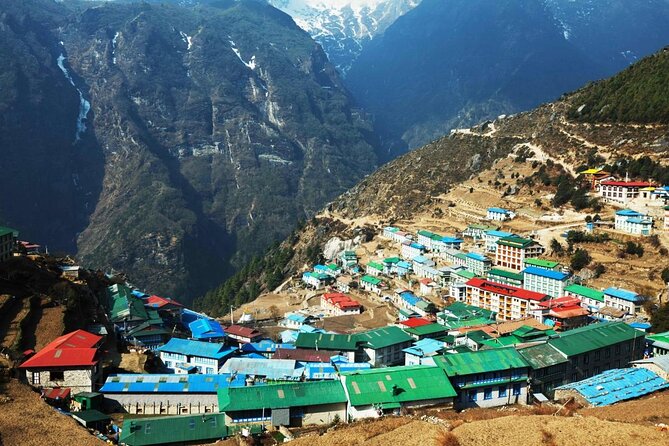
- Lukla flights begin the mountain journey: You fly from Kathmandu, or drive to Manthali and fly from there during the main season.
- Namche and Dingboche provide acclimatization time: These rest days are important parts of the trek, not wasted days.
- Kala Patthar is the major viewpoint: The early hike gives you the best stated mountain panorama of the trip.
- The package is private: Only your group participates, with a guide and porter arranged through the company.
- Kathmandu sightseeing costs extra: Entrance fees at the city sights are not included, with an estimated cost of $22.
- Basic mountain living is part of the deal: Lodges and guest houses are included, but drinks, personal expenses, and delay-related hotel nights are not.
What the $1,600 package really covers
At $1,600 per person, this is a substantial package rather than a guided day walk. You receive three nights of hotel accommodation in Kathmandu, Kathmandu to Lukla and return flights, a guide and porter, mountain lodging, all listed taxes and fees, 15 breakfasts, 11 lunches, and 11 dinners.
That structure gives you useful budget control. The biggest costs on this route are already handled, especially flights and staff. You will still need money for drinks, snacks, personal purchases, Kathmandu food, and sightseeing entrance fees. The package also does not cover extra Kathmandu hotel nights caused by a delayed departure from the mountains or an early return.
The word porter matters here. The package says a porter is provided, but it does not state the luggage limit or porter-to-client ratio. Ask those questions before booking. You should also ask exactly what kind of hotel and lodge rooms are planned, since city accommodation and mountain accommodation are very different experiences.
The food plan is generous in its number of meals, but it does not include beverages. Budget separately for water, tea, coffee, soft drinks, and any snacks you want along the trail. The price looks strongest for someone who wants the main logistics handled and does not want to piece together flights, rooms, and staff independently.
More Everest Base Camp Treks in Kathmandu
- Everest Base Camp Trek – 14 Days
★ 5.0 · 1,499 reviews - Everest Base Camp Trek
★ 5.0 · 842 reviews - Everest Base Camp Trekking
★ 5.0 · 485 reviews
Day 1: A simple arrival in Kathmandu
Your trip begins at Tribhuvan International Airport, where company staff transfer you to the hotel. The stated transfer takes about 30 minutes, followed by an overnight stay in Kathmandu.
This is a useful arrival arrangement because international flights, baggage collection, and airport traffic can make your first hour in Nepal tiring. You should have your hotel name, local contact, and pickup details easily available when you land. The package says pickup is offered and confirmation is provided at booking.
There is no scheduled sightseeing on this first day. That is sensible. Kathmandu is worth exploring, but arriving, checking in, and getting ready for the trek is enough work for one evening.
Day 2: Kathmandu’s great religious landmarks
The second day is devoted to four major sights: Swayambhunath, Patan Durbar Square, Pashupatinath Temple, and Boudhanath Stupa. Each visit is listed at roughly one hour, though the driving between them will determine the real pace.
Swayambhunath, often called the Monkey Temple, gives you a first look at Kathmandu from above and introduces the religious mix of the valley. Patan Durbar Square brings you into the old royal center of Patan, with temples and historic courtyards.
Pashupatinath is one of the most important Hindu temple sites in Nepal. Access rules can vary by area, so your sightseeing here may be partly about the surrounding complex rather than every interior space. Boudhanath, the largest stupa in South Asia according to the tour description, is a fitting final stop. Its broad circular form and surrounding shops make it a good place to see Tibetan Buddhist influence in Kathmandu.
The order is full but reasonable. You will want comfortable shoes and a little patience with city traffic. Entrance fees are not included, and the supplied estimate is $22 for Kathmandu sightseeing. Lunch and drinks in Kathmandu are also your responsibility.
Day 3: The flight to Lukla and the first walk
The mountain portion begins with the flight to Lukla. The stated flight time is about 30 minutes, followed by a trek to Phakding that takes roughly three hours.
The transport note deserves attention. In some periods, you may fly from Kathmandu. During the main season, the flight may be diverted to Ramechhap, which means a drive to Manthali before boarding the aircraft. That change can make the day much longer than the simple flight description suggests. Confirm the departure airport and transfer arrangements close to your travel date.
From Lukla, you start walking toward Phakding and enter Sagarmatha National Park. This is a good first trekking day because the walking time is moderate, allowing you to get used to the trail, your boots, and your pack. Your overnight is in Phakding, in mountain lodge accommodation.
More Trekking Tours in Kathmandu
- Annapurna Circuit Trek with Tilicho Lake
★ 5.0 · 368 reviews - Everest Base Camp Trekking – 13 Day
★ 5.0 · 365 reviews - Everest Base Camp Trek
★ 5.0 · 350 reviews - Everest Base Camp Trek -14 Days
★ 5.0 · 321 reviews
Day 4: The demanding climb to Namche Bazaar
The trek to Namche Bazaar takes about six hours. This is one of the first days when the route begins to feel like a serious high-altitude trek, with a longer uphill section and a noticeable change in the valley.
Namche is more than a stopping point. It is the main service center on the route, and it gives you a useful pause before the trail continues higher. The package includes a full rest day here, which is one of its best planning choices.
You should not judge the six-hour estimate too strictly. Trail conditions, group pace, breaks, and the weight carried by your porter can all affect the day. The guide and porter arrangement means you can focus more on walking steadily, but the trek still requires moderate physical fitness.
Day 5: Everest View Point and a useful rest day
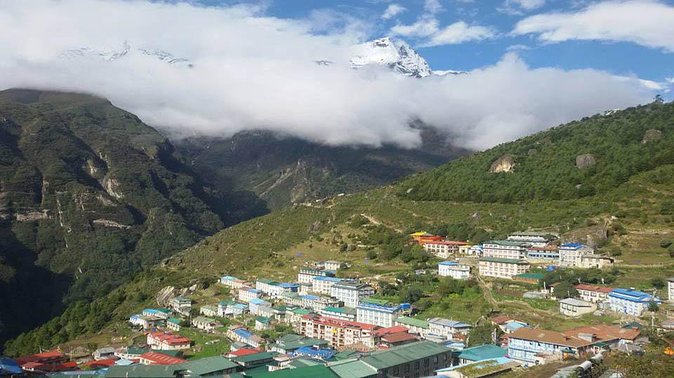
After breakfast, you hike to Everest View Point and return to the lodge. The hike is listed at about three hours. You then have time to rest in Namche.
This is acclimatization with a purpose. You gain height during the morning, see the first major Himalayan views, and return to sleep at the same altitude rather than rushing upward. The itinerary specifically highlights views of Everest and the surrounding peaks from this excursion.
I would treat the hike as a steady walk, not a race. The point is to spend time at altitude and return feeling ready for the next stage. Namche is also a good place to check your clothing, charging needs, water supply, and general comfort before the route becomes more remote.
Days 6 and 7: Tengboche, then Dingboche
The walk to Tengboche takes about five hours. The stop includes Tengboche Gompa, one of the best-known religious sites along the route, and an overnight stay in a lodge.
The setting around Tengboche is one of the memorable moments of the trek because the monastery stop is tied directly to the mountain journey. You are not simply checking off another village. You are seeing how Buddhist practice fits into daily life along a demanding trail.
On Day 7, you continue to Dingboche, with about six hours of trekking. The itinerary includes a Dingboche View Point, though the timing is not clearly separated from the day’s main walk. Dingboche is higher and colder than the earlier villages, so this is a day to keep your pace controlled and drink regularly.
The schedule then gives you another rest day in Dingboche. That pause is valuable because the next section takes you toward Lobuche and Gorakshep, where altitude and fatigue become much more serious concerns.
Day 8: Dingboche’s second acclimatization day
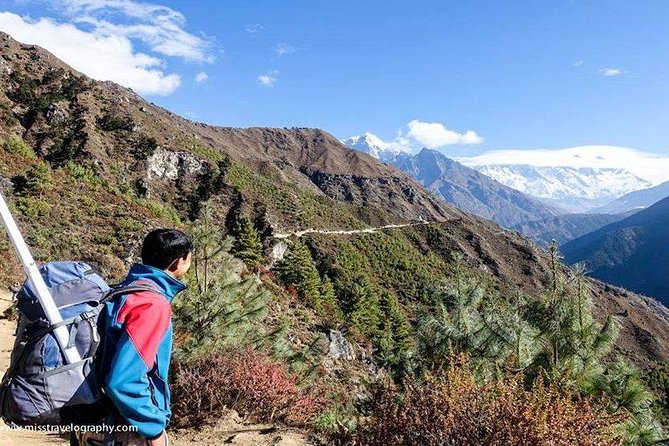
The Dingboche rest day includes a hike to a local viewpoint. The schedule does not give a duration, so you should ask the guide how long the outing is expected to take and how much elevation it gains.
A rest day does not mean staying in bed all day. A short, measured outing followed by time at the lodge can help you adjust without spending all your energy. You should use the day to organize layers, protect electronics, and make sure your daypack contains only what you need for the next stage.
This is also a good point to be honest with yourself. If you are feeling unwell, tell the guide early. The package states that travelers should have moderate fitness, but it does not promise medical support or evacuation costs, so ask about those matters before departure if they concern you.
Days 9 and 10: Lobuche, Gorakshep, and Everest Base Camp
Day 9 takes you to Lobuche in about six hours. This section is increasingly focused on the main goal, but the walk itself is the experience. The surroundings become more spare, and the route feels less like a village-to-village hike and more like a high mountain approach.
Day 10 is described in two parts. You trek to Gorakshep, rest briefly, and then hike to Everest Base Camp before returning to the lodge. A separate entry lists Gorakshep as a three-hour trek and an overnight stop. Because these descriptions overlap, confirm the exact plan with the operator.
Gorakshep is the launch point for the Base Camp walk. The route to Everest Base Camp and back is likely to be the hardest day in the schedule, even though no total duration is stated. You should expect a long day at high altitude, with plenty of time needed for a slow pace and breaks.
Everest Base Camp itself is not the summit and usually does not provide the classic full view of Everest that people imagine. The value is reaching the staging area used by climbers and standing among the peaks and glacier country of the Khumbu. The next morning’s Kala Patthar hike is specifically included for the best stated view of Everest.
Day 11: Kala Patthar and the return to Pheriche
The itinerary calls for a two-hour hike to Kala Patthar, followed by a five-hour trek back to Pheriche. This early viewpoint walk is the visual high point of the package.
You will want warm layers, a headlamp if needed, and a flexible attitude about timing. The schedule does not list a separate sunrise departure, so do not assume one without asking. From Kala Patthar, the stated goal is a wide view of Everest and other major mountains in the region.
Afterward, you descend to Pheriche and spend the night in a guest house. The drop in altitude should feel welcome after Gorakshep, but the walk is still tiring. Keep your pace easy and save some energy for the next several days.
Days 12 and 13: Retracing the route to Lukla
Day 12 takes you back to Namche by the same general route. No walking time is provided, so ask for the expected distance and whether the group will stop anywhere along the way.
Day 13 is listed as a seven-hour trek from Namche to Lukla. Once there, you prepare for the return flight and sleep in a guest house. This is another long day, and it is worth keeping your pack light and your feet well cared for.
The return flight is scheduled for Day 14, but mountain weather can affect Lukla operations. The package specifically excludes extra Kathmandu accommodation caused by a delayed departure or early arrival from the mountains. That means you should keep some financial and scheduling room after the trek, especially if you have an international flight immediately afterward.
Day 14 and 15: Kathmandu, then departure
On Day 14, you fly back to Kathmandu and transfer to the hotel. You have a free day to rest or enjoy the city. The transfer is listed at about 30 minutes, though actual road time can vary.
This spare day is useful after the mountain trek. You can eat in Kathmandu, collect souvenirs, or simply enjoy a shower and a quiet room. Food and drinks in Kathmandu are not included, so plan for those separately.
Day 15 is final departure. The package does not state a departure transfer time, so confirm whether the company will take you to the airport and how far in advance you should leave the hotel.
Service, group format, and practical comfort
This is a private activity, meaning only your group participates. That gives you more control than a large fixed group, though the itinerary does not specify the maximum number of people in your party.
The company provides staff for airport pickup, trekking, and return transfer. The service is presented as careful and attentive, with the main strength being that the moving parts are arranged for you. Still, ask for the guide’s name, the porter arrangement, emergency contacts, and the exact accommodation list before departure. No guide names are supplied in the trip information.
The mountain rooms will be basic compared with your Kathmandu hotel. The package includes accommodation during the trek, but it does not specify private rooms, attached bathrooms, heating, charging, or internet access. Those details can affect comfort and should be confirmed directly.
Cancellation is free up to 24 hours before the experience begins. Inside that period, the amount paid is not refunded, and late changes are not accepted. The cut-off uses local time.
Should you book this Everest Base Camp trek?
I would consider this package if you want the classic Everest Base Camp route with the main transport, staff, meals, hotels, lodges, and acclimatization days handled in one purchase. The strongest reasons are the full Kathmandu-to-Kathmandu format, the private group setup, the two rest days, and the included Lukla flights.
I would pause before booking if you need a tightly specified schedule or high certainty around flights and accommodation. The itinerary has overlapping descriptions around Gorakshep and Everest Base Camp, and the Ramechhap flight arrangement can change the first trekking day. Ask for a written day-by-day plan, luggage limits, hotel and lodge names, and the policy for flight delays.
For a fit hiker who accepts simple mountain accommodation and extra personal costs, the $1,600 price can be good value. You should book only after confirming the schedule details and keeping spare time and money for the return to Kathmandu.
FAQ
How long is the Everest Base Camp trek?
The package lasts approximately 15 days, from airport pickup in Kathmandu through final departure.
What is included in the price?
The price includes three nights of Kathmandu hotel accommodation, Kathmandu to Lukla and return flights, guide and porter services, trekking accommodation, taxes and fees, 15 breakfasts, 11 lunches, and 11 dinners.
Are drinks included?
No. Drinks and personal expenses are excluded. Food and drinks in Kathmandu are also not included.
Are Kathmandu sightseeing entrance fees included?
No. Entrance fees for the Kathmandu sightseeing day are excluded. The stated estimate is $22.
Where does the trek start?
The walking portion starts after flying to Lukla. During the main season, the flight may operate from Ramechhap after a drive to Manthali.
Is this a private tour?
Yes. Only your group participates in the activity.
What fitness level is required?
The package states that travelers should have a moderate physical fitness level.
Are meals included during the trek?
Yes. The package includes 15 breakfasts, 11 lunches, and 11 dinners.
Are extra Kathmandu hotel nights included?
No. Extra nights caused by delayed mountain departures or early returns are not included.
What is the cancellation policy?
You can cancel at least 24 hours before the start time for a full refund. Cancellations or changes made less than 24 hours before the start time are not accepted for a refund.
Latest treks added in Kathmandu
- Private Manaslu Circuit Trek at Himalayas★ 5.0 · 3 reviews
- Ghorepani Poonhill Trek★ 5.0 · 5 reviews
- Ghorepani Poon Hill Trek★ 5.0 · 16 reviews
- Upper Mustang Trekking★ 3.0 · 2 reviews
- Amazing 1 Day Trekking Experience in Kathmandu Nepal★ 5.0 · 24 reviews
- Upper Mustang Trekking★ 5.0 · 2 reviews
- Upper Mustang Trek★ 5.0 · 5 reviews
- Upper Mustang Trekking★ 5.0 · 4 reviews
Everest Base Camp Treks, compared.






Browse the lists this tour appears in