
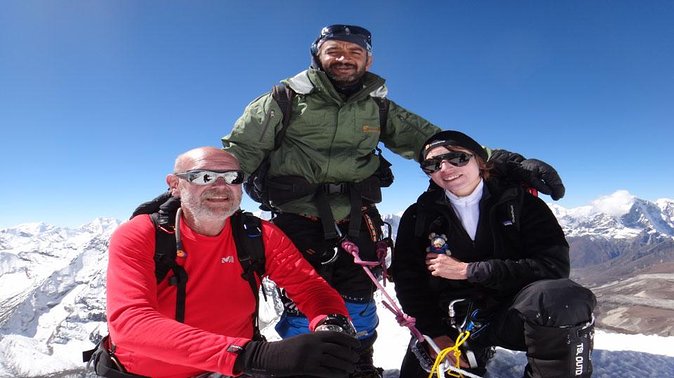
REVIEW · KATHMANDU
Everest Base Camp Trek
Everest Base Camp is less about checking off a famous place and more about earning each view one steady step at a time. Over 14 days, you move from Kathmandu’s busy streets to Sherpa villages, high mountain passes, Tengboche Monastery, and the rocky basin at Everest Base Camp.
I like the two built-in acclimatization days at Namche Bazaar and Dingboche. I also like that porters carry the main luggage, leaving you with a smaller day pack. The catch is simple: this is a serious high-altitude trek, with long six-hour walking days, basic tea-house rooms, and a route that reaches 5,545 meters at Kala Patthar.
Key points to know before booking
- Kala Patthar is the highest point: At 5,545 meters, it gives you the trek’s most direct mountain viewpoint.
- Two acclimatization days help: You pause at Namche Bazaar and Dingboche rather than climbing hard every day.
- Pradip and Laxman are named guide options: Pradip, also called Master Zi by some groups, has guided many departures, while Laxman is described as having more than 22 years of mountain experience.
- Tea-house lodging keeps the price down: You sleep in local lodges rather than mountain hotels, with twin-share rooms as the standard.
- Lukla flights are the weak link: Weather can cancel or delay flights, and a helicopter replacement costs at least $500 per person.
- The $1,500 price covers a lot: Lodging, meals on trek, guide, porter support, permits, airport transfers, and domestic flights are included, but insurance and drinks are not.
Kathmandu to Lukla: the trek begins with a flight
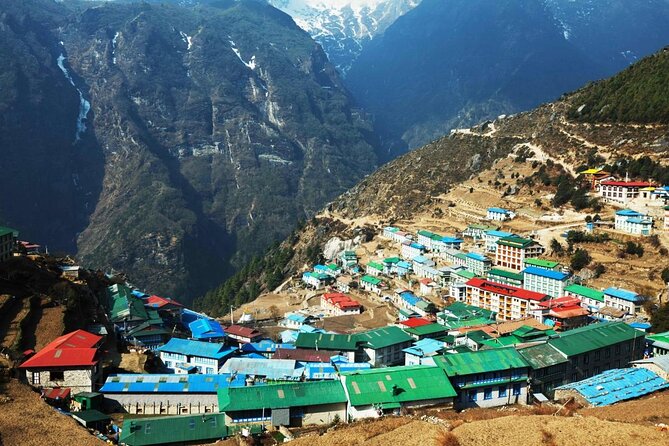
Your first day starts at Tribhuvan International Airport in Kathmandu. A representative meets you after customs and takes you to a standard three-star hotel. The package includes two Kathmandu nights, one when you arrive and one after the trek.
Day two begins early with the flight from Kathmandu to Lukla, at 2,886 meters. This short domestic flight is the gateway to the Khumbu region, but it is also the part of the plan most exposed to weather and operating changes.
From Lukla, you walk to Phakding, at 2,640 meters. The first walking day lasts about four hours, which gives your legs a gentler start before the route becomes harder. You sleep in a tea house and begin the pattern used for most of the trek: breakfast and dinner at your lodge, lunch at a stop along the trail, and a smaller day pack on your back.
Your main bag is carried by porters, with one porter assigned for every two people. The stated domestic airline allowance is 15 kilograms, including your hand luggage. Pack carefully, since excess baggage can cost $1 or more per kilogram.
More Everest Base Camp Treks in Kathmandu
- Everest Base Camp Trek – 14 Days
★ 5.0 · 1,499 reviews - Everest Base Camp Trek
★ 5.0 · 842 reviews - Everest Base Camp Trekking
★ 5.0 · 485 reviews
Namche Bazaar gives you your first real Himalayan test
The walk from Phakding to Namche Bazaar takes about six hours. Namche sits at 3,440 meters and is one of the most important stops on the route. It is described as the center of Sherpa life in the Khumbu, and it gives you your first strong sense that this trip is about people and culture as much as peaks.
The trail becomes more demanding here. You gain altitude, and the route requires a steady pace rather than a fast one. Your guide matters on this section because a good leader can help set a rhythm that prevents you from burning out too early.
Day four is an acclimatization day in Namche. You stay at the same altitude instead of pushing higher. That pause is not wasted time. It gives your body a chance to adjust before the route climbs toward Tengboche and Dingboche.
The schedule still lists about six hours for the acclimatization day, suggesting a walking excursion rather than a day spent entirely in bed. Ask your guide exactly what the day’s walk will include. The key point is to gain some height during the day, then sleep lower at Namche.
Tengboche adds a spiritual pause at 3,867 meters
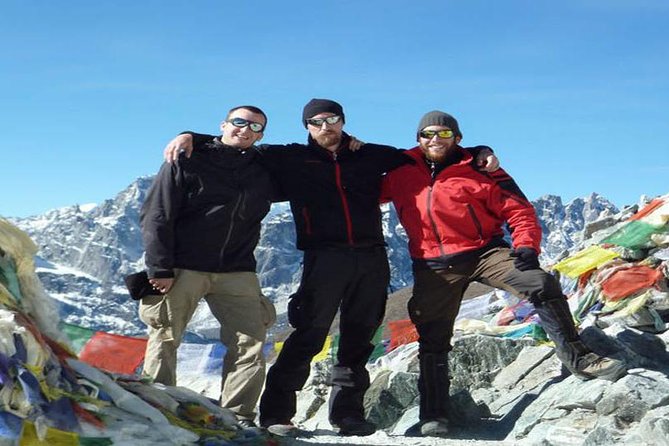
From Namche, you continue to Tengboche, also written as Tyangboche, at 3,867 meters. The walk takes around six hours. Tengboche is known for its monastery, and this is one of the route’s best chances to slow down and appreciate the spiritual side of the Khumbu.
I like this change of pace. The trek is physically demanding, but Tengboche reminds you that the region is not simply a backdrop for an adventure. Sherpa culture and Buddhist practice are part of daily life here.
The route from Tengboche to Dingboche reaches 4,260 meters. You should expect the altitude to affect your walking speed. Six hours at this height is not the same as six hours on a low-country trail, so keep your schedule open and follow your guide’s advice.
Dingboche is where altitude becomes serious
Day seven is another acclimatization day, this time at Dingboche. The listed route includes the Chhukhung path, followed by a return to Dingboche. This gives you a chance to walk higher without changing your sleeping altitude.
At 4,260 meters, Dingboche is a practical place to watch how your body responds. Headaches, poor sleep, tiredness, and shortness of breath can become more noticeable as you climb. The tour requires strong physical fitness, and that requirement should be taken seriously.
Your guide is part of the value here. Pradip has been repeatedly requested by name and is described as helpful, funny, and experienced on this route. Laxman is also associated with long mountain experience. Guide quality cannot remove altitude risk, but it can make decisions clearer when the day does not go as planned.
More Trekking Tours in Kathmandu
- Annapurna Circuit Trek with Tilicho Lake
★ 5.0 · 368 reviews - Everest Base Camp Trekking – 13 Day
★ 5.0 · 365 reviews - Everest Base Camp Trek
★ 5.0 · 350 reviews - Everest Base Camp Trek -14 Days
★ 5.0 · 321 reviews
Lobuche and Gorak Shep bring you to the edge of the high route
From Dingboche, you walk to Lobuche at 4,930 meters. The usual day takes about six hours, with lunch at Dugla, at 4,595 meters. This section is more exposed and feels more remote than the lower villages.
The next day takes you from Lobuche through Gorak Shep to Everest Base Camp. The route reaches 5,364 meters at Base Camp, and this is the emotional center of the trip. The trail passes through rocky high-country terrain, with the air thin enough to make every uphill section feel longer.
Do not expect Base Camp to look like a permanent mountaineering town. The experience is about reaching the famous point at the foot of Everest, seeing the surrounding peaks, and understanding the effort involved in climbing from there. The route also connects you with the stories of sacrifice, hard work, and persistence that define the mountain.
Gorak Shep, at 5,140 meters, is the overnight base for this section. Accommodation at this altitude is basic. Tea houses are described as clean and comfortable, but they remain simple mountain lodges. Hot showers may be available in some places for an extra charge, and electricity for charging batteries may also cost extra.
Kala Patthar is the morning reward
Day ten takes you from Gorak Shep to Kala Patthar at 5,545 meters, then down to Pheriche at 4,243 meters. Kala Patthar is the highest point on the itinerary and the place to focus on if you want the clearest mountain viewpoint included in the trek.
The climb is demanding because it begins at high altitude, often after a night at Gorak Shep. The reward is the broad view toward the Everest range and the chance to see Everest from a high lookout rather than only from Base Camp’s rocky setting.
The descent to Pheriche is important. Going lower helps your body recover after the highest section. You still have a long way to walk, but the drop in altitude usually makes the next days feel more manageable.
The return to Namche and Lukla
The itinerary lists Pheriche to Namche Bazaar on day eleven, with an afternoon arrival. The description also mentions Tengboche, so confirm the exact route with the operator before departure. In practical terms, you are retracing the main trail toward Namche, with a long day of approximately six hours.
Day twelve continues from Namche to Lukla. This is another six-hour walking day. The return is not simply an afterthought. Your legs are tired, and the route includes repeated ups and downs even as you lose overall altitude.
You spend the final trekking night in Lukla. Day thirteen is an early flight back to Kathmandu, followed by a transfer to your hotel. Day fourteen includes a private transfer to Tribhuvan International Airport for your flight home.
The flight schedule is a real planning issue. If weather cancels the Lukla flight, the operator says it will try to reschedule for the next day, subject to availability. A group may also hire a helicopter, but the stated minimum is $500 per person, paid separately. Travel insurance covering at least $500 per day for flight cancellation is strongly advisable.
What the $1,500 price really covers
At $1,500 per person, this is a substantial package rather than a basic guiding fee. It includes airport pickup and drop-off, two Kathmandu hotel nights, tea-house lodging during the trek, the Kathmandu to Lukla and Lukla to Kathmandu flights, guide and porter costs, meals on trek, TIMS card fees, a first-aid kit, government taxes, and service charges.
Breakfast is included for all 14 days. Lunch and dinner are included for 11 days, which covers the trekking portion but not your Kathmandu meals. Lunch and dinner in Kathmandu are your responsibility.
The price also includes guide and porter salary, food, drinks, lodging, transport, and insurance for the staff. That matters because porter support is not a minor add-on. It allows you to carry only daily essentials and makes the long route more comfortable.
You still need to budget for personal costs. Alcoholic and nonalcoholic drinks are not included. You may also pay for hot showers, battery charging, snacks, bottled or boiled water, Kathmandu meals, sightseeing entrance fees, souvenirs, and tips.
A practical estimate given for trek days is $12 to $15 per day if you avoid alcohol and shopping. Tips are suggested at roughly 10 to 15 percent of the tour cost, depending on the service you receive. A single supplement costs an additional $200, while the normal arrangement is a twin-share room.
Meals, power, baggage, and tea-house life
Meals are served in the lodges, with breakfast and dinner where you stay and lunch selected by the guide along the trail. Normal drinking water is available, but you are advised to bring purification tablets. Bottled and boiled water can also be purchased in the villages.
Tea houses are clean and comfortable according to the package description, but you should not expect city-hotel facilities at altitude. Kathmandu hotels are listed as standard three-star properties with attached bathrooms, air conditioning, and hot and cold showers.
Electricity is available in some villages, and solar power is used in others. Charging may cost extra and may not always be possible, so bring spare batteries and keep your phone on a low-power setting.
The operator provides a duffle bag if needed. Your main bag goes with the porters, while your day pack should hold water, a camera, sunscreen, a spare jacket, and other items you need during the day.
Who this Everest Base Camp trek suits best
This trip suits you if you want a guided, organized route with meals and lodging arranged in advance. It is also a good fit if you want cultural stops such as Namche Bazaar and Tengboche rather than treating the trip as a race to Base Camp.
You need strong physical fitness and a willingness to walk for about six hours on many days. You also need patience with delays, basic lodging, limited charging, and changing mountain conditions.
The group size is capped at 15 people. That is small enough for a guide to keep track of the group, though it is not a private trek. The package offers pickup and a mobile ticket, and confirmation is provided at booking.
Free cancellation is available up to 24 hours before the experience begins. After that point, the amount paid is not refunded, and changes made within 24 hours are not accepted.
Should you book this trek?
I would book this trek if you want the classic Everest route with a clear 14-day structure, porter support, two acclimatization days, and a price that includes the major transport and food costs. The strongest practical features are the guide service, the included Lukla flights, and the support that lets you walk with a day pack.
I would hesitate if your schedule cannot absorb a delayed Lukla flight or if you want comfortable hotels throughout. Before paying, confirm the exact guide assigned to your departure, the day eleven route, current flight arrangements, and the insurance requirement for delays or helicopter transport.
For a fit walker who accepts basic mountain conditions, this is a well-supported way to reach Everest Base Camp and Kala Patthar without arranging every lodge, meal, porter, and transfer alone.
FAQ
How long does the Everest Base Camp trek take?
The planned experience lasts approximately 14 days, including arrival and departure days in Kathmandu and the trekking route between Lukla and Everest Base Camp.
Where does the trek begin?
The tour begins with airport pickup at Tribhuvan International Airport in Kathmandu. The trekking portion starts after the flight from Kathmandu to Lukla.
What is the highest point on the itinerary?
Kala Patthar is the highest point, at 5,545 meters. Everest Base Camp is listed at 5,364 meters.
Are flights between Kathmandu and Lukla included?
Yes. The package includes the flight from Kathmandu to Lukla and the return flight from Lukla to Kathmandu.
What happens if a Lukla flight is canceled?
The flight may be rescheduled for the following day, subject to availability. A group may also use a helicopter, with a minimum stated cost of $500 per person paid separately.
Is travel insurance included?
Travel insurance for you is not included. The operator advises insurance that covers flight cancellation and at least $500 per day for possible helicopter costs.
Are meals included?
Breakfast is included for 14 days. Lunch and dinner are included for 11 days, covering the trek. Lunch and dinner in Kathmandu, along with alcoholic and nonalcoholic drinks, are not included.
How is luggage handled?
Porters carry the main luggage, with one porter for every two people. You carry a day pack. The stated domestic airline allowance is 15 kilograms including hand luggage.
Can I cancel for a full refund?
You can cancel for a full refund up to 24 hours before the experience start time. Cancellations and changes made less than 24 hours in advance are not accepted.
Latest treks added in Kathmandu
- Private Manaslu Circuit Trek at Himalayas★ 5.0 · 3 reviews
- Ghorepani Poonhill Trek★ 5.0 · 5 reviews
- Ghorepani Poon Hill Trek★ 5.0 · 16 reviews
- Upper Mustang Trekking★ 3.0 · 2 reviews
- Amazing 1 Day Trekking Experience in Kathmandu Nepal★ 5.0 · 24 reviews
- Upper Mustang Trekking★ 5.0 · 2 reviews
- Upper Mustang Trek★ 5.0 · 5 reviews
- Upper Mustang Trekking★ 5.0 · 4 reviews
Everest Base Camp Treks, compared.






Browse the lists this tour appears in