
REVIEW · KATHMANDU
Everest Base Camp Trek -17 Days
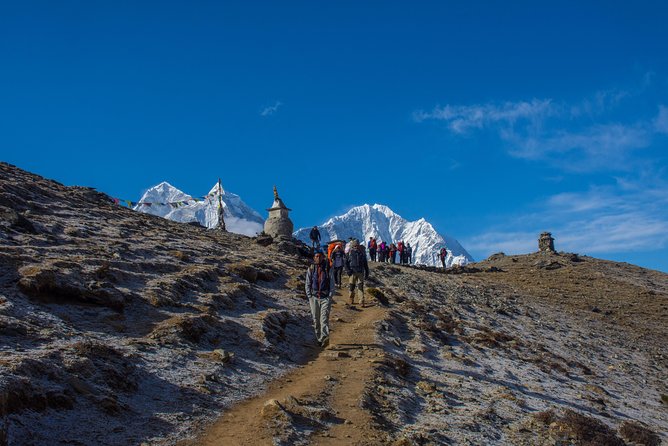
The best part of this 17-day Everest Base Camp trek is the gradual journey through Sherpa country, not just the final arrival at Base Camp. You walk from Lukla through Namche Bazaar, Khumjung, Tengboche, Dingboche, Lobuche, and Gorak Shep, with time to adjust to the thin air and absorb the mountain scenery.
I like the thoughtful acclimatization days, especially the hike around Khumjung and Khunde and the climb toward Nagarjun Peak. I also like the practical all-in structure: domestic flights, permits, porters, meals, hot drinks, a duffle bag, and private airport transfers are included. The main drawback is that this remains a physically demanding high-altitude trek, and Lukla flights can disrupt the schedule despite the built-in extra day.
Key points at a glance
- Five major acclimatization stops: Namche, Khumjung and Khunde, Dingboche, Nagarjun Peak, and Kala Patthar help break up the long climb.
- Sherpa support from start to finish: An experienced Sherpa guide, assistant staff, and porters carry the group’s supplies and help manage the trek.
- Everest Base Camp at 5,364 meters: You reach the famous camp on Day 11, then sleep at Gorak Shep.
- Kala Patthar is the big viewpoint: The early climb to 5,550 meters provides the trek’s highest point and key Everest views.
- Kathmandu time is useful: You get a guided half-day heritage tour, preparation time, and a free day before departure.
- A serious value at $2,000: Flights, permits, lodging, meals, guide services, porters, and many transfers are covered, but insurance and personal gear are not.
What this Everest trek is really like
This is not a quick mountain photo stop. It is a two-week walking journey into the Khumbu region, where the villages get smaller, the air gets thinner, and the mountains begin to dominate every view.
You start at Tribhuvan International Airport in Kathmandu and finish after walking from Lukla to Base Camp and back. The route reaches 5,364 meters at Everest Base Camp and 5,550 meters at Kala Patthar. Those figures matter: even a fit person can feel tired, breathless, or headachy at that height.
The plan is private, so only your group participates. That gives you more control than a large mixed departure, although the walking schedule still has to follow the needs of the group and the mountain. Dawa is the named contact associated with Dream Himalaya Adventures, and the company assigns an experienced local Sherpa guide, support staff, and porters.
Past departures have included family groups, a party of 12, and late-December treks. That suggests the operation can handle different group sizes and seasons, but you should not mistake flexibility for easy conditions. December can be clear and cold, and the company cannot control weather, flight delays, or trail conditions.
More Everest Base Camp Treks in Kathmandu
- Everest Base Camp Trek – 14 Days
★ 5.0 · 1,499 reviews - Everest Base Camp Trek
★ 5.0 · 842 reviews - Everest Base Camp Trekking
★ 5.0 · 485 reviews
Kathmandu: preparation before the mountains
Day 1 is simple and useful. You are collected at the airport, taken to your hotel, and given a trip briefing. The stated meeting time is 12:15 am, which is unusually late and worth confirming carefully when you book. Airport pickup is included by private vehicle.
On Day 2, you see some of Kathmandu with a guide and private transport, visit World Heritage sites, and complete the practical preparation for the trek. The schedule also allows time for packing and checking equipment.
I like this two-night start. It gives you a buffer after an international flight and a chance to sort out anything missing before leaving for Lukla. Four nights of three-star hotel lodging in Kathmandu are included on a twin-sharing bed-and-breakfast basis. The other Kathmandu meals are not covered, so budget separately for lunch and dinner in the city.
The half-day heritage tour is a pleasant extra rather than the main reason to book. Kathmandu has plenty to see, but the real focus here is getting ready for the trail. Use the preparation time wisely. Your personal trek gear is not included, and you are responsible for arranging high-risk medical insurance that covers emergency evacuation.
Lukla to Namche: the first taste of the Khumbu
Day 3 begins with a flight from Kathmandu to Lukla at 2,840 meters. The trek then drops to Phakding at 2,610 meters, taking about three hours.
This opening walk is a good introduction. You are not thrown into a long first day, and Phakding gives your body a gentle start before the route climbs higher. Hot drinks and treated drinking water are included during the trek, which is a practical comfort after several hours on foot.
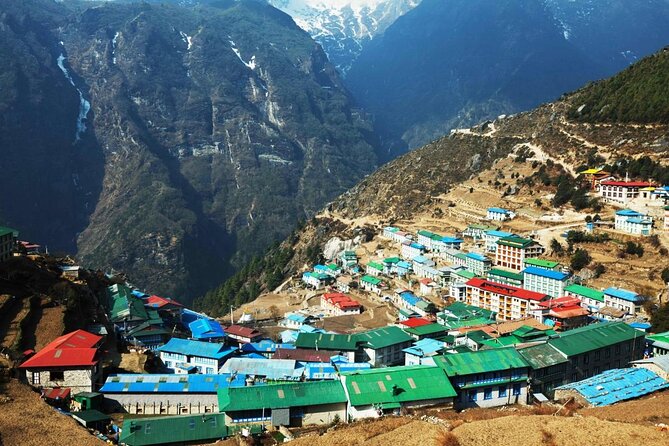
Day 4 is more serious. You walk for about five hours to Namche Bazaar at 3,440 meters. Namche is the main trading center in the area and one of the most important stops for acclimatization. The route gains height, and you should expect the pace to slow.
Namche is also the first place where the trip feels properly remote. You will see Sherpa villages, mountain trails, and broad views of the surrounding peaks. The town itself is a key supply point for the region, so it feels more active than the smaller settlements ahead.
Khumjung and Khunde: a smart acclimatization day
Day 5 is not a rest day in the lazy sense. You spend about four hours hiking around Khumjung and Khunde, reaching roughly 3,840 meters, then return to Namche for the night.
This is one of the itinerary’s strongest features. The climb higher during the day and return to sleep lower at night gives your body time to adjust. It also lets you see two important Sherpa communities without carrying your full trekking load.
The cultural side matters here. The route is not only about mountain viewpoints. It takes you through villages and toward monasteries, offering a closer look at Sherpa life and Buddhist traditions. The tour description identifies the Sherpa people as descendants of migrants from eastern Tibet who crossed the Himalaya and settled in the region centuries ago.
You will want to keep expectations sensible. This is not a dedicated cultural tour with long lectures or workshops. The cultural experience comes through walking the villages, visiting religious sites, and seeing how communities function at high altitude.
More Trekking Tours in Kathmandu
- Annapurna Circuit Trek with Tilicho Lake
★ 5.0 · 368 reviews - Everest Base Camp Trekking – 13 Day
★ 5.0 · 365 reviews - Everest Base Camp Trek
★ 5.0 · 350 reviews - Everest Base Camp Trek -14 Days
★ 5.0 · 321 reviews
Tengboche and Dingboche: monasteries and thinner air
On Day 6, you walk about five hours to Tengboche at 3,860 meters. The main attraction is Tengboche Monastery, one of the best-known religious sites on the route. The stop adds meaning to the trek and breaks up what could otherwise become a long series of mountain views and tea-house nights.
Day 7 takes you to Dingboche at 4,410 meters, again in about five hours. At this height, the air is noticeably thinner for many people. You should walk slowly, drink regularly, and tell your guide if you feel unwell.
The itinerary spells the village name as Dengboche in one place and Dingboche in another. It refers to the same major acclimatization stop. This is also where the trip begins to feel more demanding. The distances are not extreme on paper, but altitude changes the effort.
Day 8 includes a hike toward Nagarjun Peak, listed at about 5,085 meters, before returning to Dingboche. The hike takes around five hours. This is another strong acclimatization day because you gain height without changing sleeping altitude.
It is also a useful test of how your body is responding. If you struggle badly on this day, you should discuss it openly with your guide. Reaching Base Camp is important, but returning safely matters more.
Lobuche and Gorak Shep: the high-altitude finish line
Day 9 leads to Lobuche at 4,910 meters in about four hours. By now, the scenery is more severe and the walking can feel slower. You are approaching the high point of the route, so small tasks may take more effort than they did near Lukla.
Day 10 continues to Gorak Shep at 5,140 meters, with roughly four hours of walking. Gorak Shep is the final overnight base before Everest Base Camp and Kala Patthar. Sleeping here can be difficult simply because of the altitude, so do not expect a normal night’s rest.
The trek’s most anticipated day is Day 11. You walk to Everest Base Camp at 5,364 meters, a round trip that takes about six hours, and return to Gorak Shep for the night.
Base Camp itself may not look like the dramatic summit image many people carry in their heads. It is a working mountaineering site, and what you see depends on the season. The meaning comes from reaching the point where major Everest expeditions prepare for the climb, surrounded by the huge peaks of the Khumbu.
The route to Base Camp is not a casual stroll. You are already high, tired, and walking on rough ground. Keep your expectations focused on the achievement and the setting rather than a polished attraction at the end.
Kala Patthar and the long return
Day 12 begins with a climb to Kala Patthar at 5,550 meters. This is the highest point on the schedule and one of the most important viewpoints of the entire trek. You then descend to Pheriche at 4,210 meters, with about four hours for each part of the day.
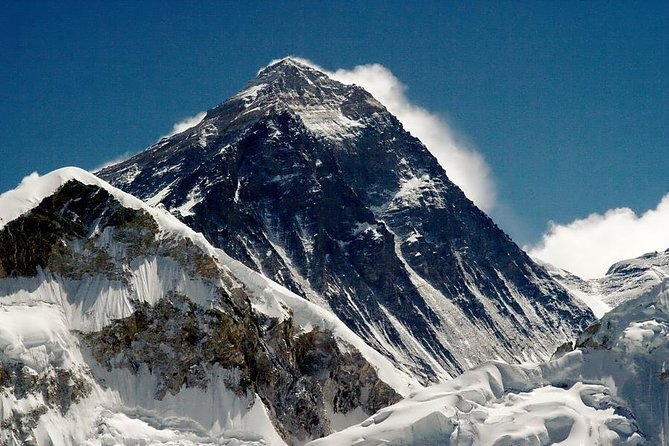
Kala Patthar often matters more for mountain views than Base Camp itself. From this high ridge, you have a better vantage point toward Everest and its neighboring peaks. The climb is short compared with the entire trek, but the altitude makes it hard. Take your time and follow the guide’s pace.
The descent to Pheriche should feel welcome, though it is still a long day. Going lower brings more air and usually a sense of relief. You are not finished, but the hardest altitude section is behind you.
Day 13 is a six-hour trek back to Namche at 3,440 meters. Day 14 continues for about six hours to Lukla, followed by free time in the evening.
The return route is not simply an afterthought. Your legs may be tired, and downhill walking can be tough on knees. The scenery also changes when you see it in reverse, and the lower altitude makes it easier to notice details you missed while concentrating on the climb.
Day 15 calls for an early morning flight back to Kathmandu. Day 16 is a free day, and it also acts as an emergency day for a delayed Lukla to Kathmandu flight. This buffer is essential. Mountain aviation does not always match a neat printed schedule, so avoid booking an international departure too tightly after the trek.
What the $2,000 price covers
At $2,000 per person, the package offers solid value if you want a managed trek rather than arranging each service yourself.
Included are:
- Private airport, hotel, and airport transfers
- Four nights of three-star Kathmandu hotel lodging with breakfast
- Round-trip Kathmandu to Lukla airfare and domestic airport taxes
- Conservation, national park, local, and government permits
- An experienced Sherpa guide
- Support Sherpa staff and the required porters
- A trek duffle bag for each participant
- Breakfast, lunch, and dinner during the trek
- Tea, coffee, hot chocolate, and treated drinking water
- First-aid equipment
- Insurance for the guide and porters, including emergency rescue
- Guide and porter equipment
- A guided half-day heritage tour in Kathmandu
- A farewell dinner
That list removes several large costs that can catch independent trekkers off guard, especially the Lukla flights, permits, porters, and daily meals. The included duffle bag is also handy if you do not want to carry your full luggage on the trail.
You still need to pay for international flights, major Kathmandu meals, personal equipment, phone calls, laundry, toiletries, bottled or boiled water, soft drinks, beer, and tips. Most important, your own medical and high-risk travel insurance is not included. It must cover emergency evacuation.
Because the package includes food and hot drinks, you can keep daily spending fairly controlled. Personal gear and insurance can still add a substantial amount, so the $2,000 should not be treated as the full cost of the holiday.
Who should book this trek
This trip suits you if you want a private, fully supported route and have a moderate level of fitness. You do not need to be a technical mountaineer, because this is a trek rather than a summit climb, but you do need to handle repeated five to six-hour walking days at increasing altitude.
It is a good fit for families with strong, prepared members, couples, small private groups, and people who want a local support team. The company has organized family trips and a 12-person group, so the format is not limited to solo hikers.
It is less suitable if you dislike basic mountain accommodation, need a fixed arrival date with no flexibility, or have not prepared for high altitude. The supplied information does not promise luxury lodges or guaranteed flights. You should also ask exactly what rooms, meals, and water arrangements apply on each trekking night before paying.
Dawa and the Dream Himalaya team are praised for communication, logistics, and personal attention. One local guide was also noted for being a capable photographer, which can be a real bonus on a trek where stopping for the right view matters. Still, guide assignments can vary, so confirm who will lead your group and how many support staff will join you.
Booking, cancellation, and practical checks
Free cancellation is available if you cancel at least 24 hours before the experience start time. Changes or cancellations inside that window are not accepted for a refund, and the local time cutoff applies.
Before booking, I would confirm four details in writing: the exact airport meeting time, the hotel names in Kathmandu, the trekking accommodation standard, and the plan if a Lukla flight is delayed. The schedule includes an emergency day, but weather can still affect onward international plans.
Also ask how the company handles unused services if you cannot complete the route. The supplied terms do not explain that situation, so it is better to know before you leave home.
Should you book this Everest Base Camp trek?
I would recommend it if you want the classic Everest route with strong logistical support and a sensible acclimatization plan. The inclusion of flights, permits, meals, porters, a duffle bag, and rescue cover for the working staff makes the $2,000 price appealing.
I would not book it casually. You need proper insurance, suitable gear, patience with Lukla flight changes, and enough fitness for long days above 3,000 meters. If you accept those conditions, this trip offers a meaningful way to reach Everest Base Camp while seeing Sherpa villages, monasteries, and the mountain communities along the route.
FAQ
How long is the Everest Base Camp trek?
The experience lasts approximately 17 days, including Kathmandu preparation and sightseeing, the trek from Lukla to Everest Base Camp and back, the return flight, and an emergency day.
Where does the experience start?
It starts at Tribhuvan International Airport in Kathmandu, Nepal. The stated start time is 12:15 am.
Is airport pickup included?
Yes. Airport, hotel, and airport transfers are provided by private vehicle.
What is the highest point reached?
The highest scheduled point is Kala Patthar at 5,550 meters. Everest Base Camp is listed at 5,364 meters.
Are flights to Lukla included?
Yes. Round-trip domestic airfare between Kathmandu and Lukla, including domestic airport taxes, is included.
Are meals included?
Breakfast, lunch, and dinner are included during the trek. Major meals in Kathmandu are not included.
Is accommodation included?
Yes. Four nights in a three-star Kathmandu hotel with breakfast are included on a twin-sharing basis. Trekking accommodation is part of the organized trek, but the provided information does not state a specific lodge category.
Do I need travel insurance?
Yes. You must arrange personal medical and high-risk insurance that covers emergency evacuation. Insurance for the guide and porters is included, but that does not replace your own policy.
Can I cancel for a full refund?
You can cancel for a full refund if you do so at least 24 hours before the experience start time. Cancellations or changes made less than 24 hours before the start are not refundable.
Latest treks added in Kathmandu
- Private Manaslu Circuit Trek at Himalayas★ 5.0 · 3 reviews
- Ghorepani Poonhill Trek★ 5.0 · 5 reviews
- Ghorepani Poon Hill Trek★ 5.0 · 16 reviews
- Upper Mustang Trekking★ 3.0 · 2 reviews
- Amazing 1 Day Trekking Experience in Kathmandu Nepal★ 5.0 · 24 reviews
- Upper Mustang Trekking★ 5.0 · 2 reviews
- Upper Mustang Trek★ 5.0 · 5 reviews
- Upper Mustang Trekking★ 5.0 · 4 reviews
Everest Base Camp Treks, compared.






Browse the lists this tour appears in