
REVIEW · KATHMANDU
Everest Base camp Trek
Everest Base Camp is not simply a walk to a famous sign. It is a demanding journey through Sherpa villages, suspension bridges, forests, and high mountain valleys, ending at one of the world’s best-known trekking destinations. The route starts with a thrilling flight to Lukla and builds slowly toward Base Camp and Kala Patthar.
I like the way the trek combines major Himalayan scenery with real village stops, rather than rushing straight toward Everest. I also like the practical package: three meals a day, permits, lodging, flights, a licensed guide, and porter support are included in the $1,500 price. The main concern is that 12 days is a tight schedule for a physically hard route, and the supplied description also refers to a 14-day version, so confirm your exact dates before booking.
Key points at a glance
- Lukla is the dramatic starting point: Your trek begins with a domestic flight from Kathmandu or Ramechhap, followed by the walk toward Phakding.
- The route includes the classic villages: You pass through Namche, Tengboche, Dingboche, Lobuche, and Gorakshep before reaching Everest Base Camp.
- Kala Patthar adds the big view: After Base Camp, the route continues to Kala Patthar for broad views of Everest-region peaks.
- Your group is private: Only your party takes part, with a licensed English-speaking guide and porter support arranged at a ratio of two clients to one porter.
- The price covers the basics that matter: Flights, meals, accommodation, national park paperwork, airport transfers, taxes, and domestic airport charges are included.
- Comfort remains simple: Lodge rooms have outside toilets, while hot showers, Wi-Fi, battery charging, bottled drinks, sweets, tips, insurance, and the Nepal visa cost extra.
Why the Lukla start makes this trek special
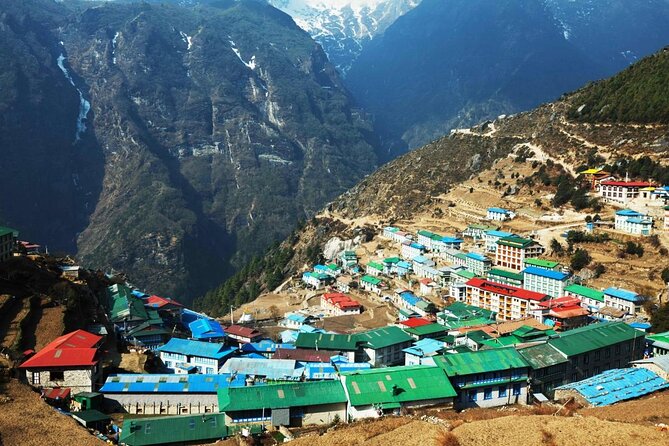
The first memorable moment comes before the walking begins. A flight from Kathmandu or Ramechhap to Lukla places you at the gateway to the Everest region, and the trek then starts among mountain villages, forest paths, the Dudh Koshi River, and suspension bridges.
That opening gives you a quick change from city life to a route shaped by foot travel. You will not spend the entire trip staring at distant peaks from a road. The route connects villages and valleys on foot, which is a large part of its appeal.
The exact flight arrangement deserves attention. The package lists flights from Kathmandu or Ramechhap to Lukla and back, so your departure airport may depend on the operating plan. Ask the company to confirm where you will fly from and return to, and how the airport transfer fits with your Kathmandu stay.
More Everest Base Camp Treks in Kathmandu
- Everest Base Camp Trek – 14 Days
★ 5.0 · 1,499 reviews - Everest Base Camp Trek
★ 5.0 · 842 reviews - Everest Base Camp Trekking
★ 5.0 · 485 reviews
What the 12-day route actually involves
The advertised duration is approximately 12 days. The overview also refers to a 14-day Everest Base Camp trek, so do not assume every booking follows the same calendar. The route itself is clear, but the number of nights and the return schedule should be checked before you pay.
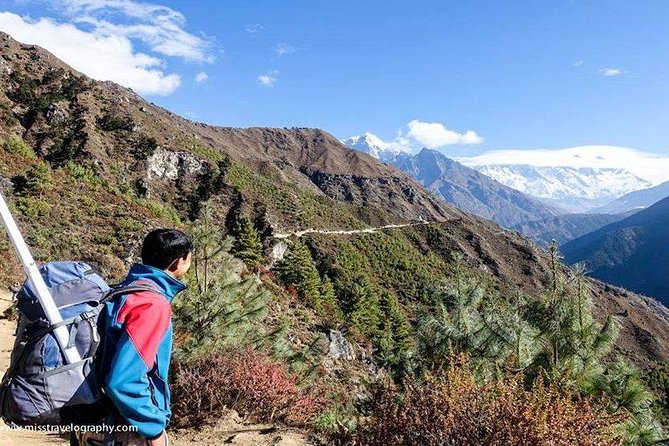
The walking begins at Lukla and continues to Phakding. This first section introduces the rhythm of the trek without placing you immediately at the highest villages. Phakding sits by the Dudh Koshi, and its river setting, bridges, and forest paths offer an early taste of the region.
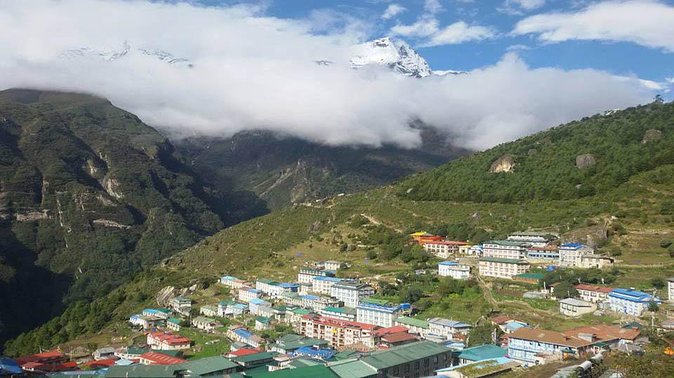
From Phakding, the route moves toward Namche. This is one of the key stops on the trek, both for the village setting and for the change in scenery as the route heads deeper into the Everest region. The route description places Namche among the overnight villages, giving you time to experience it as more than a brief rest stop.
Next comes Tengboche, known for its mountain setting and monastery area. The walk here brings the mountains closer and gives the route a strong cultural element. You are not just ticking off viewpoints. You are passing through settlements where the trail remains part of everyday life.
Dingboche marks another important stage. By this point, the scenery becomes more stark and demanding, and the route feels increasingly focused on the high valleys ahead. The description presents Dingboche as an overnight stop, which matters because you are moving forward in stages rather than attempting one enormous push.
The route then continues to Lobuche and Gorakshep. These are the final named villages before Base Camp, and they form the hardest-feeling part of the journey for many people because the terrain is higher, more exposed, and less forgiving. The supplied information does not give daily walking hours or elevation figures, so ask for a day-by-day schedule before departure.
From Gorakshep, you reach Everest Base Camp. The destination is famous, but the approach is what gives it meaning: river crossings, bridges, forests, villages, and a gradual change in the scenery. Base Camp itself is not presented as the final point. The itinerary continues to Kala Patthar, making the climb an important part of the trip.
The mountain views from Kala Patthar
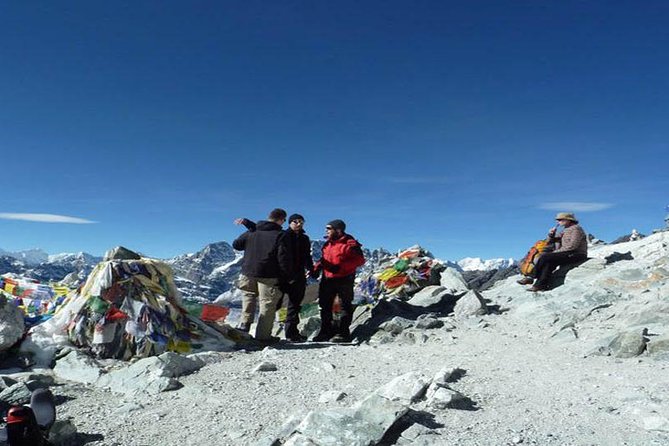
Kala Patthar is the high point of the sightseeing side of this trek. The route description highlights views toward Thamserku, Kusum Khanguru, Taboche, Cholatse, Ama Dablam, Lhotse, Island Peak, Makalu, Khumbutse, Chhagtse, Pumori, and Lobuche.
That list gives you a sense of the visual reward. You are not walking toward one mountain only. The route opens toward a crowded skyline of major Himalayan peaks, with Ama Dablam and Everest-region summits forming the backdrop to the trek.
Conditions can change quickly in the mountains, so clear views are never something to treat as guaranteed. Still, Kala Patthar adds value because it gives the journey a final viewpoint after Base Camp. If you are choosing between a basic Base Camp walk and this fuller route, the Kala Patthar section is one of the strongest reasons to choose the latter.
What the $1,500 price includes
At $1,500 per person, the price is built around the main practical costs of a guided trek. It includes airport pickup and drop-off by private car, van, or bus, along with domestic flights between Kathmandu or Ramechhap and Lukla.
You also receive breakfast, lunch, and dinner throughout the trek. That is useful on a route where finding meals independently would be inconvenient and where the daily schedule revolves around walking from one lodge village to the next.
Accommodation is included for the trek. The rooms are basic, and the toilet is outside your room. That detail is easy to overlook when comparing prices, but it tells you what kind of comfort to expect. This is a lodge-based mountain trip, not a hotel holiday.
The package also covers the Everest National Park entry permit, government paperwork, government taxes, office expenses, and domestic airport tax. A licensed, English-speaking guide is included, described as trained, friendly, and government approved. Porter support is listed at two clients for one porter.
That porter ratio can make a real difference. You still need to carry a daypack, but you are not expected to carry your full trekking load. If you are booking as a couple or pair, confirm how bags are divided and what weight limit applies, since the provided details do not state one.
More Trekking Tours in Kathmandu
- Annapurna Circuit Trek with Tilicho Lake
★ 5.0 · 368 reviews - Everest Base Camp Trekking – 13 Day
★ 5.0 · 365 reviews - Everest Base Camp Trek
★ 5.0 · 350 reviews - Everest Base Camp Trek -14 Days
★ 5.0 · 321 reviews
The extra costs you should budget for
The Nepal entry visa is not included and is listed at USD 40. International airfare and travel insurance are also your responsibility. Insurance is especially important for a trek of this type, but the package information does not specify what coverage is required, so ask the operator directly.
Mineral water, bottled drinks, and sweets cost extra. Hot showers, battery charging, and Wi-Fi for your camera are also outside the package. These are small costs individually, but they can add up over a long trek.
Tips for the guide and porter are not included. Since the guide and porter are central to the trip, plan for gratuities separately rather than treating the advertised price as your final budget.
The guide can shape the whole experience
The strongest praise connected with this trek focuses on guide support. Damu Mainali is repeatedly identified in the supplied material as a director and guide, with particular emphasis on planning, communication, evening briefings, and checking on group members during difficult sections.
Kamal is also named as a guide, including on a trek completed by a 73-year-old participant. Other names connected with guiding and porter support include DB, Dal Bahadur, Kalu, Amrit, and Nir. That does not mean you will receive one of these people. It does mean you should ask who will lead your specific departure.
A good guide matters here for more than finding the path. The trek includes several demanding stages, and the information highlights calm group management, preparation for the next day, route knowledge, and support at a steady pace. Ask how the guide handles a slower walker, changing weather, or a group member who needs more time.
The private format is another advantage. Only your group participates, so you are not tied to a large mixed party. That can make the pace and daily decisions easier to manage, though the group should still agree on a sensible walking rhythm before starting.
How hard is the walk?
The operator recommends a moderate level of physical fitness, but the description also calls the trek difficult and says previous trekking experience is a first necessity. Take that seriously. This is not a casual sightseeing excursion with a short walk at the end.
You will be walking through changing terrain for many days, with the hardest sections coming as you approach Lobuche, Gorakshep, Base Camp, and Kala Patthar. The available information does not give exact daily distances, walking times, altitude profiles, or a medical protocol, so request those details before booking.
The best preparation is practical. Build up your walking time, carry the shoes and daypack you intend to use, and be ready for simple accommodation and paid extras along the route. Enthusiasm helps, but it does not replace fitness or patience.
Food, lodging, and small comforts
Three meals a day are included, which keeps the main routine simple. You can expect your food arrangements to be handled during the trek, while bottled drinks and sweets remain personal purchases.
The accommodation is included, but privacy and bathroom comfort are limited by the outside-toilet arrangement. Hot showers are extra, as are Wi-Fi and battery charging. Bring a plan for keeping important devices powered, since the package specifically excludes charging costs.
This basic style is part of the trade-off. Your money goes toward the guide, transport, permits, meals, and route logistics rather than polished rooms. If you need private bathrooms and dependable internet, ask detailed questions before reserving.
Who should book this trek?
I would recommend this trip to someone who wants the classic Everest Base Camp route with a private group and a guide, and who values having major logistics arranged in advance. The combination of Lukla flights, village-to-village walking, Base Camp, and Kala Patthar gives you the full outline of the journey.
It is also a good fit for pairs or small groups who want porter help. The two-clients-to-one-porter arrangement is particularly useful if you want to keep your personal load manageable.
I would be more cautious if you have little walking experience, dislike basic lodging, or want a relaxed holiday schedule. The approximate 12-day format may feel compressed, and the difference between the 12-day and 14-day descriptions should be resolved before booking.
The tour has a 100 percent recommendation rate and a 5-star rating from 46 listed reviews, with repeated praise for guides, planning, communication, and personal care. Treat those figures as encouraging rather than a guarantee. The most useful takeaway is to confirm your guide’s name, exact dates, daily route, flight airport, and included baggage arrangements.
Booking details worth checking
Pickup and drop-off begin at Tribhuvan Airport in Kathmandu. Confirmation is provided at booking, service animals are allowed, and the starting point is near public transportation, though airport pickup is already included.
The activity is private, and only your group takes part. You can cancel for a full refund if you do so at least 24 hours before the local start time. Cancellations or changes made inside that window are not accepted for a refund.
Should you book the Everest Base Camp trek?
Book it if you want a guided, private Everest Base Camp route with flights, meals, permits, lodging, and porter support included in one price. The strongest reasons to choose it are the classic village route, Kala Patthar, and the attention given to guide support.
Before booking, get the 12-day or 14-day schedule in writing. Confirm your guide, the Kathmandu or Ramechhap flight plan, the porter baggage limit, and the daily walking details. If you are fit, prepared for basic lodges, and comfortable paying extra for showers, charging, drinks, insurance, and tips, this package offers a practical way to take on one of Nepal’s most famous treks.
FAQ
Where does the Everest Base Camp trek start?
The experience starts with airport pickup at Tribhuvan Airport in Kathmandu, Nepal. The trek itself begins after a flight from Kathmandu or Ramechhap to Lukla.
How long does the trek take?
The tour is listed as approximately 12 days. The description also refers to a 14-day Everest Base Camp trek, so confirm the exact duration and daily schedule when booking.
Is the flight to Lukla included?
Yes. The package includes flights from Kathmandu or Ramechhap to Lukla and the return flight to Kathmandu or Ramechhap.
Are meals included?
Yes. Breakfast, lunch, and dinner are included during the trek. Mineral water, bottled drinks, and sweets are not included.
Is accommodation included?
Yes. All trekking accommodation is included. The rooms have toilets outside the room.
Is a guide and porter included?
Yes. A government-licensed, English-speaking guide is included. Porter service is listed at one porter for every two clients.
What fitness level is required?
The experience recommends a moderate physical fitness level and says trekking experience is necessary. The route is described as difficult, so prepare for a demanding multi-day walk before departure.
Latest treks added in Kathmandu
- Private Manaslu Circuit Trek at Himalayas★ 5.0 · 3 reviews
- Ghorepani Poonhill Trek★ 5.0 · 5 reviews
- Ghorepani Poon Hill Trek★ 5.0 · 16 reviews
- Upper Mustang Trekking★ 3.0 · 2 reviews
- Amazing 1 Day Trekking Experience in Kathmandu Nepal★ 5.0 · 24 reviews
- Upper Mustang Trekking★ 5.0 · 2 reviews
- Upper Mustang Trekking★ 5.0 · 4 reviews
- Upper Mustang Trek★ 5.0 · 5 reviews
Everest Base Camp Treks, compared.






Browse the lists this tour appears in