
REVIEW · KATHMANDU
Everest Base Camp Trek
The big draw here is the classic walk into the Khumbu, from the small mountain airstrip at Lukla through Namche Bazaar to Everest Base Camp and Kala Patthar. You get grand views, Sherpa villages, and a real sense of the effort behind reaching the foot of the world’s highest mountain.
I like the careful acclimatization stop in Namche and the fact that this is a private trip, so your group is not tied to strangers or a fixed public schedule. I also like the practical support: meals are included during the trek, porters carry up to 15 kilograms of personal gear, and down jackets and sleeping bags are supplied.
The main caution is altitude and changing mountain weather. The stated duration is about 14 days, while the description also refers to 15 days of trekking, so confirm the exact schedule before paying. Lukla flights can also be delayed or canceled in poor weather.
Key points to know before booking
- Lukla begins the real adventure: The scenic flight puts you directly into the Everest region, but weather can disrupt the timetable.
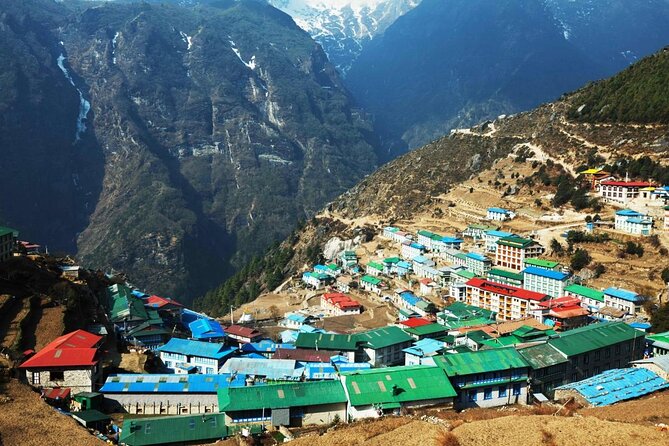
- Namche is the key acclimatization stop: You spend a rest day there before climbing higher.
- Kala Patthar is the big viewpoint: It is paired with Everest Base Camp and provides the main mountain panorama.
- Sherpa culture is part of the route: You walk through communities in the Khumbu rather than simply visiting a mountain viewpoint.
- Support is built into the price: Breakfast, lunch, dinner, a guide, porter support, down jacket, and sleeping bag are part of the package as described.
- You need proper gear and insurance: Personal equipment, rescue insurance, drinks, tips, and several daily extras cost more.
Lukla to Everest Base Camp, the route in plain terms
This is not a sightseeing trip with a little walking added. It is a sustained high-altitude trek with long days on foot, basic mountain lodging, and a route that rises steadily from Lukla into the Khumbu.
You begin in Kathmandu and fly toward Lukla, the main gateway for the Everest region. The flight itself is part of the experience. You leave the city behind and arrive at a small mountain airstrip, then walk for roughly three hours toward Phakding.
From Phakding, the route continues north beside the Dudh Kosi valley. Namche Bazaar is the next major stop and the main place to slow down for acclimatization. From there, the route continues toward Syangboche and onward to the high country, eventually reaching Everest Base Camp and Kala Patthar.
The supplied schedule is not laid out day by day, so you should ask for the final walking plan before departure. The description uses both 14 days and 15 days, and that difference matters when arranging flights, hotels, leave from work, and insurance.
More Everest Base Camp Treks in Kathmandu
- Everest Base Camp Trek – 14 Days
★ 5.0 · 1,499 reviews - Everest Base Camp Trek
★ 5.0 · 842 reviews - Everest Base Camp Trekking
★ 5.0 · 485 reviews
Kathmandu, preparation, and the flight to Lukla
Kathmandu is the starting point, with pickup offered as part of the experience. The trek itself begins when you fly to Lukla. The return flight is also included in the overall route description, giving you a quick exit from the mountains at the end.
Do not treat the flight as a minor transfer. Mountain weather can change quickly, and the trip requires good conditions to operate. If a flight is canceled because of poor weather, the stated policy offers either another date or a full refund for the experience. Still, I would leave spare time around the trek rather than scheduling an important international connection immediately afterward.
The exact pickup time and airport arrangements should be confirmed directly with Adventure Magic Treks and Expedition. The operator is identified as Shankar Pandey, and several guide names connected with the company include Krishna, Shajan, Ngathe Sherpa, Gelu Sherpa, and Sagan Thapa. You should ask who will lead your group, since a named guide is not guaranteed in the general description.
Phakding and the first walk in the Khumbu
After landing at Lukla, you walk for around three hours to Phakding. This is a useful opening day because you begin moving through the region without immediately attempting a very high pass or summit.
The first walk gives you time to settle into the rhythm of trekking. You carry a daypack, while a porter carries your larger duffel or backpack. The route follows the Dudh Kosi valley, and the setting shifts quickly from the airport and its nearby settlement to a quieter mountain trail.
The included meals are breakfast, lunch, and dinner during the trek. Tea and coffee are specifically excluded, as are personal snacks and drinks, so carry some spending money and expect extra charges for small comforts.
Lodging is described in the supplied material through references to tea houses. You should expect practical mountain accommodation rather than a city hotel. One past booking included three-star accommodation as suggested, with a nicer hotel in Kathmandu afterward, but the exact room standard for your departure should be confirmed.
Namche Bazaar and the day that protects your trek
Namche Bazaar is the most important stop for getting used to altitude. The itinerary includes one acclimatization day here before continuing north, which is a major strength of the plan.
I would take this day seriously. It is not wasted time, and it is not merely a chance to shop. Your body needs time to adjust before the route climbs higher. The itinerary also mentions Syangboche, which is associated with the Namche area and adds another high point to the route.
The walk around Namche and Syangboche gives you your first strong sense of the Khumbu communities and the Sherpa way of life. The trip is not only about taking a photograph of Everest. You are moving through villages where local culture, mountain work, hospitality, and trekking all meet.
The altitude can begin to affect appetite and energy. One account connected with this company describes difficulty eating from a later stage of the ascent, making it clear why your guide’s attention matters. Tell your guide early if you feel unwell, cannot eat, or are struggling to keep pace. Diamox is listed as optional personal medication, but you should make medical decisions with a qualified professional before the trip.
More Trekking Tours in Kathmandu
- Annapurna Circuit Trek with Tilicho Lake
★ 5.0 · 368 reviews - Everest Base Camp Trekking – 13 Day
★ 5.0 · 365 reviews - Everest Base Camp Trek
★ 5.0 · 350 reviews - Everest Base Camp Trek -14 Days
★ 5.0 · 321 reviews
From Syangboche toward the high valley
After acclimatization, you continue north through the Khumbu. The exact overnight stops are not fully spelled out, so I would not rely on the short itinerary as a precise daily map. Ask for walking distances, sleeping elevations, and planned rest points before you leave.
This section is where the trek becomes more demanding. The route climbs, the air gets thinner, and simple tasks take more effort. You will want warm layers close at hand, a reliable head torch, sun protection, and enough water capacity for the day.
The equipment guidance is unusually useful. You are advised to bring waterproof trousers and a jacket, trekking trousers, long-sleeved shirts, fleece layers, thermals, a warm down jacket, gloves, a wool or fleece hat, sunglasses, and a scarf. Good walking boots and wool or liner socks matter more than stylish clothing.
Adventure Magic Treks says it provides down jackets and down sleeping bags for its trips. That can reduce the amount of bulky gear you need to buy, but confirm the sizes and condition before you travel. You still need your own day backpack, water bottles, personal medications, toiletries, and first-aid supplies.
Everest Base Camp and the Kala Patthar payoff
Everest Base Camp is the emotional target of the trek, but Kala Patthar is the major viewpoint. The route description lists both places together, and you should understand the difference.
Base Camp puts you near the staging area used by Everest expeditions. The appeal is being on the route itself, at a place tied to major climbs and the working life of mountaineering. Kala Patthar is the high lookout, where the mountain views are the real reward.
You should not expect the summit of Everest to look exactly as it does in famous photographs from every angle. The view depends on weather, light, and your position on the route. The description promises views of Everest and other peaks, but mountain visibility can never be guaranteed.
The walk to these high points is arduous. The supplied material specifically refers to difficulty above 5,000 meters, so this is not a casual day hike. Your guide’s pacing and judgment are important here. The strongest reports about this company repeatedly highlight guides who stayed attentive, helped when the group struggled, and adjusted the pace to the group’s fitness.
That support is especially valuable at altitude. A good guide does more than point out mountains. You need someone who notices changes in energy, keeps the group together, and knows when a person should rest or turn back.
Guides, porters, and the private group advantage
This is a private activity, meaning only your group participates. That gives you more control than a large mixed departure. You can ask questions, discuss pacing, and communicate directly with your own guide team.
Names associated with successful departures include Krishna, Shajan, Ngathe Sherpa, Gelu Sherpa, and Sagan Thapa. Krishna is described as both a guide and an enthusiastic photographer, while Sagan is noted for careful attention to small personal needs. These details suggest the company places real weight on the guide relationship, although you should confirm your assigned guide before booking.
Porter support is another practical benefit. The stated maximum is 15 kilograms, or 33 pounds, and the company says this limit is intended to protect porter rights. You should still pack lightly and keep essentials in your own daypack. Carry warm clothing, water, a camera, snacks, sunscreen, a first-aid kit, and anything you may need before reaching the next lodge.
I would also ask how the porter arrangement works, what your own daypack limit is, and how tips are handled. Tips for guides, drivers, and porters are not included, so budget for them separately.
What the $1,350 price really covers
At $1,350 per person, the package can offer good value if you want a guided, supported route rather than arranging every detail yourself. Breakfast, lunch, and dinner during the trek are included, along with porter support and the stated down jacket and sleeping bag provision.
The value also comes from coordination. The company has handled flight changes, health problems, large groups, and difficult weather situations for past departures. One particularly disrupted trip involved canceled flights, road trouble, and a long detour, with the operator arranging replacement lodging and transport. That kind of backup matters in Nepal, where weather and mountain roads can change plans quickly.
The price is not all-inclusive. Lunch and dinner in Kathmandu are extra, as are personal trekking equipment, phone calls, laundry, hot showers, battery charging, bar bills, extra porters, tea, coffee, and personal expenses. Travel and rescue insurance are also excluded.
Do not confuse a lower package price with a low-cost holiday. You will need to budget for gear, insurance, tips, snacks, drinks, and unexpected delays. The package is best value for someone who wants a company to organize the route and support team, but who is prepared to pay for personal extras along the way.
Fitness, packing, and the daily reality
The operator asks for a moderate level of physical fitness. That phrase should not be read too casually. You need to walk for multiple days, handle steep sections, and function at high altitude.
Bring walking boots, a daypack, two water bottles, trekking poles, sun cream, lip balm with a high sun protection factor, insect repellent, water purification tablets, spare batteries, and a personal first-aid kit. A small combination lock is suggested for your larger bag.
The packing advice includes a duffel or large backpack for porter transport and casual clothes for Kathmandu. Keep your travel clothes separate from your trekking layers so you have something comfortable before and after the route.
You may find that food becomes less appealing as you climb. Favorite snacks are worth packing, especially if you have dietary preferences. The package includes meals, but it does not include tea, coffee, or every personal snack you may want.
What people value most about this operator
The most consistent strengths are practical rather than flashy. The guide team receives repeated praise for being friendly, attentive, and able to help when the route becomes difficult. The organization also earns credit for adjusting to flight cancellations, health issues, changing group needs, and weather disruption.
That matters more to me than polished marketing. In a high-altitude trek, a calm response to a problem is worth a great deal. The strongest accounts describe guides such as Krishna, Sagan, Gelu Sherpa, and Ngathe Sherpa as present and helpful throughout the walk.
The mountain views and Sherpa hospitality are the other major attractions. You get the classic route, not a quick helicopter visit. The tradeoff is that you must accept basic conditions, physical strain, uncertain weather, and a schedule that may shift.
Should you book this Everest Base Camp trek?
Book it if you want a private, guided route from Lukla to Everest Base Camp and Kala Patthar, with meals, porter support, an acclimatization day in Namche, and help from an established local operator.
I would be more cautious if you need luxury lodging, a guaranteed flight timetable, or a very short and easy mountain holiday. Confirm the exact 14 or 15 day schedule, assigned guide, lodging plan, flight arrangements, and rescue insurance before paying.
For a fit person who wants the classic Everest route and values attentive local support, this is a strong option at the stated price. Pack carefully, allow spare time for weather, and treat altitude symptoms seriously. The mountain will still be there, but your schedule may need to bend around it.
FAQ
How long does the Everest Base Camp trek take?
The experience is advertised as approximately 14 days, while the description also refers to 15 days of trekking. Confirm the exact number of days and the daily schedule with the provider before booking.
Where does the trek begin?
The trek begins with a flight from Kathmandu to Lukla. From Lukla, you walk for around three hours to Phakding before continuing through the Dudh Kosi valley.
Is acclimatization included?
Yes. The route includes an acclimatization day in Namche Bazaar before continuing higher toward Everest Base Camp.
Are meals included?
Breakfast, lunch, and dinner are included during the trek. Lunch and dinner in Kathmandu are not included, and tea and coffee during the trek are also excluded.
Is porter support provided?
Yes. A porter carries your larger duffel or backpack, with a stated maximum weight allowance of 15 kilograms, or 33 pounds. Extra porter services are not included.
Do I need travel and rescue insurance?
Yes. Travel and rescue insurance are not included in the price, so you must arrange your own suitable policy.
What happens if the Lukla flight is canceled because of weather?
The experience requires good weather. If it is canceled because of poor weather, you are offered a different date or a full refund.
Latest treks added in Kathmandu
- Private Manaslu Circuit Trek at Himalayas★ 5.0 · 3 reviews
- Ghorepani Poonhill Trek★ 5.0 · 5 reviews
- Ghorepani Poon Hill Trek★ 5.0 · 16 reviews
- Upper Mustang Trekking★ 3.0 · 2 reviews
- Amazing 1 Day Trekking Experience in Kathmandu Nepal★ 5.0 · 24 reviews
- Upper Mustang Trekking★ 5.0 · 2 reviews
- Upper Mustang Trek★ 5.0 · 5 reviews
- Upper Mustang Trekking★ 5.0 · 4 reviews
Everest Base Camp Treks, compared.






Browse the lists this tour appears in