
REVIEW · KATHMANDU
Everest Base Camp Trek – 15 days
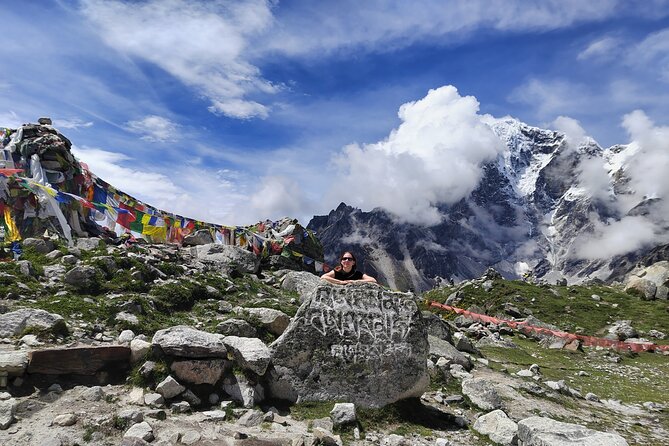
Everest Base Camp is the star here, but the real reward is the slow build toward it: Kathmandu temples, the little flight into Lukla, Sherpa villages, prayer flags, high valleys, and finally the Khumbu Glacier. You reach Base Camp at about 5,400 meters, then climb Kala Patthar to 5,545 meters for the trip’s finest mountain view.
I like the sensible acclimatization rhythm, especially the rest days at Namche Bazaar and Dingboche. I also like that the $1,375 price includes flights, guides, porters, guesthouses, staff insurance, equipment, and medicine. The main caution is the altitude and the fairly hard walking days. This is not a sightseeing holiday with a few scenic strolls.
Key points at a glance
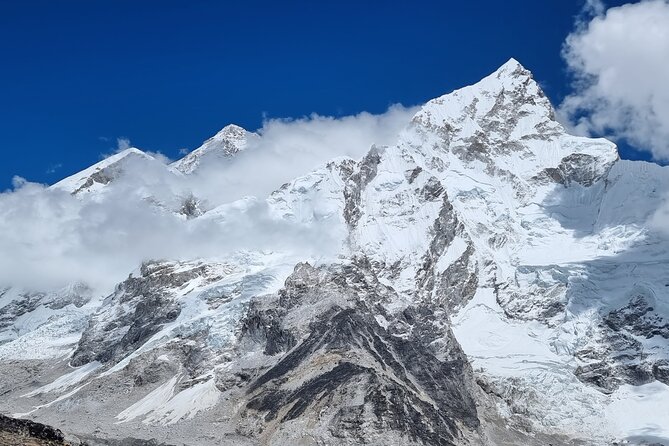
- Kala Patthar at 5,545 meters: The sunrise climb gives you the clearest high viewpoint of Everest and the surrounding peaks.
- Two useful acclimatization days: You spend extra time around Namche Bazaar and Dingboche rather than racing uphill.
- Kathmandu to Lukla by air: The short mountain flight saves several days of road travel and puts you directly on the classic trail.
- Guesthouse trekking: Expect practical twin-sharing lodging, with comfort becoming simpler as you climb.
- Strong guide and porter support: Past departures have included guides named Kumar, Kali, Santosh, Prakash, Bikash, Nima, and Dilli, with repeated praise for care and flexibility.
- A good package price: Flights, staff costs, a Kathmandu city tour, trekking support, and a down jacket and sleeping bag when needed are included.
What the 15 days really involve
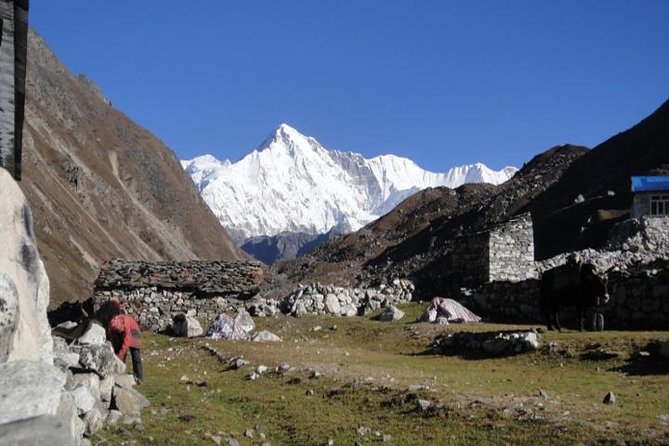
This is a classic Everest Base Camp route, not a shortcut. You fly from Kathmandu to Lukla, walk through Phakding and Namche Bazaar, cross the high valleys near Tengboche and Dingboche, reach Lobuche and Gorakshep, then walk to Base Camp and Kala Patthar before returning the same way.
The itinerary allows two acclimatization stops. That matters. At high altitude, a rest day is not wasted time. It gives your body a chance to adjust and lets you take a shorter hike instead of adding another full day of climbing.
Your group can contain up to 15 people. That is large enough to share costs but small enough for the guide to keep the walking group together. Pickup is offered from Tribhuvan International Airport, and the return also ends at the airport meeting point.
More Everest Base Camp Treks in Kathmandu
- Everest Base Camp Trek – 14 Days
★ 5.0 · 1,499 reviews - Everest Base Camp Trek
★ 5.0 · 842 reviews - Everest Base Camp Trekking
★ 5.0 · 485 reviews
Kathmandu begins with temples and preparation
On arrival, an Outshine Adventure representative meets you at Tribhuvan International Airport with a name plate and transfers you to the hotel. You then visit the company office for documents and a briefing.
That first contact is useful because the next day brings both sightseeing and practical preparation. The company has received repeated praise for quick communication, airport arrangements, and help with last-minute questions. Gokul, the company owner, is frequently singled out for personal attention and flexibility.
Day two is a private-car sightseeing day with an expert guide. You visit Kathmandu Durbar Square, Swayambhunath, Boudhanath, and Pashupatinath. Entrance fees are not included, so keep cash available for the monuments.
This is a full seven-hour outing, but it also leaves some afternoon time for equipment shopping or final packing. That is a smart use of the day. You can check your boots, warm layers, sleeping bag, and pack before heading into the mountains.
The Lukla flight and the first walk to Phakding
The flight from Kathmandu to Lukla takes about 30 minutes. It is one of the most memorable parts of the trip because the route quickly shifts from city rooftops to steep hills and mountain scenery.
After breakfast near Lukla Airport, you begin walking downhill toward Phakding. The route drops about 200 meters and takes roughly three hours, following the Dudh Koshi River. It is a gentle introduction compared with the days ahead, although you should not treat it as a completely effortless warm-up.
Phakding is your first trekking night. Accommodation is in a guesthouse on a twin-sharing basis. The package covers guesthouse lodging during the trek, but you should expect basic mountain accommodation rather than hotel-style rooms.
Namche Bazaar brings the first serious climb
Day four follows the Dudh Koshi River for around five hours before climbing about 850 meters to Namche Bazaar. This is where the trek begins to feel like a real high-altitude journey.
Namche is a large Sherpa trading village and an important stop for shopping and services. The route is steep enough to leave you tired, especially since your body is still adjusting to the change in height. Walk steadily, drink regularly, and do not worry about being the fastest person in the group.
You stay in Namche for an acclimatization day. The planned hike goes to the Everest View Hotel, about two hours uphill, with a tea stop and broad views of Everest, Nuptse, Lhotse, Ama Dablam, Thamserku, and Kusum Kanguru.
This is one of the best-designed parts of the itinerary. You gain height during the day but return to Namche to sleep lower. The view is excellent, but the point is also physiological: a short climb followed by a lower overnight stay helps prepare you for the upper valley.
More Trekking Tours in Kathmandu
- Annapurna Circuit Trek with Tilicho Lake
★ 5.0 · 368 reviews - Everest Base Camp Trekking – 13 Day
★ 5.0 · 365 reviews - Everest Base Camp Trek
★ 5.0 · 350 reviews - Everest Base Camp Trek -14 Days
★ 5.0 · 321 reviews
Tengboche combines mountain views and Sherpa culture
From Namche, you walk about five hours to Tengboche. The trail continues through the Everest region with views of Ama Dablam, one of the most recognizable peaks in Nepal.
Tengboche is known for its old monastery. You may visit during worship in the morning or evening, and time is allowed for quiet reflection or meditation. This gives the trek a cultural center rather than making it only a march toward a famous viewpoint.
The area is also a good reminder that the trail is a living home, not just a route for hikers. Monasteries, mani stones, prayer flags, and local villages are part of the daily setting. Your guide can add context, so ask questions instead of simply photographing everything as you pass.
Dingboche uses a second acclimatization day well
The walk to Dingboche takes about five hours. You pass through rhododendron-covered areas and follow the Imja Valley, with views of Ama Dablam, Kantega, Island Peak, Nuptse, and Lhotse.
The route gradually becomes more exposed and alpine. Stone walls and open high valleys replace the greener sections lower down. This is where the mountain scale starts to feel enormous, and the walking pace naturally slows.
Day eight is another acclimatization day, with a hike into the Chhukung Valley and a return to Dingboche. From there, you can view Island Peak, Ama Dablam, Tawoche, and the Lhotse-Nuptse ridge.
Again, this is not a spare day added for comfort alone. It breaks up the climb before the most demanding altitude of the trip. The schedule gives you time to walk high during the day, return to the same guesthouse, and rest before heading toward Lobuche.
Lobuche and Gorakshep bring the goal within reach
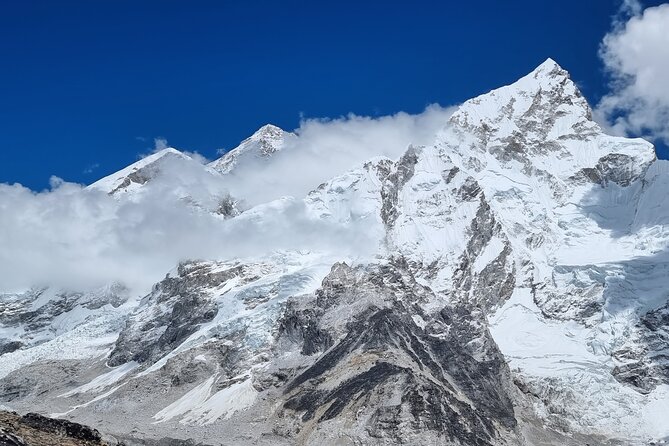
From Dingboche, you walk roughly five hours through the Dughla Valley to Lobuche. The route follows frozen rivers and reaches an icy, open setting with stone houses and views toward the Khumbu Icefall and Pumori.
The scenery becomes harsher here, and the cold can feel more serious. Your down jacket and sleeping bag are supplied by Outshine Adventure if necessary, which is useful because warm mountain gear can be expensive to buy for one trip.
The next day is one of the trek’s biggest. You walk about three and a half hours to Gorakshep, then continue for around three hours there and back to Everest Base Camp. Returning to Gorakshep for the night is a sensible plan because it avoids sleeping at the highest point on the route.
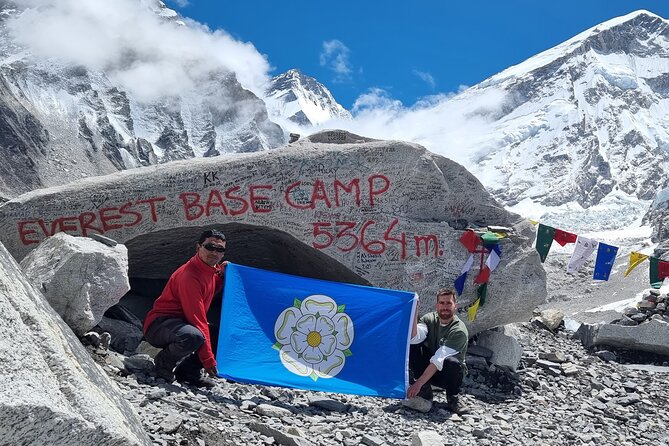
The path near Base Camp is rocky and follows the edge of the Khumbu Glacier. From the route, you see Nuptse, Lho-La, Khumbutse, Pumori, and the glacier itself. You may hear or see signs of avalanche activity in the surrounding mountains, so stay close to your guide and follow instructions.
Base Camp is a major achievement, but keep your expectations practical. During a non-expedition period, it is not a permanent village or a grand building. The satisfaction comes from reaching the glacier area at the foot of the climbing route, after days of walking through the Khumbu.
Kala Patthar is the visual high point
The early start for Kala Patthar is worth the effort. At 5,545 meters, it is the highest point in this itinerary and the best place for a wide view of Everest and the surrounding Himalayan peaks.
The day takes about six hours. The climb is demanding because of the altitude, cold, and early hour, but the payoff is the broad mountain panorama. Everest, Nuptse, Pumori, and the surrounding ridges appear from a viewpoint that makes the long approach feel worthwhile.
The itinerary says you may begin to feel less tired as the day progresses. Do not count on that. Altitude affects people differently, and feeling strong one hour does not guarantee an easy climb the next. Your guide’s judgment matters here, especially if you develop a headache, nausea, unusual fatigue, or breathing trouble.
The return route is easier, but not effortless
After Kala Patthar, you retrace the route downhill. The walk to Namche takes around six hours and is mostly downhill, which usually feels easier on the lungs but can be tiring on knees and feet.
Namche is a welcome change after the upper valleys. You have access to shops, drinks, restaurants, pool houses, and other facilities. The town gives you a chance to rest, shop, and enjoy a more social evening before the final push to Lukla.
The next day takes about five and a half hours from Namche through Phakding to Lukla. This is your final trekking day. You have time in Lukla for shops, restaurants, and bars, though the main reward is simply being finished with the trail.
The flight back to Kathmandu is scheduled for day 14. Mountain weather can affect flights, and the provided information makes clear that bad weather can lead to a changed date or a full refund when the activity is canceled. Build some flexibility into your wider Nepal plans if you can.
What the $1,375 price includes
For a 15-day Everest Base Camp trek, $1,375 per person is a useful value if you need a package with logistics handled. The price includes:
- Airport pickup and drop-off by private car
- Three total nights of standard hotel accommodation in Kathmandu
- A private-car Kathmandu sightseeing tour with an expert guide
- Kathmandu to Lukla and Lukla to Kathmandu flights
- Twin-sharing guesthouses during the trek
- A licensed English-speaking Sherpa trekking guide
- Shared porter support for two clients
- Staff food, accommodation, salary, insurance, equipment, and medicine
- A down jacket and sleeping bag when needed
- Government taxes
The main cost gap is food. The details list dinner and two breakfasts as included, but also say meals and drinks are excluded. Ask Outshine Adventure to confirm exactly which meals are covered before paying, particularly lunch, dinner, and drinks during the trek.
You also pay city monument entrance fees, trekking staff and driver tips, travel insurance, and any expenses not listed. Travel insurance must include high-altitude coverage to at least 5,300 meters. That requirement is important because Kala Patthar reaches 5,545 meters.
How the guiding and support affect the trip
The guide is not just there to point toward Everest. On this route, your guide manages pace, lodging, local arrangements, and decisions when someone struggles with altitude or fatigue.
Several guides connected with past departures include Kumar, Kali, Santosh, Prakash, Bikash, Nima, and Dilli. Dilli was especially praised for mountain knowledge, while Kumar, Kali, and Santosh were described as kind, supportive, and attentive. Your assigned guide may be someone else, but these examples show the sort of personal support the company aims to provide.
Porters carry luggage on a shared basis for two clients. Pack carefully and keep valuables, documents, medicines, and one warm layer with you. The porter arrangement reduces the physical load, but it does not remove the need for good boots, layers, water, and basic personal trekking gear.
Past departures also received strong marks for the company’s communication and flexibility. Gokul is frequently praised for answering questions, organizing airport transfers, helping with extra plans, and adjusting arrangements. That personal contact can be valuable when flights, weather, or individual needs change.
Who should book this trek
You should consider this trip if you want the classic Everest route with a guide, porter support, guesthouses, and flights already arranged. It suits people with moderate physical fitness who are prepared for repeated five- to seven-hour walking days and major altitude gain.
It is also a good fit if you want more than mountain scenery. The Kathmandu temples, Tengboche monastery, Sherpa villages, prayer stones, and market life in Namche give the route a clear cultural side.
Think twice if you dislike basic lodging, early starts, cold conditions, or uncertain mountain flights. The itinerary is carefully paced, but no operator can make 5,545 meters feel easy. You should arrive prepared for discomfort and be willing to turn back or rest if your health requires it.
The cancellation terms are strict close to departure: a full refund requires cancellation at least six full days ahead, a 50 percent refund applies two to six full days ahead, and cancellations within two days are not refunded. Bad weather or failure to reach the minimum group size can result in a changed date or full refund.
Should you book the Outshine Adventure Everest trek?
I would choose this trip if you want a reasonably priced, supported Everest Base Camp trek rather than an independent route. The two acclimatization days, included Lukla flights, shared porters, staff coverage, and Kala Patthar viewpoint give you a solid package for the money.
Before booking, confirm the meal plan, ask who your guide will be, check the exact insurance requirement, and make sure you understand the twin-sharing guesthouse setup. If you are comfortable with long days, high altitude, and simple facilities, this 15-day route gives you the main Everest experiences without unnecessary extras.
FAQ
How long is the Everest Base Camp trek?
The experience lasts approximately 15 days, including Kathmandu sightseeing, flights between Kathmandu and Lukla, the trek to Everest Base Camp, the return walk, and airport transfers.
Where does the tour start?
It starts at Tribhuvan International Airport in Kathmandu, Nepal. An airport representative meets you with an Outshine Adventure name plate.
Where does the tour finish?
The activity ends back at the Kathmandu meeting point, with airport transfer arranged according to your flight time.
Is the Kathmandu sightseeing tour included?
Yes. The package includes a guided private-car tour of Kathmandu. The listed stops are Kathmandu Durbar Square, Swayambhunath, Boudhanath, and Pashupatinath. Monument entrance fees are not included.
Are flights to Lukla included?
Yes. Kathmandu to Lukla and Lukla to Kathmandu flight tickets are included in the package price.
What accommodation is provided?
You receive standard hotel accommodation in Kathmandu for three nights in total. During the trek, you stay in twin-sharing guesthouses.
Are meals included?
The details specify dinner and two breakfasts as included, but also list meals and drinks among the exclusions. Confirm the exact meal coverage with Outshine Adventure before booking.
Are porters included?
Yes. Porters are provided to carry luggage, with one porter shared between two clients.
Is travel insurance included?
No. You must arrange your own travel insurance, and it must include coverage above 5,300 meters.
What fitness level is required?
A moderate physical fitness level is required. The itinerary includes walking days of roughly three and a half to seven hours, steep climbs, high altitude, and a summit viewpoint at 5,545 meters.
Latest treks added in Kathmandu
- Private Manaslu Circuit Trek at Himalayas★ 5.0 · 3 reviews
- Ghorepani Poonhill Trek★ 5.0 · 5 reviews
- Ghorepani Poon Hill Trek★ 5.0 · 16 reviews
- Upper Mustang Trekking★ 3.0 · 2 reviews
- Amazing 1 Day Trekking Experience in Kathmandu Nepal★ 5.0 · 24 reviews
- Upper Mustang Trekking★ 5.0 · 2 reviews
- Upper Mustang Trek★ 5.0 · 5 reviews
- Upper Mustang Trekking★ 5.0 · 4 reviews
Everest Base Camp Treks, compared.






Browse the lists this tour appears in