
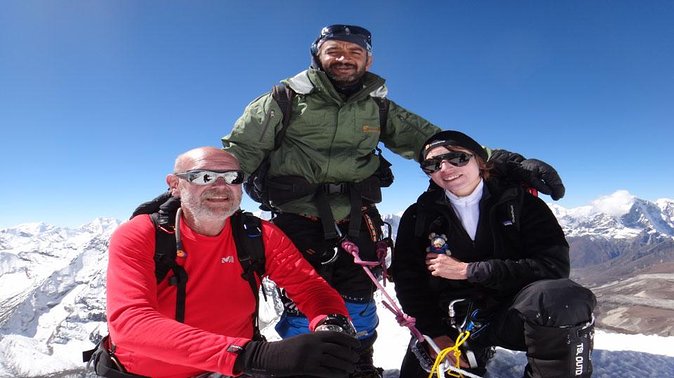
REVIEW · KATHMANDU
Everest Base Camp Trek
Everest Base Camp is not a sightseeing stop with a quick photo and a warm bus waiting below. It is a serious high-altitude trek through Sherpa villages, Buddhist monasteries, suspension bridges, glacial valleys, and thin air. The reward is a close view of Everest and the Khumbu Icefall, plus the satisfaction of reaching 5,364 meters on foot.
I like the careful acclimatization plan, with rest days in Namche Bazaar and Dingboche rather than rushing uphill. I also like the practical package: a licensed guide, porter, meals, teahouse rooms, park fees, a duffel bag, sleeping bag, and down jacket are all covered. The main drawback is the price wording: the tour says domestic flights are included, but the exclusions separately list the Lukla flight, so ask for a written cost breakdown before paying.
Key points to know before you book
- Kala Patthar is the best Everest viewpoint: Everest itself is not clearly visible from Base Camp, so the climb to 5,550 meters matters.
- Two acclimatization stops protect the schedule: Namche Bazaar and Dingboche give your body time to adjust.
- The hardest day is not the highest day: The Base Camp walk takes about 7 to 8 hours over rough, high ground.
- You sleep in teahouses, not expedition tents: Accommodation is basic, practical, and tied to local mountain communities.
- The guide team is a major part of the experience: Shiva Shrestha, Hari, Avi, Samden, and other Accessible Adventure guides are praised by name in the supplied feedback.
- The group is capped at nine people: That is small enough for personal attention, though the trip is described as private, so confirm exactly how your group will operate.
Why this Everest Base Camp trek works
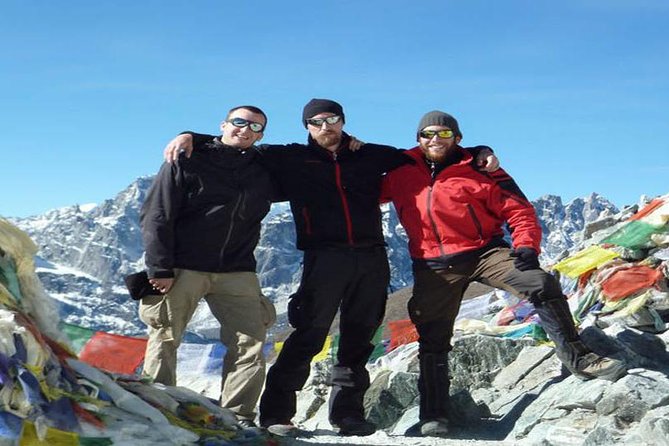
At $1,169 per person, this 14-day Everest Base Camp trek aims to take care of most of the costly and fussy parts of a Himalayan trip. You get airport transfers, a trekking leader, assistant guide support, porters, meals during the trek, teahouse accommodation, permits, staff expenses, and basic cold-weather gear.
That matters in Nepal. A porter carrying your main luggage lets you walk with a lighter daypack. A guide who checks your pace, oxygen level, and symptoms can make a real difference at altitude. The package also removes the need to bargain for rooms and organize food in each village.
Still, $1,169 is not the full cost of every part of your holiday. Travel and medical insurance are not included. Kathmandu accommodation is excluded, as are snacks, laundry, internet, phone calls, battery charging, tips, and personal purchases. The listed exclusions also say the Lukla flight is not included, even though the overview describes domestic flights as part of the package. Get this point settled before booking.
The supplied feedback repeatedly praises the company’s communication, airport transfers, food, tea house choices, and guide support. Shiva Shrestha receives especially warm attention, with several people describing his safety checks, encouragement, and personal care. Other names connected with strong experiences include Hari, Avi, Samden, Avinash, Himal, and Samden. Guide assignments can change, so ask who will lead your departure.
More Everest Base Camp Treks in Kathmandu
- Everest Base Camp Trek – 14 Days
★ 5.0 · 1,499 reviews - Everest Base Camp Trek
★ 5.0 · 842 reviews - Everest Base Camp Trekking
★ 5.0 · 485 reviews
Days 1 and 2: Kathmandu to the Lukla trail
Your first day is gentle by trekking standards. An airport representative meets you in Kathmandu and takes you to your hotel. Later, you meet the trek leader and team for a briefing, gear check, and final questions.
This is useful time, not filler. You can check your sleeping bag and down jacket, buy last-minute items in Thamel, and make sure your pack is sensible. Thamel is busy and tourist-focused, but it is convenient for gear, cafés, money exchange, and a first taste of Kathmandu.
The route to Lukla now may begin with a night drive to Manthali Airport in Ramechhap District. The drive from Kathmandu takes about four hours, followed by an early morning flight of roughly 20 minutes. This change is important because many people picture a relaxed hotel breakfast followed by a short airport transfer. In practice, you may be leaving Kathmandu during the night.
The Lukla flight is one of the trip’s memorable moments. The small aircraft usually takes about 25 to 30 minutes, with big Himalayan views and a dramatic landing strip. The runway slopes noticeably, with one end about 60 meters higher than the other.
From Lukla, the first walk to Phakding takes around three hours. The trail passes Chauri Kharka, follows the Dudh Koshi River, and reaches the Sherpa village of Phakding at 2,610 meters. You may catch a view of Khumbila, a sacred peak that Sherpas do not climb.
Phakding is a good introduction to the rhythm of the trek. You can have tea, walk around the village, and settle into a teahouse before the longer days begin. Do not expect luxury, but you can expect a practical base with mountain scenery and local contact.
Days 3 and 4: Suspension bridges and Namche Bazaar
The walk from Phakding to Namche Bazaar takes about five hours and brings the first serious uphill work. You cross the Dudh Koshi on several suspension bridges, including the famous Hillary Suspension Bridge, then enter Sagarmatha National Park.
At Jorsale, you stop for lunch before the climb toward Namche. This ascent can feel demanding because it arrives early in the trip, but it is also where the trek begins to feel properly Himalayan. The first possible view of Everest appears from Tope Danda, provided the weather cooperates.
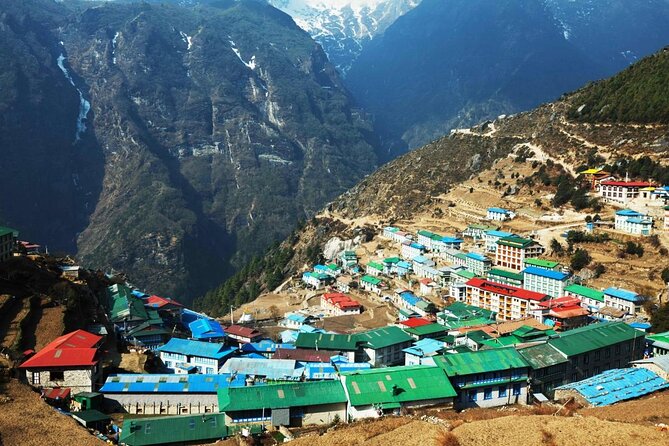
Namche Bazaar sits at about 3,440 meters and serves as the main trading center of the Khumbu. It has cafés, restaurants, gear shops, souvenir stalls, and Wi-Fi-linked spots, though high-altitude internet is not something to rely on for speed or consistency.
The fourth day is for acclimatization. That does not mean staying in bed all morning. The schedule offers walks to Hillary School, Sherpa settlements, a yak farm, Syangboche Airport, and the Hotel Everest View.
The walk to Hotel Everest View is the key outing. From its ridge, you can look across a wide range of peaks, including Everest when the air is clear. The hotel is also a reminder that comfort in the Khumbu comes with a steep delivery cost. You may stop for a drink or simply take in the view before returning to Namche.
Syangboche Airport is close to Namche and is the nearest airstrip to Everest Base Camp, but trekkers do not normally use it to skip the lower route. The gradual climb is important for acclimatization. The itinerary lists the airport twice, which appears to be a scheduling duplication rather than two different experiences.
Days 5 and 6: Tengboche, Pangboche, and Dingboche
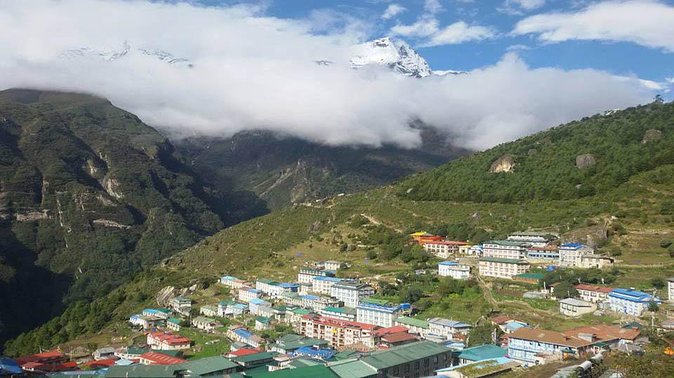
The route from Namche to Tengboche takes about six hours through juniper and rhododendron forest. On clear days, you see Everest, Nuptse, Lhotse, Ama Dablam, Thamserku, and Kwangde.
Tengboche is one of the most meaningful stops on the route. The village sits below Ama Dablam, one of the region’s most striking peaks, and is home to Tengboche Monastery, also called Dawa Choling Gompa. At 3,867 meters, it is the largest Buddhist monastery in the Khumbu.
Take time here. The monastery visit is not just another photo stop. It gives you a glimpse of the spiritual life that shapes Sherpa communities and adds a quiet pause to a physically demanding week. The itinerary allocates only about 30 minutes for the monastery, so you may want to ask your guide how much time is possible.
The next day continues through Pangboche and across the Imja Khola toward Dingboche. Pangboche has the largest and highest permanent Sherpa settlement in the region, and the village atmosphere is more local than the commercial center of Namche.
Dingboche sits at about 4,410 meters and is surrounded by views of Ama Dablam and Island Peak. The six-hour walk is not necessarily the longest of the trek, but altitude makes every climb feel slower. You should keep your pace steady and tell your guide early if you feel unwell.
More Trekking Tours in Kathmandu
- Annapurna Circuit Trek with Tilicho Lake
★ 5.0 · 368 reviews - Everest Base Camp Trekking – 13 Day
★ 5.0 · 365 reviews - Everest Base Camp Trek
★ 5.0 · 350 reviews - Everest Base Camp Trek -14 Days
★ 5.0 · 321 reviews
Day 7: Acclimatizing above 5,000 meters
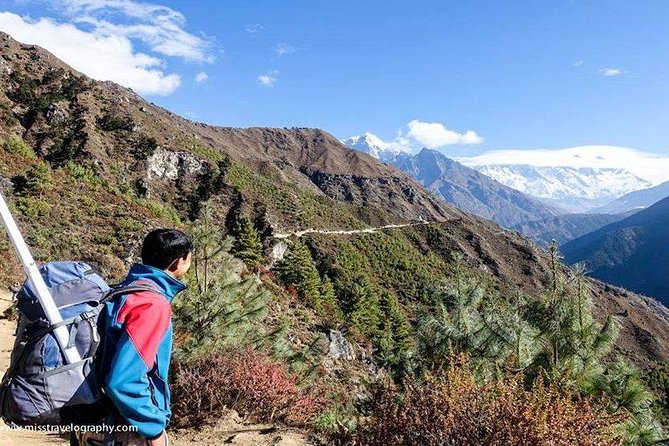
Dingboche gets another acclimatization day, and this is one of the strongest parts of the plan. The proposed hike to Nagarjun Hill, also called Nangkartshang, reaches about 5,100 meters.
The climb has no technical sections, but loose rock and scrambling can make it tiring. At this height, the issue is not climbing skill. It is breathing, balance, cold, and the amount of effort your body can manage.
The reward is a wide view of Makalu, Lhotse, Ama Dablam, Kantega, Thamserku, Island Peak, and the Imja Glacier. The full view of Ama Dablam is especially memorable because you can see the mountain from its base to its summit.
You may see two or three route references for the same Dingboche and Chhukhung path in the schedule. Do not read this as several separate full-day excursions. The main point is a high acclimatization hike with possible route options.
Days 8 and 9: Lobuche and Everest Base Camp
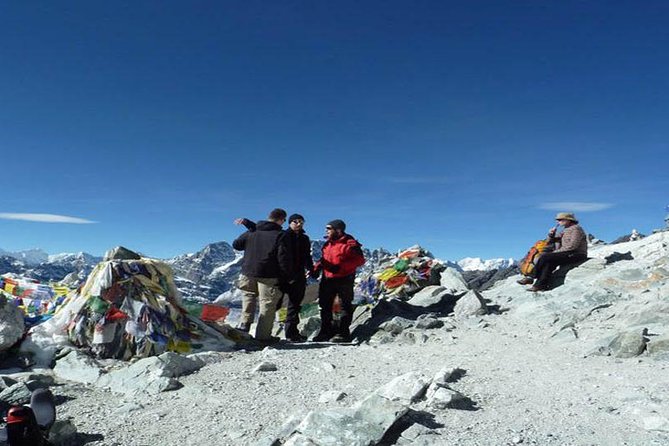
The walk to Lobuche takes about five hours and follows the lateral moraine of the Khumbu Glacier. The terrain becomes rockier and more exposed, and the altitude begins to dominate the day.
Along the way, you pass stone memorials for climbers who died on nearby peaks. These are quiet, serious places. They put the famous summit attempts into perspective and remind you that Everest is not simply a backdrop for holiday photographs.
Lobuche is a small settlement and a common final overnight stop before the Base Camp push. Rooms and dining areas can feel basic here, and some people notice breathing problems at this height. The best approach is to eat, drink, rest, and avoid treating the schedule as a race.
Day 9 is the major test. The walk to Everest Base Camp and back takes about 7 to 8 hours over roughly 12 kilometers. The trail follows the Khumbu Glacier toward Gorak Shep and then on to Base Camp at approximately 5,364 meters.
Base Camp is not a finished village or a permanent attraction. It is a rough staging area used by mountaineering teams during climbing seasons. In spring, you may see expedition activity, but conditions and access change.
The Khumbu Icefall is the great visual reward. You are close to Everest’s climbing route, but the summit itself does not rise clearly into view from Base Camp. That is why the next morning’s walk to Kala Patthar is so important.
Day 10: Kala Patthar and the descent to Pheriche
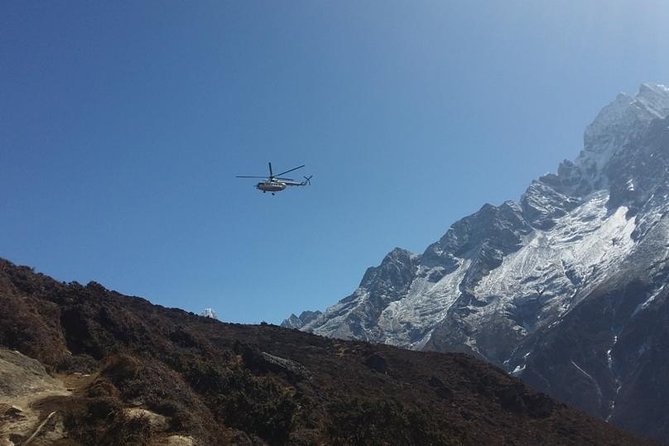
Kala Patthar reaches about 5,550 meters, the highest point of this trek. The climb begins from Gorak Shep and takes about seven hours for the viewpoint and descent toward Pheriche.
This is the place for the classic close view of Everest. From the rocky summit, you can look toward Everest, Pumori, Nuptse, and Lhotse in a broad mountain panorama. The itinerary highlights the warm early light on Everest, so your guide may arrange an early start, depending on weather and group pace.
The altitude makes this a demanding morning. Even strong walkers should expect to move slowly. The descent to Pheriche is welcome, but it is still a long day, and the loose ground can be hard on knees.
Pheriche sits at about 4,371 meters and is known for the Himalayan Rescue Association’s emergency hospital. That facility is not a substitute for travel insurance, but its presence is reassuring. You should still carry insurance that covers trekking at the altitudes on this route.
Days 11 to 13: Back through Namche and Lukla
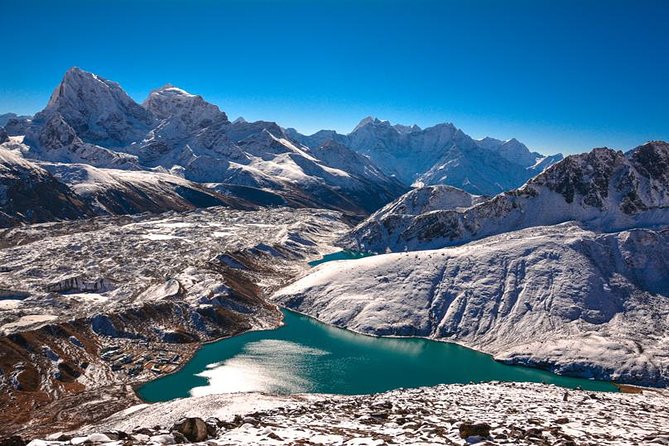
The return route feels different because you know the villages now. The path drops from Pheriche toward Tengboche and then continues to Namche, with about eight hours of walking listed for the day.
Downhill walking is easier on the lungs but can be rough on joints. Trekking poles are useful, and you should not spend all your energy celebrating the descent before reaching Namche.
The next day continues toward Lukla, taking around seven hours. You cross the Hillary Suspension Bridge again and pass through local villages before reaching the airstrip town.
Lukla is the right place for a final mountain evening. You can mark the end of the trek with your guide and porter team, who have carried the practical burden of the journey. Tips are expected and are not included, so bring enough local currency or confirm the preferred method with your guide.
The following morning, you fly back toward Kathmandu. Mountain flights depend on weather, and the schedule can shift. The return flight gives you another look at the peaks before the noise and traffic of Kathmandu return.
Day 13 includes a transfer to your hotel and free time. Kathmandu is not included in the trekking accommodation, so check your booking carefully. You can use the afternoon for rest, markets, Thamel restaurants, or simply a hot shower and quiet room.
Day 14 is departure day, with an airport transfer arranged. If you extend your stay, the company says it can help plan further travel in Nepal.
What the $1,169 price really covers
The package offers good value if the listed inclusions match your final confirmation. The biggest practical items are:
- Airport pickup and drop-off in a private vehicle
- English-speaking, government-licensed trekking leader
- Assistant guide support at a stated ratio of one assistant for four trekkers
- Porter service at a stated ratio of one porter for two trekkers
- Staff wages, food, lodging, flights, insurance, and equipment
- Sagarmatha National Park and community fees
- First-aid kit, pulse oximeter, and basic medicines
- Teahouse accommodation during the trek
- Breakfast, lunch, and dinner during the trekking days
- Duffel bag, T-shirt, trekking map, down jacket, and sleeping bag
The gear loan is useful, especially if you do not own a suitable down jacket or sleeping bag. The sleeping bag and jacket must be returned after the trek, while the duffel bag, T-shirt, and map are listed as take-home items.
The unclear Lukla flight line is the one issue I would not ignore. Ask whether the Manthali to Lukla flight is included, whether the Kathmandu to Manthali transfer is included, and what happens if weather delays the flight. Also ask about solo supplements, since porter service for a solo traveler is specifically excluded.
Who should book this trek
This route suits you if you want a classic Everest experience without attempting a technical climb. You need good general fitness, patience on long walking days, and a willingness to sleep in simple teahouses.
It is a good match for someone who values a guide and porter team over a do-it-yourself trek. The small maximum group of nine should make it easier to manage meals, pace, symptoms, and changing conditions.
It is less suitable if you want private bathrooms, fixed flight times, reliable internet, or a soft adventure with little physical strain. The Base Camp day and Kala Patthar morning are serious mountain walks, not casual hikes.
You also need travel and medical insurance. The itinerary reaches 5,550 meters, and the tour itself does not provide that coverage for you.
Should you book the Everest Base Camp Trek?
I would consider booking it if the flight inclusion is clarified in writing and you are comfortable with the physical demands. The plan has the right structure: two acclimatization days, a gradual climb, local teahouse stays, experienced support, and both Base Camp and Kala Patthar.
The strongest reason to choose it is the human support. Guides such as Shiva Shrestha have been praised for safety checks, encouragement, communication, and care when conditions became difficult. Food, accommodation choices, airport transfers, and responses to dietary needs also receive strong attention in the supplied feedback.
Book it for the journey, not just the Base Camp sign. The best parts include crossing the suspension bridges, visiting Tengboche Monastery, watching Ama Dablam change shape as you walk, and sharing a quiet meal in a mountain village. Base Camp is the milestone. The trail is the real experience.
FAQ
How long is the Everest Base Camp trek?
The full experience lasts approximately 14 days, including arrival and departure days in Kathmandu.
What is the highest point reached on the trek?
Kala Patthar is the highest point, at approximately 5,550 meters.
How high is Everest Base Camp?
The Nepal side of Everest Base Camp is listed at approximately 5,364 meters.
Is accommodation included?
Teahouse accommodation during the trek is included. Accommodation in Kathmandu is listed as excluded, including extra nights caused by early arrival or late departure.
Are meals included?
Breakfast, lunch, and dinner are included during the trek. Breakfast is also listed for two occasions outside the main trekking meal plan.
Is a guide provided?
Yes. The package includes an English-speaking, government-licensed trekking leader trained in first aid, along with assistant guide support at a stated ratio of one assistant for four trekkers.
Is porter service included?
Porter service is included at a stated ratio of one porter for two trekkers. Porter service for a solo traveler is listed as excluded.
Is the Lukla flight included?
The overview describes domestic flights as included, but the exclusions separately list the Lukla flight as not included. Confirm this cost directly with Accessible Adventure Pvt. Ltd. before booking.
Can I cancel for a full refund?
You can receive a full refund if you cancel at least three full days before the experience start time. Cancellations or changes made less than three full days before the start are not refunded or accepted. If poor weather causes the experience to be canceled, you are offered another date or a full refund.
Latest treks added in Kathmandu
- Ghorepani Poon Hill Trek★ 5.0 · 16 reviews
- Private Manaslu Circuit Trek at Himalayas★ 5.0 · 3 reviews
- Ghorepani Poonhill Trek★ 5.0 · 5 reviews
- Upper Mustang Trekking★ 3.0 · 2 reviews
- Amazing 1 Day Trekking Experience in Kathmandu Nepal★ 5.0 · 24 reviews
- Upper Mustang Trekking★ 5.0 · 2 reviews
- Upper Mustang Trek★ 5.0 · 5 reviews
- Upper Mustang Trekking★ 5.0 · 4 reviews
Everest Base Camp Treks, compared.






Browse the lists this tour appears in