
REVIEW · KATHMANDU
Everest Base Camp Trek -14 Days
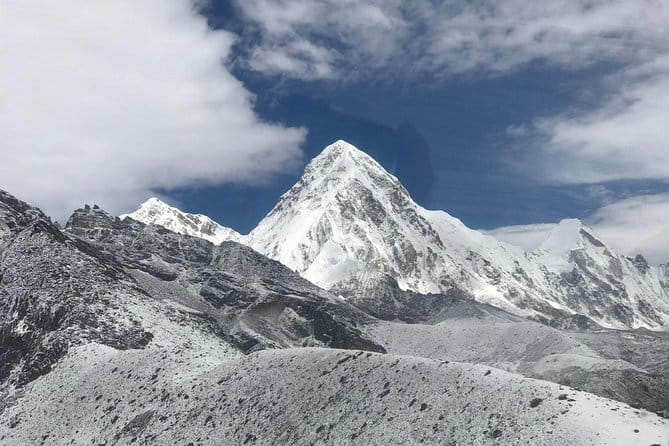
The real prize here is not just reaching Everest Base Camp. It is the slow climb through Sherpa villages, Buddhist monasteries, suspension bridges, river valleys, and high mountain settlements where each day feels different. You also get the classic sunrise walk to Kala Patthar, the best point on this route for broad views of Everest and the Khumbu peaks.
I like the sensible acclimatization plan, with rest days at both Namche Bazaar and Dingboche. I also like the practical price: at $1,800, you get flights, tea-house lodging, meals during the trek, a guide, a porter shared by two clients, permits, airport transfers, and a farewell dinner.
The main drawback is that this is still a demanding high-altitude trek, not a sightseeing holiday. Lukla flights can be delayed by weather, extra mountain nights cost more, and the package does not include insurance, bottled water, hot showers, tips, or personal expenses.
Key points to know before booking
- Kala Patthar is the scenic high point: You climb to 5,545 meters for the trip’s broadest mountain views.
- Two acclimatization days are built in: Namche and Dingboche give your body time to adjust.
- The package covers major costs: Flights, permits, meals, tea houses, guide service, and a shared porter are included.
- You sleep simply: Tea houses provide a bed and basic lodging, but comfort becomes more limited higher up.
- The trek is private: Only your own group participates, with a minimum booking of two people.
- The support team matters: Guides named in connection with this operator include Prakash, Nima, Urken, and Bharot, while Bhagwat handles trip organization.
Why this 14-day Everest Base Camp route works
The classic Everest Base Camp route is popular for good reason. It gives you a clear sense of progression. You begin among lower valleys and farm settlements, then move through pine forests and Sherpa towns before reaching a stark world of rock, ice, and thin air.
This itinerary takes 14 days, including arrival and departure. The walking days range from roughly three to seven hours. That sounds manageable on paper, but altitude changes the effort. A steady uphill path that would feel easy at home can become slow work above Namche.
I appreciate that the schedule does not rush the highest section. You spend two nights in Namche Bazaar and two nights in Dingboche. That is not wasted time. It gives you a better chance to continue safely toward Lobuche, Gorakshep, and Base Camp.
The tour is private, which helps if you need a slower pace or want to pause for photographs. It also means you are not tied to a large group’s walking speed. Still, a private trip does not remove the basic demands of altitude, cold, uneven paths, or possible flight delays.
More Everest Base Camp Treks in Kathmandu
- Everest Base Camp Trek – 14 Days
★ 5.0 · 1,499 reviews - Everest Base Camp Trek
★ 5.0 · 842 reviews - Everest Base Camp Trekking
★ 5.0 · 485 reviews
Kathmandu arrival and the flight to Lukla
Day one is kept simple. You are met at Tribhuvan International Airport and taken to your hotel by private vehicle. Two nights in a three-star Kathmandu hotel with breakfast are included, though the schedule lists your first night on arrival and your second night after returning from the mountains.
The package also includes the flight between Kathmandu and Lukla. Depending on operating conditions, flights may use Ramechhap rather than Kathmandu, with the required transfers included in the stated arrangements. The exact flight plan can change, so keep your schedule flexible.
Lukla sits at 2,860 meters, and the short first walk to Phakding is a useful introduction rather than a brutal start. You follow the Dudh Koshi River for three to four hours and sleep at about 2,610 meters.
This first day gives you a feel for the walking rhythm. Your porter carries the main duffle, while you keep a small daypack with water, warm layers, snacks, and anything needed during the day.
Phakding to Namche Bazaar, the first serious climb
Day three takes you from Phakding to Namche Bazaar in six to seven hours. The route follows the river and passes through the entrance area of Sagarmatha National Park. You will cross suspension bridges and climb steadily toward Namche.
Namche Bazaar sits at 3,446 meters and is the first major mountain town on the route. It has a strong sense of place, with steep hillsides, stone paths, lodges, and shops serving the trekking trade. It is also the point where the altitude begins to demand more patience.
This is one of the harder days for many people because the climb comes before the body has fully adjusted. Walk slowly. You do not gain anything by racing ahead, and your guide should help set a sensible pace.
The trip includes trekking meals, normally breakfast, lunch, and dinner on walking days. Personal drinks and extras are not included, so budget for water, hot beverages, snacks, phone use, charging, laundry, and showers.
Namche acclimatization, Khumjung, and Hotel Everest View
Day four is an acclimatization day, but it is not a day to stay in bed. The planned outing visits Khumjung Village and Hotel Everest View at about 3,880 meters.
The point is to climb higher during the day and sleep lower at Namche. That pattern helps your body adjust. It also gives you one of the route’s best chances to see how Sherpa communities live beyond the main trekking center.
Khumjung adds a cultural side to the trip that can get lost if you focus only on Everest. You pass through a working village rather than moving directly from one mountain checkpoint to the next. The Hotel Everest View stop gives you time to look across the surrounding peaks before returning to Namche.
I like this day because it combines practical altitude preparation with a meaningful local visit. The only caution is that you may feel tired even though the day is shorter. Rest, drink regularly, and do not treat the acclimatization walk as an easy sightseeing stroll.
More Trekking Tours in Kathmandu
- Annapurna Circuit Trek with Tilicho Lake
★ 5.0 · 368 reviews - Everest Base Camp Trekking – 13 Day
★ 5.0 · 365 reviews - Everest Base Camp Trek
★ 5.0 · 350 reviews - Everest Base Camp Trek -14 Days
★ 5.0 · 321 reviews
Tengboche and the mountain monastery
From Namche, you walk to Tengboche in five to six hours. The village sits at about 3,860 meters, and the route brings a change in scenery as you move toward the upper Imja Valley.
Tengboche is best known for its monastery and its mountain setting. The stop gives the trek a spiritual dimension, with Buddhist culture woven into the route rather than added as a separate tourist visit.
The day has a mix of walking conditions, including climbs and descents. That can be deceptive. You may lose height and then have to regain it, so save energy for the full route instead of judging the day by one early downhill stretch.
Tea-house accommodation is included throughout the trek. That keeps costs under control, but you should expect basic rooms and shared facilities rather than hotel comfort. Higher up, warmth and charging options can be limited, and hot showers cost extra.
Dingboche and the second acclimatization day
Day six takes you from Tengboche to Dingboche, at about 4,360 meters. The walk usually takes five to six hours and follows the Imja River.
The views become more open as the route leaves the lower wooded sections behind. Dingboche is an important stop because you will spend two nights here before going higher.
Day seven is another acclimatization day. The schedule does not prescribe a single demanding excursion, which allows your guide to adjust the day to your condition. You might take a gentle walk, rest, or spend time getting used to the altitude.
This is where good guiding becomes important. Several people connected with this operator have handled medical problems, doctor visits, and emergency evacuation arrangements. That does not make the mountain risk-free, but it means the support system is designed to respond if something goes wrong.
You should still carry travel and rescue insurance. It is specifically excluded from the price, and it is essential for a high-altitude trek.
Lobuche and the Thukla Pass
The walk from Dingboche to Lobuche takes five to six hours. Lobuche sits at approximately 4,910 meters, so the air is noticeably thinner and the walking pace normally slows.
The route crosses the Thukla Pass at about 4,830 meters. This is a serious section, both physically and emotionally. The climb is not long by ordinary hiking standards, but at this altitude every step takes more effort.
From the pass, the route opens toward the high peaks and the Khumbu Glacier area. It is a day to keep your schedule loose. Stop when needed, eat even if your appetite is low, and tell your guide about headaches, nausea, unusual tiredness, or breathing problems.
Lobuche accommodation is functional. You are there because it places you close to the next day’s goal, not because it offers comfort. Carry a warm sleeping layer and expect the evening to feel cold.
Everest Base Camp from Gorakshep
Day nine is the major approach day. You walk from Lobuche to Gorakshep at 5,160 meters, then continue to Everest Base Camp at approximately 5,360 meters. The full day takes six to seven hours.
Gorakshep is the final overnight settlement on this part of the route. It also serves as the staging point for Base Camp and Kala Patthar. You leave your heavier belongings there and walk with what you need for the route ahead.
The path toward Base Camp follows the Khumbu Glacier. It is not a polished road. Expect uneven ground and a slow pace, with the altitude adding to the effort. The exact appearance of Base Camp can vary by season, but reaching the marked area beside the glacier is the symbolic goal of the trek.
One useful expectation: Everest itself is not always the most dramatic peak from Base Camp. Kala Patthar the next morning is usually the stronger viewpoint. Base Camp is about the location, the glacier, and the achievement of reaching the end of the approach route.
Kala Patthar, then down to Pheriche
Day ten begins with the climb to Kala Patthar, at 5,545 meters. This is the highest point on the itinerary and the place where the route offers its most expansive mountain views.
The climb is demanding because it starts early and comes after the Base Camp day. The reward is a broad outlook over Everest and the surrounding Himalayan peaks. Your guide will set the pace, and you should focus on steady breathing rather than speed.
After Kala Patthar, you descend to Pheriche at about 4,371 meters. The walking time is listed as four to five hours, though the descent can feel tiring after the morning climb.
This is one of the best itinerary choices in the trip. You do not simply turn around from Base Camp and repeat the same day. You gain the high viewpoint, then lose altitude, which should make the following nights easier.
Returning through Namche and Lukla
Day 11 takes you from Pheriche back to Namche Bazaar in six to seven hours. The route retraces familiar sections, but the downhill direction changes how you see them. You are no longer climbing toward an uncertain goal, and the lower air should feel easier.
Day 12 continues from Namche to Lukla in five to six hours. It is a long return day, with more descents and rises than you might expect. The walking is not over until you reach Lukla, so keep some energy in reserve.
Day 13 is the flight back to Kathmandu. Weather can affect flights in the Khumbu, and the package warns that extra nights caused by delays, early returns, or other mountain problems are not included. Build flexibility into your international travel plans rather than booking a tight connection after the scheduled return.
Back in Kathmandu, the final night includes a farewell dinner at an authentic Nepalese restaurant with cultural performance. That is a pleasant way to shift from mountain routine back to city life.
What the $1,800 price really covers
At $1,800 per person, this is a fairly full package for a guided Everest Base Camp trek. The included items cover many costs that can otherwise appear one by one:
- Airport pickup and private hotel transfer
- Two nights in a three-star Kathmandu hotel with breakfast
- Breakfast, lunch, and dinner during the trek
- Tea-house lodging in the mountains
- TIMS permit and Khumbu Valley fees
- Kathmandu or Ramechhap to Lukla flights and return flight
- Experienced guide and one porter for every two clients
- Duffle bag, first-aid supplies, travel arrangements, and required paperwork
- Farewell dinner with cultural performance
The shared porter arrangement is worth understanding. One porter carries the luggage of two clients, so pack with restraint. You receive a duffle bag for the trek and return it afterward.
The price does not include international flights, Nepal visa fees, insurance, tips, drinks, hot showers, charging, laundry, phone calls, bar bills, extra porters, or extra mountain nights. These costs can add up, especially if bad weather delays the Lukla flight.
The package also includes company T-shirts and travel and rescue arrangements. Those extras are pleasant, but the real value lies in the flights, meals, permits, lodging, and local support.
Who should book this trek
You should have moderate physical fitness and be comfortable walking for up to seven hours on uneven mountain paths. The minimum age is eight, but age alone does not tell you if the trek is suitable. A child or older adult needs the stamina to handle altitude and long walking days.
This private format suits couples, families, and small groups who want a guide’s support without joining a large shared departure. It can also suit repeat trekkers who want help with logistics while keeping the trip personal.
The listed experience has a 5 out of 5 rating from 36 ratings, and the strongest praise centers on organization, safety attention, medical help, flexible planning, and the work of guides such as Prakash, Nima, Urken, Bharot, and Migma. Bhagwat is repeatedly connected with trip organization and fast communication.
You should not book it if you want guaranteed flight times, hotel-style comfort, or a trip with no physical strain. You should also avoid treating the 14-day schedule as fixed in every detail. Mountain weather can change the plan.
Should you book the Everest Base Camp Trek?
I would book this trek if you want the standard Everest Base Camp route with a clear acclimatization plan and major practical costs handled in advance. The included flights, meals, permits, guide, porter, and tea houses make the $1,800 price easier to justify.
Before paying, confirm the likely flight point, what happens if you are delayed in Lukla, the porter weight limit, room and bathroom arrangements, and the exact emergency procedure. Buy proper travel and rescue insurance, then leave spare days around the mountain flight.
The trip is best for you if reaching Base Camp matters, but you also want the villages, monastery, glacier route, and Kala Patthar viewpoint along the way. That combination gives the journey more substance than a quick dash to a famous sign.
FAQ
How long does the Everest Base Camp trek take?
The experience lasts approximately 14 days, including arrival in Kathmandu, the trek, return to Kathmandu, and airport departure.
Where does the tour start?
It starts at Tribhuvan International Airport in Kathmandu, with a listed start time of 7:00 am.
Where does the tour end?
The activity ends back at the meeting point in Kathmandu after the return from the mountains.
Are flights between Kathmandu and Lukla included?
Yes. The package includes flights between Kathmandu or Ramechhap and Lukla, depending on the operating arrangement.
Are meals included during the trek?
Breakfast, lunch, and dinner are included during the trekking portion. Meals in Kathmandu are not included except for the included breakfasts and farewell dinner arrangement.
Is accommodation included?
Yes. Two nights in a three-star Kathmandu hotel with breakfast are included, along with tea-house or lodge accommodation during the trek.
Are permits included?
Yes. The package includes the Trekkers’ Information Management System permit, Khumbu Valley fees, and required paperwork.
Is travel insurance included?
No. Travel and rescue insurance are not included, so you need to arrange your own coverage.
Can children join the trek?
The minimum age is eight. All participants should also have a moderate level of physical fitness, and the booking requires at least two people.
Latest treks added in Kathmandu
- Private Manaslu Circuit Trek at Himalayas★ 5.0 · 3 reviews
- Ghorepani Poonhill Trek★ 5.0 · 5 reviews
- Ghorepani Poon Hill Trek★ 5.0 · 16 reviews
- Upper Mustang Trekking★ 5.0 · 2 reviews
- Upper Mustang Trekking★ 3.0 · 2 reviews
- Amazing 1 Day Trekking Experience in Kathmandu Nepal★ 5.0 · 24 reviews
- Upper Mustang Trek★ 5.0 · 5 reviews
- Upper Mustang Trekking★ 5.0 · 4 reviews
Everest Base Camp Treks, compared.






Browse the lists this tour appears in