
REVIEW · KATHMANDU
Everest Base Camp Trek 14 Days
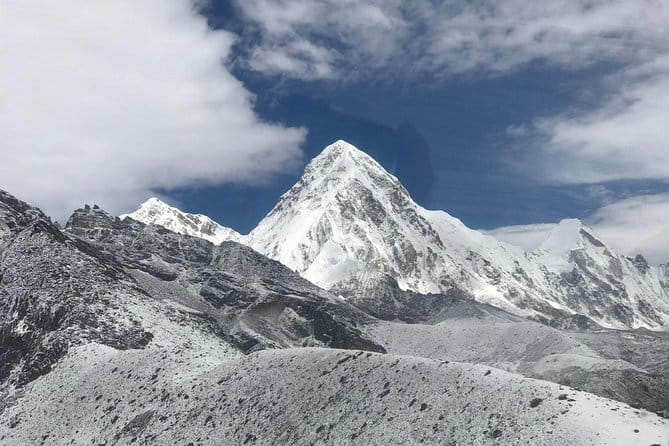
Everest Base Camp is reached on foot, one suspension bridge, Sherpa village, and glacier view at a time. I like the two acclimatization days, which give your body a fair chance to adjust, and I like that flights, permits, meals, a guide, and porter support are included. Guides such as Hari Bhatta and Pasang are named by the company, with Pasang praised for his helpful, kind approach.
The main caution is simple: this is a serious mountain trek, not a sightseeing holiday with a few walks added. Trekking gear is not included, and the long days, high altitude, early start, and weather-sensitive Lukla flights require patience and decent fitness.
Key points to know before booking
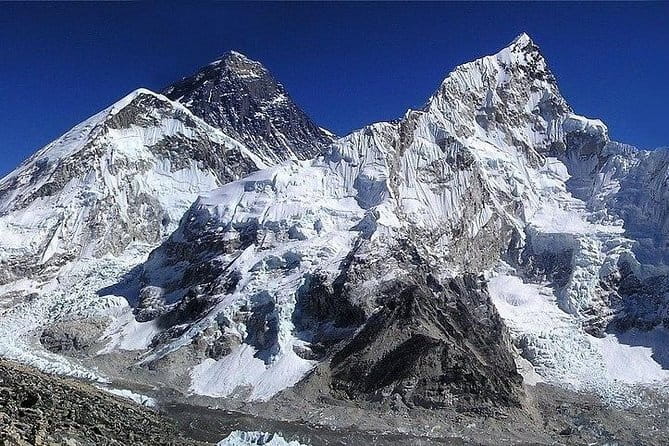
- Kala Patthar at sunrise: The early hike gives you a prime mountain viewpoint after reaching Base Camp.
- Two planned acclimatization days: You rest in Namche Bazaar and Dingboche instead of racing uphill.
- Private group format: Only your own group takes part, with an English-speaking guide and one porter for every two guests.
- Lukla flights included: Airport transfers and flights to and from Lukla are part of the package, though poor weather can affect plans.
- Most meals are covered: Breakfast is included for 13 days, with 11 lunches and 11 dinners also provided.
- A $1,800 package: The price covers major trekking costs, but you still need to budget for gear, personal expenses, and tips.
Why this 14-day route works
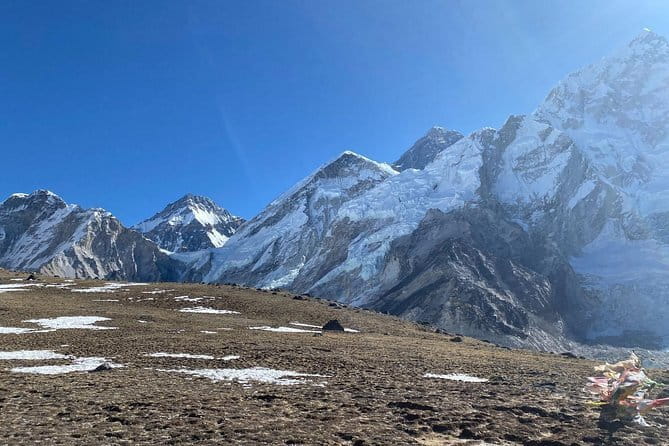
The route follows the classic approach to Everest Base Camp through Nepal’s Khumbu Valley. You start in Kathmandu, fly to Lukla, walk north through Phakding and Namche Bazaar, then climb gradually toward Tengboche, Dingboche, Lobuche, Gorakshep, and Base Camp.
The itinerary includes a return route through Pheriche and Namche Bazaar before the flight back to Kathmandu. That matters because the return is not treated as an afterthought. You retrace the trail at a faster pace, with familiar villages and forests offering a welcome change after the stark upper valley.
The schedule is compact but sensible in its broad shape. The two rest days are the most important part of the plan. You spend one in Namche Bazaar and another in Dingboche, with short walks or local exploring rather than a full day of climbing.
At $1,800 per person, the package offers solid value if you want a guided trip with the main transport and trekking costs bundled together. You are paying for the Kathmandu and Lukla transfers, flights, permits, local and government taxes, an English-speaking guide, porter support, and most meals.
The price does not cover trekking equipment, personal spending, or tips. That can make the final cost noticeably higher if you need to rent or buy several items. Ask for the current packing and equipment requirements before booking, since the tour only states that gear is excluded.
More Everest Base Camp Treks in Kathmandu
- Everest Base Camp Trek – 14 Days
★ 5.0 · 1,499 reviews - Everest Base Camp Trek
★ 5.0 · 842 reviews - Everest Base Camp Trekking
★ 5.0 · 485 reviews
Day 1: Getting settled in Kathmandu
The first day begins with arrival in Kathmandu, where you are met and transferred to your hotel. The listed schedule allows around six hours, though the useful point is not the sightseeing time. This is your buffer day to rest, organize bags, and prepare for the early mountain flight.
You should use this time to check that your clothing, footwear, and personal items are ready. The package does not include trekking gear, so arriving without suitable equipment could create a problem before you even reach Lukla.
Airport pickup and drop-off are included. That is a practical benefit in Kathmandu, particularly after a long international flight, when finding your hotel and arranging onward transport is one less task you need to handle.
Day 2: Lukla to Phakding by foot
The mountain portion starts with an early flight to Lukla. The flight is included, but it depends on suitable weather. If poor conditions cancel the flight, the provider offers another date or a full refund under its cancellation terms, so you should avoid booking tight onward travel around this part of the trip.
From Lukla, you walk to Phakding for roughly eight hours of trekking. The route includes suspension bridges, villages, and forested scenery. This first walking day introduces the rhythm of the trek without sending you straight into the highest section.
The itinerary also lists about one hour at Lukla. Think of this as the arrival and starting point for the walk, not a separate attraction with a long visit. You finish in Phakding, where the overnight stop breaks up the route toward Namche Bazaar.
Day 3: The long walk to Namche Bazaar
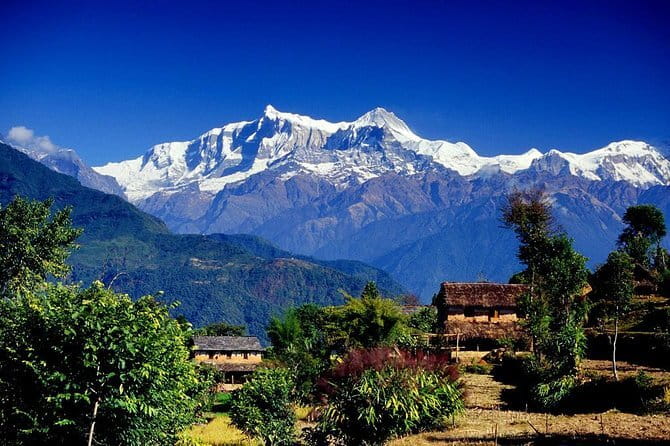
The trek from Phakding to Namche Bazaar is another roughly eight-hour day. This is one of the route’s key transitions. The scenery changes as you move farther into the Khumbu Valley, and the trail leads through Sherpa settlements and across more suspension bridges.
Namche Bazaar is the region’s main Sherpa hub. It is an important place to pause, not only because it is a memorable village setting, but because the next stages take you much higher. The schedule wisely gives you a rest day after arrival.
The day can be demanding. You should not judge your fitness by how easily you handle the first few hours. The combination of steady uphill walking and changing altitude is what makes this trek serious.
More Trekking Tours in Kathmandu
- Annapurna Circuit Trek with Tilicho Lake
★ 5.0 · 368 reviews - Everest Base Camp Trekking – 13 Day
★ 5.0 · 365 reviews - Everest Base Camp Trek
★ 5.0 · 350 reviews - Everest Base Camp Trek -14 Days
★ 5.0 · 321 reviews
Day 4: Acclimatizing around Namche Bazaar
The Namche rest day is more active than the word rest may suggest. You visit the Everest View Point and Everest View Hotel, with broad mountain views from the area. You also have time to walk through Namche and explore its shops.
This is a good example of useful pacing. You gain a memorable viewpoint while keeping the overnight stop in Namche, rather than climbing higher and sleeping at a new altitude the same evening.
The schedule shows one hour at the viewpoint and eight hours at Namche overall. Do not read that as eight hours of hard hiking. It is better understood as a full day based in the village, with time for the viewpoint and acclimatization.
Day 5: Namche Bazaar to Tengboche
The route continues to Tengboche, a major cultural stop in the Khumbu Valley. The famous Tengboche Monastery is the main draw, set among mountain views and quieter surroundings than Namche.
You walk for about eight hours, so the monastery is part of a full trekking day rather than a quick roadside stop. The setting gives the trek a different character. You are not only moving toward Everest Base Camp, you are passing through places that make the valley feel lived in.
Tengboche also marks a useful change in scenery as you leave more forested sections behind. You should expect the walk to feel more demanding as the route gains altitude.
Day 6: Tengboche to Dingboche
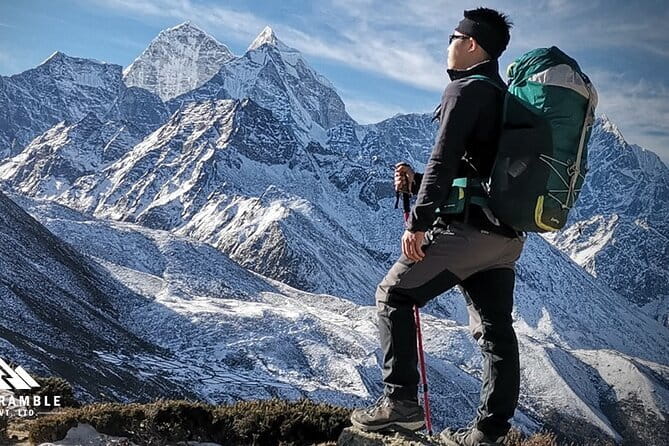
From Tengboche, you continue to Dingboche through alpine forests and open pastures. The itinerary specifically notes grazing yaks and views of Ama Dablam, one of the most recognizable peaks in the region.
Dingboche is an important overnight stop because it leads into the higher part of the trek. The day is listed at about eight hours, and you should plan for a steady pace rather than treating it as a simple transfer.
The views here are a major reward, but the exposed mountain setting can also make the route feel more serious. This is why the following acclimatization day matters so much.
Day 7: A second acclimatization day in Dingboche
Your second rest day takes place in Dingboche. You can take a short hike in the surrounding hills or rest and look out at the peaks. The schedule lists 14 hours at the stop, which signals a full day based in Dingboche rather than another long point-to-point trek.
I like this pause because it prevents the itinerary from becoming a relentless march to Base Camp. You get time to adjust before the trail reaches Lobuche, Gorakshep, and the Khumbu Glacier.
The plan does not specify the exact acclimatization walk, so your guide will determine what is suitable for your group. The important point is that you are not expected to climb to a new overnight stop that day.
Day 8: Dingboche to Lobuche beside the Khumbu Glacier
The route from Dingboche to Lobuche takes about eight hours. You walk alongside the Khumbu Glacier, with views of Everest and nearby peaks guiding the way.
This is one of the most striking sections of the trek, but it is also a reminder that you are now in a harsher mountain environment. The scenery becomes rockier and more open, and the physical challenge becomes more noticeable.
Lobuche is a practical overnight stop before the Base Camp push. The itinerary does not promise luxury, but it does describe accommodations as comfortable. You should still expect mountain trekking conditions rather than city-hotel standards.
Day 9: Lobuche, Gorakshep, and Everest Base Camp
This is the day many people picture when they book the trek. You leave Lobuche for Gorakshep, then continue toward Everest Base Camp across rocky terrain near the Khumbu Glacier.
The day is listed at about eight hours overall, followed by a one-hour Base Camp stop. The exact timing can vary with pace and conditions, but the plan is clear: Gorakshep is your overnight base, and Base Camp is reached as an out-and-back walk.
Base Camp itself is not a conventional summit or a permanent sightseeing site. It is an iconic endpoint surrounded by huge peaks and glacier terrain. The satisfaction comes from reaching it under your own power, after days of gradual walking from Lukla.
You return to Gorakshep for the night. That return is important to understand when judging the day. You do not simply arrive at Base Camp and finish walking. You still have to cross the rough route back to the overnight stop.
Day 10: Sunrise at Kala Patthar, then Pheriche
You wake early for the hike to Kala Patthar. The goal is the view, especially when the peaks catch the first golden light of sunrise. This is often the visual high point of the route, and it complements Base Camp nicely.
After Kala Patthar, you descend toward Pheriche for a well-earned rest. The itinerary gives about eight hours for the day, with one hour assigned to Kala Patthar. An early start and the altitude make this a demanding morning, even though much of the route afterward goes downhill.
Do not assume that descending makes the day easy. You will already have several long walking days behind you, and the rough trail can still test your legs.
Day 11: Pheriche back to Namche Bazaar
The return to Namche takes about eight hours. You retrace part of the route through the Everest region, but the downhill direction changes how the day feels.
Namche is a welcome stop because it brings you back to a larger village setting after the remote upper valley. You can also look back on the trek with a clearer sense of how far you have come.
This day is not glamorous, but it is useful. A planned overnight in Namche avoids turning the entire return to Lukla into one punishing push.
Day 12: Namche Bazaar to Lukla
The final trekking day runs from Namche to Lukla and is listed at about eight hours. You pass back through villages and forested sections before reaching the town where the mountain flight began.
The itinerary describes this as a chance to celebrate completing the trek. That is fair, but keep some energy in reserve. The route is still a full day on foot, and your legs may be tired after the Base Camp section.
Your guide and porter support are especially valuable here. The package provides one porter for every two guests, while your guide handles the route and group coordination.
Day 13: Flying back to Kathmandu
You take a scenic flight from Lukla back to Kathmandu, followed by a hotel transfer. The day is allocated about 14 hours, which reflects the early flight, waiting time, transfer arrangements, and the possibility of delays.
This is another reason not to schedule an important international connection immediately afterward. The tour includes the return flight, but mountain weather can affect the timetable.
Once back in Kathmandu, the rest of the day is free. It is a useful recovery period after nearly two weeks of travel and trekking.
Day 14: Airport transfer and departure
The final day is an airport transfer for your onward journey. The schedule allows about six hours, giving you time to leave Kathmandu through the included drop-off service.
The package covers breakfast for 13 days, so breakfast is included through the trekking program but not necessarily as a final extra beyond the stated count. Lunch is included on 11 days and dinner on 11 days, leaving some meals for you to arrange independently.
What the $1,800 price really covers
The value here is strongest in the bundled essentials. Your $1,800 includes:
- Airport pickup and drop-off
- Flights between Kathmandu and Lukla
- Trekking permits
- Government and local taxes
- An English-speaking professional guide
- One porter for every two guests
- 13 breakfasts
- 11 lunches
- 11 dinners
That is a useful package for someone who wants a guided route without arranging each major piece separately. The private format also means only your group participates, which can make pacing and daily decisions more personal.
The gaps are just as important. Trekking gear is excluded, as are personal expenses and tips for the guide and porter. The listing does not give a detailed gear list or specify the accommodation standard, so ask those questions before paying.
Guide support and the personal feel
The company identifies English-speaking professional guides as part of the service. Hari Bhatta is associated with arranging trekking experiences and is described as giving strong reassurance through his experience and local contacts.
Pasang is also named as a guide, alongside Ram as porter, with specific praise for their helpful and kind service. That matters on a mountain route where communication, patience, and steady support can shape the whole experience.
You should confirm who will lead your departure, since guide assignment may vary. The useful takeaway is that the package is built around local human support, not a self-guided walk with a printed route.
Who should book this Everest Base Camp trek
This trip suits you if you want the classic Everest Base Camp route in a private group and prefer to have flights, permits, meals, guide support, and porter help arranged together.
It also suits a first-time high-altitude trekker who has a moderate level of physical fitness and is prepared to walk for around eight hours on several days. You do not need to be an elite mountaineer, but you do need to take the schedule seriously.
It is less suitable if you want flexible rest days, short walks, or a luxury-focused holiday. The itinerary is fixed, the start is early, the Lukla flights depend on weather, and the upper route demands stamina.
The free cancellation policy allows a full refund when you cancel at least 24 hours before the start time. Changes made within 24 hours are not accepted, and poor weather may lead to a different date or full refund.
Should you book it?
I would book this trek if you want a classic, tightly planned Everest Base Camp route and value having the major logistics handled for you. The two acclimatization days, private group format, guide and porter support, and included Lukla flights make the $1,800 price reasonable.
I would not book until you confirm the gear requirements, accommodation details, guide assignment, and weather contingency plan. If you are comfortable with long walking days and mountain conditions, this is a strong route. If you want an easy holiday with Everest views added on, choose something shorter and gentler.
FAQ
How long is the Everest Base Camp Trek?
The experience lasts approximately 14 days, including arrival and departure days in Kathmandu, the flights to and from Lukla, and the trek itself.
Where does the trek start?
The experience starts in Kathmandu. You then take an early flight to Lukla, which is the starting point for the walking portion.
Are flights between Kathmandu and Lukla included?
Yes. The package includes flight tickets to and from Lukla, along with airport pickup and drop-off.
Are permits and taxes included?
Yes. Trekking permits and government and local taxes are included in the price.
Are meals included?
Breakfast is included for 13 days. The package also includes 11 lunches and 11 dinners.
Is this a private tour?
Yes. Only your own group participates in the activity.
Is a guide and porter included?
Yes. An English-speaking professional guide is included, along with one porter for every two guests.
What happens if bad weather cancels the experience?
The experience requires good weather. If it is canceled because of poor weather, you are offered a different date or a full refund.
Latest treks added in Kathmandu
- Private Manaslu Circuit Trek at Himalayas★ 5.0 · 3 reviews
- Ghorepani Poonhill Trek★ 5.0 · 5 reviews
- Ghorepani Poon Hill Trek★ 5.0 · 16 reviews
- Upper Mustang Trekking★ 3.0 · 2 reviews
- Amazing 1 Day Trekking Experience in Kathmandu Nepal★ 5.0 · 24 reviews
- Upper Mustang Trekking★ 5.0 · 2 reviews
- Upper Mustang Trek★ 5.0 · 5 reviews
- Upper Mustang Trekking★ 5.0 · 4 reviews
Everest Base Camp Treks, compared.






Browse the lists this tour appears in