
REVIEW · KATHMANDU
Everest Base Camp trek 14 days
Reaching Everest Base Camp is the headline, but the real prize is the steady march through Sherpa villages, high passes, prayer flags, and mountain views. This 14-day plan takes you from Kathmandu to Lukla, then through Namche Bazaar, Tengboche, Dingboche, Lobuche, and Gorakshep before the big walk to Base Camp and Kala Patthar.
I like that flights, permits, lodges, guide support, meals, and airport transfers are arranged in one package. I also like the practical gear help, since a sleeping bag and down jacket are available. The catch is the price does not cover international flights, travel insurance, tips, entrance fees, or meals in Kathmandu, and the high-altitude walking still demands solid fitness.
Key points to know before booking
- Kala Patthar is the view day: The hike reaches 5,550 meters, giving you one of the route’s best mountain viewpoints.
- The route includes two acclimatization stops: Time is set aside in Namche Bazaar and Dingboche rather than pushing uphill every day.
- Your Lukla flights are included: Kathmandu to Lukla and the return flight are part of the package, along with airport transfers.
- A sleeping bag and down jacket are available: This cuts down on expensive cold-weather gear you need to bring.
- The group may reach 18 people: That keeps costs down, though it can mean a less personal pace than a private trek.
- The finish includes culture and food: A cultural show and farewell dinner close the trip in Kathmandu.
What the $1,380 price really covers
At $1,380 per person, this trek offers useful value for a demanding Himalayan trip. You get Kathmandu accommodation on a twin-sharing basis with breakfast, trekking lodges, domestic flights, ground transport, airport pickup and departure, a guide, trekking permits, the TIMS card, daily trek meals, and government taxes.
That list matters. The Kathmandu to Lukla flight alone is a key piece of the route, and arranging it independently can add work and uncertainty. The package also covers the guide’s salary, lodging, meals, and insurance, which is better than treating guide support as an afterthought.
You also receive first-aid medicine items, a T-shirt, and a trip achievement certificate. I would treat those as small extras, not reasons to book. The real value lies in the route planning and the fact that you are not sorting out every lodge, permit, transfer, and meal yourself.
There are still important extra costs. International airfare, travel insurance, personal spending, bar bills, Kathmandu meals beyond the included breakfast, entrance fees, and tips for the trekking crew are not included. Ask for a clear estimate of these before you commit, especially for insurance and gratuities.
More Everest Base Camp Treks in Kathmandu
- Everest Base Camp Trek – 14 Days
★ 5.0 · 1,499 reviews - Everest Base Camp Trek
★ 5.0 · 842 reviews - Everest Base Camp Trekking
★ 5.0 · 485 reviews
Day 1 in Kathmandu, a useful soft landing
The trip begins in Kathmandu with airport pickup and city accommodation. This first night is more than a formality. It gives you a chance to meet the guide, check your equipment, and make sure your flight and trekking arrangements are in order.
The city hotel is described as standard rather than luxurious. That is fine for this kind of trip. You are paying for a practical base before the mountains, not a resort stay.
Lukla to Phakding, where the walking begins
On Day 2, the flight from Kathmandu to Lukla takes about 40 to 45 minutes. From Lukla, you walk to Phakding, covering roughly three to four hours. The route reaches about 2,640 meters, so this is a manageable introduction rather than an immediate high-altitude test.
The short first walking day helps you settle into the pace. You sleep in a trekking lodge and eat breakfast, lunch, and dinner as provided by the plan. Lodge accommodation is basic, and you should expect function over comfort.
Phakding to Namche Bazaar, the first serious climb
Day 3 takes you from Phakding to Namche Bazaar in about five to six hours. Namche sits at approximately 3,440 meters and is one of the most important stops on the route.
This is where the trek starts to feel properly Himalayan. The walking becomes more demanding, and the altitude becomes a practical concern. Namche is also a good place to pause, wash clothes if possible, check your layers, and make sure you are drinking enough.
Day 4 is reserved for acclimatization in Namche. That rest day is one of the strongest parts of the schedule. You may still walk during an acclimatization day, but the key is not to gain a great deal of height too quickly. Follow your guide’s instructions and do not treat the rest day as wasted time.
More Trekking Tours in Kathmandu
- Annapurna Circuit Trek with Tilicho Lake
★ 5.0 · 368 reviews - Everest Base Camp Trekking – 13 Day
★ 5.0 · 365 reviews - Everest Base Camp Trek
★ 5.0 · 350 reviews - Everest Base Camp Trek -14 Days
★ 5.0 · 321 reviews
Tengboche and the first big mountain views
The route continues to Tengboche on Day 5, a six to seven-hour walking day at about 3,860 meters. Tengboche is known for its monastery setting and for broad views of the surrounding peaks.
This section is rewarding, but you should not underestimate the duration. Six or seven hours on mountain paths can feel much longer than the number suggests, especially when you are still adjusting to altitude. Keep your day pack light and carry only what you need close at hand.
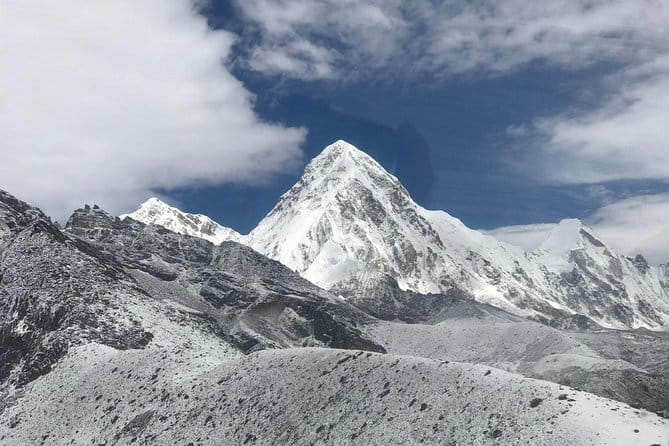
The mountain views include Ama Dablam, Lhotse, Makalu, Cho Oyu, and Everest at different points on the trip. Ama Dablam is especially memorable for its sharp profile, while the high peaks give the route a sense of scale long before Base Camp appears.
Dingboche, acclimatization, and a route detail to clarify
The schedule includes an acclimatization day in Dingboche, followed by a trek to Dingboche listed at about 4,410 meters on Day 7. That wording appears inconsistent, since Dingboche is already named as the Day 6 stop.
You should ask the operator to confirm the exact plan before departure. The important point is that the itinerary includes time for acclimatization around Dingboche, a sensible choice before the higher sections. This is where altitude becomes a bigger part of your daily experience, and patience matters more than speed.
The day from Tengboche toward Dingboche is a major step into higher country. At these elevations, a normal walking pace can feel slow, and you may need more breaks. A good guide should watch for signs of altitude trouble and adjust the pace when needed.
Lobuche and Gorakshep, the high-altitude test
Day 8 continues to Lobuche at approximately 4,910 meters, with around five hours of walking. This is a demanding part of the route because the air is thin and the trail has already taken you well above the level of ordinary mountain hiking.
Day 9 is the key approach to Everest Base Camp. You walk to Base Camp and return to Gorakshep, which sits at roughly 5,200 meters. The plan does not provide a specific walking time for this day, so ask your guide for the expected schedule and how long you will spend at Base Camp.
Base Camp is the emotional high point for many people, but keep your expectations grounded. During a non-expedition period, it may not look like the busy climbing camp shown in photographs. The achievement is getting there, surrounded by the Khumbu peaks, after days of steady walking.
Gorakshep is a high and basic overnight stop. Rest, food, warm layers, and hydration become especially important here. The sleeping bag and down jacket supplied by the company can be valuable at this stage, though you should confirm how and when the equipment is issued.
Kala Patthar, then the long return to Periche
Day 10 begins with a hike to Kala Patthar. The schedule gives about two and a half hours for the ascent to 5,550 meters, followed by a seven-hour descent to Periche at around 4,200 meters.
This is likely the most important viewpoint of the trek. Kala Patthar is higher than Base Camp and is used for wide mountain views, including Everest. The early start often associated with this viewpoint is not stated in the trip details, so confirm the timing with your guide rather than assuming it.
The descent to Periche is long. Downhill walking is easier on the lungs but can be hard on knees and feet. Trekking poles, well-broken-in boots, and careful foot placement will help. The day is not over just because you have reached the viewpoint.
Namche and Lukla, the return feels different
Day 11 takes you back to Namche Bazaar in about six hours. You will lose altitude, which usually makes walking and sleeping feel easier, but the trail remains tiring after the high section.
Day 12 is the seven-hour walk from Namche to Lukla. This is a full day, not a quick stroll back to the airport. Keep some energy in reserve, since your next day depends on the flight schedule.
Day 13 includes the flight back to Kathmandu. Domestic mountain flights can be affected by weather, but no specific contingency is included in the supplied details. For that reason, avoid scheduling an important international connection immediately after the return flight.
The final evening includes a cultural show and farewell dinner. I like this touch because it gives the trip a proper ending instead of dropping you back at a hotel with no time to reflect. You return to Kathmandu with a chance to celebrate the group effort before departure on Day 14.
Meals, lodges, and the gear you receive
Breakfast, lunch, and dinner are included during the trekking days shown in the plan. Kathmandu accommodation includes breakfast, but extra city meals are your responsibility.
That arrangement is practical. Meals in the mountain lodges are handled along the route, while you retain some choice in Kathmandu. Personal snacks, drinks, and bar bills are not covered, so budget for those separately.
The accommodation is described as standard city hotels and trekking lodges. You should expect simple rooms and shared twin beds in Kathmandu, with basic lodge facilities during the trek. The package does not promise private rooms, upgraded lodges, or attached bathrooms.
A sleeping bag and down jacket are available if you need them. This is useful for anyone who does not already own serious cold-weather gear. Confirm sizes, condition, and whether you collect the items in Kathmandu before setting out.
Guide support and group size
The guide’s pay, accommodation, meals, and insurance are included. That is a meaningful part of the price, since the guide is central to pacing, route decisions, and altitude awareness.
Names connected with past trips include Suresh, Sobit, Pasang Sherpa, and Ram. You should not assume one of them will lead your departure, but the company has used these guides on Everest Base Camp and related Nepal trips. If you have a preferred guide or need a specific language, ask before booking.
The maximum group size is 18. That can be a good value for solo bookers or friends who want organized support without paying private-tour rates. The tradeoff is that walking speed, rest stops, and room arrangements may not always match your personal preference.
Fitness, insurance, and cancellation details
The tour calls for a moderate level of physical fitness, but this is still a serious high-altitude trek. You need to be comfortable walking for five to seven hours on several days, with a much higher effort around Base Camp and Kala Patthar.
Travel insurance is not included. You are responsible for arranging it, and the plan specifically excludes it. Check that your policy covers trekking at the elevations reached here, along with the kinds of medical and transport costs relevant to a remote mountain route.
Free cancellation is available if you cancel at least 24 hours before the local start time. Cancellations or changes made inside that window are not accepted for a refund.
Who should book this Everest Base Camp trek?
I would choose this trip if you want the classic Everest Base Camp route without managing every permit, transfer, lodge, and flight yourself. It suits people who value a fixed plan, included meals, guide support, and a group format.
It is also a sensible option if you need a sleeping bag and down jacket supplied. The route has built-in acclimatization days, which is important for a trek reaching more than 5,000 meters.
I would hesitate if you want a private guide, luxury accommodation, flexible rest days, or a short and easy holiday. The walking days are long, the lodges are basic, and the group may contain up to 18 people. You should also clarify the Dingboche wording and confirm exactly what happens if a domestic flight is delayed.
Should you book it?
Yes, if your main goal is a clearly arranged Everest Base Camp trek at a competitive package price. The strongest features are the included Kathmandu to Lukla flights, permits, guide costs, meals, accommodation, acclimatization days, and access to cold-weather equipment.
Book only after checking the extra costs, guide assignment, Dingboche schedule, and insurance requirements. If those details suit you, this is a practical way to tackle one of Nepal’s most famous routes, with enough structure to keep the planning load off your shoulders.
FAQ
How long does the Everest Base Camp trek take?
The full experience lasts 14 days, including arrival and departure days, Kathmandu stays, domestic flights, and the trek.
What meals are included?
Breakfast, lunch, and dinner are included during the trekking portion as listed in the daily schedule. Breakfast is included with the Kathmandu hotel stay. Extra Kathmandu meals and personal food expenses are not included.
Are the Kathmandu to Lukla flights included?
Yes. The package includes the Kathmandu to Lukla flight and the return Lukla to Kathmandu flight, along with airport pickup and departure services.
Is a sleeping bag provided?
Yes. A sleeping bag and down jacket are available if you need them during the trek.
How large can the group be?
The maximum group size is 18 people.
What is not included in the price?
International airfare, travel insurance, tips for the trekking crew, entrance fees, personal expenses, bar bills, and extra meals in Kathmandu are not included.
Latest treks added in Kathmandu
- Private Manaslu Circuit Trek at Himalayas★ 5.0 · 3 reviews
- Ghorepani Poonhill Trek★ 5.0 · 5 reviews
- Ghorepani Poon Hill Trek★ 5.0 · 16 reviews
- Upper Mustang Trekking★ 3.0 · 2 reviews
- Amazing 1 Day Trekking Experience in Kathmandu Nepal★ 5.0 · 24 reviews
- Upper Mustang Trekking★ 5.0 · 2 reviews
- Upper Mustang Trek★ 5.0 · 5 reviews
- Upper Mustang Trekking★ 5.0 · 4 reviews
Everest Base Camp Treks, compared.






Browse the lists this tour appears in