
REVIEW · KATHMANDU
Everest Base Camp Trek 14 Days
Everest Base Camp is not a quick mountain photo stop. It is a demanding two-week walk through Sherpa country, with suspension bridges, stone villages, thin air, and giant Himalayan views. I like the private format, which lets your guide adjust the pace, and I like the two proper acclimatization days in Namche Bazaar and Dingboche.
The price of $999 per person is appealing because it includes airport transfers, permits, guide costs, and Lukla flights. But read the fine print: your accommodation, meals, international airfare, Nepal visa, insurance, and tips are not included. The 14-day schedule is also strenuous, with long walking days and limited room for flight delays.
Key points to know before booking
- Lukla flights begin the trek: You fly to Tenzing Hillary Airport, then walk to Phakding on the first trekking day.
- Two acclimatization stops matter: You spend extra time in Namche Bazaar and Dingboche rather than rushing straight uphill.
- The private trip is flexible: Only your own group participates, with a guide assigned to support the trek.
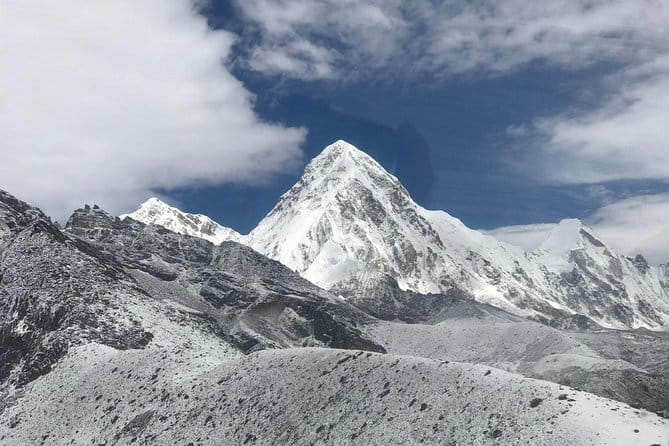
- Everest Base Camp is not the only highlight: Tengboche Gompa, Ama Dablam, Pumori, and the Khumbu Glacier add variety to the route.
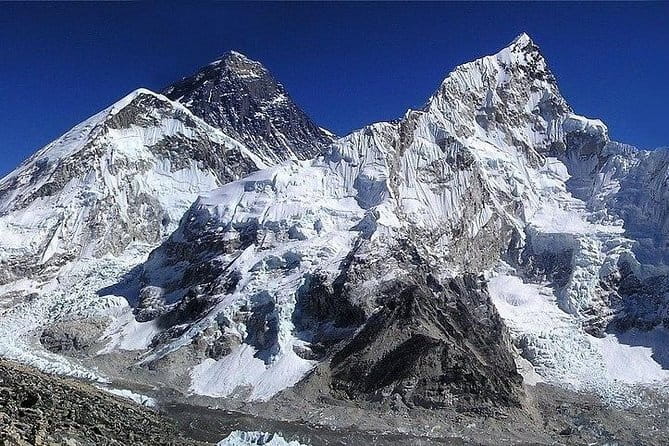
- The return includes Kala Patthar: This early mountain walk is the key viewpoint for Everest itself.
- Budget carefully: $999 covers important services, but not guest accommodation, guest food, insurance, rescue cover, or tips.
What the 14-day Everest trek is really like
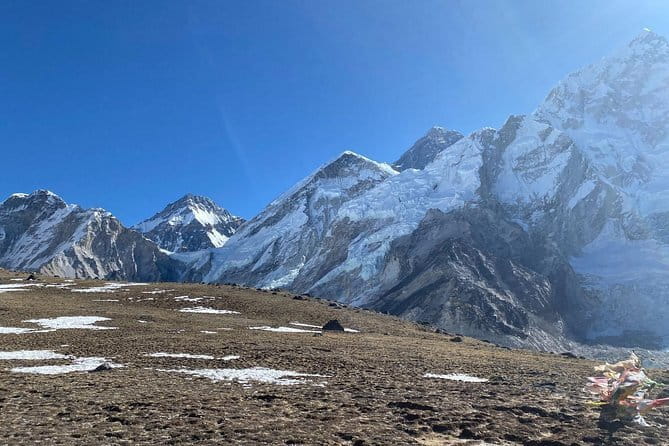
This is the classic route from Kathmandu to Everest Base Camp and back. You begin with city arrangements and a short flight to Lukla, then walk through the Sagarmatha National Park toward Namche Bazaar, Tengboche, Dingboche, Lobuche, Gorakshep, and Base Camp.
The route works because it gains height in stages. You do not simply fly high and start walking at extreme altitude. Still, this is a serious trek. The schedule includes several days described as long walking days, and the highest sections are reached after days of steady uphill travel.
You should also understand what the destination means. Everest Base Camp gives you a view of the Khumbu Icefall, not necessarily a clear view of the summit of Everest. For the classic Everest panorama, Kala Patthar is the important viewpoint on Day 10.
More Everest Base Camp Treks in Kathmandu
- Everest Base Camp Trek – 14 Days
★ 5.0 · 1,499 reviews - Everest Base Camp Trek
★ 5.0 · 842 reviews - Everest Base Camp Trekking
★ 5.0 · 485 reviews
Day 1: Kathmandu preparation in Thamel
Your airport representative meets you and takes you to your hotel or hostel. Later, you meet the guide, check your equipment, and go over the trip.
This first evening is more useful than it sounds. You can ask questions, confirm the next morning’s start, and find out if anything needs to be rented or replaced. The meeting point is Nepal Nirvana Trails at Sat Gumti Marg in Kathmandu, though pickup can also take place at your hotel or Tribhuvan Airport.
The listed start time is 5:45 a.m. That is an early beginning, so keep your bags organized the night before. The airport transfer is included, as are the local flight arrangements. Your international flight and Nepal entry visa are your responsibility.
Day 2: Lukla flight and the walk to Phakding
The trek begins with a flight to Tenzing Hillary Airport in Lukla. The flight is listed as about an hour in the itinerary, followed by a trek to Phakding, where you spend the night.
Lukla is the gateway to the Everest region, and arriving by air saves many days of road travel. It also means your trek starts at altitude, so the first walk to Phakding is an important test of your pace. Keep it easy. This is not the day to prove how fast you can walk.
Flights can affect the schedule, and the final trip information notes that flights may operate from Kathmandu or Manthali. That detail matters when planning your arrival and departure. The price includes the local flight tickets, but you should still leave some flexibility around the flying days.
Day 3: Entering Sagarmatha National Park and reaching Namche
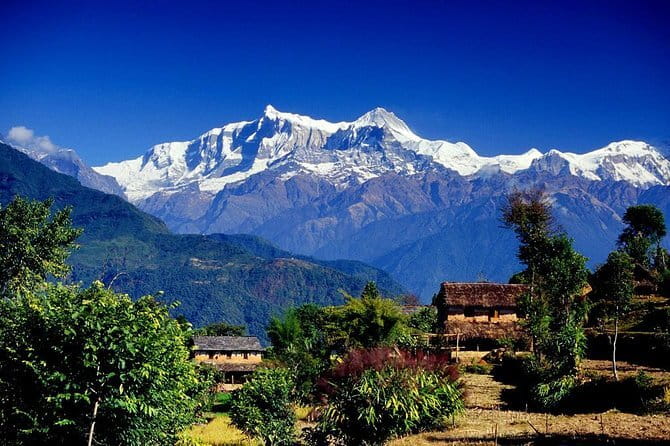
You cross the Dudh Koshi River, pass through Monjo, and enter Sagarmatha National Park. The route continues through forest toward Namche Bazaar.
This is a full trekking day, listed at about 16 hours in the schedule, so you should treat it as one of the harder early stages. The trail has river crossings, forest, and a steady climb. Namche is a major stop because it is the main settlement in the region and the first place where the effects of altitude can become more obvious.
I like the route’s gradual change here. You move from the airport approach into protected mountain country, with villages and footpaths replacing roads. The downside is simple: the long day can feel tough, especially if your flight arrival or walking pace is slower than planned.
More Trekking Tours in Kathmandu
- Annapurna Circuit Trek with Tilicho Lake
★ 5.0 · 368 reviews - Everest Base Camp Trekking – 13 Day
★ 5.0 · 365 reviews - Everest Base Camp Trek
★ 5.0 · 350 reviews - Everest Base Camp Trek -14 Days
★ 5.0 · 321 reviews
Day 4: Acclimatization and the Everest View Point
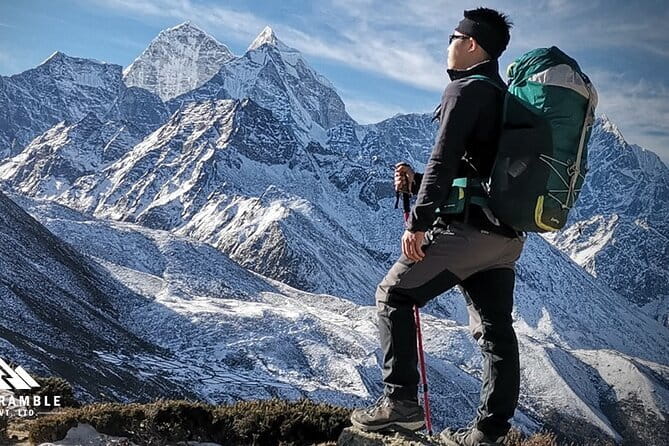
You stay another night in Namche and hike toward the Everest Hotel viewpoint. From there, you can see Everest, Ama Dablam, Thamserku, and Lhotse.
This is not a wasted rest day. The short uphill walk helps your body adjust to the altitude while giving you your first major mountain views. You return to Namche rather than gaining another sleeping height, which is the sensible rhythm for this route.
The itinerary lists this as a full day, with admission included for the viewpoint. Use the time to walk steadily, drink water, and ask your guide how the rest of the route will work. The guide’s role matters most on days like this, when pacing and acclimatization are more important than distance.
Day 5: Forest trails and Tengboche Gompa
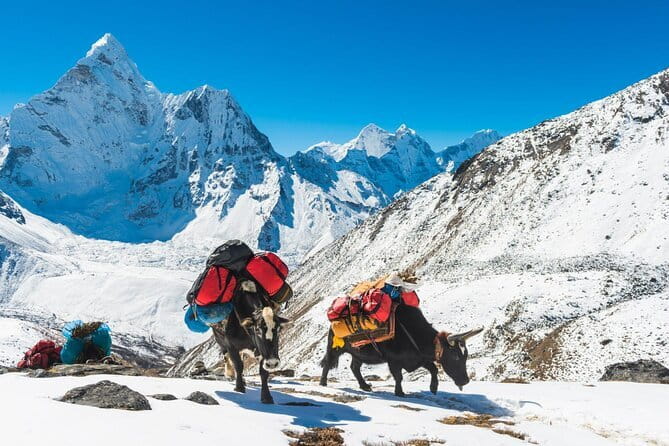
You leave Namche and walk through juniper and rhododendron forest toward Tengboche. The route includes mountain views and a visit to Tengboche Gompa.
Tengboche is one of the most memorable cultural stops on the trek. You are not only walking toward a famous mountain. You are passing through Sherpa villages and visiting a Buddhist monastery that gives the route a stronger sense of place.
The schedule again describes a long day, around 16 hours. The walk is not just a scenic stroll, and the final approach can feel demanding after the climb out of Namche. Still, the combination of forest, high peaks, and the gompa makes this a good balance of nature and culture.
Day 6: Dingboche and the Imja Khola
The trail continues to Dingboche after crossing the Imja Khola. Along the way, you see Island Peak and Ama Dablam.
Dingboche is another key altitude stop. It is higher and more exposed than the lower villages, and reaching it marks a clear change in the trek. The mountain views become larger and more immediate, but the air is thinner and the walking pace naturally slows.
The stated walking time is again long. You should expect an uneven route and allow your guide to set a steady rhythm. The private arrangement is useful here because your group does not have to match the speed of a large mixed party.
Day 7: A second acclimatization day in Dingboche
You spend a second night in Dingboche and have the option of hiking to Nangkartshang Peak at 5,083 meters or Chhukung Ri at 5,546 meters. From these high points, you can view Everest, Ama Dablam, Island Peak, and Pumori.
This is one of the strongest parts of the schedule. The extra day gives you time to adjust before the route climbs toward Lobuche and Gorakshep. The optional hikes are not minor walks, though. The elevations are high, and you should discuss the choice with your guide rather than treating both options as required.
If your body feels good, the higher viewpoint can add a memorable mountain perspective. If you are tired or feeling altitude symptoms, a shorter outing and more rest may be the wiser choice. The itinerary gives you options, not a reason to push beyond your limits.
Day 8: The rocky route to Lobuche
You walk toward Lobuche on an uneven, rocky trail. Views include Pumori, Nuptse, and Lobuche Peak.
The character of the trek changes again. Forest is mostly behind you, and the route becomes more open, rocky, and stark. The surrounding peaks do much of the work, but the trail itself requires careful footing.
This is another long day in the schedule. The walk to Lobuche puts you close to the final approach, but it also means you are now at a height where every uphill section takes more effort. Keep your day simple: walk slowly, follow the guide, and save energy for the next morning.
Day 9: Everest Base Camp and the Khumbu Glacier
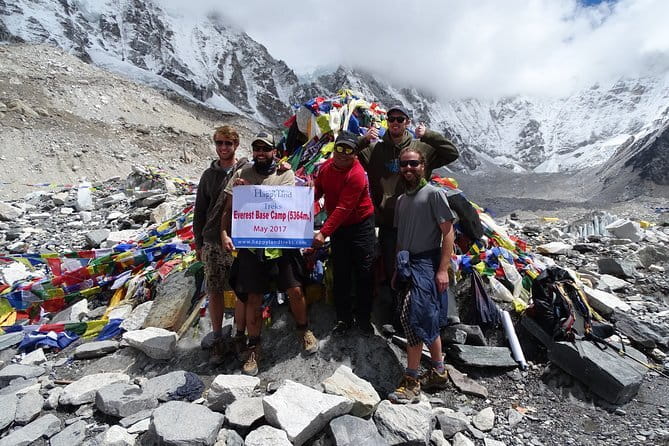
This is the big day. You walk through the Khumbu Glacier area to Everest Base Camp, then return to Gorakshep. The itinerary calls it a long day walk, with the Khumbu Icefall visible from Base Camp.
Reaching Base Camp is an achievement, but it is important to set realistic expectations. This is the base camp approach used by trekkers, not a summit attempt. You will see the icefall and the surrounding high peaks, but the exact views depend on conditions and visibility.
The return to Gorakshep makes the day harder. You are not finishing at Base Camp and stopping for the night. You walk back after reaching your goal, at high altitude, over rocky ground. That is why the previous acclimatization days and a careful pace matter.
Day 10: Kala Patthar and the descent to Pheriche
You hike to Kala Patthar for views of Everest, then descend to Pheriche. The itinerary describes the Kala Patthar portion as brief, but the full day includes the high viewpoint and the descent.
For many people, Kala Patthar provides the most satisfying Everest view of the trip. Base Camp is the destination, but Kala Patthar gives you the wider mountain scene, including Everest and the peaks around it. If you want a classic photograph of Everest, this is the stop to remember.
The descent to Pheriche is welcome after the high point, but do not assume downhill means effortless. Rocky paths can be hard on knees, and fatigue from the previous day may still be present. Your guide can help keep the pace controlled.
Days 11 and 12: Back through Namche to Lukla
On Day 11, you descend toward Namche, crossing suspension bridges and passing villages. On Day 12, you continue through Monjo and Jorsale, return to Phakding, cross more bridges over the Dudh Koshi, and reach Lukla.
The return route gives you a different view of familiar ground. Descending generally helps with altitude, but the itinerary still lists long walking days. After Base Camp and Kala Patthar, your legs may be tired, so good pacing remains important.
Lukla is not just a transit point. It is where you finish the walking portion and prepare for the flight back to Kathmandu. Since the route depends on local flights, avoid scheduling an important international connection immediately after the listed return flight.
Day 13: Flight back to Kathmandu and free time
You take an early flight of about 35 minutes to Kathmandu. The rest of the day is free, with time to walk around Thamel and buy souvenirs.
This final afternoon is a useful buffer. You can rest, sort your bags, and enjoy Kathmandu without another mountain day on the schedule. The airport transfer and local flight are included, but meals and accommodation for you are not listed among the inclusions.
The schedule says the flight may use Kathmandu or Manthali. Confirm the departure airport and timing with the operator before the trip, especially if your international flight follows soon after.
Day 14: Airport transfer or more time in Nepal
On the last day, the representative takes you to the airport, unless you choose to extend your time in Nepal.
The included departure transfer is convenient, especially after a tiring trek. If you extend the trip, you can arrange that separately. The listed experience itself finishes in Kathmandu.
What the $999 price includes, and what it does not
At $999, this trek offers solid value for a private 14-day package if you already understand the extra costs. Included services cover airport transfers, local flight tickets, guide salary, guide food and equipment, guide insurance, national park and local permits, government taxes, and VAT.
The major exclusions are important:
- Your accommodation and food for the complete trip
- International flights
- Nepal entry visa
- Travel and health insurance
- Emergency rescue and evacuation cover
- Tips for the trekking guide
The accommodation and food wording deserves special attention. Ask for the exact lodging and meal arrangements before booking, because those costs can change your real budget considerably. Insurance must specifically cover high-altitude trekking and emergency evacuation. Tips are expected, so plan for them rather than treating them as an unexpected charge.
Guides, private groups, and personal support
The trip is private, so only your group participates. That can make a big difference on a route where people acclimatize at different speeds. The company has assigned guides named in recent trip feedback, including Raju, Roshan, Ram, Abinash, Man Bahadur, Navraj, Bhairas, and Bala.
Specific praise has centered on care, humor, cultural explanation, organization, and help during difficult flight arrangements. One solo woman described receiving strong support when a helicopter return became necessary, and a parent traveling with a 14-year-old daughter highlighted careful arrangements and support throughout the trek.
Those details do not remove the physical demands. A good guide can help with pacing, route decisions, and logistics, but you still need moderate physical fitness and suitable insurance.
Who should book this Everest Base Camp trek?
I would recommend it to you if you want the classic Everest route, prefer a private group, and value having airport transfers and local flights handled in one package. It also suits people who want Sherpa villages, Tengboche Gompa, high mountain viewpoints, and Base Camp in one 14-day plan.
It may not suit you if you want a relaxed holiday, dislike early starts, or expect the $999 price to cover every trip expense. The long walking days, high elevations, rocky trails, and reliance on Lukla flights require patience and flexibility.
The schedule also suits you best if you can protect a little extra time around the trek. Flight changes are part of mountain travel, and a strict onward timetable can add stress.
Should you book it?
Book this trek if you want a private, tightly planned route to Everest Base Camp and you are comfortable budgeting beyond the headline price. The strongest features are the two acclimatization days, the included Lukla flights and permits, the private guiding, and the chance to see both the cultural and mountain sides of the Khumbu.
Before paying, confirm the accommodation and meal costs, the departure airport for your Lukla flight, the guide assigned to your group, and the insurance requirements. If those points are clear, Nepal Nirvana Trails’ 14-day itinerary is a practical way to take on one of Nepal’s great walks without arranging every permit and transfer yourself.
FAQ
How long is the Everest Base Camp trek?
The experience lasts approximately 14 days, including arrival and departure transfers, local flights, trekking days, acclimatization days, and free time in Kathmandu.
Where does the trek start?
The experience starts in Kathmandu, with pickup available at Tribhuvan Airport or at the hotel where you stay. The listed meeting location is Nepal Nirvana Trails at Sat Gumti Marg.
What time does the tour start?
The listed start time is 5:45 a.m.
Is the Lukla flight included?
Yes. Flights from Kathmandu or Manthali to Lukla and from Lukla back to Kathmandu or Manthali are included.
Is airport pickup included?
Yes. Arrival and departure airport transfer services are included.
Are accommodation and meals included?
No. The package information lists guest accommodation and food for the complete trip as exclusions.
Is travel insurance included?
No. You must arrange travel and health insurance that covers emergency rescue and evacuation.
Does the itinerary include acclimatization days?
Yes. You spend an acclimatization day in Namche Bazaar and a second acclimatization day in Dingboche.
Is the tour private?
Yes. Only your own group participates in this private activity.
Can I cancel for a full refund?
You can receive a full refund if you cancel at least 24 hours before the experience start time. Cancellations or changes made within 24 hours are not accepted for a refund.
Latest treks added in Kathmandu
- Private Manaslu Circuit Trek at Himalayas★ 5.0 · 3 reviews
- Ghorepani Poonhill Trek★ 5.0 · 5 reviews
- Ghorepani Poon Hill Trek★ 5.0 · 16 reviews
- Upper Mustang Trekking★ 3.0 · 2 reviews
- Amazing 1 Day Trekking Experience in Kathmandu Nepal★ 5.0 · 24 reviews
- Upper Mustang Trekking★ 5.0 · 2 reviews
- Upper Mustang Trek★ 5.0 · 5 reviews
- Upper Mustang Trekking★ 5.0 · 4 reviews
Everest Base Camp Treks, compared.






Browse the lists this tour appears in