
REVIEW · KATHMANDU
Everest Base Camp Trek
Everest Base Camp is not a quick photo stop. It is an 11-day mountain trek, wrapped inside a 14-day Nepal trip, with suspension bridges, stone villages, thin air, and a final walk beside the Khumbu Glacier. You fly into Lukla, climb slowly through the Khumbu Valley, reach Base Camp, then turn around and retrace much of the route.
I like the built-in acclimatization days in Namche Bazaar and Dingboche, and I like that flights, airport transfers, meals, a porter, and two Kathmandu hotel nights are included. The main catch is the altitude and weather. Lukla flights can be delayed or canceled, and Kala Patthar reaches about 5,550 meters, so this is a serious physical challenge, not a casual mountain walk.
Key points before you book
- Kala Patthar is the visual high point: The sunrise viewpoint offers the clearest listed views of Everest, Nuptse, Pumori, and the Khumbu region.
- Namche and Dingboche provide two acclimatization stops: You gain altitude more carefully than on a rushed itinerary.
- The group is capped at eight people: That can make guide support more personal and keep the walking pace easier to manage.
- Lukla flights are part of the adventure: Flights are included, but weather and seasonal air traffic can alter the plan.
- The Sherpa culture is part of the route: You visit Namche, Tengboche Monastery, Pangboche Monastery, and Sherpa communities along the valley.
- The $1,300 price covers major costs: Flights, meals, two Kathmandu hotel nights, airport transfers, taxes, and guiding are included, while drinks, personal purchases, and tips are extra.
Kathmandu preparation before the Lukla flight
Your first day begins with an airport pickup and a drive to a hotel near Thamel, Kathmandu’s well-known visitor district. The schedule is light, with a pre-trip meeting and preparation for the trek. That matters because the next morning starts early and the route quickly leaves city comforts behind.
Two nights in Kathmandu are included on a bed-and-breakfast plan. The final Kathmandu night gives you a buffer after returning from the mountains, although the exact timing can shift if flights are delayed.
The included airport transfers are useful, especially if you are arriving tired or carrying trekking gear. A maximum group size of eight also gives the guide a manageable group to watch on steep or slow sections.
More Everest Base Camp Treks in Kathmandu
- Everest Base Camp Trek – 14 Days
★ 5.0 · 1,499 reviews - Everest Base Camp Trek
★ 5.0 · 842 reviews - Everest Base Camp Trekking
★ 5.0 · 485 reviews
Lukla to Phakding: the first three hours on foot
The flight to Lukla takes about 40 minutes from Kathmandu or Ramechhap, depending on the season and airport operations. The flight is included for both you and your guide, but bad weather and local conditions can cause delays or cancellations. During busy periods, you may travel by road to Ramechhap before flying.
From Lukla, the first walking day continues toward Phakding and takes roughly three hours. It is a short opening stage, giving you time to adjust to the trail, the pace, and the basic rhythm of walking between mountain settlements.
You spend the night near Phakding and have time to explore the community. Do not expect this to feel like a sightseeing tour with a long list of formal stops. The appeal is the gradual change from the airport village into a quieter valley route.
Six hours to Namche Bazaar
Day three is longer, with about six hours of walking through the Dudh Koshi valley. You cross small suspension bridges and pass through Monjo before climbing toward Namche Bazaar, the main entrance to the Everest region and an important Sherpa center.
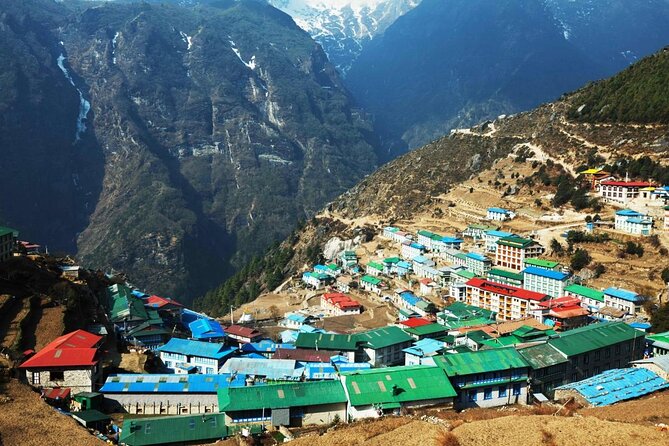
Namche is one of the most useful stops on the route. It is not only a place to sleep. It is also where you begin to understand how villages, trekking routes, mountaineering, and Sherpa culture connect in this part of Nepal.
The next day is set aside for acclimatization at about 3,440 meters. You visit an Everest viewpoint and can also see the Sherpa Museum, which focuses on local culture and mountaineering history. The schedule includes around two hours at the viewpoint and another hour in Namche.
I especially like this pause because the route does not simply force you higher every day. You still walk, but the day is shorter and gives your body a better chance to adjust. The viewpoint is associated with Hotel Everest View, described as one of the highest-placed hotels in the area, and it provides broad mountain views without requiring a full trekking day.
Tengboche and the quiet of its monastery
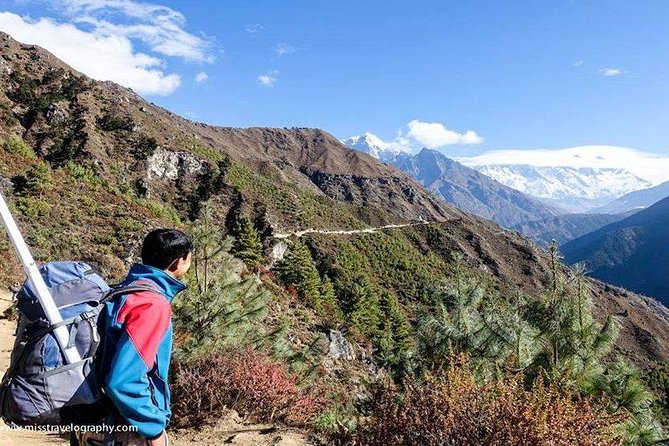
From Namche, the trail follows a high route above the Dudh Koshi toward Tengboche. The walk takes about five hours and includes views of Everest, Nuptse, Lhotse, Thamserku, and Kwangde.
Tengboche Monastery is one of the route’s most meaningful cultural stops. The setting is calm, and the monastery gives the trek a purpose beyond reaching a famous point on a map. You are moving through a living Buddhist region, not simply passing through a chain of mountain lodges.
The trail can feel more demanding here because you are gaining altitude. The itinerary keeps the day to about five hours, which is sensible. You will want time to look around rather than race into the next village.
More Trekking Tours in Kathmandu
- Annapurna Circuit Trek with Tilicho Lake
★ 5.0 · 368 reviews - Everest Base Camp Trekking – 13 Day
★ 5.0 · 365 reviews - Everest Base Camp Trek
★ 5.0 · 350 reviews - Everest Base Camp Trek -14 Days
★ 5.0 · 321 reviews
Dingboche and a second acclimatization day
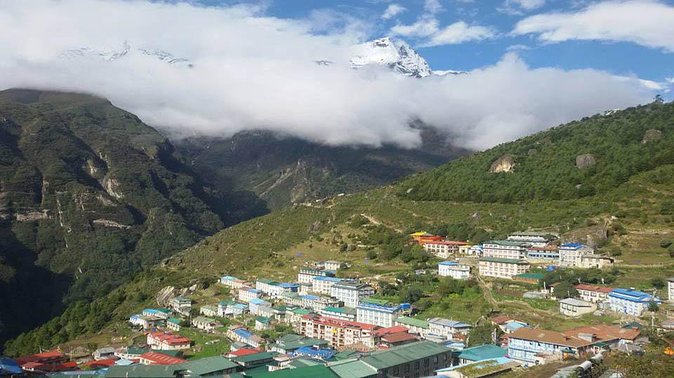
Day six leads through rhododendron forests and meadows, past the Buddhist nunnery at Deboche, and across the Imja Khola toward Dingboche. The walking time is about five hours. Island Peak and Amphu Laptsa Peak are part of the mountain views in this section.
Dingboche is followed by another acclimatization day. You can rest or take a short walk before the higher stages to Lobuche, Gorak Shep, and Base Camp. The schedule lists around three hours of walking for optional activity, with a return to Dingboche for the night.
This second rest day is one of the strongest features of the program. The route eventually reaches very high elevations, and the plan gives you a slower transition instead of piling several long climbs together.
The description only states that you need a moderate level of physical fitness, but the numbers tell the fuller story. You should be ready for repeated five to six-hour walking days, steep sections, cold conditions, and a high point above 5,500 meters.
Memorials, the Khumbu Glacier, and Lobuche
The walk to Lobuche takes about six hours. You pass Dughla and climb a hill marked by memorials to Sherpas who died on Everest expeditions. This is a sobering stop, and it puts the famous mountain in a more serious frame.
The route then follows the moraine of the Khumbu Glacier, with views toward Kala Patthar and Pumori. The trail becomes more stony and uneven as you approach the high valley. You should expect this section to feel less like a village walk and more like a demanding mountain approach.
Lobuche is an overnight stop before the Base Camp push. That staging is practical. It breaks the journey into manageable sections and avoids trying to reach Base Camp directly from Dingboche.
Everest Base Camp from Gorak Shep
Day nine takes you from Lobuche toward Everest Base Camp, with the total walking time listed at about six hours. After lunch, the route continues over stony ground, moraines, and streams toward the Khumbu Icefall and Base Camp.
Base Camp itself is not a viewpoint with a clear summit panorama in the way many first-time hikers imagine. You are visiting the staging area at the foot of the Khumbu Icefall, surrounded by glacier terrain and expedition history. The experience comes from the approach, the height, and the realization that climbers begin their Everest attempts from this harsh setting.
After the Base Camp visit, you return toward Gorak Shep for the night, with another three hours listed for that section. This is a long, tiring day, and the thin air can make even moderate distances feel slow.
The route does not include a technical climb. It is a high-altitude trek on a marked route, but the ground, altitude, and weather still demand care. Your guide’s judgment matters, particularly if anyone in the group is struggling.
Kala Patthar at 5,550 meters
The next morning brings the trek’s highest point. The guide schedules the climb to Kala Patthar, around 5,550 meters, for sunrise. The ascent takes about two hours, followed by a descent to Gorak Shep for breakfast.
For many people, this is the best mountain view of the entire trip. Kala Patthar is valued because it provides a strong outlook toward Everest and the surrounding peaks, including the Khumbu region. The early start is uncomfortable, but the dawn light is the reason to do it.
After breakfast, you descend toward Pheriche for another six-hour walking day. The downhill direction helps, but it does not make the day effortless. Knees and feet may be just as tired as lungs by this stage.
I would treat Kala Patthar as a highlight, not a guaranteed performance test. If altitude, weather, or exhaustion affects your pace, the important thing is to follow the guide’s advice rather than force the summit.
The return through Pangboche and Namche
The route descends through Pangboche and back toward Namche Bazaar in about six hours. Pangboche Monastery is identified as the oldest monastery in the area, giving you another chance to connect the scenery with the region’s Buddhist traditions.
You continue via Tengboche and Phungithanka before reaching the familiar route toward Namche. The return journey is not just a repeat. Walking downhill gives you different views, and you now understand the villages and bridges that seemed unfamiliar on the way up.
The descent to Lukla takes about six hours on day twelve. You pass through greener surroundings and Sherpa hamlets before reaching the Hillary Suspension Bridge and Lukla. After the stark upper valley, the lower trail can feel noticeably more settled and welcoming.
Lukla flights and the importance of flexibility
Day thirteen is reserved for the flight from Lukla. During the busy season, you may fly to Ramechhap because of air traffic at Kathmandu’s Tribhuvan International Airport, then continue by road to Kathmandu. The listed stop at Ramechhap includes the flight and related transfer time.
This is the biggest practical uncertainty in the trip. The program depends on mountain weather and available flights. A canceled flight is not a small delay when you have an international departure to catch, so I would avoid placing a tight connection immediately after the trek.
The company states that poor weather can lead to a changed date or a full refund if the experience is canceled. That is helpful before departure, but you still need personal flexibility for a mountain itinerary. The airport transfer on arrival and the final departure transfer are included.
What the $1,300 price really covers
At $1,300, the value depends on what you would otherwise arrange separately. The package includes airport pickup and drop-off, taxes and fees, flights between Kathmandu or Ramechhap and Lukla, the guide’s flights, two Kathmandu hotel nights with breakfast, and meals during the trek.
You receive 13 breakfasts, 11 lunches, and 11 dinners. Personal expenses and drinks are not included, and alcohol costs extra. Tips for the guide and driver are also outside the quoted price, so keep a separate budget for those.
The price also includes the structure that is difficult to organize alone: a 14-day schedule, a guide, a porter, acclimatization stops, high-altitude route planning, and a group limited to eight. It is not a luxury trek, and the description does not promise upscale lodging or premium facilities. The value is in the logistics and support, not in hotel comfort.
Guide support and the human side of the trek
The strongest pattern in the feedback is the personal care provided by the guides and porters. Ram is praised for keeping a trekker calm and supported, while Amer is mentioned for porter support. Other guide names connected with the experience include Bishnu, Rajesh, Prakash, Tilak, Binode, Sanjay, and Gore.
One particularly useful detail is the kind of help described on the trail. Gore reportedly shared his own gear, repaired a damaged shoe, kept track of meals and health, and made calm decisions during a sudden snowstorm. Another guide, Ram, kept a family group entertained with card games while looking after a granddaughter on the trek.
That gives you a useful picture of what good support means here. It is not just pointing at the next village. It is helping with morale, clothing, shoes, pacing, weather, and the small problems that can become large ones at altitude.
The group size of eight supports that style of care. Still, guide quality can vary by individual assignment, and the names above do not mean all of them will be on your departure. Ask who will lead your group and how porter support is arranged before you travel.
Who should book this Everest Base Camp trek?
You should consider this trip if you want the classic Everest route, prefer a structured group, and value having flights and meals arranged. It suits people who can handle several hours of walking per day and who are prepared for altitude rather than focused only on a scenic holiday.
It also works well for families with a strong fitness base, provided everyone understands that the high sections are demanding. One family completed the route with a guide who kept the younger member engaged, but that does not remove the need for preparation or patience.
I would hesitate to recommend it to anyone with very limited hiking experience, a fixed flight schedule immediately afterward, or little tolerance for basic mountain conditions. The moderate fitness requirement should not be read as easy. The altitude, weather, and long return walk are real tests.
You can cancel for a full refund up to three full days before the local start time. Changes or cancellations inside that window are not accepted, and the minimum group requirement or poor weather can also affect departure.
Should you book it?
Book this trek if reaching Everest Base Camp matters more to you than comfort, speed, or certainty. The itinerary has the right basic shape: a short start from Lukla, two acclimatization days, time at Tengboche and Pangboche, the Base Camp walk, a Kala Patthar sunrise, and a gradual return.
The $1,300 cost is attractive because it covers the expensive flights, meals, transfers, hotel nights, and guiding. Just keep money aside for tips, drinks, and personal expenses, and build flexibility around the Lukla flight.
My practical advice is simple: ask about the assigned guide, prepare for six-hour walking days, and leave room after day thirteen before your international departure. If you can accept those conditions, this is a focused way to reach Everest Base Camp with useful support and a small group.
FAQ
How long does the Everest Base Camp Trek take?
The experience lasts approximately 14 days. The schedule includes two nights in Kathmandu, trekking from Lukla to Everest Base Camp and back, and the return flight from Lukla.
Is the flight to Lukla included?
Yes. The package includes the client’s flight between Kathmandu and Lukla, or between Ramechhap and Lukla when seasonal operations require it. The guide’s flights are also included.
What happens if weather cancels the Lukla flight?
The trip depends on suitable weather. If the experience is canceled because of poor weather, you are offered another date or a full refund. Flight delays and cancellations may also affect the schedule.
How high does the trek go?
The highest listed point is Kala Patthar at about 5,550 meters. Namche Bazaar is around 3,440 meters, and the itinerary includes acclimatization days there and in Dingboche.
Are meals included?
Yes. The package includes 13 breakfasts, 11 lunches, and 11 dinners. Personal expenses, beverages, and alcoholic drinks are not included.
What is the cancellation policy?
You can cancel at least three full days before the experience start time for a full refund. Cancellations or changes made less than three full days before the start are not accepted for a refund.
Latest treks added in Kathmandu
- Private Manaslu Circuit Trek at Himalayas★ 5.0 · 3 reviews
- Ghorepani Poonhill Trek★ 5.0 · 5 reviews
- Ghorepani Poon Hill Trek★ 5.0 · 16 reviews
- Upper Mustang Trekking★ 3.0 · 2 reviews
- Amazing 1 Day Trekking Experience in Kathmandu Nepal★ 5.0 · 24 reviews
- Upper Mustang Trekking★ 5.0 · 2 reviews
- Upper Mustang Trek★ 5.0 · 5 reviews
- Upper Mustang Trekking★ 5.0 · 4 reviews
Everest Base Camp Treks, compared.






Browse the lists this tour appears in