
REVIEW · KATHMANDU
Everest Base camp Trek-12 days
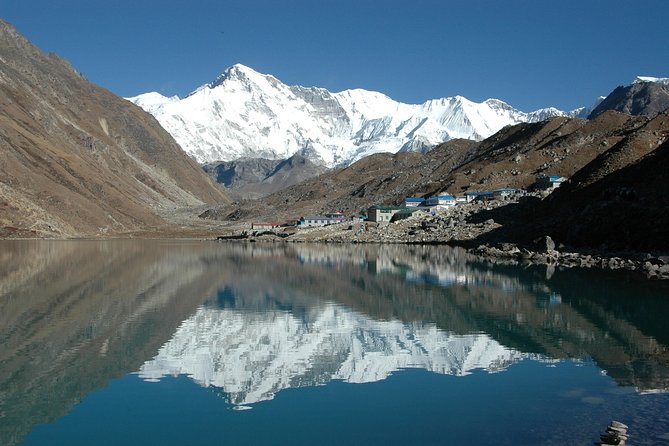
Flying into Lukla is the first real jolt of this Everest Base Camp trek. From there, you walk through Sherpa villages, rhododendron forests, Buddhist monuments, and high mountain valleys before reaching Base Camp at 5,364 meters. The route also includes an early hike to Kala Patthar, the best viewpoint in the program.
I like the two acclimatization days, especially the hike toward Everest View Hotel and the optional climb above Dingboche. I also like the practical package: Lukla flights, teahouse lodging, meals, park fees, sleeping bags, down jackets, and airport transfers are covered.
The main caution is the altitude and the schedule. This is not a casual walk, and the advertised duration is inconsistent: it is described as a 12-day trek but runs about 13 days including Kathmandu and the return flight. Weather can also delay flights to or from Lukla.
Key points before you book
- Lukla flight included: The 40 to 45 minute domestic flight puts you directly at the mountain trailhead.
- Maximum group size of 26: This keeps the price down, but it is not a private trek.
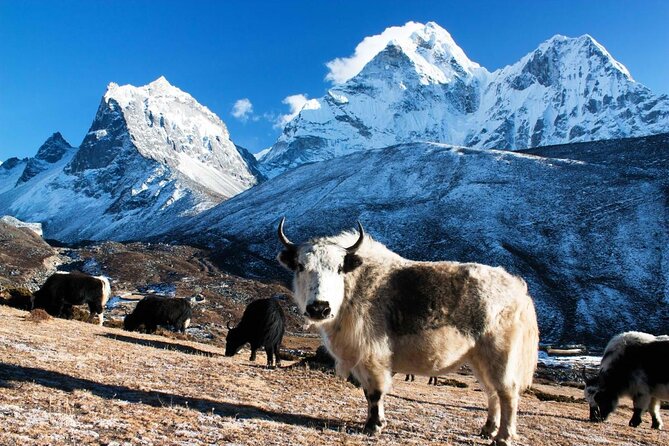
- Acclimatization is built in: You spend extra time around Namche and Dingboche rather than rushing uphill.
- Highest point is Kala Patthar: Base Camp sits at 5,364 meters, while the early morning viewpoint reaches about 5,364 meters according to the supplied schedule.
- Teahouse lodging is part of the package: Expect practical mountain accommodation, not resort comfort.
- Several costs are covered: Meals, park fees, flights, gear, and transfers make the $1,400 price worth examining closely.
What the $1,400 price really covers
At $1,400 per person, this is an economical guided trek rather than a luxury Nepal holiday. The price includes the two domestic flights between Kathmandu and Lukla, accommodation during the trek, national park fees, meals, seasonal fruit, a sleeping bag, a down jacket, basic medical supplies, and arrival and departure transfers.
That bundle matters. Lukla flights alone are an essential part of reaching the standard Everest Base Camp route, and replacing a sleeping bag and warm jacket can add a surprising amount to your preparation costs. You also avoid arranging teahouses and meals from village to village.
The package includes 11 dinners, 12 breakfasts, and 11 lunches. Personal spending is separate, including alcoholic drinks, cold drinks, laundry, and other items of a personal nature. A porter is also not included if you want one, so ask about the current porter cost before departure.
The group can reach 26 people. That is a substantial group for a narrow mountain trail, so you should expect a social trip with a set pace rather than a private, highly flexible experience. The advantage is price and shared support. The tradeoff is that slower decisions, larger meal stops, and less one-to-one attention are possible.
More Everest Base Camp Treks in Kathmandu
- Everest Base Camp Trek – 14 Days
★ 5.0 · 1,499 reviews - Everest Base Camp Trek
★ 5.0 · 842 reviews - Everest Base Camp Trekking
★ 5.0 · 485 reviews
Kathmandu to Lukla, then into the Khumbu
Your first day is based in Kathmandu Valley. The details are brief, but arrival and departure transfers are included, and the stated start time is 6:00 am. Confirm the exact pickup point and whether your first night in Kathmandu is included, since the package specifically says accommodation during the trek.
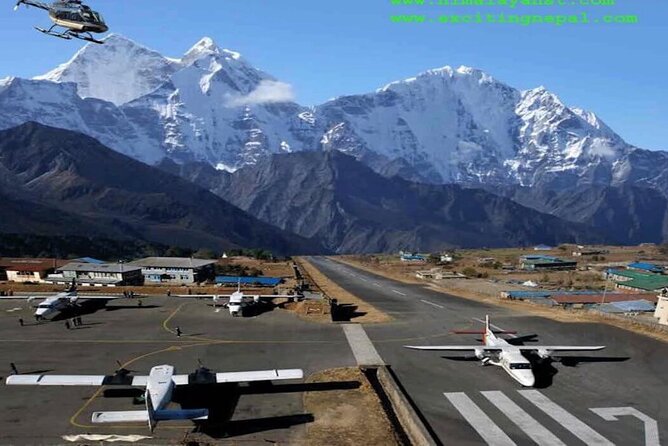
On the following morning, you leave early for Tribhuvan International Airport. The flight to Lukla takes about 40 to 45 minutes. The small airstrip and mountain setting make the arrival memorable, but this is also the part of the trip most exposed to bad weather. The operator says a weather cancellation may lead to a new date or a full refund, so keep some flexibility in your wider Nepal plans.
After meeting porters and staff in Lukla, you walk toward Monzo, with the route also describing the villages of Phakding and Manjoo in this section. The trail begins with a descent, then follows the Dudh Kosi River. Glacial water gives the river a pale, chalky look, and suspension bridges soon become part of the rhythm of the route.
The first trekking day covers roughly 10 kilometers and takes five to six hours, reaching about 2,804 meters. That is a fair opening day. You get a taste of the trail without immediately confronting the highest elevations.
Namche Bazaar and the first acclimatization test
The next morning, you continue from Monzo toward Jorasele and enter Sagarmatha National Park. The park is a UNESCO World Heritage Site, but the bigger pleasure is the change in scenery. Rhododendron forest, mountain streams, stone steps, and glimpses of snowy peaks begin to replace the lower valley feel.
The climb from Jorasele to Namche is the first serious test. The route gains about 600 meters and includes a steep, rough section toward the Khumbu River. The schedule lists three to four hours and a maximum altitude of 3,445 meters, with the walking distance given as about four kilometers.
Namche Bazaar is more than a stopping point. It is the main Sherpa trading center on this route, with lodges, shops, and a strong sense that the high valley is now your world. You should expect a busy mountain town rather than a quiet village.
The following day is for acclimatization, but it is not a day in bed. You climb above Namche toward the Everest View Hotel, then visit Khunde and Khumjung. Khumjung is described as a prosperous Sherpa village, and the route gives you a closer look at local homes and village life.
The climb is steep at first. Take it slowly. The purpose is to gain height during the day and sleep lower in Namche, giving your body time to adjust. From the Everest View Hotel, you may see Everest along with Ama Dablam and other major peaks if the air is clear.
Tengboche brings monasteries and wide mountain views
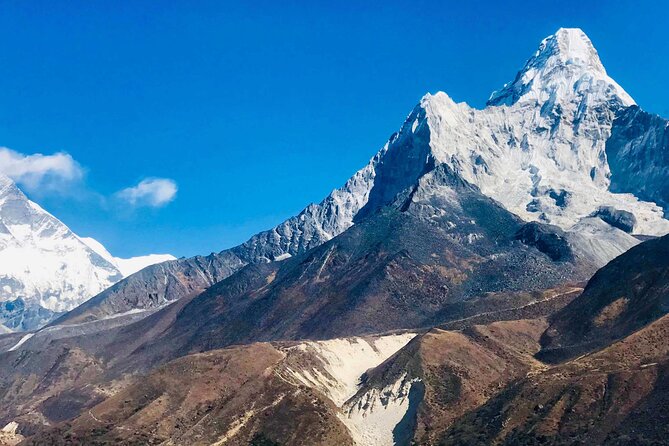
From Namche, the trail follows a contour before climbing stone steps toward Mongla Pass, listed at about 3,975 meters. This day covers roughly 9.5 kilometers and takes five to six hours. The views of Ama Dablam are one of the strongest reasons to take this route, since the mountain appears in several sections of the walk.
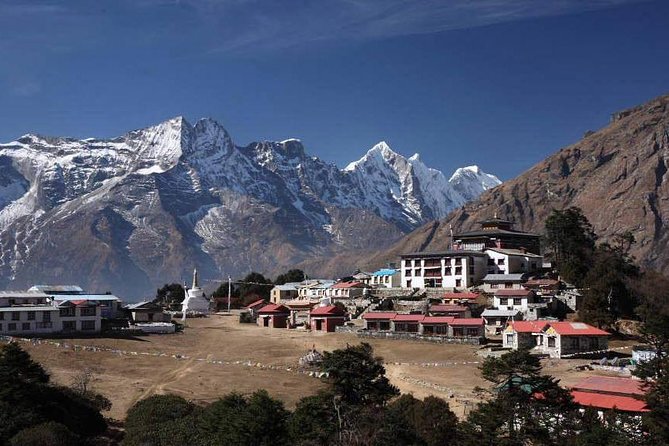
You also pass Buddhist monuments, small gompas, and stupas. These are not decorative interruptions. They show how closely daily life, religion, and mountain travel are tied together in the Khumbu.
The route descends to the Dudh Kosi River before climbing again toward Tengboche. That repeated pattern is typical here: lose height, regain it, and do it while carrying your day pack at altitude. Tengboche is a particularly meaningful stop because of its monastery setting and open views toward the surrounding peaks.
From Tengboche, the trail drops through rhododendron woodland before climbing again through birch, conifer, and rhododendron forest. You pass smaller settlements and see more of the local way of life. The route then crosses the Khumbila Khola valley and climbs toward a ridge, with views of Taboche, Nuptse, Cholatse, and other peaks.
The day ends around Dingboche at roughly 4,350 meters. The schedule gives five to six hours and about 11 kilometers. At this height, a normal walking day feels different. You may move slowly, stop often, and find that even a modest incline demands patience.
More Trekking Tours in Kathmandu
- Annapurna Circuit Trek with Tilicho Lake
★ 5.0 · 368 reviews - Everest Base Camp Trekking – 13 Day
★ 5.0 · 365 reviews - Everest Base Camp Trek
★ 5.0 · 350 reviews - Everest Base Camp Trek -14 Days
★ 5.0 · 321 reviews
Dingboche gives your body time to catch up
Dingboche has its own acclimatization day. The planned outing is a hike toward Nangkartshang Peak, just above the village. It is a useful choice because it gives you a higher daytime climb without forcing you to sleep at the same height.
The viewpoint is especially good for Ama Dablam. On a clear day, you may see the mountain from its summit down to its base. The rest of the afternoon is available for a village walk or quiet rest.
This is where the moderate-fitness description deserves a careful reading. You do not need to be an elite athlete, but you should be comfortable walking for five to eight hours over uneven ground on several consecutive days. Hiking experience is recommended, and altitude can affect a fit person just as quickly as an unfit one.
Move slowly, drink regularly, and tell your guide if you feel unwell. The schedule itself warns you to avoid altitude sickness by walking at a measured pace. Do not treat that advice as a formality.
Duglha, Lobuche, and the memorial stones
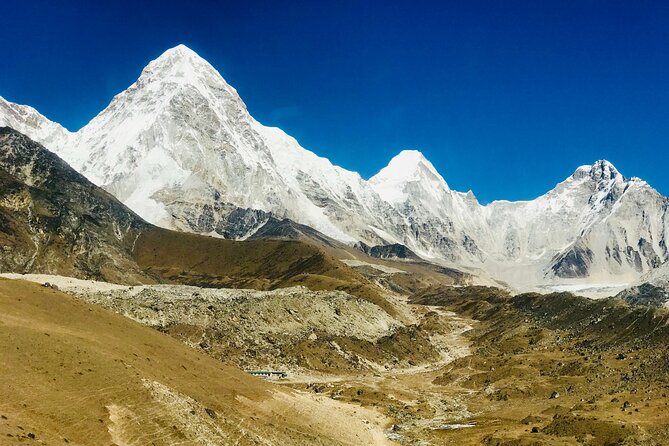
Leaving Dingboche, you walk through a widening valley before the route narrows near Dusa. You pass the campsite associated with the first successful Everest expedition and gain fresh views of Pumori.
The trail crosses a stream and climbs to Duglha, a small settlement marked by prayer flags. From here, the route becomes more serious. High altitude, wind, rough ground, and the steady incline all take more energy than the distances suggest.
The next section toward Gorak Shep covers about 15 kilometers and takes seven to eight hours. You follow the Khumbu Glacier, walking over uneven rock with repeated ups and downs. Near Gorak Shep, the trail becomes rougher, and you need to watch every step.
Gorak Shep is the last major staging point before Base Camp. The schedule lists a maximum altitude of 5,364 meters, though the walking sequence includes both Gorak Shep and the onward trip to Base Camp. At this elevation, you should expect a simple day focused on pacing, warmth, hydration, and reaching the goal safely.
Reaching Everest Base Camp at 5,364 meters
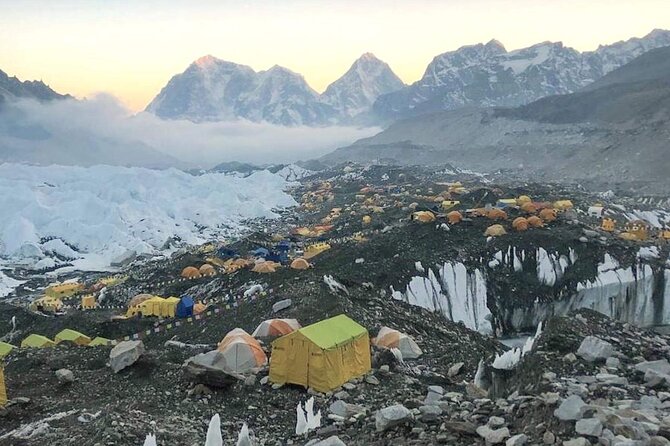
The route from Gorak Shep leads toward the Khumbu Glacier and the Khumbu Icefall. You cross rough ground and large rocks, then continue with gradual ups and downs before the final approach.
Everest Base Camp is not a paved lookout with a neat sign and a café. The setting is glacial, rocky, and dependent on the climbing season. The achievement is reaching the foot of the route used by Everest expeditions, with the Khumbu Icefall nearby and huge peaks surrounding you.
The emotional payoff comes from the effort as much as the view. You have walked from Lukla through forests and villages, climbed above Namche, crossed high valleys, and adapted to thin air. Give yourself time to take photographs, but do not linger so long that you compromise the return to Gorak Shep.
Kala Patthar offers the best sunrise view
The next morning begins early, with a three to four hour hike toward Kala Patthar. This is one of the strongest parts of the program because the viewpoint gives broad views of Everest, the Khumbu Glacier, and the Khumbu Icefall.
At sunrise, the snowy peaks may catch the first light and change color within minutes. The route promises a 360-degree panorama in clear weather, but mountain weather is never guaranteed. Bring warm layers, including the supplied down jacket if it fits well, and keep your camera accessible.
The schedule places the highest point at about 5,364 meters, matching the Base Camp figure. Exact elevations can vary by route point and map source, but the practical message is clear: this is the highest and most demanding part of your walk.
The long return through Namche and Lukla
After Kala Patthar, you begin the descent. You pass through Pangboche and Tengboche before continuing to Namche Bazaar, arriving in the afternoon. Downhill walking is easier for breathing, but it can be hard on knees and tired feet.
The final trekking day covers about 10 kilometers from the Manjoo area back to Lukla. The route follows Benkar and Phakding, crosses several suspension bridges over the Dudh Kosi, and passes small Sherpa settlements.
This last day is not just a formality. You still have uneven ground and repeated river crossings, but the lower altitude makes the air feel easier. Lukla has lodges, teahouses, and shops, so you have a chance to spend the final night with the trek behind you.
The next morning, you take the early flight to Kathmandu. A window seat can give you an aerial view of the Himalayan region, assuming the weather cooperates. Again, leave room in your schedule for flight disruption.
Guides, group size, and the human side of the trek
The operator assigns guides, and the names associated with past trips include Ram Tamang, Basu, Suman, Shasi, Tika, and other team members. If you have a preference or want to know your guide’s experience and language ability, ask before departure rather than assuming a particular person will lead your group.
The strongest practical praise attached to this company concerns communication and problem solving. Subash, the owner, is repeatedly described as quick to answer questions and helpful with arrangements, airport changes, hotels, health advice, and pre-trip planning.
That support matters on a route where flights can shift and altitude can change your plans. Still, remember that this is a group trek. A guide can organize the route and help with logistics, but you remain responsible for reporting symptoms and managing your own pace.
Who should book this Everest Base Camp trek?
I would choose this trip if you want the classic Everest route, prefer a guided group, and value having major logistics handled for a reasonable price. It suits a moderately fit person with hiking experience who is willing to spend nearly two weeks walking and sleeping at high altitude.
You should think twice if you want private pacing, premium lodging, a porter included automatically, or a short and easy holiday. The group size can reach 26, the trail is physically demanding, and the basic teahouse format is part of the experience.
The free cancellation rule is useful: cancel at least 24 hours before the local start time for a full refund. Cancellations or changes inside 24 hours are not refunded or accepted, and a weather cancellation may lead to another date or a full refund.
Should you book it?
Book this trek if the $1,400 price fits your budget and you want a practical route to Everest Base Camp with flights, meals, gear, park fees, and acclimatization days included. The best features are the classic Lukla approach, the extra time around Namche and Dingboche, the Kala Patthar sunrise, and responsive trip support from the company.
Before paying, confirm the exact 12-day or 13-day schedule, porter pricing, Kathmandu accommodation, guide assignment, and how flight delays are handled. If you accept basic lodging, group travel, and a tough high-altitude walk, this is a strong-value way to reach the Everest region.
FAQ
How long does the experience last?
The program is advertised as a 12-day Everest Base Camp trek, but the detailed schedule runs about 13 days, including Kathmandu, the Lukla flights, and the final return to Kathmandu.
Where does the trek begin?
The experience begins in Kathmandu Valley. You then fly from Kathmandu to Lukla before starting the main trek.
How long is the flight to Lukla?
The flight from Kathmandu to Lukla takes about 40 to 45 minutes.
Is airport pickup included?
Yes. Arrival and departure transfers are included, and pickup is offered.
What is the maximum group size?
The group can include a maximum of 26 people.
Is accommodation included?
Yes. Accommodation during the trek is included, with teahouse lodging used along the route.
Are meals included?
Yes. The package includes 12 breakfasts, 11 lunches, and 11 dinners. Seasonal fruit is also included.
Are national park fees included?
Yes. National park fees are included in the price.
Is trekking gear provided?
A sleeping bag and down jacket are included, along with basic medical kits. Other personal equipment is not specified in the supplied details.
Is a porter included?
No. A porter carrier is not included automatically. You can request one at an additional cost.
What level of fitness is needed?
The trek is best suited to people with moderate physical fitness and hiking experience. Walking days range from about three to eight hours, and the route reaches more than 5,000 meters.
What happens if bad weather cancels the trip?
If poor weather causes the experience to be canceled, you are offered a different date or a full refund. Normal cancellations made at least 24 hours before the start time receive a full refund.
Latest treks added in Kathmandu
- Ghorepani Poon Hill Trek★ 5.0 · 16 reviews
- Private Manaslu Circuit Trek at Himalayas★ 5.0 · 3 reviews
- Ghorepani Poonhill Trek★ 5.0 · 5 reviews
- Upper Mustang Trekking★ 3.0 · 2 reviews
- Amazing 1 Day Trekking Experience in Kathmandu Nepal★ 5.0 · 24 reviews
- Upper Mustang Trekking★ 5.0 · 2 reviews
- Upper Mustang Trek★ 5.0 · 5 reviews
- Upper Mustang Trekking★ 5.0 · 4 reviews
Everest Base Camp Treks, compared.






Browse the lists this tour appears in