
REVIEW · KATHMANDU
Everest Base Camp trek 12 days from Kathmandu
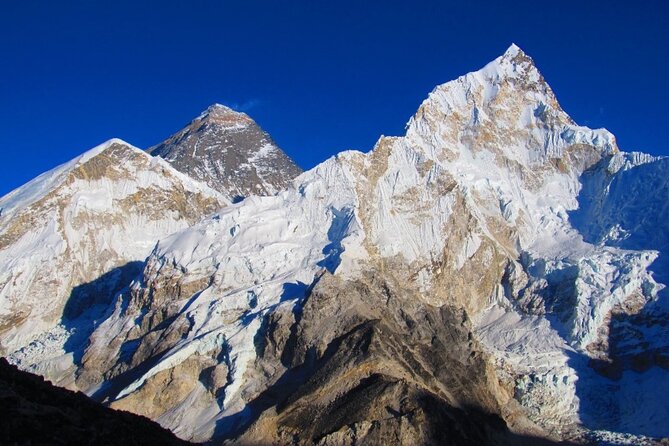
The prize here is clear: you walk through the Khumbu Valley to Everest Base Camp at 5,320 meters, then climb Kala Patthar at 5,550 meters for the best mountain views of the trip. The route also gives you time in Namche Bazaar, a visit to Tengboche Monastery, and a useful acclimatization hike to Hotel Everest View.
I like the practical package. Flights, meals, permits, teahouse lodging, a licensed guide, sleeping bag, down jacket, and walking pole are included, so you are not arranging the trek piece by piece. I also like the built-in rest days at Namche and Dingboche, which matter far more than squeezing in extra sights at this altitude.
The catch is the pace. Twelve days is a tight schedule for a high-altitude trek, and the long days around Base Camp and Kala Patthar demand steady fitness. Flights to Lukla can also involve an early start, and in peak season you may need a five to six-hour transfer to Ramechhap Airport.
Key points to know before booking
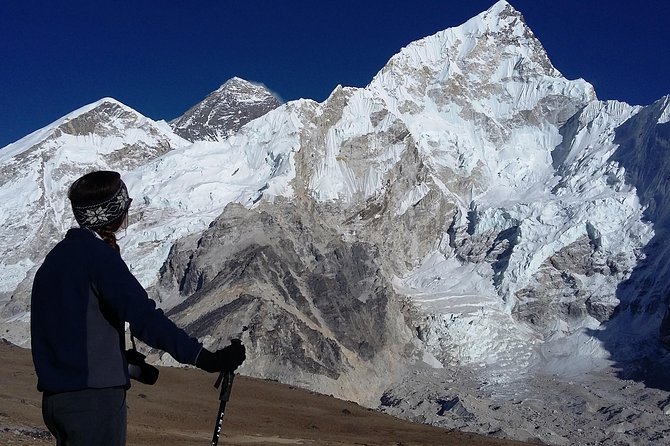
- 5,550-meter Kala Patthar: The high point of the trek offers close views of Everest and a wide panorama of the Khumbu peaks.
- Two acclimatization stops: Namche and Dingboche each include a higher day hike before you continue upward.
- Private trekking experience: Your walking group is limited to your own booking, though airport transfers are shared.
- A useful equipment package: A duffle bag, down jacket, sleeping bag, walking pole, map, and achievement certificate are supplied.
- Peak-season flight change: From March to May and September to November, Lukla flights operate from Ramechhap because of Kathmandu air traffic.
- $1,600 per person: The price covers many major trek costs, but not drinks, insurance, porter service, tips, rescue, or personal spending.
What the $1,600 price really covers
At $1,600 per person, this is not a bare-bones walking package. The fee includes the flight from Kathmandu or Ramechhap to Lukla and back, twin-share lodge accommodation, breakfast, lunch, and dinner during the trek, permits, government fees, taxes, and a licensed guide.
The equipment allowance adds real value. You receive a duffle bag, down jacket, sleeping bag, and walking pole, which can save you from buying or renting several bulky items. A trekking map and trip certificate are also included, though the map is the useful part when you want to follow the route.
You still need to budget for drinks, hot showers, phone calls, internet, laundry, battery charging, bottled or boiled water, and any bar bills. Tips for the crew are not included. A porter is also extra, so clarify before departure if you want someone to carry your main bag.
The biggest financial uncertainty is rescue or evacuation. Helicopter flights, emergency care, accident costs, cancellation costs, and insurance are excluded. You should arrange suitable travel insurance before setting out, especially because the route reaches 5,550 meters.
More Everest Base Camp Treks in Kathmandu
- Everest Base Camp Trek – 14 Days
★ 5.0 · 1,499 reviews - Everest Base Camp Trek
★ 5.0 · 842 reviews - Everest Base Camp Trekking
★ 5.0 · 485 reviews
Day 1: Lukla to Phakding begins with a flight and a short walk
The first day starts with a flight lasting about 40 minutes, followed by a three to four-hour walk to Phakding at 2,652 meters. The listed meeting time is 5:15 a.m., so this is not a gentle first morning.
Lukla is the working gateway to the Everest region. Once you land, the trek starts at once, with no long road approach. Phakding is a sensible first stop because it keeps the opening walking day moderate while beginning the gradual climb toward Namche.
The flight schedule is one part of this trip you cannot treat casually. In peak months, the flight begins at Ramechhap rather than Kathmandu. You can travel there the previous day and sleep nearby, or leave Kathmandu around 1 a.m. for the five to six-hour shared transfer.
Day 2: The river route to Namche Bazaar
The walk from Phakding to Namche takes about six to seven hours and reaches 3,440 meters. This is the first day that feels like a serious trek, with a longer distance and a clear gain in height.
Namche Bazaar is more than a stopping point. It is the main trading center and gateway for the Everest region, and it is where you begin to feel the route’s mountain culture rather than simply passing through it. The town is also an important place to pause before going higher.
You should not rush this section. The schedule gives you a full day in Namche next, which is valuable for adjusting to the thinner air. A good guide will also help you keep the pace steady and make the next morning easier.
Day 3: Namche acclimatization and Hotel Everest View
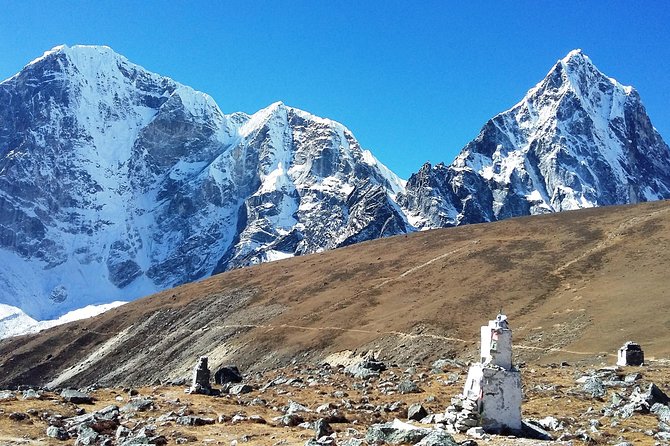
The acclimatization day includes a three to four-hour hike toward Hotel Everest View at about 3,900 meters. This follows the basic high-altitude rule of sleeping lower than your highest daytime point, though your guide will manage the exact pace and stops.
The hike gives you an early look at Everest and the surrounding peaks without asking you to carry your trek onward. It is also a useful test of how your body responds before the route climbs above 4,000 meters.
Do not treat this as a day off. Walking higher and returning to Namche helps prepare you for the next stages. Keep your breathing calm, drink regularly, and tell the guide promptly if you feel unwell.
More Trekking Tours in Kathmandu
- Annapurna Circuit Trek with Tilicho Lake
★ 5.0 · 368 reviews - Everest Base Camp Trekking – 13 Day
★ 5.0 · 365 reviews - Everest Base Camp Trek
★ 5.0 · 350 reviews - Everest Base Camp Trek -14 Days
★ 5.0 · 321 reviews
Day 4: Tengboche Monastery at 3,860 meters
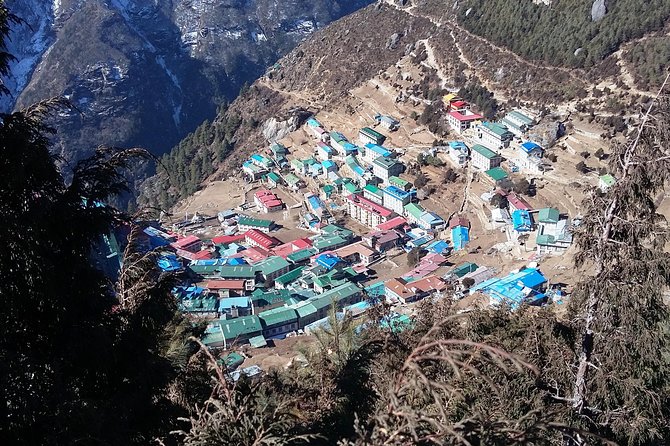
From Namche, you walk five to six hours to Tengboche at 3,860 meters. Tengboche Monastery is one of the most meaningful stops on the route, and it adds a cultural purpose to what could otherwise be a steady sequence of mountain lodges.
The monastery is an important religious site in the region. The stop gives you a chance to slow down and understand that the Khumbu route is not only a path for mountaineering expeditions. It is also a lived-in high mountain area with its own religious traditions.
The day is not especially long by trekking standards, but the altitude begins to make every uphill section more noticeable. You will appreciate having a guide who can explain the sites and keep the group moving at a safe rhythm.
Days 5 and 6: Dingboche and the Nagarjun Hill acclimatization hike
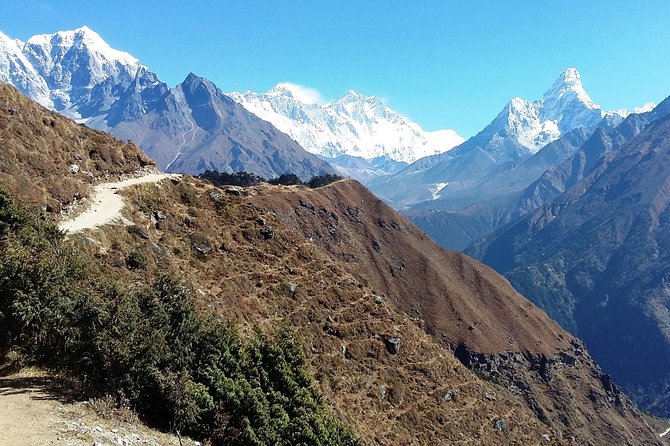
Day 5 takes you from Tengboche to Dingboche, a five to six-hour walk ending at 4,410 meters. Dingboche is an important pause because the next section climbs higher and the air becomes noticeably thinner.
The following day is another acclimatization day, with a four to five-hour hike toward Nagarjun Hill at about 5,100 meters. This is a serious daytime height, even though you return to Dingboche to sleep.
The route now asks more from you than basic sightseeing fitness. The package says no prior trekking experience is needed, and that is fair if you are in moderate physical shape and prepared for long uphill days. Still, you should not confuse no prior experience with no preparation. Regular walking, hills, and stair training will help.
Day 7: Dingboche to Lobuche
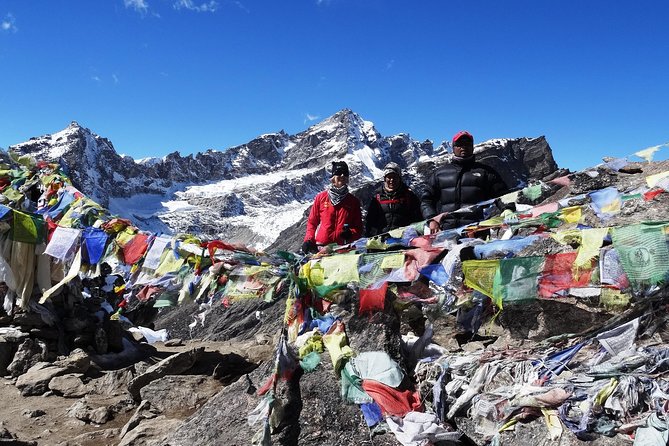
The walk to Lobuche takes four to five hours and reaches 4,910 meters. Compared with the previous days, the distance is shorter, but the height makes it demanding.
Lobuche is a staging point for the main goal ahead. The settlement feels less like a town and more like a practical overnight stop, so your expectations should be simple: eat, rest, keep warm, and prepare for an early, long day.
This is a good place to manage your personal gear carefully. Keep warm layers, water, headwear, and any needed medication easy to reach. Your down jacket and sleeping bag are included, but you still need suitable trekking clothes and footwear.
Day 8: Gorak Shep and Everest Base Camp
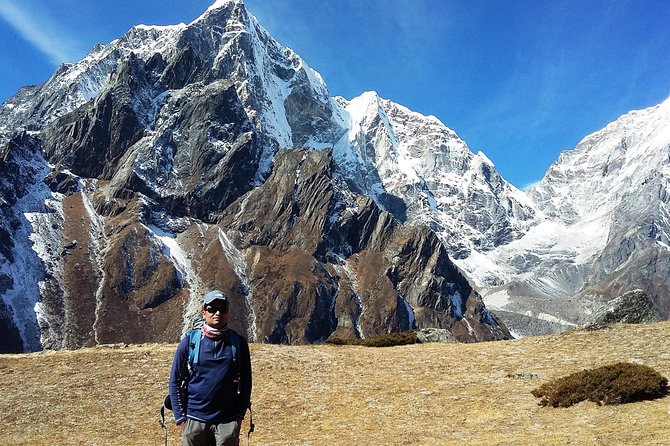
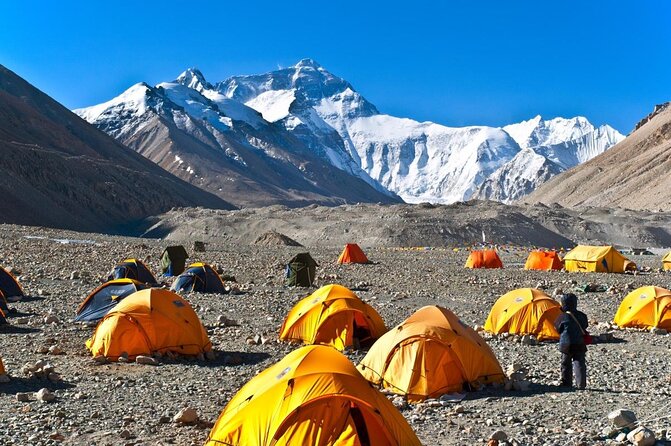
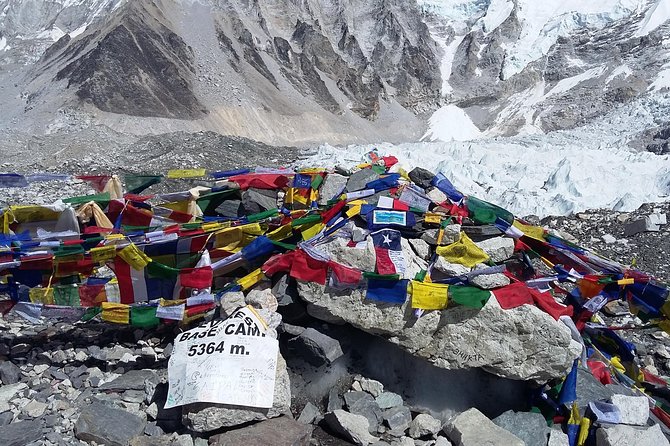
Day 8 is one of the hardest and most rewarding sections. You walk from Lobuche to Gorak Shep and then continue to Everest Base Camp, with seven to eight hours of walking in total. Base Camp sits at 5,320 meters beside the Khumbu Glacier.
This is the symbolic high point of the trek. You reach the place where Everest expeditions begin, but the experience is not a simple viewpoint visit. The path is long, the air is thin, and the rough terrain requires patience.
Gorak Shep is your overnight base, and the day’s length means you should conserve energy from the morning. You may find the route slower than expected, particularly on the return from Base Camp. The guide’s role is important here, both for pacing and for watching how you handle the height.
Day 9: Kala Patthar and the descent to Pheriche
The next morning brings the trek’s highest point, Kala Patthar at 5,550 meters. The route then continues to Pheriche at 4,371 meters, with six to seven hours of walking.
Kala Patthar is the main mountain viewpoint. From here, you get close views of Everest and a 360-degree panorama of the Khumbu peaks. The repeated Kala Patthar references in the schedule simply reflect its importance, not several different summit visits.
This is also a day of mixed feelings. You may start before breakfast for the climb, then spend much of the day descending. The lower sleeping height at Pheriche is welcome, but your legs will have already worked hard.
Days 10 and 11: Returning through Namche to Lukla
Day 10 takes you from Pheriche back to Namche Bazaar in six to seven hours. Much of the return route feels easier because you are losing altitude, but descending can be tough on knees and tired legs.
Day 11 continues from Namche to Lukla, again taking about six to seven hours. This final walking day lets you look back at the route from a different angle, with the high goal behind you and the flight home ahead.
The schedule lists Lukla at 286 meters, though the important point for you is that it is the flight gateway at the end of the trek. Keep a small amount of flexibility in mind. The package includes the return flight, but mountain aviation is closely tied to weather and operating conditions.
Day 12: Flying back to Kathmandu
The final day is the return flight to Kathmandu, or to Ramechhap during peak season. If your flight uses Ramechhap, the shared transfer back to Kathmandu is included according to the stated arrangement.
This is not a sightseeing day in Kathmandu. The named stops include Kathmandu Valley and Kathmandu Durbar Square, but the 12-day schedule is primarily a trekking program. Do not assume you will have a guided Durbar Square visit unless the operator confirms it separately.
The guide and support setup
A highly experienced, government-licensed guide is included. That matters on this route because the guide does more than point out mountains. You need help with pacing, altitude awareness, lodge arrangements, permits, and daily timing.
The company’s wider trekking work includes longer Everest routes, Island Peak trips, and three-pass programs. Its strongest service points are attentive guides and porters, clear evening briefings about the next day, and careful organization. For this 12-day trip, though, a porter is not included, so confirm exactly how your baggage will be handled.
The tour is described as private, meaning only your own group participates in the trekking activity. That gives you more control than a large public departure. Airport transfers are different: Kathmandu and Ramechhap transfers are on a sharing basis.
Who should book this trek?
I would choose this trek if you want the classic Everest route in a compact 12-day format and prefer having major logistics bundled together. It suits someone with moderate physical fitness who can handle six to eight-hour walking days and has no medical reason to avoid high altitude.
It is less suitable if you want a relaxed schedule, extra weather flexibility, or several spare days for flight delays. The route gives you two acclimatization days, but the overall plan remains tight.
The private format is a good fit for couples, friends, or a family group that wants a shared guide without being mixed into a large walking party. Group discounts are offered, though the exact saving is not provided, so ask for the current price before booking.
Should you book the 12-day Everest Base Camp trek?
Book it if Base Camp and Kala Patthar are your main goals, you value included gear and meals, and you are ready for an early flight and demanding altitude. The $1,600 price is reasonable for the flight, permits, guide, meals, lodging, and equipment package, but your total cost will be higher after insurance, drinks, tips, porter service, and personal expenses.
Before paying, confirm the Ramechhap plan for your dates, baggage arrangements, porter costs, flight flexibility, and what happens if weather disrupts the Lukla flight. If those points are clear, this is a well-structured way to reach Everest Base Camp without arranging each piece yourself.
FAQ
How long is the Everest Base Camp trek from Kathmandu?
The trek lasts approximately 12 days, including the flights between Kathmandu or Ramechhap and Lukla.
What is the highest point on the route?
Kala Patthar is the highest point, at approximately 5,550 meters.
How high is Everest Base Camp?
Everest Base Camp is listed at approximately 5,320 meters.
Is prior trekking experience required?
No prior trekking experience is required, but you should have a moderate level of physical fitness.
Is this a private tour?
Yes. The trekking activity is private and only your group participates. Airport transfers are provided on a shared basis.
What meals are included?
Breakfast, lunch, and dinner are included during the trek.
Is accommodation included?
Yes. Accommodation is provided in guest houses or lodges, based on twin sharing.
What trekking equipment is supplied?
The package includes a duffle bag, down jacket, sleeping bag, walking pole, and trekking map.
Do Lukla flights leave from Kathmandu all year?
No. During peak seasons from March to May and September to November, Lukla flights operate from Ramechhap Airport because of heavy air traffic in Kathmandu.
Can I cancel for a full refund?
Yes, if you cancel at least 24 hours before the experience start time. Cancellations made less than 24 hours before the start time are not refunded.
Latest treks added in Kathmandu
- Private Manaslu Circuit Trek at Himalayas★ 5.0 · 3 reviews
- Ghorepani Poonhill Trek★ 5.0 · 5 reviews
- Ghorepani Poon Hill Trek★ 5.0 · 16 reviews
- Upper Mustang Trekking★ 3.0 · 2 reviews
- Amazing 1 Day Trekking Experience in Kathmandu Nepal★ 5.0 · 24 reviews
- Upper Mustang Trekking★ 5.0 · 2 reviews
- Upper Mustang Trek★ 5.0 · 5 reviews
- Upper Mustang Trekking★ 5.0 · 4 reviews
Everest Base Camp Treks, compared.






Browse the lists this tour appears in