
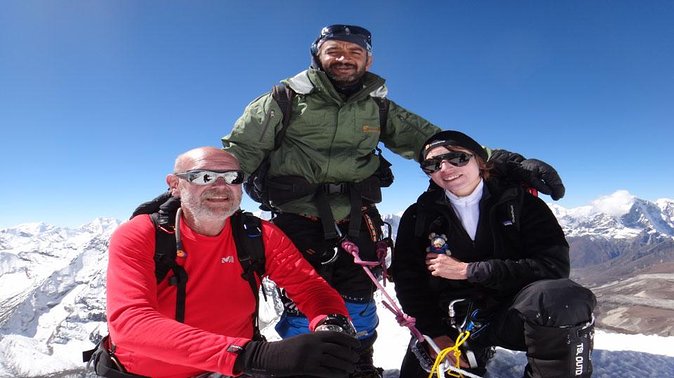
REVIEW · KATHMANDU
Everest Base Camp Trek
Everest Base Camp is not a sightseeing stop you simply arrive at. It is the reward at the end of nearly two weeks of steady walking, thin air, stone villages, mountain monasteries, and long days on Himalayan trails. The trek gives you big mountain views and a close look at Sherpa life, with tea-house lodging instead of resort comfort.
I like two things here. First, the group limit of 10 keeps the trek small enough for personal help from your guide. Second, the package covers the practical core: accommodation, meals, permits, park fees, hotel transfers, and a professional guide. The main consideration is physical: you should be ready to hike six to seven hours most days, often at high altitude, and sleep in simple tea houses.
Key points to know before booking
- Everest Base Camp is the goal, but the walking is the main event: Villages, monasteries, wildlife, mountain plants, and changing views fill the days between Kathmandu and base camp.
- The group is limited to 10 people: That is small enough for your guide to keep track of the pace and offer more direct support.
- Tea-house nights are part of the culture: You sleep in local mountain lodges, gaining a more direct sense of life in the Khumbu region.
- The price covers the essentials: At $1,590 per person, the package includes meals listed in the itinerary, permits, park fees, accommodation, guide service, and hotel pickup and drop-off.
- You must be physically prepared: The tour requires a strong fitness level, with long hikes each day and overnight stays in the mountains.
- The local team is a major part of the value: Rajesh is repeatedly associated with careful planning and quick communication, while guides named Dinesh, Resham, Orsun, Prakash, and Ganesh have led other treks through the region.
Why Everest Base Camp remains such a powerful trek
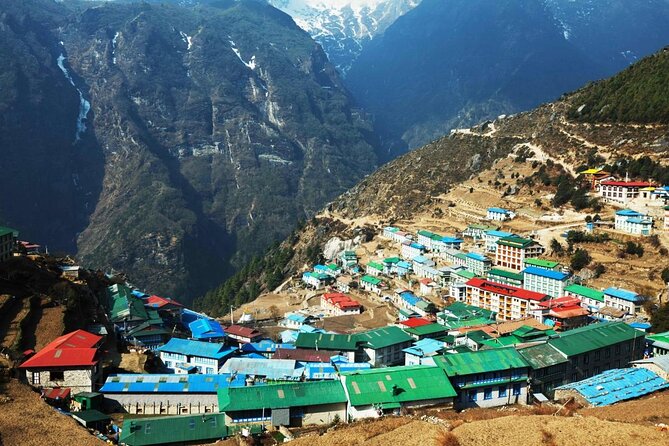
The name carries plenty of weight, but the appeal is not only standing at a famous base camp. You are walking through a preserved mountain culture, passing villages that depend on the trail economy, staying in tea houses, and seeing how daily life changes as roads and modern comforts fall away.
The setting changes as you climb. You can expect broad Himalayan views, rocky paths, high mountain plants, and signs of life adapted to difficult conditions. The tour also puts emphasis on flora, fauna, and local culture, so this is more than a long-distance hike with a photo stop at the end.
I especially like that the trek includes monasteries and villages rather than treating them as scenery between major hiking days. A monastery visit can give you a better sense of the region’s spiritual life, while a tea-house evening brings you into the practical rhythm of the mountains. You eat, sleep, and recover in the same kind of local lodging used by people moving through the region.
That said, the package should not be mistaken for a comfortable holiday. Six or seven hours of walking each day is a serious commitment. The high altitude adds another layer of difficulty, and even a fit person may find the pace tiring. Your success depends on preparation, patience, and listening carefully to your guide.
More Everest Base Camp Treks in Kathmandu
- Everest Base Camp Trek – 14 Days
★ 5.0 · 1,499 reviews - Everest Base Camp Trek
★ 5.0 · 842 reviews - Everest Base Camp Trekking
★ 5.0 · 485 reviews
What the 12-day schedule means in practice
The tour lasts about 12 days, beginning and ending with support in Kathmandu. The supplied details do not give a full day-by-day route, so you should ask for the exact overnight stops, elevation gains, acclimatization plan, and flight arrangements before paying.
The wider Everest region is normally reached through Lukla, and the company’s trekking arrangements have included Kathmandu to Lukla flights for past groups. Flight conditions in the mountains can affect timing, so leave room in your wider Nepal plans rather than scheduling an important international connection immediately after the trek.
The walking days are the heart of the trip. You will spend much of each day on foot, with the route passing through mountain villages and areas of natural interest. A good guide helps you keep a steady pace instead of treating every morning like a race. That matters more at altitude than raw speed.
The route also gives you time to learn. The tour promises insight into mountain plants, animals, and culture, and the local team can add meaning to what you see. Ask your guide questions as you go. The best parts of a trek often come from understanding why a village is where it is, how tea houses serve the route, or what role a monastery plays in local life.
The return journey is not simply an afterthought. Descending can be easier on your breathing, but tired legs and long walking days still demand care. Keep some energy in reserve, and do not treat the return as a free day.
Tea houses, meals, and the local rhythm
Tea-house lodging is one of the defining features of this tour. These are practical mountain accommodations, not luxury hotels. You should expect a simple place to sleep and a shared social setting where the day’s walking naturally becomes the main conversation.
That simplicity is a strength if you want a closer connection to mountain life. You are not sealed away in a private resort bubble. You are using accommodation that fits the region and the demands of the route.
It is also a limitation. The package information does not promise private rooms, attached bathrooms, heating, or internet access, so ask about those details if they matter to you. At altitude, small comforts can make a large difference, especially after several hours on the trail.
Meals are included according to the itinerary, with breakfast, lunch, and dinner marked as B, L, and D. That adds real value to the $1,590 price because food on a remote trek can otherwise become a large daily expense. Drinks are not included. Cola, Fanta, mineral water, and other beverages must be purchased during the trek, and alcoholic drinks are also extra.
Food and drinks in Kathmandu are outside the package as well. Souvenir photos and temple or monastery entrance fees are additional costs. Bring a sensible budget for these small expenses, since they are easy to overlook when you focus on the headline price.
The guides can make or break the walk
A local guide is not just someone who points out the route. On a trek like this, the guide manages pace, communication, practical decisions, and the human side of a tiring journey.
The company is led by Rajesh, whose role includes planning and coordinating treks. Past groups have also worked with guides including Dinesh, Orsun, Resham, and Prakash. Ganesh is another local team member associated with the company. Since the exact guide for this departure is not stated, ask who will lead your group and how many porters or support staff are included.
Dinesh is described as patient during harder moments and good at keeping the mood light. Resham has handled trek details on the trail, while Prakash has led high-pass trips in the Everest region. Those details do not guarantee who you will meet, but they show why the guide question deserves attention before booking.
Communication before arrival is another strong point. Rajesh has helped people with changing plans, delayed flights, and route choices. That is valuable in Nepal, where a small change in transport can affect the whole schedule. Ask questions early, and keep all agreed arrangements in writing.
Because the group maximum is 10, you are not joining a large procession. A smaller group can make it easier to keep a shared pace and for the guide to notice when someone is struggling. It can also mean less anonymity, so be prepared to spend a lot of time with the same people.
More Trekking Tours in Kathmandu
- Annapurna Circuit Trek with Tilicho Lake
★ 5.0 · 368 reviews - Everest Base Camp Trekking – 13 Day
★ 5.0 · 365 reviews - Everest Base Camp Trek
★ 5.0 · 350 reviews - Everest Base Camp Trek -14 Days
★ 5.0 · 321 reviews
The value of $1,590 per person
The price is reasonable to assess as a package rather than as a simple daily rate. You are paying for about 12 days, accommodation, meals listed in the itinerary, national park fees, local taxes, permits, a professional guide, and hotel pickup and drop-off.
Those inclusions remove several chores from your hands. You do not need to arrange every lodge, calculate park charges, or find a guide after arriving in Kathmandu. That coordination is especially useful if this is your first Himalayan trek.
Still, $1,590 is not the final amount you will spend. Drinks during the trek, city food, alcohol, temple and monastery entry fees, and souvenir photos are excluded. You may also need to budget for personal equipment, insurance, tips, and any extra transport or accommodation outside the stated package. Those costs are not specified here, so confirm them before departure.
The strongest value comes from the guide and organization, not simply from the bed and meals. Several people who used the same company for different treks returned to it, including for Everest Base Camp after an earlier Nepal trek. That suggests a useful level of continuity, though you should still check the exact services attached to your own booking.
Fitness, altitude, and the real difficulty
The operator requires a strong physical fitness level. Take that seriously. This is not a gentle village stroll with a short walk to a viewpoint.
You should be comfortable walking for six or seven hours in a day and repeating that effort across several days. The route takes you into the Himalayas, where altitude can make ordinary exertion feel harder. The information supplied does not state the maximum elevation, medical support, or detailed acclimatization schedule, so ask for those facts directly.
A training plan should focus on long walks, hills, stairs, and carrying a daypack. You do not need to train like an elite athlete, but you should arrive with durable legs and the ability to walk on consecutive days.
The best approach on the trail is steady and conservative. Do not race ahead to prove a point. Keep drinking water, tell your guide when you feel unwell, and allow the group’s plan to take priority over personal speed. Your guide can help with the practical response, but you remain responsible for disclosing symptoms and following medical advice.
The trek is a poor match if you dislike basic accommodation, long uphill walks, cold conditions, or plans that may be affected by mountain weather. It is a good match if you want a demanding outdoor goal and are willing to accept inconvenience as part of the setting.
Weather and transport need flexible planning
The experience requires good weather. If conditions force cancellation, you are offered a different date or a full refund. That protection is helpful, but it does not remove the need for flexibility.
Mountain transport can be disrupted by weather, and the company has previously helped with delayed flight connections and Kathmandu to Lukla arrangements. Ask how flight delays are handled for your specific departure, especially if you have separate hotel bookings or an onward flight.
The stated opening hours run from 6:15 AM to 10:45 PM, every day, from January 1, 2024 through December 31, 2025. Those hours are useful for contacting the operator, but they are not a promise that the trek itself runs on an identical daily schedule.
You receive confirmation at booking, and every participant must provide passport name, number, expiry date, and country. Have those details ready to avoid a slow start.
Cancellation is free up to 24 hours before the experience begins. Cancel later than that and the payment is not refunded. Changes made within 24 hours are not accepted, with cut-off times based on local time.
Who should book this Everest trek?
I would point this trek toward someone who wants the classic Everest Base Camp goal but prefers a small organized group over arranging every detail alone. It suits you if you value a local guide, included meals, tea-house lodging, and help with transfers and permits.
It is also a good choice for a first trek in Nepal if you are realistic about the physical demands. The package removes much of the administrative work, leaving you to focus on walking, recovery, and the mountain setting.
I would be more cautious if you need a precise luxury standard, private facilities, or a tightly fixed schedule. Ask for the complete itinerary before booking, including the exact route, elevations, rest days, flight arrangements, room arrangements, and what happens if weather changes the plan.
Solo participants can fit the small-group format, but the social side depends on the group assembled for your dates. Families and older hikers should assess fitness carefully. The supplied material confirms a strong fitness requirement, not a special family or accessibility program.
Should you book it?
Book this trek if your priority is an organized, local-led route to Everest Base Camp with the major trekking costs bundled into one price. The small group, tea-house stays, cultural stops, and established local team give it a practical shape.
Do not book it simply because the name Everest sounds exciting. You need to be ready for long walking days, basic lodging, extra drink costs, and weather-related changes. Before confirming, ask for the detailed route and acclimatization schedule.
For a fit hiker who wants support without joining a huge group, this is a sensible option. The best reason to choose it is not just the view from base camp. It is the chance to reach that point while walking through villages, monasteries, and mountain communities with a local team handling the hard logistics.
FAQ
Where does the Everest Base Camp trek begin?
The tour is based in Kathmandu, Nepal. Hotel pickup and drop-off are included.
How long does the trek last?
The experience lasts approximately 12 days.
How many people can join the group?
The maximum group size is 10 people.
How many hours do you hike each day?
You should expect to hike approximately six to seven hours each day.
Where do you sleep during the trek?
Overnight stays are in tea houses in the Himalayan region.
Are meals included?
Meals are included according to the itinerary, covering breakfast, lunch, and dinner where marked B, L, and D.
Are drinks included?
No. Drinks such as cola, Fanta, and mineral water during the trek must be purchased separately. Alcoholic drinks are also excluded.
Are permits and national park fees included?
Yes. National park fees, local taxes, and permits are included in the package.
What information is needed at booking?
You must provide each participant’s passport name, passport number, expiry date, and country.
Can you cancel for a full refund?
Yes, if you cancel at least 24 hours before the experience start time. Cancellations made less than 24 hours before the start are not refunded. If poor weather causes the operator to cancel, you are offered a different date or a full refund.
Latest treks added in Kathmandu
- Private Manaslu Circuit Trek at Himalayas★ 5.0 · 3 reviews
- Ghorepani Poonhill Trek★ 5.0 · 5 reviews
- Ghorepani Poon Hill Trek★ 5.0 · 16 reviews
- Upper Mustang Trekking★ 3.0 · 2 reviews
- Amazing 1 Day Trekking Experience in Kathmandu Nepal★ 5.0 · 24 reviews
- Upper Mustang Trekking★ 5.0 · 2 reviews
- Upper Mustang Trek★ 5.0 · 5 reviews
- Upper Mustang Trekking★ 5.0 · 4 reviews
Everest Base Camp Treks, compared.






Browse the lists this tour appears in