
REVIEW · KATHMANDU
Everest Base Camp Kalapathar Trek 14 Days
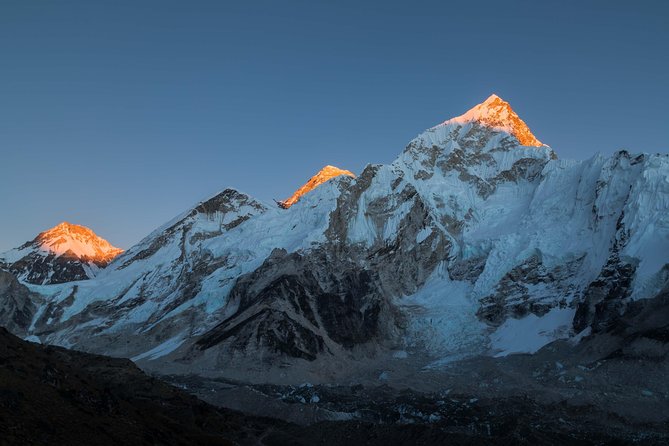
The real prize here is the walk itself: from Sherpa villages and rhododendron woodland to the stark moraine and ice around Everest Base Camp. The high point is Kala Patthar, at about 5,545 meters, where you get one of the closest practical views of Everest on this route.
I like the careful acclimatization stop in Namche Bazaar and the inclusion of Tengboche, one of the most memorable cultural and mountain viewpoints in the Khumbu. I also like that permits, flights, a guide, tea-house rooms, sleeping bags, meals, and ground transport are bundled into the $1,990 price.
The main caution is simple: this is a demanding high-altitude trek, not a sightseeing holiday with a few walks added. The itinerary includes several long days of up to eight hours, and a porter is not included, so you must carry your own luggage or arrange one separately.
Key points to know before booking
- Kala Patthar reaches 5,545 meters: The sunrise or early-morning climb is the trip’s highest and most demanding section.
- Namche is your acclimatization base: You spend a rest day here, with a viewpoint walk and a visit to the park museum.
- Everest Base Camp comes late in the route: You reach it from Lobuche, then sleep at Gorak Shep before climbing Kala Patthar.
- Tea-house lodging keeps the trek practical: Accommodation is included, but WiFi, showers, drinks, and personal expenses cost extra.
- Lukla flights are part of the package: The short mountain flight saves days of road travel and begins the trek quickly.
- The route is private: Only your own group takes part, with a professional trekking guide assigned to lead you.
What this 14-day Everest route is really like
This is a classic Everest Base Camp route with a short Kathmandu introduction, a flight to Lukla, and a steady climb through the Khumbu Valley. You walk through Sagarmatha National Park, a UNESCO World Heritage Site, and pass through places that matter for both mountain scenery and Sherpa culture.
The schedule is designed around altitude rather than speed. That matters. You do not rush straight from Lukla to Everest Base Camp. Instead, you gain height in stages, pause in Namche, spend time in the upper valley, and return by a slightly different sequence of overnight stops.
The itinerary calls the trip 14 days, although the detailed schedule gives you arrival and departure days along with 11 main days of activity. The pace is ambitious but familiar for a standard Everest Base Camp program. You should arrive with a moderate level of fitness and be comfortable walking for several hours on uneven mountain trails.
More Everest Base Camp Treks in Kathmandu
- Everest Base Camp Trek – 14 Days
★ 5.0 · 1,499 reviews - Everest Base Camp Trek
★ 5.0 · 842 reviews - Everest Base Camp Trekking
★ 5.0 · 485 reviews
Kathmandu begins with culture and preparation
You arrive at Kathmandu International Airport and are transferred to a hotel in or near Thamel, the central area used by many trekking companies. This first transfer is useful after a long flight, since it removes the need to arrange your own airport transport while carrying trekking luggage.
Day two combines a visit to Swayambhunath Temple with trek preparation. The temple, often called the Monkey Temple, is one of Kathmandu’s major heritage sites. The listed visit lasts about two hours, but admission is not included, so keep some money available for that ticket.
The Kathmandu day gives you a brief cultural start before the mountains take over. It is not a full city tour, and the supplied schedule refers to a wider heritage tour without naming every stop. Think of it as an introduction and a practical preparation day, not a detailed survey of Kathmandu.
The Lukla flight and first walk to Phakding
The flight from Kathmandu to Lukla takes about 30 minutes. It is an efficient way to reach the trailhead, though mountain flights can make the first trekking day feel tightly connected to aviation schedules. The package includes the round-trip Kathmandu to Lukla flight, which is a major part of the logistical value.
From Lukla, the trail heads down toward the Dudh Kosi River before reaching Phakding. You pass through farm villages and begin to see how the route connects small settlements along the valley. This opening walk is not the hardest day, but it introduces the steady rhythm you will follow for nearly two weeks.
The early trail also gives you a useful adjustment period. You are walking at altitude, but not yet at the extreme elevations found later. Use this time to establish a slow pace, drink regularly, and notice how your body responds.
Namche Bazaar and the first acclimatization pause
The walk from Phakding to Namche is one of the longer days, listed at about eight hours. You follow the river, cross bridges, pass Monjo, and enter Sagarmatha National Park. The route offers views toward Thamserku and Kongde before climbing toward Namche Bazaar.
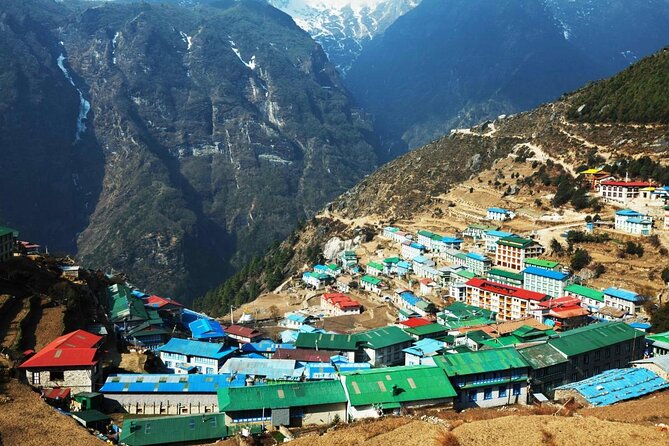
Namche sits at about 3,440 meters and is more than a place to sleep. It is the first key altitude stop, with shops, restaurants, and a busy street where you can replace small items or simply rest. The atmosphere is more developed than the villages below, though you should not expect city comforts.
The following day is set aside for acclimatization. You can take a short excursion to a viewpoint above Namche and visit the park museum, which covers the Khumbu area, Sherpa culture, and mountaineering. The museum admission is not included.
I particularly like this pause in the schedule. Many high-altitude programs become unpleasant when they treat acclimatization as wasted time. Here, you get a practical rest day with something meaningful to do. Do not turn it into a hard hike. The point is to gain height slowly and return to Namche feeling ready for the next section.
More Trekking Tours in Kathmandu
- Annapurna Circuit Trek with Tilicho Lake
★ 5.0 · 368 reviews - Everest Base Camp Trekking – 13 Day
★ 5.0 · 365 reviews - Everest Base Camp Trek
★ 5.0 · 350 reviews - Everest Base Camp Trek -14 Days
★ 5.0 · 321 reviews
Tengboche brings together peaks and Buddhist culture
From Namche, the trail continues toward Tengboche. The day is listed at about eight hours, so this is another substantial walking day rather than a short transfer between villages.
Tengboche is one of the route’s best combinations of scenery and culture. It sits in a forested area with broad views toward Everest, Ama Dablam, and surrounding peaks. You also visit Tengboche Monastery, with about 30 minutes set aside for the visit.
The monastery adds an important human dimension to the trek. This is not only a walk toward a famous mountain. Prayer flags, Buddhist monuments, and monasteries help explain the beliefs and traditions of the communities that live in the Khumbu.
The exact timing of a monastery visit can depend on local activity, but the itinerary does include time to see it. Admission is listed separately, so budget for any required ticket.
Pangboche, Dingboche, and the exposed upper valley
The next major section takes you through Pangboche toward Dingboche. The itinerary describes Pangboche as the last permanent village on the Everest Base Camp route, then continues into Dingboche, a more open and exposed area.
You should expect the scenery to change noticeably here. The protected woodland gives way to broad, treeless spaces and bigger views of Ama Dablam and Island Peak. The trail may feel more demanding because of the altitude and exposure, even when the walking surface is manageable.
This day is again listed at about eight hours. That figure is important. At high altitude, eight hours is not the same as eight hours at sea level. You will likely walk slowly, stop often, and feel the effects of thinner air. A good guide should help set a sensible pace, but you also need to speak up if you feel unwell.
Dingboche to Lobuche and the memorials at Thugla
From Dingboche, the route passes Buddhist monuments and prayer flags before reaching Thugla. The area around Thugla opens to views of Ama Dablam, Cholatse, Taboche, and other large peaks.
The walk continues to Lobuche, where you spend the night. This is another eight-hour day in the published schedule, and the elevation makes it one of the more serious sections of the trek.
The monuments and prayer flags along the route are worth slowing down for. They are quiet reminders that the trail has a spiritual character as well as a mountaineering one. The approach to Lobuche also prepares you for the harsher terrain ahead, where trees disappear and rock, moraine, ice, and snow become the main features.
Tea-house accommodation keeps the route possible without camping equipment. You receive a sleeping bag and duffel bag as part of the package, but the basic nature of mountain lodging means you should not expect the same comforts as your Kathmandu hotel.
Everest Base Camp from Lobuche to Gorak Shep
The walk from Lobuche reaches Gorak Shep and then continues to Everest Base Camp. This is the emotional center of the trip, but it is not a simple photo stop. The trail is high, rough, and surrounded by moraine and glacial terrain.
At Base Camp, you are close to the Khumbu Icefall and glaciers, beneath the world’s highest mountain. The exact appearance of Base Camp varies by season and by climbing activity, so the setting will not look identical on every departure. The mountain environment itself is the main reason to come.
The itinerary gives only about one hour for the Base Camp stop, then returns you to Gorak Shep for the night. That is sensible. The return walk still requires energy, and spending too long at this elevation can make the evening harder.
You should pace yourself carefully on this day. Take small steps, keep warm, and do not judge your performance against anyone else in the group. The goal is to reach Base Camp safely and still have enough strength to return.
Kala Patthar at 5,545 meters
The early climb to Kala Patthar is the trip’s highest point and its finest mountain-view opportunity. At roughly 5,545 meters, this is higher than Everest Base Camp itself.
The plan is to climb from Gorak Shep, enjoy the view, return for breakfast, and then continue downhill toward Thugla and Pheriche. The route later reaches Pangboche for the overnight stop. The supplied schedule gives two hours for the Kala Patthar and Pheriche portion, but the full day clearly involves a longer sequence of walking and descent.
The view is the reward: Everest appears at close range, with surrounding peaks filling the horizon. Early morning is usually chosen for visibility, but the actual conditions depend on weather.
This is also where altitude matters most. Kala Patthar is not a casual viewpoint. You should expect a slow climb, cold conditions, and a strong need for warm clothing. If you feel ill, tell your guide rather than treating the summit as compulsory. Reaching Base Camp is already a major achievement, and safety should decide the day.
The return through Pangboche, Namche, and Lukla
After the high point, you descend through Pheriche and Pangboche before returning toward Namche. The downhill direction feels easier in some ways, but tired legs and uneven trails still demand care.
The return from Pangboche to Namche passes via Tengboche, giving you another chance to appreciate the monastery and mountain views. The route is listed as an eight-hour walk. Namche then provides a more comfortable pause before the final long trek to Lukla.
The walk from Namche to Lukla is also listed at about eight hours. This is a full day on foot, not a short final stroll. The return route lets you see familiar villages from a new angle, but fatigue may limit your attention to the scenery.
At Lukla, you spend the night before flying back to Kathmandu. The return flight is included, as is private ground transport after you land. Day 13 allows time back in Kathmandu and in Thamel, where you can rest and recall the trek before flying home on day 14.
What the $1,990 price covers
At $1,990 per person, this is not a bare trail-only package. The price includes the round-trip Lukla flights, required permits, private vehicle transfers, a professional trekking guide, tea-house accommodation, a sleeping bag, a duffel bag, a route map, and an Eco Holidays Nepal T-shirt.
Meals are also included in the stated totals: 10 lunches, 12 breakfasts, and 11 dinners. The exact meal count does not cover every possible meal during arrival and departure days, so check the final booking details if you need a precise meal-by-meal breakdown.
The value is strongest if you want one company to handle the main logistics. Lukla tickets and permits can be a nuisance to arrange separately, and a guide adds practical support on a route where altitude and trail conditions matter.
You still need to pay for personal expenses, soft and hard drinks, WiFi, showers, and other personal items. A porter is also extra. That last point is important. If you do not want to carry your own main bag for long days, arrange a porter in advance and ask exactly what cost and weight allowance apply.
Guides, service, and the private-group setup
The experience is private, so only your group takes part. That gives you more control than a large fixed group, though the exact flexibility depends on your guide and the needs of the group.
Guide names associated with past departures include Anup, Sagar, Balaram, and Bikram. One account praised a guide named Sagar for being kind and experienced around the mountains. Another highlighted Balaram, while Bikram was described as ready to help in difficult moments. You should confirm your assigned guide before departure rather than assuming one of these names will lead your trek.
The overall service picture is positive, with particular praise for friendly staff, careful arrangements, and a route that did not feel rushed. One useful caution is that a Sherpa guide’s English may be limited, even when his practical help and friendly manner are strong. If detailed English communication is important to you, ask about your guide’s language ability before booking.
There was also mention of minor logistical trouble at the beginning of one trip, followed by quick help from the company. That is worth keeping in mind in a mountain itinerary. Good support matters, but flights and weather can still affect plans.
Who should book this trek?
I would recommend it to you if you want the standard Everest Base Camp experience with Kala Patthar added, prefer tea-house accommodation, and want a guide to handle permits, flights, and route logistics.
It suits people with moderate fitness who can prepare for repeated days of walking, including several days listed at eight hours. You do not need to be a technical climber, but you do need patience, stamina, and a sensible attitude toward altitude.
I would hesitate to recommend it if you want luxury accommodation, guaranteed private bathrooms, included WiFi, or a relaxed schedule with very short walking days. I would also ask for a more detailed safety and contingency plan if you have a medical condition that could affect high-altitude walking.
The cancellation terms are flexible before departure: you can receive a full refund if you cancel at least 24 hours before the experience begins. Changes or cancellations inside that 24-hour window are not accepted for a refund.
Should you book the Everest Base Camp Kala Patthar Trek?
Book this trek if your priority is a well-known Everest route with the main practical pieces bundled together. The strongest reasons are the acclimatization day in Namche, the cultural stop at Tengboche, the private format, and the inclusion of Lukla flights, permits, meals, equipment, and a guide.
Go in with realistic expectations. The $1,990 price does not cover drinks, showers, WiFi, personal costs, or a porter, and the high-altitude days are demanding. If you prepare properly and accept basic tea-house conditions, this is a strong way to reach both Everest Base Camp and Kala Patthar without having to organize every major detail yourself.
FAQ
How long is the Everest Base Camp Kala Patthar Trek?
The experience lasts approximately 14 days, including arrival and departure days in Kathmandu.
Where does the trek begin?
The trek begins after a flight from Kathmandu to Lukla. From Lukla, you walk toward Phakding and continue through the Khumbu Valley.
What is the highest point on the route?
Kala Patthar is the highest point, at approximately 5,545 meters.
Is Everest Base Camp included?
Yes. The route includes a walk to Everest Base Camp from Lobuche, followed by a return to Gorak Shep for the overnight stay.
Are flights between Kathmandu and Lukla included?
Yes. Round-trip flights between Kathmandu and Lukla are included in the package.
Is accommodation included?
Yes. Tea-house accommodation during the trek is included. The Kathmandu hotel is also part of the arrival and return arrangements described in the schedule.
Are meals included?
The package includes 12 breakfasts, 10 lunches, and 11 dinners.
Is a trekking guide included?
Yes. A professional trekking guide is included during the trek.
Is a porter included?
No. A porter is not included, so you must carry your own luggage unless you arrange and pay for a porter separately.
What personal costs are not included?
Personal expenses, soft and hard drinks, WiFi, showers, and other personal items are not included.
What fitness level is required?
The activity requires a moderate level of physical fitness. Several walking days are listed at about eight hours, and the route reaches very high altitude.
Is this a group or private tour?
It is a private tour or activity, meaning only your own group takes part.
Can I cancel for a full refund?
Yes, if you cancel at least 24 hours before the experience begins. Cancellations or changes made less than 24 hours before the start time are not refunded.
Latest treks added in Kathmandu
- Private Manaslu Circuit Trek at Himalayas★ 5.0 · 3 reviews
- Ghorepani Poonhill Trek★ 5.0 · 5 reviews
- Ghorepani Poon Hill Trek★ 5.0 · 16 reviews
- Upper Mustang Trekking★ 3.0 · 2 reviews
- Amazing 1 Day Trekking Experience in Kathmandu Nepal★ 5.0 · 24 reviews
- Upper Mustang Trekking★ 5.0 · 2 reviews
- Upper Mustang Trek★ 5.0 · 5 reviews
- Upper Mustang Trekking★ 5.0 · 4 reviews
Everest Base Camp Treks, compared.






Browse the lists this tour appears in