
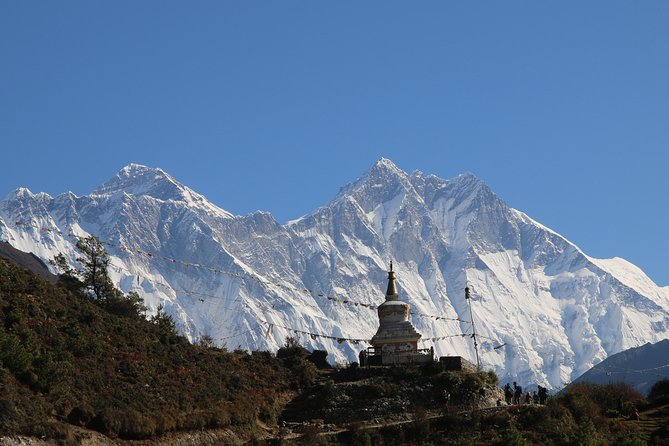
REVIEW · KATHMANDU
Everest Base Camp Budget Trekking
Everest Base Camp is not a quick mountain photo stop. This 14-day private trek carries you from Lukla through Namche Bazaar, Tengboche, Dingboche, and Lobuche to Base Camp at 5,160 meters, with a sunrise climb of Kala Patthar at 5,545 meters. You get two acclimatization days, which are vital rather than decorative.
I like the small private setup, since you can walk at your own pace instead of chasing a large group. I also like the practical coverage: airport transfers, Lukla flights, permits, staff costs, a first-aid kit, and a sleeping bag are included. The main drawback is the budget wording. Your meals and drinks during the trek are not included, and bad-weather flight delays or helicopter rescue are your responsibility.
Key points to know before you book
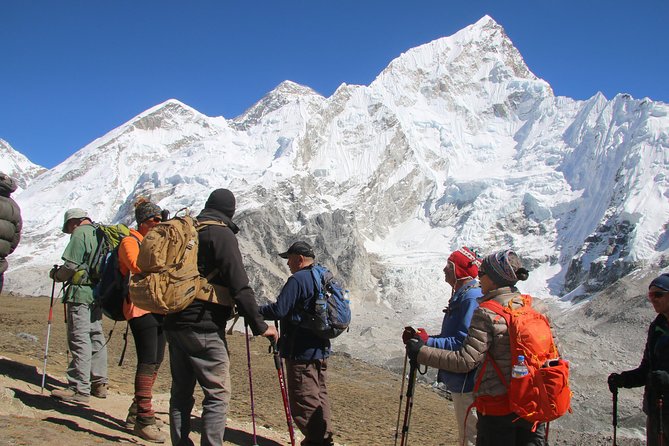
- Lukla to Base Camp in 14 days: The route reaches Everest Base Camp, then adds the high viewpoint of Kala Patthar.
- Two acclimatization days: One is spent around Namche Bazaar and another around Dingboche, helping you adjust to altitude.
- Private trekking arrangement: Only your group takes part, with an English-speaking guide and porters.
- $900 covers major logistics: Domestic flights, airport transport, permits, staff costs, and a sleeping bag are included.
- Budget costs continue on the trail: Trekking food, drinks, hot showers, water, insurance, and emergency rescue are extra.
- Altitude is the serious issue: Several nights are above 4,000 meters, and the highest walking reaches 5,545 meters.
What the $900 price really gives you
At $900 per person, this is a low-cost way to arrange the main structure of an Everest Base Camp trek. The value comes from the pieces that can be awkward or expensive to organize alone: Kathmandu airport transfers, Kathmandu to Lukla flights, the return flight, national park and local community fees, the TIMS card, staff transport, staff insurance, and a guide with porters.
You also receive a sleeping bag during the trek, with a refundable arrangement after you finish. A first-aid kit and government taxes are included, as is a farewell Nepali cultural dinner on the final evening.
Read the inclusions carefully. Food, accommodation, salary, transportation, insurance, equipment, and medicine for all staff refers to the people working on the trek. Your own food during trekking is listed separately as not included. You will also pay for drinks, alcoholic beverages, mineral water, boiled water, and hot showers.
International airfare and the Nepal entry visa are not covered. Neither is travel insurance or emergency rescue of any kind. If poor weather delays, postpones, or cancels a Lukla flight, a helicopter charter is also outside the price. That last point matters: Lukla flights depend on mountain weather, so you should not schedule a tight international connection immediately after the trek.
More Everest Base Camp Treks in Kathmandu
- Everest Base Camp Trek – 14 Days
★ 5.0 · 1,499 reviews - Everest Base Camp Trek
★ 5.0 · 842 reviews - Everest Base Camp Trekking
★ 5.0 · 485 reviews
Day 1: Kathmandu arrival and a soft landing
Your first day is simple. You are collected at the international airport and taken to your Kathmandu hotel.
That transfer is a useful start after a long flight, especially if you are unfamiliar with Kathmandu. The schedule does not ask you to begin walking immediately, giving you time to settle in and prepare for the mountain section.
The meeting point is Kathmandu, in the Kathmandu Valley. Airport transport connected to the schedule is included, but your meals and other personal expenses in Kathmandu are not.
Day 2: Lukla to Phakding at 2,652 meters
The mountain section begins with a flight from Kathmandu to Lukla, followed by a three to four hour walk to Phakding at 2,652 meters.
This is a sensible first walking day. You gain altitude, but the overnight height remains much lower than Namche or the upper Khumbu villages. The trail gives you a gradual introduction to the rhythm of the trek: walk, rest, eat, and keep an eye on how your body responds.
The domestic flight is an important part of the practical planning. The included baggage allowance is only 15 kilograms per person, so pack with restraint. Heavy luggage quickly becomes a burden on a route where the walking days grow longer and the air grows thinner.
Day 3: Climbing to Namche Bazaar at 3,440 meters
The walk to Namche Bazaar takes about five to six hours and finishes at 3,440 meters. This is where the trek begins to feel properly Himalayan.
Namche is the main settlement in the Khumbu region and serves as the first major adjustment point for altitude. The climb is not just a matter of distance. The trail rises and falls, and the thin air can make a normal walking pace feel surprisingly slow.
Your guide and porters are especially useful here. You can ask for a slower pace, take regular stops, and avoid the common mistake of trying to prove your fitness on the first hard climb. The private format helps because the group does not need to move according to strangers with different energy levels.
More Trekking Tours in Kathmandu
- Annapurna Circuit Trek with Tilicho Lake
★ 5.0 · 368 reviews - Everest Base Camp Trekking – 13 Day
★ 5.0 · 365 reviews - Everest Base Camp Trek
★ 5.0 · 350 reviews - Everest Base Camp Trek -14 Days
★ 5.0 · 321 reviews
Day 4: Acclimatization around Namche
The fourth day is a rest and acclimatization day in Namche Bazaar. Do not treat this as a wasted day. At this altitude, it is one of the most important parts of the schedule.
The purpose is to spend time at elevation without gaining another large amount of height for the night. You may walk locally, rest, and take in the mountain setting, but the key point is to give your body time to adjust.
Acute mountain sickness is a serious risk on this route. Headache, nausea, unusual tiredness, and difficulty sleeping can all be warning signs. You should tell your guide immediately if you feel unwell. The schedule includes the recommended pause, but no itinerary can remove the risk completely.
Day 5: Namche to Tengboche at 3,860 meters
The five to six hour walk to Tengboche brings you to 3,860 meters. This section is known for its mountain views and for Tengboche Monastery, one of the best-known cultural sites along the Everest route.
Tengboche gives the trek a welcome change of pace. You are not only walking toward a famous peak. You are also moving through a region where Buddhist culture shapes village life and the route itself.
The overnight height is now close to 4,000 meters, so the effects of altitude may become more noticeable. Keep your walking speed steady, drink according to your guide’s advice, and avoid wasting energy on a race to the lodge.
Day 6: Tengboche to Dingboche at 4,410 meters
The route continues to Dingboche, with five to six hours of walking and an overnight elevation of 4,410 meters.
This is a major step upward. The distance may look manageable on paper, but the altitude changes how your legs and lungs work. You will want warm clothing, careful pacing, and enough time to eat and rest after arrival.
Dingboche is well placed for the second acclimatization day. It also marks the point where the high-altitude character of the trek becomes impossible to ignore. From here, every gain in elevation deserves respect.
Day 7: The second acclimatization day
The second rest day comes in Dingboche. Again, this is a safety feature, not filler.
The schedule gives your body another chance to adjust before you sleep above 4,900 meters. You may take a short local walk or rest, depending on how you feel. The right choice is not always the most ambitious one. If you have symptoms of altitude sickness, tell the guide and do not push higher simply because the calendar says so.
The tour information describes the trek as suitable for people with moderate fitness and says previous adventure experience is not required. That is fair as long as you understand the difference between technical climbing and sustained high-altitude walking. You do not need climbing skills, but you do need preparation.
Day 8: Dingboche to Lobuche at 4,910 meters
The five to six hour walk to Lobuche takes you close to 5,000 meters. At this point, the thin air is the main challenge, not the need for special mountaineering technique.
You will likely notice that every uphill section takes longer. Keep your steps short and even. The best approach is patient and slightly boring, which is exactly what you want at altitude.
Lobuche is a staging point for the push to Base Camp. The night is high, and sleep may be less comfortable. Your guide can help monitor your condition, but you remain responsible for explaining symptoms clearly rather than hiding them to protect your schedule.
Day 9: Everest Base Camp at 5,160 meters
The walk to Everest Base Camp and back to Gorakshep takes about five to six hours. This is the emotional center of the trek, but it is also a demanding day at high elevation.
Everest Base Camp itself is famous because expeditions use it as a starting point for climbs on the world’s highest mountain. The experience here is about standing at the foot of that great route, surrounded by the high Khumbu world, rather than reaching the summit. Base Camp is not the best place for a broad view of Everest itself, so keep your expectations realistic.
After reaching Base Camp, you return to Gorakshep. The schedule makes this a long out-and-back day, and you should conserve energy for the following morning. Do not spend all your strength trying to turn the Base Camp stop into a photo marathon.
Day 10: Kala Patthar at 5,545 meters, then Pheriche
The highest point of the trek is Kala Patthar at 5,545 meters. After the climb, you descend to Pheriche at 4,210 meters, with six to seven hours of walking overall.
Kala Patthar is included for a good reason. It offers the famous high mountain viewpoint that many people imagine when they picture the Everest region. The climb is hard because of the altitude, but the descent to Pheriche gives your body welcome relief.
This is likely the most demanding day of the trip. You rise early, climb high, then walk down for several hours. Warm layers, gloves, a head covering, and a headlamp are sensible items to confirm with the operator before departure, though the supplied details do not specify a full personal equipment list.
Days 11 and 12: The long return to Namche and Lukla
Day 11 takes six to seven hours to reach Namche Bazaar. Day 12 continues for another six to seven hours to Lukla.
Descending is generally easier on breathing than ascending, but it still puts work on your knees and feet. After the concentration required above 5,000 meters, these long days can feel tiring in a different way.
Returning to Lukla also brings the flight issue back into view. The next day is scheduled for the flight to Kathmandu, but mountain weather can interfere. The tour price does not include a helicopter charter if the flight is delayed, postponed, or cancelled, so insurance and extra financial margin are important.
Day 13: Lukla to Kathmandu
The return flight takes you from Lukla back to Kathmandu at 1,337 meters. After many nights at high elevation, the lower air should feel like a luxury.
You have a final night in Kathmandu before departure. The included farewell Nepali cultural dinner gives the trip a clear closing point, though lunch, dinner, and other expenses in Kathmandu are generally your responsibility outside that farewell arrangement.
The company has arranged private trips for people who wanted to set their own pace, including a solo trekker who chose to walk with one Sherpa after finding a group trek too fast. That detail points to one of this experience’s most useful features: a private format can make the pace more flexible.
Day 14: Departure from Nepal
The final day is set aside for your onward departure. Airport transport connected to the schedule is included.
Keep your international plans sensible. Since the Lukla flight can be affected by weather, extra time is wise. A cheap trek can become expensive if a missed international flight forces you to buy a replacement ticket.
Preparation, fitness, and altitude safety
You should arrive with moderate physical fitness. The operator recommends running, swimming, and walking before the trek, and that is sound advice. Long walks on consecutive days are more relevant than a single burst of gym fitness, so build up your walking time before arrival.
You do not need previous adventure experience, but you do need to take the altitude seriously. The route goes above 4,500 meters several times and reaches 5,545 meters at Kala Patthar. Anyone with a pre-existing medical condition should seek medical advice before booking.
Travel insurance is not included. It should cover trekking at the elevations you will reach and emergency rescue, since rescue costs are specifically excluded. Medical supplies are provided for staff, and a first-aid kit is included, but that is not a substitute for personal medication or insurance.
Who should choose this Everest Base Camp trek?
I would choose this trip if you want the classic Lukla route with a private guide, a moderate price, and the main permits and flights arranged for you. It suits fit walkers who value a clear schedule and do not need luxury extras.
I would think twice if you want every meal, drink, shower, and rescue cost bundled into one payment. You also need flexibility around Lukla flights and enough cash or financial protection for weather delays.
The strongest practical feature is the combination of private pacing and two acclimatization days. The biggest concern is the gap between the attractive headline price and the additional costs on the mountain. Ask for a clear estimate of your own food, accommodation, and daily spending before you commit, since the supplied details do not give a separate total for those items.
The operator, Global Holidays Adventure P. Ltd, has handled private Everest trips with contacts including Surya and Samsher. The available feedback especially praises organization, airport and border arrangements, comfortable lodging on related journeys, and supportive Sherpa service. Those are useful signs, but you should still confirm the exact guide, porter ratio, lodge standard, meal arrangements, and bad-weather plan before paying.
Should you book it?
Book this Everest Base Camp trek if you want a budget private trek with Lukla flights, permits, porters, an English-speaking guide, and a properly paced 14-day schedule. The route includes both Base Camp and Kala Patthar, which gives you the two major goals many first-time trekkers seek.
Do not book it solely because $900 sounds all-inclusive. It is not. Add trekking meals, drinks, insurance, possible delays, personal gear, and emergency costs to the real budget. If you can manage those extras and respect the altitude, this is a practical way to walk into the Everest region without joining a large group.
Free cancellation is available when you cancel at least 24 hours before the local start time. Cancellations or changes made later are not refunded or accepted.
FAQ
How long is the Everest Base Camp trek?
The experience lasts approximately 14 days, including arrival and departure days in Kathmandu, the Lukla flights, the trek to Base Camp and Kala Patthar, and the return to Kathmandu.
Is the trek private?
Yes. This is a private activity, so only your group participates.
Are the Kathmandu to Lukla and Lukla to Kathmandu flights included?
Yes. The domestic flight fare for Kathmandu to Lukla and the return flight is included. The baggage allowance is 15 kilograms per person.
Are meals included during the trek?
No. Food during trekking is listed as not included. Beverages, alcoholic drinks, mineral water, boiled water, and hot showers are also extra.
Is previous trekking experience required?
No previous adventure experience is required, but you should have moderate physical fitness. Running, swimming, and walking are recommended as preparation.
What happens if bad weather cancels the Lukla flight?
A helicopter charter caused by a delayed, postponed, or cancelled flight is not included. Travel insurance and emergency rescue are also not included, so you should arrange suitable coverage before departure.
Latest treks added in Kathmandu
- Private Manaslu Circuit Trek at Himalayas★ 5.0 · 3 reviews
- Ghorepani Poonhill Trek★ 5.0 · 5 reviews
- Ghorepani Poon Hill Trek★ 5.0 · 16 reviews
- Upper Mustang Trekking★ 3.0 · 2 reviews
- Amazing 1 Day Trekking Experience in Kathmandu Nepal★ 5.0 · 24 reviews
- Upper Mustang Trekking★ 5.0 · 2 reviews
- Upper Mustang Trekking★ 5.0 · 4 reviews
- Upper Mustang Trek★ 5.0 · 5 reviews
Everest Base Camp Treks, compared.






Browse the lists this tour appears in