
REVIEW · KATHMANDU
Everest: 16 Day Trek to Everest Base Camp
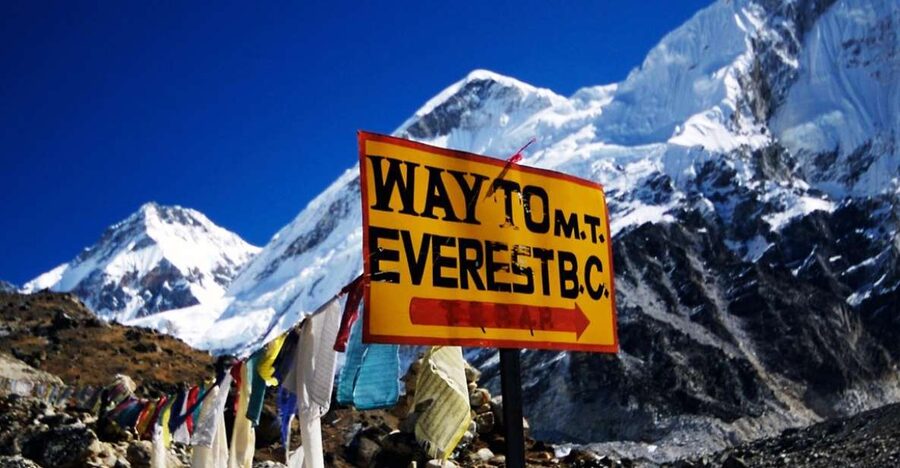
Reaching Everest Base Camp is the headline, but Kala Patthar at 5,555 meters is where you get the great mountain view. This 16-day trip gives you time to walk slowly, acclimatize at Namche and Dingboche, and visit Sherpa villages instead of rushing uphill.
I like the practical all-in-one setup: Lukla flights, tea-house lodging, meals, permits, a guide, and a porter are included. I also like the human side of the route, with nights in Sherpa communities such as Pangboche, Dingboche, and Tengboche. The main caution is altitude. This is not a casual hike, and the long day to Base Camp followed by the early Kala Patthar climb will test your legs and lungs.
Key points to know before booking
- Kala Patthar is the big viewpoint: At 5,555 meters, it gives you a memorable high mountain lookout near Everest.
- The itinerary includes two acclimatization days: You spend a rest day at Namche and another at Dingboche.
- Your $1,699 covers the core trekking costs: Flights, permits, lodging, meals, guide, porter, jacket, and sleeping bag are included.
- You sleep in tea houses for 12 nights: This gives the trek a local, straightforward feel, but comfort is basic.
- Sujan helped manage a serious emergency: One booking account describes an urgent descent after a fall at 5,100 meters, with Sujan helping arrange the return to Kathmandu.
- Flight plans may use Ramechhap: Your Kathmandu to Lukla flight may instead leave from Ramechhap Airport, so build flexibility into your plans.
What the 16-day Everest route is really like
This is a classic Everest Base Camp trek with a sensible pace for first-time high-altitude trekkers. You begin in Kathmandu, fly toward the Khumbu region, walk from Lukla to Base Camp, climb Kala Patthar, and return by the same broad route.
The route is demanding because the air gets thin fast. You start near 2,860 meters at Lukla and finish at more than 5,500 meters on Kala Patthar. That change matters more than the daily mileage. You may be fit and still feel slow, breathless, or headachy at altitude.
The program includes food, tea, lodging, a guide, and a porter, which removes many of the hard planning tasks. You still need to bring personal clothing, hiking shoes, insurance, water money, and patience. Mountain schedules change. Flights can be affected by weather, and the plan already notes that Ramechhap may be used instead of Kathmandu for the Lukla flight.
More Everest Base Camp Treks in Kathmandu
- Everest Base Camp Trek – 14 Days
★ 5.0 · 1,499 reviews - Everest Base Camp Trek
★ 5.0 · 842 reviews - Everest Base Camp Trekking
★ 5.0 · 485 reviews
Kathmandu, days 1 and 2: get ready before the mountains
Your first day is for arrival in Kathmandu at about 1,400 meters. Airport and hotel transfers are included, as is a three-night stay in a three-star hotel with breakfast.
The second day is set aside for Kathmandu sightseeing. A guided city tour is not included, so you should not expect a built-in sightseeing program. That gives you freedom, but you may need to arrange your own visit if you want to see the city before trekking.
I like having this buffer before the mountains. You can recover from your international flight, sort your clothing, and meet the English-speaking guide and porter. The included jacket, sleeping bag, kitbag, and T-shirt are useful, but the jacket and sleeping bag must be returned at the end.
Lunch and dinner in Kathmandu are not included. Mineral water, Wi-Fi, desserts, personal spending, travel insurance, and the Nepal entry visa are also outside the package. These are small lines on the budget, but they add up, so plan for them.
Day 3: flying to Lukla and walking to Phakding
The mountain portion begins with a flight to Lukla at about 2,860 meters, followed by a trek to Phakding at about 2,610 meters. The first walking day is relatively short compared with the harder stages ahead, which helps you settle into the pace.
Lukla is the gateway to the Khumbu. From there, you begin walking beside rivers and through mountain settlements. Phakding is your first tea-house night, and this is where the simple routine takes over: walk, eat, rest, and prepare for the next climb.
The flight is included in the price, both outbound and return. Still, do not treat the published flight point as fixed. The plan notes that flights may operate from Ramechhap Airport, which can affect your road transfer and timing. Ask for the current departure arrangement before you leave Kathmandu.
Day 4: the climb to Namche Bazaar
The walk to Namche Bazaar takes you to about 3,440 meters. This is one of the first days when the altitude becomes a serious part of the experience.
Namche is a Sherpa trading town set among steep mountain slopes. You will cross valleys, follow a roaring river, and gain height toward the main settlement. The route is not just a march to a bed. It introduces you to the Sherpa way of life and the built-up mountain communities that support the Everest trek.
Namche is also the first major test of your breathing. Keep your pace steady and let the guide set the rhythm. Walking too quickly here can make the next day harder.
More Trekking Tours in Kathmandu
- Annapurna Circuit Trek with Tilicho Lake
★ 5.0 · 368 reviews - Everest Base Camp Trekking – 13 Day
★ 5.0 · 365 reviews - Everest Base Camp Trek
★ 5.0 · 350 reviews - Everest Base Camp Trek -14 Days
★ 5.0 · 321 reviews
Day 5: acclimatizing at 3,440 meters
The rest day at Namche is not wasted time. It gives your body a chance to adjust before you climb higher.
You will have time to explore the village and enjoy the mountain setting without carrying out a full travel day. The exact activity is not specified, so treat this as a flexible acclimatization day rather than a promised guided excursion.
I consider this one of the strongest parts of the schedule. A 16-day plan has room to slow down, while a shorter program would have less protection against altitude problems. You should still follow the guide’s advice and report symptoms early.
Days 6 and 7: Pangboche and Dingboche
From Namche, you continue to Pangboche at about 3,985 meters. The route takes you through more remote valleys and Sherpa villages, with soaring peaks, rivers, and glaciers becoming a larger part of the view.
Pangboche gives you a quieter village stop before Dingboche. It is a useful overnight stage because the itinerary does not force you to go directly from Namche to the higher settlement in one push.
The next day takes you to Dingboche at about 4,410 meters. At this height, the walk may feel slower even if the trail is manageable. The scenery becomes more severe and open, with less vegetation and more bare rock, snow, and ice.
This is the point where you need to stop judging the day by distance. At altitude, a modest walking day can still feel strenuous. Eat the provided meals, drink enough, and keep warm.
Day 8: another acclimatization day in Dingboche
Dingboche provides the second planned acclimatization day. This is important because you are now sleeping above 4,000 meters.
You can use the day to rest and take in the views. The program describes the pace as suitable for first-time trekkers, but that does not mean easy. First-timers benefit from the extra day because the body needs time to adjust before Lobuche and Gorak Shep.
Altitude can affect people unpredictably. Fitness does not guarantee an easy response. If you feel unwell, tell the guide promptly. The importance of this point is clear from one account of the trip, in which an emergency after a fall at 5,100 meters required a return to Kathmandu. Sujan was described as kind and helpful in handling that situation. The detail is useful because it shows why guide support and emergency planning matter in this region.
Days 9 and 10: Lobuche, Gorak Shep, and Base Camp
Day 9 takes you to Lobuche at about 4,940 meters. You are now close to the high point of the trek, and the air will feel thin. The route passes through stark high mountain scenery, with glaciers and huge peaks shaping the day.
Day 10 is the major push. You walk to Gorak Shep at about 5,164 meters, continue to Everest Base Camp, listed at about 5,364 meters, and return to Gorak Shep to sleep.
This is a long and demanding day. Base Camp itself is a major goal, but do not expect the summit view from there. The best broad view of Everest comes from Kala Patthar the next morning. Base Camp gives you the satisfaction of reaching the expedition area and seeing the glacier setting up close.
Returning to Gorak Shep after Base Camp makes the day tougher. Your guide and porter are important here, especially when the return feels slower than the outward walk. Take the route one section at a time, and do not spend all your energy trying to rush to the destination.
Day 11: Kala Patthar, then a major descent
The itinerary lists an early climb to Kala Patthar at 5,555 meters, or about 18,225 feet, followed by a return trek to Pheriche at about 4,371 meters. The overview gives a slightly different imperial figure, so use the itinerary’s metric height as the clearer reference.
Kala Patthar is the visual high point of the trip. From this ridge, you can look toward Everest and the surrounding peaks, valleys, and glaciers. The climb is short in distance compared with the full trek, but the altitude makes it hard.
After the viewpoint, you descend to Pheriche. This is a long day with a rewarding change: going down usually feels easier on your breathing, even though your legs may be tired. The drop in elevation also gives your body relief after the high nights at Gorak Shep.
Days 12 to 14: returning through Tengboche and Namche
Day 12 brings you back to Tengboche at about 3,860 meters. This gives you another Sherpa village experience and a different feel from the high, bare country around Gorak Shep.
Day 13 continues to Namche Bazaar at 3,440 meters. Returning through Namche lets you recognize the route from a new angle. You are descending now, but do not assume the days are effortless. Tired knees, uneven trails, and a long walking schedule can still make the return demanding.
Day 14 is the trek back to Lukla at about 2,860 meters. This is your final walking day and your last tea-house night. It is a good time to check that all rented equipment is ready to return and that your personal items are packed for the flight.
Day 15 and 16: return to Kathmandu and depart
On Day 15, you fly from Lukla back to Kathmandu. As with the outward journey, flight operations can involve Ramechhap, so keep your plans flexible and do not schedule an important international connection too tightly.
The final night in Kathmandu is included within the three hotel nights. A welcome or farewell dinner is also included, giving you a chance to mark the end of the trek without paying for that meal separately.
Day 16 is departure day. Airport drop-off is included. You will need to arrange your international flight and cover any departure taxes that apply.
What the $1,699 price covers
At $1,699 per person, this package has good value if you want the main costs organized in advance. It includes:
- Three nights in a three-star Kathmandu hotel with breakfast
- Twelve nights in tea houses
- Breakfast, lunch, dinner, and a cup of tea during the trek
- An English-speaking guide and porter
- Everest National Park permit
- Return flights between the Kathmandu area and Lukla
- Airport and hotel transfers
- A jacket, sleeping bag, kitbag, and T-shirt
- Welcome or farewell dinner in Kathmandu
- Fuel, road taxes, and parking fees
The included meals are a real advantage. Buying every meal separately in the mountains can make budgeting less clear, and tea is welcome after a cold walking day.
The package does not include Nepal’s entry visa, international airfare, insurance, Kathmandu lunches and dinners, desserts, mineral water, Wi-Fi, or a guided Kathmandu tour. I would treat travel insurance as essential, especially for a high-altitude trek where evacuation and medical costs can be serious.
Tea houses, food, and comfort
Tea-house lodging keeps the trip connected to local mountain communities. It is also basic. You should choose this experience because you want a practical place to sleep along the route, not hotel comfort at high altitude.
Food and drinks during the trek are included, with breakfast, lunch, dinner, and tea. Mineral water is not included, so you need to budget separately for drinking water. Wi-Fi is also excluded, which may be a small blessing if you want to focus on the trail, but you should not count on regular internet access.
The supplied warm jacket and sleeping bag reduce the amount of bulky equipment you must bring from home. They are loaned items, not souvenirs, and must be returned after the trek.
Who should book this trek?
I would recommend it to you if you want the standard Everest Base Camp route, prefer a slower 16-day schedule, and value having flights, meals, permits, and mountain staff arranged together.
It suits first-time trekkers who understand that first-time does not mean low effort. You need to be able to walk for several hours on uneven mountain trails and handle high altitude. The experience is not suitable for wheelchair users or people with mobility impairments.
The strongest reason to choose this trip is its balance of structure and local contact. You get a guide, porter, tea houses, and set meals, but you still move through real Sherpa villages rather than staying in a controlled resort setting.
Should you book the Everest Base Camp trek?
Book it if your priority is reaching Base Camp and Kala Patthar with a clear plan, built-in acclimatization days, and most major trekking costs covered. The $1,699 price is reasonable for the combination of flights, permits, food, staff, lodging, and rented cold-weather equipment.
Do not book it if you want luxury rooms, reliable internet, a fully guided Kathmandu sightseeing program, or a short and easy walk. You should also leave room for flight changes and carry proper insurance.
Sujan’s involvement in a difficult emergency and the strong praise for communication and organization are reassuring details. Still, the mountain makes the final decision. Prepare properly, respect the altitude, and this 16-day route gives you a solid way to reach one of the world’s great trekking goals.
FAQ
How long is the Everest Base Camp trek?
The experience lasts 16 days, including arrival and departure days, two days in Kathmandu before the trek, the mountain trek, and the return to Kathmandu.
What is the highest point on the itinerary?
Kala Patthar is listed at 5,555 meters, or about 18,225 feet. Everest Base Camp is listed at about 5,364 meters, or 17,598 feet.
Are flights to and from Lukla included?
Yes. Return airfare between Kathmandu and Lukla is included, though the flight may operate from Ramechhap Airport instead.
How many nights are spent in tea houses?
The package includes 12 nights in tea houses during the trekking portion.
Are meals included during the trek?
Yes. Breakfast, lunch, dinner, and a cup of tea are included during the trek. Mineral water and desserts are not included.
Is a guide provided?
Yes. An English-speaking trekking guide and porter are included.
Is Kathmandu sightseeing included?
A sightseeing day in Kathmandu is included in the itinerary, but a guided Kathmandu tour is not included.
Can the booking be canceled for a full refund?
Yes. You can cancel up to 24 hours in advance for a full refund. You can also reserve now and pay later.
Latest treks added in Kathmandu
- Private Manaslu Circuit Trek at Himalayas★ 5.0 · 3 reviews
- Ghorepani Poonhill Trek★ 5.0 · 5 reviews
- Ghorepani Poon Hill Trek★ 5.0 · 16 reviews
- Upper Mustang Trekking★ 3.0 · 2 reviews
- Amazing 1 Day Trekking Experience in Kathmandu Nepal★ 5.0 · 24 reviews
- Upper Mustang Trekking★ 5.0 · 2 reviews
- Upper Mustang Trekking★ 5.0 · 4 reviews
- Upper Mustang Trek★ 5.0 · 5 reviews
Everest Base Camp Treks, compared.






Browse the lists this tour appears in