
REVIEW · KATHMANDU
Everest Base Camp Trek with Island Peak Climbing
The real prize here is not just reaching Everest Base Camp. You also get a serious introduction to Himalayan climbing on Island Peak, with rope, crampon, ice axe, and glacier training from a climbing Sherpa. That makes this a much bigger undertaking than a standard Everest trek.
I like the careful acclimatization plan and the practical support: airport pickup, Lukla flights, porters, permits, meals, and a spare summit day are all built in. I also like the small group cap of 15, since guides such as Deepak, Pemba, Ram, Milan, and Sandip have been praised for steady pacing, safety checks, and clear briefings.
The main drawback is simple: this is a demanding high-altitude expedition, not a comfortable sightseeing holiday. You must bring strong fitness, personal climbing gear, suitable insurance, and patience for basic mountain lodging, cold, weather delays, and long walking days.
Key points to know before booking
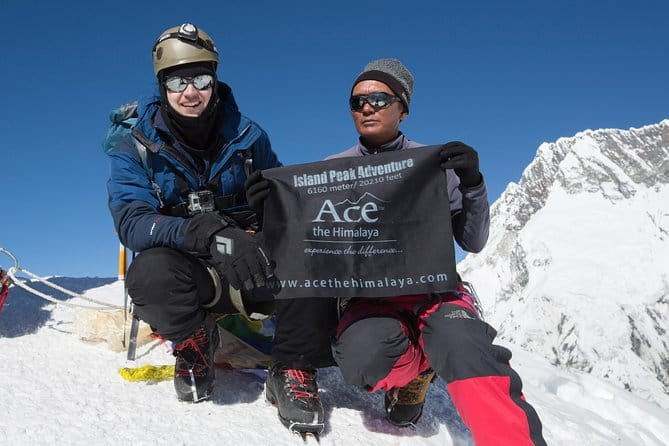
- Everest Base Camp plus a real peak attempt: You visit Base Camp, climb Kala Patthar, then attempt Island Peak at 6,189 meters.
- Two acclimatization days: Time in Namche Bazaar and Dingboche helps you adjust before the trail gets very high.
- A two-day Island Peak window: The extra day can be used if snow or weather delays the summit attempt.
- Strong guide and porter support: One porter is assigned for every two people, while a climbing Sherpa handles the peak section.
- A small group of up to 15: This gives you more direct contact with the guide than a large commercial departure.
- A costly but broad package: The $3,300 price includes flights, permits, staff, food on trek, climbing support, and most accommodation, but not insurance, personal gear, or Kathmandu dinners.
Why this trip is more than a standard Everest trek
Many Everest Base Camp trips finish at the foot of the Khumbu Icefall. This one keeps going into the Island Peak area, so you get two very different mountain goals in one trip.
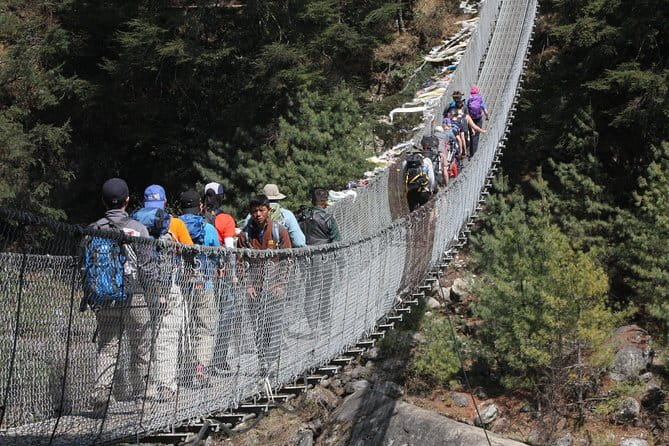
The first goal is the classic walk to Base Camp, with Sherpa villages, monasteries, suspension bridges, glaciers, and the high viewpoint of Kala Patthar. The second is a guided climbing attempt on Island Peak, also called Imja Tse. The climb is described as technically manageable rather than extreme, but it still includes crevassed snow, a steep headwall, fixed rope work, crampons, and exposure.
That distinction matters. You do not need to arrive as an expert mountaineer, but you do need stamina, confidence on steep snow, and a willingness to learn quickly. The climbing Sherpa provides training on ropes, harnesses, crampons, ice axes, ice screws, and snow bars. Your guide decides the final plan based on fitness, weather, snow, and group condition.
The support structure is one of the strongest parts of the package. Ace the Himalaya handles the domestic flights, permits, porters, staff insurance, food, accommodation, and route logistics. Guides named in past departures include Deepak, Pemba Sherpa, Ram, Milan, Sandip, Madan, Dipesh, and Ramesh. The important point is not expecting one particular guide, but knowing the operation uses both trekking leaders and specialist climbing staff.
More Everest Base Camp Treks in Kathmandu
- Everest Base Camp Trek – 14 Days
★ 5.0 · 1,499 reviews - Everest Base Camp Trek
★ 5.0 · 842 reviews - Everest Base Camp Trekking
★ 5.0 · 485 reviews
Kathmandu arrival and the flight to Lukla
Your trip begins with pickup at Tribhuvan International Airport. An airport representative holds an Ace the Himalaya sign outside the terminal and takes you to your hotel by private vehicle.
A pre-trip meeting follows either at the company office or at the hotel, depending on your arrival time. Bring your passport and the required documents, and use this meeting to ask about gear, altitude, food, weather, and the Island Peak plan. This is your best chance to clear up small concerns before you leave the city.
Kathmandu includes four nights in a three-star hotel with breakfast. You also get a sightseeing tour before the trek, although the supplied plan does not give a detailed list of sights. Lunch and dinner in Kathmandu are not included, which gives you freedom to choose your own meals but adds to the final cost.
The flight to Lukla takes about 35 minutes from Kathmandu to Tenzing and Hillary Airport at 2,804 meters. It is a beautiful start, but mountain flights depend on weather. Keep some flexibility in your wider Nepal schedule, especially if you have an international flight immediately after the trek.
From Lukla, you walk downhill toward the Dudh Kosi River and then follow the main route to Phakding. The first day is relatively gentle, which is useful after the flight. Your porters organize the luggage while you explore the village and settle into the rhythm of walking.
Phakding to Namche Bazaar, where the altitude begins to matter
The walk from Phakding to Namche follows the Dudh Kosi and crosses several suspension bridges decorated with prayer flags. You enter Sagarmatha National Park and then face a steep climb toward Namche Bazaar.
Namche is the largest town on the route and one of the most useful stops on the whole trip. You find lodges, bakeries, restaurants, internet services, money exchange, hotels, and shops. It is also where the mountain begins to feel serious. At about 3,440 meters, you may notice the thinner air after the long climb.
The next day is reserved for acclimatization. Rather than gaining more height along the main route, you make a shorter outing toward the Sherpa museum, Syangboche Airport, and the Everest View Hotel. If the weather is clear, you can see Everest and several surrounding peaks.
I like this pause because it gives your body time to adjust without wasting a day. You also get a closer look at Sherpa culture instead of rushing from lodge to lodge. Still, do not treat it as a rest day in the usual sense. The hike above Namche remains useful physical work.
Tengboche and Dingboche, with monasteries and big mountain views
From Namche, the trail follows the Dudh Kosi with striking views before climbing to Tengboche at 3,860 meters. Tengboche Gompa is one of the trip’s most meaningful stops. Inside are ornate wall hangings, a large Buddha sculpture, musical instruments, and ceremonial robes.
The schedule allows you to observe a prayer ceremony, either in the morning or evening depending on the day’s walking time. The exact timing is not guaranteed, so treat it as a welcome possibility rather than the central reason to book the trek.
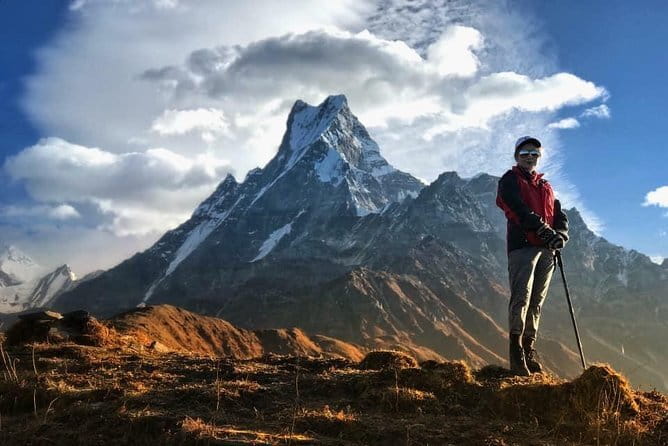
Beyond Tengboche, the route drops through Debuche, crosses the Imja Khola, passes Pangboche and its mani stones, and climbs to Dingboche. Here the views open toward Lhotse, Island Peak, and Ama Dablam. You are now high enough that a slow pace is not optional. It is the sensible way to keep moving.
Dingboche gets another acclimatization day. The planned outing climbs Nangkartshang Peak above the village. From its summit, Ama Dablam can appear from top to bottom if the sky is clear. The afternoon is free for resting or walking around the village.
This is one of the most valuable design choices in the trip. You gain height during the day, return to sleep lower, and give your body a chance to adjust. Your guide should also keep checking appetite, sleep, hydration, headache, and other signs of altitude trouble. Past departures have especially praised guides for watching these details and explaining safety in plain terms.
More Trekking Tours in Kathmandu
- Annapurna Circuit Trek with Tilicho Lake
★ 5.0 · 368 reviews - Everest Base Camp Trekking – 13 Day
★ 5.0 · 365 reviews - Everest Base Camp Trek
★ 5.0 · 350 reviews - Everest Base Camp Trek -14 Days
★ 5.0 · 321 reviews
Lobuche, Everest Base Camp, and the hard climb to Kala Patthar
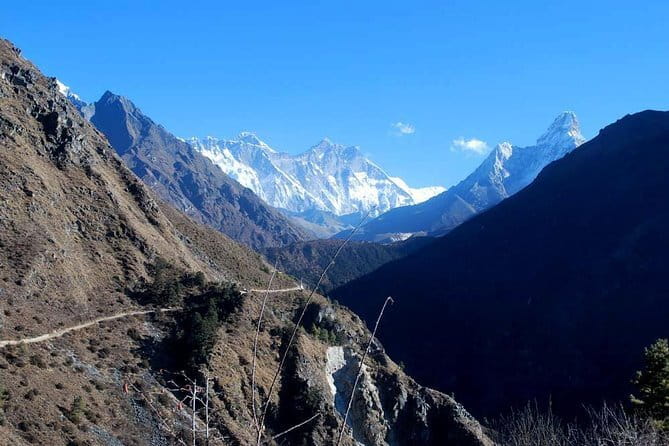
After Dingboche, the route feels more severe. You follow the lateral moraine of the Khumbu Glacier toward Lobuche, passing stone memorials dedicated to climbers who died on nearby peaks. The setting is beautiful, but the altitude can bring breathing problems. This is a day to walk slowly and conserve energy.
The next day is the push to Everest Base Camp at 5,365 meters. You walk beside and over rough glacial terrain toward the camp, with the Khumbu Icefall visible ahead. During the spring climbing season, expedition teams may be preparing for summit attempts.
Do not expect a permanent village or a polished attraction at Base Camp. It is a seasonal mountaineering site, and the exact appearance changes with the climbing season. The achievement is getting there under your own power, then returning to Gorak Shep for the night.
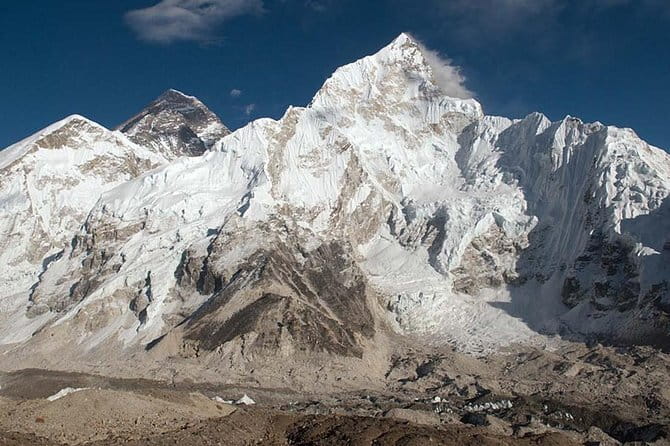
The following morning brings Kala Patthar at 5,555 meters. This is one of the toughest parts of the trek, but it provides the broadest mountain view. Everest rises ahead, with Nuptse, Pumori, Chagatse, and Lhotse adding to the scene.
The plan is to climb early, descend to Gorak Shep for a hot breakfast, then continue down to Pheriche. That makes for a long and tiring day. It is worth knowing this in advance, since the schedule does not let you linger for hours at the summit. The reward is the view and the satisfaction of completing the highest point of the standard trekking section.
Chukhung and Island Peak Base Camp
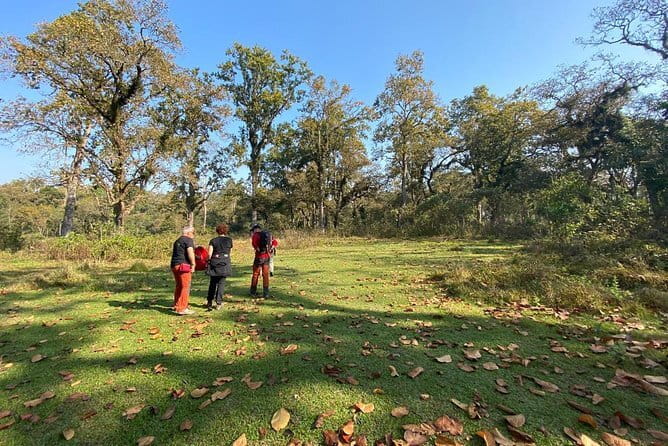
After Pheriche, you return through Dingboche and turn into the Chukhung Valley. This change of direction takes you away from the main Everest Base Camp route and toward Island Peak.
From Chukhung, the trail follows the Imja Valley, with Ama Dablam dominating the view. You pass moraines flowing from Lhotse and reach the sandy flats of Pareshaya Gyab before continuing to Island Peak Base Camp.
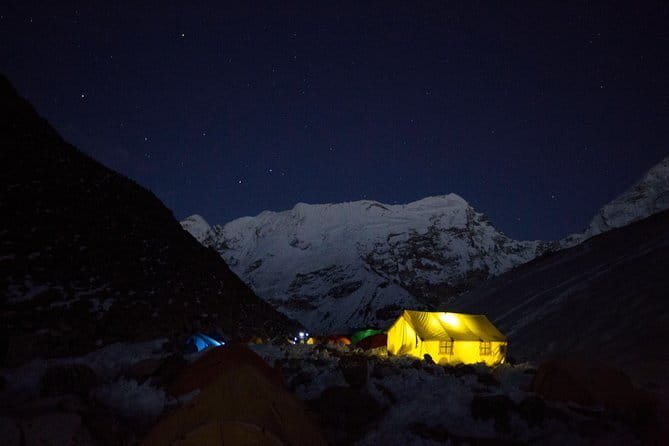
Accommodation here is in tents, with meals cooked by a professional camp team. This is a sharper change from the guesthouses. Facilities are more basic, nights are colder, and you should expect less privacy and comfort. In return, you are sleeping close to the climb and avoiding a needless return to a lower village.
The supplied plan allows one or two nights at Base Camp, depending on the climbing schedule. All meals at camp are included, along with filtered water on the trail using a Katadyn Pocket Water Filter and seasonal fruit during the trek.
What the Island Peak summit attempt involves
The climb begins early, usually after a briefing and gear check. The final ascent can take four to six hours, though the full summit day also includes the descent and return. The route is not described as highly technical, but it is not a casual hike.
You may encounter crevasses, steep snow, a headwall, ropes, crampons, and a strong sense of exposure. A good head for heights helps. Your fitness matters even more, since you have already completed the long walk to Everest Base Camp and Kala Patthar.
The climbing Sherpa provides instruction in the use of the rope, harness, crampons, ice axe, ice screw, snow bar, and ice hammer. Group climbing equipment is included, but personal trekking and climbing equipment is not. Ask for a precise packing list before departure rather than assuming every item will be supplied.
The extra day is an important safety feature. Mountain conditions can change quickly, so the leader may use the second day for a summit attempt if the first morning is unsuitable. If conditions cooperate, the spare day may be used for rest or continued trekking toward Lukla.
No operator can guarantee the summit. The right decision may be to turn around if weather, snow, altitude, or fatigue makes the climb unsafe. A successful trip means making good decisions, not forcing the top.
The descent through Tengboche, Namche, and Lukla
After Island Peak, the route returns through Chukhung and then toward Tengboche. You pass Dingboche, Orsho, Shomare, and Lower Pangboche before crossing the Imja Khola and climbing through Debuche.
The descent to Namche takes you through juniper, rhododendron, and fir forest, then across the Dudh Kosi near Phunki Tenga. You climb to Trashinga and contour above the valley to Shanasa. There may be time to visit Kunde and Khumjung before returning to Namche.
This part of the trip gives your legs a break from constant uphill walking, but steep downhill sections can be hard on knees. Trekking poles are a sensible personal item, though the package does not list them among the included equipment.
The final walking day returns you to Lukla. The afternoon is free for a shower, rest, and a group celebration. That small luxury matters after nearly three weeks of cold mornings, dusty paths, basic lodging, and long days.
The return flight to Kathmandu also takes about 35 minutes. Weather can affect this flight, so keep the final day after the scheduled arrival as open as possible before an important international connection. The trip ends with airport transfer back to Tribhuvan International Airport.
What the $3,300 price really covers
At $3,300 per person, this is not a budget trek. It is also not an inflated price for a trip that combines Everest Base Camp with a guided Island Peak attempt.
The price includes Kathmandu hotel nights with breakfast, trekking accommodation, tented Base Camp accommodation, standard meals during the trek, domestic flights, permits, climbing documents, porters, trekking guides, a climbing Sherpa, staff costs, filtered water, seasonal fruit, and a farewell dinner. One porter serves every two people, which is a useful balance between support and responsible load sharing.
You also receive a duffel bag and sun hat to keep. The group size is capped at 15, so you are paying for a structured operation rather than arranging each lodge, permit, flight, and climbing detail yourself.
Budget extra for Kathmandu lunches and dinners, drinks, alcohol, personal gear, tips, international flights, the Nepal visa, and insurance. High-altitude rescue and evacuation insurance is essential, but it is not included. Tipping for the trekking staff and driver is expected.
I see the price as good value for someone who wants a managed expedition and does not want to coordinate Nepal’s moving parts alone. It is less appealing if you already own climbing experience, prefer independent trekking, or want control over every lodge and rest day.
Who should book this Island Peak trip?
I would choose this for a fit hiker who wants a first serious Himalayan climbing experience with a clear safety structure. You should be comfortable walking for many hours, sleeping in simple guesthouses, handling cold, and accepting that weather controls the mountain schedule.
It suits people who value support. Guides have been praised for patient instruction, regular altitude checks, route briefings, and help with practical problems such as delayed luggage. The small group also gives you a better chance to ask questions and receive attention than a large departure.
I would not choose it for a relaxed vacation, a first-ever mountain walk, or anyone unwilling to train. The itinerary includes long days, thin air above 5,000 meters, a strenuous Kala Patthar climb, and a technical peak section. You should also be ready for plans to change if the Lukla flights or summit weather do not cooperate.
Free cancellation is available up to 24 hours before the start time. If poor weather cancels the experience, you are offered another date or a full refund, subject to the stated policy. Changes or cancellations inside 24 hours are not accepted.
Should you book it?
Book this trip if you want the full package: Everest Base Camp, Kala Patthar, and a supported Island Peak attempt, with logistics handled from airport pickup to return flight.
Skip it if you want an easy trek, private rooms throughout, or a guaranteed summit. The best reason to choose it is the combination of a careful acclimatization plan, a two-day climbing window, porter support, and experienced guide leadership. Bring the right insurance, train seriously, and treat the summit as an opportunity rather than a promise.
FAQ
How long does the Everest Base Camp and Island Peak trip last?
The scheduled itinerary lasts 19 days, from airport pickup in Kathmandu through the return airport transfer.
Is airport pickup included?
Yes. Pickup from Tribhuvan International Airport and transfers between the airport and hotel are included in a private tourist vehicle.
What is the maximum group size?
The group can include up to 15 people.
Are flights between Kathmandu and Lukla included?
Yes. The package includes round-trip airfare between Kathmandu and Lukla, with each flight taking about 35 minutes when operating.
Is climbing equipment included?
Group equipment such as climbing rope, ice screws, snow bars, and ice hammers is included. You must bring or arrange your personal trekking and climbing equipment.
Does the price include travel insurance?
No. You need separate travel insurance that covers emergency high-altitude rescue and evacuation.
Latest treks added in Kathmandu
- Ghorepani Poonhill Trek★ 5.0 · 5 reviews
- Ghorepani Poon Hill Trek★ 5.0 · 16 reviews
- Private Manaslu Circuit Trek at Himalayas★ 5.0 · 3 reviews
- Upper Mustang Trekking★ 3.0 · 2 reviews
- Amazing 1 Day Trekking Experience in Kathmandu Nepal★ 5.0 · 24 reviews
- Upper Mustang Trekking★ 5.0 · 2 reviews
- Upper Mustang Trek★ 5.0 · 5 reviews
- Upper Mustang Trekking★ 5.0 · 4 reviews
Everest Base Camp Treks, compared.






Browse the lists this tour appears in