
REVIEW · KATHMANDU
Everest Base Camp Trek
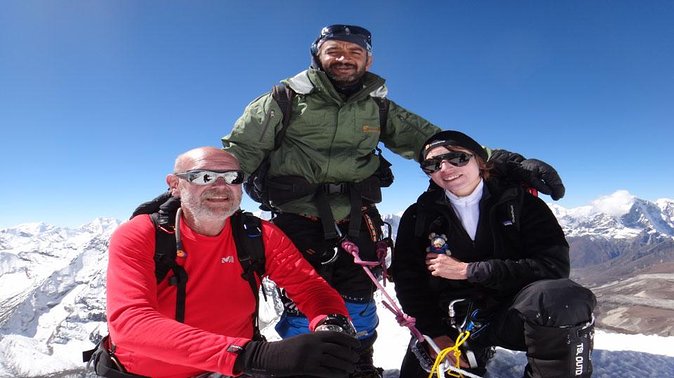
The big draw is simple: you walk into the high Khumbu, past Sherpa villages and old monasteries, until Everest fills the horizon. The route reaches about 5,380 meters, with the best broad view of Everest and nearby peaks from Kala Patthar.
I like the scenic flight to Lukla and the pause in Namche Bazaar, where the trail meets the commercial and cultural center of the region. I also like the local character of the trip, with guides and porters such as Shailesh, Bishnu, Santa, Tek, Hari, and Nawin involved across different departures. The main caution is altitude: this is a serious trek, not a sightseeing walk, and a moderate fitness level is the minimum stated requirement.
Key points before you book
- Lukla begins the adventure: The flight to Tenzing Hillary Airport is one of the most memorable parts of the route, but flight delays can affect plans.
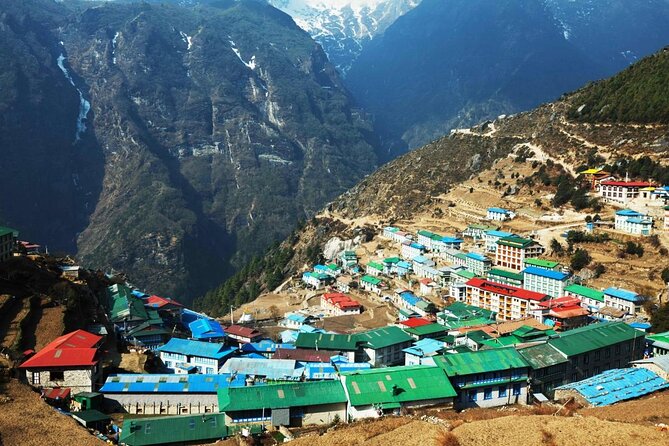
- Namche is more than an overnight stop: It is the Khumbu’s main trade center and a useful place to adjust to higher ground.
- Tengboche adds meaning to the scenery: The large monastery sits beneath Ama Dablam and gives the trek a strong cultural side.
- Kala Patthar delivers the classic view: You get the broadest panorama of Everest and nearby snow peaks from this high point.
- The route is physically demanding: Thin air, steep sections, basic lodges, and long walking days are part of the deal.
- The price covers some major costs: Overnight accommodation, airport or departure tax, and national park fees are included, while flights, visa, tips, food, drinks, WiFi, and personal costs are not clearly covered.
Why this Everest trek feels different from a mountain sightseeing tour
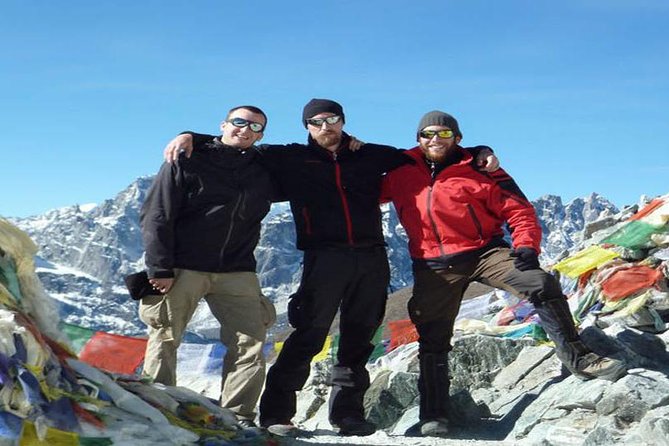
This is not a quick mountain lookout with a short walk attached. You spend roughly two weeks moving through the Khumbu on foot, gaining height gradually and seeing daily life change as the trail climbs.
The route begins in Kathmandu, then heads by air to Lukla at about 2,860 meters. From there, you follow the same broad corridor used by climbers and porters heading toward Everest. The reward is not only the mountain itself. It is the sequence of river valleys, suspension bridges, stone villages, prayer flags, monasteries, and snow peaks that make the walk feel like a real journey.
I also appreciate the small group limit of 15 people. That is large enough to meet others but still manageable on a narrow trail. Solo departures have also been arranged with a guide and porter, so you do not necessarily need to arrive with a group.
The operator, Nepal Trekking Routes Pvt. Ltd, has organized departures with staff including Shailesh, Bishnu, Santa, Tek, Hari, Nawin, Navien, and Raj. The exact guide depends on your departure, but the repeated pattern is clear: the service is built around local guides, direct communication, and support with changing plans.
More Everest Base Camp Treks in Kathmandu
- Everest Base Camp Trek – 14 Days
★ 5.0 · 1,499 reviews - Everest Base Camp Trek
★ 5.0 · 842 reviews - Everest Base Camp Trekking
★ 5.0 · 485 reviews
Kathmandu to Lukla, the dramatic opening day
Your meeting point is Tribhuvan Airport in Kathmandu, with pickup offered. The flight to Tenzing Hillary Airport is a highlight in its own right. Lukla sits high in the mountains, and landing there changes the mood immediately from city travel to a walking expedition.
The airport is named for Tenzing Norgay and Edmund Hillary, whose first successful ascent of Everest helped place this region at the center of mountaineering history. On this trek, you follow the broad route associated with those early expeditions, though the modern trail also serves villages, lodges, porters, and local trade.
The flight is weather-sensitive. Previous departures have included delays and cancellations, with the company arranging revised plans afterward. That support matters, but you should still avoid scheduling an important international connection immediately after the trek. The description does not say that the Lukla flight is included in the $1,290 price, so confirm this before paying.
Walking toward Namche Bazaar
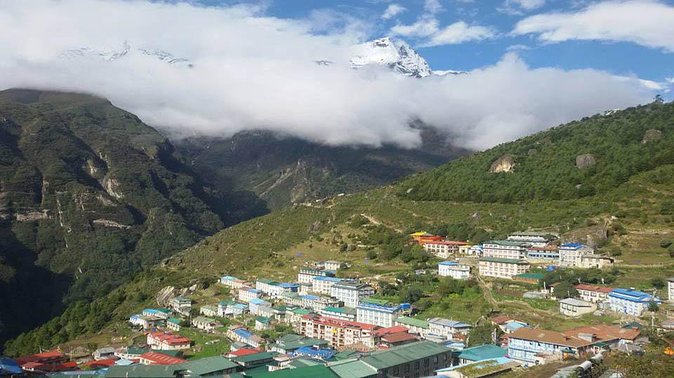
The early walking days take you through the lower Khumbu, where the trail passes villages, green valleys, and mountain streams before rising toward Namche Bazaar. The lower section is easier on the lungs than the high route, but it still includes steep climbs and uneven ground.
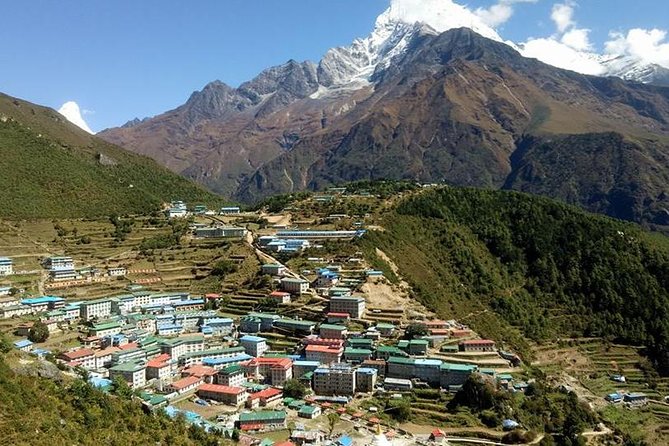
Namche is the commercial center of the Khumbu and the main gateway to Everest Base Camp. Its curved settlement, market activity, lodges, and Sherpa Museum give you a useful introduction to the region before the trail becomes more remote.
This is also where the pace matters. You are already at significant altitude, and the route needs time for your body to adjust. A rest or acclimatization period is normally part of an Everest Base Camp plan, but the supplied information does not provide a fixed day-by-day schedule. Ask for the exact overnight stops and acclimatization plan before booking.
The opportunity to have breakfast or lunch at Everest View Hotel is another appealing feature. It gives you a chance to look toward Everest and surrounding peaks from one of the world’s highest-altitude hotels. It is an optional-sounding stop in the description, so confirm whether food and any visit are included in your price.
Tengboche Monastery and the spiritual Khumbu
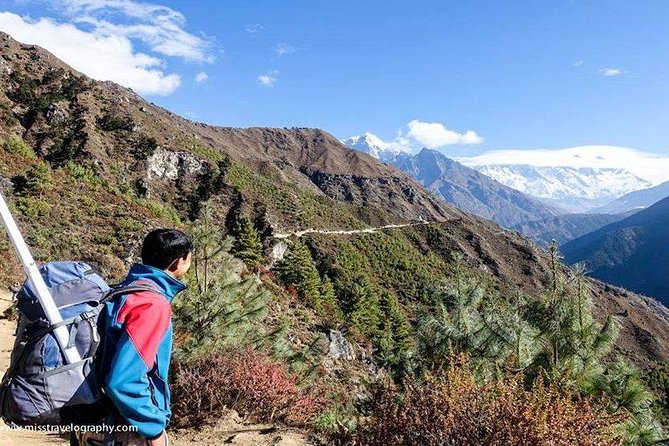
From Namche, the route continues toward Tengboche, one of the most memorable stops on the walk. Tengboche Monastery is described as the largest monastery in the Khumbu, and its setting beneath Ama Dablam gives the place a powerful visual presence.
This stop adds something a mountain trek can otherwise lack. You are not only counting meters and peaks. You are passing through a living Sherpa region, where Buddhist practice, village life, and mountaineering all share the same narrow valleys.
The scenery becomes more severe as you climb. Trees thin out, the air feels lighter, and the surrounding peaks begin to dominate the view. Ama Dablam is especially striking from this part of the route, while Everest, Lhotse, Cho Oyu, and other high mountains form the wider backdrop.
Lodging at this altitude is practical rather than luxurious. One detailed account described the lodges as ascetic, which is a fair warning. Overnight accommodation is included, but that does not mean hotel-style comfort. Prepare for simple rooms and a basic trekking setup.
More Trekking Tours in Kathmandu
- Annapurna Circuit Trek with Tilicho Lake
★ 5.0 · 368 reviews - Everest Base Camp Trekking – 13 Day
★ 5.0 · 365 reviews - Everest Base Camp Trek
★ 5.0 · 350 reviews - Everest Base Camp Trek -14 Days
★ 5.0 · 321 reviews
Higher ground, thinner air, and the final approach
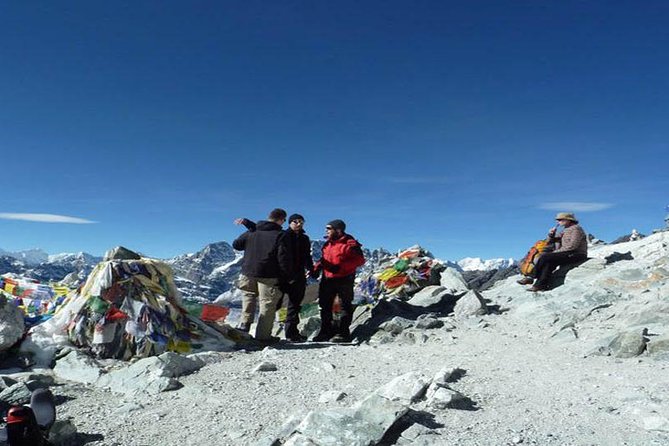
The upper part of the trek is where the physical challenge becomes real. The trail leads through high settlements and exposed mountain country toward Everest Base Camp. The views grow larger, but the air grows thinner.
You do not need technical climbing skills to reach Base Camp on this route, but you do need patience and steady fitness. Several accounts describe steep sections, hard walking, and the difficulty of the final days. Even people accustomed to hiking in the Alps found the altitude difficult to predict.
That point deserves emphasis. Fitness helps, but it does not guarantee that you will feel comfortable at 5,000 meters. Your guide should help you manage the pace and respond to the thin air. One past trekker specifically praised advice from the guide on coping with altitude, and another described feeling safely guided while pushing beyond familiar limits.
Do not treat the Base Camp day as a race. The value comes from reaching the place used by climbers preparing for Everest, not from finishing first. The surrounding peaks, glaciers, and expedition activity provide the drama.
The listed elevation for Everest Base Camp is about 5,380 meters, or 17,600 feet. That number is high enough that sleep, appetite, energy, and walking speed may all change. The experience provider says you should have moderate physical fitness, but you should personally be honest about your health and discuss high-altitude travel with a medical professional if needed.
Kala Patthar gives you the mountain view you came for
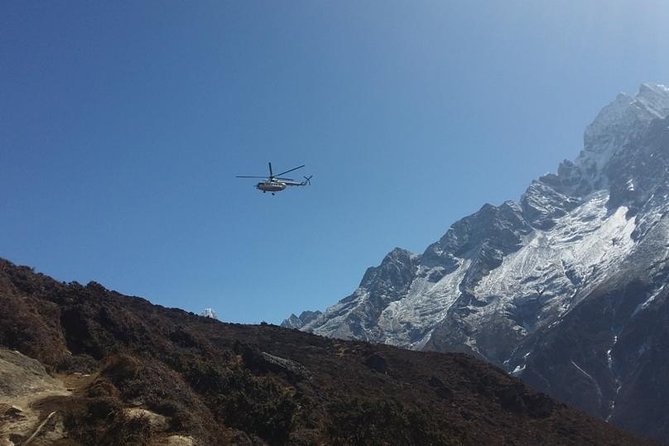
Kala Patthar is the visual high point of the trip. From here, you can look across a 360-degree panorama toward Everest and the snow-covered peaks nearby.
It is important to understand the view correctly. Everest Base Camp itself is about the experience of arriving at the mountaineering staging area. Kala Patthar is the place that gives you the classic open mountain panorama. Many people value the two stops for different reasons.
The climb to Kala Patthar is another demanding high-altitude outing. The reward is a wider view than you get from the Base Camp area, with Everest presented as part of a huge ring of peaks rather than as an isolated object.
The route also connects you to the names that shaped Everest history, especially Edmund Hillary and Tenzing Norgay. You are not recreating their expedition, of course, but walking the Khumbu trail gives those stories a physical setting. Villages, monasteries, valleys, and mountain passes become more understandable when you see how remote and demanding the region remains.
The return walk is part of the experience
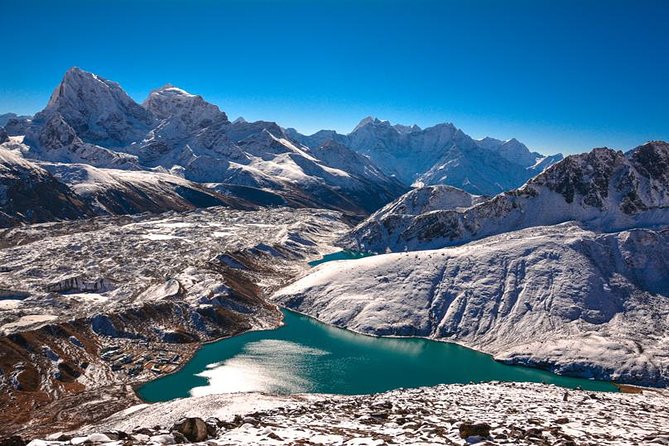
Reaching Base Camp is not the end of the physical work. You must still walk back toward Lukla, often retracing sections of the route. The return gives you different light, easier breathing, and a chance to notice details missed on the way up.
The available experiences connected with this company have included different variations, including helicopter returns and longer approaches from Jiri. Those are not the same as the standard 14-day trek, so do not assume a helicopter flight or Jiri route is part of this specific package.
The standard description points to a return by the normal trekking route, but the full daily itinerary is not supplied. Ask whether the 14 days include arrival and departure days, how many nights are spent in Kathmandu, and how the company handles a missed Lukla flight.
A little flexibility is valuable here. Weather can affect flights, and altitude can affect the walking schedule. The company has arranged extra hotel nights, altered trekking days, and revised transport for past departures. That does not remove the risk, but it suggests that the operator is used to the practical problems of Himalayan travel.
What the $1,290 price really covers
At $1,290 per person, this is a reasonable starting price for a guided, supported trek, but you should not read it as an all-in total.
The stated inclusions are:
- Overnight accommodation
- Airport or departure tax
- National park fees
The exclusions are just as important:
- International airfare
- Nepal arrival visa
- Alcoholic drinks
- WiFi on board
- Personal expenses
- Tips for guides and porters
The information does not clearly confirm whether domestic flights to and from Lukla, meals, guide and porter wages, permits beyond national park fees, or equipment are included. Get those details in writing. The price can be good value if the main trekking services and domestic transport are covered, but it may be less attractive if you must add flights, meals, tips, visa costs, and extra nights separately.
I like that national park fees are listed upfront. Sagarmatha National Park is a major part of the route, not a side attraction, and the fee supports access to this protected mountain region. Still, you need a clear cost sheet before comparing this trip with another operator.
Who will enjoy this route most
This trek suits you if you want a demanding walking holiday with a strong cultural side. You should enjoy simple accommodation, changing weather, high-altitude exertion, and the rewards of moving slowly through a mountain region.
It is a good match for:
- Hikers who want a major goal without technical climbing
- People interested in Sherpa villages, monasteries, and local food
- Solo trekkers who want an organized guide and porter
- Small groups that prefer a maximum of 15 people
- Visitors who value direct support when flights or plans change
It is not a good fit if you want guaranteed comfort, a fixed timetable with no weather risk, or a short mountain excursion. The route can be physically tough, and the altitude cannot be reduced by enthusiasm.
The company has also handled solo treks and different age groups, including a departure for a 67-year-old participant. That does not mean the trek is easy or suitable for everyone at that age. It does show that preparation, pacing, and support can matter as much as speed.
Practical details worth confirming
Confirmation is provided at booking, and mobile tickets are available. Pickup is offered from Tribhuvan Airport, with the published meeting hours beginning early in the morning and extending into the evening on the stated operating dates.
The experience is listed as operating from January 1, 2024 through December 31, 2025. Since mountain weather and transport plans change, confirm the current departure date, Lukla flight arrangements, and seasonal conditions when you book.
The cancellation policy allows a full refund if you cancel at least 24 hours before the experience begins. Cancellations within 24 hours are not refunded, and late changes are not accepted. That policy is worth noting because your international flights and other Nepal plans may be tied to this trek.
Should you book the Everest Base Camp Trek?
Book it if your main goal is to walk into the Everest region, meet the Khumbu through its villages and monasteries, and earn the mountain views one day at a time. The combination of Lukla, Namche, Tengboche, Base Camp, and Kala Patthar gives you both cultural context and high mountain drama.
I would book only after confirming what the $1,290 includes, especially domestic flights, meals, guide and porter costs, and the exact acclimatization schedule. If those details are favorable, the small group limit, local staff, airport pickup, and stated support with difficult logistics make this a strong option.
The best reason to choose it is not simply the Everest name. It is the chance to see how people live in the Khumbu, follow a historic mountaineering route, and reach a very high place under your own power. That is a demanding bargain, but for the right walker, a memorable one.
FAQ
How long is the Everest Base Camp Trek?
The trek lasts approximately 14 days.
Where does the experience begin?
It begins at Tribhuvan Airport in Kathmandu, Nepal. Pickup is offered.
What is the highest elevation reached?
The route reaches approximately 5,380 meters, or 17,600 feet, at Everest Base Camp. Kala Patthar also provides a high mountain viewpoint.
What is included in the price?
Overnight accommodation, airport or departure tax, and national park fees are included.
What is not included?
International flights, the Nepal arrival visa, alcoholic drinks, WiFi on board, personal expenses, and tips for guides and porters are not included.
How physically difficult is the trek?
A moderate level of physical fitness is required. The route includes steep walking, thin air, and high elevations, so it is a serious trek rather than a casual sightseeing activity.
Latest treks added in Kathmandu
- Ghorepani Poon Hill Trek★ 5.0 · 16 reviews
- Private Manaslu Circuit Trek at Himalayas★ 5.0 · 3 reviews
- Ghorepani Poonhill Trek★ 5.0 · 5 reviews
- Upper Mustang Trekking★ 3.0 · 2 reviews
- Amazing 1 Day Trekking Experience in Kathmandu Nepal★ 5.0 · 24 reviews
- Upper Mustang Trekking★ 5.0 · 2 reviews
- Upper Mustang Trek★ 5.0 · 5 reviews
- Upper Mustang Trekking★ 5.0 · 4 reviews
Everest Base Camp Treks, compared.






Browse the lists this tour appears in