
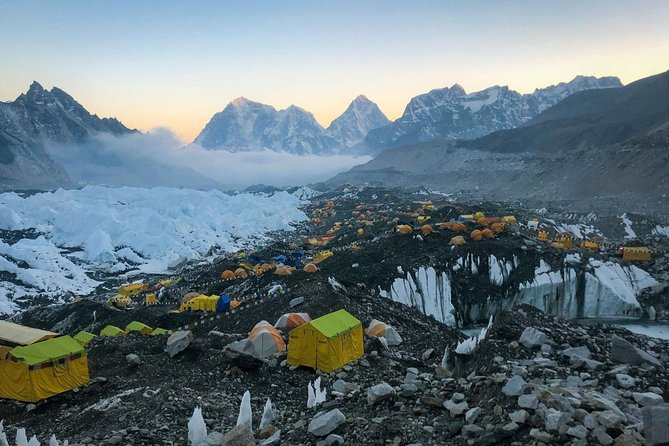
REVIEW · KATHMANDU
Cheapest Everest Base Camp Trek from Kathmandu
Everest Base Camp is the main event here, but the route earns its keep long before you reach it. You walk through Sherpa country, pause in Namche Bazaar, visit Tengboche Gompa, and climb Kala Pattar for sunrise views of Everest, Lhotse, Nuptse, and Cho Oyu. I especially like the private-group format and the fact that a guide stays with you for the full trek from Lukla.
I also like the clear price of $1,080, which covers the Lukla flight, tea-house rooms, permits, and guide expenses. The trade-off is important: meals are not included, rooms use common bathrooms, and a porter, insurance, Kathmandu hotel, and flight disruption costs are extra.
Key points to know before you book
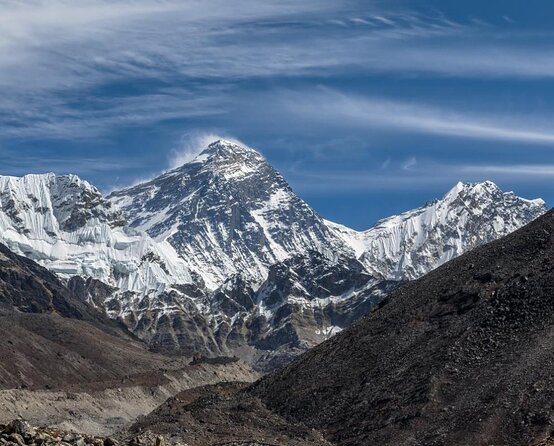
- Kala Pattar is the big view day: The sunrise walk gives you the route’s best listed outlook toward Everest, Lhotse, Nuptse, and Cho Oyu.
- The price covers the costly basics: Your Lukla flight, guide, local lodge room, national park fee, and Khumbu entry fee are included.
- You get a private trek: Only your own group participates, with a professional guide assigned for 12 days from Lukla.
- Acclimatization is built in: You spend a second day around Namche and another day around Dingboche rather than climbing higher every day.
- Bring a food budget: Tea-house meals are paid directly, so the advertised price is not the full cost of the trek.
- Keep a buffer after the trek: Lukla flights depend on weather, and the final flight may run through Ramechap before the shared drive to Kathmandu.
Why this Everest trek feels like a real expedition
This is a serious high-altitude trek, not a sightseeing walk with a few mountain views added. The route takes you from Kathmandu to Lukla, then on foot through Phakding, Namche Bazaar, Tengboche, Dingboche, Lobuche, and Everest Base Camp before returning by the same broad corridor.
I like the way the plan allows time to adjust around Namche and Dingboche. Those slower days can feel less exciting on paper, but they are central to handling the altitude. You are not simply racing toward Base Camp and hoping your body catches up.
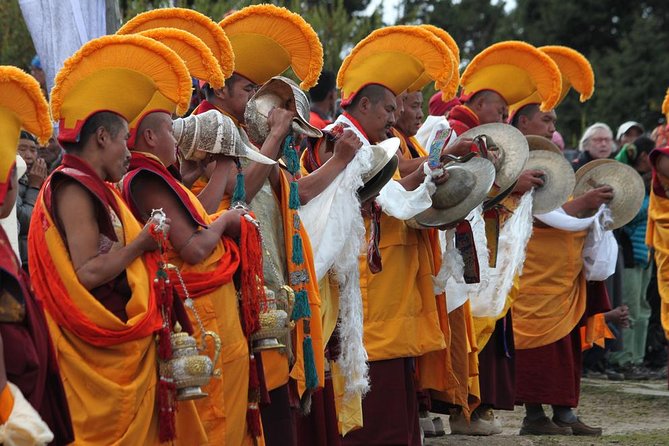
The route also gives you more than a finish-line photograph. Sherpa culture is part of the experience, especially in Namche and around the monasteries. Tengboche Gompa adds a spiritual stop to a trek otherwise shaped by exertion, weather, and mountain views.
The tour is private, which matters here. You are not tied to the pace or mood of a large mixed group. Your guide can manage the walking rhythm for your party, though the supplied details do not name the guide assigned to your departure. The company contact connected with this experience is Mr. Kishor, a useful name to know when confirming arrangements.
More Everest Base Camp Treks in Kathmandu
- Everest Base Camp Trek – 14 Days
★ 5.0 · 1,499 reviews - Everest Base Camp Trek
★ 5.0 · 842 reviews - Everest Base Camp Trekking
★ 5.0 · 485 reviews
Day 1: Flying to Lukla and walking to Phakding
The first day begins early, with a listed start time of 5:00 am. You fly from Kathmandu, or from Ramechap if operations require it, to Lukla in the Everest region. From Lukla, the trek starts on foot toward Phakding.
The early start is practical rather than glamorous. Flights to Lukla depend on weather and operating conditions, so the schedule can shift. You should give your hotel and arrival details in Kathmandu to the operator so the guide can arrange pickup.
Lukla is the gateway to the walking route, while Phakding marks the first overnight stop. The supplied plan does not give a walking time for this day, so do not treat the schedule as a minute-by-minute promise. The useful point is that you begin walking soon after landing rather than spending a spare day in Lukla.
Day 2: Namche Bazaar and the first major climb
From Phakding, you continue toward Namche Bazaar, the Sherpa cultural hub of the Everest region. This is one of the route’s major milestones. Namche is not just a place to sleep. It is the point where the trek begins to feel firmly connected with Sherpa life and the high mountain route.
The day is listed as a full day at Namche, which suggests the schedule gives you time to settle in rather than rush through. You will want to pay attention to how your body responds here. The route becomes more demanding as you continue, and the next day is set aside for acclimatization.
Your room is arranged in a local lodge or tea house on a sharing basis. Common bathrooms are part of the deal. That keeps the price down, but you should be comfortable with simple lodging and limited privacy.
Day 3: Acclimatization around Syangboche Marg
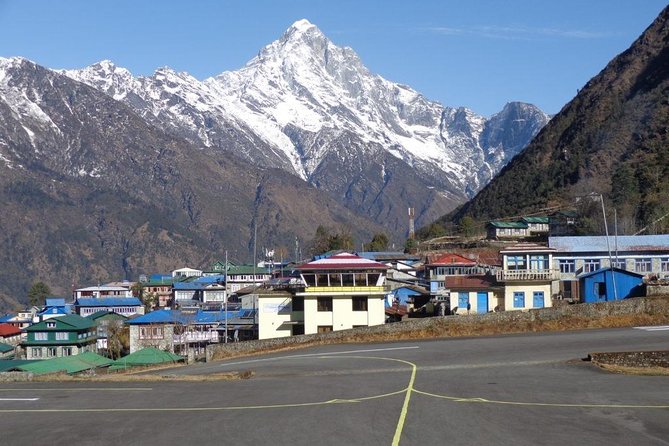
The third day allows you to stroll around Namche and the Syangboche Marg area for about five hours. This is not wasted time. A pause at this stage helps break up the steady climb and gives you a chance to adjust before heading higher.
I like that the plan labels this as acclimatization rather than trying to squeeze in another long transfer. You may find the day physically easier than the main trekking days, but it still asks you to walk at altitude. Use it to understand your guide’s pace and to sort your daypack before the higher sections.
The schedule says you are free to stroll around Namche. That means the exact pattern is flexible, but it does not promise a separate paid attraction or a fixed sightseeing program. The value is in the breathing room.
More Trekking Tours in Kathmandu
- Annapurna Circuit Trek with Tilicho Lake
★ 5.0 · 368 reviews - Everest Base Camp Trekking – 13 Day
★ 5.0 · 365 reviews - Everest Base Camp Trek
★ 5.0 · 350 reviews - Everest Base Camp Trek -14 Days
★ 5.0 · 321 reviews
Day 4: Tengboche Gompa and a change of mood
The route continues to Tengboche Gompa, a Buddhist monastery described as the highest-altitude monastery in the Everest region. This is one of the most distinctive stops on the trek because it shifts your attention from logistics and endurance to Buddhist life in the mountains.
Tengboche also gives the route a strong cultural center. You are not only walking toward a famous mountain. You are passing through a Sherpa region where monasteries, villages, and mountain travel are linked.
The overnight stop is listed as a full day, but the exact walking hours are not provided. That is worth noting if you like tightly timed itineraries. Your guide will be important in setting the pace and explaining how the day fits the altitude plan.
Days 5 and 6: Dingboche, glacier views, and another rest day
Day 5 brings you to Dingboche, with glacier and mountain views. The next day remains in Dingboche for an excursion to a nearby area. This second slower day is another sensible part of the design.
Dingboche is where the high-altitude character of the trek becomes harder to ignore. You are no longer simply following a valley route toward a famous destination. The schedule gives your body time to adjust before Lobuche and Base Camp.
The excursion is not described in enough detail to promise a particular peak, viewpoint, or village. That is a good reason to ask the operator what nearby area your guide normally uses and how strenuous the outing will be. The important fact is that you do not immediately move higher on Day 6.
Food becomes a bigger budget issue during these lodge nights. The room is included, but meals in the tea house are paid directly. Keep money available for breakfasts, dinners, drinks, and any other food you buy along the route.
Day 7: Lobuche and the Everest range
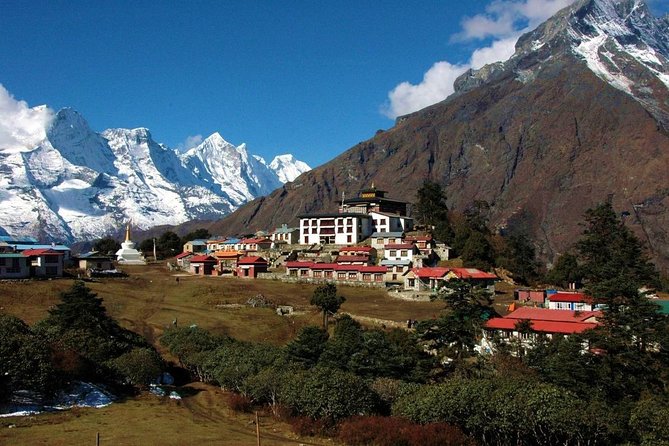
You leave Dingboche for Lobuche, in the Khumbu region, with views toward the Everest range. This is a key approach day. The distances and walking times are not specified, so you should expect a full trekking day rather than a short transfer.
Lobuche is a practical staging point for the next day’s excursion to Base Camp. The route becomes more focused here, with less room for casual wandering and more attention to the high-altitude schedule.
Your guide’s role matters most on days like this. The included guide has expenses and insurance covered by the operator, but your own insurance is not included. Make sure your policy is suitable for a high-altitude trek before you go.
Day 8: Everest Base Camp, the main goal
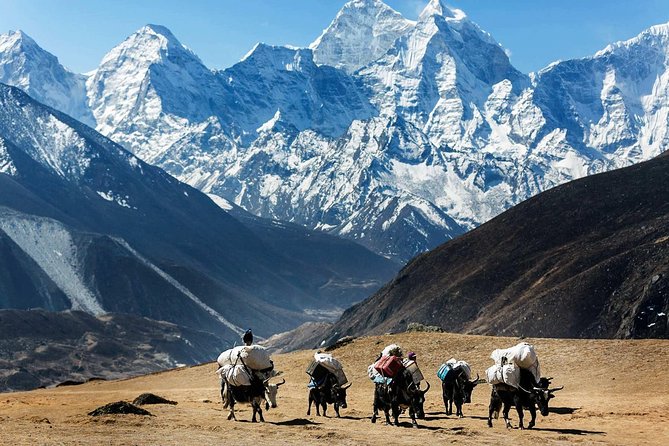
Day 8 takes you to Everest Base Camp, with about three hours listed for the excursion. Reaching Base Camp is the emotional center of the trek, but it is worth keeping expectations realistic. You are visiting the base camp area, not climbing Mount Everest, and the experience is shaped by conditions, timing, and the walking route.
The attraction is not a ticketed museum or a formal visitor site. It is the setting: the high Khumbu route, the surrounding peaks, and the knowledge that mountaineers use this area as a staging point for Everest expeditions.
The schedule lists admission as free. That does not mean the day costs nothing. Your tea-house meals remain separate, and all normal personal expenses are still yours. It does mean there is no separate Base Camp entry ticket listed.
Day 9: Kala Pattar at sunrise, then Pheriche
Day 9 is arguably the best photography and mountain-view day. You make a sunrise excursion to Kala Pattar, then trek down to Pheriche. The listed walk at Kala Pattar is about two hours, with admission included.
The reward is the promised panorama of Everest, Lhotse, Nuptse, and Cho Oyu. If your main reason for booking is to see Everest clearly, this morning is the part of the plan to protect. Sunrise depends on weather, and mountain conditions can change quickly, but the timing is chosen for the best possible view.
The descent to Pheriche is more than a change of scenery. Moving lower after the Base Camp and Kala Pattar section gives your body a break from the highest part of the route. You should still take the day seriously. Downhill walking can be tiring after several days on foot.
Days 10 and 11: Returning through Namche to Lukla
Day 10 brings you back to Namche Bazaar, where you can stroll through the area and enjoy its color and Sherpa character from a different angle. The return route can feel familiar, but Namche is a useful place to pause before the final push to Lukla.
On Day 11, you trek from Namche to Lukla and stay overnight. This is your last walking day. The plan does not include a hotel in Kathmandu, so the night in Lukla is part of the return logistics rather than a soft landing back in the capital.
The return route is also a reminder that the trek is not finished when you leave Base Camp. You need enough energy for the walk back and enough schedule flexibility for the flight out.
Day 12: Lukla, Ramechap, and the drive to Kathmandu
The final day includes a flight from Lukla to Ramechap, followed by a shared drive to Kathmandu and a hotel drop-off. The flight may instead operate directly from Lukla to Kathmandu when conditions and operations allow, but Ramechap is specifically part of the stated plan.
This arrangement can lengthen the return and makes a same-day international connection a poor idea. The operator recommends a buffer day after the trek before your onward international flight. Take that advice seriously. Weather can delay the Lukla flight, and a delayed flight can affect the road transfer as well.
The shared drive from Ramechap is included in the stated return arrangement, but the details do not promise a private vehicle. If comfort or timing matters, ask about the transfer before booking.
What $1,080 really includes
At $1,080 per person, the price is attractive for a 12-day Everest Base Camp package because it covers several costs that quickly add up:
- A professional trekking guide for 12 days from Lukla
- The Lukla flight from Kathmandu or Ramechap, depending on operations
- Local lodge or tea-house rooms on a sharing basis
- Everest National Park fees
- The Khumbu entry fee
- Guide expenses and the guide’s insurance
- Hotel drop-off in Kathmandu after the Ramechap drive
That is good value if you already own suitable trekking equipment and do not need a porter. The private format also gives you a more personal structure than a large group departure.
The low headline price needs a careful reading. You pay directly for tea-house meals, and a porter is not included. Your insurance, Kathmandu hotel, and costs caused by flight cancellation or delay are also separate.
You may hire a porter in Lukla if you need help carrying your bags. Since porter cost is not included, confirm the price and arrangement locally before setting out. The package covers a room, not full board, so build your food budget into the total.
What the simple lodging means for you
Tea-house lodging is part of the appeal of this route, but it is not a hotel experience. You receive a room on a sharing basis, and bathrooms are common. The supplied details do not promise private bathrooms, upgraded rooms, or a particular lodge in each village.
I would treat the room as a clean place to sleep and organize your gear, not as a retreat with extensive facilities. You should be comfortable with basic conditions and with the possibility that the room standard varies along the route.
The private tour does not change the lodge setup. Only your group participates in the trekking activity, but the accommodation itself is still described as local lodge or tea-house lodging on a shared basis.
Fitness, weather, and the practical risks
You need strong physical fitness for this experience. It is explicitly described as a high-altitude trek, and the itinerary includes repeated walking days, acclimatization excursions, a Base Camp excursion, a sunrise climb to Kala Pattar, and a long return to Lukla.
The plan does not state a required age, walking speed, medical standard, or daily distance. That means you should discuss your own fitness and any health concerns with a qualified professional, then ask the operator how the guide handles changes in pace.
Weather affects the most important transport link. Lukla flights are weather-dependent, and the final flight may use Ramechap. Keep a buffer day after the trek before your international flight, and do not build an important connection immediately after the scheduled Kathmandu arrival.
The cancellation terms are friendly for ordinary changes: you can cancel at least 24 hours before the start for a full refund. Poor weather or failure to reach the minimum number of participants may lead to a different date, another experience, or a full refund. Changes made within 24 hours are not accepted, and the policy does not cover your separate costs caused by delays.
Who will get the most from this trek
I would choose this trip if you want the classic Everest Base Camp route with a private guide and a relatively low starting cost. It suits you if you value the mountain route, Sherpa culture, acclimatization days, and Kala Pattar sunrise more than polished accommodation.
It is also a good fit if you are willing to manage some details yourself. You need to pay for meals, arrange your own insurance, decide if you want a porter, and handle any Kathmandu hotel needs. The operator requires a copy of your passport in advance for trekking permit issuance.
I would hesitate if you need guaranteed flights, private bathrooms, included meals, or a fully protected connection to an international flight. The price is not all-inclusive, and the route depends on weather in a part of Nepal where schedules can change.
Should you book the Cheapest Everest Base Camp Trek?
Book it if you want the essential Everest Base Camp route at a controlled price and you are comfortable with tea houses, common bathrooms, separate meal costs, and weather-related uncertainty. The strongest parts are the private format, the two acclimatization stops, the included guide, and the chance to see Everest from Kala Pattar at sunrise.
Before paying, confirm the guide assignment, the flight plan from Kathmandu or Ramechap, the expected food budget, porter arrangements, and the return transfer. If you can add a buffer day after Day 12 and arrive fit for a high-altitude trek, this offers a practical way to reach Base Camp without paying for extras you may not need.
FAQ
How long is the Everest Base Camp trek?
The experience lasts approximately 12 days, beginning with the flight and walk from Lukla and ending with the flight and drive back to Kathmandu.
What is the price per person?
The listed price is $1,080 per person.
Is the tour private?
Yes. Only your group participates in the activity.
Is a guide included?
Yes. A professional trekking guide is included for 12 days from Lukla. The guide’s required expenses and insurance are also included.
Are flights to Lukla included?
Yes. The package includes the flight to Lukla from Kathmandu or Ramechap, depending on operational conditions.
Does the price include food?
No. Meals and food at the tea houses are paid directly by you.
Is a porter included?
No. A porter is not included, but you can hire one in Lukla if needed.
What type of accommodation is provided?
You stay in a local lodge or tea house on a sharing basis. The bathrooms are common.
Do I need to provide passport details?
Yes. A copy of your passport is required in advance for trekking permit issuance.
What happens if bad weather cancels the trip?
If poor weather cancels the experience, you are offered a different date or a full refund. You should also keep a buffer day after the trek because Lukla flights depend on weather.
Latest treks added in Kathmandu
- Ghorepani Poon Hill Trek★ 5.0 · 16 reviews
- Private Manaslu Circuit Trek at Himalayas★ 5.0 · 3 reviews
- Ghorepani Poonhill Trek★ 5.0 · 5 reviews
- Upper Mustang Trekking★ 3.0 · 2 reviews
- Amazing 1 Day Trekking Experience in Kathmandu Nepal★ 5.0 · 24 reviews
- Upper Mustang Trekking★ 5.0 · 2 reviews
- Upper Mustang Trek★ 5.0 · 5 reviews
- Upper Mustang Trekking★ 5.0 · 4 reviews
Everest Base Camp Treks, compared.






Browse the lists this tour appears in