
REVIEW · KATHMANDU
Mardi Himal Trek
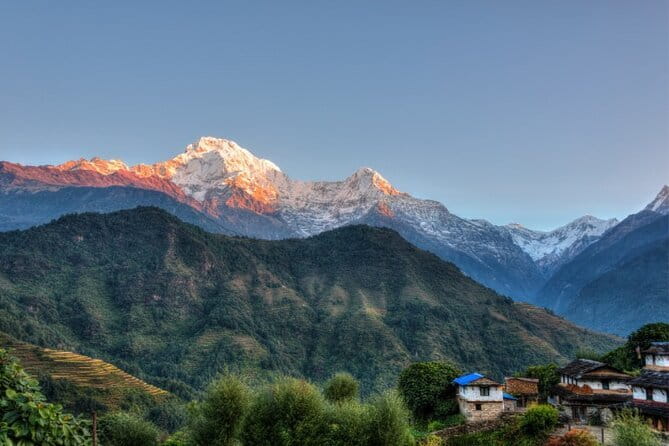
The Mardi Himal Trek gives you a fine mix of high Himalayan views and village life without sending you onto the busiest Annapurna trails. You move from Kathmandu to Pokhara, then climb through stone stairways, rhododendron woods, mossy forest, open pasture, and a high ridge facing Machapuchare, the famous fishtail peak.
I like the chance to see the Annapurna range from several different settings, and I like the return route through Siding, Kalimati, and Ghalel. Those villages add real human interest to a trip that could otherwise become a parade of mountain viewpoints. The main consideration is the physical demand: steep steps, narrow ridges, long trekking days, and basic guesthouse facilities require moderate fitness and sensible expectations.
Key points to know before booking
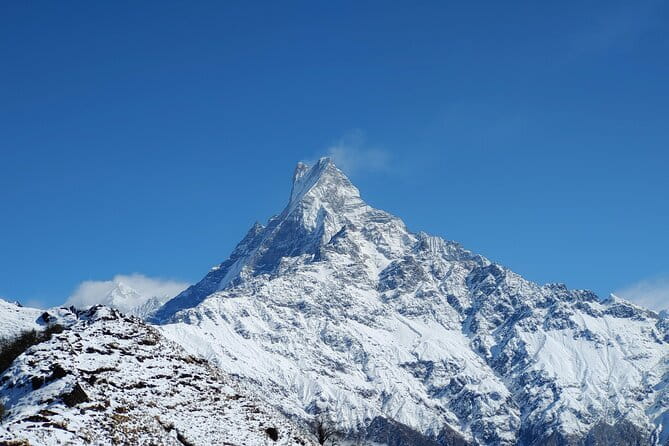
- The best views arrive high on the ridge: Machapuchare, Annapurna South, Hiunchuli, and Dhaulagiri may appear from different points along the route.
- The trek is private: Only your own group takes part, with one guide and one porter for every two members.
- Pokhara adds a softer side: You get time for Phewa Lake, dinner, and an easier city break before and after the mountain section.
- The route includes real village contact: Siding, Kalimati, and Ghalel offer a look at Brahmin, Gurung, Rai, Limbu, and Chhetri communities.
- Wildlife is part of the appeal: Red panda, danphe, dzo, sheep, and goats are mentioned as possible sightings, but no animal sighting is guaranteed.
- The price covers the core trek, not everything: At $950 per person, permits, transport, guide, porter, lodging, and four breakfasts are included, while insurance, meals beyond those listed, hot water, internet, equipment, and drinks cost extra.
Why this Mardi Himal route is worth considering
Mardi Himal is a good choice if you want a Himalayan trek with strong mountain scenery but also care about culture and city time. The trip does not simply put you on a trail and bring you back. It begins with Kathmandu, gives you time in Pokhara, crosses several kinds of mountain terrain, and returns through villages that see less tourist traffic than the main Annapurna stops.
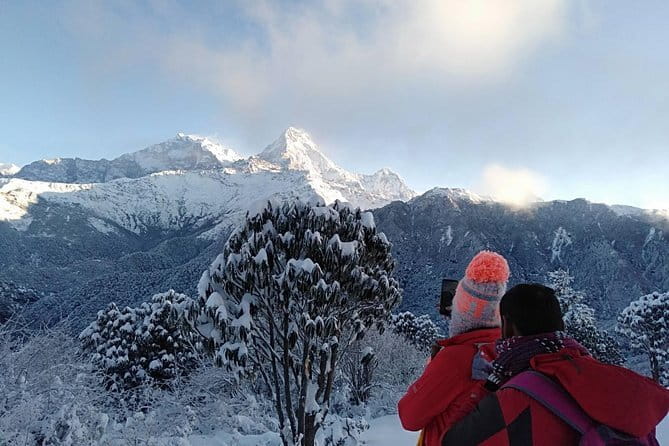
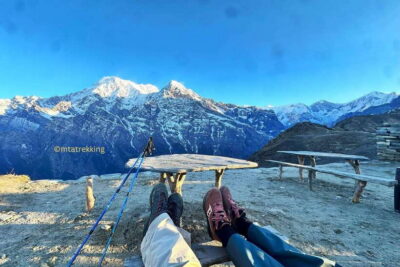
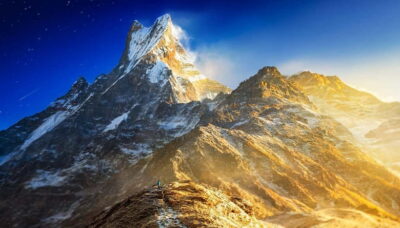
The high point is the ridge above the tree line. From there, you can look toward the distinctive fishtail profile of Machapuchare, with Annapurna South and Hiunchuli also rising nearby. Dhaulagiri is listed among the possible mountain views, though visibility depends on cloud and weather.
The natural setting changes quickly. Lower sections pass through shaded forest and cultivated hills. Higher up, trees give way to shrubs, rhododendron, and open grass. That variety makes each day feel different, even when the basic rhythm stays the same: breakfast, walking, lunch at a teahouse or village stop, then an overnight stay in a simple lodge.
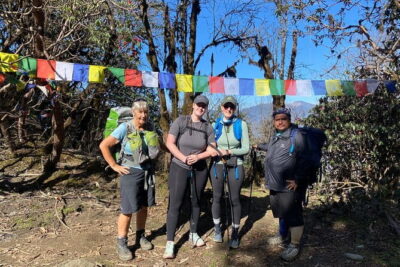
You should not book this as a casual sightseeing trip. The route includes several hours of walking on most trekking days, with Day 5 and Day 6 listed at about eight hours. Steep and narrow sections appear near the upper ridge. The company asks for moderate physical fitness, which is a fair description.
More Mardi Himal Treks in Kathmandu
- Mardi Himal Trek
★ 5.0 · 41 reviews - Mardi Himal Trek Nepal
★ 5.0 · 29 reviews - Mardi Himal Trek – 8 Days | Hidden Gem of the Annapurnas
★ 5.0 · 19 reviews
Kathmandu arrival and the long road to Pokhara
Your first day is practical rather than scenic. An airport representative meets you outside Tribhuvan International Airport with an Accessible Adventure sign and transfers you by private vehicle to your hotel. The transfer can take about two hours, depending on traffic.
That pickup matters after an international flight. Kathmandu traffic can be confusing, and having someone meet you removes one early nuisance. The airport transfer is included, although admission fees are not relevant here and no sightseeing is planned.
Day 2 begins early. A guide collects you from your hotel at about 6:30 AM, and you board a tourist bus departing around 7:30 AM for Pokhara. The ride takes roughly six or seven hours, passing river valleys, terraced barley and rice fields, and green hills.
This is not a quick transfer. The bus ride uses much of the day, so you should not expect a relaxed morning in Kathmandu or a full afternoon in Pokhara. Still, it gives you a useful look at rural Nepal before the walking begins.
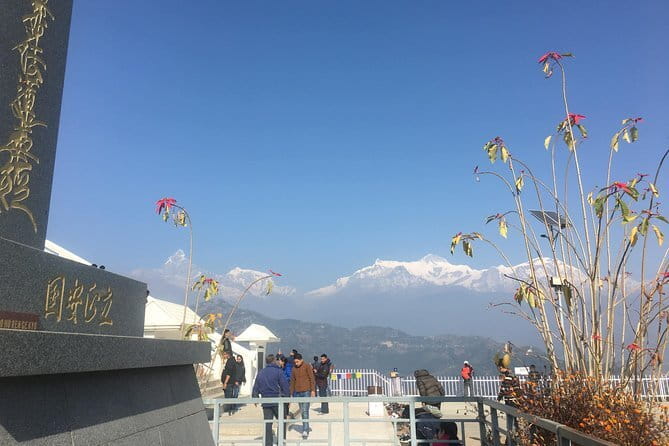
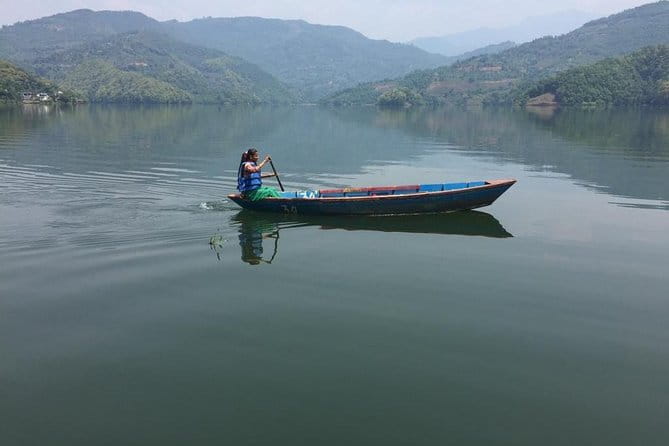
Pokhara sits beside Phewa Lake and is a pleasant change from Kathmandu. You have the evening free to eat well, walk by the water, or take a boat out for views toward Machapuchare. The trip includes a hotel night in Pokhara, but meals and activities outside the listed inclusions are your responsibility.
Phedi, Dhampus, and the first stone stairways
On Day 3, an early breakfast is followed by a short drive to Phedi Khola, generally under an hour. This is where the trek begins in earnest.
The trail climbs through shaded woods and small villages, using many stone staircases. That first day is only about five hours, but the steps make it a proper start rather than a gentle warm-up. Take your time here. A slow first morning is better than spending the rest of the trek with sore knees.
Dhampus makes a natural lunch stop. The town has a fine view of the Annapurna range and gives you your first clear sense of how quickly the route rises above the lower hills. After lunch, you continue toward Pothana.
Pothana is built around traditional stone homes and paved paths, though souvenir stalls and snack sellers show that trekking has changed the village. That mix is worth noticing. You are not walking through a museum village, but you are also not passing through a place built only for tourism.
The exact overnight wording in the supplied program is not fully clear after Pothana, so I would confirm the night’s lodge and final walking distance before departure. The broad plan is clear: forest, Dhampus, Pothana, and a gradual move toward the higher ridge.
Forest, rhododendron, and the approach to High Camp
The next section leaves much of the lower village setting behind. The trail follows a ridge toward Mardi Himal and Machapuchare, with trees becoming shorter and thinner as you gain height.
You pass shrubs and isolated rhododendron bushes. In season, these flowers can add color to an otherwise gray or green mountain route, but the larger pleasure is the changing sense of space. The forest starts to open, and the peaks become easier to see.
The program mentions a possible sighting of the danphe, Nepal’s national bird. You may also see other birds in the rhododendron country. Keep your expectations realistic: wildlife is an added possibility, not a scheduled part of the trek. The red panda is also mentioned as a species found in the wider region, but you should treat a sighting as very unlikely luck rather than a promised feature.
The day ends at a high camp area with broad mountain views. Sleeping high on the ridge is one of the trip’s strongest moments, but the facilities are basic. Twin-share guesthouse accommodation is included, and you should bring a four-season sleeping bag. Hot showers, hot water, internet, phone calls, laundry, and drinks are not included.
One point deserves clarification before you pay a deposit. The day descriptions use several names, including Kokar, Low Camp, and High Camp, and the order is not perfectly consistent. Ask Accessible Adventure to confirm the exact overnight locations and elevation profile for your departure. That small check will give you a clearer idea of the cold, walking time, and sleeping conditions.
Another trail to compare in Kathmandu:
- Everest Base Camp Trek – 14 Days
★ 5.0 · 1,499 reviews - Everest Base Camp Trek
★ 5.0 · 842 reviews - Everest Base Camp Trekking
★ 5.0 · 485 reviews - Annapurna Circuit Trek with Tilicho Lake
★ 5.0 · 368 reviews
Low Camp and the long ridge toward the viewpoint
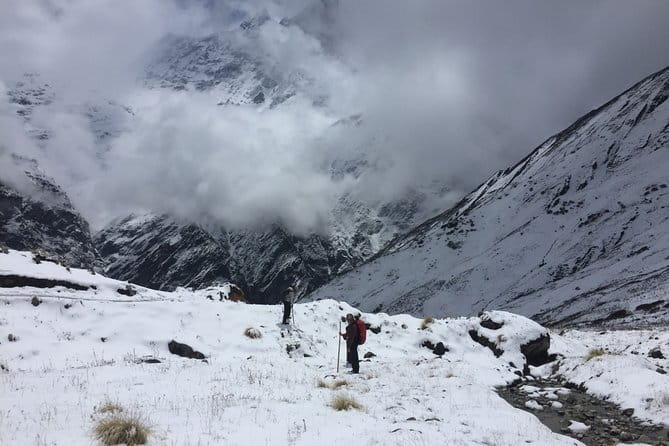
The central trekking day passes through mossy woodland and misty forest. This is excellent country for photographs, especially when sunlight comes through the trees. It is also a good reminder that Himalayan weather can change the mood of the route quickly. A clear morning can become cloudy, and a fine viewpoint may disappear for an hour.
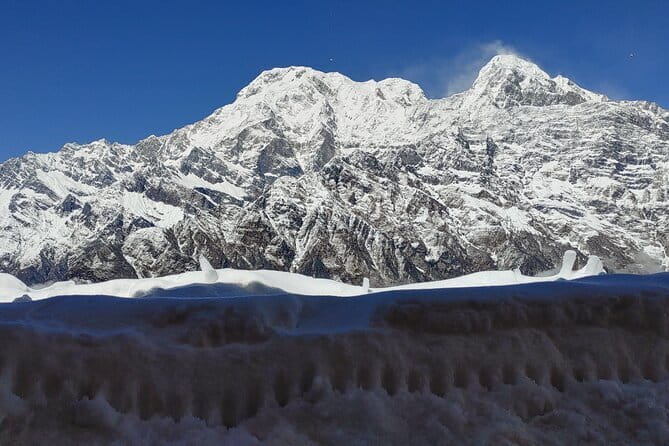
Low Camp provides a lunch stop and a first strong look at Machapuchare’s fishtail summit. From there, the trail turns west and brings Annapurna South and Hiunchuli into view. You continue along the ridge as the trees thin and rhododendron becomes more common.
This section is listed at about eight hours, so you should prepare for a full day on your feet. The trail is not described as technically difficult climbing, but length, altitude, and uneven surfaces add up. Good boots, layered clothing, water, and a packed snack are practical essentials.
The next morning begins early for sunrise. You climb toward an upper viewpoint along grassy pasture, with some steep and narrow sections. Dzo may be grazing in the fields. These animals are hybrids of yak and cattle, and their presence shows how people use the high pastures during the warmer months.
You may also pass herders’ huts and see areas used for sheep and goats. This is one of the most authentic parts of the route because the ridge is not only a scenic platform. It is working mountain country.
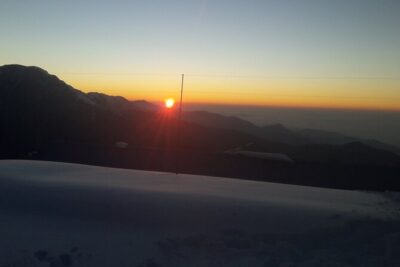
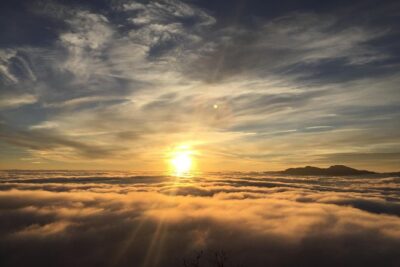
The final viewpoint is described as the finest view of the trek. From here, you may see Machapuchare, Annapurna South, Hiunchuli, and other Himalayan peaks if the weather cooperates. Sunrise is the reason for the early start, so carry warm layers and keep your camera protected from cold and damp.
Returning through Siding instead of retracing the trail
The return route is a good design choice. Rather than simply reversing every step, you head from High Camp toward Low Camp, then take a different track toward Siding.
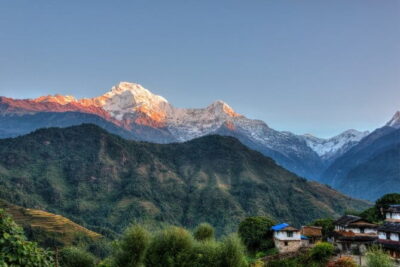
Siding is a traditional Nepalese settlement with less tourist traffic than the main trekking villages. The village has adapted to trekking through family-run guesthouses, but it retains a more local feel than a purpose-built mountain stop. The accommodation may be operated by a family connected with guesthouses in Kokar and Low Camp.
That family connection is a small detail, but it matters. Staying in locally run lodges gives your spending a better chance of reaching people who live along the route. It also makes the trek feel less like a packaged mountain circuit.
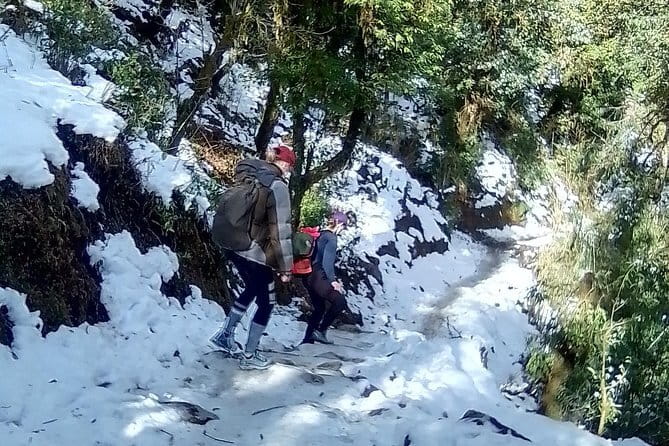
Day 7 is listed at about seven hours, so the descent is not effortless. Going downhill can be harder on your knees than climbing, especially after several long days. Trekking poles are worth considering if you normally find steep descents uncomfortable.
The following day takes you from Siding toward Lumle, passing Kalimati and Ghalel. The cultural mix is a key reason to pay attention here. Kalimati is mainly Brahmin, while Ghalel includes Brahmin and Gurung residents. The wider trip also points to Rai, Limbu, and Chhetri communities.
You are not being offered a formal cultural performance. Instead, the value comes from seeing how villages sit beside one another and how mountain communities maintain different identities within the same region. Keep your behavior simple and respectful: ask before photographing people, follow your guide’s lead, and remember that homes and religious places are not attractions.
At Lumle, a prearranged Jeep takes you back to Pokhara. The drive is expected to take about two hours, leaving time for a good dinner and another night in the city.
What the $950 price really covers
At $950 per person, the cost is reasonable for a private, arranged 10-day trip, provided you understand what is and is not included. You are paying for airport pickup and drop-off, transport between Kathmandu and Pokhara, the Jeep from Lumle, trekking transfers, guesthouse accommodation, a guide, porter support, permits, government tax, and office service.
The porter arrangement is one porter for every two members. That is useful if you want to carry a lighter daypack, but you should still pack sensibly and keep essential items with you. The tour is private, so your group is not folded into a large mixed party.
The included food allowance is limited to four breakfasts. The program describes breakfast in several places, but the inclusion list specifically says four breakfasts. Confirm exactly which meals are covered before booking. You should budget separately for other meals, hot drinks, bottled or cold drinks, and snacks.
Not included are international flights, Nepal’s tourist visa, travel insurance, trekking equipment, and a four-season sleeping bag. Hot water, hot showers, laundry, phone calls, and internet also cost extra when available. These charges can add up in mountain lodges, so carry enough local currency and ask your operator for current guidance.
The price is strongest for people who value a guide, porter, permits, and transport arranged in one package. It is less attractive if you already have equipment, prefer to organize every lodge yourself, or want most meals included.
What past service details suggest about the company
The strongest service theme is support from the local team. Shyaam is described as an energetic and cheerful guide, while Himal handled email planning and was available during the early preparation stage. Hari and Mahendra are also named in connection with customizing trips around time and budget.
Those details are useful if you like having a human contact before arrival. I would ask who your actual guide will be, how much English they speak, the porter’s luggage limit, and what happens if weather changes the route.
The company received a perfect five-star rating from four pieces of feedback, including a family group with children as young as eight on a shorter five-day version to the Mardi Himal viewpoint. That suggests the operator can adapt the experience for families, but it does not prove that every child will find the full 10-day route easy. The longer itinerary includes several eight-hour days and should be judged on fitness, not optimism.
The cancellation terms are helpful: you can cancel for a full refund up to 24 hours before the start time. Late cancellations are not refunded, and poor weather may lead to a new date or a full refund. Since mountain conditions affect visibility and safety, that weather provision is worth having.
Who should book this trek
I would recommend the Mardi Himal Trek to you if you want:
- A private trek with a guide and porter
- A mix of mountain views and village life
- Time in Pokhara before and after the trail
- Basic guesthouse accommodation rather than a luxury lodge trip
- A route with long walking days but no stated technical climbing
- Cultural contact that comes through ordinary villages rather than staged shows
I would be more cautious if you want a short, easy walk, private bathrooms, reliable hot showers, or meals included throughout. You should also think carefully if you dislike long bus rides, since Kathmandu to Pokhara takes six or seven hours each way.
The best preparation is steady walking practice, especially on hills and stairs. Bring layers for changing weather, sturdy footwear, a four-season sleeping bag, and a small pack containing items you cannot afford to lose. Confirm the lodge sequence, included meals, and exact upper-ridge itinerary before departure.
Should you book the Mardi Himal Trek?
Book it if you want a well-supported private trek with a strong payoff at the upper ridge and a return route that adds genuine village interest. The combination of Pokhara, rhododendron forest, high pasture, Machapuchare views, and Siding makes the trip more varied than a simple out-and-back walk.
Do not book it expecting a soft adventure. The trail is demanding in places, accommodation is basic, and several costs sit outside the $950 price. For a fit person who values local guides, arranged transport, and a broad taste of Nepal, this is a solid choice. Just confirm the day-by-day lodging and meal details first, then pack for the mountains rather than the brochure picture.
FAQ
How long does the Mardi Himal Trek take?
The full program lasts approximately 10 days, including arrival and departure in Kathmandu, transport to and from Pokhara, and the trekking days.
What fitness level is required?
The experience requires a moderate physical fitness level. Walking days range from about five to eight hours, with steep stairways, uphill ridges, and some narrow sections near the upper viewpoint.
Is the tour private?
Yes. Only your own group participates. The package includes one guide and one porter for every two members.
What accommodation is included?
Twin-share accommodation in guesthouses is included during the trek. A hotel stay is also arranged in Kathmandu and Pokhara as part of the program.
Are meals included?
The listed inclusion is four breakfasts. Other meals, drinks, hot water, hot showers, snacks, and similar purchases are not included unless separately confirmed.
What happens if bad weather cancels the trek?
If poor weather causes the experience to be canceled, you can choose a different date or receive a full refund. For normal cancellations, a full refund is available when you cancel at least 24 hours before the local start time.
Latest treks added in Kathmandu
- Private Manaslu Circuit Trek at Himalayas★ 5.0 · 3 reviews
- Ghorepani Poonhill Trek★ 5.0 · 5 reviews
- Ghorepani Poon Hill Trek★ 5.0 · 16 reviews
- Upper Mustang Trekking★ 3.0 · 2 reviews
- Amazing 1 Day Trekking Experience in Kathmandu Nepal★ 5.0 · 24 reviews
- Upper Mustang Trekking★ 5.0 · 2 reviews
- Upper Mustang Trek★ 5.0 · 5 reviews
- Upper Mustang Trekking★ 5.0 · 4 reviews
Mardi Himal Treks, compared.
Mardi Himal Trek – 8 Days | Hidden Gem of the Annapurnas
Read our review →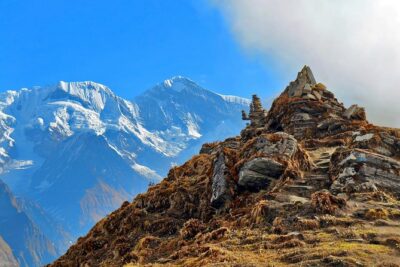
Browse the lists this tour appears in