
REVIEW · KATHMANDU
Gokyo Lakes and Gokyo Ri Trek
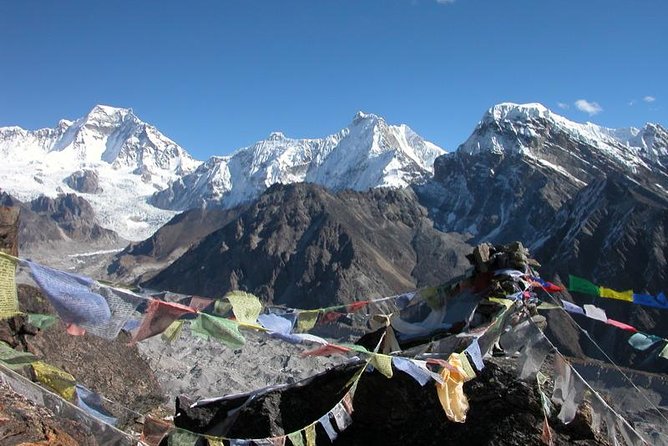
The prize here is the climb to Gokyo Ri, at roughly 5,383 to 5,386 meters, where you look across Gokyo Lakes, the Ngozumpa Glacier, and a striking line of Himalayan peaks. This is an excellent choice if you want Everest-region scenery without following the busier Everest Base Camp route.
I like the slow build through Namche Bazaar and Khumjung, where the trek includes Sherpa culture as well as mountain views. I also like that the price includes Lukla flights, trekking permits, a guide, porters, lodging, and airport transfers. The main catch is altitude: this is a demanding high-mountain walk, and meals, drinks, travel insurance, and personal gear cost extra.
Key points to know before booking
- Gokyo Ri is the main reward: The summit viewpoint reaches about 5,383 meters and looks toward Everest, Cho Oyu, Makalu, and other high peaks.
- The route uses a useful acclimatization stop: You hike to Everest View Hotel and return to Namche before heading higher.
- The Ngozumpa Glacier shapes the trek: You see the largest glacier in the Himalaya and explore around it from Gokyo.
- Sherpa culture is part of the route: Namche Bazaar and Khumjung offer a close look at mountain communities and Buddhist traditions.
- The $999 price covers major basics: Domestic flights, permits, lodges, staff, Kathmandu hotels, and transfers are included, but meals on the trek are not.
- The group is capped at 15: That is small enough for a more personal outing, while the porter ratio is listed as two clients for one porter.
Why the Gokyo Valley route feels different
The Gokyo Lakes and Gokyo Ri Trek takes you into the Everest region from Kathmandu, but its focus is not Everest Base Camp. You follow a quieter-feeling route toward Gokyo Valley, where glacial lakes and the enormous Ngozumpa Glacier share the stage with the mountains.
For me, the appeal is variety. One day brings a short flight into Lukla. Another brings the stone paths and trading-town feel of Namche Bazaar. Higher up, the scenery becomes more open and severe, with fewer trees, colder air, and wide views toward the Himalayan giants.
You should not mistake the 12-day schedule for an easy holiday. The route reaches more than 5,300 meters, and several days involve five to seven hours of walking. The itinerary does include an acclimatization day in Namche, but you still need strong physical fitness and a sensible attitude toward altitude.
More Everest Base Camp Treks in Kathmandu
- Everest Base Camp Trek – 14 Days
★ 5.0 · 1,499 reviews - Everest Base Camp Trek
★ 5.0 · 842 reviews - Everest Base Camp Trekking
★ 5.0 · 485 reviews
Day 1: Kathmandu arrival and trip briefing
You arrive in Kathmandu at about 1,340 meters and are transferred from the airport by private vehicle. The first day is practical rather than scenic, giving you time for trip information, equipment checks, and preparation for the mountain flight.
Your Kathmandu hotel is included on a bed-and-breakfast basis. Lunch and dinner in Kathmandu are not included, so budget separately for city meals. You will also need to handle your Nepal entry visa and international airport charges.
This is the day to confirm what your porter will carry and what must remain in your day pack. The supplied equipment list calls for a sleeping bag, down jacket, waterproof layers, warm clothing, proper boots, water treatment, a headlamp, sunscreen, and basic personal items. That list is not decorative. At altitude, cold, wind, sun, and simple lodge conditions can make small oversights unpleasant.
Day 2: Lukla flight and the walk to Phakding
The day begins early, with a listed start time of 6:00 a.m. You take a scenic flight of about 30 minutes from Kathmandu to Lukla, then walk for roughly three hours to Phakding at approximately 2,640 meters.
The flight saves a long overland approach and gives you an immediate sense of the region’s scale. It also makes the schedule sensitive to flight conditions, so keep your plans flexible around this part of the trip. The domestic airfare and airport departure tax are included.
Phakding is a useful first walking stop because the altitude gain is modest compared with later days. You stay in a lodge with twin-sharing accommodation. Meals during the trek are not included in the package, though your guide helps you order food.
Day 3: Six hours to Namche Bazaar
The route continues for around six hours to Namche Bazaar, at about 3,440 meters. This is one of the most memorable stops because Namche is the main mountain center on the route, with a strong connection to Sherpa life and trade.
The walk is a real step up from the first day. You gain altitude and spend much of the day on mountain paths, so a steady pace matters more than speed. Your guide and porter arrangement is one of the practical strengths here: the package includes a government-licensed English-speaking local guide and the required porters, with a listed ratio of one porter for every two clients.
Namche is not simply a place to sleep before going higher. It is where you begin to feel the rhythm of the high country. Take the evening slowly, drink water, and resist the urge to treat a rest stop as wasted time.
More Trekking Tours in Kathmandu
- Annapurna Circuit Trek with Tilicho Lake
★ 5.0 · 368 reviews - Everest Base Camp Trekking – 13 Day
★ 5.0 · 365 reviews - Everest Base Camp Trek
★ 5.0 · 350 reviews - Everest Base Camp Trek -14 Days
★ 5.0 · 321 reviews
Day 4: Acclimatization at Everest View Hotel
The fourth day is designed to help your body adjust. You hike to Everest View Hotel at about 3,880 meters, then return to Namche for the night.
This up-and-down pattern is valuable because it lets you reach a higher altitude during the day without sleeping there immediately. It also provides one of the first strong outlooks toward Everest and the surrounding Himalaya.
I like this day because it gives you a break from the long forward march while keeping you active. Do not turn it into a race. The purpose is to acclimatize, enjoy the view, and return to Namche feeling ready for the higher route.
Days 5 and 6: Dole and Machchhermo
On day five, you walk about five hours to Dole, at approximately 4,130 meters. The change in altitude is now more serious, and the air may feel noticeably thinner. Your body will tell you to slow down, and you should listen.
Day six takes about four hours to Machchhermo, at roughly 4,470 meters. This is a shorter walking day, which helps balance the rising elevation. The itinerary gives you time to settle into the route before the final approach to Gokyo.
The exact character of the scenery can change with weather and season, but you should expect more exposed mountain terrain and fewer low-altitude comforts. Lodges are included on a twin-sharing basis, while drinks, snacks, and meals are your responsibility. Hot drinks and bottled beverages can add up over several days, so carry a realistic budget.
Day 7: Gokyo Valley and the glacial lakes
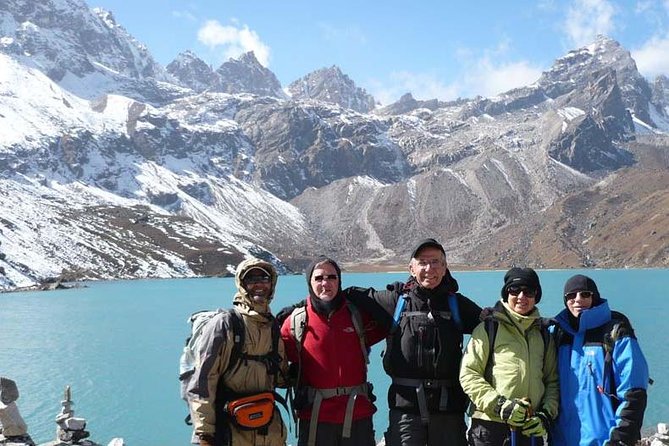
The walk to Gokyo takes about five hours, finishing at approximately 4,770 meters. This is the day the route’s identity becomes clear. You reach Gokyo Valley, explore around the glacier, and see the lakes that give the trek its name.
Gokyo Lake lies on the western side of the Ngozumpa Glacier. The glacier is one of the central sights of the route, not a minor feature passed in the distance. Its ice, scale, and position among the peaks give this trek a different feel from a simple village-to-village walk.
Gokyo is also your base for the key climb. Keep the evening calm and organize your clothing, water, snacks, and headlamp. The next morning starts early and involves a major ascent.
Day 8: Gokyo Ri, then back toward Machchhermo
The high point of the trip comes on day eight, when you climb Gokyo Ri in about three hours. The summit is listed at around 5,383 meters, while the general tour description gives 5,386 meters. Either way, this is a serious altitude gain and a demanding morning.
From the top, you can expect wide Himalayan views that include Mount Everest, Cho Oyu, and Makalu. The route also gives you views over Gokyo Lakes, the valley, and the Ngozumpa Glacier. This is the moment to appreciate why you made the slower journey through Dole and Machchhermo.
After returning to Gokyo, you continue down to Machchhermo, with about five hours of walking listed for the descent. That makes this a long day, even though much of it is downhill. Descending does not mean effortless. Your knees and feet may feel the strain, so good boots and walking poles can help.
Day 9: Return to Namche through Khumjung
The route returns to Namche in about seven hours, passing through Khumjung Village. Khumjung is described as the homeland of the Sherpa people, and it adds cultural meaning to a trip otherwise dominated by peaks and glaciers.
This is one of the best parts of the itinerary for anyone who wants more than mountain photographs. You have the chance to observe Buddhist religion and local mountain life as part of the route, not as a separate city activity.
The seven-hour schedule is long, and you are already coming off the Gokyo Ri climb. Keep your pack light, use the porter service properly, and walk at a pace you can maintain. The return to Namche also marks a useful psychological shift: the highest section is behind you.
Day 10: Seven hours down to Lukla
The final trekking day takes about seven hours to Lukla. It is a substantial finish, not a brief stroll before the flight.
Lukla gives you time to prepare for the next day’s flight and say goodbye to the staff who supported the walk. Staff costs, salaries, insurance, equipment, and medicine for trekking workers are included in the package. Tips are not included, and tipping is expected, so plan for that separately.
The itinerary does not describe a spare weather day in Lukla. Because flights can be affected by conditions, you should avoid scheduling an international flight immediately after the planned return to Kathmandu if your overall trip allows extra time.
Day 11 and Day 12: Kathmandu and departure
On day 11, you fly from Lukla to Kathmandu. The plan includes a farewell dinner with the family, giving the trip a social finish after the long days in the mountains.
Kathmandu accommodation is included on the bed-and-breakfast plan. Lunch and dinner remain your own expense except for the included farewell dinner.
Day 12 is the transfer to Tribhuvan International Airport for your final departure. Airport pickup and drop-off are included by private vehicle, which simplifies both ends of the trip.
What the $999 price really covers
At $999 per person, the package offers solid value if you need a guided, organized trek rather than a do-it-yourself arrangement. The price includes:
- Kathmandu hotels with breakfast
- Kathmandu to Lukla and return flights
- Airport departure tax for the domestic flights
- Trekking lodges with twin-sharing rooms
- A licensed English-speaking local guide
- Porters, with a listed ratio of two clients to one porter
- Staff food, accommodation, salaries, insurance, equipment, and medicine
- Sagarmatha National Park and TIMS permits
- A duffle bag you keep
- Kathmandu surface transfers
- Government taxes and official expenses
- A farewell dinner
The important limitation is food. All meals during the trek are excluded, as are alcoholic drinks, hot and cold drinks, and meals in Kathmandu apart from breakfast and the farewell dinner. You also pay for travel insurance, evacuation coverage, personal trekking equipment, Nepal entry visa costs, international airfare, and tips.
That price can work well for a first Nepal trek because many of the large logistical pieces are handled. Compare the total cost, not just the advertised rate. Add gear rental or purchases, insurance with emergency rescue and evacuation, meals, drinks, tips, visa fees, and possible extra nights if flights are delayed.
Guides, group size, and the human side
The group limit is 15 people. That is a reasonable size for a mountain walk, though the experience will still depend on how the group handles different walking speeds and altitude responses.
The guide is not just there to point out the path. This person helps order meals, manages the trekking staff, supports the schedule, and offers context on local history, culture, religion, flora, and fauna. One guide named in the supplied material is Gyanu, who is praised for his history and culture knowledge, friendly manner, and respectful approach. Ask the operator directly if Gyanu will lead your departure, since guide assignments can vary.
The trek also gives you a chance to meet mountain staff in a more meaningful setting than a quick sightseeing stop. Porters carry the main load, but you still need to pack responsibly and respect the weight limits set by the operator.
Equipment and fitness: take the checklist seriously
You need strong physical fitness for this trek. The route includes long walking days, steep climbing, and sleeping at high altitude. A proper fitting pair of boots is more important than fashionable gear.
The required checklist includes a down jacket, sleeping bag, waterproof jacket and trousers, warm layers, quick-drying shirts, trekking trousers, wool and cotton socks, gloves, hats, sunglasses, sunscreen, lip care, a raincoat or poncho, headlamp, water bottle, and water purifier.
Bring a day pack for daily essentials. A first aid kit, toilet paper, hand-washing gel, spare camera batteries, and personal hygiene supplies are also listed. Walking poles, gaiters, binoculars, earplugs, reading material, and a GPS are optional, but some can make the walk more comfortable.
Travel insurance must cover emergency rescue and evacuation. This is not an optional luxury for a high-altitude trek. Check the policy before you leave home.
Should you book the Gokyo Lakes and Gokyo Ri Trek?
Book this trek if you want glacier and lake scenery, a major Himalayan viewpoint, Sherpa villages, and a guided route with flights and permits arranged. It suits fit hikers who are comfortable with several six- to seven-hour walking days and the possibility of cold, basic lodge conditions.
Think twice if you want a relaxed holiday, dislike early starts, or have no plan for altitude and evacuation insurance. The Gokyo Ri climb is the highlight, but it demands preparation.
For the right person, the route offers a strong mix of high mountain views and local culture. The package handles many expensive logistics, and the group size is limited to 15. Just budget honestly for meals, equipment, insurance, tips, and possible flight delays before deciding that $999 is your final cost.
FAQ
How long is the Gokyo Lakes and Gokyo Ri Trek?
The trek lasts approximately 12 days, including arrival in Kathmandu, the trek, the return flight from Lukla, and departure from Nepal.
Where does the trek begin?
The trip begins in Kathmandu, followed by a scenic flight of about 30 minutes to Lukla.
What is the highest point on the trek?
The highest point is Gokyo Ri, listed at approximately 5,383 to 5,386 meters.
Is the Lukla flight included?
Yes. The Kathmandu to Lukla and Lukla to Kathmandu airfare is included, along with the domestic airport departure tax.
Are meals included during the trek?
No. Meals during the trek are not included. Your guide helps you order food, but you pay separately for meals and hot or cold drinks.
Is a guide provided?
Yes. A government-licensed English-speaking local guide is included, along with the required local staff and porters.
Are trekking permits included?
Yes. The Sagarmatha National Park permit and TIMS permit are included.
What is the cancellation policy?
You can cancel at least 24 hours before the experience start time for a full refund. Cancellations or changes made less than 24 hours before the start time are not accepted for a refund.
Latest treks added in Kathmandu
- Ghorepani Poonhill Trek★ 5.0 · 5 reviews
- Ghorepani Poon Hill Trek★ 5.0 · 16 reviews
- Private Manaslu Circuit Trek at Himalayas★ 5.0 · 3 reviews
- Upper Mustang Trekking★ 3.0 · 2 reviews
- Amazing 1 Day Trekking Experience in Kathmandu Nepal★ 5.0 · 24 reviews
- Upper Mustang Trekking★ 5.0 · 2 reviews
- Upper Mustang Trek★ 5.0 · 5 reviews
- Upper Mustang Trekking★ 5.0 · 4 reviews
Everest Base Camp Treks, compared.






Browse the lists this tour appears in