
REVIEW · KATHMANDU
Gokyo Lakes and Gokyo Ri Trek
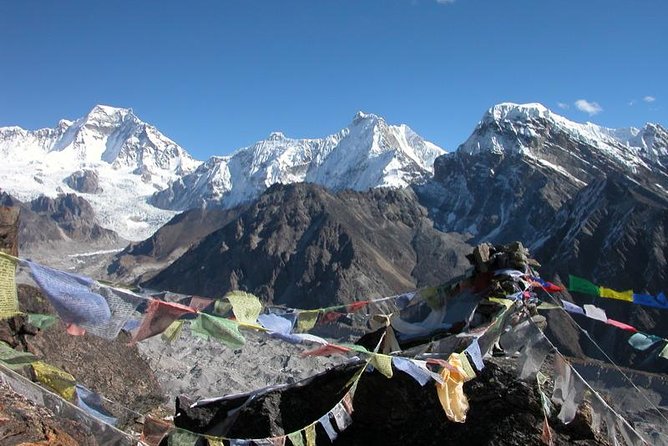
Gokyo Ri gives you one of the Everest region’s finest viewpoints without taking you to Everest Base Camp. From the summit, you look across Ngozamba Glacier and the Gokyo Lakes toward Everest, Lhotse, Makalu, and Cho Oyu. The route also brings you through Sherpa villages, pine and rhododendron forests, suspension bridges, and the lively trading town of Namche Bazaar.
I like two things especially here. First, the turquoise lakes and wide glacial valley give this trek a character of its own, instead of simply repeating the better-known Base Camp route. Second, the schedule includes a useful acclimatization day at Namche, plus a shorter day before Gokyo, which gives your body a fair chance to adjust.
The main catch is the altitude and the long walking days. Gokyo Ri is a strenuous climb, and the itinerary includes flights, high mountain weather, and several days of trekking at serious elevation. The advertised price is $1,706.67 per person, but check carefully whether your international and domestic flights, permits, insurance, and personal costs are covered.
Key points to know before booking
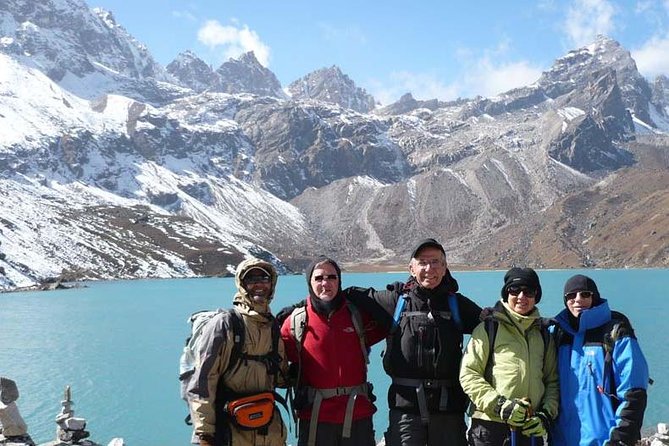
- Gokyo Ri viewpoint: Climb above the valley for views of Everest, Lhotse, Makalu, Cho Oyu, Thamserku, and several glaciers and lakes.
- A quieter Everest option: The route shares the busy approach to Namche, then becomes less crowded as you head toward Dole, Machhermo, and Gokyo.
- Fourteen-day format: The trip combines three Kathmandu UNESCO sites, a Lukla flight, eight trekking days, the return flight, and airport transfer.
- Small group size: The maximum is 10 people, a useful limit on narrow trails and in small mountain settlements.
- Meals included: The package lists 12 breakfasts and 11 lunches and dinners. Personal expenses and services not included in the offer are extra.
- Weather matters: Poor conditions can cancel the experience, with a different date or full refund offered in that case.
Why Gokyo Lakes feels different from Everest Base Camp
The Gokyo route gives you a broad taste of the Everest region without following the full Base Camp trail. You still walk through Namche Bazaar and Sagarmatha National Park, so you get the classic approach through the Dudh Koshi valley. After Namche, though, the route turns toward Dole and Machhermo instead of heading to Tengboche and the Base Camp trail.
That change matters. The valley gradually opens around Gokyo, with high lakes, glacial ice, ridges, and snowy peaks replacing the denser forest scenery below. The first lakes include Longpongo and Taboche Tso, while the larger views open around Gokyo village and the Ngozamba Glacier.
I would choose this trip if your main goal is mountain scenery rather than reaching a famous endpoint. Gokyo Ri offers an outstanding panorama, and the route has a quieter feel after the Namche section. If you want the emotional payoff of standing at Everest Base Camp, this is not that trip. It is an alternative with lakes and a particularly strong viewpoint.
More Everest Base Camp Treks in Kathmandu
- Everest Base Camp Trek – 14 Days
★ 5.0 · 1,499 reviews - Everest Base Camp Trek
★ 5.0 · 842 reviews - Everest Base Camp Trekking
★ 5.0 · 485 reviews
Kathmandu begins with temples, prayer flags, and practical errands
Your first day is kept fairly open after arrival at Tribhuvan International Airport. A representative meets you and takes you to your hotel. You can rest, adjust to the time difference, or head into Thamel to buy missing trekking equipment.
Thamel is a useful first stop because it combines restaurants, shops, and trekking supplies. The itinerary also points you toward Durbar Square, though the listed first-day visit does not give a formal stop duration there. Use this first day for practical jobs, such as checking clothing, footwear, and personal medication, rather than trying to pack in too much sightseeing.
Day two is a strong cultural introduction to Nepal. At Pashupatinath Temple, you see one of the country’s most important Hindu religious sites and a UNESCO World Heritage Site. The visit is scheduled for about three hours, enough time to take in the temple area and its spiritual importance.
Boudhanath Stupa follows, with about two hours planned. This enormous Buddhist stupa is also respected by Hindus and is one of the most memorable places in Kathmandu for prayer wheels, Buddhist practice, and people walking the circuit around the monument.
The final stop is Swayambhunath, often called the Monkey Temple. Its hilltop position gives you views across Kathmandu, along with prayer flags, monks, and prayer wheels. The day involves about seven hours of sightseeing across three major sites, so it is more active than a simple rest day.
Lukla to Phakding: a short first walk beside the Dudh Koshi
On day three, you fly from Kathmandu to Tenzing-Hillary Airport at Lukla. The listed flight time is about 35 minutes, followed by arrangements with the trekking team and the start of the walk toward Phakding.
The first trek is intentionally short, about four hours. You descend toward Chaurikharka, then follow the Dudh Koshi valley through forest and villages. The river gives the route a clear visual guide, and the lower trail includes rhododendron, fir, and birch.
Phakding is an overnight stop and an acclimatization-friendly start. This is not a day to prove your fitness. It is better to walk steadily, drink regularly, and save energy for the higher sections ahead.
The schedule also refers to Sagarmatha National Park and the settlement of Dole on this day, with an additional four-hour description. That appears to be a planning inconsistency, since Dole belongs to a later section of the trek. Confirm the exact day-by-day plan with the operator before departure, especially if you are arranging accommodation or flights around the published schedule.
Namche Bazaar brings the first real altitude test
The route through Sagarmatha National Park includes pine forest, suspension bridges, rushing rivers, and views of Thamserku from Benkar. At Monjo, permits are checked at the park entrance, then you continue toward Jorsale and across a final suspension bridge before the climb to Namche.
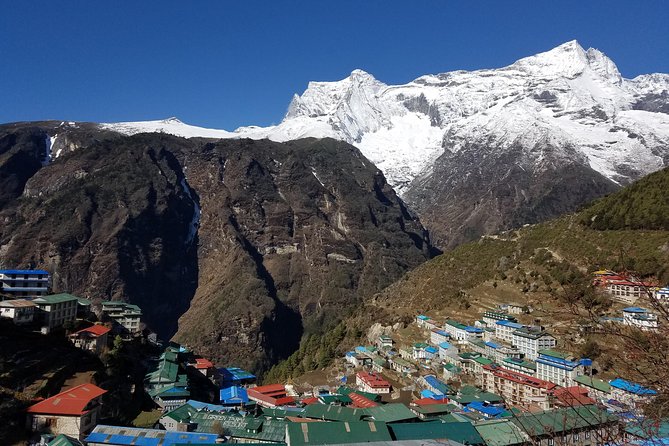
This is a seven-hour walking day in the schedule. The switchback climb into Namche is the first section that may feel demanding, especially after a flight and a short opening walk. The town is both a Sherpa trading center and an important rest point, with shops and services useful to people heading higher.
The itinerary gives you a full acclimatization day at Namche. That is one of its strongest practical choices. Rather than sitting indoors, you take a side trip to the Everest View Hotel for views of Everest, Ama Dablam, Nuptse, and Lhotse. You can also hike toward Khumjung village and visit Khunde Hospital and the local school.
The walk is listed at about five hours. That is enough activity to help your body adjust without committing you to another major trekking day. Namche also gives you a chance to check your clothing, batteries, and general condition before the trail becomes more remote.
More Trekking Tours in Kathmandu
- Annapurna Circuit Trek with Tilicho Lake
★ 5.0 · 368 reviews - Everest Base Camp Trekking – 13 Day
★ 5.0 · 365 reviews - Everest Base Camp Trek
★ 5.0 · 350 reviews - Everest Base Camp Trek -14 Days
★ 5.0 · 321 reviews
Namche to Dole follows the quieter side of the valley
From Namche, the route climbs toward Kyangjuma, with views of Ama Dablam, Thamserku, and Kangtega. The schedule gives this section one hour at the Ama Dablam viewpoint, but the wider day includes the route onward toward Dole.
The walk to Dole is one of the more demanding sections. One trip description specifically calls the Namche to Dole day hard, and that fits the route’s gradual but sustained climbing. You gain height while moving through forest and along ridges, so the effort is not only about distance.
Past Dole, the trail becomes quieter than the approach to Namche. Pine and rhododendron appear along the path, while the views open toward the high peaks. You may see pheasants, mountain goats, musk deer, and other wildlife in the national park, though sightings are never guaranteed.
Machhermo offers a shorter day before the high lakes
Day seven is scheduled as a six-hour walk through Lhabarma and Luza to Machhermo. The trail climbs gradually above Dole, passing summer settlements, sandy spurs, and small communities.
Luza is more than a name on the route. It is one of the places where you see how seasonal settlement patterns fit the high valley. Streams from Kyajo Ri and Pari Lapche join in this area, adding movement and sound to an otherwise stark mountain setting.
Machhermo is a useful overnight stop because the next day takes you into the Gokyo valley. The itinerary calls this section shorter than the previous day, but six hours at altitude still requires a measured pace. You should not treat the word shorter as easy.
Gokyo Lakes appear beyond the Ngozamba Glacier
From Machhermo, you climb toward Phangka before the valley opens. The route descends toward the river and then rises steeply to the terminal moraine of the Ngozamba Glacier.
Crossing glacial moraine is a very different experience from walking through the lower forest. The ground can feel rough and exposed, and the scale of the ice makes the route feel remote. An iron bridge marks the entrance to the Gokyo lake valley.
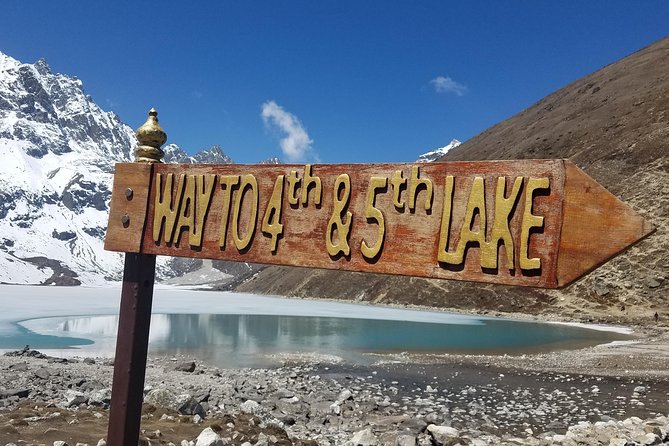
The first lake is Longpongo. From there, a gentler trail leads to Taboche Tso, with a stream connecting the lakes. The description also refers to further lakes in the valley before reaching Gokyo village.
This five-hour day is well placed. You arrive close to the main Gokyo viewpoint without immediately tackling the summit. The open scenery and cold, high setting are the reward, but the altitude remains the central concern. Walk slowly and follow your guide’s advice if you begin to feel unwell.
Gokyo Ri is the trip’s biggest physical and visual reward
Day nine is the high point of the trek, both literally and in terms of scenery. The climb to Gokyo Ri is continuous and strenuous, so you should expect a slow ascent with plenty of effort. The exact timing for starting is not stated, but the full outing is listed at about seven hours and includes the fourth lake, Thonak Tsho.
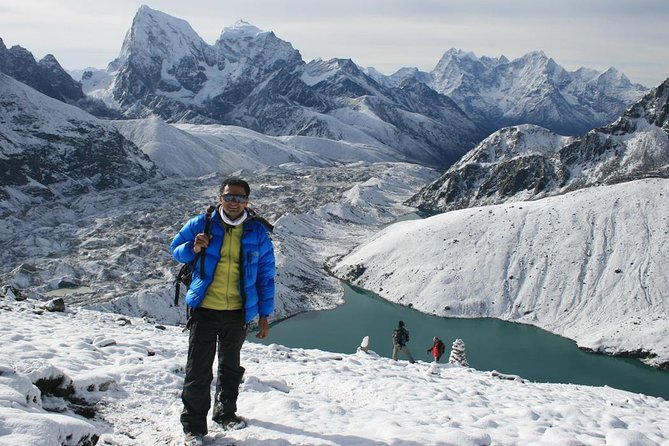
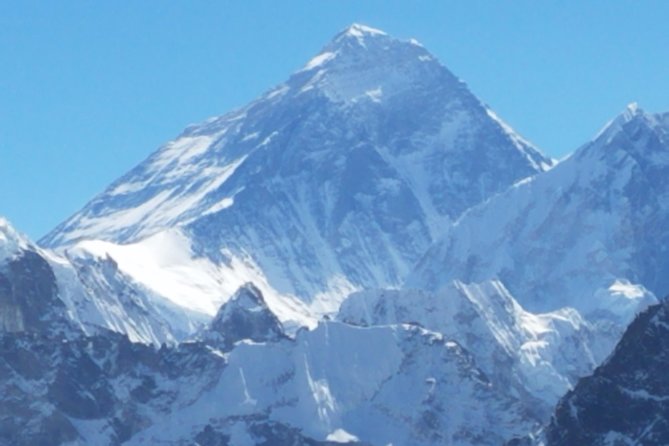
From the summit, the panorama includes Mount Everest, Lhotse, Makalu, Cho Oyu, Thamserku, and other major peaks. Below you are the Gokyo Lakes and the Ngozamba Glacier. This is the day that makes the route especially appealing to people who want a broad Himalayan view rather than a single destination.
You should also keep expectations realistic. The views depend on weather, cloud, and visibility. A high viewpoint is never a guaranteed postcard. The operator states that poor weather can force cancellation, with a different date or full refund offered, and mountain flight conditions can also affect the schedule.
The return to Lukla is easier on the lungs, not always the knees
After Gokyo Ri, the route retraces the valley through Luza, Lhabarma, and Dole. This five-hour day is mostly downhill, with views of Thamserku, Cho Oyu, and Kangtega, as well as chortens, terraces, and the iron bridge.
The next day takes you from Dole toward Namche through Phortse Tenga. The trail drops sharply in places and passes through rhododendron and wildflower areas. Waterfalls, winding paths, and mountain views make this a scenic section, but downhill walking can be tiring after the summit day.
You spend the night in Namche before the long descent to Lukla. Day 12 is listed at about eight hours, following the Dudh Koshi River through the forest and back past villages, monasteries, prayer stones, prayer flags, and chortens.
This return route is familiar by then, but it is not simply filler. The lower altitude makes breathing easier, and the changing views can look different in the opposite direction. Build in patience. A long downhill day after several high-altitude walks can be hard on your legs.
What the $1,706.67 price means in practice
At $1,706.67 per person, the value depends on what is included beyond the listed meals and guided itinerary. The package includes 12 breakfasts and 11 lunches and dinners, and it offers pickup. It also covers the planned sightseeing and trekking schedule, but the inclusion list does not clearly confirm every transport cost, domestic flight, permit, accommodation category, or guide and porter arrangement.
Ask for a written list before paying. In particular, clarify:
- Whether the Kathmandu to Lukla and Lukla to Kathmandu flights are included
- Which hotels and teahouses are included
- Whether trekking permits and national park fees are covered
- Whether airport transfers are included at both ends
- What personal expenses and services are excluded
- Whether emergency evacuation and insurance remain your responsibility
The small maximum group size of 10 adds practical value. A group this size can move more easily on narrow trails and may make accommodation arrangements simpler. The strongest service detail comes from the care described around altitude and comfort. Krishna is named as a guide who checked conditions and helped with teahouse arrangements, while Suresh Guranag is credited with acting quickly during a serious altitude-sickness emergency and organizing a helicopter rescue through the company.
That rescue account should not replace your own insurance. It does show why guide communication and emergency procedures matter on this route.
Who should book this Gokyo trek?
I would recommend it to a fit adult who wants high Himalayan scenery, can manage several hours of walking each day, and prefers Gokyo’s lakes and glacier views to the Base Camp destination. It also suits someone who wants a guided trip with Kathmandu sightseeing included, rather than arranging a trek and city stay separately.
It is less suitable if you want a relaxed holiday, dislike uneven mountain trails, or have not prepared for altitude. The activity calls for moderate physical fitness, but the Gokyo Ri ascent and the eight-hour return to Lukla make the real demand higher than a casual walking tour.
The operator allows service animals and says the meeting point is in Kathmandu, but mountain-trail conditions can still limit what is practical. Ask direct questions about your own needs before booking.
Free cancellation is available up to 24 hours before the start time. Cancellations within 24 hours are not refunded, and poor weather may lead to a changed date or full refund.
Should you book it?
Book this trek if Gokyo Lakes and a high viewpoint sound more appealing than the standard Everest Base Camp goal. The route offers a fine mix of Kathmandu culture, Sherpa villages, forest trails, glacial scenery, and a powerful summit day at Gokyo Ri.
Before committing, confirm the price inclusions and the exact daily schedule. The published plan contains a few duplicated or unclear stop descriptions, especially around the early days. With those details settled, this is a strong choice for a small-group Himalayan trek that delivers big mountain views without following the usual Base Camp route.
FAQ
How long does the Gokyo Lakes and Gokyo Ri Trek take?
The full experience lasts approximately 14 days, including Kathmandu sightseeing, the flights to and from Lukla, the trek, and the final airport transfer.
What is the maximum group size?
The group is limited to a maximum of 10 people.
What meals are included?
The package lists 12 breakfasts, 11 lunches, and 11 dinners. Personal expenses and services not included in the offer cost extra.
Is airport pickup available?
Yes. Pickup is offered, and the itinerary includes arrival transfer from Tribhuvan International Airport and a departure transfer on the final day.
What fitness level is required?
The activity requires a moderate physical fitness level. The trek includes several walking days of four to eight hours, plus a strenuous ascent of Gokyo Ri.
What happens if bad weather cancels the trip?
The experience requires good weather. If it is canceled because of poor weather, you are offered a different date or a full refund.
Latest treks added in Kathmandu
- Private Manaslu Circuit Trek at Himalayas★ 5.0 · 3 reviews
- Ghorepani Poonhill Trek★ 5.0 · 5 reviews
- Ghorepani Poon Hill Trek★ 5.0 · 16 reviews
- Upper Mustang Trekking★ 3.0 · 2 reviews
- Amazing 1 Day Trekking Experience in Kathmandu Nepal★ 5.0 · 24 reviews
- Upper Mustang Trekking★ 5.0 · 2 reviews
- Upper Mustang Trek★ 5.0 · 5 reviews
- Upper Mustang Trekking★ 5.0 · 4 reviews
Everest Base Camp Treks, compared.






Browse the lists this tour appears in