
REVIEW · KATHMANDU
12 Days Everest Base Camp Trek
Everest Base Camp is not a quick mountain walk. It is a serious high-altitude journey through Sherpa villages, pine forests, suspension bridges, and the rough upper Khumbu. This guided trip removes much of the planning, with flights, permits, tea-house lodging, porters, and a clear acclimatization schedule handled for you.
I like the two acclimatization days, especially the hike toward Hotel Everest View and Nangkartshang Peak. I also like the human side of the trip: guides such as Mingmar, Khilraj, Dawa, Santosh, Sonam, and Indra are repeatedly praised for daily briefings, patience, and care.
The main caution is the demanding schedule and some unclear details. The program is described as 12 days, though one part calls it a 16-day group tour. The meal information also conflicts, so confirm exactly what is covered before paying.
Key points to know before you book
- Kala Patthar sunrise: The early climb gives you one of the finest views of Everest, Nuptse, Pumori, and the surrounding peaks.
- Acclimatization is built in: Rest days in Namche Bazaar and Dingboche help you adjust before the highest sections.
- Lukla flights are included: The package covers the domestic flights, though weather can affect the schedule.
- Porter support is provided: One porter is assigned for every two people, with duffle bags available if needed.
- Basic tea-house nights: Lodging is practical guesthouse accommodation, not a luxury mountain hotel.
- A strong guide-led format: This suits you if you want a group trek with route support rather than managing permits, lodging, and navigation alone.
What the $1,099 price really covers
At $1,099 per person, this trek offers a useful bundle for a major Himalayan route. The price includes Kathmandu or Ramechhap to Lukla flights and the return flight, airport and hotel transfers, Sagarmatha National Park fees, Lukla entrance fees, local taxes, a licensed English-speaking guide, porters, first-aid equipment, and tea-house accommodation on a twin-sharing basis.
That matters because the Everest Base Camp route involves more than simply walking from village to village. Someone must arrange permits, check transport, secure beds in tea houses, organize porters, and keep the group moving when weather or trail conditions change.
The package also includes one night at Gokarna Forest Resort in Kathmandu. That is a pleasant touch at the beginning or end of a demanding trip, although the details should be confirmed because the separate inclusion list also says accommodation in Kathmandu is not included.
Food needs careful checking. The itinerary says breakfast is included with tea-house lodging, while the exclusions say breakfast, lunch, dinner, and drinks are not included during the trip. Ask the operator for a written breakdown. You should also budget for bottled water or other drinks, snacks, personal gear, insurance, and any meals in Kathmandu.
The price is good value if the flights and listed services are delivered as described. It is less of a bargain if you assume all meals and Kathmandu hotels are covered. The important question is not just the headline price, but the final amount you will spend on the ground.
More Everest Base Camp Treks in Kathmandu
- Everest Base Camp Trek – 14 Days
★ 5.0 · 1,499 reviews - Everest Base Camp Trek
★ 5.0 · 842 reviews - Everest Base Camp Trekking
★ 5.0 · 485 reviews
Days 1 and 2: Lukla, Phakding, and the first hard climb
The adventure begins with a flight from Kathmandu to Lukla, the small mountain airstrip that serves as the main gateway to the Everest region. The flight takes about an hour, and the package includes the airfare for you and the trekking crew.
From Lukla, you walk through pine forest and Sherpa villages toward Phakding. The first day is not simply a gentle warm-up. The schedule is long, and even the opening route can feel demanding when you are carrying a daypack and adjusting to the rhythm of walking for several hours.
Day two follows the Dudh Koshi River. You cross suspension bridges, pass the Monjo checkpoint, and enter Sagarmatha National Park. The route continues through Jorsalle before the steep climb toward Namche Bazaar.
That climb is one of the first real tests. After crossing the Tenzing Hillary Suspension Bridge, the trail rises sharply. The reward is a growing view of Thamserku and other Himalayan peaks, with the first possible glimpses toward Everest.
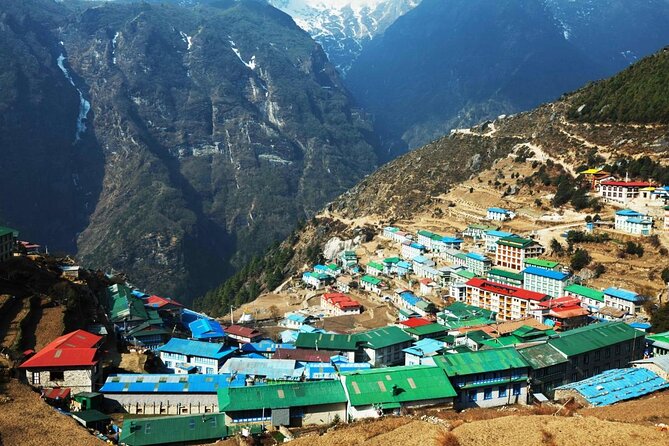
Namche Bazaar is more than a stopping point. It is the main commercial center of the Khumbu, with shops, restaurants, government offices, and ATMs. Do not expect a city, but you will find more services here than farther up the trail.
Day 3: Namche Bazaar and the first mountain views
The scheduled rest day in Namche is one of the most valuable parts of the route. You need time for your body to adjust, and a day without moving higher is far better than rushing toward the upper valleys.
The suggested outing goes toward Syangboche and Hotel Everest View. From there, you can look toward Everest and the surrounding peaks. It is a short hike on paper, but the altitude can make even a modest walk feel serious.
Use this day sensibly. Explore Namche, attend the guide’s briefing, check your clothing and water supplies, and rest. The point is not to rack up distance. The point is to prepare for the higher sections.
The program gives the acclimatization day a very long listed duration, but that does not mean you will be walking continuously for 15 hours. Treat it as a full day in the area, with time for rest and a short hike.
Days 4 and 5: Tengboche, Deboche, and Dingboche
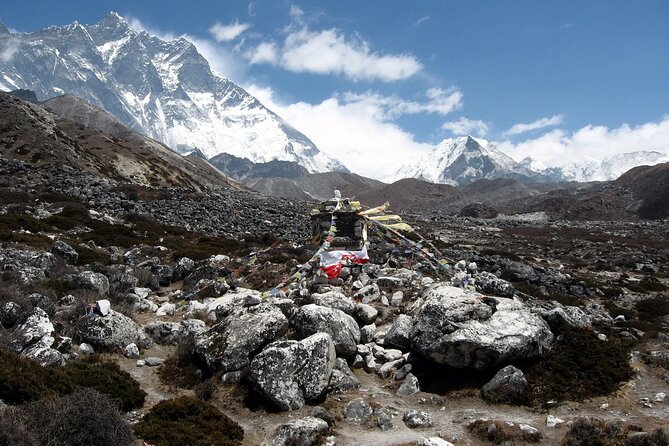
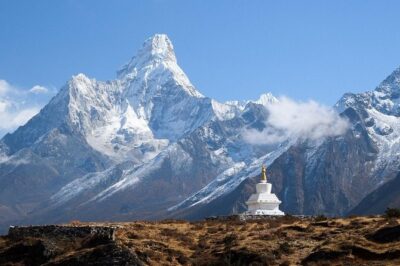
The trail from Namche toward Tengboche moves through forest and opens to excellent mountain views. The route passes through rhododendron, birch, and conifer trees, with Ama Dablam, Everest, and Lhotse appearing above the valley.
Tengboche is a major cultural stop. Its monastery is described as the largest in the Everest region, and the village gives you a chance to pause and appreciate that this is not only a mountain route. Sherpa religious life and local communities are part of the setting.
After Tengboche, you continue toward Deboche, crossing the Imja River before staying in a tea house. Tea-house accommodation is basic, shared, and practical. You should value it for warmth, food, and a bed rather than hotel-style comfort.
The next day leads toward Dingboche through the Imja Valley and along the Lobuche River. The route includes forest at first, then becomes more open and exposed as you gain altitude.
Dingboche is an important staging point. It is high enough that your body needs time to adjust, but it still offers a place to rest before the tougher walk toward Lobuche and Gorakshep.
More Trekking Tours in Kathmandu
- Annapurna Circuit Trek with Tilicho Lake
★ 5.0 · 368 reviews - Everest Base Camp Trekking – 13 Day
★ 5.0 · 365 reviews - Everest Base Camp Trek
★ 5.0 · 350 reviews - Everest Base Camp Trek -14 Days
★ 5.0 · 321 reviews
Day 6: Nangkartshang Peak and useful rest time
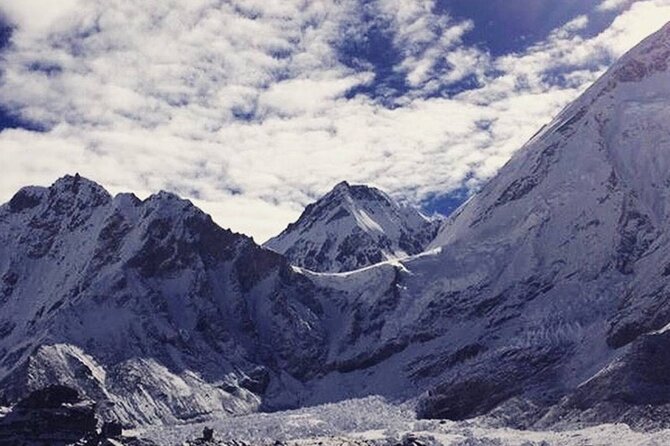
The second acclimatization day is based in Dingboche. The planned hike toward Nangkartshang Peak gives you views toward Makalu, Lhotse, Cholatse, Tawache, and Ama Dablam.
This is a good example of why the schedule is better than a rushed point-to-point march. You climb a little higher during the day, then return to sleep at Dingboche rather than spending the night at a greater altitude.
You should follow the guide’s pace closely here. The air is thinner, and a strong first few days does not guarantee that you will feel fine above 4,000 meters. Pay attention to headaches, unusual fatigue, poor appetite, or nausea, and tell your guide promptly if you feel unwell.
The guide team is one of the package’s strongest features. Names associated with this route include Mingmar, Khilraj, Dawa, Santosh, Sonam, Indra, and others. The useful service is not just leading the way. It includes daily advice on clothing, walking speed, accommodation, and the next day’s conditions.
Days 7 and 8: Thukla Pass, Lobuche, and Everest Base Camp
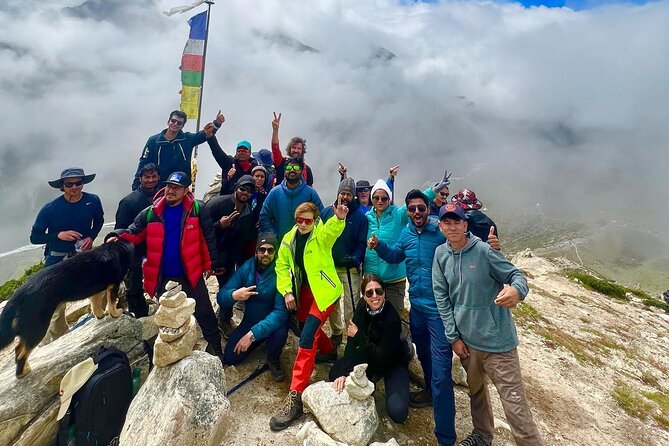
From Dingboche, the setting becomes rougher and the air noticeably thinner. You walk toward Thukla Pass, where the route opens to wide views of Pumori and Nuptse.
Thukla is also an emotional point on the trail because of the memorial area for climbers and mountaineers who died in the Himalayas. The program does not list this detail, so ask your guide about it if you want context while you are there.
After lunch at Thukla, you continue toward Lobuche. This is a demanding day, and the thin air can make the distance feel longer than the map suggests. Keep your pace steady and avoid trying to match the fastest person in the group.
Day eight begins with the walk to Gorakshep, the final settlement before Base Camp. The route is rocky and high, and the accommodation becomes more basic as you approach the glacier.
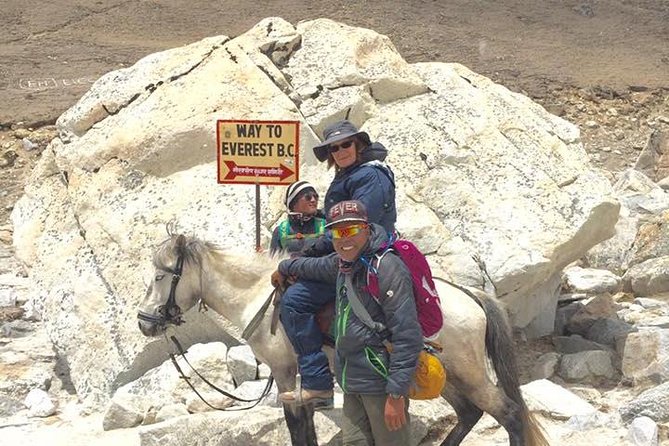
After lunch, you continue toward Everest Base Camp along the Khumbu Glacier. Reaching the camp is the main goal, but keep your expectations realistic. During the climbing season, Base Camp is associated with expedition tents and activity. Outside that period, it is mainly a famous point on the trail, marked by the Khumbu Glacier and surrounding peaks.
The walk back to Gorakshep comes on the same day. That return is not a minor detail. You will already be tired from the climb to Base Camp, so this is one of the longest and hardest sections of the trip.
Day 9: Kala Patthar and the best viewpoint
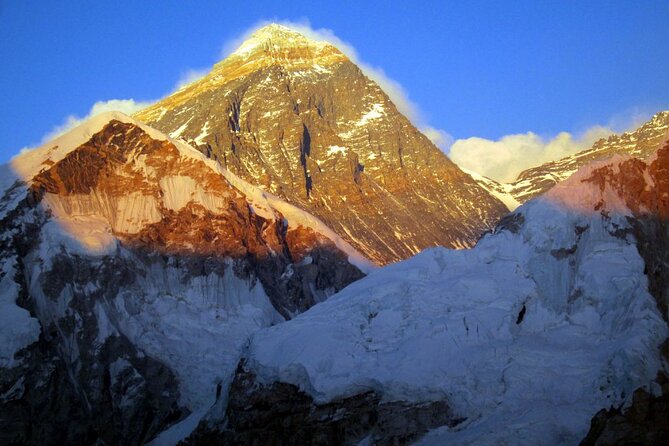
The early climb to Kala Patthar is one of the strongest parts of the itinerary. You set out before sunrise to watch light spread across Everest, Nuptse, Pumori, and the high Himalayan ridges.
Kala Patthar is often more rewarding for mountain views than Base Camp itself. Everest is easier to see from this viewpoint, and the early light can bring out detail in the snow and rock.
After the viewpoint, you return to Gorakshep for breakfast, then descend toward Pheriche. The descent provides welcome relief from the altitude, though your knees may notice the long downhill sections.
Lunch is planned around Lobuche or Thukla before continuing to Pheriche. This day combines the trip’s best viewpoint with a substantial descent, so keep your camera accessible but do not let photography slow the group too much.
Days 10 to 12: Back through Namche and out via Lukla
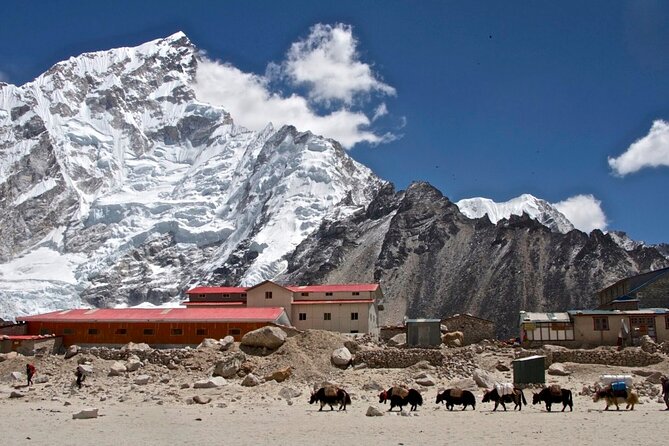
The return to Namche follows familiar ground. Going lower brings easier breathing, but the route is not effortless. Descending trails, suspension bridges, and long walking hours still require concentration.
Day eleven takes you from Namche to Lukla. You pass through villages and forests, stop for tea, and have lunch in Phakding before continuing to the airstrip town.
This final walking day is a good reminder that Everest Base Camp is a round-trip trek. Reaching Base Camp is only half the physical commitment. You still need to walk back through the Khumbu before taking the flight out.
On day twelve, you fly from Lukla to Kathmandu and are transferred to your hotel. Mountain weather can affect these flights, so you should not plan an important international connection immediately afterward unless you have a generous buffer.
Group size, guides, and comfort on the trail
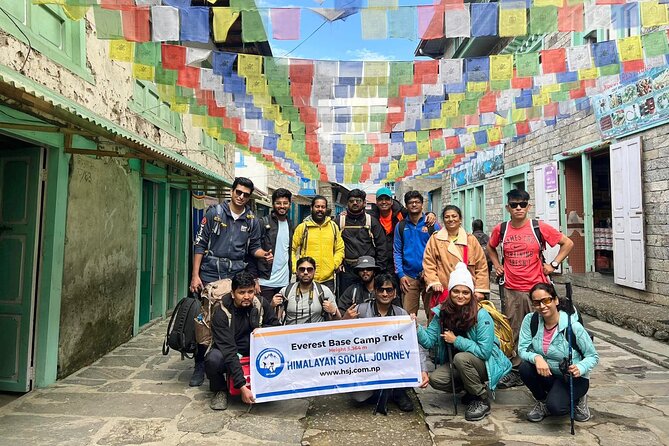
The maximum group size is 30 people. That is large enough to create a social atmosphere, but it can also mean different walking speeds and more waiting at meal stops or accommodation.
The porter arrangement is one porter for two people. Pack carefully and keep your essential daily items in your own daypack. The package includes duffle bags if needed, but it does not include your personal clothing and trekking equipment.
Bring original passport and travel insurance details. Travel insurance is not included, and for a high-altitude trek it is a basic part of sensible preparation.
The tea houses are not luxurious, especially at the highest points. Expect comfort to decline as altitude rises. Basic rooms and shared facilities are part of the route, not a flaw unique to this operator. Still, one person specifically found the accommodation uncomfortable, so anyone seeking polished hotels should reconsider this format.
Who should choose this Everest trek?
This trip fits an active person with moderate physical fitness and some mountain trekking experience. You do not need to be an expert climber, since this is a trekking route rather than a technical climb, but you must be ready for long days, steep climbs, thin air, and simple lodging.
It is also a good choice if you want a group structure. You will have a guide, porter support, arranged flights, permits, and a planned route. That removes many of the decisions that can distract from the actual walk.
It is less suitable if you want flexible departure times, private rooms, full meal coverage, or a slow luxury trip. The 12-day schedule is efficient, but it leaves little spare time if you need an extra rest day.
The provider has a 98 percent recommendation rate and a 4.9 rating from 289 ratings. The strongest pattern is clear: people value the guides, daily support, organization, and help with accommodation and food. One weak point was a last-minute Kathmandu hotel change, so confirm your hotel arrangements before arrival.
You can cancel for a full refund up to six full days before the start time. A cancellation two to six days before departure receives 50 percent back, while cancellations less than two days before departure are not refunded. Poor weather can lead to a new date or a full refund, but you should still allow extra time around the Lukla flights.
Should you book this trek?
Book it if you want a guided, organized route to Everest Base Camp and you are comfortable with hard walking and basic tea houses. The combination of acclimatization days, porter support, national park fees, flights, and experienced local guides makes the $1,099 price attractive, provided the meal and Kathmandu accommodation details are confirmed.
Think twice if you need hotel comfort or a relaxed pace. Before booking, ask one direct question: exactly which breakfasts, lunches, dinners, drinks, and Kathmandu nights are included? If the answer matches your budget, this is a practical way to reach Base Camp, watch sunrise from Kala Patthar, and experience the Khumbu without having to arrange every moving part yourself.
FAQ
How long is the Everest Base Camp trek?
The supplied program is organized over 12 days, including flights from Kathmandu to Lukla, the trek to Everest Base Camp, the return walk to Lukla, and the flight back to Kathmandu. One description refers to a 16-day group tour, so confirm the final schedule before booking.
Are flights to Lukla included?
Yes. The package includes the domestic flights between Kathmandu or Ramechhap and Lukla, including the return journey.
Is accommodation included?
Tea-house accommodation during the trekking days is included on a twin-sharing basis, with breakfast listed as included. One night at Gokarna Forest Resort in Kathmandu is also described as included, but another section says Kathmandu accommodation is not included, so ask for confirmation.
Are meals included during the trek?
The information is inconsistent. Breakfast is listed with the tea-house accommodation, while another section says breakfast, lunch, dinner, and drinks are not included. Confirm the meal plan and budget for food and drinks unless the provider gives you a clear written answer.
Is a guide and porter included?
Yes. The package includes a licensed English-speaking guide and one porter for every two people. A first-aid kit and duffle bags, if needed, are also included.
What fitness level is required?
The trek is suited to people with moderate physical fitness and some mountain trekking experience. You should be ready for long walking days, steep climbs, high altitude, and basic tea-house accommodation.
What happens if bad weather cancels the trip?
The experience requires suitable weather. If it is canceled because of poor weather, you are offered another date or a full refund. Changes and cancellations made by you follow the stated six-day, two-day, and refund deadlines.
Latest treks added in Kathmandu
- Ghorepani Poonhill Trek★ 5.0 · 5 reviews
- Ghorepani Poon Hill Trek★ 5.0 · 16 reviews
- Private Manaslu Circuit Trek at Himalayas★ 5.0 · 3 reviews
- Upper Mustang Trekking★ 3.0 · 2 reviews
- Amazing 1 Day Trekking Experience in Kathmandu Nepal★ 5.0 · 24 reviews
- Upper Mustang Trekking★ 5.0 · 2 reviews
- Upper Mustang Trek★ 5.0 · 5 reviews
- Upper Mustang Trekking★ 5.0 · 4 reviews
Everest Base Camp Treks, compared.





Browse the lists this tour appears in