
REVIEW · KATHMANDU
Everest Base Camp Trekking
Everest Base Camp is less about reaching a single famous point than about the slow climb through the Khumbu region. You pass Sherpa villages, prayer wheels, suspension bridges, and monasteries before spending a hard-won morning above 5,500 meters at Kala Patthar, the best viewpoint on this route for Everest and the surrounding peaks.
I like the careful acclimatization plan, with nights in Namche Bazaar and Dingboche, and I like that the price covers the main practical pieces: Lukla flights, permits, porters, meals, and teahouse lodging. The drawback is serious: this is a demanding high-altitude trek, and the long days near Gorak Shep can be uncomfortable even for fit hikers.
Key points before you book
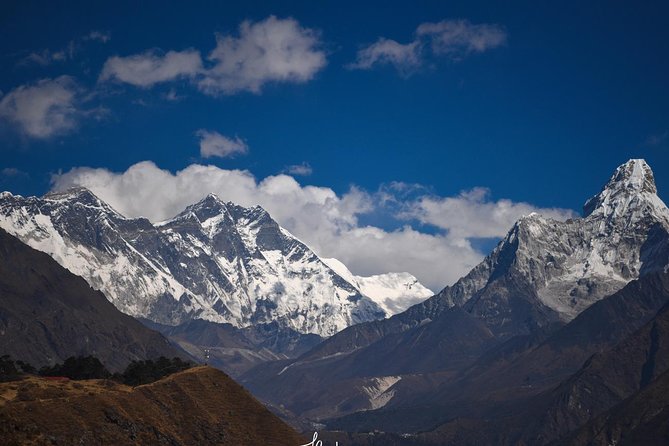
- Kala Patthar at 5,555 meters: The pre-dawn climb gives you the route’s clearest mountain views, including Everest, Lingtren, Khumbutse, and Changtse.
- Two useful acclimatization stops: Namche Bazaar and Dingboche provide rest days with optional hikes instead of a rushed ascent.
- Kathmandu sightseeing included: You visit Boudhanath, Pashupatinath, Patan Durbar Square, and Swayambhunath before heading into the mountains.
- Lukla flights are part of the plan: Weather can delay or cancel them, so extra days after the trek are strongly advised.
- Sherpa culture is part of the route: Tengboche Monastery, Pangboche, Namche, and Khumjung add more than scenery.
- The price covers core trek costs: At $1,625 per person, you get a guide, porter support, food, permits, domestic flights, airport transfers, and Kathmandu hotel stays.
What this 15-day Everest trek is really like
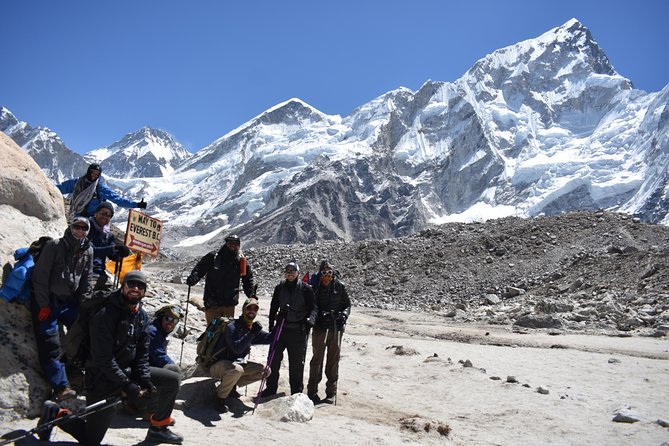
This is a private trek for your own group, operated by Himalayan Sanctuary Adventure Private Limited. The schedule combines two different trips: a short Kathmandu cultural stay and a serious mountain journey from Lukla to Everest Base Camp.
You are not simply walking toward Everest each day. The route rises in stages, then pauses to let your body adjust. That pacing matters. Namche Bazaar sits at 3,441 meters, Dingboche at 4,350 meters, and Gorak Shep at 5,180 meters. The air gets thinner quickly, and the plan gives you time to respond to it.
The route is generally well graded, but it is not easy. Expect rocky sections, steep climbs, suspension bridges, and tougher walking near the Khumbu Glacier. You need moderate physical fitness, and you should treat the high altitude as the main challenge, not as a minor detail.
More Everest Base Camp Treks in Kathmandu
- Everest Base Camp Trek – 14 Days
★ 5.0 · 1,499 reviews - Everest Base Camp Trek
★ 5.0 · 842 reviews - Everest Base Camp Trekking
★ 5.0 · 485 reviews
Two days in Kathmandu before the mountains
Your first day is simple. A representative meets you outside Tribhuvan International Airport, then transfers you to a three-star hotel in Thamel. The drive takes about 30 minutes, and the central location gives you a practical base for the first night.
Day two is devoted to Kathmandu Valley sights. Boudhanath Stupa is the visual highlight, with its large white dome and watchful eyes, while Pashupatinath introduces you to one of Nepal’s most important Hindu religious sites beside the Bagmati River.
You also visit Patan Durbar Square, with palace buildings, courtyards, pagoda temples, and a museum containing bronze religious objects. Swayambhunath, often called the Monkey Temple, sits on a hill above the valley and gives you an early taste of Nepal’s Buddhist traditions.
This day is useful preparation, not just filler. You get an introduction to the religious life and architecture you will encounter again on the trail. Entrance fees are not included, so carry some local currency for the sightseeing stops.
Lukla to Phakding: the short first walk
The early flight from Kathmandu to Lukla is one of the trip’s memorable transitions. You leave the city and arrive at 2,804 meters, where you meet the rest of the trekking crew and begin on foot.
The first walk to Phakding takes about three to four hours. The route passes through Cheplung, with views toward Khumbila, a sacred mountain that has never been summited. Phakding sits at 2,610 meters, so this is a sensible first night rather than a punishing opening day.
You sleep in a teahouse, with breakfast, lunch, and dinner included during the trek. Teahouse accommodation is basic, and the cost of extras such as hot drinks, showers, battery charging, and laundry is your responsibility.
The steep approach to Namche Bazaar
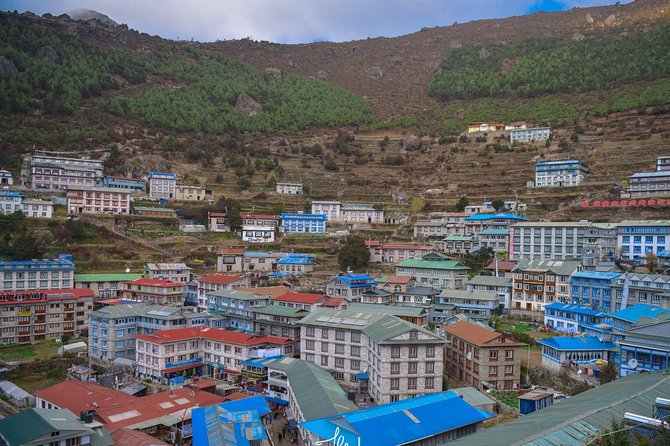
The walk from Phakding to Namche takes about five hours and follows the Dudh Koshi River through Benkar, Chumoa, Monjo, and Jorsale. You enter Sagarmatha National Park along the way, cross suspension bridges, and later follow the meeting waters of the Dudh Koshi and Bhote Koshi.
The final climb to Namche is steep. This is where the trek begins to feel serious. Namche Bazaar, at 3,441 meters, is a busy mountain trading town and an important rest point for the route ahead.
The next day is set aside for acclimatization. You hike toward the Sagarmatha National Park viewpoint for sunrise, with views of Everest, Lhotse, Nuptse, Ama Dablam, Thamserku, and Kongde. You can also make an optional hike to Khumjung village.
I like this structure because the rest day still has purpose. You walk higher during the day, then return to sleep lower in Namche. The schedule gives you a chance to see the mountains without spending every hour in your room.
More Trekking Tours in Kathmandu
- Annapurna Circuit Trek with Tilicho Lake
★ 5.0 · 368 reviews - Everest Base Camp Trekking – 13 Day
★ 5.0 · 365 reviews - Everest Base Camp Trek
★ 5.0 · 350 reviews - Everest Base Camp Trek -14 Days
★ 5.0 · 321 reviews
Tengboche and the spiritual side of the Khumbu
From Namche, the trail climbs toward Tengboche in about five hours. The section to Phunki is relatively easy, followed by a stronger ascent to the village.
Tengboche is known for its monastery, the largest in the Everest region. It is located inside Sagarmatha National Park, a UNESCO World Heritage Site, and has broad views toward Everest, Nuptse, Lhotse, Ama Dablam, and Thamserku.
The monastery opens at 3:00 p.m. If your arrival matches the timing, you may observe a Buddhist ceremony. The schedule is not guaranteed, so treat this as a possible benefit rather than a promised performance.
This stop gives the trek a human and spiritual dimension. You are not walking through empty wilderness. The route connects villages, religious centers, porters, guides, farmers, and mountain communities.
Dingboche gives your body room to adjust
The walk to Dingboche takes about four to five hours. You descend briefly to Debuche, cross the Imja River, pass Pangboche and its monastery, then continue through the Imja Valley and along the Lobuche River.
Dingboche sits at 4,350 meters and receives a full acclimatization day. The planned hike leads toward Nangkartshang Peak, reaching about 5,083 meters over three to four hours. From higher ground, you can see Lhotse, Makalu, and Cho Oyu.
This is one of the most important parts of the schedule. The trek does not try to rush from Namche to the upper valley in one push. You get a rest day, but also a controlled hike that helps you understand how your body responds to altitude.
The conditions become more basic as you climb. You should expect cold evenings, simple rooms, and extra charges for services such as showers, hot and cold drinks, phone calls, and battery recharging.
Lobuche and the hard approach to Gorak Shep
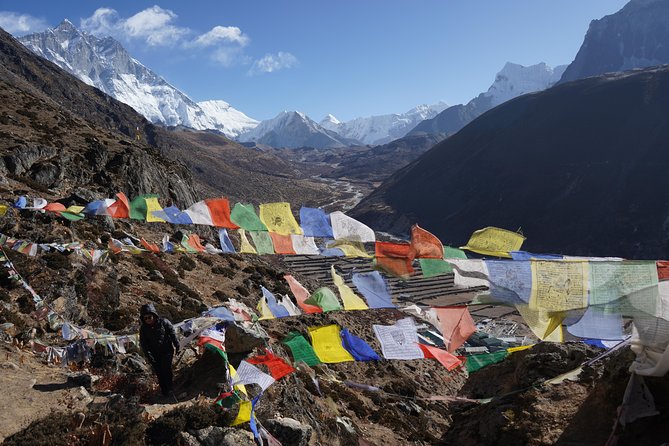
The route from Dingboche to Lobuche is listed at about four to seven hours, depending on the exact section and pace. You pass the Dughla area and continue toward Lobuche at 4,910 meters.
The day toward Everest Base Camp is among the hardest. You walk through stark high-altitude terrain to Gorak Shep at 5,180 meters, then continue to Everest Base Camp at 5,365 meters. The schedule describes a long day, with roughly 17 kilometers and up to 12 hours of walking in its fullest version.
At Base Camp, you see the Khumbu Glacier area and views toward Nuptse, Khumbutse, and Pumori. The famous point is not a summit, and Everest itself is not always visible from Base Camp. The appeal is reaching the foot of the climbing route and seeing the glacier country close up.
Afterward, you return to Gorak Shep for the night. This is a demanding arrangement, so you should not judge the day only by its listed walking time. Snow, fatigue, stops, and altitude can all change the pace.
Kala Patthar is the visual high point
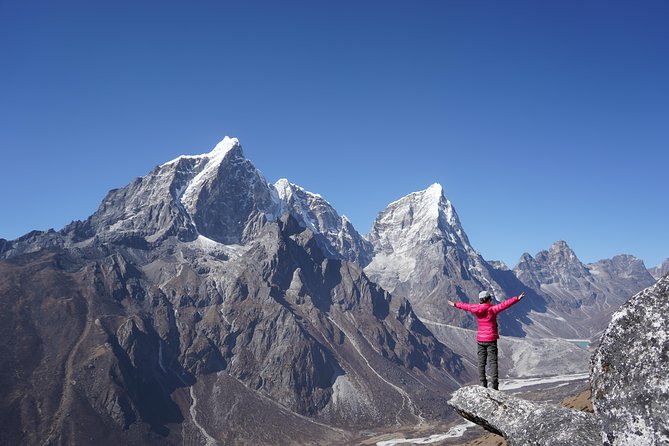
The next morning begins early with the climb to Kala Patthar at 5,555 meters. It takes about three hours to reach the top, followed by a return to Gorak Shep for lunch.
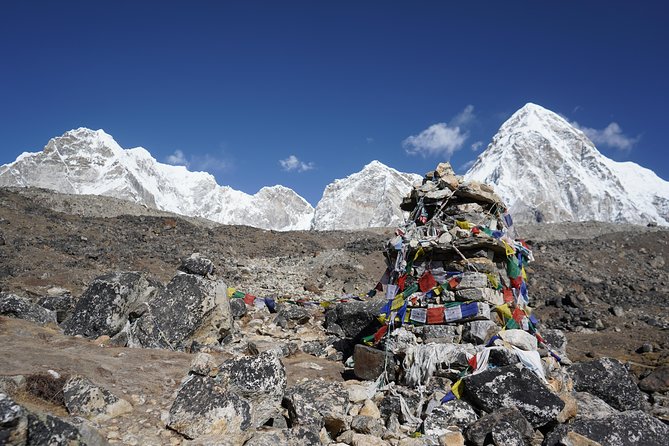
For many people, this is the most rewarding view of the trek. From the summit, you can look toward Everest, Lingtren, Khumbutse, and Changtse, with the Khumbu Glacier below. The sunrise light is the reason for the early start.
The descent to Pheriche at 4,200 meters comes after lunch. Walking downhill is easier on your breathing, but it can still be hard on tired knees. This day combines the trek’s highest point with a substantial descent, so you should conserve energy and follow your guide’s pace.
The return to Lukla is not an afterthought
From Pheriche, you retrace the route through Pangboche and Tengboche to Namche Bazaar. This takes about seven hours. The familiar path feels different in reverse, and the lower altitude usually makes the walking more comfortable.
The next day takes you from Namche back to Lukla in about five to six hours. The afternoon is free for rest, a hot shower, or time in town. A final group celebration is planned in the evening.
The last walking day can feel surprisingly satisfying. You have covered the same route that seemed daunting at the start, but now you know what it cost. The extra time in Lukla also matters because the return flight can be delayed by weather.
Flights, delays, and the value of a buffer
The package includes flights between Kathmandu and Lukla, plus airport transfers. These flights are essential to the route and also the least predictable part of the schedule. Weather can delay or cancel them.
The operator advises adding two or three extra days after the trek before your international flight. Take that advice seriously. A delayed Lukla flight can affect the return to Kathmandu, and a tight connection may turn a great trek into a costly scramble.
One of the strongest practical points here is the response to disruption. The service includes staff who handle arrangements when weather affects flights, and the experience is designed with airport pickup and transfers already in place. Still, you should purchase travel and rescue insurance, since those are not included.
What the $1,625 price covers
At $1,625 per person, the price is strongest when you value a fully arranged trek rather than trying to assemble each part yourself.
Included are:
- Airport pickup and drop-off
- Three-star Kathmandu hotel accommodation with breakfast
- Teahouse lodging during the trek
- Breakfast, lunch, and dinner during the mountain section
- Kathmandu sightseeing by private vehicle
- Kathmandu to Lukla and Lukla to Kathmandu flights
- An English-speaking, government-licensed trekking guide
- One porter for every two trekkers
- National Park permits and TIMS paperwork
- Staff wages, insurance, food, accommodation, and equipment
- Government and local taxes
- A farewell dinner
That is a meaningful bundle. The porter ratio is especially useful because you can carry a lighter personal load, though you still need a daypack with your essentials.
You pay separately for Nepal’s visa, sightseeing entrance fees, alcohol, tips, laundry, showers, charging, phone calls, extra porters, and other personal purchases. Extra Kathmandu nights caused by early arrival, late departure, early return, or mountain delays are also excluded.
Who should book this trek
You should consider this trip if you want the classic Everest Base Camp route with a guide, organized transport, meals, permits, and porter support. It suits someone who wants a demanding challenge but prefers not to arrange every lodge, flight, and permit alone.
It is also a good fit if you care about more than mountain photographs. The Kathmandu temples, Sherpa villages, monastery visits, and time in Namche give the route cultural depth.
You should think twice if you dislike basic lodging, long walking days, or uncertain flight schedules. The route is not a comfortable sightseeing holiday. You need to accept cold, fatigue, limited services, and the possibility that weather changes your plans.
The private format is helpful because only your group participates. You can still expect a set schedule, but you are not placed in a large public tour. The guide, porters, and staff are included, while tips remain your responsibility.
Should you book the Everest Base Camp trek?
I would book this trek if you are physically prepared, have room in your schedule for flight delays, and want the practical support of a guide and porter team. The two acclimatization days, included meals and permits, and full Kathmandu to Lukla arrangements give the $1,625 price solid value.
I would not book it as a quick holiday or treat the 15 days as exact. Plan for the possibility of extra nights, carry insurance that covers trekking and rescue, and prepare for the long Gorak Shep and Kala Patthar days. If you accept those conditions, this is a well-paced route to one of the world’s great mountain viewpoints.
FAQ
How long does the Everest Base Camp trek take?
The planned duration is 15 days, including Kathmandu sightseeing, the trek from Lukla to Everest Base Camp, the return to Lukla, domestic flights, and airport transfers.
What is the highest point reached?
Kala Patthar is the highest point, at about 5,555 meters. Everest Base Camp is listed at 5,365 meters.
Are flights between Kathmandu and Lukla included?
Yes. The package includes domestic flights from Kathmandu to Lukla and from Lukla back to Kathmandu.
What happens if the Lukla flight is delayed?
Weather can delay or cancel the flight. You are advised to keep two or three extra days at the end of the trip before your international departure.
Is accommodation included?
Yes. You receive a three-star hotel in Kathmandu with breakfast and teahouse accommodation during the trek.
Are meals included?
Breakfast, lunch, and dinner are included during the trek. Breakfast is included in Kathmandu, while lunch and evening meals in Kathmandu are not included.
Is a guide provided?
Yes. An English-speaking, government-licensed trekking guide is included, along with porter service at a ratio of one porter for every two trekkers.
Are trekking permits included?
Yes. The package includes the necessary paperwork, National Park permits, TIMS, and government and local taxes.
Do I need travel and rescue insurance?
Yes, you should arrange it yourself. Travel and rescue insurance are not included in the price.
Latest treks added in Kathmandu
- Private Manaslu Circuit Trek at Himalayas★ 5.0 · 3 reviews
- Ghorepani Poonhill Trek★ 5.0 · 5 reviews
- Ghorepani Poon Hill Trek★ 5.0 · 16 reviews
- Upper Mustang Trekking★ 3.0 · 2 reviews
- Amazing 1 Day Trekking Experience in Kathmandu Nepal★ 5.0 · 24 reviews
- Upper Mustang Trekking★ 5.0 · 2 reviews
- Upper Mustang Trek★ 5.0 · 5 reviews
- Upper Mustang Trekking★ 5.0 · 4 reviews
Everest Base Camp Treks, compared.






Browse the lists this tour appears in