
REVIEW · KATHMANDU
Trek to Everest Base Camp
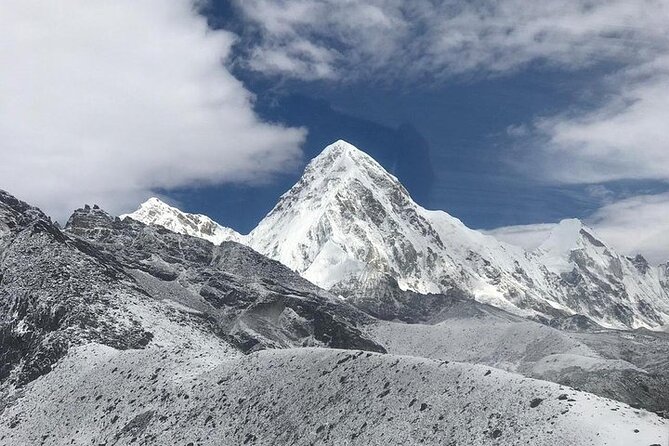
The real prize here is not simply reaching Everest Base Camp. It is the gradual walk from pine forests and stone villages to the stark upper Khumbu, with the Buddhist monastery at Tengboche, the Khumbu Glacier, and the summit view from Kala Patthar. You climb as high as 5,545 meters, so this is a serious mountain trek, not a sightseeing walk with a few uphill stretches.
I like the two acclimatization days, one in Namche Bazaar and another in Dingboche. I also like the practical setup: permits, airport transfers, Kathmandu lodging, teahouse nights, an English-speaking guide, and one porter for every two people are included. The main drawback is the altitude and the long walking days, especially the 15-kilometer push to Base Camp and the early climb to Kala Patthar.
Key points to know before booking
- The trek reaches 5,364 meters at Everest Base Camp, with an even higher climb to Kala Patthar at 5,545 meters.
- Two rest and acclimatization days are built into the route, at Namche Bazaar and Dingboche.
- Teahouse lodging covers 11 nights, while two nights in Kathmandu include breakfast.
- The package includes permits, entry fees, airport transfers, a guide, and porter support, which keeps the main costs clear.
- Bimal, Pramish, Promise, and Ngawang are names connected with past trips, though your assigned guide should be confirmed before departure.
- Food and drinks in the mountains are extra, as are hot showers, charging, bottled water, equipment, insurance, evacuation, and tips.
What the $1,597 price really covers
At $1,597 per person, this trek offers a useful amount of support for a high-altitude journey. You are not paying only for a route description. The price includes private airport pickup and drop-off, two nights in Kathmandu with breakfast, 11 nights in mountain teahouses, trekking permits, entry fees, government and local taxes, an English-speaking guide, and one porter for every two people.
That arrangement matters once you leave Kathmandu. Permits and park entry are handled for you, and the porter allows you to carry a smaller daypack rather than hauling all your equipment over the Khumbu trails. The package also includes welcome drinks, a farewell dinner, and a trip certificate for reaching Everest Base Camp.
The price does not cover the full cost of your holiday. Mountain meals and drinks are extra, including hot water, cold drinks, hot showers, charging, bottled water, and alcoholic drinks. You also pay for personal gear, Nepal’s entry visa, international flights, travel medical insurance, emergency evacuation, and tips for your guide and porter.
That last point deserves attention. Tipping is expected, so budget for it before you arrive. You should also treat insurance with emergency evacuation cover as essential. The trek reaches more than 5,000 meters, and the package does not absorb medical or rescue costs.
More Everest Base Camp Treks in Kathmandu
- Everest Base Camp Trek – 14 Days
★ 5.0 · 1,499 reviews - Everest Base Camp Trek
★ 5.0 · 842 reviews - Everest Base Camp Trekking
★ 5.0 · 485 reviews
Kathmandu preparation before the Lukla flight
The trek begins in Kathmandu at 1,350 meters. On arrival, you are met and taken to your hotel by private transport. The evening briefing is used to prepare for the route, check your equipment, and explain the days ahead.
This first night is valuable because the next morning starts early. The meeting point is Happyland Treks on Paknajol Marg, with a stated start time of 6:45 am. Confirm the exact departure details with the operator before setting out, since mountain flights and trekking schedules need careful coordination.
You return to Kathmandu for a final night after the mountain section. Day 13 leaves time to explore the city or rest, while Day 14 is reserved for a final stroll, souvenir shopping, and the airport transfer. The Kathmandu portion is brief, but it gives you a practical buffer at both ends of the trek.
Day 2: Lukla to Phakding beside the Dudh Koshi
The flight from Kathmandu to Lukla takes about 35 minutes. It is a memorable start, with mountain views from the aircraft and an immediate change from city streets to a high mountain village at 2,800 meters.
From Lukla, you walk about 8 kilometers for three to four hours toward Phakding, at 2,652 meters. The trail follows the Dudh Koshi River and passes stone villages, snow-covered peaks, Cheplung at 2,700 meters, and Ghat at 2,530 meters.
This is a sensible first walking day. You gain altitude, but the overnight stop in Phakding is lower than Lukla, giving your body a gentler introduction to the route. Do not mistake the short distance for a free pass, though. You are beginning a long series of walking days, and a steady pace is more useful than racing ahead early.
Day 3 and Day 4: Namche Bazaar and the first Everest view
The trail from Phakding enters pine forest and crosses the Dudh Koshi on a long suspension bridge. At Monjo, you reach the entrance to Sagarmatha National Park, where trekking permits are registered.
After Monjo, the route climbs steeply to Namche Bazaar. Namche sits at 3,440 meters and is the main trading and resting center on the route. It is also where you get your first distant view of Everest.
Day 4 is a full acclimatization day in Namche. You can explore the town or take a three to four-hour hike to the Everest viewpoint hotel. That uphill outing is not just a sightseeing extra. It gives your body time at altitude before you sleep higher.
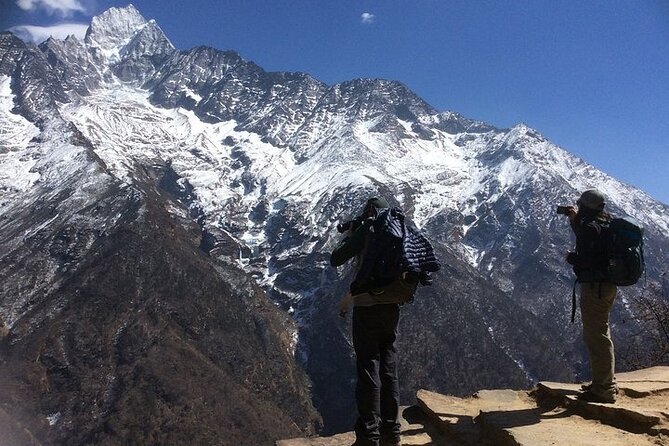
The setting around Namche includes views of Ama Dablam, Nuptse, Lhotse, and Everest, especially around sunrise and sunset. I like this pause in the schedule because it prevents the itinerary from becoming a nonstop climb. Still, rest day does not always mean total idleness. The planned viewpoint walk is part of the altitude strategy.
More Trekking Tours in Kathmandu
- Annapurna Circuit Trek with Tilicho Lake
★ 5.0 · 368 reviews - Everest Base Camp Trekking – 13 Day
★ 5.0 · 365 reviews - Everest Base Camp Trek
★ 5.0 · 350 reviews - Everest Base Camp Trek -14 Days
★ 5.0 · 321 reviews
Day 5 and Day 6: Tengboche, Pangboche, and Ama Dablam
Leaving Namche, you climb through Phunki Tenga toward Tengboche at about 3,800 meters. Tengboche is home to the largest and most celebrated Buddhist monastery in the Khumbu region.
The monastery gives this trek more character than a simple peak-to-peak route. You are walking through a living mountain region with Buddhist traditions, not just ticking off viewpoints. The day covers about 9.2 kilometers in five to six hours, so the climb is manageable on paper but becomes harder as the air thins.
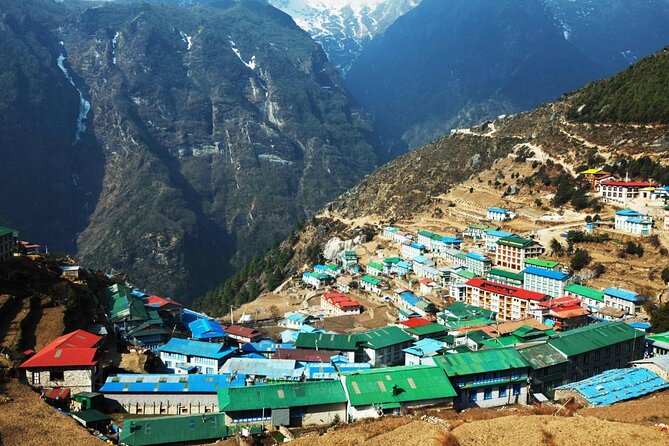
The following day descends through rhododendron forest to Debuche, then continues to Pangboche after crossing the Imja Khola River. Pangboche sits at roughly 4,200 meters. You get striking views of Ama Dablam and the surrounding peaks, but you also begin to feel the accumulated effect of altitude and repeated walking.
The descent through forest is welcome after Tengboche. The larger concern is the steady rise in sleeping altitude. Keep your pace calm, drink regularly, and tell your guide if you feel unwell rather than trying to hide symptoms.
Day 7 and Day 8: Dingboche and the Khumbu Glacier
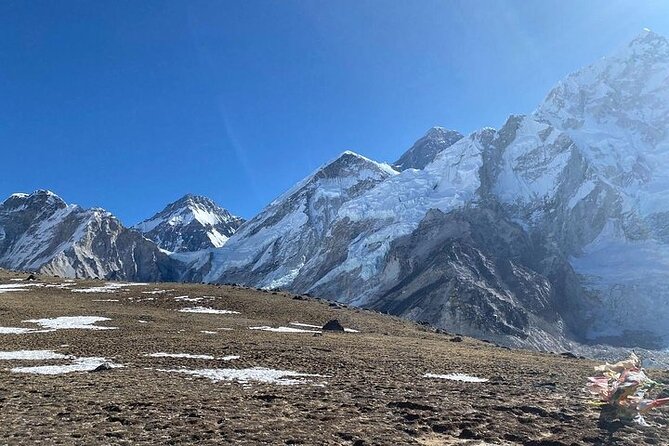
Dingboche provides the second scheduled rest day. At this point, you have spent several days walking uphill and sleeping higher, so a break is well placed.
You can rest in Dingboche or take the optional three to four-hour hike to Nangkhartshang Peak, which reaches 5,083 meters. That climb is designed to help with acclimatization, but it is still a demanding outing. If you are tired or developing altitude symptoms, resting is the sensible choice.
The next day takes you to about 4,900 meters over 11 to 12 kilometers and six to seven hours. The route rises toward the moraine of the Khumbu Glacier, described as the highest glacier in the world. This is where the scenery turns more severe and exposed, with less forest and more rock, ice, and open mountain terrain.
The route description does not name the overnight stop for this day, so confirm the exact lodging plan before you travel. That is a small but useful point when you are arranging gear, medication, and expectations for the hardest section.
Day 9: Gorakshep and Everest Base Camp
Day 9 is the central challenge. You reach Gorakshep at 5,180 meters, then continue to Everest Base Camp at 5,364 meters. The walking distance is about 15 kilometers, taking six to eight hours.
The trail from Gorakshep is rocky and demanding. You follow the Khumbu Glacier, with icefalls and high peaks around you. It is not a smooth path to a signpost. The terrain can make the final approach slow, and the high altitude makes every climb feel larger than it would at home.
At Base Camp, you have time for photographs and views before returning to Gorakshep. The itinerary then continues with the descent toward Pangboche on the next day, so you do not spend a second night at Base Camp itself.
This is the point where fitness and patience matter most. You need to be comfortable walking for most of a day and handling rough ground. The support of a guide and porter helps, but neither replaces acclimatization or medical cover.
Day 10: Kala Patthar and the long descent
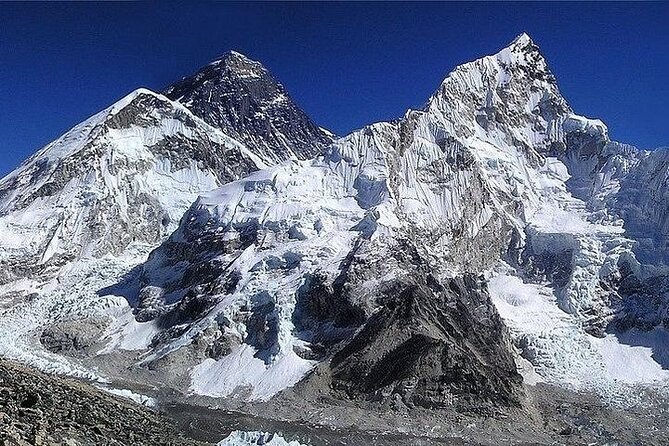
The early start is for Kala Patthar, at 5,545 meters. The climb takes about two to three hours and leads to views over the Khumbu Glacier, with Everest, Nuptse, Changtse, and Lhotse above.
Kala Patthar is higher than Everest Base Camp and is often the more rewarding viewpoint for seeing Everest clearly. The route does not simply finish when you return from Base Camp. You climb again before beginning a major descent to Pangboche at 4,320 meters.
This is a strenuous day because it combines an early summit-style walk with a long downhill section. The descent brings relief from the altitude, but tired legs can make rocky ground tricky. Trekking poles and well-used footwear would be practical personal equipment, though equipment is not supplied in the package.
Days 11 and 12: Back through Namche to Lukla
The return to Namche covers about 13 to 15 kilometers and takes seven to eight hours. From Pangboche, the path rises and falls through Tengboche, with rhododendron and juniper forest along the way.
The route is not one continuous downhill walk. Expect repeated ups and downs before reaching Namche at 3,440 meters. After the high altitude near Base Camp, the lower air feels easier, but the mileage can still be tiring.
Day 12 continues to Lukla, about 16 kilometers in six to seven hours. You follow the Dudh Koshi River and cross several suspension bridges through the valley. The evening includes a celebration with the trekking crew, a fitting end to the walking section.
The porter system is especially useful on this return journey. You still need a daypack with personal essentials, but carrying less weight makes the long descent and final valley walk more manageable.
Guides, support, and the personal feel
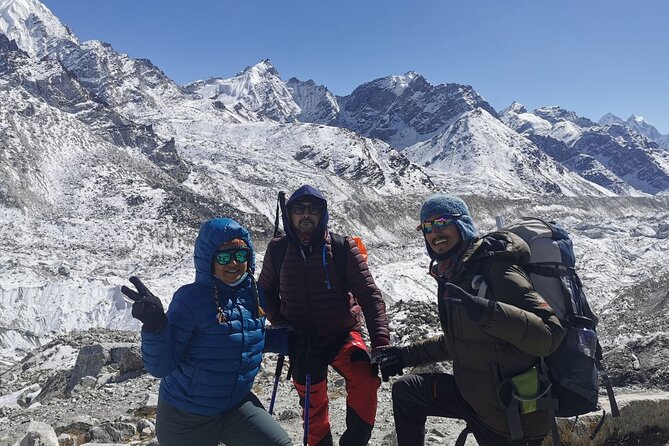
The company provides an English-speaking guide and one porter for every two people. The group is described as private, so only your own party participates. That can make the schedule more personal than a large shared departure, although you should confirm the exact group arrangement and guide before booking.
Past trips connected the names Bimal and Pramish, also written as Promise in one account, with friendly and attentive support. Ngawang is also named in a company response. Bimal helped one solo trekker organize the trip and assisted with Kathmandu restaurant and accommodation advice. That suggests the local support begins before you reach the trail, but the specific person assigned to your group is not guaranteed by the information provided.
The strongest pattern is personal care, organization, and good spirits. That matters on a two-week trek, when a calm guide can help with pacing, route decisions, and the practical problems that arise in mountain lodges. Still, ask who your guide will be, how many people the porter carries for, and what happens if the itinerary needs to change.
Who should book this Everest trek?
You should consider this trek if you want the classic Lukla to Everest Base Camp route with organized support and two built-in acclimatization days. It suits people with a moderate fitness level who can handle repeated five to eight-hour walking days, steep climbs, rough paths, and high altitude.
It is a good match if you value logistics being handled for you. Permits, park entry, airport transfers, lodging, a guide, and porter support are already part of the main price.
It is not a good choice if you want a soft adventure or a low-cost trip with every expense included. Food, drinks, insurance, evacuation, equipment, visa costs, tips, showers, charging, and other personal spending remain yours. The high point of the route is above 5,500 meters, and the itinerary includes demanding days rather than short scenic walks.
You should also be honest about your preparation. The stated requirement is moderate physical fitness, but the schedule is still demanding. Get suitable medical advice, arrange travel medical insurance with emergency evacuation cover, and make sure your personal equipment is ready before arriving in Kathmandu.
Should you book the 14-day Everest Base Camp Trek?
I would book this trip if you want a structured, supported route to Everest Base Camp and understand the extra costs beyond the headline price. The strongest value comes from the permits, airport transfers, teahouse lodging, guide, porter arrangement, and acclimatization schedule.
I would pause before booking if you are uncomfortable with long walking days, thin air, basic mountain lodging, or paying separately for food and drinks. Ask Happyland Treks to confirm your assigned guide, the exact Day 8 overnight stop, the current flight arrangements, and the expected tipping amount.
For a fit trekker who wants the classic Himalayan route without organizing every permit and bed alone, this is a practical package. Its greatest rewards are the slow change from Kathmandu to the high Khumbu, the monastery at Tengboche, the glacier approach, and the view from Kala Patthar. Its price is fair only if you budget honestly for the extras.
FAQ
How long does the Everest Base Camp Trek take?
The trek lasts approximately 14 days, including time in Kathmandu, the flight to and from Lukla, the mountain trek, and the final airport transfer.
Where does the trek start?
The meeting point is Happyland Treks on Paknajol Marg in Kathmandu, Nepal. The stated start time is 6:45 am.
Is airport pickup included?
Yes. Private airport pickup and drop-off are included.
How high does the trek go?
Everest Base Camp reaches 5,364 meters. The highest point on the route is Kala Patthar at 5,545 meters.
Are acclimatization days included?
Yes. There is a rest and acclimatization day in Namche Bazaar on Day 4 and another in Dingboche on Day 7.
What accommodation is included?
The package includes two nights in Kathmandu with breakfast and 11 nights in teahouses along the trekking route.
Are meals included in the mountains?
No. Food and drinks in the mountains are not included. Hot water, cold drinks, hot showers, bottled water, alcoholic drinks, and battery charging also cost extra.
Is a guide and porter provided?
Yes. An English-speaking guide is included, along with one porter for every two people.
Can I cancel for a full refund?
Yes, if you cancel at least 24 hours before the experience start time. Cancellations made less than 24 hours before the start time are not refunded, and late changes are not accepted.
Latest treks added in Kathmandu
- Private Manaslu Circuit Trek at Himalayas★ 5.0 · 3 reviews
- Ghorepani Poonhill Trek★ 5.0 · 5 reviews
- Ghorepani Poon Hill Trek★ 5.0 · 16 reviews
- Upper Mustang Trekking★ 3.0 · 2 reviews
- Amazing 1 Day Trekking Experience in Kathmandu Nepal★ 5.0 · 24 reviews
- Upper Mustang Trekking★ 5.0 · 2 reviews
- Upper Mustang Trek★ 5.0 · 5 reviews
- Upper Mustang Trekking★ 5.0 · 4 reviews
Everest Base Camp Treks, compared.






Browse the lists this tour appears in