
REVIEW · KATHMANDU
Everest Base Camp Trekking
The real prize here is not simply reaching Everest Base Camp. It is the slow approach through pine forests, Sherpa villages, Buddhist monasteries, suspension bridges, and high valleys where mountains seem to fill the sky. By the time you reach base camp and watch sunrise from Kala Patthar, the route itself has become part of the achievement.
I like the small maximum group of 10, because a guide can keep a closer eye on everyone and answer questions without shouting across a crowd. I also like that teahouse accommodation, meals, and local transport are built into the package, so you can concentrate on walking rather than arranging each night’s bed and meal.
The main drawback is the physical demand. This is a high-altitude trek for people with strong fitness, not a gentle sightseeing tour. Weather can affect the route and flights, and the itinerary includes steep, rocky ground where patience matters more than speed.
Key points before you book
- Reach Everest Base Camp on day 9, after walking through the Khumbu Valley and crossing the high terminal moraine area.
- Rise early for Kala Patthar on day 10, the main sunrise viewpoint in the itinerary.
- Walk with a guide in a group of up to 10, useful on a long route with many junctions and changing conditions.
- Sleep in teahouses and eat included meals, a practical arrangement for a remote mountain trek.
- Build in acclimatization at Namche Bazaar, with a short viewpoint walk rather than a full rest day.
- Allow for a demanding return, since descending steep rocky trails can be hard on knees and balance.
The value of a $1,350 guided trek
At $1,350 per person, this trip is priced as a fairly practical way to tackle one of Nepal’s best-known long-distance routes. The value comes from the organization: airport pickup, local transport, guided walking, teahouse accommodation, meals, and a planned 14-day schedule are included.
That matters in the Everest region. You are not merely paying for a walking route. You are paying to have someone manage the sequence of villages, overnight stops, acclimatization days, and mountain transport. A small group also gives you more personal attention than a large coach-style tour.
Still, read the inclusions carefully before paying. The itinerary begins with a flight from Kathmandu to Lukla and ends with a return flight, but the supplied details do not spell out every airfare or personal expense. Ask what is covered, especially drinks, extra snacks, gear, tips, and any costs caused by delays.
The free cancellation rule is useful: you can cancel for a full refund if you do so at least 24 hours before the local start time. Changes or cancellations inside that window are not accepted for a refund.
More Everest Base Camp Treks in Kathmandu
- Everest Base Camp Trek – 14 Days
★ 5.0 · 1,499 reviews - Everest Base Camp Trek
★ 5.0 · 842 reviews - Everest Base Camp Trekking – 13 Day
★ 5.0 · 365 reviews
Days 1 and 2: Kathmandu to Lukla
Your first day begins at Tribhuvan International Airport in Kathmandu. An airport representative meets you and takes you to the hotel by private tourist vehicle. You can rest or visit the company office to review the trek details.
That first night has a practical purpose. It gives you time to recover from your journey, check your equipment, and ask final questions before heading into the mountains. The meeting point is the airport on Ring Road, so keep your passport details and booking information ready.
Day 2 starts early, with a drive from the hotel to the domestic terminal. The flight to Lukla is one of the memorable parts of the trip, with morning views of snow-covered peaks and the sunrise over the Himalaya. On arrival at Tenzing-Hillary Airport, the walking begins.
Do not treat the flight as a minor transfer. Mountain weather can affect air travel, and the schedule is an important part of the trip’s rhythm. You should arrive prepared to walk soon after landing, rather than expecting a slow first day.
Day 3: Pine forests and the entrance to Sagarmatha National Park
The route from Lukla passes through pine forest and follows the Dudh Koshi River. Views of Mount Thamserku appear along the way, giving you an early taste of the enormous peaks ahead.
You pass small settlements before reaching the checkpoint at Sagarmatha National Park. This is where the journey changes from a local mountain walk into a protected-area trek with a clear connection to Everest and the Khumbu region.
The day is appealing because it mixes trees, river views, villages, and mountain scenery. It also reminds you that the trail is not only about high ridges. The lower section has its own character, and the gradual change in altitude helps set up the days ahead.
Day 4: Acclimatization around Namche Bazaar
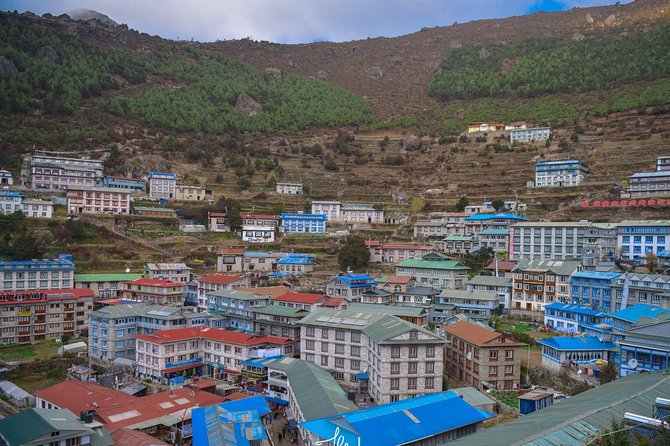
Namche Bazaar is the largest settlement in the Khumbu region and one of the most useful stops on the route. You can find ATMs, internet cafes, restaurants, bakeries, and other services here.
Although this is called a rest day, the program includes a short hike to a nearby viewpoint. That is a sensible approach. You gain altitude gradually while giving your body a chance to adjust, rather than sitting still and then making a sudden hard climb.
Namche is also where the trek begins to feel more remote and more focused. You have access to a few comforts, but you are clearly in a mountain settlement rather than a city. Use the stop to check your clothing, water, and personal items. After Namche, the route becomes tougher, and options are fewer.
More Trekking Tours in Kathmandu
- Annapurna Circuit Trek with Tilicho Lake
★ 5.0 · 368 reviews - Everest Base Camp Trek
★ 5.0 · 350 reviews - Everest Base Camp Trek -14 Days
★ 5.0 · 321 reviews - Manaslu Circuit Trek
★ 5.0 · 292 reviews
Day 5: The trail from Namche to Phorse
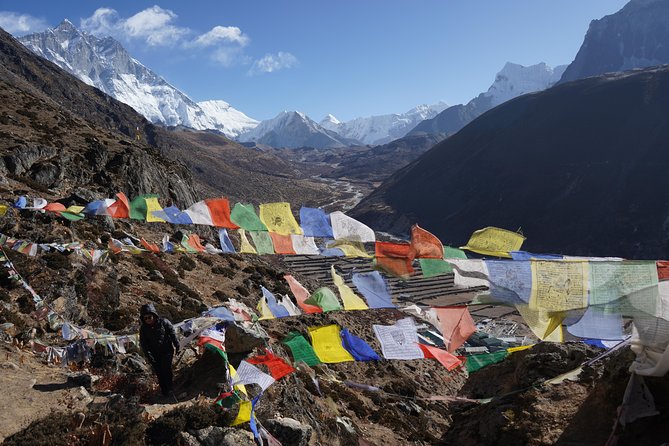
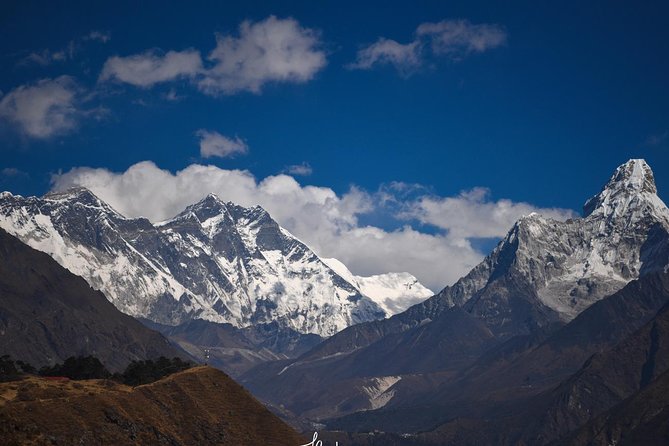
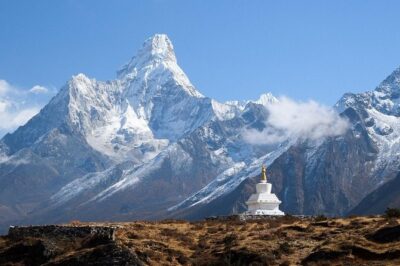
The walk to Phorse begins after breakfast and includes a climb toward Mugla Pass. From the route, you can see Ama Dablam, Khumbu, and Thamserku. Ama Dablam is one of the most striking mountains in the region, so this is a strong day for photographs.
The trail then descends toward the Dudh Koshi before crossing the river. This combination of climbing and descending is worth noting. Distance alone does not tell you how hard a day will feel, since a route can lose height and then regain it later.
Phorse offers a quieter stop than Namche. You will need to be comfortable with simple teahouse living and a more limited range of services. That is part of the appeal, but it also means you should not expect city-style convenience.
Day 6: Pangboche, monasteries, and Dingboche
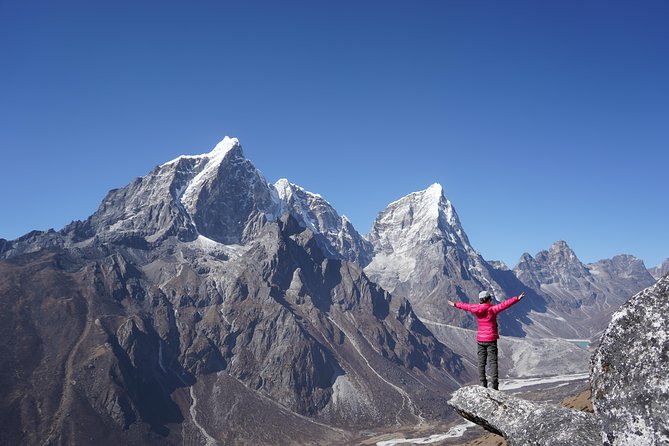
The route from Phorse to Dingboche begins with a visit to the region’s largest Buddhist monastery. This is one of the trip’s more meaningful cultural moments, since the walk is not only a mountain challenge. Your guide can help explain the local people, Buddhist practice, and life in the high valleys.
From the monastery, the route continues through alpine forest toward Pangboche, then onward through Shomare and other villages. The setting grows more open as you move higher, with fewer trees and more exposed mountain views.
Dingboche is an important overnight stop because the air is thinner and the walking becomes more demanding. The itinerary does not describe a separate full rest day here, so you should pay attention to your condition and tell your guide if you feel unwell.
Days 7 and 8: High valleys, old expedition history, and the Khumbu Glacier
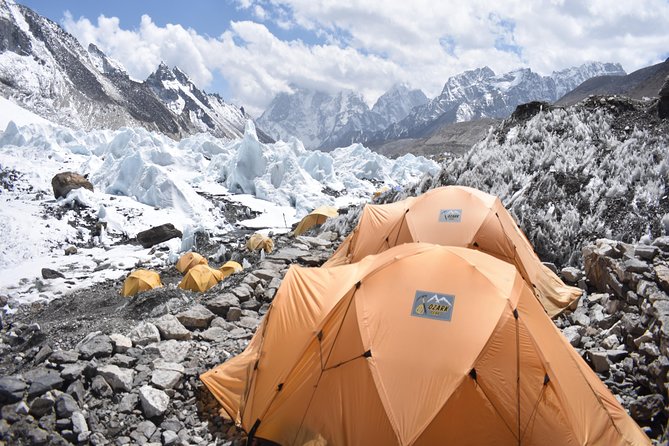
The next section takes you from Duglha through the Khumbu Khola valley. Along the way, you pass Dusa, associated with yak herders, and Phulong Karp, linked with the 1953 expedition that first successfully climbed Everest. You may also see the Chola Lake area.
These details give the route a human scale. Everest is famous for its summit, but the valley is also shaped by yak herding, mountain settlements, prayer flags, and generations of people living in difficult conditions.
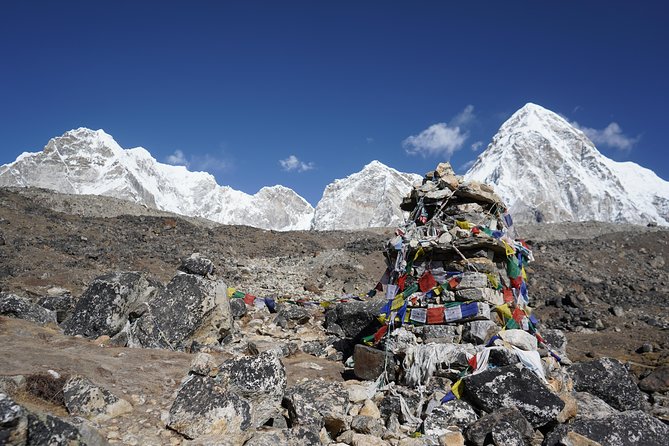
The following day includes a steep walk up the terminal moraine of the Khumbu Glacier. You then climb toward Chupki Lhara, an area marked by boulders and stones decorated with prayer flags.
This is likely to feel like one of the hardest parts of the trek. The trail is rocky, the altitude is high, and the ground can demand careful footwork. Walk steadily and let the guide set a sensible pace. At this stage, rushing only wastes energy.
Day 9: Everest Base Camp
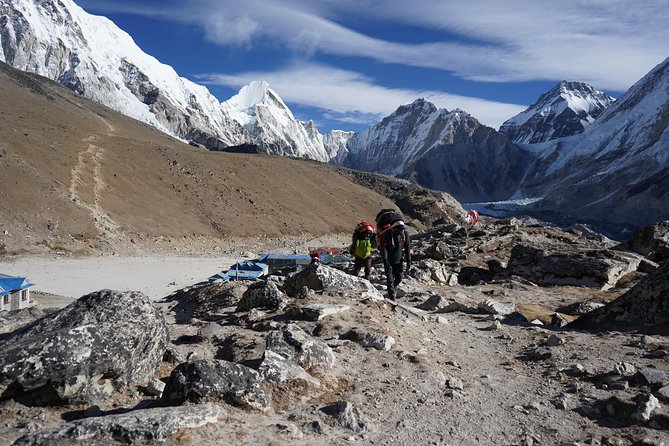
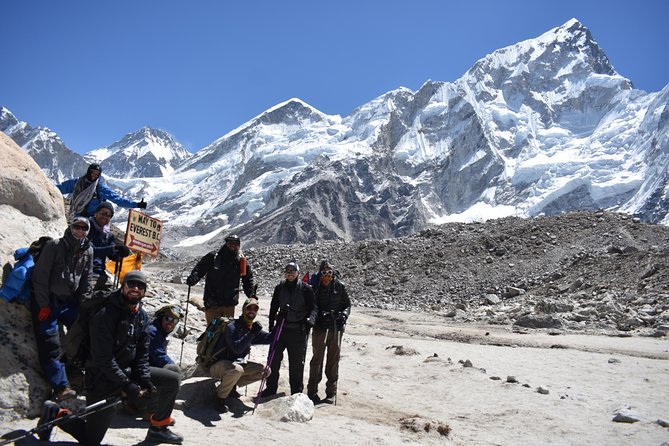
Day 9 is the main target. From Thangma Riju, you can experience a broad 360-degree view of snow-covered mountains. One important detail is easy to miss: Mount Everest itself is not visible from this viewpoint.
The route continues to Everest Base Camp, where you spend about 30 minutes. Reaching the world’s highest mountain is a major moment, but base camp is not a summit viewpoint. The experience is about standing at the starting area for Everest expeditions and recognizing how far you have walked to get there.
The approach over the Khumbu Glacier area can feel rough and slow. Give yourself time to enjoy it rather than treating the final section as a race. Your guide’s role is especially useful here, since the ground is uneven and the route can be confusing.
Day 10: Sunrise from Kala Patthar
The trek begins very early on day 10 so you can see morning light spread across the mountains. Kala Patthar is the itinerary’s sunrise viewpoint, and the stop lasts about 30 minutes.
This is the day for the clearest high mountain panorama, with views toward Everest and surrounding peaks such as Lingtr… The supplied route description cuts off the final mountain name, but the main point is clear: Kala Patthar is the scenic high point of the trip.
The early start is not comfortable. You will be walking in cold conditions, and the high altitude can make even a short climb feel serious. Yet the timing is worthwhile because the changing light gives the mountains a different character from the views at base camp.
After Kala Patthar, the route turns downhill. That can feel like relief, but do not underestimate the descent. Tired legs and loose, rocky ground require control.
Days 11 and 12: Returning through Pheriche and Pangboche
The descent follows the route toward Duglha, passing Pheriche, Orsho, and Shomare before reaching Pangboche. The old monastery in Pangboche offers another chance to connect the walk with local Buddhist culture and the history of the valley.
Day 12 continues downhill over steep ground. You need to move slowly and keep your balance, especially on rocky sections. The trail eventually reaches a suspension bridge over the Dudh Koshi.
A guided return is valuable here. Once you have reached your main goal, it is easy to switch off mentally. The group still has a demanding walk ahead, and careful pacing helps prevent small slips or strains from becoming serious problems.
Days 13 and 14: Lukla, Kathmandu, and departure
On day 13, you return by mountain flight from Lukla to Kathmandu. The aerial views are worth watching again, but the flight is also the final link in a route shaped by mountain weather and limited transport.
Back in Kathmandu, you have time for shopping and walking around the city. The evening is set aside to celebrate completing the trek. This is a welcome change from teahouse rooms and high valleys, although you may be too tired for a long night out.
Day 14 allows more shopping and sightseeing around the Kathmandu Valley before your scheduled flight from Tribhuvan International Airport. The extra city time makes the schedule less rushed and gives you a buffer at the end of a physically demanding trip.
Guides, group size, and the human side of the trek
The group limit of 10 is one of the strongest features. A guide can offer more direct help with pacing, directions, and daily decisions. That becomes especially important when someone feels the effects of altitude or when weather changes the plan.
Several guide names associated with this experience include Biru, Amabar, and Ramesh. If one of them is assigned to your group, you can expect the guide to be central to the experience, not just someone walking at the front. Recent trip accounts place particular emphasis on guides helping with safety, equipment, illness, and route decisions.
The same is true of the porters. The trek works because local staff carry supplies and keep the daily logistics moving. Treat that support as part of the human experience, not an invisible service. Ask the company what porter arrangements and baggage limits apply before departure.
Who should book this trek?
You should consider it if you want a guided route, enjoy long days on foot, and prefer a planned mountain experience to arranging every detail yourself. It suits an active person with strong fitness who is prepared for altitude, cold weather, steep paths, and basic accommodation.
It is less suitable if you want comfortable hotels, easy walks, flexible sleeping hours, or a high degree of independence. The 14-day schedule has little room for simply taking a day off because you feel tired.
The trip operates in all weather, so suitable clothing is essential. A current passport is required, and the company asks for each person’s passport name, number, expiry date, and country at booking.
Should you book the Everest Base Camp trek?
I would choose this trip if you want the classic Everest Base Camp route with a small group and a guide who manages the complicated parts. The inclusion of meals, teahouses, local transport, airport pickup, and a planned acclimatization stop makes the $1,350 price easier to justify.
Before booking, confirm exactly what the Kathmandu to Lukla flights cover, what equipment you need to bring, and how the company handles weather delays. If you are fit, patient, and ready for a demanding walk, this is a focused way to reach base camp and see the Himalaya at a human pace. If your priority is comfort, choose a shorter or lower-altitude Nepal trip instead.
FAQ
Where does the Everest Base Camp trek begin?
The experience begins with pickup at Tribhuvan International Airport in Kathmandu, Nepal.
How long does the trek last?
The full experience lasts approximately 14 days.
How large is the group?
The group can have a maximum of 10 participants.
Is airport pickup included?
Yes. An airport representative meets you at Tribhuvan International Airport and takes you to the hotel by private tourist vehicle.
What accommodation is included?
Teahouse accommodation is included during the mountain trek.
Are meals included?
Yes. Meals are included in the tour package.
Is a passport required?
Yes. You need a current valid passport on the day of travel, and passport details are required when booking for all participants.
Can I cancel for a full refund?
Yes. You can cancel at least 24 hours before the experience starts for a full refund. Cancellations or changes made less than 24 hours before the start time are not accepted for a refund.
Latest treks added in Kathmandu
- Ghorepani Poonhill Trek★ 5.0 · 5 reviews
- Ghorepani Poon Hill Trek★ 5.0 · 16 reviews
- Private Manaslu Circuit Trek at Himalayas★ 5.0 · 3 reviews
- Upper Mustang Trekking★ 3.0 · 2 reviews
- Amazing 1 Day Trekking Experience in Kathmandu Nepal★ 5.0 · 24 reviews
- Upper Mustang Trekking★ 5.0 · 2 reviews
- Upper Mustang Trek★ 5.0 · 5 reviews
- Upper Mustang Trekking★ 5.0 · 4 reviews
Everest Base Camp Treks, compared.





Browse the lists this tour appears in