
REVIEW · KATHMANDU
Everest Base Camp Trek
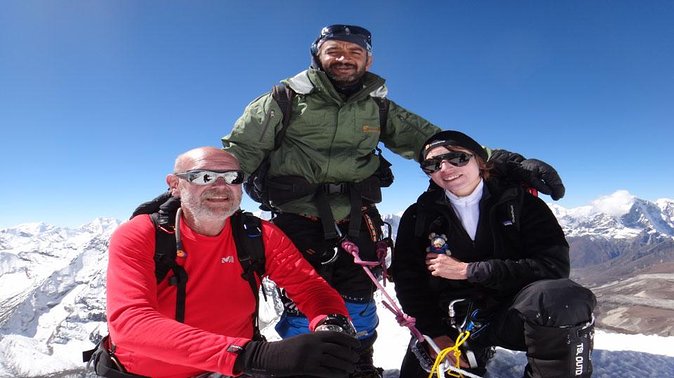
Everest Base Camp is not a gentle mountain walk. It is a serious high-altitude trek through Sherpa villages, rhododendron forest, glacial valleys, and some of the finest Himalayan views you can reach without climbing a peak. I like the two acclimatization stops, especially Namche Bazaar and Dingboche, and I like that the route includes both Base Camp and the early-morning climb to Kalapathar at 5,545 meters.
The private format is another strong point. You have your own group, a guide, and porter support rather than being folded into a large crowd. The main caution is the altitude and workload: the 10-hour day from Kalapathar to Pheriche is a major test, and the itinerary leaves little room for weather delays on the Lukla flights.
Key points before you book
- Lukla flight included: The trek begins with a roughly 45-minute domestic flight from Kathmandu to Lukla.
- Two useful acclimatization days: You spend an extra night in Namche Bazaar and another in Dingboche.
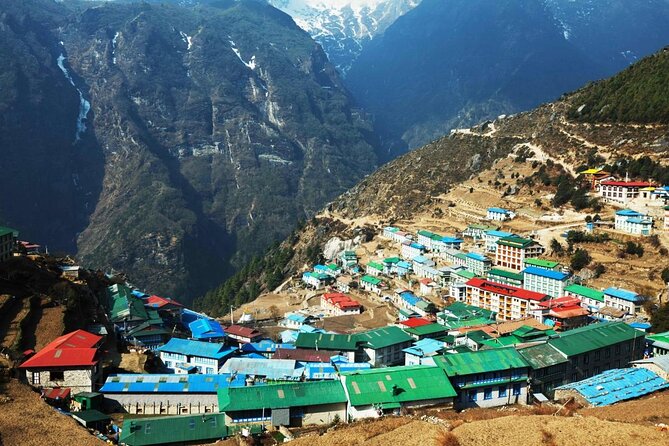
- High-point views at Kalapathar: The summit reaches 5,545 meters and is described as one of the best places to see Everest.
- Private trekking format: Only your group participates, with a guide and porter support.
- Meals and airfare included: The price covers domestic airfare, 13 breakfasts, and 11 lunches and dinners.
- Demanding final section: Base Camp, Gorak Shep, Kalapathar, and the long return to Pheriche require strong fitness and careful pacing.
What the $1,950 price really covers
At $1,950 per person, this trek is priced as a packaged Himalayan experience rather than a simple walking tour. The biggest value comes from the domestic airfare, which gets you between Kathmandu and Lukla, plus the included breakfasts, lunches, and dinners listed for the trek.
You also receive airport transfers, hotel transfers, trip preparation, and private guiding. The exact accommodation details are not specified, so I would ask before booking where you stay in Kathmandu and at each trekking stop. That question matters more than it might seem after several days at altitude.
Food in Kathmandu is not included, and personal expenses and travel insurance are extra. You should also budget for anything outside the stated meal coverage, along with drinks and other personal purchases. Travel insurance is especially important for a route at this altitude, since the package does not include it.
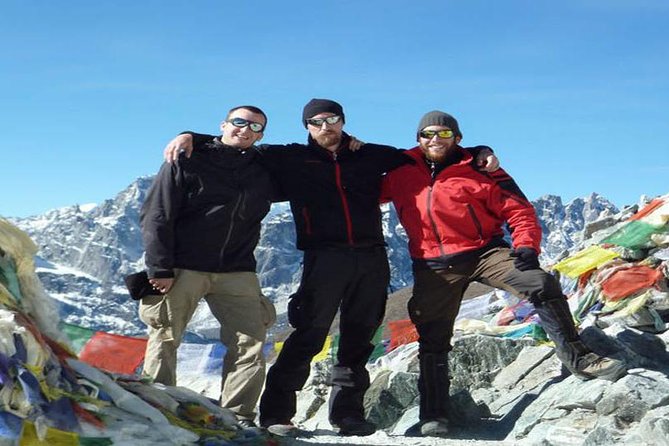
The private format can make the price worthwhile. You are not tied to the pace of a large group, and the schedule can be handled more directly by your guide. The company has used guides including Pramod, who was described as both guide and friend on one extended Nepal trip. Since guide assignments can vary, ask who will lead your departure and how porter support is arranged.
More Everest Base Camp Treks in Kathmandu
- Everest Base Camp Trek – 14 Days
★ 5.0 · 1,499 reviews - Everest Base Camp Trek
★ 5.0 · 842 reviews - Everest Base Camp Trekking
★ 5.0 · 485 reviews
Kathmandu preparation before the mountains
Day 1 is deliberately quiet. You arrive in Kathmandu, transfer to your hotel, attend a short orientation, and prepare for the trek.
That preparation day is useful because the following morning begins early, with a stated meeting time of 4:45 a.m. Kathmandu is not the main event here, but it is where you sort out your equipment, meet your support team, and confirm the airport transfer.
The schedule also includes a return to Kathmandu on Day 13, followed by an airport transfer on Day 14. That extra day after the mountains gives you a little breathing room before your international flight. Still, the itinerary does not describe a spare weather day, so ask how the company handles a delayed Lukla flight.
Lukla to Phakding: the first five hours
The flight from Kathmandu to Lukla takes about 45 minutes. After a short tea break, you begin walking toward Phakding, with roughly five hours on the trail.
This first day gives you a gradual introduction to the route. You are already in the Khumbu region, but you are not yet facing the highest sections. The walk to Phakding is long enough to test your boots and pack while leaving you time to settle into the rhythm of trekking.
The early airport start is the tradeoff. You gain a full walking day, but you will be awake very early. Keep your first day measured. It is tempting to walk quickly when the air still feels manageable, but saving energy here helps later.
Namche Bazaar and the first acclimatization test
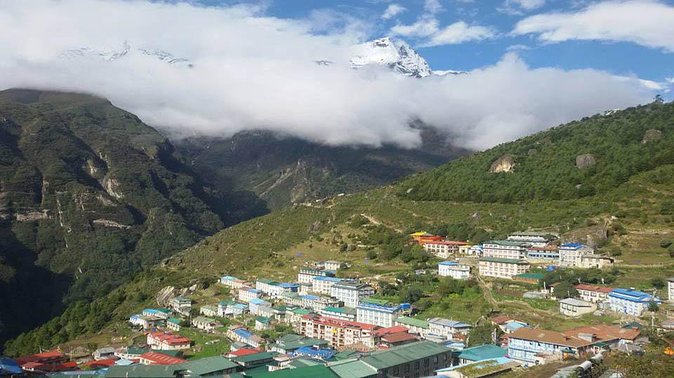
The trek from Phakding to Namche Bazaar takes about six hours. Namche is the market hub of the Khumbu region and one of the most memorable settlements on the route.
Day 4 is an acclimatization day, but it is not a rest day in the usual sense. You make a short hike toward Syangboche Ridge at about 3,880 meters. From there, you can look toward Everest and the surrounding peaks, with fir trees and shrubs adding texture to the view.
I like this arrangement because it gives your body time to adjust without wasting a day. The practical rule is simple: climb higher during the day, then return to sleep at the lower elevation. The itinerary gives you about four hours for this outing, so it should be treated as a useful conditioning walk, not an all-out effort.
Namche is also where the trip begins to feel less like a standard mountain hike and more like a high-altitude expedition. You have reached a major Sherpa settlement, and the route ahead becomes more demanding.
More Trekking Tours in Kathmandu
- Annapurna Circuit Trek with Tilicho Lake
★ 5.0 · 368 reviews - Everest Base Camp Trekking – 13 Day
★ 5.0 · 365 reviews - Everest Base Camp Trek
★ 5.0 · 350 reviews - Everest Base Camp Trek -14 Days
★ 5.0 · 321 reviews
Tengboche Monastery and the Ama Dablam views
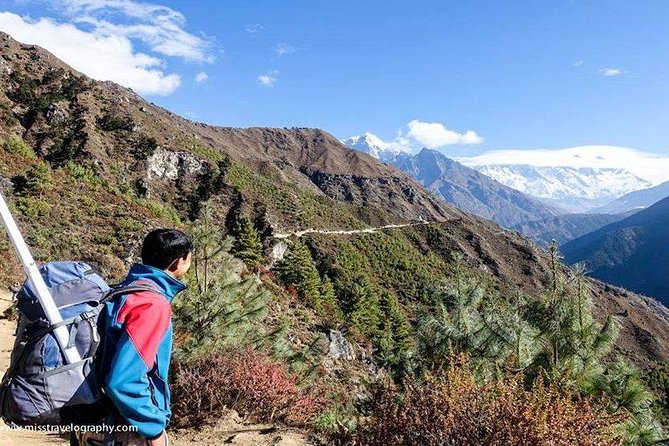
From Namche, you walk about six hours to Tengboche. This is one of the cultural highlights of the trek, thanks to Tengboche Monastery and its monks and nuns.
The mountain views are equally important. The route offers views of Everest, Ama Dablam, and Lhotse. Ama Dablam is especially striking from this part of the Khumbu, though the exact view depends on weather and visibility.
The monastery gives the trek a welcome change of pace. You are not simply counting hours and meters. You are passing through a living religious center connected to the communities of the region. Be respectful around meditation and religious activity, and allow time to observe rather than rushing through.
The day is listed at five to six hours. That sounds manageable, but the trail is already high and includes ups and downs. You should expect your pace to slow compared with the first two days.
Deboche, Pangboche, and the approach to Dingboche
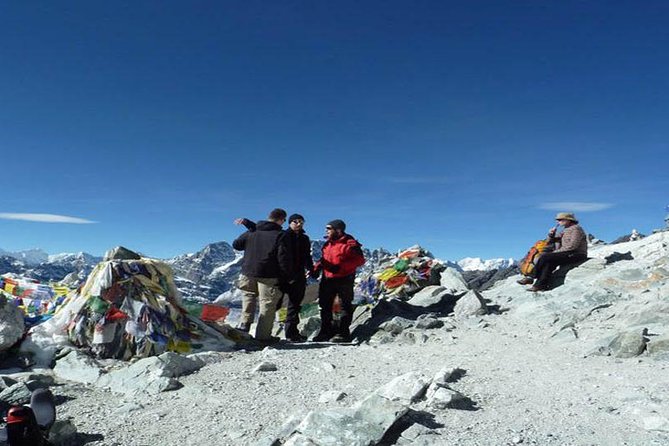
Day 6 takes you through rhododendron forest toward Deboche, across the Imja Khola, and onward through Pangboche and Somare before reaching Dingboche. The walk is listed at about six hours.
Ama Dablam appears prominently from Pangboche. This is one of the strongest scenic stretches of the route, with the mountain villages giving way to a more open, higher valley. The itinerary allows lunch at Pangboche or Somare, then continues to Dingboche.
Dingboche is important because the altitude now becomes a central concern. The next day is set aside for acclimatization, which is exactly the sort of pause you want on a responsible high-altitude route.
The schedule names a hike toward Nagarjuna Hill, reaching about 5,050 meters. The ascent is described as challenging but rewarding, with views toward Ama Dablam and Cholatse. Three hours is the stated duration, but the altitude makes this far harder than a three-hour walk at sea level. Go slowly, follow your guide’s advice, and do not treat the hill as a competition.
The memorial at Thukla and Lobuche at 4,940 meters
From Dingboche, the route passes through Thukla and then climbs to about 4,830 meters. Here you find a memorial area for climbers who died while climbing Mount Everest.
This is a sober part of the trek. The memorials give you a clear sense of the risk involved in high-altitude climbing, even though your own objective is Base Camp rather than a summit attempt. I would plan to pause here. It is one of the places where the human story of Everest becomes more real.
From the memorial area, the trail continues gradually toward Lobuche at 4,940 meters. The day takes about five hours. At this point, short distances can feel long, and every ascent demands patience. You may be walking across pasture and rocky ground, but the altitude changes the effort.
Gorak Shep, Everest Base Camp, and Kalapathar
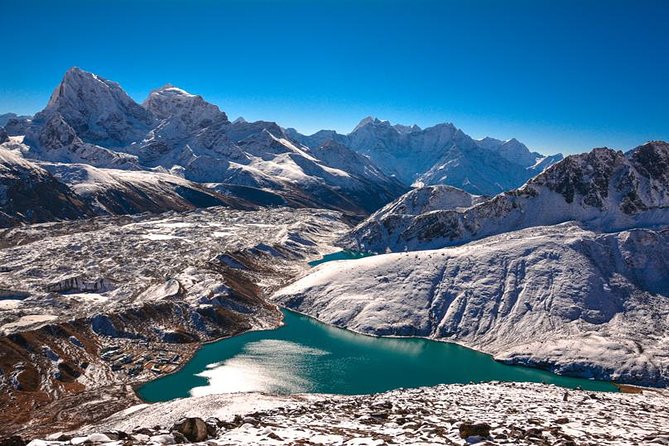
Day 9 brings you to Gorak Shep, at about 5,140 meters. The trail climbs gently toward the moraine, and Gorak Shep is the last settlement before Base Camp and Kalapathar.
After lunch, the itinerary allows a hike to Everest Base Camp or Kalapathar on the same day. This is one point I would clarify before booking, because the following day also includes an early Kalapathar hike. The schedule may be adjusted according to weather, energy levels, and the guide’s judgment.
The approach to Base Camp takes you through moraine country and glacier terrain. You should not expect to see the summit of Everest from Base Camp itself in the same clear way you might from Kalapathar. Base Camp is valuable for the setting, the expedition history, and the feeling of reaching the foot of the world’s highest mountain.
Kalapathar is the stronger viewpoint. The early climb reaches 5,545 meters, and the route description identifies it as one of the best places to see Everest. An early start usually aims for clear mountain light, though the supplied schedule does not guarantee weather conditions.
The next day is listed as a 10-hour trek from Kalapathar to Pheriche. That is the toughest part of the program for many people. You first make the early climb, then retrace part of the route and descend toward Pheriche. The descent helps, but a long day after sleeping at Gorak Shep still requires real stamina.
The return through Tengboche and Namche
From Pheriche, the route follows the trail back toward Tengboche. The day is listed at about seven hours and includes a descent to Phungi Thanga at 3,250 meters, followed by an ascent to Kyanjuma at 3,600 meters before continuing to Namche Bazaar.
This is a good reminder that returning is not simply walking downhill. The Khumbu trail rises and falls, and tired legs still face substantial climbs. The familiar villages and views can make the return feel easier mentally, but you should keep your pace controlled.
The following day takes you all the way back to Lukla in about seven hours. You finish the trek there and have time to celebrate with your guide and coworkers. That final evening is a fitting end to the walking portion, though the flight schedule remains weather-sensitive.
The private format and guide support
This is a private activity, so only your group participates. That gives you more control over walking speed and breaks than a large group tour would. It also lets your guide respond more directly if someone needs a slower day.
The experience is presented with a guide and porter support, though the exact porter arrangement is not explained in the details provided. Ask what weight limit applies to porter-carried bags and what you are expected to carry yourself.
The company has worked with local guides, and Pramod is named in one account as a guide who also became a friend during a long Nepal trek. That is a useful sign that the human side of the trip matters, but you should confirm whether Pramod is available for your dates rather than assuming every departure has the same guide.
Who should book this Everest trek?
I would choose this trek if you want a structured route to Everest Base Camp, prefer a private group, and value built-in acclimatization days. It suits people who are comfortable walking for five to seven hours on several consecutive days and who understand that high altitude makes every hour harder.
You should think carefully before booking if you dislike early starts, have limited hiking fitness, or want a relaxed sightseeing holiday. The 10-hour Kalapathar to Pheriche day is not a small detail. Nor are the 4:45 a.m. start, the high overnight elevations, and the possibility of disruption around the Lukla flight.
The route offers much more than a photograph at Base Camp. You see Sherpa villages, monasteries, rhododendron forest, glaciers, memorials, and the changing mountain views around Everest, Ama Dablam, Lhotse, and Cholatse. The scenery is a major reward, but the cultural and human details give the trek its lasting character.
Final booking advice
I would book this experience if you want the classic Everest Base Camp route with private support, included domestic airfare, meals during the trek, and two acclimatization stops. The $1,950 price has solid value if the accommodation and porter arrangements meet your expectations.
Before paying, confirm three points: the name and experience of your assigned guide, the accommodation standard, and how the company handles a delayed Lukla flight. If you are fit, prepared for altitude, and willing to accept a demanding schedule, this is a strong way to reach Base Camp and Kalapathar without organizing every moving part yourself.
FAQ
How long is the Everest Base Camp trek?
The experience is planned for approximately 14 days, including arrival and departure days in Kathmandu, the trek from Lukla, the return to Lukla, and the flight back to Kathmandu.
Is the Lukla flight included?
Yes. Domestic airfare is included, and the itinerary includes flights between Kathmandu and Lukla.
What time does the experience start?
The stated start time is 4:45 a.m. This applies to the early transfer for the flight from Kathmandu to Lukla.
Are meals included?
Yes. The package lists 13 breakfasts, 11 lunches, and 11 dinners. Food in Kathmandu is not included.
Is this a private tour?
Yes. Only your group participates in the activity.
Do I need a high level of fitness?
The stated requirement is moderate physical fitness, but the route is highly demanding because of its length, elevation, and long walking days. The itinerary includes a 10-hour day from Kalapathar to Pheriche.
Is travel insurance included?
No. Personal travel insurance is not included and must be arranged separately.
Latest treks added in Kathmandu
- Private Manaslu Circuit Trek at Himalayas★ 5.0 · 3 reviews
- Ghorepani Poonhill Trek★ 5.0 · 5 reviews
- Ghorepani Poon Hill Trek★ 5.0 · 16 reviews
- Upper Mustang Trekking★ 3.0 · 2 reviews
- Amazing 1 Day Trekking Experience in Kathmandu Nepal★ 5.0 · 24 reviews
- Upper Mustang Trekking★ 5.0 · 2 reviews
- Upper Mustang Trekking★ 5.0 · 4 reviews
- Upper Mustang Trek★ 5.0 · 5 reviews
Everest Base Camp Treks, compared.






Browse the lists this tour appears in