
REVIEW · KATHMANDU
Everest Base Camp Trek
Everest Base Camp is the main event, but the best part of this 15-day Himalayan trek is the steady build-up to it. You walk from Lukla through Sherpa villages, pine and rhododendron forests, stark glacier country, and high passes of blue-white peaks before reaching the foot of the world’s highest mountain.
I like the practical setup: full-board meals, permits, flights, accommodation, and a guide are included, and you can borrow a down jacket and sleeping bag. I also like the two acclimatization days, which give you a better chance of handling the altitude sensibly. The drawback is the physical demand. You reach about 5,400 meters, sleep at high altitude, and walk on rough paths for up to eight hours a day.
Key points before you book
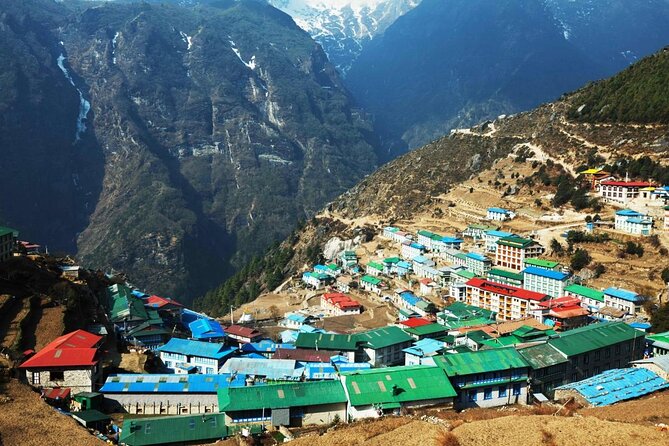
- Private trekking: Only your group takes part, with one licensed English-speaking mountain guide.
- Acclimatization built in: Rest days in Namche Bazaar and Dingboche include optional hikes to higher viewpoints.
- Full-board package: Breakfast, lunch, dinner, teahouse lodging, permits, domestic flights, and airport transfers are included.
- Borrowed cold-weather gear: A sleeping bag, duffel bag, and down jacket are provided for use during the trek.
- Porters cost extra: You can add a porter, which is worth considering if you want to walk with a lighter daypack.
- Weather affects flights: Lukla flights can be disrupted, and any helicopter transfer or evacuation requires suitable travel insurance.
What the $1,690 price really covers
At $1,690 per person, this trek is not just a guide and a route map. The price includes arrival and departure transfers in Kathmandu, hotel accommodation in the capital, guesthouses during the trek, domestic flights to and from Lukla, permits, full-board food, and one licensed mountain guide.
That package has real value. The Lukla flight, national park permit, local municipality fee, meals, and mountain lodging can add up quickly when arranged separately. The company also supplies a sleeping bag, down jacket, and duffel bag, so you may not need to buy or rent every piece of bulky cold-weather equipment.
The price does not include a porter, personal drinks, laundry, internet, phone use, tips, international airfare, or a Nepal visa. Most importantly, it does not include travel insurance for helicopter evacuation. At this altitude, that is not a corner to cut.
The private format is another useful part of the deal. You are not placed into a large fixed group, and the guide can watch your pace and condition more closely. Group discounts are offered, but ask how the price changes for your party before booking.
More Everest Base Camp Treks in Kathmandu
- Everest Base Camp Trek – 14 Days
★ 5.0 · 1,499 reviews - Everest Base Camp Trek
★ 5.0 · 842 reviews - Everest Base Camp Trekking
★ 5.0 · 485 reviews
Kathmandu arrival and the short flight to Lukla
Day 1 is deliberately easy. A representative meets you at Kathmandu International Airport and transfers you to the hotel. This takes care of the first confusing step after a long international flight.
The following morning begins early, with a listed start time of 6:15 a.m. You transfer to the airport for the roughly 30-minute flight to Lukla. The itinerary also refers to Kathmandu or Ramechhap, so confirm the exact departure airport before you go. That detail matters because road transfers and airport arrangements can change.
Lukla is where the walking begins. The first day is gentle by Everest Base Camp standards, following the Dudh Koshi River on paved footpaths through green conifers and small settlements. Phakding, at 2,610 meters, is about a three-hour walk from Lukla and makes a sensible first night because you gain altitude gradually.
You will already notice the rhythm of the route: teahouses, suspension bridges, pack animals, stone paths, and houses built for life in the Khumbu region. The scenery is attractive from the start, but the first day is mainly about getting used to walking and sleeping above sea level.
Namche Bazaar gives you the first great mountain views
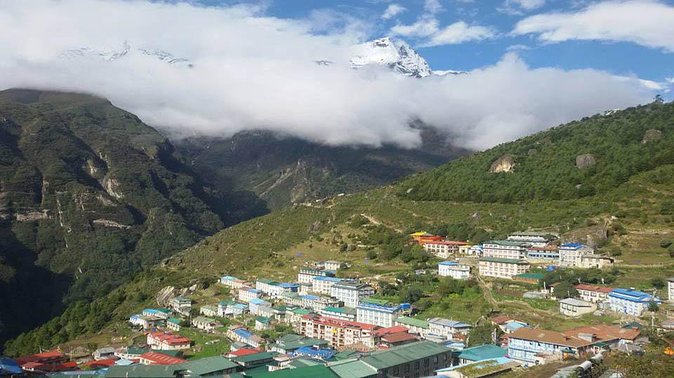
Day 3 begins at Monjo, a Sherpa settlement and the entry point to Sagarmatha National Park. Your guide handles the permit checks, including the national park permit and local trekking documentation.
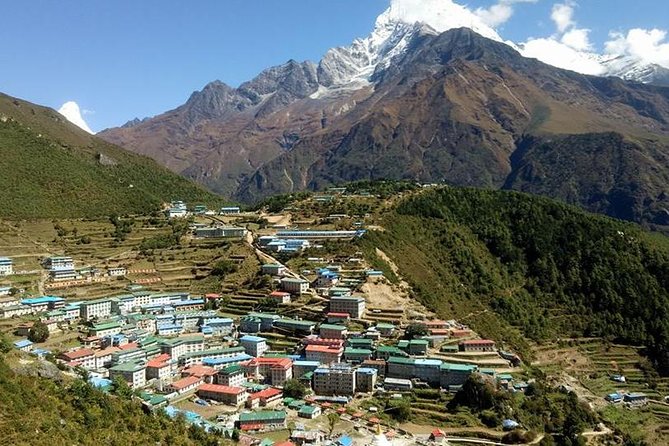
From Monjo, the trail climbs hard toward Namche Bazaar. The uphill section gains roughly 590 meters and takes about five hours. Partway up, you may get your first views of Everest and Lhotse. Thamserku, Kwangde, and the sacred mountain Khumbila add plenty of drama before you reach Namche.
Namche is not a quiet mountain hamlet. It is the main service center of the Khumbu, with shops, lodges, and places to rest. That makes it a practical stop, but do not expect a short stroll. The climb into town is one of the first real tests of your legs.
Day 4 is for acclimatization. You stay in Namche and walk higher before returning to sleep lower. Options include Khumjung, with its local school and hospital, Thame, known for its connection with Sherpa Everest expeditions, or the area around Syangboche airstrip and the Everest View Hotel.
The point is not to race to a viewpoint. It is to let your body adjust. Take the day seriously, walk slowly, drink regularly, and tell your guide if you develop a headache, nausea, unusual tiredness, or breathing trouble. The included pulse oximeter and first-aid kit give the guide useful tools, but they do not replace good judgment.
Tengboche combines monastery and mountain scenery
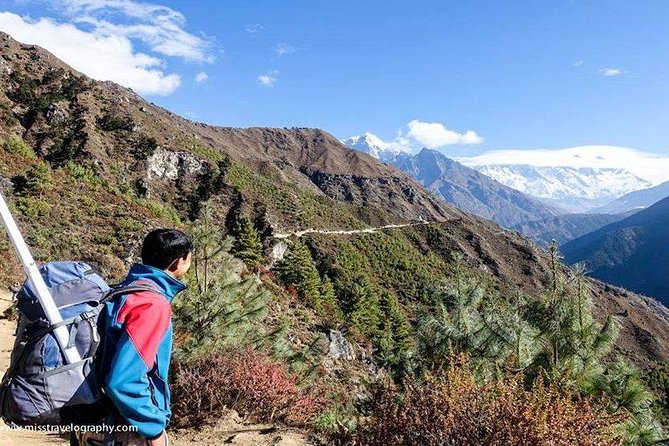
From Namche, the trail drops toward the Dudh Koshi River before climbing again to Tengboche at about 3,870 meters. This is a long day of roughly six hours, with a pattern of descent followed by a sustained uphill stretch.
Tengboche is one of the most memorable stops on the route. The settlement is built around the region’s main Tibetan Buddhist monastery. You can enter the monastery and listen to the monks chanting mantras, provided the visit fits the religious schedule and local rules.
The setting is the real star. Everest, Lhotse, Ama Dablam, and Thamserku appear around the valley, and the views change as the trail turns through forest. This is also a good place to slow down. The altitude is rising quickly, and the monastery gives the day a cultural focus beyond mountain photography.
More Trekking Tours in Kathmandu
- Annapurna Circuit Trek with Tilicho Lake
★ 5.0 · 368 reviews - Everest Base Camp Trekking – 13 Day
★ 5.0 · 365 reviews - Everest Base Camp Trek
★ 5.0 · 350 reviews - Everest Base Camp Trek -14 Days
★ 5.0 · 321 reviews
Dingboche offers a second acclimatization day
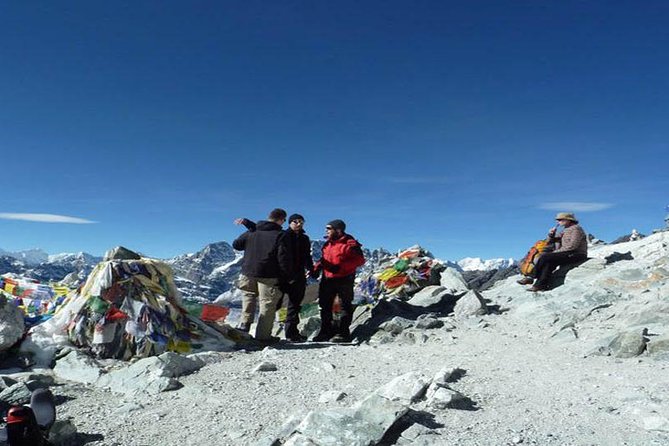
The walk from Tengboche follows the Imja Khola valley and passes through wooded sections before reaching Pangboche. The village has an old gompa, described as one of the oldest monasteries in the Khumbu. From there, the trail climbs toward Dingboche at about 4,360 meters.
Dingboche is a major turning point. Trees become less common, nights are colder, and the air feels thinner. Ama Dablam and Island Peak dominate the views, but you will also notice that each hour of walking now takes more effort.
Day 7 is another acclimatization day. You can walk toward Chhukung for views of Mount Makalu, Island Peak, and Peak 38, or climb Nangkartshang Peak. The route gives you a chance to go higher during the day and return to Dingboche for the night.
This is one of the strongest features of the itinerary. Some fast schedules reduce acclimatization to a minimum, but this trip gives you time in both Namche and Dingboche. That does not remove altitude risk, but it makes the schedule more responsible than a nonstop ascent.
Lobuche and the Khumbu Glacier change the mood
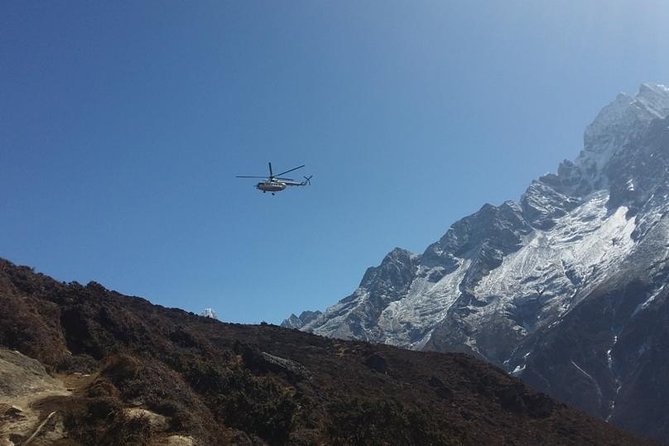
After Dingboche, the scenery turns more barren. You walk toward Lobuche, with the peaks becoming larger and the trail rougher. The path joins the route below Thukla and gives views across the valley toward Cholatse.
A steep section follows, and the rocky trail requires attention. From Lobuche, Tawache and Nuptse rise sharply overhead. The mountain views are superb, but this is not a comfortable walking day. You are high, the air is thin, and every uneven step costs more energy.
Lobuche is a simple overnight stop before the final push. Keep your expectations practical. High-altitude teahouses are about shelter, food, and warmth, not hotel comfort. The included guesthouse accommodation makes the trip easier to organize, but you should still expect basic facilities.
Everest Base Camp is a long day from Lobuche
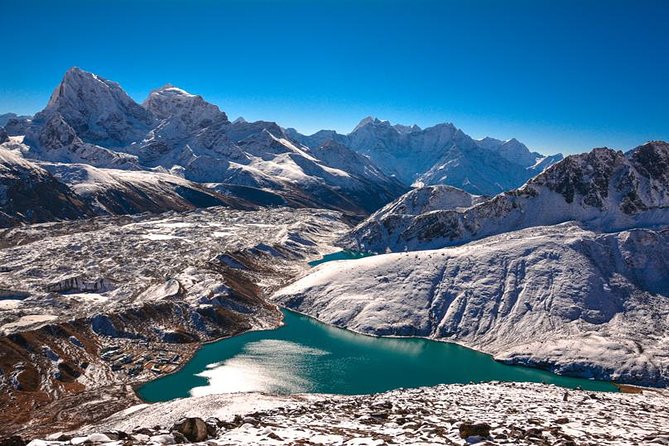
Day 9 is the major approach to base camp. You walk beside the Khumbu Glacier to Gorak Shep, where you stop for lunch before continuing to Everest Base Camp at about 5,400 meters.
The total walking time is listed at about eight hours. The trail can be rocky and tiring, and the altitude makes the distance feel longer than it would at home. This is a day for a slow pace, careful footing, and following your guide’s advice.
The view from Everest Base Camp is not the classic front-on view of Everest. The mountain itself is partly hidden from this position. Instead, you see Khubutse, Pumori, Changtse, and the Khumbu Icefall. That is not a disappointment once you understand the geography. Base camp is about standing at the foot of the climbing route and seeing the immense icefall, not simply photographing Everest’s summit.
The experience can also vary with the season. During climbing periods, the area may have more expedition activity. At other times, the glacier and rock dominate the scene. Either way, reaching the site is the achievement.
Kala Patthar gives the clearest Everest panorama
The next morning brings the climb to Kala Patthar, or Black Rock. This is where the itinerary delivers its finest mountain panorama. From the summit, you can see Everest, Pumori, Lhotse, Nuptse, Changtse, and many other high peaks.
The ascent is demanding because you are already at extreme altitude. Go slowly and keep warm. The reward is a broad view that shows the scale of the Khumbu far better than the base camp itself.
The schedule then descends toward Pheriche and begins the return journey. Here the written itinerary needs clarification: it says you will return to Pheriche and retrace your steps to Lukla, while the following days separately describe the descent through Tengboche, Namche, and Lukla. Treat this as a likely summary error and ask the operator to confirm the exact night-by-night plan before paying.
The return route is easier on the lungs, not always the knees
The descent from the high country brings a welcome change in breathing, but downhill walking can be hard on knees and ankles. You pass through Pangboche and Tengboche, cross the Imja Khola, and continue through rhododendron and pine forest toward Phunki Tenga, Sansa, Kyangjuma, and Namche.
These familiar places look different in reverse. Peaks that once seemed impossibly high now sit behind you, and the return walk gives you time to notice village life, prayer stones, suspension bridges, and the way the trail connects each settlement.
The following day continues toward Lukla, crossing the Tenzing and Hillary suspension bridge and descending through Sherpa villages. The listed walking time is about seven hours. Keep some energy in reserve. The final day on foot is still a full trekking day, not a casual stroll.
Kathmandu gives you one quiet recovery day
The flight from Lukla to Kathmandu takes about 30 minutes, though weather can affect flight operations. The plan is to fly early, return to your Kathmandu hotel, and spend the rest of the day resting or looking around.
Day 14 is open for sightseeing. You can visit Pashupatinath, Swoyambhunath, Boudhanath, or Bhaktapur Durbar Square, or spend time in Thamel buying souvenirs. I like having this buffer day because it gives you time to recover and leaves some room if the mountain flight schedule shifts.
The company’s support with transport and possible rescue arrangements is useful, but you should not read that as automatic insurance coverage. Some past departures required helicopter arrangements when Lukla flights were affected or when a trekker became exhausted. Buy a policy that specifically covers high-altitude trekking and helicopter evacuation.
Guide support and the human side of the trek
The package includes one professional, licensed, English-speaking mountain guide. The guide handles permits, accommodation arrangements, meals, route decisions, altitude checks, and emergency coordination. That is a lot of practical work, and it lets you focus on walking.
Several guides associated with past departures include Chandra, Raz, Ongchhu, Sumba Sherpa, and Raj. The personal style can vary by guide, so ask who is assigned to your departure if that matters to you. The strongest feedback about the company centers on quick communication, airport welcomes, pre-trek advice, and calm help when health or flight problems arise.
Porters are not included. You can add one when booking, and I would seriously consider it if you are not accustomed to carrying a loaded pack at altitude. Even with a porter, keep essentials, water, warm layers, medication, and documents in your daypack.
Who should book this Everest trek
This trek suits fit, adventurous people who are comfortable with basic lodging, long walking days, early starts, and uncertain mountain weather. You do not need to be an elite athlete, but you do need a solid level of fitness and the patience to walk slowly at altitude.
It is a good choice if you want a private arrangement rather than a large group, prefer having the main costs bundled together, and value an acclimatization day in two key places. It is also useful for a first Himalayan trek because the guide and company handle many complicated details.
I would hesitate if you dislike shared teahouse facilities, have no interest in training, or expect guaranteed flight times and hotel-style comfort. The trip is demanding, and the $1,690 price does not cover every expense. Add insurance, tips, personal spending, and possibly a porter to your real budget.
Should you book it?
Book this trek if reaching Everest Base Camp matters more to you than comfort, and if you want a private guide-led route with meals, permits, flights, and cold-weather equipment arranged in advance. The acclimatization structure and personal support are strong reasons to choose it.
Before booking, confirm the exact flight airport, the assigned guide, porter cost, accommodation standard, and the corrected day 10 to day 12 schedule. If those details are clear and you have proper evacuation insurance, this is a practical, well-supported way to tackle one of Nepal’s great walking routes.
FAQ
How long is the Everest Base Camp trek?
The full experience lasts approximately 15 days, including arrival and departure in Kathmandu, the trek, domestic flights, and a free sightseeing day.
What is the price per person?
The listed price is $1,690 per person.
Is this a private trek?
Yes. Only your group participates, with one licensed English-speaking mountain guide.
Are meals included?
Yes. Breakfast, lunch, and dinner are included during the trek. The package lists 14 breakfasts, 11 lunches, and 11 dinners.
Is accommodation included?
Yes. Hotel accommodation is included in Kathmandu, and guesthouse accommodation is included during the trek.
Are trekking permits included?
Yes. The package includes the Sagarmatha National Park permit and the Khumbu Pasang Lhamu Rural Municipality fee.
Are domestic flights included?
Yes. Flights between Kathmandu or Ramechhap and Lukla are included, along with listed taxes and transfers.
Is a porter included?
No. Porters cost extra, but one can be added when you book.
Can I borrow a sleeping bag and down jacket?
Yes. A sleeping bag, duffel bag, and down jacket supplied by Unique Adventure International are available for use during the trek.
What happens if bad weather cancels the experience?
If poor weather causes the experience to be canceled, you will be offered another date or a full refund. You can also cancel for a full refund up to 24 hours before the start time. Cancellations within 24 hours are not refunded.
Latest treks added in Kathmandu
- Private Manaslu Circuit Trek at Himalayas★ 5.0 · 3 reviews
- Ghorepani Poonhill Trek★ 5.0 · 5 reviews
- Ghorepani Poon Hill Trek★ 5.0 · 16 reviews
- Upper Mustang Trekking★ 3.0 · 2 reviews
- Amazing 1 Day Trekking Experience in Kathmandu Nepal★ 5.0 · 24 reviews
- Upper Mustang Trekking★ 5.0 · 2 reviews
- Upper Mustang Trek★ 5.0 · 5 reviews
- Upper Mustang Trekking★ 5.0 · 4 reviews
Everest Base Camp Treks, compared.






Browse the lists this tour appears in