
REVIEW · KATHMANDU
Everest Base Camp Trek
Getting close to Everest is the main event here, but the mountain is only part of the story. This 15-day private trek carries you from Kathmandu to Lukla, then through Sagarmatha National Park, Sherpa villages, monasteries, and some of the highest walking routes on Earth.
I like that the price includes the awkward, expensive pieces: Kathmandu to Lukla flights, local lodges, meals, a guide, porters, permits, and surface transfers. I also like the human side of the trip. Guides named Bal, Sabin, Raju, and Gelu have been praised for patience, support, and calm decision-making.
The main drawback is the Lukla flight. Weather can delay or cancel flights for a day or several days, even in the best season. You need travel insurance, spare time, and a willingness to accept that Himalayan plans are often written in pencil.
Key points before you book
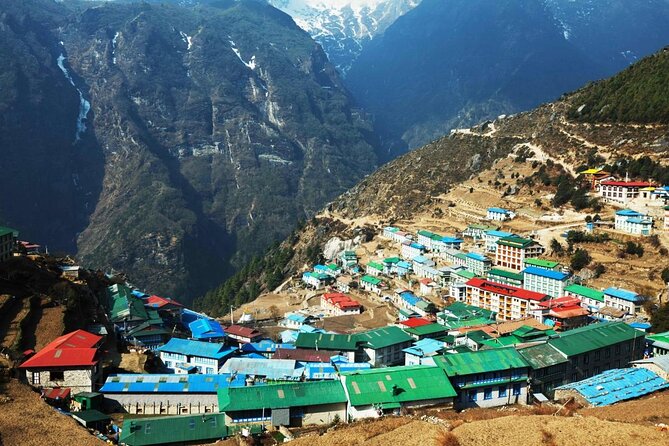
- Lukla is the dramatic gateway: The flight lands at Tenzing-Hillary Airport, around 2,845 to 2,860 meters above sea level.
- The route reaches Everest Base Camp: You walk through Sagarmatha National Park toward views of Everest, Lhotse, Ama Dablam, Makalu, and Cho Oyu.
- Sherpa culture is part of the route: Highland villages and monasteries give the trek a human dimension beyond mountain scenery.
- The package handles major logistics: Flights, three Kathmandu hotel nights, lodge accommodation, meals, guide services, porters, permits, and transfers are included.
- This is a demanding walk: A moderate fitness level is required, and the altitude makes steady pacing more important than speed.
- The trek is private: Only your own group participates, so the guide can give more direct attention to your pace and needs.
Why the Everest Base Camp Trek feels different
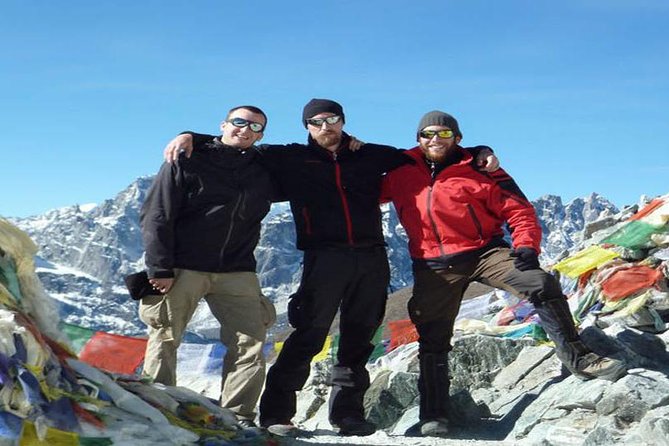
This is not a sightseeing trip with a mountain view at the end. You spend many days walking toward that view, which changes how you see Everest. The summit becomes part of a larger setting that includes stone villages, prayer sites, mountain rivers, steep paths, and daily life in the highlands.
The route is described as one of Nepal’s classic treks for good reason. Everest gets the headlines, but the mountain company is almost as impressive. You can expect views of Lhotse, Ama Dablam, Makalu, and Cho Oyu, along with the high-altitude terrain protected by Sagarmatha National Park.
The trek is private, which matters. You are not tied to the pace of a large mixed group. If one person is tired, the guide can respond directly. Past groups have especially valued this kind of support when someone was lagging behind or dealing with a leg injury.
Still, do not mistake private for easy. You will sleep in local lodges with shared bathrooms, walk at high altitude, and deal with basic conditions. The reward is a more direct connection with the route and the communities that support it.
More Everest Base Camp Treks in Kathmandu
- Everest Base Camp Trek – 14 Days
★ 5.0 · 1,499 reviews - Everest Base Camp Trek
★ 5.0 · 842 reviews - Everest Base Camp Trekking
★ 5.0 · 485 reviews
Kathmandu gives you a useful first step
The experience begins at Tribhuvan International Airport in Kathmandu and ends back there after the trek. Three nights in a three-star hotel with breakfast are included, with airport pickup and surface transfers arranged as part of the package.
That Kathmandu time is useful, not wasted. It gives you a chance to recover from your flight, meet your guide, handle preparation, and explore the city before heading into the mountains. The tour description also presents Kathmandu as a place for cultural exploration, so you are not simply passing through an airport and rushing toward Lukla.
Lunch and dinner in Kathmandu are not included. That is a small but important budget note. You should also plan for your Nepal visa, listed at USD 40 for a multiple-entry 30-day visa, plus personal snacks, drinks, and any extra costs before or after the trek.
The Lukla flight is part of the adventure
Lukla, also called Tenzing-Hillary Airport, sits at roughly 2,845 to 2,860 meters. It is the shortest flight access point for the Everest Base Camp route, and nearly all flights operate in the morning to reduce the risk of poor weather later in the day.
The flight saves a great deal of road travel, but it introduces uncertainty. Mountain weather can delay or cancel the service for one day, several days, or longer. This can happen at the start of the trek or on the return journey.
I would treat the Lukla flight as a major part of your planning, not a minor transfer. Keep a few buffer days after the trek if your international schedule allows. If your flight is canceled for a long period, the operator may offer alternative treks toward Annapurna, Langtang, or Upper Mustang, which are more accessible by road.
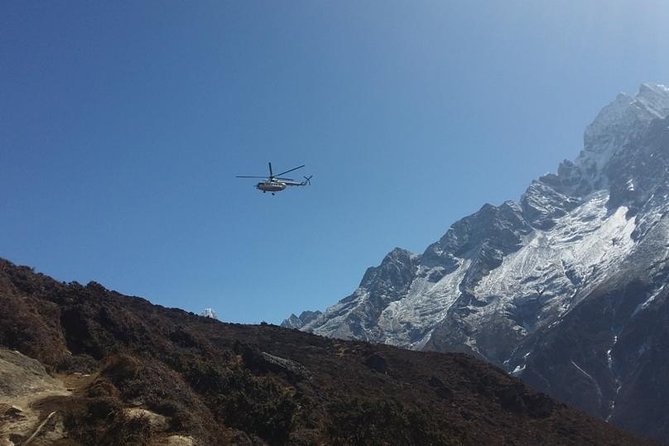
You can also ask about a helicopter flight to or from Lukla if you want to keep the original plan. That comes with an extra charge, and availability, timing, and cost need to be confirmed at the time.
One hard financial point deserves attention: expenses caused by flight cancellations, road blocks, or emergency evacuation are not covered. Unused services are not refundable under those circumstances. Travel insurance with trekking and emergency evacuation cover is essential.
Walking through Sagarmatha National Park
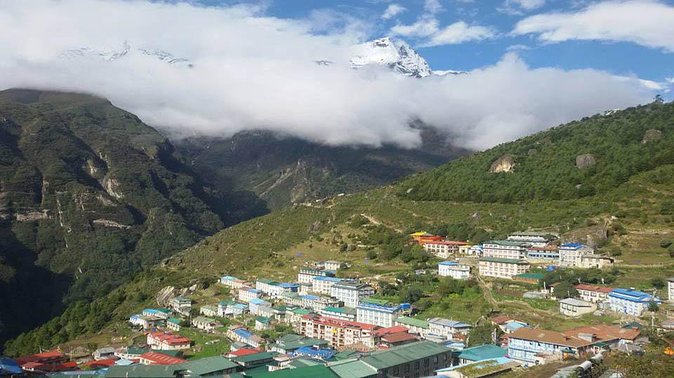
Once you leave Lukla, the trip shifts from transport logistics to walking. The route passes through Sagarmatha National Park, where the appeal is not limited to distant peaks. The area has Himalayan plants and wildlife, steep valleys, and settlements shaped by altitude and mountain trade.
The days are built around gradual progress. You move farther into the Everest region and higher into the mountains, passing through Sherpa communities and stopping at local lodges. The cultural side of the route is important because it shows how the highlands function beyond the trekking season.
Monasteries and Sherpa settlements bring a sense of place that a pure mountain-view itinerary would miss. You can expect simple accommodation, shared bathroom facilities, and meals served during the trek. The included menu is described as three-course meals with hot drinks for breakfast, lunch, and dinner.
Do not expect hotel comfort in the mountains. Local lodges are practical shelters, not luxury properties. Their value is that they keep you on the route and give you a warm place to eat and sleep. Carry extra snacks if you like specific foods, since snacks while walking are not included.
More Trekking Tours in Kathmandu
- Annapurna Circuit Trek with Tilicho Lake
★ 5.0 · 368 reviews - Everest Base Camp Trekking – 13 Day
★ 5.0 · 365 reviews - Everest Base Camp Trek
★ 5.0 · 350 reviews - Everest Base Camp Trek -14 Days
★ 5.0 · 321 reviews
The mountain views build as you go
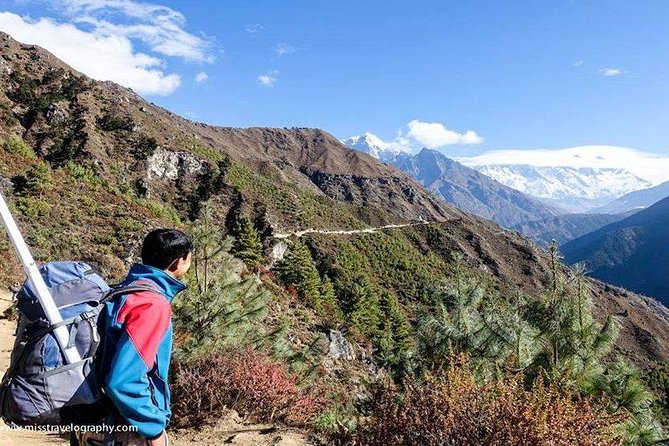
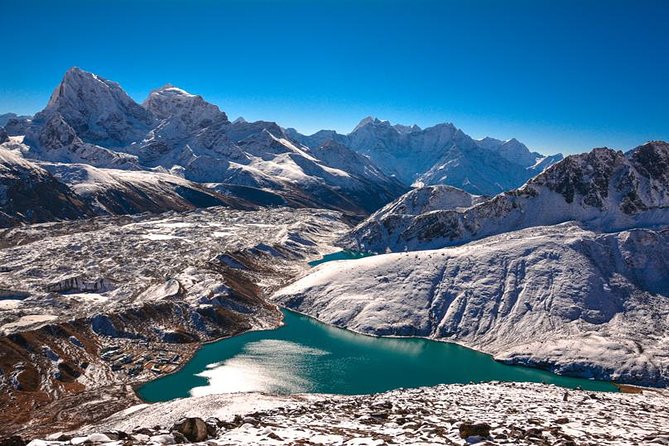
The visual payoff comes in stages. Everest is the headline, but the surrounding peaks give the trek its scale. Lhotse rises to 8,586 meters, Cho Oyu to 8,188 meters, and Ama Dablam to 6,812 meters. Makalu is also part of the mountain panorama named for the route.
Ama Dablam often becomes a favorite because of its distinct shape, while Everest carries the emotional weight of the journey. At Base Camp, you are at the foot of the climbing route rather than on the summit itself. That distinction matters. You get close to the world’s highest mountain, but this is a trekking achievement, not a mountaineering expedition to the top.
Some past itineraries have also included Kala Patthar, a high viewpoint associated with Everest trekking, but the supplied program does not clearly list it as a guaranteed stop. Ask the operator directly if it is part of your exact schedule before booking.
The high point of the trek is not just a photo. Reaching Base Camp after days of walking gives the place meaning. You have crossed the park, adapted to altitude, and shared the route with guides, porters, local residents, and other people moving through the region.
Guides and porters are central to the experience
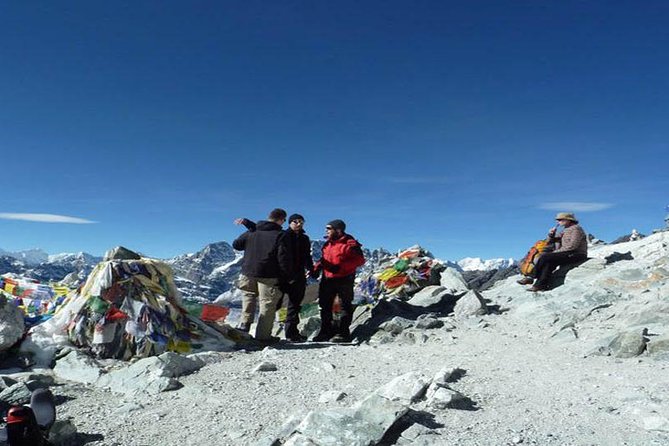
The package includes an English-speaking local guide and porters. On a trek like this, that support is far more than a convenience. Your guide helps with route decisions, daily pacing, weather problems, lodge arrangements, and communication along the way.
Several guides have been praised by name in connection with this operator. Bal was described as calm, patient, professional, and generous with information. Sabin has worked alongside him on private trips. Raju has supported older trekkers with extra attention, while Gelu was praised for explaining the route and local details clearly.
That does not mean you should assume one particular guide will lead your group. Names can change with scheduling. It does show the sort of guide service you should expect to ask for: clear communication, patience, and practical support rather than a guide who simply walks at the front.
Porters are another major part of the operation. Past groups have singled out their encouragement and willingness to help when someone was struggling. Treat this support with respect. Pack sensibly, follow any luggage limits given by the operator, and remember that a porter is carrying the weight that makes your own walk easier.
Accommodation and meals: simple, useful, and included
During the trek, you stay in local lodges with standard rooms and shared bathrooms. This is one of the clearest differences between an Everest Base Camp trek and a hotel-based holiday.
The lodge system is valuable because it keeps you close to the walking route. It also places you in the same basic setting used by other people making the journey. Conditions can be plain, and privacy may be limited, so bring realistic expectations.
Three meals a day are included during the trek, along with hot drinks. That is a strong part of the package value, especially because food and accommodation become more complicated as the route climbs.
In Kathmandu, breakfast is included with your three nights at a three-star hotel. Lunch and dinner are your responsibility there. Drinks, snacks while walking, table beverages, medical expenses, and emergency evacuation costs are also outside the price.
What the $2,500 price really covers
At $2,500 per person, this is not a cheap holiday, but it includes a sizeable package of costly services. You receive three Kathmandu hotel nights, Kathmandu airport pickup, domestic airfare to Lukla and back, surface transfers, local lodge accommodation, three daily meals with hot drinks during the trek, guide and porter support, and Trekkers’ Information Management System fees.
That reduces the number of separate decisions you need to make. You are not arranging the Lukla flight, finding lodges each evening, or negotiating a guide after arrival. For a first Himalayan trek, that coordination has real value.
The price does not cover your Nepal visa, Kathmandu lunches and dinners, personal snacks, table drinks, insurance, medical expenses, emergency evacuation, or added helicopter costs. It also does not protect you from the financial effects of long flight cancellations.
I would compare this package by looking at what is included rather than focusing only on the headline cost. If you want a private trek with local staff, meals, lodging, flights, and Kathmandu support arranged together, the price is easier to justify. If you already have a guide, insurance, and flight arrangements, a simpler package might suit you better.
Who should book this trek
This trip suits you if you want a serious mountain walk with a clear goal and strong local support. You should have a moderate level of physical fitness and be prepared for repeated walking days at altitude.
It can also suit a wide age range when the pace and support are handled well. Past groups have included older people, including women in their late sixties and a 78-year-old grandfather trekking with university-age grandsons. That is not a promise that age alone will never be a barrier. It shows that preparation, pacing, and guide support matter greatly.
You should be comfortable with basic lodges, shared bathrooms, changing weather, and uncertain flights. You should also be willing to spend extra time in the mountains if plans change.
This is not ideal if you need fixed timings, hotel comfort every night, or a guaranteed return flight on a particular date. Lukla makes the route possible, but it also makes the schedule vulnerable.
Practical planning before departure
Book with enough time to arrange your visa, insurance, and medical preparation. Your insurance should specifically address trekking and emergency evacuation, since those costs are excluded from the package.
Keep your arrival and departure plans flexible. A buffer after the trek is one of the smartest choices you can make. If you cannot add spare days, understand the possible helicopter supplement and the alternative route options before you leave Kathmandu.
Ask the operator to confirm the exact daily itinerary, expected walking distances, whether Kala Patthar is included, luggage arrangements, and what happens if a flight is canceled. The supplied details confirm the broad route and inclusions, but not every daily stop.
Free cancellation is available if you cancel at least 24 hours before the experience start time. Changes or cancellations inside that window are not accepted for a refund.
Should you book the Everest Base Camp Trek?
I would book this trek if Everest is a genuine goal and you want the practical work handled by a Nepal-based team. The strongest reasons are the private format, included flights and meals, local guide and porter support, and the chance to experience Sherpa communities rather than simply view the mountain from afar.
I would pause if your international schedule cannot absorb a Lukla delay, or if shared lodges and basic conditions sound miserable rather than memorable. The trip is demanding, and the price does not cover every risk.
For the right person, the value lies in the complete journey: Kathmandu preparation, the morning flight into Lukla, days through Sagarmatha National Park, Sherpa villages and monasteries, and the hard-earned arrival at Everest Base Camp. Go prepared, insure yourself properly, and leave room in the schedule for the mountains to make the final decisions.
FAQ
How long does the Everest Base Camp Trek take?
The trek lasts approximately 15 days, including the Kathmandu stay, flights to and from Lukla, and the walking portion.
Where does the experience start and end?
It starts at Tribhuvan International Airport in Kathmandu, Nepal, and ends back at the same meeting point.
Is airport pickup included?
Yes. Pickup is offered, and all surface transfers listed in the itinerary are included.
Are flights to Lukla included?
Yes. Kathmandu to Lukla and Lukla to Kathmandu airfare is included in the package.
What type of accommodation is provided?
You receive three nights at a three-star hotel in Kathmandu on a twin-sharing basis with breakfast. During the trek, accommodation is in local lodges with standard rooms and shared bathrooms.
Are meals included?
Breakfast, lunch, dinner, and hot drinks are included during the trek. Lunch and dinner in Kathmandu are not included.
Do I need travel insurance?
Yes. Your insurance and medical expenses are not included. Emergency evacuation costs are also excluded, so suitable trekking and evacuation cover is important.
What happens if my Lukla flight is canceled?
Flights can be delayed or canceled because of weather. The operator will try to arrange the next available flight. You can keep buffer days, consider an alternative trek accessible by road, or ask about a helicopter flight for an additional charge.
Latest treks added in Kathmandu
- Private Manaslu Circuit Trek at Himalayas★ 5.0 · 3 reviews
- Ghorepani Poonhill Trek★ 5.0 · 5 reviews
- Ghorepani Poon Hill Trek★ 5.0 · 16 reviews
- Upper Mustang Trekking★ 3.0 · 2 reviews
- Amazing 1 Day Trekking Experience in Kathmandu Nepal★ 5.0 · 24 reviews
- Upper Mustang Trekking★ 5.0 · 2 reviews
- Upper Mustang Trekking★ 5.0 · 4 reviews
- Upper Mustang Trek★ 5.0 · 5 reviews
Everest Base Camp Treks, compared.






Browse the lists this tour appears in