
REVIEW · NEPAL
Pokhara: 5-Day Annapurna Base Camp Trek with Hot Spring
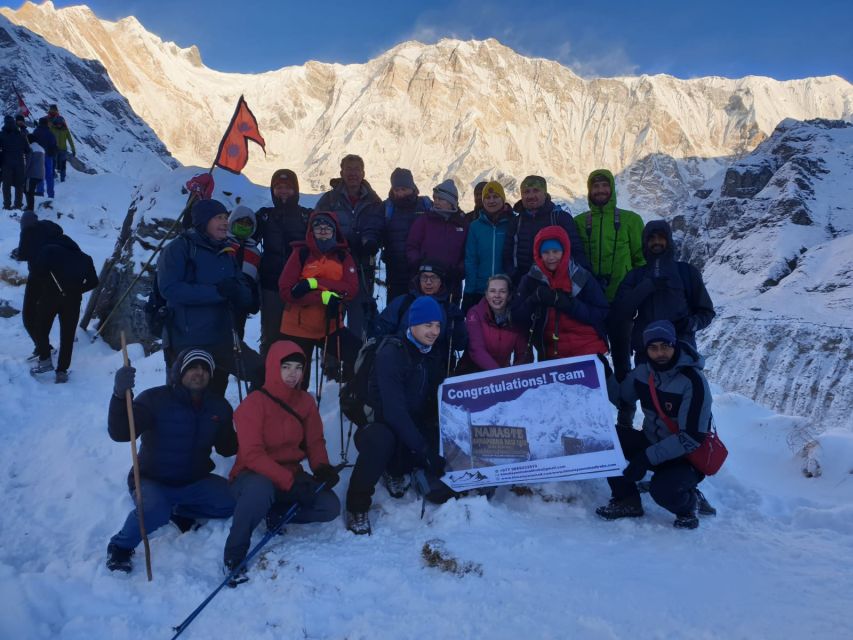
Annapurna Base Camp is the star here, but the hot spring finish may be the smartest part of the plan. You climb through forests and mountain villages to a high bowl of peaks and glaciers, then soak at Jhinu Dada before returning to Pokhara.
I like the private format and the practical support: permits, paperwork, a guide, trekking poles, sleeping bag, duffle bag, transport, and private mountain lodging are included. I also like that guides such as Jeet and Kaji have been praised for keeping a close eye on pace, rest, and safety. The catch is simple: five days is fast, and snow, ice, or poor weather can make the schedule hard work.
Key points at a glance
- Annapurna Base Camp at 4,130 meters: Reach the famous mountain basin after a steep, demanding ascent.
- Jhinu Dada hot springs: End the trek with a warm soak before the drive back to Pokhara.
- Private guided travel: You trek with your own group and an English, Hindi, or Nepali-speaking guide.
- A sharp five-day schedule: The route includes long days, including up to eight hours of walking on the descent.
- Useful gear included: Trekking poles, sleeping bag, duffle bag, permits, and required paperwork are provided.
- Meals depend on your package: The standard option lets you buy food along the way, while the full package includes breakfast, lunch, and dinner.
The real challenge is fitting Annapurna Base Camp into five days
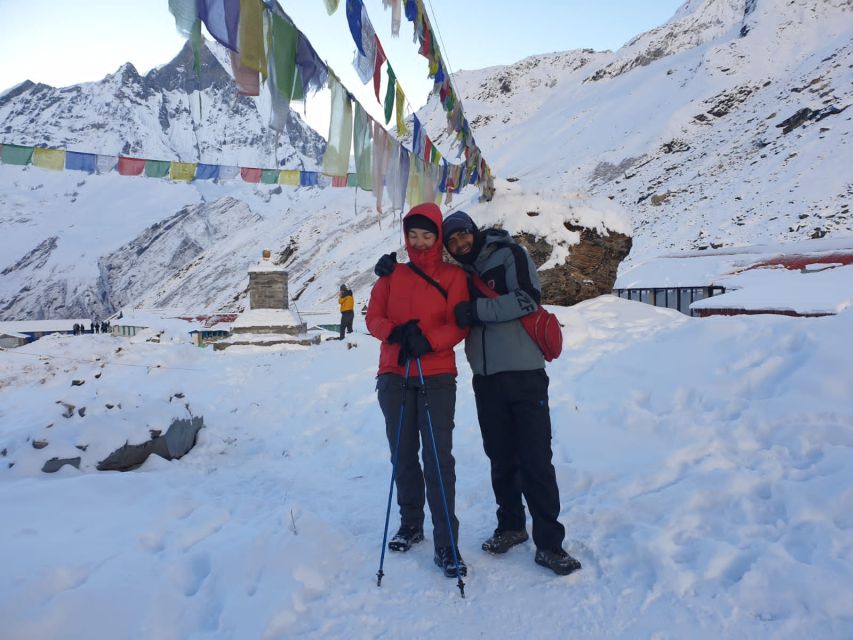
This is a compact version of the Annapurna Base Camp trek from Pokhara. You leave Lakeside early, ride toward Samrung, walk through Sinuwa and Deurali, sleep at Annapurna Base Camp, and then retrace the route before reaching the hot springs.
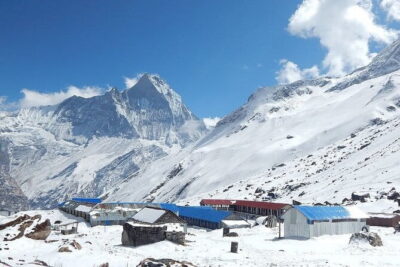
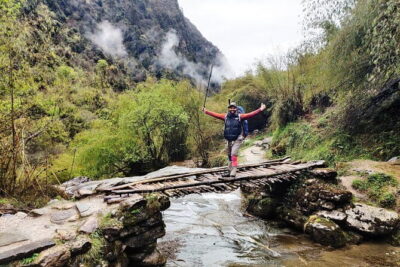
The mountain scenery changes quickly. Lower down, you see the Seti River, paddy fields, villages, and green forest. Higher up, rhododendrons, colder air, snow, and enormous peaks take over. The final approach to Base Camp gives you the classic reward: a broad natural bowl surrounded by high Himalayan summits and glaciers.
The price is listed at $150 per person, which can be good value if you choose the full package and make use of the included transport, guide, permits, gear, lodging, and staff costs. Check the exact package before paying, since meals are included only with the all-inclusive option. Porters, drinks, bottled or boiled water, showers, laundry, charging, and other personal costs are extra.
I would treat this as a serious trek, not a casual mountain walk. The schedule gives you little spare time for bad weather, tired legs, or a slower pace.
More Hot Spring Treks in Nepal
- Pokhara: 5 Day Annapurna Base Camp Trek & Natural Hot Spring
★ 4.9 · 44 reviews - From Pokhara: 5-Day Annapurna Basecamp Trek with Hot Springs
★ 4.9 · 26 reviews - Pokhara: 7-Day Annapurna Base Camp Trek & Natural Hot Spring
★ 5.0 · 11 reviews
Day 1: Lakeside Pokhara to Sinuwa by road and trail
Your first morning begins with pickup from your hotel in Lakeside Pokhara. The road journey takes you toward Samrung, with views of the Seti River, mountain slopes, and paddy fields along the way.
The drive is part of the experience, not just a transfer. You see rural Nepal before your boots hit the trail, and the route gives you a first look at how quickly Pokhara’s lakeside comfort gives way to mountain villages and steep country roads.
From Samrung, you trek for about four hours to Sinuwa, at roughly 2,200 meters. The combined day is listed as about three hours by Jeep and four hours on foot. That makes Day 1 longer than the simple distance might suggest, especially after an early start.
Sinuwa is your first overnight stop. The village setting gives you a gentle introduction to mountain life, with local hospitality and thick greenery around the trail. You should use this evening to organize your daypack, check your footwear, and ask your guide about the next day’s pace.
The first day is not the highest or hardest section, but it sets the tone. You are already gaining altitude, and the five-day plan means you cannot treat this as a lazy warm-up.
Day 2: Seven hours through forest to Deurali
Day 2 carries you from Sinuwa to Deurali at about 3,200 meters. The trek takes around seven hours, so this is where the schedule begins to feel serious.
The route passes through forests and rhododendron areas. Depending on the season, the flowers can add a strong splash of color to the walk, while the trees offer shade during parts of the climb. You also gain a clearer sense of the mountains as the trail rises and the air gets thinner.
This is a good day to let your guide control the rhythm. Guides Jeet and Kaji were praised for being attentive, respectful, and careful about rest, which matters on a long uphill day. You should not feel embarrassed about asking for a slower pace. A private group gives you more room to adjust than a large shared departure.
Deurali is a useful stopping point because it puts you close to the main prize without pushing you all the way to Base Camp in one day. Still, the altitude is now significant. Keep water and a warm layer close at hand, and do not count on feeling as energetic as you did in Pokhara.
If you choose the standard package, you buy meals as you go. The full package covers breakfast, lunch, and dinner during the trek. Either way, carry cash for drinks, water, charging, and other small expenses because these are not covered.
Day 3: The climb to Annapurna Base Camp at 4,130 meters
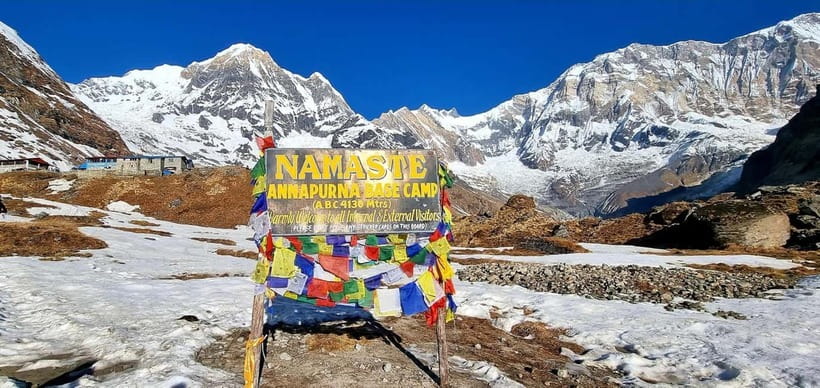
The third day is the heart of the trip. From Deurali, you walk for about five hours to Annapurna Base Camp, reaching 4,130 meters.
The scenery becomes more open and dramatic as the trail moves above the forest. The focus is no longer village life or flowering trees. You are walking toward a high mountain basin framed by towering peaks and glaciers.
Reaching Base Camp is a physical achievement, especially on a five-day schedule. You have climbed from Pokhara’s lower elevation in only a short period, so the final approach can feel demanding. Your guide’s job is especially important here: steady navigation, sensible breaks, and honest advice about how you are coping with the altitude all matter.
At Base Camp, you spend the night surrounded by the Himalayas. The plan allows you to take in the mountain amphitheater and photograph the peaks, but time is limited. You will not have a long spare day for wandering or waiting hours for perfect weather.
That is the central trade-off of this trip. Five days lets you reach the famous destination without committing to a longer holiday, but it also compresses the experience. One person who completed the trek in February found five days intense and wished for seven, especially because winter conditions made the descent harder.
You should be particularly cautious if you are not comfortable with snow or ice. Winter conditions can affect the trail, and the same account described crossing four avalanches on the way down. That is not a normal detail to brush aside. Check conditions before departure and listen closely to your guide.
More Annapurna Treks in Nepal
- Annapurna Circuit Trek with Tilicho Lake
★ 5.0 · 368 reviews - Annapurna base camp trek 5 Days
★ 5.0 · 252 reviews - 14-Day Private Annapurna Base Camp Trek
★ 5.0 · 180 reviews - Trekking in Annapurna/Langtang/Everest/Upper Mustang regions
★ 5.0 · 161 reviews
Sunrise at Base Camp, then an eight-hour descent
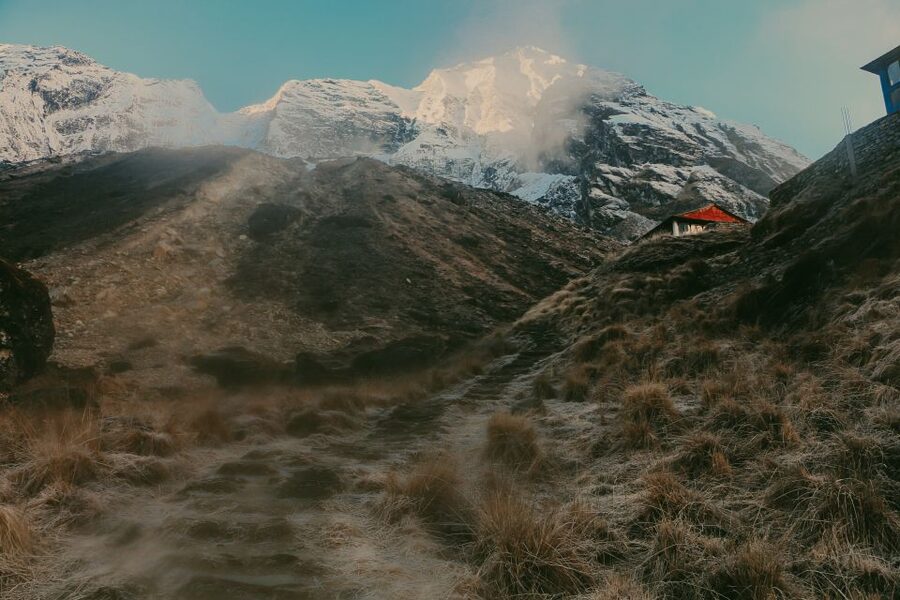
The fourth day begins with sunrise over the peaks. This is likely to be one of the most memorable moments of the trip, but it also starts a long day on your feet.
You descend from Annapurna Base Camp to Lower Sinuwa, at about 2,200 meters. The walking time is listed as eight hours. That is a substantial descent, even though going downhill may seem easier than climbing.
Downhill walking can be rough on knees and tired feet. Trekking poles are included, and you should use them. They help with balance on uneven sections and take some strain off your legs. A private guide can also help you choose a sensible pace rather than pushing you to match strangers.
The return route follows familiar ground through forests and mountain scenery. Seeing the trail again can be reassuring, but it does not make the day short. Plan on arriving tired, and keep a change of clothes where you can reach it easily.
Lower Sinuwa gives you a lower and likely more comfortable overnight stop than Base Camp. The drop in altitude is welcome, though the day’s walking may be the main thing you remember.
Day 5: Jhinu Dada hot springs and the road to Pokhara
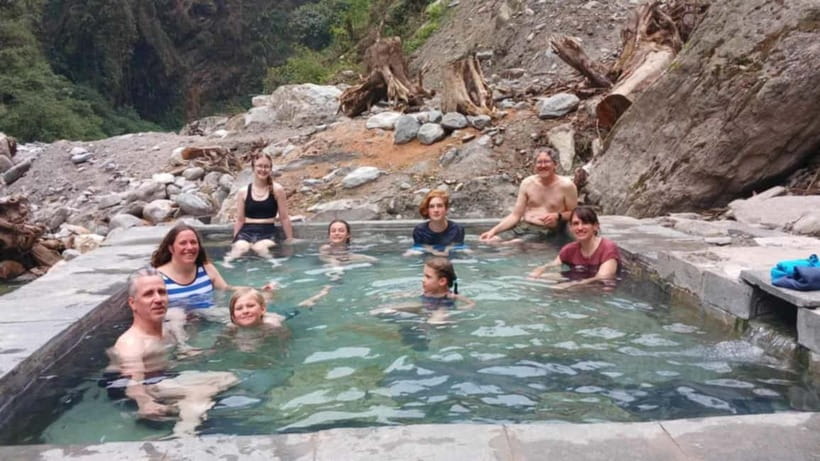
The final day combines a downhill trek, a hot spring stop, and a Jeep ride back to Lakeside Pokhara. You descend from Lower Sinuwa to Jhinu Dada, walk for about four hours, then continue by vehicle for roughly three hours.
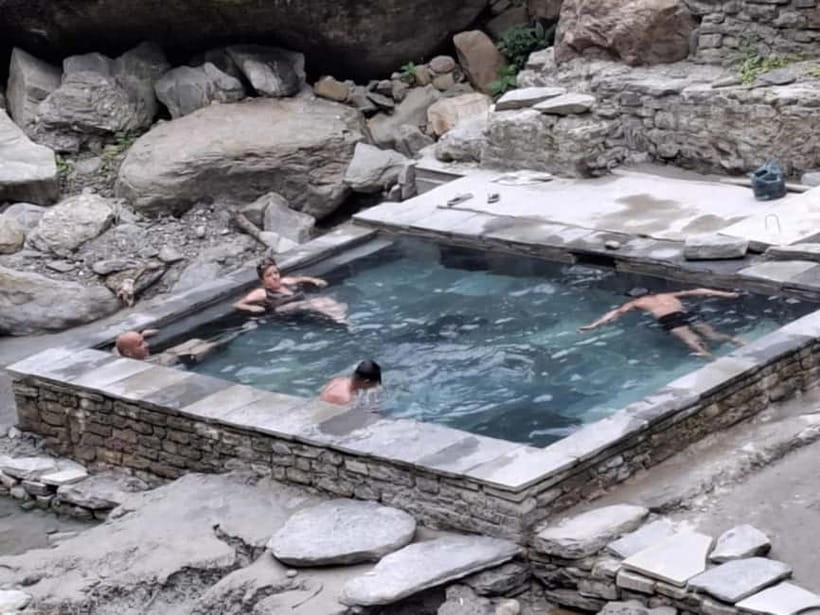
Jhinu Dada is the trip’s built-in recovery session. After several long days, a soak in the natural hot springs can loosen tired muscles and give you a quiet break before the road journey. Bring a modest change of clothing and keep your valuables secure, since the hot spring visit is outdoors and personal items are not part of the provided services.
After the soak, the drive returns you to Lakeside. The contrast is striking: mountain paths and basic trekking stops give way to Pokhara’s hotels, restaurants, and lakeside streets.
Do not schedule an important flight immediately after this return unless you have plenty of extra time. The information provided warns that an extra Pokhara night may be needed if you arrive early, leave late, or return from the mountains earlier than planned for reasons outside the scheduled route. Mountain transport and weather can be unpredictable, so a buffer night is sensible.
What the $150 price really covers
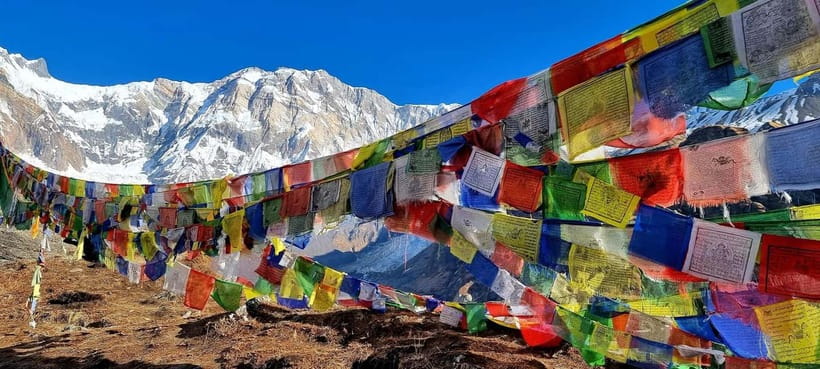
At $150 per person, this package can offer strong value, but you need to read the inclusions carefully. The price covers hotel pickup and drop-off, a licensed English-speaking guide, trekking permits, required paperwork, the Trekkers’ Information Management System fee, government tax, private accommodation during the trek, and staff expenses.
You also receive trekking poles, a sleeping bag, and a duffle bag. Luggage storage is available, which is useful if you are staying in Pokhara before and after the trek and do not want to carry everything into the mountains.
Transportation is described as deluxe and arranged according to the number of people. The private group format is another advantage. You can ask questions, set a reasonable pace, and discuss rest without negotiating with a large group.
The biggest price detail is food. The standard option allows you to purchase meals along the route. The all-inclusive full package includes breakfast, lunch, and dinner during the trek. Ask which option you are booking so your budget does not come as a surprise.
You also pay separately for soft and hard drinks, bottled or boiled water, showers, laundry, phone calls, battery charging, bar bills, porters, and other personal costs. A porter can be arranged for an additional fee. Travel and rescue insurance are not included, and you should buy suitable cover before leaving Pokhara.
Guides matter more on a fast mountain schedule
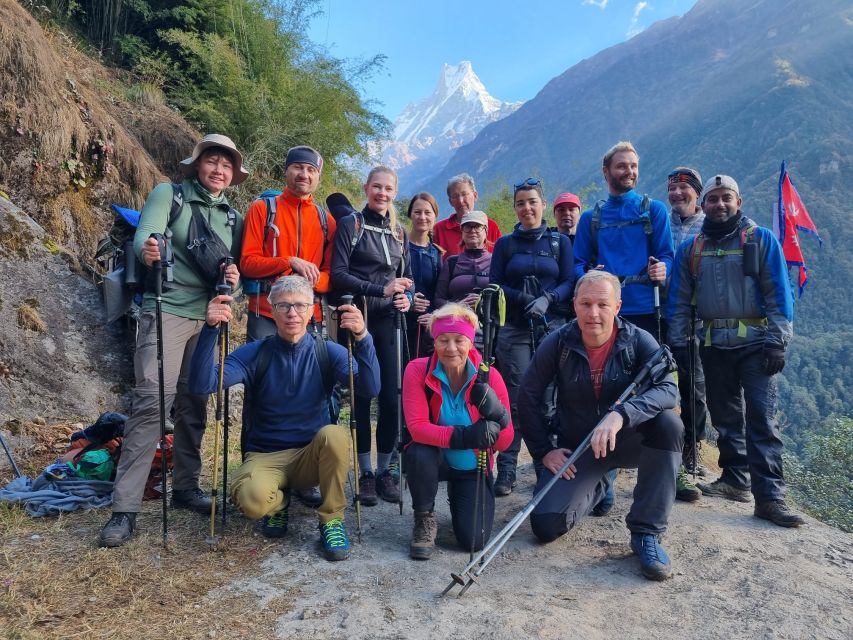
The strongest personal praise connected with this experience centers on the guides. Jeet was described as funny, attentive, respectful, and careful about explanations and rest. Kaji was credited with helping throughout difficult winter conditions, including the descent over avalanche areas.
That kind of support is not decoration. On a five-day trek, you need a guide who can explain the route, notice when you are struggling, and make sensible choices when weather or trail conditions change.
The available guide languages are English, Hindi, and Nepali. You should confirm your preferred language when booking. The guide is also an important source of local context, from village customs to the practical details of food, water, weather, and trail timing.
Because this is a private group, you have a better chance of getting direct attention than on a large departure. That does not remove the physical demands, but it can make the trip feel more manageable.
What to pack for this particular route
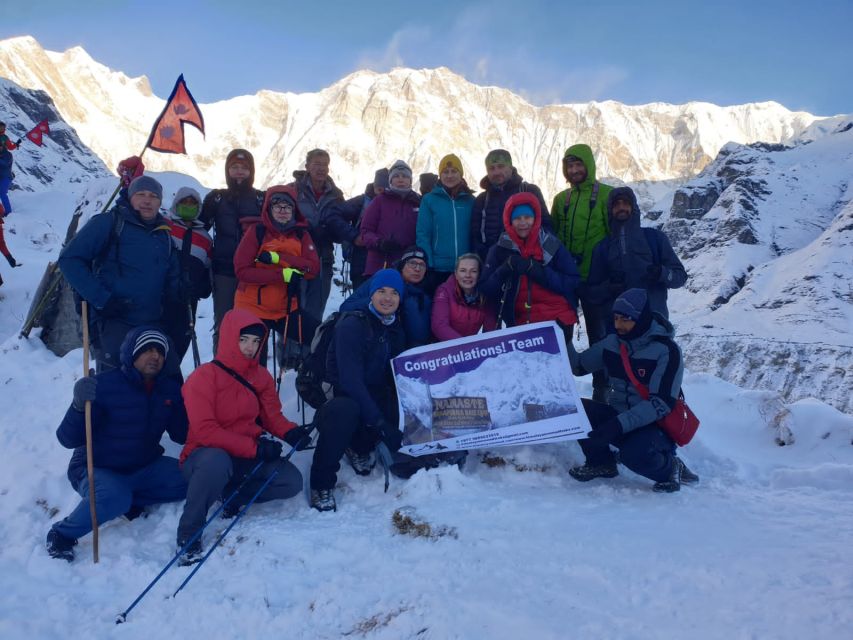
The suggested packing list includes a passport or ID card, camera, sunscreen, hiking shoes, daypack, jacket, comfortable clothing, spare clothes, hat, socks, sunglasses, cash, and trekking gear.
The operator provides a sleeping bag, trekking poles, and duffle bag, but you should confirm the condition and size of rented gear before setting out. Bring layers rather than one bulky coat. Lower sections can feel mild while Base Camp is cold, and the route moves through several weather zones.
A small daypack should hold water, sunscreen, a jacket, snacks if you choose to buy them, and personal items. Keep cash accessible for expenses not covered by the package. A phone or camera is useful, but charging costs extra, so conserve battery and carry a backup power source if you have one.
Good hiking shoes are not optional for this schedule. The trail includes long uphill and downhill sections, and winter conditions can bring snow and ice. A hat, sunglasses, and sunscreen remain useful even when the air feels cold.
Who should book this five-day trek?
I would recommend it to a fit hiker who wants Annapurna Base Camp but has only five days available from Pokhara. It suits someone who values a private guide, included permits, basic equipment, and a memorable hot spring stop without arranging each part alone.
It is also a good match if you want a clear mountain goal. The trip has a strong shape: road and village scenery, forest, high-altitude peaks, sunrise at Base Camp, a long descent, and a hot spring finish.
I would hesitate to recommend it to anyone who dislikes long walking days or has no flexibility for poor conditions. The schedule includes seven hours on Day 2 and eight hours on Day 4. Snow, ice, or avalanche conditions can make those days harder than the printed times suggest.
If you can spare seven days, a slower version would likely give you more breathing room and more time to enjoy the views. If five days is your limit, arrive prepared, use the poles, follow your guide’s pacing advice, and keep a spare night in Pokhara.
Should you book the Annapurna Base Camp trek?
Book it if you want a compact, private route to one of Nepal’s best-known mountain destinations and you accept that the pace will be demanding. The included permits, guide, transport, gear, private mountain lodging, and hot spring stop make the $150 starting price attractive, especially with the full meal package.
Think twice if you are new to long hikes, uneasy on snow and ice, or hoping for relaxed days among the peaks. In that case, ask about a longer schedule before committing.
For the right person, this is a direct and memorable way to reach Annapurna Base Camp from Pokhara. Just treat the five-day length as a serious limit, not a casual suggestion.
FAQ
How long is the Annapurna Base Camp trek?
The activity lasts five days, beginning and ending in Lakeside Pokhara.
What altitude does Annapurna Base Camp reach?
Annapurna Base Camp is at approximately 4,130 meters.
Are meals included during the trek?
Meals are included with the all-inclusive full package. With the standard option, you purchase meals along the route.
Is a porter included?
No. A porter can be arranged for an additional cost if needed.
What languages can the guide speak?
Guides are available in English, Hindi, and Nepali.
Is travel and rescue insurance included?
No. Travel and rescue insurance are not included, and purchasing suitable insurance is recommended.
More five-day treks in Nepal
- Kathmandu to Annapurna Base Camp (ABC) 5-Day Trek
★ 5.0 · 102 reviews - Kathmandu/Pokhara: 5-Day Annapurna Base Camp (ABC) Trek
★ 4.9 · 72 reviews - 5 Day Private Guided Trekking in Annapurna Base Camp
★ 5.0 · 25 reviews - Ghorepani – Poon Hill Trek – 5 DAYS
★ 5.0 · 13 reviews
Latest treks added in Nepal
- Private Manaslu Circuit Trek at Himalayas★ 5.0 · 3 reviews
- Ghorepani Poonhill Trek★ 5.0 · 5 reviews
- Ghorepani Poon Hill Trek★ 5.0 · 16 reviews
- Upper Mustang Trekking★ 3.0 · 2 reviews
- Amazing 1 Day Trekking Experience in Kathmandu Nepal★ 5.0 · 24 reviews
- Upper Mustang Trekking★ 5.0 · 2 reviews
- Upper Mustang Trek★ 5.0 · 5 reviews
- Upper Mustang Trekking★ 5.0 · 4 reviews
Annapurna Base Camp Treks, compared.

Trekking in Annapurna/Langtang/Everest/Upper Mustang regions
Read our review →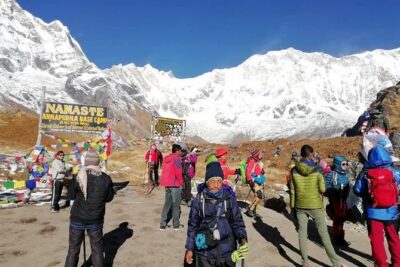
Kathmandu to Annapurna Base Camp (ABC) 5-Day Trek
Read our review →Browse the lists this tour appears in