
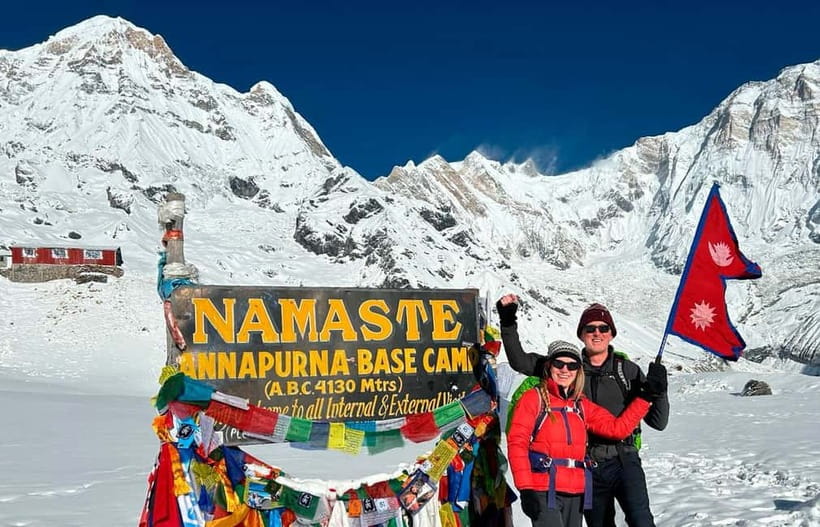
REVIEW · NEPAL
Pkr/Kathmandu: 5-Day Annapurna Base Camp & Hot spring Trek
Reaching Annapurna Base Camp at 4,130 meters in only five days is the main draw here. You move quickly from Pokhara’s lakeside streets to steep forest trails, high mountain valleys, and the great ring of Annapurna peaks. The route gives you waterfalls, traditional villages, tea houses, and one unforgettable night surrounded by Himalayan summits.
I like the efficient route and the personal help from guides such as Sagar, Raj, and Nareen, who have handled pacing, safety, meals, and difficult weather well. I also like the optional soak at Jhinu Danda, a fine reward after days of uphill and downhill walking. The catch is simple: five days is a tight schedule, and this is a moderate-to-challenging trek with little room for slow walking or poor acclimatization.
Key points before you book
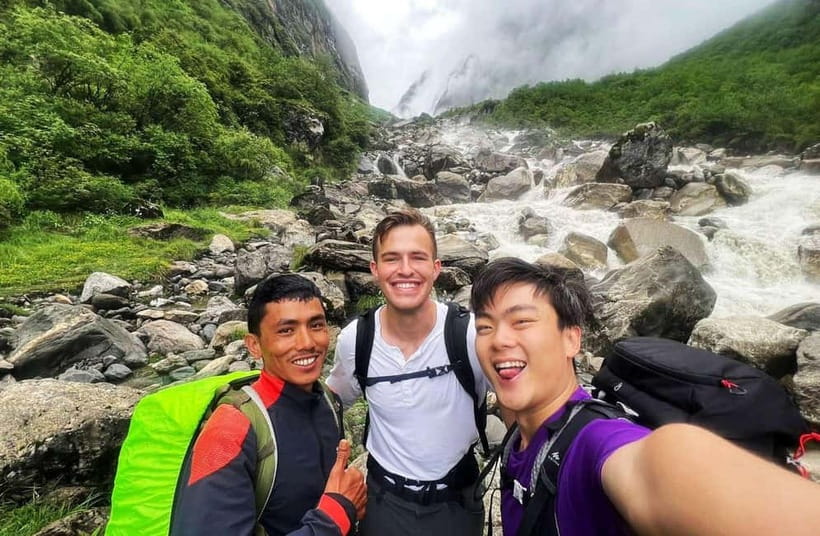
- Reach 4,130 meters in five days: The schedule is short, direct, and physically demanding.
- Walk through the Annapurna Sanctuary: Forests, waterfalls, rivers, and the high MBC valley fill the route.
- See major Himalayan peaks: Annapurna I, Machhapuchare, and Hiunchuli are the stars of the mountain views.
- Sleep in mountain guest houses: Four nights are spent in basic tea-house accommodation along the trail.
- Relax at Jhinu Danda: The natural hot springs are optional on the final trekking day.
- Choose your price carefully: The $60 starting price does not include every version of the trip, meals, porter service, or Kathmandu flights.
Why this five-day ABC route is appealing
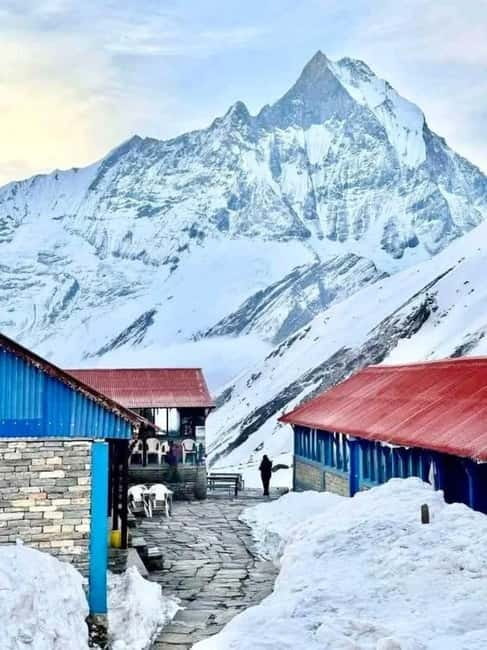
Annapurna I rises to 8,091 meters and sits within the Annapurna Sanctuary, a broad mountain bowl reached by foot. You do not need a long expedition to see it. This itinerary moves from Pokhara to Simrung by shared jeep, then takes you through Sinuwa, Deurali, Machhapuchhre Base Camp, and Annapurna Base Camp.
That quick progression gives the trip a satisfying sense of change. On day one, you are walking through lower hills and village country. By day three, you are in a cold, high valley with walls of rock and snow around you. You get a real taste of the central Himalayas without committing to a two-week trek.
The private-group format is another plus. Your guide can watch your pace and respond when the trail or weather becomes difficult. Recent guide pairings included Sagar, Raj with porter Naron, and Nareen with porter Visnu. The strongest praise has focused on careful pacing, safety, organization, and good spirits during long days.
Still, do not mistake the low price or short duration for an easy holiday. You will walk for four to seven hours on most trekking days. The trail includes steep slopes, stone steps, cold conditions, rain, and possibly snow. You need a good level of fitness, and high-altitude acclimatization matters.
More Hot Spring Treks in Nepal
- Pokhara: 5 Day Annapurna Base Camp Trek & Natural Hot Spring
★ 4.9 · 44 reviews - From Pokhara: 5-Day Annapurna Basecamp Trek with Hot Springs
★ 4.9 · 26 reviews - Pokhara: 7-Day Annapurna Base Camp Trek & Natural Hot Spring
★ 5.0 · 11 reviews
Day one: Pokhara to Simrung, then Sinuwa
The day begins with hotel pickup in Pokhara. From there, a shared jeep takes about two to three hours to reach Simrung via Nayapul. The road transfer saves time, but it also means you begin the walking portion with a full day still ahead.
If you start in Kathmandu, the plan includes a roughly 30-minute flight to Pokhara. The Kathmandu option can include hotel pickup, the flight, and the return flight as an add-on, so check exactly which package you are selecting. The advertised $60 price should not be treated as the final cost for every version.
From Simrung, you walk for about four to five hours to Sinuwa. The route begins the physical test right away, with climbing and uneven trail underfoot. Sinuwa sits at about 2,340 meters, high enough to make the next days worth taking seriously.
The first night is in a mountain guest house. Expect practical rather than polished lodging. Four nights of this kind of accommodation are included, but the information does not promise private rooms or hotel-style comforts. Carry warm clothing and a sleeping bag if needed, though sleeping bags can be borrowed as part of the equipment support.
Day two: Forests, waterfalls, and Deurali
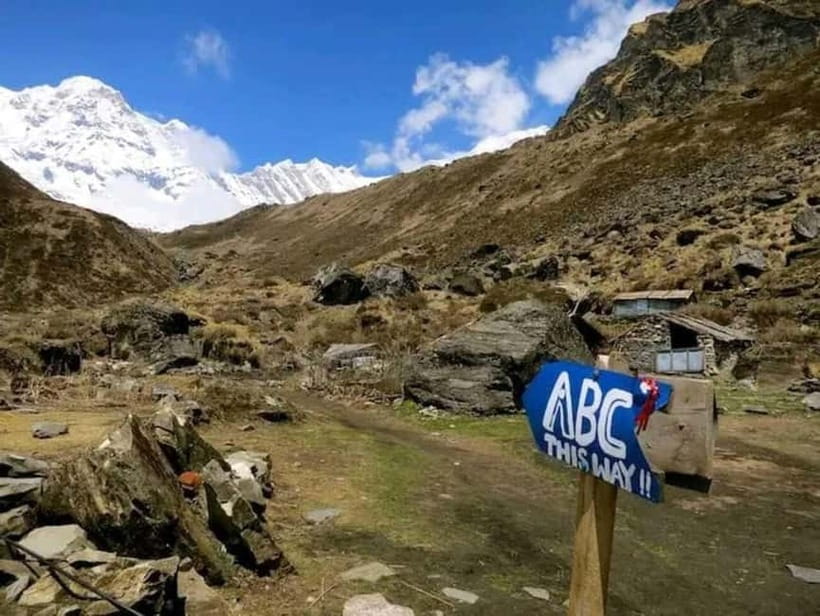
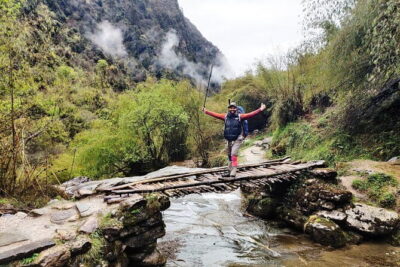
The second day takes you from Sinuwa to Deurali in roughly five to six hours. The trail passes through dense forest and small settlements, including Himalaya, where tea houses provide a useful pause.
This is one of the most scenic parts of the trek at close range. Instead of staring at distant peaks all day, you walk beside rivers and waterfalls, with trees shading parts of the route. The sound of running water helps break up the long climbs.
Deurali sits at about 3,230 meters. That gain is significant, and you may feel the altitude more clearly here. Keep your pace steady rather than racing ahead. Guides such as Sagar have been praised for setting a manageable rhythm and paying close attention to safety, which matters most on days like this.
The night is again spent in a guest house. Meals are included only with the all-inclusive option. If you choose the budget package, you need to pay for food separately or add a meal plan. Hot, cold, and alcoholic drinks are not included.
Day three: Machhapuchhre Base Camp to Annapurna Base Camp
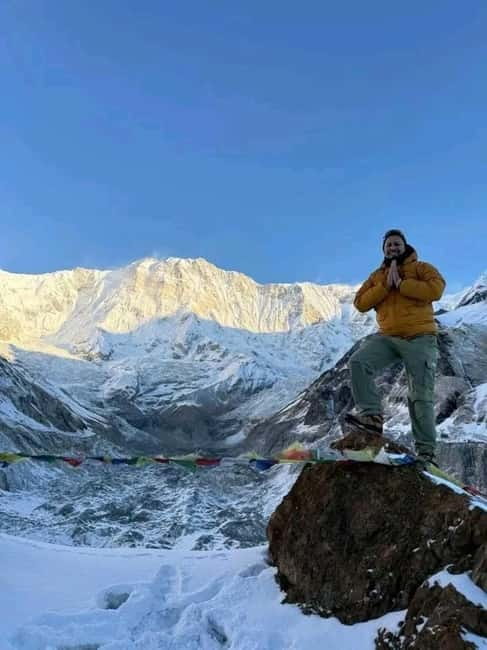
Day three is the high point of the trip in every sense. You walk from Deurali through the Machhapuchhre Base Camp area and on to Annapurna Base Camp. The total walking time is about five to six hours.
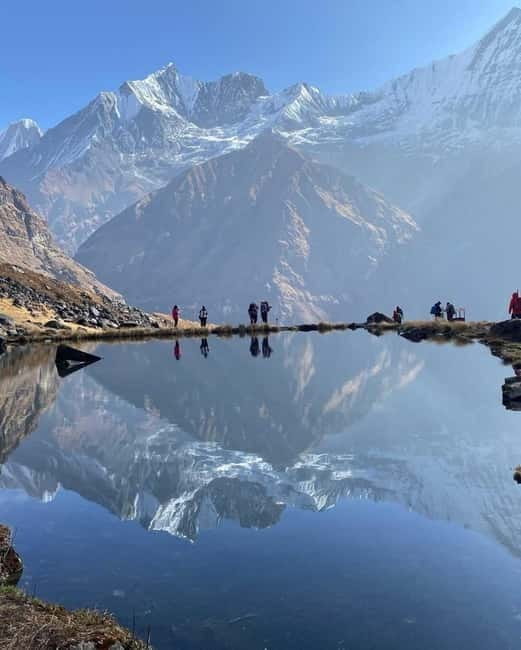
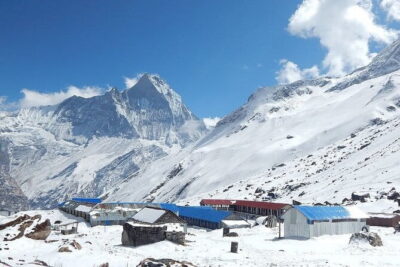
Machhapuchhre, also called Fishtail, is one of Nepal’s most recognizable peaks. Its sharp form gives the valley a dramatic character, while Annapurna I, Hiunchuli, and other peaks rise around the sanctuary. At MBC, the route feels very different from the lower forest sections. Trees thin out, the air turns colder, and the views become the main event.
Annapurna Base Camp sits at 4,130 meters. The altitude is the key challenge, so watch for symptoms such as headache, unusual tiredness, or breathing trouble. The trip is not suitable for people with heart or respiratory problems, people with a low level of fitness, or anyone with a history of altitude sickness unless a medical professional has cleared them.
You sleep at a tea house near base camp. The setting is the reward, with the mountain range close on every side. The western sunset view is specifically noted as a highlight, while the following morning offers the chance to see sunrise over the high peaks. Bring your warmest clothing, since cold temperatures can make this night far tougher than the distance suggests.
More Annapurna Treks in Nepal
- Annapurna Circuit Trek with Tilicho Lake
★ 5.0 · 368 reviews - Annapurna base camp trek 5 Days
★ 5.0 · 252 reviews - 14-Day Private Annapurna Base Camp Trek
★ 5.0 · 180 reviews - Trekking in Annapurna/Langtang/Everest/Upper Mustang regions
★ 5.0 · 161 reviews
Day four: Sunrise, then a long return to Bamboo or Sinuwa
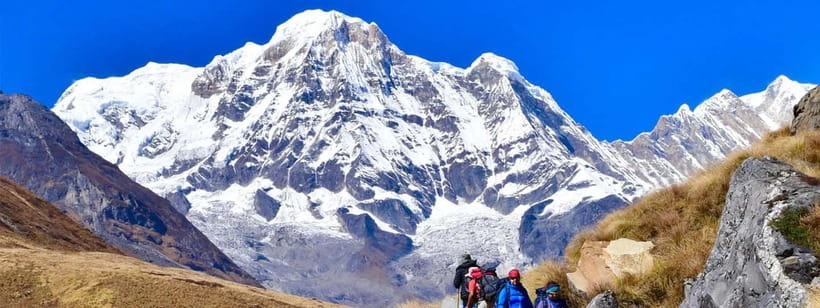
The morning begins early if you want the best light on the peaks. The sunrise around Annapurna Base Camp and the Machhapuchhre Base Camp valley is one of the strongest moments of the trip. You then retrace the route through Deurali, Himalaya, and Dobhan.
The walk back takes about six to seven hours, making this the longest day by time on your feet. Descending is not automatically easy. Repeated stone steps can punish knees and ankles, especially after the high-altitude night.
Your overnight stop is listed as Bamboo or Sinuwa, depending on the arrangement and pace. The minimum altitude is about 2,340 meters, so you will sleep lower than at base camp. That drop should feel welcome, but the day still demands stamina.
This is where a porter can make a large difference. Porter service is included with the all-inclusive option, while budget or Kathmandu packages may offer it as an add-on. If you carry your own pack, keep it light. Necessary equipment such as a duffle bag, sleeping bag, and trekking poles can be borrowed, but one recent trip had to improvise trekking poles from bamboo. Confirm equipment before you leave Pokhara.
Day five: Jhinu Danda hot springs and the drive to Pokhara
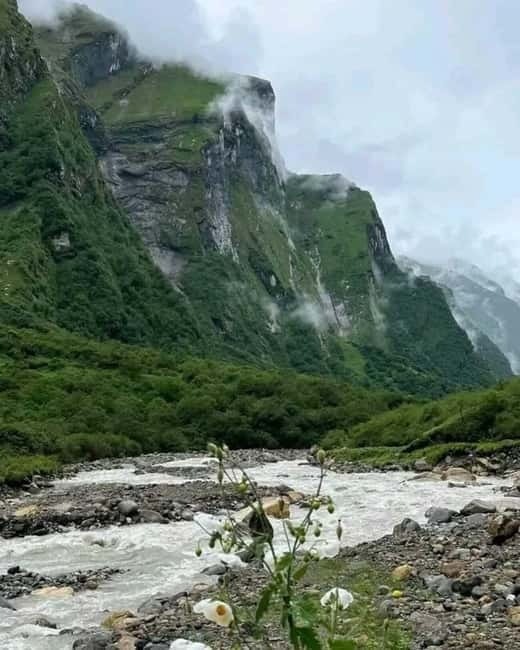
The final walking day takes about three to four hours from Bamboo or Sinuwa to Simrung via Jhinu Danda. The route then continues by shared jeep to Pokhara, a drive of roughly two to three hours.
Jhinu Danda is the relaxing finish. The hot springs are optional, so you can decide based on energy, time, and weather. After several days of cold mountain conditions and steep trail, a natural soak can be a pleasant way to close the trek.
The group is expected back at the Pokhara hotel or drop-off point around 5:00 PM. Treat that as an estimate rather than a guarantee. Trail conditions, weather, road delays, and the pace of the group can all affect the return.
The route ends lower, near 830 meters, which gives your legs and lungs a break. You will have gone from Pokhara to a high Himalayan base camp and back in less than a week, but you should still plan a quiet evening rather than a packed schedule.
Guides, porters, and the value of private support
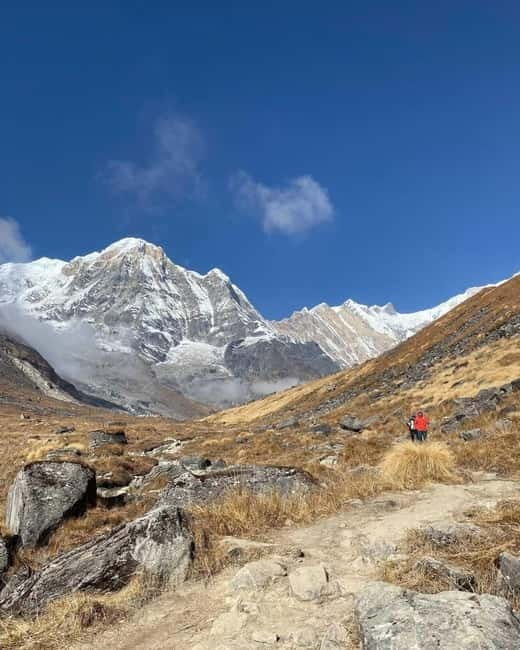
The strongest part of this experience is the human support on the trail. Sagar has been praised for steady pacing, safe decisions, handling accommodation and meals, and explaining local culture and weather. Raj and porter Naron received similar praise after a last-minute booking, especially during difficult uphill sections.
Nareen, known as Anarayan, helped one less experienced group through cold, rain, and snow. Porter Visnu was also singled out for reliable support. Another pairing, Sagar and Bimal, was valued for respectful conduct, local stories, wildlife pointers, and keeping morale up during long days.
You should still ask practical questions before setting off. Confirm your departure time, what equipment is available, what your meal plan covers, and whether trekking poles and porter service are included in your chosen package. One trip had less pre-departure information than expected, so do not rely only on the booking summary.
The guides speak English, French, Japanese, and Chinese across the available service. The group is private, which gives you more control than a large shared tour. It also means the pace may depend closely on your own fitness and the abilities of anyone traveling with you.
What the $60 price really means
At $60 per person, the advertised starting price looks unusually low for a five-day Himalayan trek. The value depends on what you select. Hotel pickup and drop-off in Pokhara, shared jeep transfers, four nights of mountain guest house accommodation, a guide, permits, first aid, and borrowed equipment are listed among the included items.
Meals and porter service are included only with the all-inclusive option. The budget or Kathmandu option may require separate payment for meals and porter support. Drinks are not included, and travel insurance is always your responsibility.
Kathmandu departures also require careful checking. The Kathmandu to Pokhara flight is included if you select that flight option, but return Kathmandu to Pokhara flight tickets are listed as an add-on. Confirm the full price before booking, especially if you are not already in Pokhara.
For a short private trek with permits, accommodation, guiding, transfers, and equipment support, the package can offer good value. It is not a complete all-expenses-paid trip at the lowest advertised price. Think of $60 as an entry point, then price the version that matches how much luggage, food, and transport help you need.
Free cancellation up to 24 hours before departure and reserve-now-pay-later terms add useful flexibility. You can also check available starting times before committing.
Fitness, weather, and packing advice
The best seasons listed are March to May and September to November. Weather in the mountains can still change quickly during those months. Conditions on one recent trip included cold, rain, and snow, so a good forecast is helpful but not enough by itself.
Pack warm clothing, hiking shoes, sunscreen, water, a camera, travel insurance documents, and suitable trekking gear. You can borrow sleeping bags, duffle bags, and trekking poles, but confirm availability in advance. Since one group did not receive the expected poles, bringing your own reliable pair is sensible if you have them.
You need to be comfortable walking for several hours on consecutive days. A low level of fitness will make the itinerary harder, and the high point at 4,130 meters adds another layer of strain. People with mobility impairments, heart problems, respiratory issues, or altitude sickness are specifically advised not to take this trip.
Alcohol and drugs are not allowed. Hot, cold, and alcoholic drinks are also excluded from the package, so budget for drinks along the trail.
Who should choose this Annapurna trek?
I would choose this route if you have limited time in Nepal but want a genuine high-mountain walk rather than a short viewpoint visit. It suits hikers who can handle long days, basic guest houses, changing weather, and a fast rise in altitude.
It is also a good fit if you value personal guidance. The private-group format and repeated praise for guide care can make a demanding route feel more manageable. First-time trekkers can take part, but they should train beforehand and ask clear questions about equipment, meals, departure times, and altitude.
I would not choose it if you want a relaxed schedule, guaranteed comfort, or plenty of spare days for weather delays. Five days leaves little margin. If you are unsure about your fitness, a longer Annapurna itinerary would likely provide a gentler pace, though that option is not part of this package.
Should you book the five-day ABC trek?
Book it if you want the fastest practical route to Annapurna Base Camp from Pokhara, and if you are ready for a serious physical challenge. The combination of high peaks, forest trails, waterfalls, Gurung villages, tea houses, and Jhinu hot springs gives the trip plenty of variety.
Before paying, confirm the exact package, especially meals, porter service, flights, trekking poles, and equipment. If you prepare properly and accept the basic conditions, this is a strong-value Himalayan adventure with guides who have shown real care on difficult days. If you need a slow pace or easy access, choose a different plan.
FAQ
How long is the Annapurna Base Camp trek?
The trek lasts five days. The walking days range from about three to seven hours, with the longest return day taking six to seven hours.
What is the highest altitude on the route?
Annapurna Base Camp is the highest point at 4,130 meters. Deurali is about 3,230 meters, and Sinuwa is about 2,340 meters.
Does the trip start in Kathmandu or Pokhara?
You can begin from Kathmandu or Pokhara. The Kathmandu option includes a roughly 30-minute flight to Pokhara if the flight option is selected.
Is hotel pickup included?
Hotel pickup and drop-off in Pokhara are included. Kathmandu hotel pickup and drop-off are included if you select the flight option.
Are meals included?
Meals are included with the all-inclusive option. They are not included with the budget or from-Kathmandu option unless you add them separately.
Is a porter included?
A porter is included with the all-inclusive option. Porter service is available as an add-on for the budget or from-Kathmandu option.
Are hot springs included?
Jhinu Danda’s natural hot springs are an optional part of the final trekking day. The itinerary passes through Jhinu Danda before returning to Pokhara.
What languages can the guides speak?
The available guide languages are English, French, Japanese, and Chinese.
What are the best months for this trek?
The recommended seasons are March to May and September to November. Mountain weather can still be unpredictable, so bring warm clothing and suitable trekking gear.
More five-day treks in Nepal
- Kathmandu to Annapurna Base Camp (ABC) 5-Day Trek
★ 5.0 · 102 reviews - Kathmandu/Pokhara: 5-Day Annapurna Base Camp (ABC) Trek
★ 4.9 · 72 reviews - 5 Day Private Guided Trekking in Annapurna Base Camp
★ 5.0 · 25 reviews - Ghorepani – Poon Hill Trek – 5 DAYS
★ 5.0 · 13 reviews
Latest treks added in Nepal
- Private Manaslu Circuit Trek at Himalayas★ 5.0 · 3 reviews
- Ghorepani Poonhill Trek★ 5.0 · 5 reviews
- Ghorepani Poon Hill Trek★ 5.0 · 16 reviews
- Upper Mustang Trekking★ 3.0 · 2 reviews
- Amazing 1 Day Trekking Experience in Kathmandu Nepal★ 5.0 · 24 reviews
- Upper Mustang Trekking★ 5.0 · 2 reviews
- Upper Mustang Trek★ 5.0 · 5 reviews
- Upper Mustang Trekking★ 5.0 · 4 reviews
Annapurna Base Camp Treks, compared.

Trekking in Annapurna/Langtang/Everest/Upper Mustang regions
Read our review →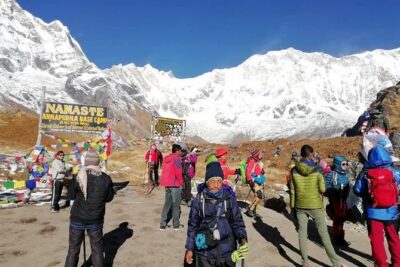
Kathmandu to Annapurna Base Camp (ABC) 5-Day Trek
Read our review →Browse the lists this tour appears in