
REVIEW · MOROCCO
6 days trekking To The heart of Desert
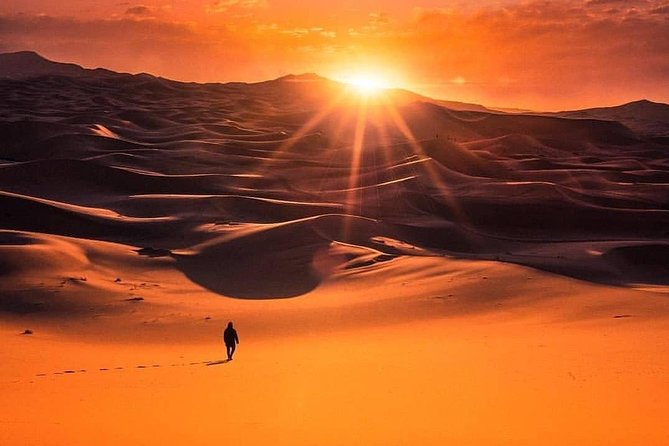
The heart of this trip is not a quick camel ride at a desert gate. It is a six-day walking caravan from M’Hamid, with camels carrying your luggage while you cross dunes, tamarisk groves, plateaus, and dry river country. You spend nights in nomadic-style camps and follow the sun rather than a clock.
I like the slow pace and the human side of the journey. You have time for tea under the trees, stories around the fire, sand bread and tajine at Erg Zahar, and an encounter with the traditions of southern Morocco. I also like that the route includes Ait Benhaddou and the Draa Valley, so the long transfer from Marrakech becomes part of the trip.
The main consideration is physical effort. Several days call for three to four hours of walking, often on sand, and Day 1 and Day 6 involve very long drives between Marrakech and the desert. This is not a soft-focus overnight camp outing.
Key points to know before booking
- Erg Zahar is the trip’s high point: Ride or climb the dune for sunset, with views toward the Algerian border.
- The camels carry your luggage: You walk with a guide and caravan instead of hauling a large pack.
- Sidi Naji adds local meaning: This desert sanctuary connects the route with oral tradition and regional custom.
- The route begins and ends in Marrakech: The High Atlas, Tichka Pass, Ait Benhaddou, Zagora, and the Draa Valley fill the long road journey.
- Walking shoes matter: Day 3 includes both plateau and sand, so sturdy footwear is more useful than fashionable desert sandals.
- The tour is private: Only your own group takes part, with a moderate fitness level expected.
From Marrakech to the Sahara by way of Tichka Pass
Your trip begins at 8:00 a.m. near Hôtel Restaurant Café de France on Marrakech’s Jemaa el-Fnaa. The first day is a full road journey, not a gentle warm-up. You cross the High Atlas by the winding Tichka Pass at 2,260 meters, Morocco’s highest road pass.
I like this opening because it gives you a sense of how sharply the country changes. Marrakech’s busy streets give way to mountain valleys, changing colors, and Berber villages. The road is famously twisty, so anyone prone to motion sickness should plan ahead.
The route includes stops at Tamnougalte and Ait Benhaddou. Ait Benhaddou, a 16th-century UNESCO site, is one of Morocco’s best-preserved fortified villages and has appeared in major film productions. It is not just a photo stop. The earthen architecture helps explain how people once protected homes, food, and trade routes in this dry region.
After the kasbahs, the road follows the palm-lined Draa Valley toward Zagora, known as a center of date production. From there, you continue to M’Hamid, the gateway to the Sahara, and reach the camp with Khalil’s team.
The day ends at a nomadic standard camp, with dinner and the first desert night. Expect a long day of driving before the walking begins. That tradeoff is worth knowing in advance: you see a great deal of southern Morocco, but you will not have much spare time for lingering at every stop.
More six-day treks in Morocco
- Marrakech: 6 Day Trekking Tachedirt To Toubkal Via Ifni Lake
★ 5.0 · 3 reviews - Singalila Ridge Trek from Darjeeling – 6 Days
★ 5.0 · 56 reviews - 6 Days Machame Route Kilimanjaro Climbing Trekking Tour
★ 5.0 · 34 reviews
Day 2: walking from M’Hamid to Sidi Naji
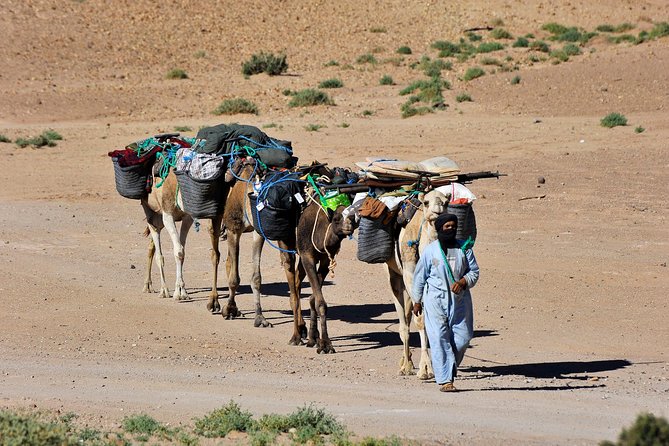
After breakfast, you leave the camp on foot with your guide and camel caravan. The camels carry the luggage, which makes a major difference. You still need to walk on uneven sand and hard ground, but you do not need to carry every item for six days.
The first destination is a palm grove. Tea and lunch are served in the shade of tamarisk trees, a welcome break in a place where shade feels like a valuable resource rather than a decorative feature. The midday pause also reflects the desert rhythm. You walk in the cooler hours, rest when the sun is strongest, and continue later.
After lunch and rest, the route goes to the sanctuary of Sidi Naji. Local oral tradition connects the site with a marabout who lived there for 18 grandfathers, a phrase that points to a very old and layered local story. The value of this stop is not a polished museum presentation. It is the chance to hear how desert communities preserve memory through place and spoken tradition.
The camp is set at the foot of the dunes. This is your first full night of the trek, and the quiet begins to feel different from ordinary silence. There are no city streets to fill the background, and the evening schedule follows the fading light.
Day 3: the long approach to Erg Zahar
Day 3 is the most demanding and most rewarding walking day. You leave Sidi Naji for Erg Zahar, described as the third-largest dune in the M’Hamid desert. The route takes about four hours of walking, split into two hours in the morning and two hours in the late day.
The surface changes between plateau and sand. That variety keeps the walk interesting, but it also means your feet and ankles work differently from one hour to the next. Bring shoes with good support and enough protection from loose sand. The provided information specifically warns that good walking shoes are needed, and I would take that advice seriously.
After the morning section, you stop under tamarisk trees for lunch and a nap. This is one of the trip’s best practical features. The schedule does not treat the desert like a race, and the midday rest gives you a chance to recover before the final approach.
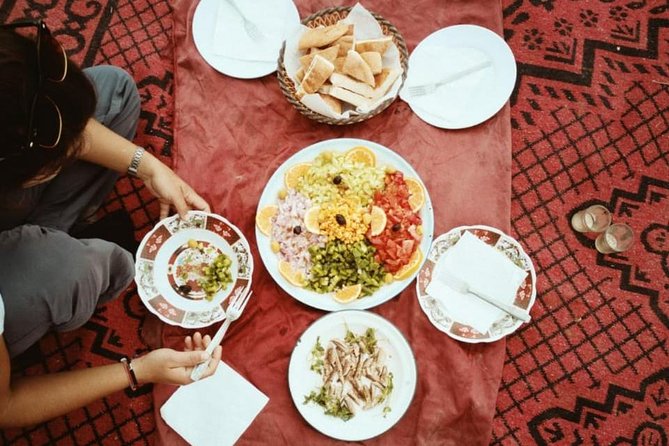
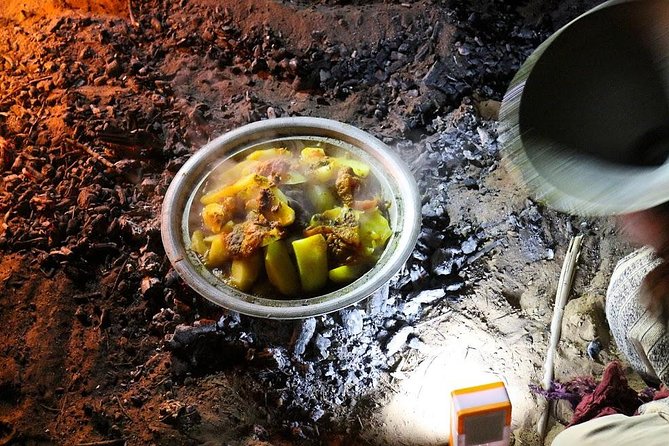
At Erg Zahar, the camp is prepared among the dunes. You can ride the dune for sunset, look toward the Algerian border, and take in the broad view as the light changes. The evening includes making sand bread and tajine, turning dinner into part of the desert experience rather than a meal delivered without context.
The listing gives a brief duration for this stop, but the important point is the overnight stay. You have time to see the dune at sunset and wake in the same setting the next morning. Pack a small day bag with water, sun protection, and anything you want close at hand, since your main luggage travels with the camel caravan.
Day 4: tamarisk country and the Draa Valley
After the night at Erg Zahar, the route continues toward Kraat Jamal through Lahdybat. Tamarisk trees line much of the way, offering welcome relief from open sand. Lunch comes along the route before you cross the Draa Valley.
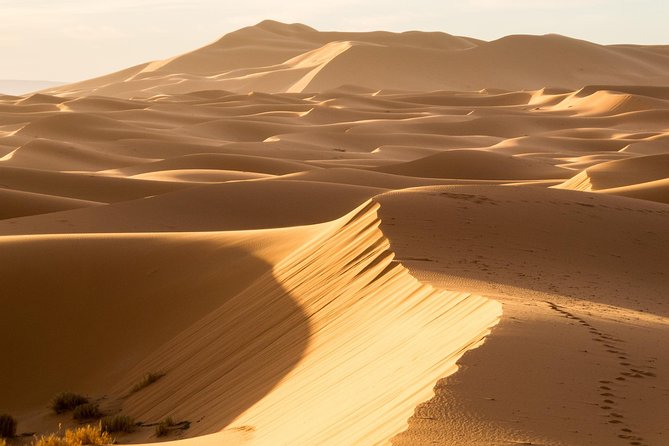
This section is useful because it shows that the M’Hamid desert is not one endless field of dunes. You pass through varied dry country, with vegetation appearing where water or seasonal runoff has made life possible. The change in ground and plant life gives you more to notice than a simple out-and-back dune walk.
The final desert camp is in a place known for wild camels. The information does not promise a wildlife excursion, so you should not book this expecting a formal animal-spotting activity. Instead, it is a chance to sleep in a setting connected with the region’s nomadic routes and natural rhythms.
By this point, the experience becomes less about individual sights and more about the pattern of the days: walk, rest, eat, watch the light change, and sleep away from the modern world. That repetition is either the main attraction or the main challenge, depending on your style of travel.
More Trekking Tours in Morocco
- Mt Toubkal Ascent Express Trek 2 Days 1 Nights
★ 4.7 · 962 reviews - Marrakesh: 2-Day Mt. Toubkal Trek with 1-Night Stay & Meals
★ 4.7 · 795 reviews - Marrakech: 2-Day Atlas Mountains Trek with Village Stay
★ 4.8 · 717 reviews - From Marrakech: 3-Day Mount Toubkal Climbing Trek
★ 4.7 · 597 reviews
Day 5: the return walk and a proper shower
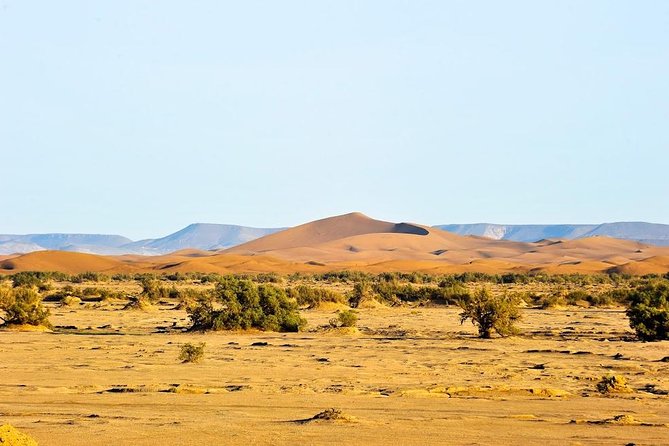
With the morning breeze, you begin the three-hour walk back toward M’Hamid. This is shorter than Day 3 and gives you a final chance to walk with the caravan before returning to a settled camp.
The return camp provides a shower and lunch. After several nights in the desert, that shower is more than a small convenience. It marks the shift from the nomadic section of the trip back toward ordinary travel.
You spend the night in M’Hamid. That extra night matters because it avoids forcing you straight from the desert into a long transfer north. It gives you time to clean up, eat, and sleep before the final road day.
Day 6: the long road back to Marrakech
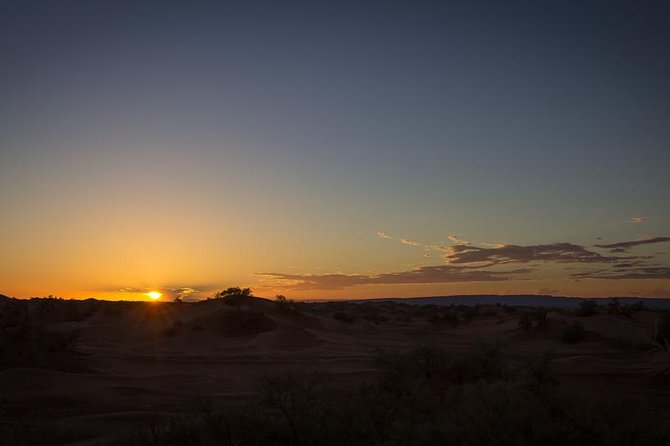
The final morning starts early at your accommodation in M’Hamid. You retrace the route toward Marrakech, with an expected arrival in the late afternoon. The stated duration is about 15 hours, so treat this as a serious transfer day.
The drive is the least romantic part of the trip, but it connects two very different parts of Morocco. You return through the desert gateway, the Draa Valley, and the Atlas route toward Marrakech. If your onward plans are tight, avoid scheduling a flight or fixed appointment immediately after the stated return.
The meeting point is back at the original Marrakech location. Since this is a private activity, the group size is limited to your own party rather than a mixed public coach group. That can make the long transfer easier, particularly for families or friends who want to set their own pace during stops.
What the $999.74 price means
At $999.74 per person, this is a substantial trip cost, but it covers far more than six days of walking. The package includes five nights of accommodation, a driver and guide, local taxes, bottled water, tea or coffee, six breakfasts, six dinners, and five lunches.
The price also pays for the working caravan: a guide, camel drivers, and camels to move luggage and supplies through the desert. That support is central to the experience. Without it, you would be planning food, water, camp equipment, and luggage transport yourself.
The meals listed are worth checking carefully before departure. Breakfast and dinner are included for six days, while lunch is included on five days. The details also say food and drinks are not included, which likely refers to items outside the stated meal package. Ask Desertbrise Travel to clarify any extra meals, snacks, or drinks you expect to need.
The value is strongest if you want an organized private expedition rather than a short commercial camel circuit. It is weaker if your main goal is simply one sunset in the dunes. For that, a six-day program is more time and money than necessary.
Guides, pace, and the feel of the group
Khalil is identified as the manager connected with Desertbrise Travel and is praised for organizing the route. Abdo, Ali, and Mohamed are also named as guides associated with the desert trek. The exact staff assigned to your departure may differ, so confirm the guide names when you book.
The role of the team goes beyond pointing out the route. You can expect support with the camel caravan, camp setup, meals, and the daily rhythm of walking and resting. The experience is built around Sahraoui nomadic customs, cooking, songs, stories, and time around the fire.
Families have used this type of route, including children aged 8, 10, and 12, but the official guidance still calls for moderate physical fitness. I would not treat the family examples as a guarantee that every child will find the walk easy. Sand, heat, early starts, and long vehicle transfers can test young walkers.
The private format is a real advantage. You are not assigned to a large mixed group, and the schedule can feel more personal. Still, private does not mean effortless. Everyone in your party should be comfortable with basic camp conditions and several hours of walking.
What to pack for six desert days
Bring light clothing that covers your skin, a hat, sunscreen, and sturdy walking shoes. The route includes sand, plateau, and hard ground, so support matters more than appearance.
A small daypack is useful for water, personal medication, sun protection, and a warm layer. The camel caravan carries your larger luggage, but you should not assume you can reach every item during the day.
Pack with temperature changes in mind. Desert days can be hot, while nights can feel cool, especially when you are sleeping outdoors or in a simple camp. A compact layer for the evening is sensible.
The operator lists bottled water, tea, and coffee. Even so, ask how much personal water you should carry during each walking section. Also confirm shower arrangements and what kind of sleeping accommodation is provided at the nomadic standard camp.
Who should book this trek?
I would recommend it to you if you want a real walking journey, enjoy quiet places, and like travel that follows local routines rather than a packed sightseeing schedule. It suits couples, families with active children, and private groups who want a guided desert experience with luggage support.
It is also a good choice if you want more than dunes. The Atlas crossing, Ait Benhaddou, the Draa Valley, Sidi Naji, camel caravans, cooking, and desert camps create a broad picture of southern Morocco.
I would think twice if you dislike long drives, basic camps, heat, sand, or repeated walking. The route has no promise of luxury, and the first and last days are dominated by road travel. The appeal lies in simplicity, silence, and time away from normal routines.
Should you book the six-day M’Hamid trek?
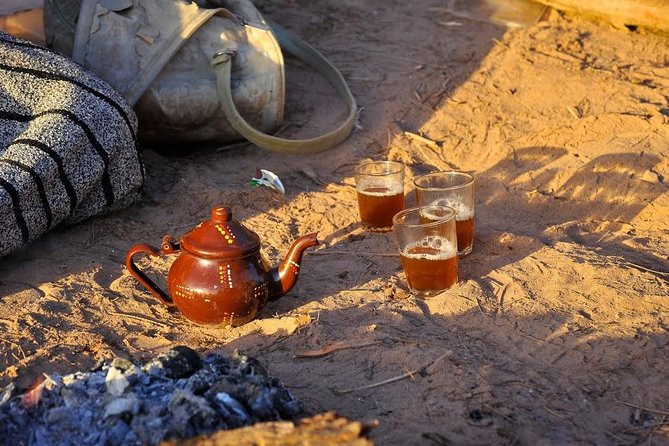
Book it if you want to slow down and give the desert several days, not just several hours. The strongest parts are the camel-supported caravan, the split walking schedule, the Erg Zahar sunset, the Sidi Naji stop, and the chance to spend evenings with local guides over tea, stories, songs, sand bread, and tajine.
Skip it if you are looking for a quick, comfortable taste of the Sahara. At this price and length, the tour asks for real commitment. For the right person, that is exactly its value: the desert becomes the main destination, not a backdrop between city stops.
FAQ
Where does the tour begin?
It begins at Hôtel Restaurant Café de France near Jemaa el-Fnaa in Marrakech. The stated start time is 8:00 a.m.
How long is the experience?
The tour lasts approximately six days and includes five nights of accommodation. The final drive from M’Hamid to Marrakech is expected to take about 15 hours.
How much walking is involved?
Walking varies by day. Day 3 takes about four hours, split between morning and afternoon, and Day 5 takes about three hours. The activity advises a moderate level of physical fitness.
Do camels carry the luggage?
Yes. A camel caravan accompanies the walking group and carries the luggage.
Are meals included?
The package includes six breakfasts, six dinners, and five lunches, along with bottled water, coffee, and tea. Food and drinks outside the stated inclusions are not covered.
Can I cancel for a full refund?
You can cancel at least 24 hours before the local start time for a full refund. Cancellations or changes made less than 24 hours before the start are not accepted for a refund.
Latest treks added in Morocco
- 5 Days Desert Trekking from Marrakech★ 5.0 · 16 reviews
- 3 days Toubkal Trek from Marrakech★ 5.0 · 4 reviews
- Elite Experience Atlas Mountains Day Trekking★ 5.0 · 7 reviews
- 3 Days Berber Villages Trek – Authentic Atlas Mountain Experience★ 5.0 · 4 reviews
- Morocco Desert Trek 4 Days: 2 days on foot in Morocco★ 5.0 · 2 reviews
- Atlas Mauntains and 3 Valleys Trek★ 5.0 · 6 reviews
- Atlas Mountains Valley Trek – 3 Days★ 5.0 · 29 reviews
- 5-day Jebel M’goun trek★ 5.0 · 2 reviews
6-Day Experiences, compared.
6 Days Machame Route Kilimanjaro Climbing Trekking Tour
Read our review →
6 day Rainbow Mountain x Ausangate Trek – FlashpackerConnect
Read our review →
6 Days Poon Hill – Ghandruk Circuit Trek from Kathmandu
Read our review →
6 Days Uganda Gorilla, Chimps Trekking and Wildlife Safari
Read our review →Browse the lists this tour appears in