
REVIEW · MOROCCO
Marrakech: 6 Day Trekking Tachedirt To Toubkal Via Ifni Lake
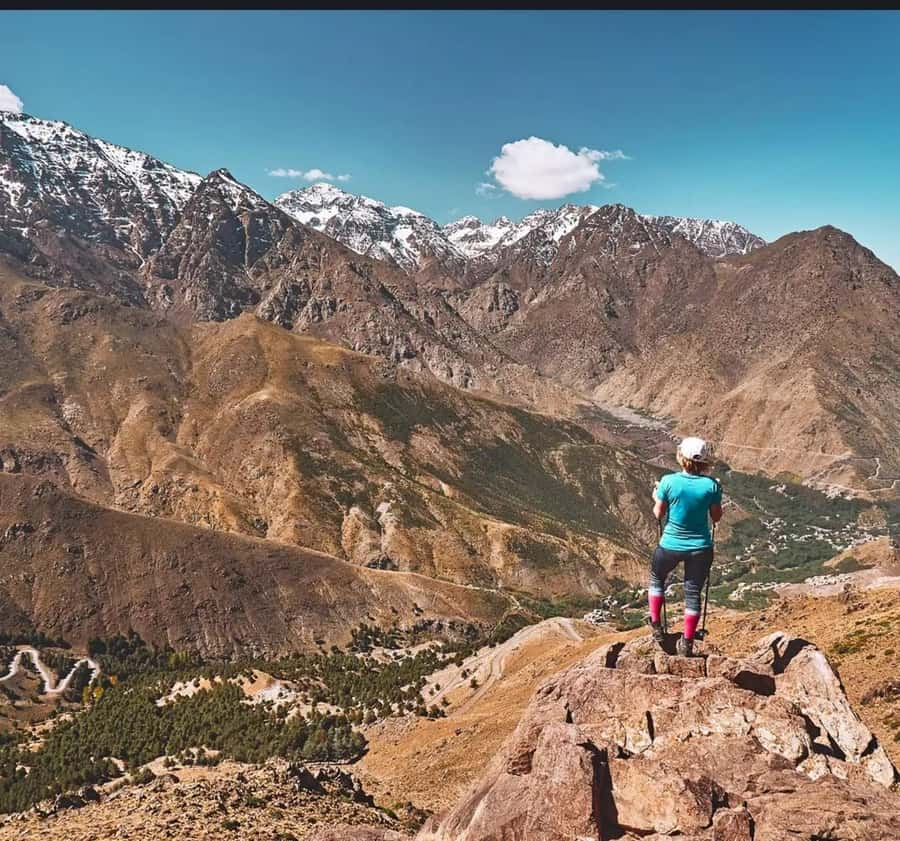
Mount Toubkal is the headline, but the real treat is the long route getting there. You cross high passes, sleep near shepherds’ summer pastures, pass Berber villages, and reach Ifni Lake, the High Atlas’s only large lake, before summit day.
I like the careful altitude buildup and the strong guide support. One solo walker had a guide check the contents of her daypack, carry her larger pack, and lend trekking poles. The sunrise summit also gives you a fine reward for the early start.
The main caution is simple: this is a serious mountain trek, not a string of easy walks. High passes reach 3,555 and 3,660 meters, and summit day combines a 4,167-meter climb with a long descent to Imlil.
Key points to know before you book
- A mountain route with variety: Tacheddirt, remote valleys, Berber hamlets, Ifni Lake, two high passes, and Toubkal all appear in one journey.
- Built-in acclimatization: The first day includes a climb to Tizi n’Tamatert before you settle into Tacheddirt.
- Two kinds of nights: You sleep in village lodging at Tacheddirt and Amsouzert, then camp at Azib Likemt and Ifni Lake, with a refuge night before the summit.
- A very early final morning: The summit push begins around 4 a.m. so you can reach Mount Toubkal for sunrise.
- Practical support included: Transport from Marrakech, a local English-speaking guide, lodging, meals, and water are part of the price.
- Pack for real mountain conditions: Hiking shoes, warm layers, gloves, sun protection, a daypack, cash, and travel insurance all belong on your checklist.
Why this six-day route is worth considering
At $795 per person, this is not a cheap day trip from Marrakech. It is a multi-day mountain journey with accommodation, food, water, transport, and a local guide already included, so the price makes more sense when you compare the whole package rather than just the summit.
I like that the route does not rush straight from the road to the peak. You begin in the Imlil Valley, reach Tacheddirt, cross the high Tizi n’Likemt, descend to Amsouzert, climb to Ifni Lake, and only then approach the Toubkal Refuge. That sequence gives you time to settle into the pace and see several sides of the High Atlas.
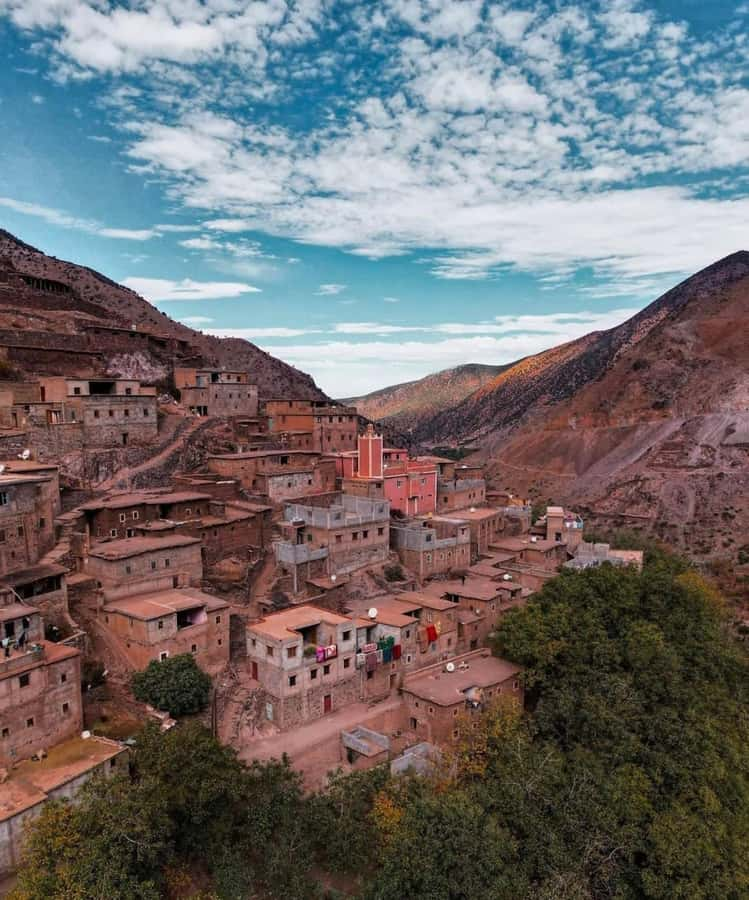
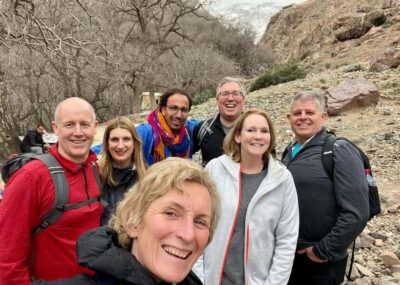
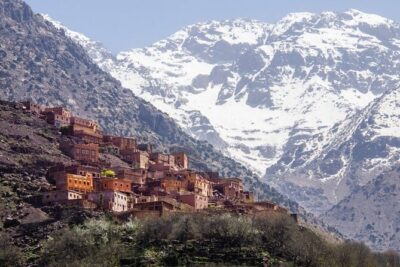
The trip also has an appealing human scale. You pass through traditional Berber villages and stay in local lodging, rather than spending every night in a large hotel or a single busy base town. The camps add a more basic, outdoors-focused side to the trip. You should expect simplicity, not resort comfort.
The route is listed as six days, though one account describes a shorter arrangement with the same broad pattern of acclimatization, summit ascent, and return to Imlil. Confirm your exact departure plan, daily walking schedule, and group setup before paying. The published six-day program is the clearest plan, but the timing deserves a check.
More Atlas Mountains Treks in Morocco
- Mt Toubkal Ascent Express Trek 2 Days 1 Nights
★ 4.7 · 962 reviews - Marrakesh: 2-Day Mt. Toubkal Trek with 1-Night Stay & Meals
★ 4.7 · 795 reviews - Marrakech: 2-Day Atlas Mountains Trek with Village Stay
★ 4.8 · 717 reviews
Day 1: Imlil to Tacheddirt by way of Tizi n’Tamatert
Your pickup begins in Marrakech, followed by about 1.5 hours in a van to the mountain starting area. The road transfer matters because it gets you from city streets to Imlil at 1,740 meters without spending a full day on transport.
From Imlil, you climb for about two hours to Tizi n’Tamatert Pass at 2,279 meters. This first rise is useful preparation. You are not attempting Toubkal immediately, but you are already asking your legs and lungs to work above the valley.
The route then drops into the Imnane Valley over another two to three hours. In total, expect four to six hours of walking. You finish in Tacheddirt, a Berber village at roughly 2,300 to 2,400 meters, where the night is spent in a gîte or camp.
This is a smart opening day because it combines a moderate climb with a descent and gives you an early feel for the terrain. It is not a free warm-up, though. If you rarely hike, the first day may feel longer than the numbers suggest. Keep your daypack light and use the first day to test your shoes, water system, and clothing layers.
Day 2: Tacheddirt to Azib Likemt over a 3,555-meter pass
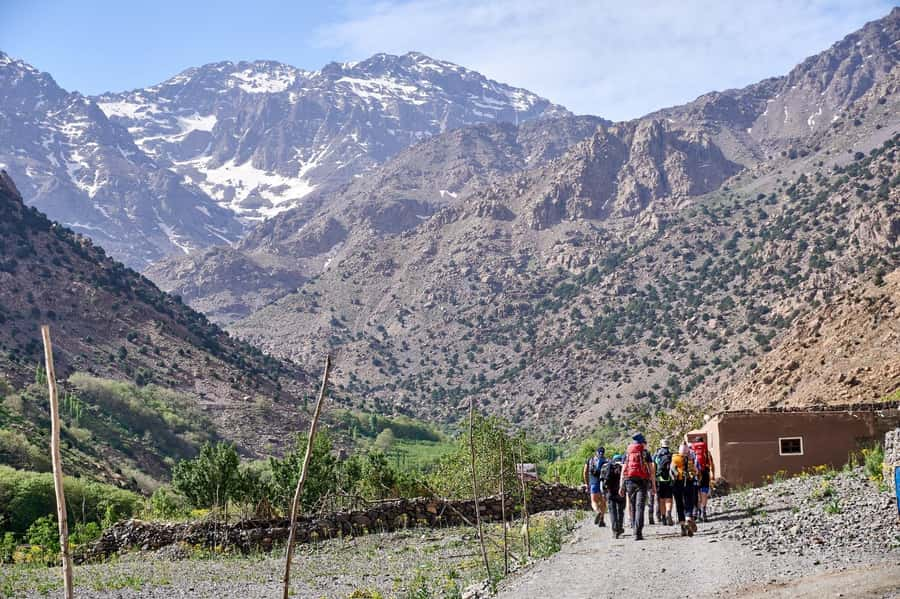
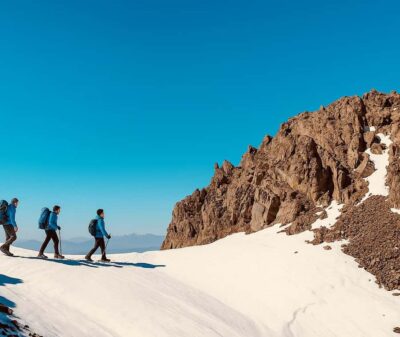
Day two brings the route’s first major mountain crossing. From Tacheddirt, you climb toward Tizi n’Likemt Pass at 3,555 meters. That is a large gain from the village, and the high point can make the day feel demanding even if the trail itself is manageable.
The reward is a broad view across the High Atlas. You are far from the traffic and quick sightseeing stops around Marrakech. The route leads onward to Azib Likemt, a set of summer pastures used by shepherds, at about 2,600 meters.
You camp here for the night. This is one of the most appealing parts of the route for anyone who wants a more remote mountain experience. It also means you should be ready for basic conditions and changing temperatures. Bring a warm jacket, gloves, and a change of dry clothes. The supplied packing list also calls for comfortable hiking shoes, sunscreen, a hat, and a power bank.
The high pass makes this day an important test. You should not judge your chances of summiting only by the distance. Altitude, steep ground, sun, and the need to carry personal items can all affect your pace.
Day 3: Remote valleys and the village of Amsouzert
The route leaves Azib Likemt and travels through remote valleys and traditional Berber hamlets before descending to Amsouzert. At about 1,740 meters, Amsouzert is a welcome change after the previous night’s camp and high pass.
You stay in a local guesthouse. That gives you a more settled evening and a chance to rest before the next climb. It also helps break up the journey in a useful way: the trip alternates between high mountain exposure and village life instead of stacking every hard section together.
Amsouzert is described as one of the most appealing villages in this part of the High Atlas. The value here is not a single famous monument. It is the setting, the local rhythm, and the contrast between a lived-in village and the bare slopes above it.
This is also a good point to take stock. Check your feet, dry your clothing, recharge your power bank if possible, and ask your guide about the next day. The route still has major elevation ahead, so do not treat the descent into Amsouzert as the end of the hard work.
More six-day treks in Morocco
- 6 days trekking To The heart of Desert
★ 5.0 · 8 reviews - Singalila Ridge Trek from Darjeeling – 6 Days
★ 5.0 · 56 reviews - 6 Days Machame Route Kilimanjaro Climbing Trekking Tour
★ 5.0 · 34 reviews - 6 day Rainbow Mountain x Ausangate Trek – FlashpackerConnect
★ 5.0 · 30 reviews
Day 4: Climbing from Amsouzert to Ifni Lake
From Amsouzert, you hike upward to Ifni Lake at 2,295 meters. The lake is one of the trip’s special stops, not just a place to sleep. Its turquoise water sits among steep rocky peaks, giving you a quiet alpine setting after the long valley sections.
You camp beside the lake. This is the kind of night that makes the route feel different from a standard peak-bagging trip. You get time around a natural feature rather than simply arriving at a refuge, eating, and preparing for the summit.
The climb to Ifni Lake is moderate in altitude compared with the next day, but your legs may already feel the accumulated distance. Pace yourself. Eat even if your appetite is reduced, drink regularly, and keep your warm layer close. Water is included, but a personal bottle or daypack is still needed to carry what you use during the day.
The lake is also a sensible place to enjoy a calm lunch or rest surrounded by the mountains. The trip’s appeal is partly its range of settings: villages, pasture, rocky passes, lake shore, refuge, and summit.
Day 5: Ifni Lake to the Toubkal Refuge
Day five is another major mountain day. You climb toward Tizi n’Ouanoums Pass at 3,660 meters, then descend to the Toubkal Refuge at around 3,200 meters.
The ascent is described as steep but rewarding. This is where your earlier acclimatization matters. You have already spent nights at altitude and crossed a high pass, so your body has had more time to adjust than it would on a quick two-day summit trip.
The descent to the refuge can feel odd after such a high crossing. You work hard to gain the pass, then lose elevation to reach the night’s accommodation. That is normal for this route and positions you for the summit start.
At the refuge, keep the evening practical. Organize your headlamp or phone light, warm layers, gloves, water, and a small summit pack. The final ascent starts early, and you will not want to search through a large bag in the dark.
The provider includes all nights and meals during the trek. That reduces the number of arrangements you need to make, but it does not mean you can pack lightly in every sense. You still need personal clothing, suitable footwear, sun protection, and any medication or first-aid items you require.
Day 6: Toubkal at sunrise, then down to Marrakech
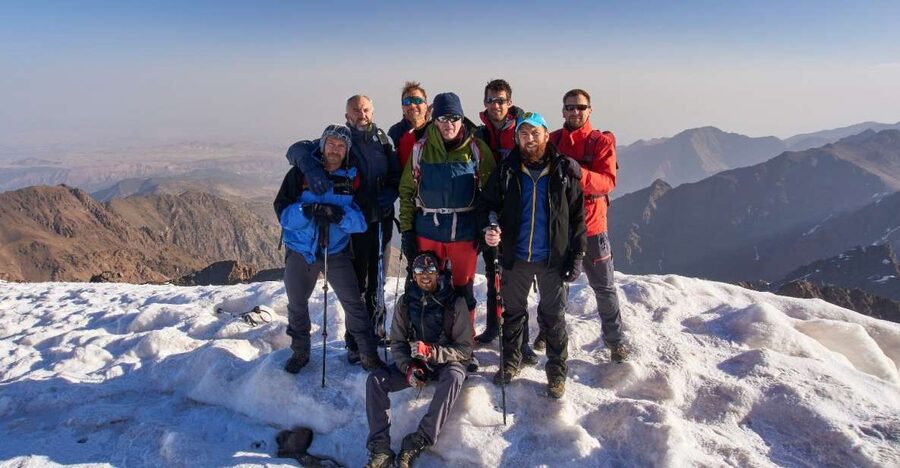
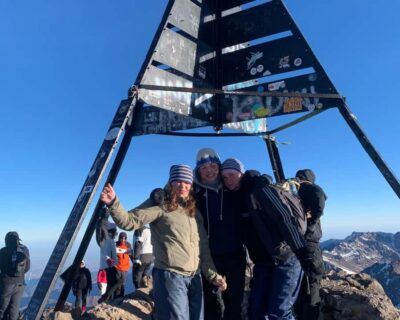
Summit morning begins around 4 a.m. The goal is to reach Mount Toubkal at 4,167 meters, the highest peak in North Africa, in time for sunrise.
The final climb is the trip’s main physical challenge. At this height, the cold, darkness, steep ground, and reduced oxygen can slow you down. The guide’s role matters here. One account describes close attention to the walker’s pack and stamina, with steady encouragement during the ascent. That kind of support is more useful than a rushed push to the top.
At the summit, you get 360-degree views across the Atlas Mountains, with sight lines described as reaching toward the Sahara. Take time for photos, but keep your clothing on and listen to your guide. The summit is a high, exposed place, and the descent still lies ahead.
The advertised plan then takes you all the way down to Imlil at 1,740 meters. One account places arrival at about 2 p.m., followed by a quick vehicle transfer to Marrakech. That makes for a long day, but it is efficient if you need to return to the city.
I would leave extra room in your Marrakech plans after the trek. The return transfer is included, but the summit day is not the moment to schedule a tight flight, train, or important appointment. You may also have little time for shopping in Imlil. If souvenirs matter to you, ask in advance if a short stop is possible.
Guide support, packs, and group comfort
The experience includes a local English-speaking guide. The strongest practical feature is the hands-on support described during the climb. For a solo participant, the guide checked the daypack contents from time to time, carried the larger backpack, and helped keep the load manageable.
If two or more people join, a porter is said to carry the large packs. Confirm this arrangement before departure, especially if you are deciding what luggage to bring. You should not assume every personal item will be transported.
Trekking poles were also available to borrow in one case. That can be helpful on the descents from the passes and on the long return to Imlil. Still, ask about availability rather than counting on a particular piece of rental equipment.
The guide’s local knowledge adds value beyond route finding. The trip includes villages, pasture areas, and mountain history, so an attentive guide can help connect the walking with the people and places around you. The supplied language is English, and the booking details say the company will contact you the day before with pickup information.
What is included, and what you still need
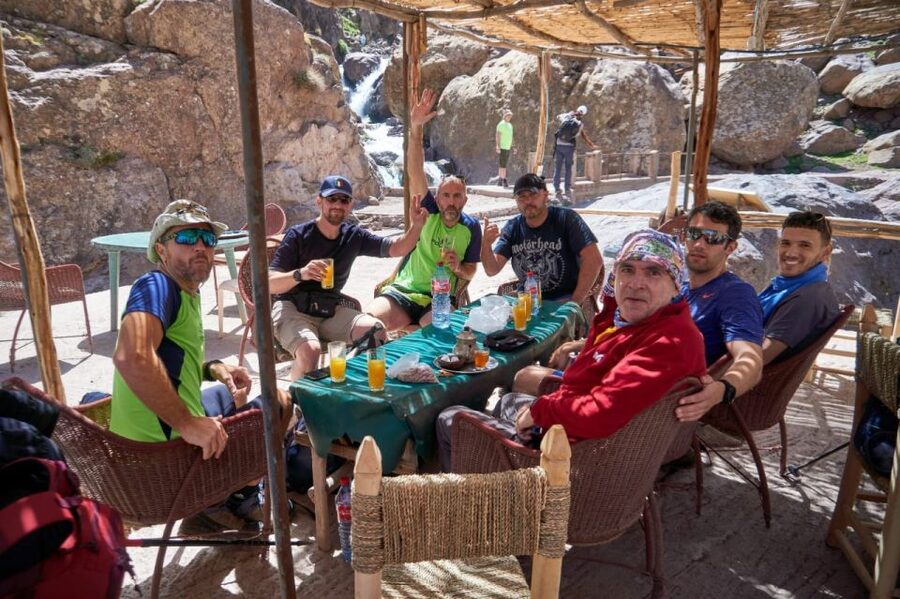
The $795 price includes:
- Marrakech pickup and drop-off
- Transportation
- All nights on the route
- A local guide
- All meals during the trek
- Water
Trekking gear is not included, though it is available to rent. Personal expenses are also extra. Bring cash for anything not covered, and keep your passport with you.
The suggested equipment list is sensible for a high mountain trip:
- Hiking or trekking shoes
- Comfortable clothes and a change of clothes
- A warm jacket and gloves
- Hat and sunscreen
- Daypack
- Camera and power bank
- First-aid kit
- Travel insurance
- Cash
Do not arrive with only city trainers because the route includes steep passes, rocky ground, and long descents. You also need layers. The lower valleys and high passes will not feel the same, and the summit start is before sunrise.
Who should book this trek?
I would recommend it to an active hiker who wants more than a direct Toubkal ascent. The route rewards patience with village stays, remote valleys, a high lake, two major passes, and a sunrise summit.
It is a good fit if you like a mix of local lodging and camping and do not need polished hotel service every night. The included meals, water, transport, and guide also make it easier than arranging each part yourself.
This is not suitable for children under 12, pregnant women, or people over 70 according to the stated restrictions. More broadly, anyone with limited hiking experience should be honest about the demands. The highest days are long, and a 4,167-meter summit followed by a descent to Imlil requires stamina.
Free cancellation up to 24 hours before departure and reserve-now, pay-later terms give you some booking flexibility. They do not remove the need for travel insurance or sensible preparation.
Should you book it?
Book this trek if you want the full route to Toubkal, not just the shortest possible climb. The strongest reasons are the gradual altitude gain, the variety of mountain settings, the Ifni Lake camp, and the close practical help available from the guide.
Think twice if you want a soft adventure with short walks and guaranteed comfort. The passes are high, the summit start is early, and the last day is demanding. At $795, the value is solid for a six-day supported trek with meals, lodging, water, and Marrakech transfers, but only if you are ready for genuine mountain work.
FAQ
How long is the Mount Toubkal trekking experience?
The advertised duration is six days, beginning with pickup in Marrakech and ending with a private transfer back to Marrakech after the trek.
What is the highest point reached?
You climb Mount Toubkal to 4,167 meters, the highest peak in North Africa.
Is transportation from Marrakech included?
Yes. Pickup and drop-off in Marrakech, along with transportation for the trip, are included. The initial van ride takes about 1.5 hours.
What type of accommodation is provided?
You stay in a gîte or camp in Tacheddirt, camp at Azib Likemt, use a local guesthouse in Amsouzert, camp beside Ifni Lake, and stay at the Toubkal Refuge before the summit.
Are meals and water included?
Yes. All meals during the trek and water are included.
What should I bring?
Bring your passport, hiking shoes, comfortable clothing, a change of clothes, a jacket, gloves, hat, sunscreen, a daypack, cash, travel insurance, a first-aid kit, and a power bank. Trekking gear is not included but can be rented.
Latest treks added in Morocco
- 5 Days Desert Trekking from Marrakech★ 5.0 · 16 reviews
- 3 days Toubkal Trek from Marrakech★ 5.0 · 4 reviews
- Elite Experience Atlas Mountains Day Trekking★ 5.0 · 7 reviews
- 3 Days Berber Villages Trek – Authentic Atlas Mountain Experience★ 5.0 · 4 reviews
- Morocco Desert Trek 4 Days: 2 days on foot in Morocco★ 5.0 · 2 reviews
- Atlas Mauntains and 3 Valleys Trek★ 5.0 · 6 reviews
- Atlas Mountains Valley Trek – 3 Days★ 5.0 · 29 reviews
- 5-day Jebel M’goun trek★ 5.0 · 2 reviews
Atlas Mountains Treks, compared.
Mt Toubkal Ascent Express Trek 2 Days 1 Nights
Read our review →
2-Day Mt. Toubkal Trek with 1-Night Stay & Meals
Read our review →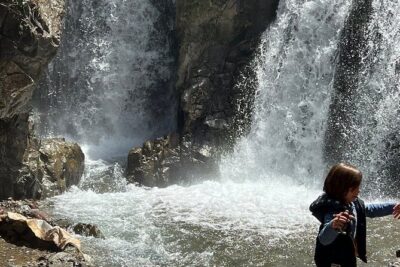
Summiting and Hiking the Atlas Mountains Day Trek from Marrakech
Read our review →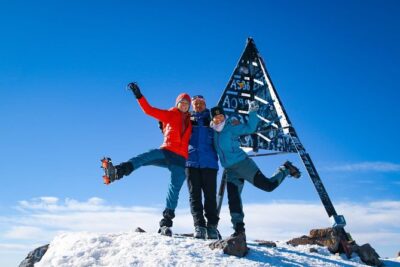
Browse the lists this tour appears in