
REVIEW · MARRAKECH
5-day Jebel M’goun trek
Jebel M’Goun is not a gentle mountain stroll. It is a serious five-day crossing through Morocco’s Central High Atlas, with high passes, mule-supported camps, and a summit ridge reaching about 4,068 meters. You begin in Ait Bougmez Valley and finish with a visit to Ouzoud Falls, so the trip has a satisfying mountain-to-waterfall finish.
I like the variety of scenery, from sheepfolds and nomad country to broad views over the Draa and Dades valleys. I also like the practical support: muleteers carry the tents and supplies, while meals are included throughout the five days. The main caution is the effort required. One day covers about 22 kilometers with nine hours of walking, and the altitude adds another layer of difficulty.
Key points to know before you book
- The summit route reaches about 4,068 meters, making altitude and endurance important.
- Day three is the hardest stage, with around nine hours on foot, 1,200 meters of ascent, and 1,470 meters of descent.
- Camping is part of the experience, with tents on the first three nights and a local guesthouse on the fourth.
- Muleteers support the group, carrying camping gear and helping with cooking and camp setup.
- Ait Bougmez Valley gives the trip a strong local character, with nomadic families, herds, villages, and mountain passes.
- The $704.74 price includes meals and mountain support, but not Marrakech lodging, water, insurance, tips, or personal equipment.
Why Jebel M’Goun is a different High Atlas trek
Many mountain trips from Marrakech focus on reaching one famous summit and returning by the same general route. This one feels more like a crossing. You move through the Ait Bougmez Valley, climb toward the Tarkedit plateau, travel along the M’Goun ridge, then descend back toward the valley.
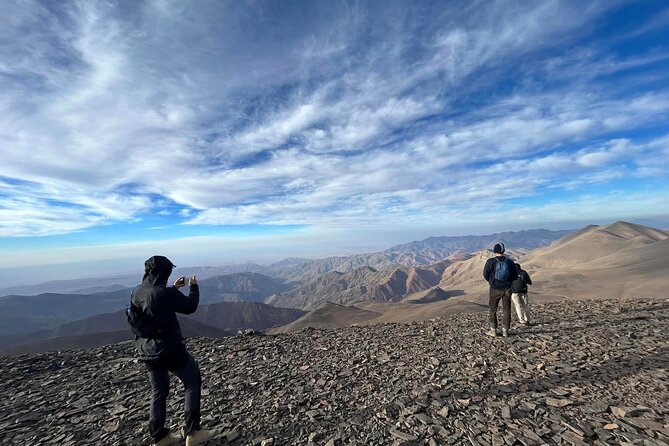
That changing route is the chief appeal. You are not looking at the same view every day. The first stages feel pastoral, with sheepfolds and mule tracks. Higher up, the surroundings become stark and open. From the ridge, you can see the M’Goun Massif and distant valleys stretching toward Draa and Dades.
Jebel M’Goun rises to roughly 4,068 or 4,071 meters, depending on the measurement used in the trip information. Either figure makes it Morocco’s second-highest peak after Toubkal. The mountain is not just a high point to tick off. It is the center of a route through a less developed part of the High Atlas.
You should also understand the nature of the support. This is not a self-guided walk with a daypack and a marked trail. Muleteers help carry tents and supplies, and cooking is part of the mountain setup. In one account connected with the experience, Hassan guided a shorter three-day version while two men named Mohammed handled cooking and tents. Another account names Abdoe as a guide who kept close watch on safety, food, and drink. Guide assignments can vary, but these details give you a useful sense of the team structure.
More five-day treks in Marrakech
- 5 Days Desert Trekking from Marrakech
★ 5.0 · 16 reviews - Annapurna base camp trek 5 Days
★ 5.0 · 252 reviews - Kathmandu to Annapurna Base Camp (ABC) 5-Day Trek
★ 5.0 · 102 reviews
The long road from Marrakech to Ait Bougmez
The first morning begins at 8:30 a.m. with a transfer from Marrakech toward Azilal, the small town known as a gateway to the mountains. You then continue over Tizi N’Tirghist pass at about 2,900 meters before reaching Ait Bougmez Valley.
The drive takes about five hours, so this is not a quick transfer followed by a short walk. The road portion matters because the valley is far from Marrakech, and the mountain route begins well beyond the city’s immediate surroundings. I would treat the first day as a full travel day with an afternoon walk, not as a relaxed introduction.
After meeting the muleteers and eating lunch, you walk up the small Arous Valley toward the Ikkis N’Arous sheepfolds. The walking distance is about eight kilometers, with roughly two hours on foot and 500 meters of ascent. You sleep in tents.
This opening stage is a sensible way to begin. It gets you away from the road and into the mountain setting without immediately demanding the toughest climb. Still, the early start, long drive, and uphill walk make it a tiring first day. Keep your essential items accessible during the transfer, since you will not want to search through the group’s luggage when the walking begins.
Day two: Tarkedit Pass and the high plateau
Day two takes you higher. The route climbs toward Tarkedit Pass at about 3,400 meters. You gain around 1,100 meters and walk approximately 13 kilometers over six hours, followed by a descent of about 500 meters.
This is where the altitude begins to shape the day. You may feel fine at lower elevations and notice the thinner air as the route rises. The schedule includes stops to take in views of the M’Goun range and the summit. Those breaks are useful for more than photographs. They give you a chance to control your breathing and maintain a steady pace.
After the pass, you descend for about two hours to Tarkedit Plateau. Nomadic families use this broad high area, and that human presence gives the second night more character than a simple mountain camp. You sleep in tents again.
The main challenge here is the combination of ascent and altitude. Six hours is not extreme by mountain standards, but 1,100 meters of climbing at high elevation can be demanding. You should arrive with a moderate level of fitness at minimum, and a stronger base if you want to enjoy the views instead of simply managing the effort.
Day three: the ridge, the summit views, and the hardest descent
The third day is the trip’s physical centerpiece. You walk for about nine hours, climb around 1,200 meters, descend roughly 1,470 meters, and cover close to 22 kilometers.
The route rises to the M’Goun ridge, where the views open toward the summit and across the M’Goun Massif. You can also see toward the Draa and Dades valleys. This is the day when the scale of the Central High Atlas becomes clear. The high ridge gives you a broad sense of how the valleys sit below the mountain range.
The word summit needs a little care here. The supplied schedule describes the climb to the ridge and views toward the summit, but it does not clearly state that the group reaches the exact highest point of Jebel M’Goun. If standing on the precise summit is essential to you, confirm the route with Amazing Toubkal Trek before booking.
The descent is long and should not be underestimated. Losing 1,470 meters can be hard on knees and feet, especially after the morning climb. Good footwear, trekking poles if you use them, and careful pacing matter more than trying to keep up with the fastest person in the group.
You finish at camp after passing through wide mountain scenery. This is likely the most rewarding day for strong hikers, but it is also the day most likely to test anyone who has not prepared for long hours on uneven ground.
More Trekking Tours in Marrakech
- Marrakesh: 2-Day Mt. Toubkal Trek with 1-Night Stay & Meals
★ 4.7 · 795 reviews - Marrakech: 2-Day Atlas Mountains Trek with Village Stay
★ 4.8 · 717 reviews - From Marrakech: 3-Day Mount Toubkal Climbing Trek
★ 4.7 · 597 reviews - From Marrakesh: 2-Day Mount Toubkal Trek
★ 4.7 · 591 reviews
Day four: nomadic country and the return to Ait Bougmez
Day four changes the rhythm again. You head toward Bouberden Pass, which reaches about 3,100 meters. The climb is around 500 meters, followed by a major descent of approximately 1,350 meters over 21 kilometers and about six hours of walking.
A notable part of the day is meeting nomadic families with their herds. The trip does not present the mountains as empty wilderness. People use these high routes and plateaus, and this contact helps you see how movement, livestock, and seasonal mountain life fit together.
From Bouberden Pass, you get a rear view of M’Goun and a broad look across the surrounding peaks. You then descend toward Ait Bougmez Valley. Lunch is planned near a juniper tree, a small detail that makes the day feel connected to the place rather than arranged around a series of formal sightseeing stops.
After lunch, you walk for about two more hours to the village of Timit. The overnight stay is in a local guesthouse rather than a tent. That change is welcome after several nights outside, though you should not expect a city hotel. The information provided does not specify room arrangements or facilities, so ask the operator if those details matter to you.
Day five: Ouzoud Falls before Marrakech
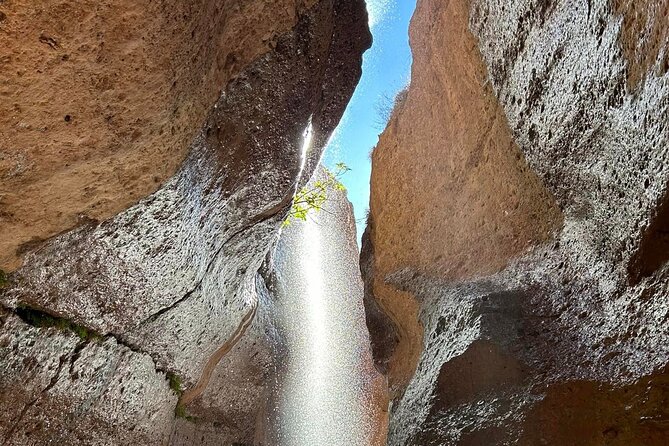
The final day is mainly a driving day. You travel to Azilal, visit Ouzoud Falls, eat lunch at a small local restaurant nearby, and continue back to Marrakech. The total drive is about five hours, with an expected arrival around 4 p.m.
This is a good finish because it gives you a final point of interest after the mountain route. Ouzoud Falls provides a clear contrast to the high passes and dry mountain valleys. It also breaks up the return journey instead of making the last day one long transfer.
You should keep your expectations practical. The waterfall stop is an excursion during the return, not a separate full-day visit. The schedule does not state how long you spend there, and traffic or road conditions could affect the arrival time in Marrakech.
What the $704.74 price really covers
At $704.74 per person, this is not a budget walk, but the price includes several costly and useful parts of a remote mountain trip. You receive transport connected with the five-day route, muleteer support, camping arrangements, a guesthouse night, and breakfast, lunch, and dinner for all five days.
The meal coverage is a real advantage. Food in the mountains is not something you can easily arrange at every stop, and cooking equipment and supplies must reach the camps somehow. The mule support also changes what you carry. You still need a personal bag with essentials, but you are not expected to haul all the tents and group supplies yourself.
Several costs remain yours. Drinking water is not included, nor are travel insurance, Marrakech accommodation and meals, personal equipment, or traditional tips. Those extras can affect the true cost, especially if you need to buy trekking gear in Morocco or add hotel nights around the trip.
I would compare the price with the level of support, not with the cost of a simple day hike. This is a private activity for your group, which can be valuable if you want a flexible pace and direct contact with your guide. The available information does not state the maximum group size, so ask before booking if privacy or walking pace is a major concern.
Fitness, altitude, and packing decisions
The operator asks for moderate physical fitness, but the numbers suggest you should aim higher than a casual weekend walker. The toughest day combines 22 kilometers, nine hours of walking, a substantial climb, and a long descent. You need to be comfortable walking for several consecutive days.
Altitude deserves respect. The route reaches 3,400 meters at Tarkedit Pass and rises toward a summit above 4,000 meters. The information does not give a formal altitude-acclimatization plan, so discuss any concerns with the operator before departure. If you develop symptoms that worry you, tell your guide early rather than trying to hide them.
Pack for a mix of conditions. Your personal equipment is excluded, so you should confirm the exact gear list, sleeping arrangements, and luggage limits. At a minimum, plan around sturdy walking shoes, warm layers, rain protection, sun protection, and a way to carry personal water. The route includes camping, high passes, and long descents, so comfort and reliability matter more than keeping your bag stylish or light.
Food is included, but water is not. That distinction is easy to miss when comparing prices. Ask how water is obtained along the route and how much carrying capacity you should bring.
Booking, cancellation, and who should take this trip
Confirmation is provided at booking, pickup is offered, and the meeting time is 8:30 a.m. The activity allows service animals and is near public transportation, though the mountain route itself is clearly not suited to anyone who cannot manage long walks over uneven ground.
You can cancel for a full refund up to 24 hours before the start time. A cancellation inside that window is not refundable, and late changes are not accepted. The trip depends on suitable weather and a minimum number of participants. If poor weather or low enrollment causes cancellation, you are offered another date or experience, or a full refund.
The private format should appeal to you if you want the group experience kept to your own party. It may also make the demanding days feel more manageable, since a guide can monitor your pace and condition. The strongest praise attached to this experience focuses on guide care, food, drink, and the work of the support team. Abdoe is specifically noted for checking safety and health, while Hassan is named as a strong guide on a shorter version.
Should you book the five-day Jebel M’Goun trek?
Book it if you want a demanding High Atlas crossing with mountain camps, mule support, nomadic encounters, and a real sense of distance from Marrakech. The changing route, high ridge views, and Ouzoud Falls finish give the five days a good shape.
Think twice if you want easy walks, private rooms every night, or a clearly stated ascent to the exact summit point. The third day is long, the altitude is serious, and several practical costs remain outside the $704.74 price.
For a fit hiker who values scenery, local support, and a route with more substance than a quick summit outing, this is a strong choice. Before paying, confirm the exact summit objective, water arrangements, equipment list, guide assignment, and group size. Those answers will tell you if this mountain challenge matches the trip you have in mind.
FAQ
Where does the Jebel M’Goun trek begin?
The journey starts with pickup in Marrakech at 8:30 a.m. You travel through Azilal and over Tizi N’Tirghist pass before reaching Ait Bougmez Valley, where the walking section begins.
How high does the route go?
The route reaches Tarkedit Pass at about 3,400 meters and climbs toward Jebel M’Goun, whose summit is listed at approximately 4,068 to 4,071 meters above sea level.
How many hours do you walk each day?
The walking days vary. Day one includes about two hours of walking, day two about six hours, day three around nine hours, and day four about six hours. Day five is mainly a drive with the Ouzoud Falls visit.
Are meals included?
Yes. Breakfast, lunch, and dinner are included for all five days. Drinking water is not included.
Where do you sleep during the trek?
The first three nights are in tents. The fourth night is in a local guesthouse in Timit. Accommodation in Marrakech is not included.
What happens if the trip is canceled because of weather?
If poor weather causes cancellation, you are offered a different date or experience, or a full refund. The activity also requires a minimum number of participants, with the same options if that minimum is not met.
Latest treks added in Marrakech
- 5 Days Desert Trekking from Marrakech★ 5.0 · 16 reviews
- 3 days Toubkal Trek from Marrakech★ 5.0 · 4 reviews
- Elite Experience Atlas Mountains Day Trekking★ 5.0 · 7 reviews
- 3 Days Berber Villages Trek – Authentic Atlas Mountain Experience★ 5.0 · 4 reviews
- Morocco Desert Trek 4 Days: 2 days on foot in Morocco★ 5.0 · 2 reviews
- Atlas Mauntains and 3 Valleys Trek★ 5.0 · 6 reviews
- Atlas Mountains Valley Trek – 3 Days★ 5.0 · 29 reviews
- Hiking 3 Days Trek Toubkal (4167m) From Marrakech :★ 4.5 · 2 reviews
5-Day Experiences, compared.
Kathmandu to Annapurna Base Camp (ABC) 5-Day Trek
Read our review →
Machu Picchu: 5-Day Salkantay Trek with Panoramic Train
Read our review →
Kathmandu/Pokhara: 5-Day Annapurna Base Camp (ABC) Trek
Read our review →
5-Day Pearl of Africa Chimps and Gorilla Trekking Safari
Read our review →Browse the lists this tour appears in