
REVIEW · KATHMANDU
14 Days Private Tour Everest Base Camp Trek
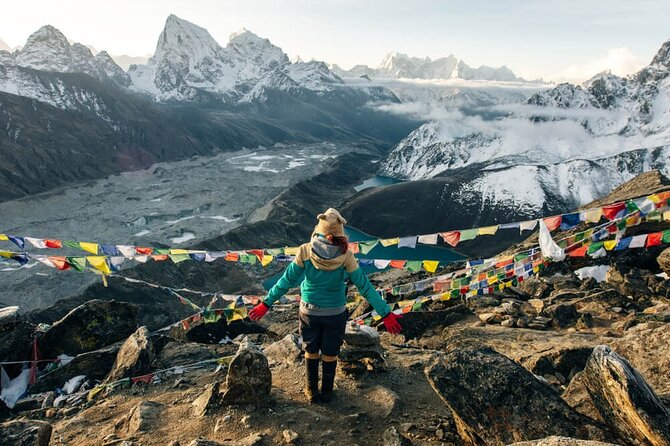
The big draw here is simple: you walk into the heart of the Khumbu instead of merely looking at Everest from a road or viewpoint. Over 14 days, you move from Kathmandu’s busy streets to suspension bridges, Buddhist monasteries, glacial valleys, and the high camps beneath the world’s tallest mountain.
I like the two acclimatization days, which give your body a fair chance to adjust, and I like the practical support: a licensed guide, a porter shared between two people, tea-house lodging, meals, permits, and Lukla flights are included. The main catch is the altitude and effort. This is not a casual holiday, and some days are described as lasting up to 15 or 16 hours, so you need solid fitness and a flexible attitude.
Key points before you book
- Private trekking group: Only your party takes part, with an excellent government-licensed guide and a porter assigned at a two-to-one ratio.
- The classic Everest route: You pass through Phakding, Namche Bazaar, Tengboche, Dingboche, Lobuche, Gorakshep, and Everest Base Camp.
- Two planned acclimatization stops: You spend a rest day in Namche and make a conditioning climb toward Nangkartsang Peak from Dingboche.
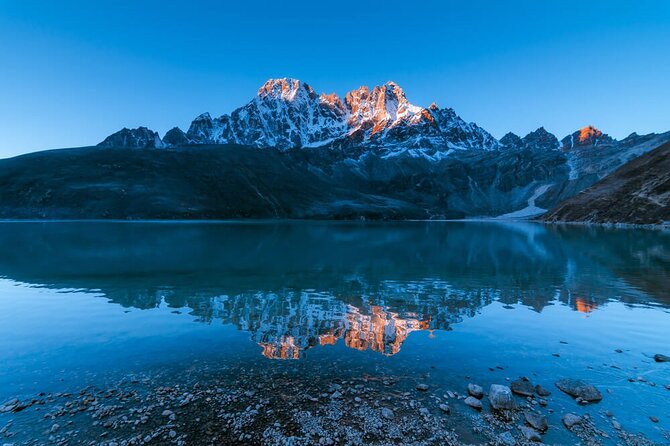
- Kala Patthar sunrise: The return route begins early so you can see Everest in the morning light from Kala Patthar.
- Strong package value: The $1,600 price includes domestic flights, three Kathmandu hotel nights with breakfast, tea-house stays, meals during the trek, permits, park fees, transfers, guide, and porter.
- Bring extra cash: Drinks, showers, Wi-Fi, charging, city meals, tips, and personal costs are not included.
What the $1,600 price really covers
At $1,600 per person, this is a substantial package rather than a bare trekking service. I find the price easier to judge when you separate the costly moving parts: the Kathmandu to Lukla and Lukla to Kathmandu flights, airport transfers, three nights in Kathmandu, trekking accommodation, meals, permits, guide, porter, and required taxes.
The package includes 12 breakfasts, 11 lunches, and 12 dinners. It also includes seasonal fruit and standard tea-house accommodation during the walking portion. In Kathmandu, breakfast is covered, but lunch and dinner in the city are your responsibility.
The guide’s meals, lodging, and related costs are included. A porter carries the bags for two members of the group, which keeps the price down while still reducing the load you carry yourself. I would confirm the expected bag weight and any luggage storage arrangements before departure, since those details are not specified here.
You still need money for bottled water and other drinks, tea, coffee, soft drinks, beer, hot showers, Wi-Fi, phone use, camera charging, and tips. Those small mountain costs add up quickly. A welcome and farewell cultural dinner are included, but ordinary city meals are not.
More Everest Base Camp Treks in Kathmandu
- Everest Base Camp Trek – 14 Days
★ 5.0 · 1,499 reviews - Everest Base Camp Trek
★ 5.0 · 842 reviews - Everest Base Camp Trekking
★ 5.0 · 485 reviews
Kathmandu, Lukla, and the first walk to Phakding
Your trip begins with an airport pickup at Tribhuvan International Airport. A representative meets you outside the terminal, takes you to your hotel, and holds a short meeting about the trek and preparation.
This first day is useful rather than glamorous. You can rest after your flight, sort your bags, and ask questions before heading into the mountains. The program includes three Kathmandu nights in all, with the final one after the trek.
The early flight to Lukla on Day 2 is a major part of the adventure. The short journey gives you views of the Kathmandu Valley and mountain ranges before landing at Lukla. From there, you begin walking toward Phakding.
The first trail section is relatively straightforward, though it starts with a rocky downhill stretch. You pass Cheplung, reach the Dudh Koshi River, and continue uphill to Phakding. It is a sensible opening day because you are already in the mountains, but the walk is not yet the most demanding part of the route.
Namche Bazaar and the first real altitude test
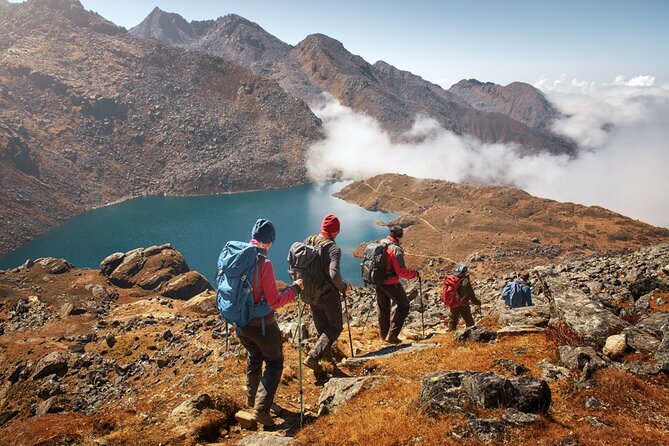
Day 3 takes you from Phakding to Namche Bazaar. This is where the trek begins to feel serious. You cross rivers and several suspension bridges, walk through Benkar, and get your first striking view of Mt. Thamserku.
At the Sagarmatha National Park checkpoint, the guide assists with permits. The route then drops toward the Dudh Koshi River before climbing again through Jorsale. The trail into Namche is uphill, and the combination of effort and increasing altitude can make this day feel longer than the distance suggests.
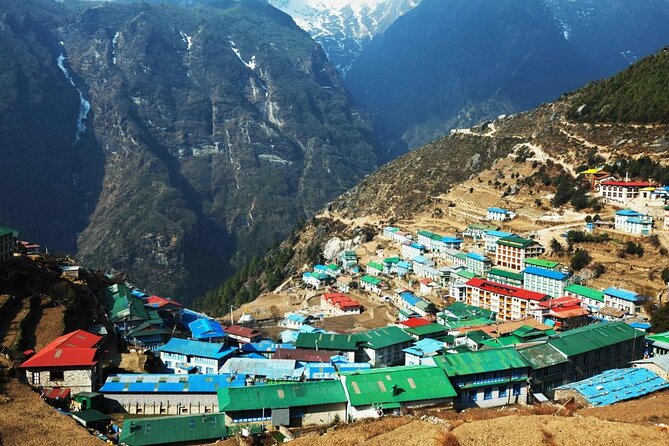
The reward comes in the approach to Namche Bazaar, the main trading center of the Khumbu region. The village sits on the hillsides and becomes your base for a full acclimatization day.
That rest day is not wasted time. You need to let your body adjust before going higher. The supplied program describes altitude sickness as a serious concern, and the included first-aid kit has an oximeter and pulse meter checker. Those tools do not replace careful monitoring, but they show that altitude is being treated as a real safety issue.
Tengboche and the quiet power of the monastery
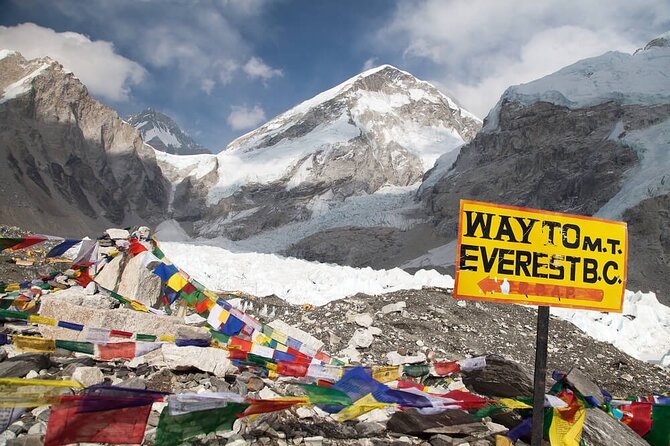
From Namche, the trail passes Kyanjum and enters rhododendron forest. You descend first toward the Phungi Thenga river, then climb toward Tengboche. This up-and-down pattern is typical of Himalayan walking, and it can be tiring even when the scenery distracts you.
The mountain views include Everest, Nuptse, Lhotse, and Ama Dablam. Ama Dablam becomes a recurring companion, so keep your camera ready when the trail opens up.
Tengboche’s main attraction is its large Tibetan Buddhist monastery, the biggest Tibetan Buddhist gompa in the Khumbu region. You are welcome to visit and spend time in the quiet surroundings. I would treat this stop as more than a photo opportunity. It gives the trek a cultural center and a pause from simply counting miles and elevation.
The route from Namche to Tengboche is described as challenging because of irregular ground and the later climb. Good boots and a patient pace matter here.
More Trekking Tours in Kathmandu
- Annapurna Circuit Trek with Tilicho Lake
★ 5.0 · 368 reviews - Everest Base Camp Trekking – 13 Day
★ 5.0 · 365 reviews - Everest Base Camp Trek
★ 5.0 · 350 reviews - Everest Base Camp Trek -14 Days
★ 5.0 · 321 reviews
Dingboche and the second acclimatization day
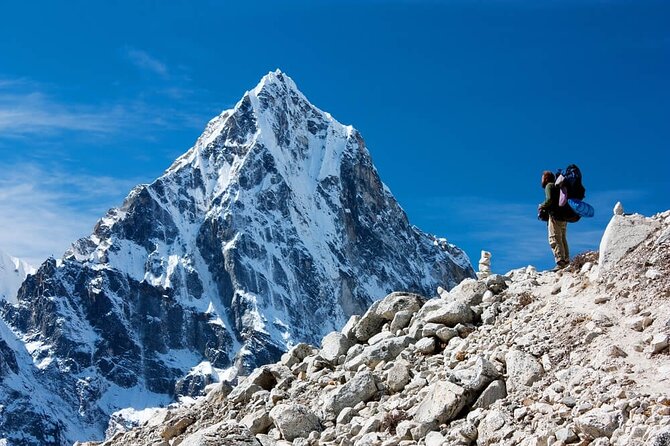
After Tengboche, you pass through Deboche, cross a suspension bridge, and continue toward Pangboche and Shomare before reaching Dingboche. The route includes forest, stone-carved walls, open valley sections, and increasingly snowy mountain views.
Ama Dablam is especially close along this section. The scenery becomes more exposed as you move away from the lower forests, and the walk feels more like a high mountain trek than a village hike.
Day 7 is the second acclimatization day. The planned climb toward Nangkartsang Peak is a smart use of a rest day because you gain height and then return to Dingboche to sleep lower.
Nangkartsang divides the valley toward Chhukung from the valley leading to Lobuche. From the climb, the views include Lhotse, Makalu, Cho Oyu, Ama Dablam, and other peaks. The ascent is steep enough to help prepare you, but the route returns to Dingboche rather than moving you farther up the valley.
Lobuche, the memorial, and the Khumbu Glacier
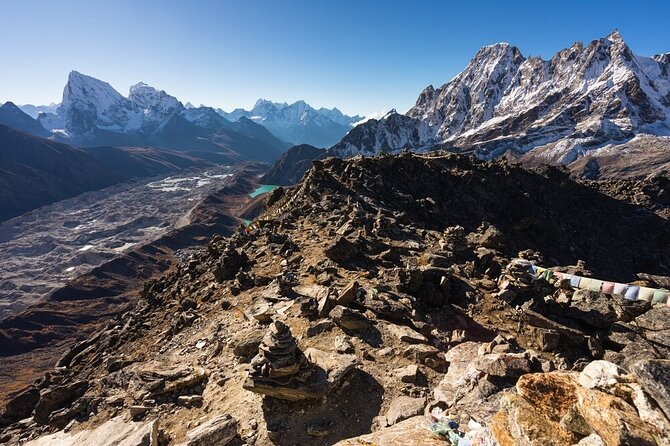
The walk from Dingboche to Lobuche is tougher. You climb toward a moraine, pass through the Pheriche valley, and continue through Thukla. After a long ascent, you reach the Everest Memorial and the Khumbu Glacier.
The memorial is an important emotional stop. It honors climbers who died while attempting Everest, and it changes the tone of the trek. The mountain is beautiful, but it is also serious and dangerous. I would allow time here rather than treating it as another quick waypoint.
After the memorial and glacier section, you continue to Lobuche for the night. At this altitude, even ordinary tasks can take more effort. The program describes this as a difficult trail, so do not judge your progress by your lowland walking speed.
Everest Base Camp and Gorakshep
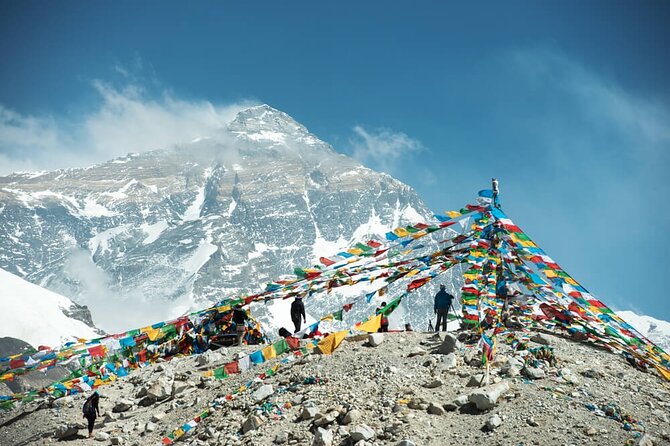
From Lobuche, the trail climbs more gradually toward Gorakshep. The route runs beside the Khumbu Glacier, with views toward Nuptse and possible views of Everest’s summit.
Gorakshep is described as the trek’s highest village. From there, you continue toward Everest Base Camp after a short break. The path near the glacier is not simply a smooth road, so careful footing and steady pacing matter.
Reaching Everest Base Camp is the emotional high point for most people on this route. You are at the base used by climbers preparing for the summit, surrounded by glacier country and enormous peaks. The experience is about standing in the place, not looking for a single perfect viewpoint. Conditions, cloud, and seasonal activity can change what you see.
The information provided for Day 9 is cut short, so exact timing and the full description of the return to Gorakshep are not clear. I would ask the operator to confirm the expected walking hours and overnight plan for this day before booking.
Kala Patthar at sunrise, then back to Pheriche
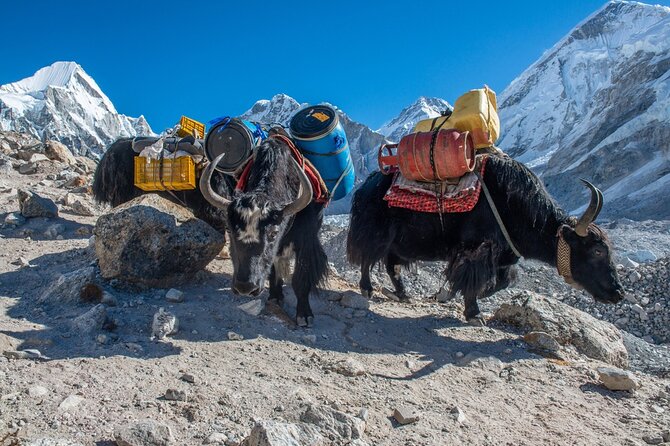
Day 10 begins early. You climb toward Kala Patthar to catch the sunrise and get a clearer view of Everest as morning light reaches the peaks.
The trail is described as difficult in places, but the route is easy to follow. From Kala Patthar, you return to Gorakshep for breakfast and then continue down to Pheriche.
I like the order of this section. You reach Base Camp first, then make the early climb to Kala Patthar when the light is best. It also gives you a proper mountain-view finale before the long return.
The descent to Pheriche should feel welcome, but it is still a full trekking day. Going downhill can be hard on knees and feet, especially after several days at high elevation.
Returning through Tengboche, Namche, and Lukla
From Pheriche, you retrace the route through Pangboche and Tengboche before returning to Namche Bazaar. You will recognize the trail, but walking it in reverse gives the valleys and bridges a different character.
Day 12 takes you from Namche down toward Lukla, passing through Phakding and several settlements. The downhill direction may feel easier for breathing, but it is still a long day on uneven ground.
You spend the night in Lukla, which protects the schedule from requiring an immediate airport transfer after the final walking day. Mountain flights can be sensitive to weather, so having the return day built into the program is useful, even though the details of delays and backup plans are not provided.
On Day 13, you fly back to Kathmandu and are met at the airport for transfer to your hotel. You can rest, recharge, and enjoy the included farewell cultural dinner. Day 14 is the final airport transfer for your international flight.
Guides, porters, and the private format
This is a private activity, so only your group participates. That matters on a high-altitude trek because pacing, rest stops, and daily decisions can be adjusted around your group rather than a large fixed party.
The package includes a government-licensed guide and one porter for every two members. The guide handles route support, permits, accommodation arrangements, and altitude concerns, while the porter reduces the amount you carry.
Several guide names appear in the supplied feedback, including Tek, Dil, Ram, Som Kumar Tamang, Keshab, and Mingmar. The comments repeatedly emphasize patience, humor, safety, help with equipment, and clear advice. You should not assume one of these people will be assigned to your departure, but you can ask the company to confirm your guide’s name and experience before you travel.
One useful detail is that equipment rental was arranged for at least some past departures. It is not listed as included in this package, so ask about rental costs and availability if you do not own high-altitude gear.
Fitness, altitude, and practical limits
The official fitness requirement is moderate, but the route itself is demanding. You should be comfortable walking for many hours on rocky, uneven ground and handling repeated climbs and descents.
The program lists several days at 13 to 16 hours, although those figures may represent broad daily schedules rather than nonstop walking. Either way, you should prepare for long days. The key challenge is not only distance. It is the combination of altitude, cold, uneven trails, limited facilities, and several nights at high elevation.
The two acclimatization days are essential. Do not treat them as optional sightseeing days or try to race ahead. If you feel unwell, tell your guide immediately. The included first-aid kit and oxygen saturation checks are helpful, but no package can remove the risk of altitude sickness.
You should also expect to pay for hot showers, Wi-Fi, charging, and drinks as you go. Tea houses offer basic lodging rather than city-hotel comfort. That simplicity is part of the setting, but it requires flexibility.
What the strong ratings mean for your decision
The tour has a 4.9 rating from 105 reviews and is recommended by 98 percent of customers. The most consistent praise focuses on guide support and organization, not just the mountain views.
Names such as Tek, Dil, Ram, Som, and Keshab appear alongside comments about guides being patient, funny, caring, helpful, and experienced. One person appreciated being given time to walk at a personal pace. Another highlighted quick communication and advice before departure. Equipment rental help, careful tea-house choices, and preparation for cold conditions also come up in the supplied feedback.
I would read those points as a sign that the company’s greatest value is its local support system. The mountains supply the spectacle, but a good guide can make the difference when you are tired, cold, uncertain about the route, or struggling with altitude.
The high rating does not change the physical demands. You still need the right clothing, fitness, insurance, and attitude. It also does not guarantee a particular guide or weather conditions.
Should you book this Everest Base Camp trek?
I would book this tour if you want the classic Everest Base Camp route with private support and a package that handles the major logistics. The included Lukla flights, permits, meals, tea-house lodging, guide, porter, airport transfers, and Kathmandu hotels make the $1,600 price reasonable for the services listed.
I would pause before booking if you dislike basic lodging, long walking days, uncertain mountain weather, or extra costs for drinks and facilities. Ask for the exact daily walking times, bag-weight rules, guide assignment, gear rental details, and plan for flight delays.
For a fit first-time Himalayan trekker who wants help without joining a large group, this is a strong choice. For someone seeking a relaxed holiday, it is the wrong trip. The payoff is not comfort. It is the steady change from city streets to the glacier valleys below Everest.
FAQ
Where does the Everest Base Camp trek begin?
The tour begins at Tribhuvan International Airport in Kathmandu, Nepal. An airport representative provides pickup and transfers you to the arranged hotel.
Is this a private tour?
Yes. Only your group participates in the activity.
What flights are included?
The package includes the Kathmandu to Lukla flight and the return flight from Lukla to Kathmandu.
Are accommodation and meals included?
Three nights in Kathmandu with breakfast and standard tea-house accommodation during the trek are included. The package lists 12 breakfasts, 11 lunches, and 12 dinners. Lunch and dinner in Kathmandu are not included.
Are a guide and porter provided?
Yes. The package includes a government-licensed guide and one porter for every two members. Their meals, accommodation, and related costs are included.
What costs are not included?
Personal expenses such as phone and camera charging, hot showers, Wi-Fi, drinks, and tips are not included. Lunch and dinner during your Kathmandu stay are also extra.
What is the cancellation policy?
You receive a full refund if you cancel at least three full days before the experience start time. Cancellations or changes made within three full days are not refunded or accepted. If poor weather causes cancellation, you are offered another date or a full refund.
Latest treks added in Kathmandu
- Private Manaslu Circuit Trek at Himalayas★ 5.0 · 3 reviews
- Ghorepani Poonhill Trek★ 5.0 · 5 reviews
- Ghorepani Poon Hill Trek★ 5.0 · 16 reviews
- Upper Mustang Trekking★ 3.0 · 2 reviews
- Amazing 1 Day Trekking Experience in Kathmandu Nepal★ 5.0 · 24 reviews
- Upper Mustang Trekking★ 5.0 · 2 reviews
- Upper Mustang Trek★ 5.0 · 5 reviews
- Upper Mustang Trekking★ 5.0 · 4 reviews
Everest Base Camp Treks, compared.






Browse the lists this tour appears in