
REVIEW · KATHMANDU
14 Days of Adventure Trekking to Everest Base Camp
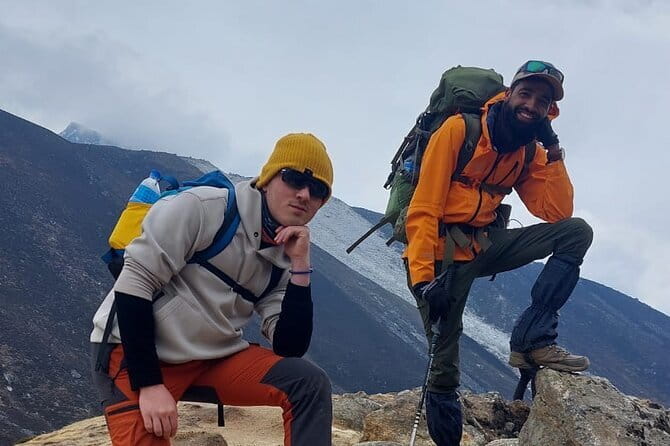
Everest Base Camp is reached on foot, one steady day at a time, through Sherpa villages, suspension bridges, pine and rhododendron woods, high alpine country, and the great Khumbu glacier. The prize is not only the base camp sign. It is the changing view of Ama Dablam, Lhotse, Nuptse, Pumori, and Everest as you gain height.
I like the built-in acclimatization day at Dingboche, and I like that the price includes domestic flights, porters, teahouse lodging, permits, and airport transfers. Guides named TN Bhatta and Rajendra are associated with the operation, and personal care from the guiding team matters greatly on a trek like this. The main caution is altitude: this is a serious physical challenge, not a gentle sightseeing holiday.
Key points to know before booking
- Fourteen days from Kathmandu: The plan covers arrival, the trek, return to the capital, and departure-day transfer.
- Lukla flight included: The short flight to Tenzing-Hillary Airport saves days of road travel and begins the trek high in the Khumbu.
- Acclimatization is built in: You spend an extra day around Namche and another around Dingboche before reaching the highest camps.
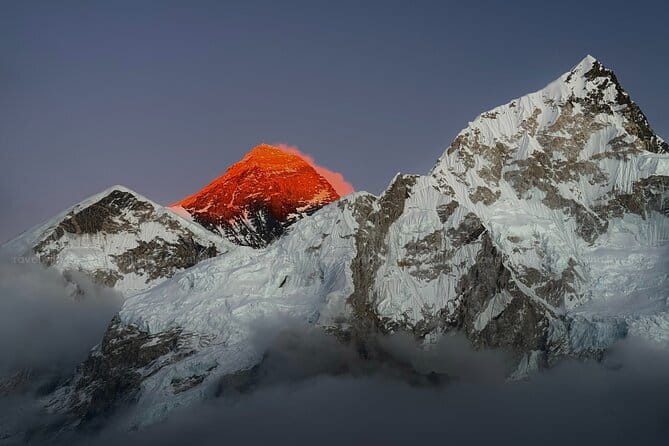
- Two major viewpoints: Everest Base Camp is the main goal, while Kala Patthar provides the clearest close view of Everest and a sunrise start.
- Private format: Only your group participates, with local guides and porters supporting the route.
- $1,350 covers the core structure: Flights, lodging, permits, meals listed in the program, airport transfers, and a medical kit are included, but personal gear, evacuation, tips, drinks, Wi-Fi, and charging cost extra.
What the $1,350 price really buys
At $1,350, this trip gives you the expensive backbone of an Everest Base Camp trek. Domestic flights between Kathmandu and Lukla are included, along with local guides, porters, accommodation, airport transfers, national park permits, TIMS cards, and a medical kit.
That matters because small costs build quickly in the Himalayas. Lodging, permits, flights, and support staff are not minor details. Having them arranged also means you can focus on walking, eating, resting, and managing your energy.
The inclusions need a careful reading. Dinner is listed, and breakfast is included in the program, though the wording about breakfast is unclear. Do not assume every lunch is covered. The itinerary repeatedly refers to lunch stops, but personal expenses such as drinks, laundry, Wi-Fi, and battery charging are specifically excluded.
You also pay for international airfare, your Nepal visa, personal clothing and equipment, emergency evacuation, extra accommodation or meals, and tips for the guide and porters. Alcoholic drinks and soft drinks are not included. At high altitude, even a simple hot drink or device charge can become a paid extra.
The private format is another useful part of the value. Your group travels together rather than joining a large mixed departure. That can make pacing and rest stops easier to manage, though the exact group size is not stated.
More Everest Base Camp Treks in Kathmandu
- Everest Base Camp Trek – 14 Days
★ 5.0 · 1,499 reviews - Everest Base Camp Trek
★ 5.0 · 842 reviews - Everest Base Camp Trekking
★ 5.0 · 485 reviews
Kathmandu begins with Thamel and a Nepali dinner
Your first day starts with an airport pickup and hotel transfer in Kathmandu. Thamel gives you an easy introduction to the city, with trekking shops, restaurants, colorful streets, and places to check any missing gear before leaving for the mountains.
The welcome dinner is more than a formal meal. You are served a Nepali thali with rice, lentil soup, vegetables, pickles, and a meat or vegetarian choice. Lassi and rakshi may also be available, with traditional music and dance during the evening.
I like this start because it gives you time to meet your guide before the trail begins. It also lets you settle into Nepal at a sensible pace. The listed schedule is approximate, so use the first day to rest and prepare rather than trying to squeeze in too much sightseeing.
Your meeting point is in Thamel, Kathmandu. Pickup is offered, and the final airport transfer is arranged on departure day.
Lukla to Phakding: a short flight and an easy first walk
Day two begins with the domestic flight from Tribhuvan International Airport to Lukla. The flight itself is listed at about 35 minutes, with additional time for airport procedures and arrival.
Lukla’s Tenzing-Hillary Airport is famous for its mountain setting and short runway. Weather can affect flights, so keep your first day flexible. The program includes a weather-related cancellation option, with a different date or full refund if the activity is canceled for poor conditions.
After landing, you meet the trekking crew and have breakfast at a local hotel. The walk to Phakding is a gentle introduction compared with the days ahead. You cross the Dudh Koshi River, reach the village, and may visit Phakding Monastery in the evening.
Phakding is your first teahouse night. Expect a simple mountain lodging experience rather than a city hotel. You sleep there before the route turns upward toward Namche Bazaar.
Namche Bazaar requires your first real effort
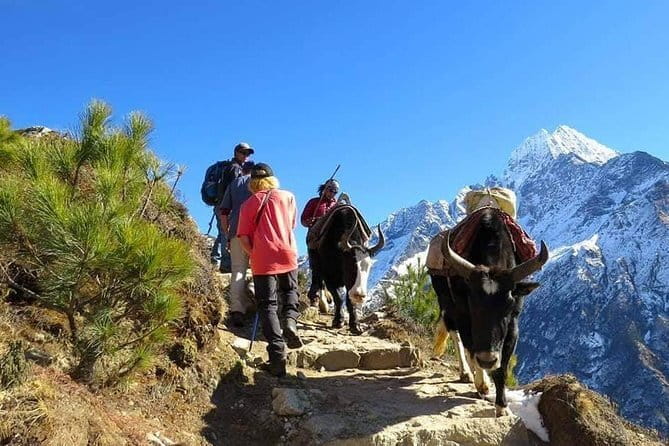
The path from Phakding enters Sagarmatha National Park at Monjo. The park covers a huge section of the Khumbu and reaches from forested lower valleys to the summit area of Everest. The change in scenery is gradual at first, with river crossings, woods, and villages.
Lunch is planned at Jorsalle, a settlement between the Dudh Koshi River and forest. After that comes one of the route’s memorable features, the Hillary Bridge. It spans the fast-moving river on a high suspension crossing, and you will cross it on the climb toward Namche.
Namche Bazaar is the gateway town for the Everest region and the first place where the altitude starts to feel serious. The climb into town can be tiring after the bridge, especially if this is your first high-altitude trek. You spend the night there, giving your body time to adjust.
The itinerary gives Namche a full acclimatization day. That is good planning. Skipping rest days can make the later stages much harder, and the extra day lets you see more without giving up recovery time.
More Trekking Tours in Kathmandu
- Annapurna Circuit Trek with Tilicho Lake
★ 5.0 · 368 reviews - Everest Base Camp Trekking – 13 Day
★ 5.0 · 365 reviews - Everest Base Camp Trek
★ 5.0 · 350 reviews - Everest Base Camp Trek -14 Days
★ 5.0 · 321 reviews
Namche’s museum and Everest View Hotel
Your rest day around Namche includes the Sagarmatha National Park Museum, also called the Sherpa Museum in the program. It focuses on Sherpa mountaineering and offers views toward Kusum Kanguru, Thamserku, and Kongde.
You then walk to Hotel Everest View. The hotel is known for its high location and broad views of the Everest range. The stop includes time for drinks or a meal, though check which items are covered before ordering.
From there, you descend toward Khumjung for lunch. Khumjung gives you a close look at a Sherpa settlement away from the main town, with a different rhythm from the shops and lodges of Namche. You return to Namche for another night.
This is one of the strongest sections of the plan because it follows a useful altitude rule: climb higher during the day, then sleep at the lower point. You should still walk slowly and tell your guide if you develop a headache, nausea, unusual tiredness, or other altitude symptoms.
Tengboche brings forests, Ama Dablam, and a major monastery
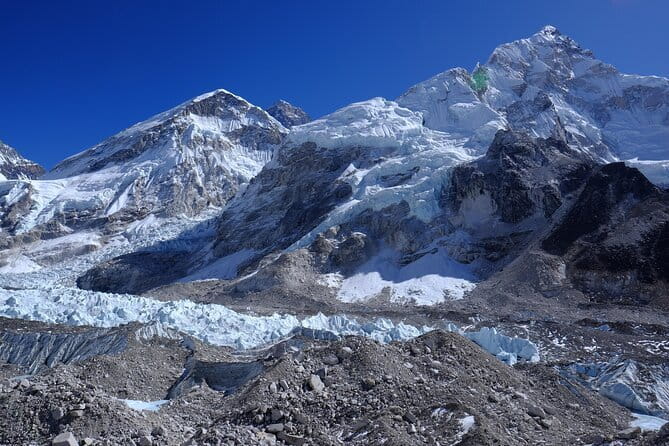
The route leaves Namche for Kyangjuma, where you stop for tea and views of Ama Dablam. That mountain becomes a recurring landmark on the trail, changing shape as you gain height.
Lunch is scheduled at Phungi Thenga. From there, the trail climbs toward Tengboche, one of the most important settlements on the route. The village is home to Tengboche Monastery, described as the largest monastery in the Khumbu region.
You stay overnight at Tengboche. The day combines a real climb with a cultural stop, so it is not just a march from one bed to the next. If the monastery is open for visits, follow local instructions and keep the setting quiet and respectful.
Dingboche and the end of the tree line
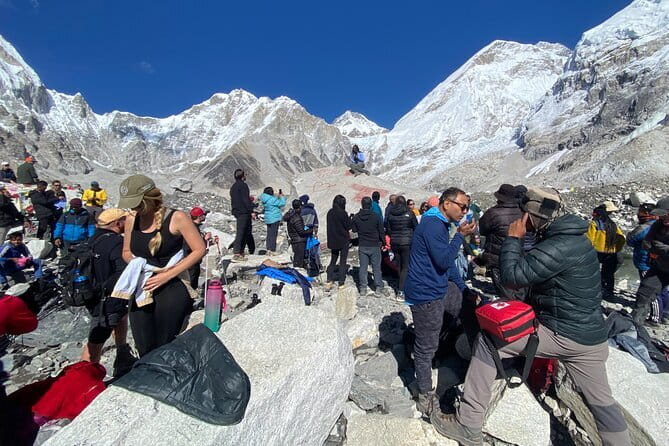
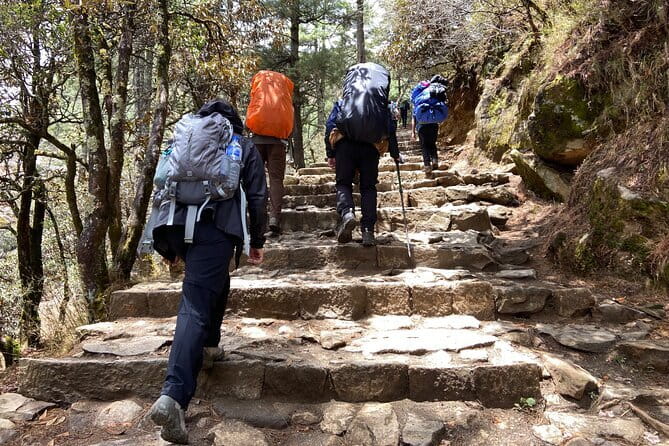
The walk to Dingboche passes through rhododendron forest and settlements such as Deboche. At Pangboche, the trail reaches the last large settlement on the upward route. The village includes a monastery, schools, cultivated fields, and terraced farmland.
Pangboche is also where routes separate toward Everest Base Camp and Ama Dablam Base Camp. Lunch is arranged around Pangboche and Somare before the path continues toward Dingboche.
Dingboche sits in high alpine country, where trees become scarce. That change is easy to notice, and the air feels thinner. You spend the night there before the second acclimatization day.
The combination of a slower schedule and an extra night is a major strength. You cannot bargain with altitude, and a well-paced itinerary gives you a better chance of reaching Base Camp without rushing.
Chukhung Ri adds a useful acclimatization climb
The Dingboche rest day is active rather than lazy. You hike toward Chukhung Ri, a viewpoint with views of several mountain ranges, then descend to Chukhung for lunch and return to Dingboche.
The listed timing for Chukhung Ri is brief, so ask your guide about the actual walking plan and expected altitude gain. The important point is the pattern: go higher during the day, then sleep back in Dingboche.
You also get a different view of Ama Dablam from this area. Mountains often look completely different from opposite sides, and the changing angle is one of the pleasures of this route.
The day may be physically demanding even though it is labeled acclimatization. Take it slowly. You are not trying to win the climb. You are preparing your body for the higher villages ahead.
Lobuche, the Thukla memorial, and the Italian Pyramid
After Dingboche, you pass through Thukla, also called Dughla, before reaching Lobuche. Lunch is planned around Thukla, and the route crosses the Thukla Pass.
The Thukla Memorial Park honors climbers who died on peaks in the Everest region. It is a quiet and sobering place. The memorial gives the trek a human dimension, reminding you that these mountains are beautiful but not harmless.
Lobuche is the overnight stop. Lodging becomes more basic as you go higher, and the cold, thin air can make even a normal evening feel long. Keep your water, warm layers, and headlamp close at hand.
If time and energy allow, the group may visit the Italian Pyramid, an international high-altitude research facility near Lobuche at about 5,050 meters. Its pyramid-shaped structure supports work in high-altitude medicine, glaciology, meteorology, and climate science. An overnight option there is mentioned, but it is flexible and should be confirmed before you count on it.
Everest Base Camp is the goal, but not the best viewpoint
Day nine is the great push. You walk to Gorak Shep, leave your main baggage and bedding there, eat lunch, and continue toward Everest Base Camp.
The route passes glaciers and brings views of the Khumbu Icefall, Everest, Lhotse, Nuptse, Pumori, and other high peaks. The terrain is rougher than the lower trail, and the thin air can make the distance feel longer than the map suggests.
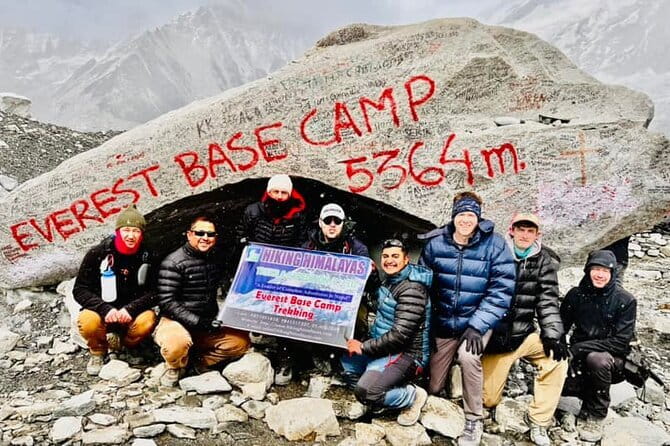
At Base Camp, you can explore near the glaciers and the expedition route and take photographs before returning to Gorak Shep. The exact appearance of Base Camp varies with season and expedition activity, so do not expect a permanent village of tents.
It is also worth knowing that Everest is not always best seen from Base Camp itself. The site is the symbolic finish, while the surrounding peaks and icefall provide much of the visual drama.
If time allows, there may be a late walk toward the Kala Patthar helipad for sunset. Treat this as optional. After the Base Camp walk, your priority should be food, warmth, and sleep.
Kala Patthar sunrise is the visual high point
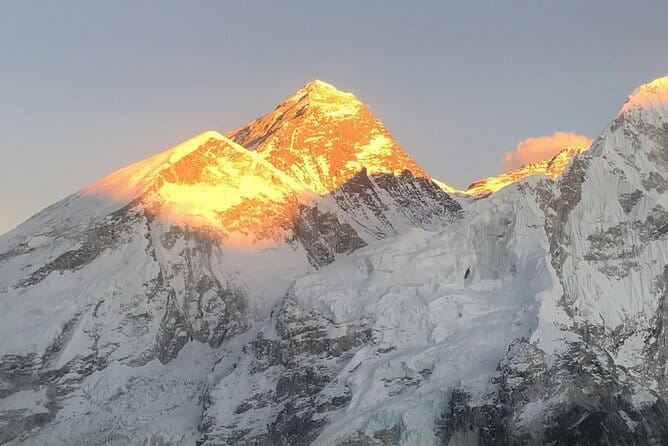
The next morning begins around 4 a.m. for the climb toward Kala Patthar. The early start is tough, but this viewpoint is presented as the closest and clearest place on the route to see Everest and the surrounding range.
Sunrise changes the peaks minute by minute. The walk back to Gorak Shep follows breakfast and packing, then you descend through Lobuche and Thukla toward Pheriche.
This is a demanding two-day sequence: Base Camp, Gorak Shep, an early Kala Patthar climb, and a long descent. The descent is easier on breathing but can be hard on knees and legs. Trekking poles and well-fitted footwear are sensible personal equipment, though they are not supplied.
Pheriche is the night’s stop. The lower altitude should feel welcome after Gorak Shep, but you still need to rest. The trek is not finished until you are back in Lukla.
The return route passes through Namche and Lukla
You retrace the route through Pangboche and Phungi Thenga before reaching Namche Bazaar. The familiar trail now looks different in reverse, and the descent usually allows more conversation and time to notice details missed on the climb.
Namche is the right place for a final celebration. The program mentions music venues and cold beer, but those drinks are personal expenses. Keep the celebration moderate because the next day continues to Lukla.
From Namche, you pass through Monjo for the Sagarmatha National Park permit checkout, stop for lunch at Phakding, and continue to Lukla. You spend the night there before the flight to Kathmandu.
Again, weather can affect the flight. Do not schedule an international departure too tightly after the Lukla return. This program includes a Kathmandu return on day 13, but flight times in mountain regions can change.
Kathmandu closes the trip with shopping and a farewell meal
After the flight from Lukla to Kathmandu, you have time to rest, visit bars or pubs, and shop for souvenirs. Thamel is useful for last-minute gifts such as handmade crafts, pashmina shawls, singing bowls, thangka paintings, jewelry, and Nepali tea.
A farewell dinner is arranged by Trek Curator. On day 14, you have breakfast at the hotel, more time in Thamel, and an airport drop-off at Tribhuvan International Airport.
The schedule gives you a practical final day rather than forcing a rushed departure straight after the mountain flight. Shopping costs are not included, and neither are personal meals or drinks outside the stated program.
Who should book this Everest trek?
I would choose this trip if you want a private, organized route with local support and a clear fourteen-day plan. It suits someone with moderate fitness who is ready to walk for many days, sleep in basic mountain lodges, and accept changing weather and simple facilities.
It is also a good fit if you want cultural stops, not just mountain photographs. The Thamel dinner, Sherpa Museum, Khumjung, Tengboche Monastery, Pangboche, and the Thukla memorial give the trek more meaning than a simple point-to-point hike.
I would think twice if you dislike early mornings, shared teahouse conditions, cold rooms, limited connectivity, or uncertainty around Lukla flights. The itinerary includes a medical kit, but emergency evacuation is not included. Make sure your insurance and personal preparation match the altitude and remoteness of the route.
Cancellation is free up to 24 hours before the start time. Within 24 hours, the payment is not refunded, except that poor weather cancellation by the operator offers a different date or full refund.
Should you book it?
Book this trek if you want the main Everest Base Camp route handled by a local team, with flights, porters, permits, lodging, and acclimatization days included for $1,350. The strongest features are the private format, the well-placed Dingboche rest day, and the paired Base Camp and Kala Patthar visits.
Before paying, confirm exactly which breakfasts, dinners, and lunches are covered, ask about the assigned guide, and budget for gear, tips, drinks, charging, and possible emergency costs. If you are ready for a demanding walk and can accept basic conditions, this plan gives you a strong route to one of the world’s great mountain destinations.
FAQ
How long is the Everest Base Camp trek?
The program lasts approximately 14 days, including arrival and departure days in Kathmandu, the trek from Lukla, the return flight, and airport transfers.
Does the tour include flights from Kathmandu to Lukla?
Yes. Domestic flights between Kathmandu and Lukla are included, including the outbound flight to Tenzing-Hillary Airport and the return flight to Kathmandu.
Is airport pickup included?
Yes. Airport transfers are included, including arrival pickup in Kathmandu and the departure transfer to Tribhuvan International Airport.
Where does the trek start?
The meeting point is in Thamel, Kathmandu. After the Kathmandu portion, you fly to Lukla and begin walking from there.
Are guides and porters included?
Yes. Local guides and porters are included in the program. Guides connected with the operation include TN Bhatta and Rajendra.
Is accommodation included?
Yes. Accommodation is included according to the program, using hotels, teahouses, and lodges. Extra nights outside the planned schedule are not included.
What is not included in the price?
International airfare, the Nepal visa fee, personal gear, emergency evacuation, extra nights and meals, alcoholic and soft drinks, laundry, Wi-Fi, battery charging, personal expenses, and tips for guides and porters are not included.
Latest treks added in Kathmandu
- Private Manaslu Circuit Trek at Himalayas★ 5.0 · 3 reviews
- Ghorepani Poonhill Trek★ 5.0 · 5 reviews
- Ghorepani Poon Hill Trek★ 5.0 · 16 reviews
- Upper Mustang Trekking★ 3.0 · 2 reviews
- Amazing 1 Day Trekking Experience in Kathmandu Nepal★ 5.0 · 24 reviews
- Upper Mustang Trekking★ 5.0 · 2 reviews
- Upper Mustang Trek★ 5.0 · 5 reviews
- Upper Mustang Trekking★ 5.0 · 4 reviews
Everest Base Camp Treks, compared.






Browse the lists this tour appears in