
REVIEW · KATHMANDU
14 Days Everest Base Camp Trekking
Flying into the Himalayas is only the opening scene. This 14-day Everest Base Camp trek carries you from Lukla through Sherpa villages, rhododendron woods, high valleys, and glacier country to the foot of the world’s highest mountain. The reward is not just a photograph at Base Camp. It is the slow change in air, plants, buildings, and daily rhythm as you climb.
I like the sensible acclimatization plan, with rest days in Namche and Dingboche, and I like that the $1,420 price includes return Lukla flights, lodging, meals, permits, a guide, and porter support. The main caution is simple: this is a serious high-altitude trek, not a long sightseeing walk. You need strong fitness, patience, and a willingness to sleep simply.
Key points to know before you book
- Two planned acclimatization days: You rest in Namche on Day 4 and Dingboche on Day 7, with optional hikes to higher viewpoints.
- Kala Patthar adds the big mountain view: The early climb to 5,565 meters is one of the trip’s most demanding and rewarding moments.
- Lukla flights are built in: Round-trip domestic flights, departure taxes, airport transfers, and ground transport in private vehicles are included.
- Tea-house trekking keeps the cost reasonable: You stay in the best available twin-share lodges, with meals included during the mountain portion.
- Guide and porter support are included: One certified English-speaking guide and one porter for every two trekkers are provided.
- The schedule is physically demanding: Several trekking days are listed at about 10 hours, and the itinerary reaches more than 5,000 meters.
Why this Everest Base Camp route works
The route follows the classic approach from Lukla to Base Camp, with a steady gain in height rather than a rush to the top. You begin in Kathmandu, fly to Lukla at 2,850 meters, and finish in the Khumbu region after passing through Phakding, Namche Bazaar, Tengboche, Dingboche, Lobuche, and Gorak Shep.
I like the way the plan breaks up the climb. Namche gives you an early pause before the serious altitude begins. Dingboche gives you another rest day before Lobuche and Gorak Shep. Those stops are not wasted time. They give your body a chance to adjust while also adding short walks and mountain views.
The route is private, so only your own group participates. That can make the pace and daily routine easier to manage than a large fixed group. Still, the supplied schedule lists many long days, and the descriptions sometimes use broad timing estimates. You should ask the operator to confirm the current walking times and flight plan before departure.
More Everest Base Camp Treks in Kathmandu
- Everest Base Camp Trek – 14 Days
★ 5.0 · 1,499 reviews - Everest Base Camp Trek
★ 5.0 · 842 reviews - Everest Base Camp Trekking
★ 5.0 · 485 reviews
Day 1: Kathmandu arrival and mountain preparation
Your trip begins at Tribhuvan International Airport in Kathmandu. Airport pickup is offered, and private ground transport is included for the listed airport and hotel transfers.
The first day is less about sightseeing and more about getting organized. You can expect time to sort trekking equipment, meet the support team, and prepare for the early flight to Lukla. Since food and accommodation in Kathmandu are not included, budget $45 per day for those costs.
Kathmandu is also your buffer before the mountains. If weather affects the Lukla flight later in the trip, having some flexibility in your schedule matters. The supplied plan does not promise extra weather days, so you should avoid booking a tight international connection immediately after the trek.
Day 2: Lukla to Phakding on the Dudh Koshi
The flight to Lukla is one of the memorable parts of the trip. Lukla’s runway sits on a steep mountain slope, and landing there makes it clear that the city has been left far behind.
After meeting your guide and porters, you walk along the Dudh Koshi Valley toward Phakding at about 2,656 meters. The trail is well marked and passes through the first mountain villages and river scenery. This is an important adjustment day. You are walking, but you are not yet at extreme altitude.
The schedule describes this as a long day, up to about 10 hours, though the exact pace will depend on your group and the operating conditions. Keep your day pack light, carry water, and save some energy for the days ahead.
Day 3: Suspension bridges and the climb to Namche Bazaar
From Phakding, the trail crosses and recrosses the river on high suspension bridges. These crossings add a little drama to the morning, especially when the valley opens below you.
Beyond Monjo, at roughly 2,845 meters, you enter Sagarmatha National Park. The park protects the fragile mountain environment, and this is where the route begins to feel more remote and more distinctly Himalayan.
The final approach to Namche Bazaar includes a sustained climb. Namche sits between ridges at about 3,440 meters and serves as the main service center for the Khumbu route. You will find lodges, tea shops, and souvenir shops, but do not confuse comfort with ease. The altitude can make even a modest climb feel slow.
More Trekking Tours in Kathmandu
- Annapurna Circuit Trek with Tilicho Lake
★ 5.0 · 368 reviews - Everest Base Camp Trekking – 13 Day
★ 5.0 · 365 reviews - Everest Base Camp Trek
★ 5.0 · 350 reviews - Everest Base Camp Trek -14 Days
★ 5.0 · 321 reviews
Day 4: Namche rest day and Everest View Point
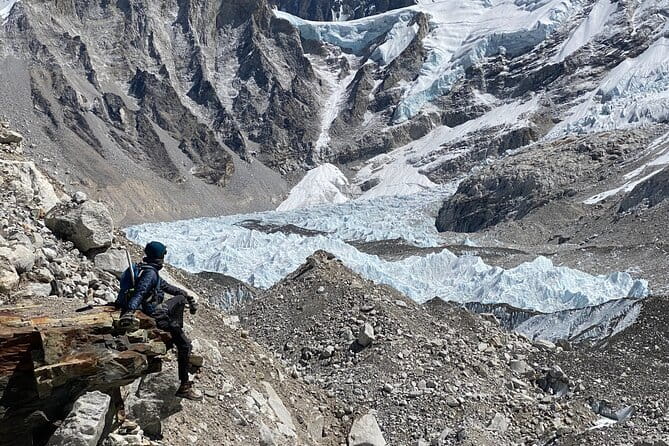
A full rest day in Namche is one of the itinerary’s best choices. You can sleep later, walk gently, and let your body adjust before climbing higher.
The planned outing includes the Everest View Point. From the Namche area, you may see Everest along with other major peaks, depending on weather and visibility. The point of the day is not to tire yourself out. It is to climb a little higher, return to Namche, and sleep at a lower elevation.
Namche also gives you a useful chance to handle practical needs. You can check clothing, batteries, snacks, and personal gear before the route becomes more basic. Hot showers cost extra during the trek, listed at $5 per person, so this is a sensible place to use available facilities if needed.
Day 5: Namche to Tengboche and the first great peak views
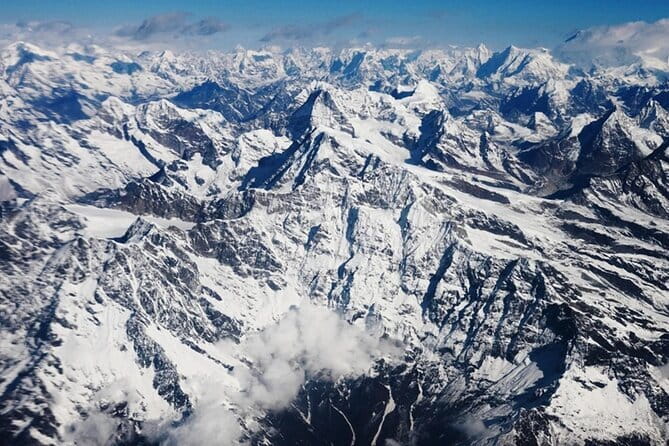
The trail contours along the valley high above the Dudh Koshi. The walking is scenic, but it is not flat. You gain and lose height as the path follows the shape of the mountain slopes.
This is where the big peaks begin to feel close. Views include Everest, Lhotse, Nuptse, and Ama Dablam. The route passes several villages and reaches Tengboche, written as Tyangboche in the schedule, at around 3,860 meters.
Tengboche is known for its monastery setting and open mountain views. The combination of spiritual life, stone walls, forest, and high peaks gives this stop a strong sense of place. The day is listed at about 10 hours, so make the most of the views but keep your pace controlled.
Day 6: Pangboche and the approach to Dingboche
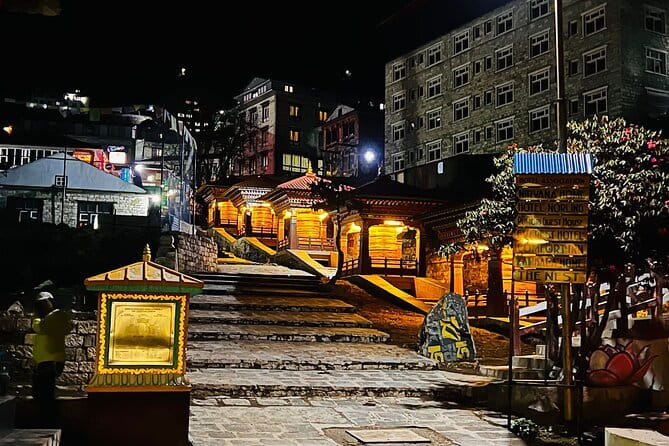
You descend through a forest, cross the Imja Khola, and climb toward Pangboche at approximately 3,985 meters. The vegetation begins to thin as you gain height, and the scenery shifts from wooded trails to open alpine slopes.
Pangboche sits opposite Ama Dablam, giving you one of the route’s most striking mountain settings. The village also includes a gompa and Mani walls, reminders that this is a lived-in cultural region, not simply a path to a famous viewpoint.
You continue toward Dingboche, a key stop before the high country. This is another long trekking day, listed at about 10 hours. If you are feeling the altitude here, tell your guide early. Quietly pushing through discomfort is not a smart way to reach Base Camp.
Day 7: Dingboche acclimatization and Nagarjun
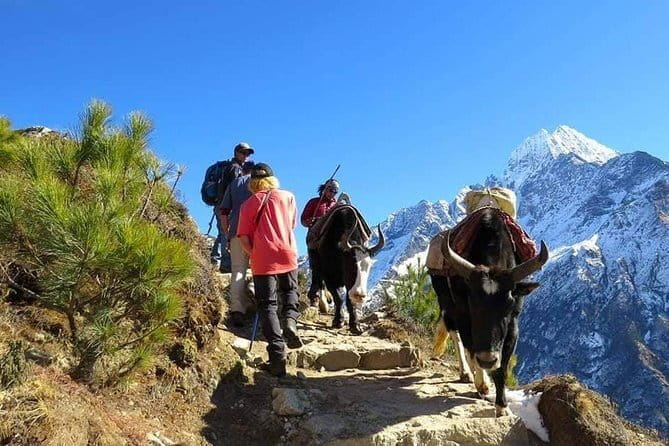
Dingboche provides the second full acclimatization day. You can walk up the valley toward Tshola Tsho at about 4,510 meters, with views toward the steep walls of Cholatse and Taboche.
The schedule also mentions a climb to Nagarjun at about 5,100 meters. This is an optional high walk, so your guide can help decide how much makes sense for you. The purpose is to gain height during the day and return to Dingboche to sleep lower.
This is a demanding rest day, not a day off in the usual sense. You should not feel pressured to reach every optional point. At this altitude, a shorter walk with steady breathing may do more for you than a hard push.
Day 8: Dingboche to Lobuche beside the Khumbu Glacier
The trail continues up a broad valley beneath Cholatse and Tawache. You then turn toward the Khumbu Glacier and climb steeply toward Duglha at about 4,620 meters.
Duglha is a natural lunch stop before the route continues to Lobuche. The air is thinner now, the terrain is rougher, and the mountain walls feel much closer. You are entering the high section where cold, wind, and fatigue can shape the day as much as the distance.
Lobuche is an important overnight stop because it places you within reach of Gorak Shep and Base Camp. The listed walking time is about 10 hours, so you should expect a full day on your feet. Keep snacks and warm layers handy rather than buried in your main bag.
Day 9: Gorak Shep and Everest Base Camp
You follow the Khumbu Glacier toward Gorak Shep at approximately 5,164 meters. The trail rises to cross a tributary glacier, and the surrounding views become increasingly severe and impressive.
The schedule lists about one hour to Gorak Shep, followed by lunch and a much longer outing to Everest Base Camp. The Base Camp walk is described as taking about five hours, with a total stop time of roughly seven hours. The route weaves through ice pinnacles and past crevasses of the Khumbu Glacier.
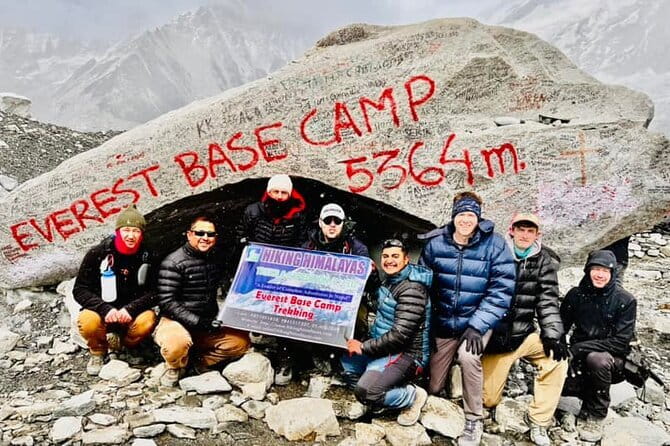
This is not a casual photo stop. At 5,364 meters, you may move slowly, and the uneven glacier route can feel demanding. The return route can use a higher path for broader views. Your guide’s pacing and judgment matter greatly here, especially if anyone feels unwell.
Base Camp itself is a major goal, but keep expectations realistic. It is a seasonal mountaineering camp, not a permanent village or a polished attraction. The power of the place comes from the glacier, the peaks, and the knowledge that serious expeditions begin here.
Day 10: Kala Patthar, then down to Pheriche
The early climb to Kala Patthar at about 5,565 meters is the high point of the trek in both altitude and scenery. From the summit area, you can look toward Everest, Nuptse, Ama Dablam, Pumori, Lola, and Lhumbutse.
This is one of the hardest mornings. You are climbing higher than Base Camp, often after a demanding previous day, and the thin air makes every step count. The reward is one of the finest viewpoints on the route, but you should not treat reaching the top as more important than your health.
After Kala Patthar, the route is mostly downhill toward Duglha and Pheriche. That sounds easier, but descending on rocky paths can still tire your legs. Pheriche offers a welcome change after the exposed high country.
Days 11 and 12: Return through Tengboche and Lukla
The route retraces its steps through the river valley and back toward Tengboche. You descend through birch and rhododendron forest, a pleasant contrast to the gray glacier country above.
From Tengboche, you continue toward Namche Bazaar. The itinerary gives this day another 10-hour estimate, so do not assume the return is effortless. Descending usually helps with breathing, but tired knees and feet can become the main problem.
Day 12 follows the Dudh Koshi down to Lukla. The final evening is set aside for a celebration with the Sherpa guide team. This is a fitting end to the walking section, since your guide and porter support have shaped the trip from the first bridge to the last village.
Porter support is included at a ratio of one porter for two trekkers. You are still responsible for personal equipment and should clarify any baggage weight limits before leaving Kathmandu.
Days 13 and 14: Return to Kathmandu and departure
On Day 13, you head to the Lukla airstrip for the flight back to Kathmandu. The listed airport time is about three hours, including the return flight and related transport. Once back in the city, the rest of the day is free for shopping, packing, or rest.
Day 14 includes transport to Tribhuvan International Airport for your flight home. The operator also notes options to stay longer for activities such as national park game drives, white-water rafting, Tibet tours, or mountain biking, but those are separate plans rather than part of this trek.
What the $1,420 price really covers
At $1,420, the package offers solid value for a guided Everest Base Camp trip. It includes return Kathmandu to Lukla flights, airport and hotel ground transfers, twin-share lodge accommodation during the trek, meals in the mountains, permits, a certified English-speaking guide, porter support, a first-aid kit, a trekking map, and a trip achievement certificate.
Meals included are listed as 13 breakfasts, 11 lunches, and 11 dinners. That covers the mountain itinerary, but not your Kathmandu food and hotel costs. Drinks, snacks, hot showers, personal gear, insurance, tips, and international airfare are also extra.
The cost is especially useful for anyone who wants one organized booking rather than arranging flights, permits, lodging, staff, and transport separately. The tradeoff is that accommodation is the best available twin-share lodge, not a private hotel room. You should also carry travel insurance that covers trekking at the planned altitude, since insurance is not included.
Guides, support, and the human side of the trek
The package includes one English-speaking guide, with food, lodging, and insurance covered for that guide. Past groups have been led by guides named Hari and Kapil, while Kapil and Namo have also guided family groups. Your assigned guide may differ, so confirm the name and experience of your actual guide before departure.
The strongest pattern in the feedback is careful organization and personal support. Specific praise has centered on Hari’s calm, cooperative approach and Kapil’s attention to physical and mental well-being. Those qualities matter more than a polished speech when you are tired, cold, or struggling with altitude.
Porters are also part of the support system. The inclusion of their food, accommodation, insurance, and equipment costs is a good sign for budget planning, though you should ask how much luggage each porter will carry and what you should keep in your day pack.
Who should book this trek
You should consider this trip if you want the classic Everest Base Camp route with a private group, included mountain logistics, and two built-in acclimatization days. It suits people who can handle long walking days and who value local guides and porters over luxury facilities.
Families have completed the route with guides and porters, but the itinerary still requires strong physical fitness. The high altitude, glacier paths, steep sections, and long days make this a poor choice for anyone looking for a gentle holiday.
Book it with extra care if your international schedule is tight. The plan includes Lukla flights, but the supplied information does not promise a spare weather day. Leave room around the trek rather than risking a missed international connection.
Free cancellation is available if you cancel at least 24 hours before the local start time. Changes or cancellations inside that window are not accepted for a refund.
Should you book the 14-day Everest Base Camp trek?
I would choose this trek if you want a well-organized route at a fair package price and you are comfortable with basic twin-share lodges and demanding mountain days. The included flights, permits, meals, guide, and porter support remove much of the planning work.
I would not choose it if you need luxury, flexible sightseeing time, or a short walking holiday. Before paying, confirm the exact hotel in Kathmandu, current flight arrangements, baggage limits, guide assignment, and the practical plan for bad weather.
For a fit hiker who wants Base Camp, Kala Patthar, Sherpa villages, and serious Himalayan scenery without arranging every detail alone, this is a sensible option.
FAQ
How long is the Everest Base Camp trek?
The experience lasts approximately 14 days, including arrival in Kathmandu, the trek from Lukla, the return to Kathmandu, and departure.
Where does the trek begin?
The organized trip begins at Tribhuvan International Airport in Kathmandu. The walking section begins after the flight to Lukla.
Are flights between Kathmandu and Lukla included?
Yes. Round-trip Kathmandu to Lukla flights, including departure taxes, are included.
Is airport pickup available?
Yes. Pickup is offered, and private ground transport is included for the listed hotel and domestic airport transfers.
What type of accommodation is provided?
You stay in the best available twin-share lodge-to-lodge accommodation during the trek. Kathmandu food and accommodation are not included.
Are meals included?
Yes. The package lists 13 breakfasts, 11 lunches, and 11 dinners. Drinks, snacks, and food in Kathmandu are extra.
Is a guide included?
Yes. One professional, certified English-speaking guide is included, along with the guide’s food, accommodation, and insurance.
Are porters included?
Yes. Essential porter support is included at a ratio of one porter for every two trekkers, with porter food, accommodation, and insurance covered.
Do I need strong physical fitness?
Yes. The additional information states that strong physical fitness is required. Several walking days are listed at about 10 hours, and the route reaches more than 5,500 meters.
Are permits and trekking equipment included?
Trekking permits are included, along with a first-aid medical kit and trekking map. Personal trekking equipment is not included, so you must bring or arrange your own gear.
Latest treks added in Kathmandu
- Private Manaslu Circuit Trek at Himalayas★ 5.0 · 3 reviews
- Ghorepani Poonhill Trek★ 5.0 · 5 reviews
- Ghorepani Poon Hill Trek★ 5.0 · 16 reviews
- Upper Mustang Trekking★ 3.0 · 2 reviews
- Amazing 1 Day Trekking Experience in Kathmandu Nepal★ 5.0 · 24 reviews
- Upper Mustang Trekking★ 5.0 · 2 reviews
- Upper Mustang Trek★ 5.0 · 5 reviews
- Upper Mustang Trekking★ 5.0 · 4 reviews
Everest Base Camp Treks, compared.






Browse the lists this tour appears in