
REVIEW · KATHMANDU
14 Days Everest Base Camp Trek
The best part of this 14-day Everest Base Camp trek is the steady change in scenery and culture. You fly from Kathmandu to Lukla, walk through Sherpa villages and Buddhist prayer walls, then reach Everest Base Camp at 5,365 meters. The trek also includes Kala Patthar, the key viewpoint for Everest, Nuptse, Lhotse, and Pumori.
I like the practical all-in-one setup: return flights, meals, permits, guides, porters, and accommodation are included. I also like the two-night acclimatization pattern in Namche Bazaar and Dingboche, which gives your body time to adjust instead of rushing straight uphill.
The main concern is the altitude and the long walking days. The ninth day lasts about nine hours, and the highest overnight stops have basic teahouse facilities. You need strong fitness, sensible pacing, and travel insurance that covers high-altitude evacuation.
Key points to know before booking
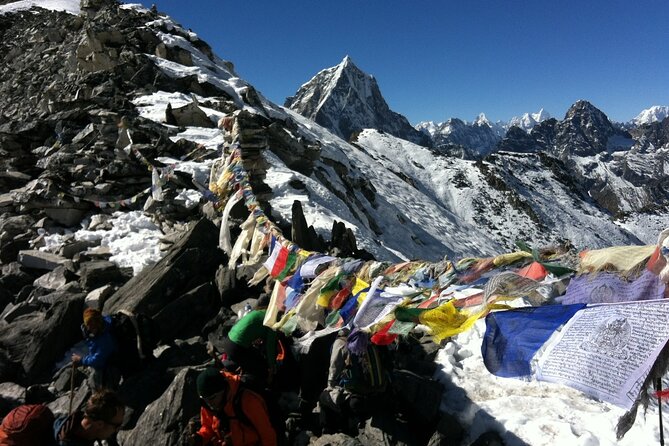
- Everest Base Camp at 5,365 meters: Reach the famous foot of the Khumbu Icefall after a demanding walk from Lobuche.
- Kala Patthar viewpoint: The climb offers some of the clearest mountain views in the itinerary, including Everest, Nuptse, Lhotse, Pumori, and Chag tse.
- Namche and Dingboche acclimatization: Rest days include short hikes to Syanboche and Nangkartseng Hill.
- Sherpa culture along the trail: See mani stones, prayer flags, Buddhist monasteries, Sherpa villages, and the Sherpa Culture Museum.
- Useful inclusions: Flights, teahouses, meals, a 15-kilogram porter allowance, a sleeping bag, TIMS card, oxygen, and first-aid equipment are covered.
- Experienced local leadership: Bishal and Abhishek are names associated with especially helpful and encouraging guiding on this route.
Kathmandu to Lukla: a dramatic start in two days
Your first day is simple. An airport representative meets you at Tribhuvan International Airport and transfers you to a double or triple-sharing hotel in Kathmandu. This is mainly a landing and rest day, with no sightseeing program listed.
On day two, you fly from Kathmandu to Tenzing-Hillary Airport in Lukla. The flight takes you into the Everest region, and the airstrip is part of the experience. Once you land, the walking begins with a trek to Cheplung village, where you can see Mt. Khumbila, a mountain important to the Sherpa people.
You then continue to Phakding, passing views of Kusum Kanguru. The walking time is listed at about four hours, which makes this a useful first day on foot rather than an immediate endurance test. Breakfast, lunch, and dinner are included.
The Lukla flight is also the first point where flexibility matters. Bad weather can affect the schedule, and the cancellation terms allow a different date or a full refund if poor weather causes the experience to be canceled. The operator also notes that unforeseen delays can lead to extra costs, so keep your travel insurance and spare funds in place.
More Everest Base Camp Treks in Kathmandu
- Everest Base Camp Trek – 14 Days
★ 5.0 · 1,499 reviews - Everest Base Camp Trek
★ 5.0 · 842 reviews - Everest Base Camp Trekking
★ 5.0 · 485 reviews
Namche Bazaar and the first acclimatization day
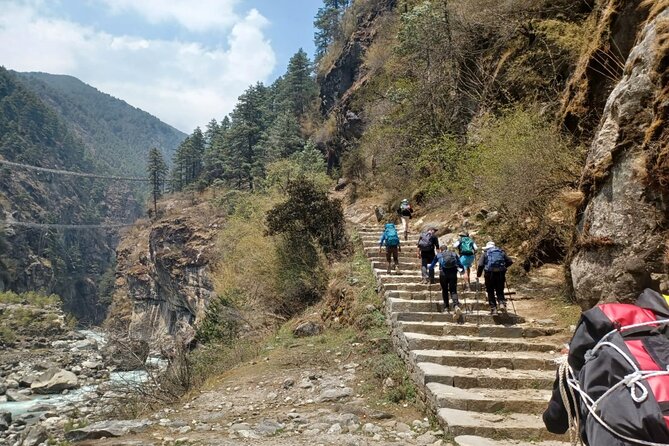
Day three leads toward Namche Bazaar, the main settlement of the Everest region. You pass through Jorsale and Sagarmatha National Park, cross suspension bridges, and walk among pine and cedar forest. Mani stone walls carved with prayers add a spiritual layer to what could otherwise feel like a long mountain approach.
The walk takes about seven hours and ends with a strenuous climb to Namche. This is where the trek begins to feel serious. Namche is not just a place to sleep. It was once a trading point for Nepali and Tibetan merchants, and it remains the main commercial and social center for people heading deeper into the Khumbu.
Day four is set aside for acclimatization. You take a short trip toward Syanboche Airport, at about 3,700 meters, then visit the Everest Photo Gallery and Sherpa Culture Museum. The plan also allows time to rest at the guesthouse.
I like this day because it has a clear purpose. You gain altitude during the day, see more of Namche, and then return to sleep there. The program is not simply filling time with sightseeing. It helps your body adjust before the trail rises again.
Tengboche Gompa and the route into high country
From Namche, day five follows the Dudh-Koshi Valley toward Phungki-Thanka before climbing to Tengboche. The main attraction is Tengboche Monastery, at about 3,860 meters, with views toward Everest and Ama Dablam.
The walking time is about six hours. The monastery gives the day a strong cultural focus, and the setting among high peaks makes it one of the route’s memorable stops. You stay overnight in a guesthouse with meals included.
Day six takes you through Deboche and across the Imja Khola toward Pangboche. The trail passes mani stones and continues into Dingboche, often called the Summer Valley. Here the views open toward Lhotse, Ama Dablam, and Island Peak.
Dingboche is an important point in the trek because altitude begins to affect nearly everyone differently. The route does not pretend that every day will feel easy. You walk for about six hours, then rest in a teahouse with breakfast, lunch, and dinner provided.
Dingboche acclimatization and the Nangkartseng Hill climb
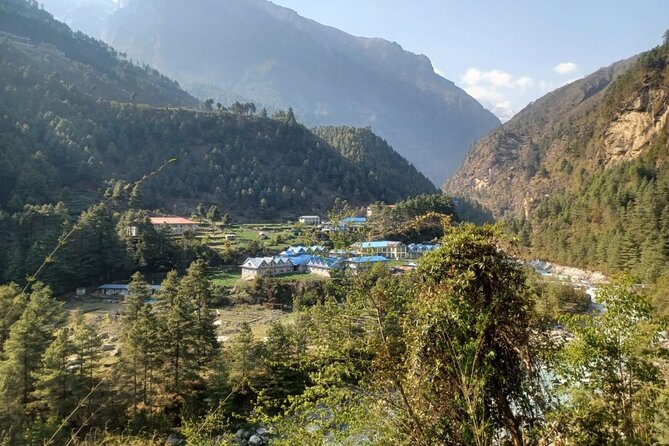
Day seven is another acclimatization day, but it includes a worthwhile climb to Nangkartseng Hill. The outing takes roughly five hours and gives you views of Lobuche East, Lobuche West, Kangtega, Taboche Peak, Thamserku, and Ama Dablam.
If the weather is clear, you may also see Mt. Makalu, the world’s fifth-highest mountain. That detail matters because mountain visibility is never guaranteed. The itinerary sensibly treats this as a weather-dependent reward rather than a promise.
After lunch, you can rest at Dingboche. This balance of uphill walking and downtime is useful. At high altitude, a day with no movement at all is not always the best plan, but an all-day push is worse. The schedule gives you a measured way to keep moving while protecting your energy.
More Trekking Tours in Kathmandu
- Annapurna Circuit Trek with Tilicho Lake
★ 5.0 · 368 reviews - Everest Base Camp Trekking – 13 Day
★ 5.0 · 365 reviews - Everest Base Camp Trek
★ 5.0 · 350 reviews - Everest Base Camp Trek -14 Days
★ 5.0 · 321 reviews
Lobuche, Thukla, and the approach to Everest Base Camp
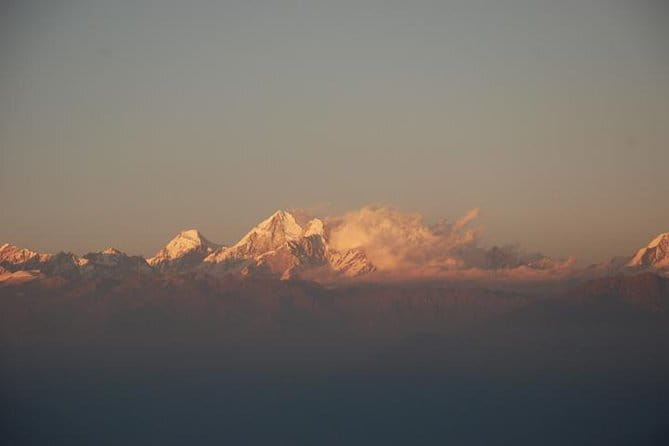
Day eight takes you from Dingboche to Lobuche, a walk of about six hours. You pass through Thukla, described as a small lunch stop, and continue toward the Khumbu Glacier.
The views now become more severe and exposed. You see Nuptse, Pumori, and Mahanlangur Himal, along with chortens, prayer flags, and mani stones. The cultural markers remain present even as the trees thin and the mountain environment becomes harsher.
Lobuche is a basic overnight stop before the main push. This is a good place to remember that the tour is not a luxury mountain holiday. Teahouse accommodation is included, but the facilities at high altitude are likely to be simple. You are paying for access, logistics, and local support, not resort comfort.
The big day: Everest Base Camp at 5,365 meters
Day nine is the hardest day on paper. You walk from Lobuche along the Khumbu Glacier to Everest Base Camp, reaching 5,365 meters. The walking time is listed at about nine hours, and you return to Gorak Shep for the night.
Base Camp is the emotional center of the trek. You are not climbing Everest, but you reach the point used by mountaineering teams preparing for the summit. The Khumbu Icefall provides the dramatic backdrop, and in spring you may see expedition teams preparing for their attempts.
This day demands patience. The distance is not the only challenge. The altitude slows your pace, and the route can feel tiring even for people who are fit at home. I would treat the nine-hour estimate as a full mountain day and avoid planning anything else around it.
You return to Gorak Shep rather than sleeping at Base Camp. That is a practical arrangement, since Base Camp itself is not presented as an overnight stop. Breakfast, lunch, and dinner are included.
Kala Patthar and the descent to Pheriche
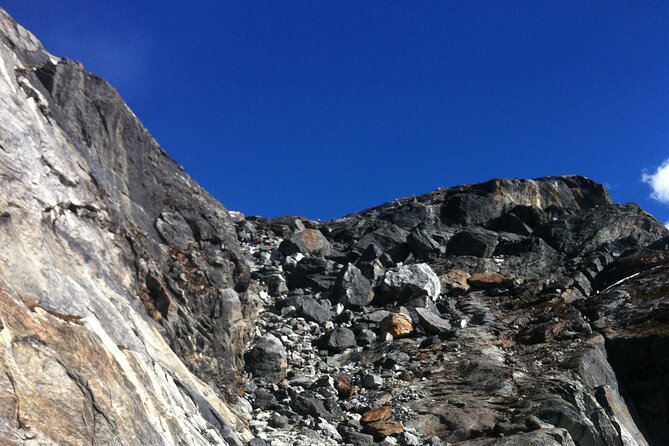
Day ten begins with the climb to Kala Patthar. This is often the finest viewpoint of the trek because it gives you a broad view toward Everest, Nuptse, Chag tse, Lhotse, and Pumori.
The day is listed at about eight hours. After Kala Patthar, you return to Gorak Shep and descend to Pheriche, at approximately 4,210 meters. The downhill section helps, but do not assume it will feel effortless. Descending on tired legs can be hard on your knees, and the trail remains high and demanding.
The order of Base Camp followed by Kala Patthar works well. Base Camp gives you the achievement, while Kala Patthar gives you the better viewpoint. If the weather is poor, the mountain panorama may be limited, so keep your expectations flexible.
The return through Namche and Lukla
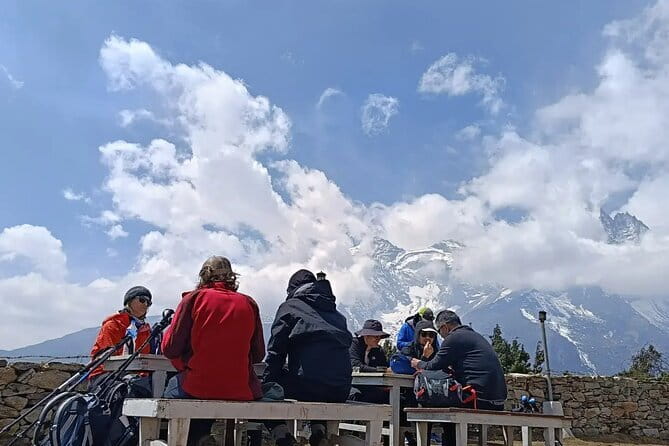
Day eleven retraces the route toward Namche Bazaar. You descend through Pangboche and Phungki Thanka, follow the Imja River, and pass through Kyangjuma. The day takes about seven hours.
This return walk offers a different view of the same route. Descending lets you notice villages, bridges, and forest sections that may have passed quickly during the uphill journey. You spend the night in Namche.
Day twelve continues to Lukla, again taking about seven hours. The route crosses suspension bridges above the Dudh-Koshi and passes rhododendron forest, open views, and snow-covered peaks. A celebration can be arranged in Lukla to mark the end of the trek.
The final night in Lukla is useful because it places you near the airport for the return flight. Still, mountain flights can be affected by weather, so do not schedule a tight international connection immediately after the Lukla flight.
What the $1,499 price covers
At $1,499 per person, the price has solid value if you want one company handling the main logistics. You receive private airport and hotel transfers, Kathmandu accommodation on days one and thirteen, teahouse accommodation from days two through twelve, and return flights between Kathmandu and Lukla.
The package also includes an English-speaking local guide and a personal porter who can carry up to 15 kilograms per person. For a demanding trek, that porter allowance is important. Carrying only your daypack can make the long climbs more manageable.
Meals are another useful inclusion. Breakfast is listed for all 14 days, with lunch and dinner included for the 12 trekking days. Water and drinks are not included, so budget for hydration separately.
You also receive the TIMS card, a high-altitude sleeping bag, oxygen, emergency medicine, and a first-aid kit. Medical and life insurance for the guides and porters is included, but this does not replace your own travel insurance. Medical treatment and evacuation for you are not included, so arrange suitable coverage before departure.
The price does not include Nepal’s entry visa, listed at $40 for foreign trekkers and not required for Indian citizens. Personal expenses, extra accommodation, rescheduling, cancellations caused by unforeseen circumstances, and anything outside the inclusion list are also your responsibility.
Guiding, group size, and the day-to-day feel
The activity is described as a private tour, meaning only your group participates, even though the wider description presents it as a small-group excursion. That setup can make pacing and encouragement more personal.
Bishal has been praised for taking care of the practical details and for being a brilliant guide. Abhishek, who has also guided this route, is described as young, enthusiastic, helpful, and encouraging. Those qualities matter on a high-altitude trek, where steady support can be as useful as route knowledge.
An assistant guide is added for a larger group. The porter carries up to 15 kilograms per person, but you should still pack carefully. The company provides a storeroom in Kathmandu for extra luggage that you do not need on the trail.
The positive pattern here is clear: the strongest part of the service is personal care and organization. The tradeoff is that the itinerary still depends on shared teahouse standards and mountain conditions. A friendly guide cannot control weather, flight delays, altitude symptoms, or basic facilities.
Who should book this Everest Base Camp trek?
I would recommend it to a fit first-time Himalayan trekker who wants the classic route with the main logistics arranged. It suits you if you value local guiding, porter support, included meals, and cultural stops such as Tengboche Monastery and the Sherpa Culture Museum.
It is also a good fit if you want more than a quick march to Base Camp. The rest days in Namche and Dingboche, plus the Nangkartseng Hill and Kala Patthar walks, give the trip more depth.
I would hesitate if you dislike basic accommodation, long walking days, or uncertain flight schedules. You also need to be comfortable paying separately for drinks, visa costs, personal spending, and possible medical or evacuation expenses.
Free cancellation is available up to 24 hours before the start time for a full refund. Changes made inside that window are not accepted, and poor weather or failure to reach the minimum number of participants can lead to a different date or a refund.
Final call: a well-supported classic route
This trek earns its price through the logistics it handles: Lukla flights, permits, accommodation, food, porters, guides, transfers, and basic high-altitude equipment. The most useful features are not flashy. They are the acclimatization days, porter allowance, sleeping bag, oxygen, and local support when the trail gets tough.
Book it if you want a structured route with guides such as Bishal or Abhishek, and if reaching Base Camp matters as much as seeing Sherpa villages and Buddhist sites along the way. Skip it if you want comfort, flexible luxury, or a short walking holiday. For a demanding but carefully supported Everest experience, it is a sensible choice at $1,499.
FAQ
How long does the Everest Base Camp trek take?
The experience lasts approximately 14 days, including arrival and departure transfers, the trek, return flights, and hotel stays in Kathmandu.
Where does the trek begin and end?
It begins in Kathmandu, Nepal, with airport pickup at Tribhuvan International Airport. The activity ends back at the Kathmandu meeting point after the trek.
Is airport pickup included?
Yes. Private airport and hotel transfers are included, including pickup on arrival and transfer to Tribhuvan International Airport at the end.
Are flights to Lukla included?
Yes. The package includes a return flight from Kathmandu to Lukla and back. The flight to Lukla is listed on day two, and the return flight takes about 35 minutes on day thirteen.
Are meals included?
Breakfast is included for all 14 days. Lunch and dinner are included for the 12 trekking days. Water and other drinks are not included.
Is accommodation included?
Yes. You stay in double or triple-sharing hotel accommodation in Kathmandu on days one and thirteen. Teahouse accommodation is included throughout the trekking days from day two to day twelve.
How much luggage can the porter carry?
The personal porter can carry up to 15 kilograms per person. Extra luggage that you do not need during the trek can be stored in Kathmandu.
Is travel insurance included?
No. Medical and life insurance for porters and guides is included, but your own travel insurance is not. Medical treatment and evacuation expenses are also excluded.
How fit do I need to be?
The tour requires a strong physical fitness level. Walking days range from about four to nine hours, with the longest and most demanding day reaching Everest Base Camp at 5,365 meters.
Latest treks added in Kathmandu
- Private Manaslu Circuit Trek at Himalayas★ 5.0 · 3 reviews
- Ghorepani Poonhill Trek★ 5.0 · 5 reviews
- Ghorepani Poon Hill Trek★ 5.0 · 16 reviews
- Upper Mustang Trekking★ 3.0 · 2 reviews
- Amazing 1 Day Trekking Experience in Kathmandu Nepal★ 5.0 · 24 reviews
- Upper Mustang Trekking★ 5.0 · 2 reviews
- Upper Mustang Trek★ 5.0 · 5 reviews
- Upper Mustang Trekking★ 5.0 · 4 reviews
Everest Base Camp Treks, compared.






Browse the lists this tour appears in