
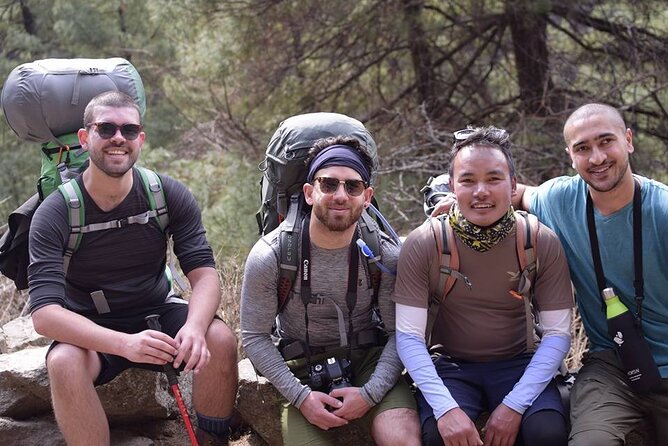
REVIEW · KATHMANDU
14 Day – Everest Base Camp Trek
The prize here is not only reaching Everest Base Camp. It is the steady change from Kathmandu streets to high Himalayan villages, with Namche Bazaar, Tengboche, Dingboche, Gorakshep, and Kala Patthar marking the way. The early flight to Lukla and sunrise hike to Kala Patthar give this trip two memorable bookends.
I like the sensible acclimatization days in Namche and Dingboche, and I like that the $2,000 price covers the major costs: domestic flights, permits, tea-house lodging, meals, guide, porter support, and airport transfers. The private format also lets your group move at its own pace within the planned route. The main caution is altitude. This is a demanding trek, not a sightseeing stroll, and the plan leaves little spare time if flights or health problems disrupt the schedule.
Key points to know before booking
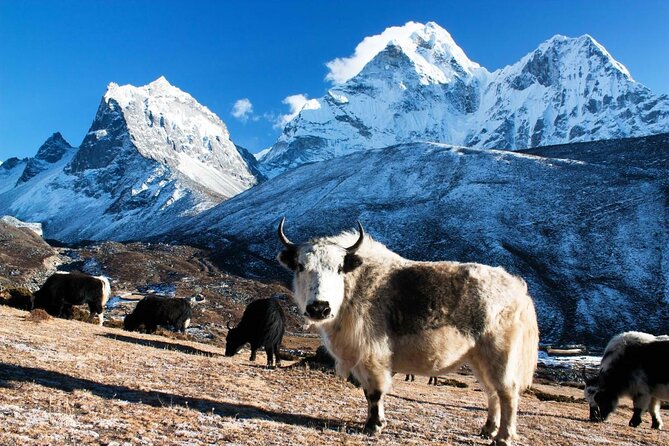
- Everest Base Camp and Kala Patthar are separate highlights: You reach Base Camp on Day 9, then climb Kala Patthar early the next morning for the sunrise mountain view.
- Two acclimatization days are built in: Namche Bazaar and Dingboche provide planned rest and adjustment time before the highest walking days.
- The price covers the expensive essentials: Lukla flights, airport tax, permits, tea-house rooms, meals, guide, porter service, insurance, and staff medicine are included.
- This is a private trip: Only your own group takes part, with an English-speaking guide and one porter assigned between two people.
- Lukla flights depend on weather: A past trip required helicopter arrangements after a flight cancellation, so keep flexibility around the return to Kathmandu.
- High-altitude nights are basic: Hot showers, bottled water, charging, drinks, and personal equipment cost extra.
The route in plain English
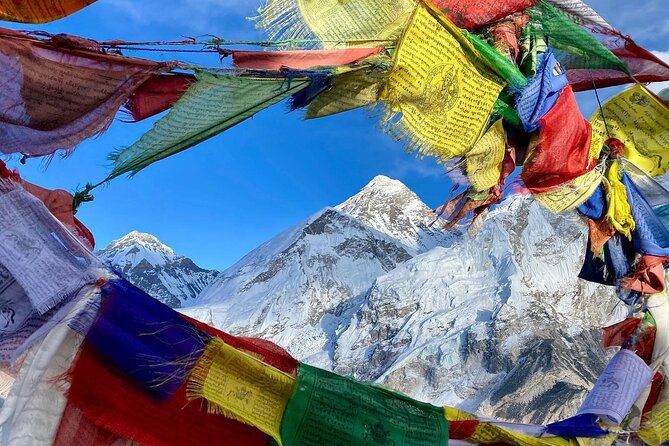
This is the classic Everest Base Camp approach from Lukla. You begin at about 2,840 meters in Lukla and finish the main walking section at Kala Patthar, listed at 5,550 meters. The route is not technical mountaineering, but the altitude makes ordinary walking feel much harder.
You will sleep in tea houses rather than tents. That gives you a roof, meals, and a chance to share the evening with other people on the route, but you should expect simple facilities and paid extras. The package includes a duffel bag, a T-shirt, snacks such as Snickers, Oreo cookies, and peanuts, plus a medical kit and trip certificate.
The company has used guides including Tenzing, Pramish, and Lopsang on different trips, while Nick and Unish have handled arrangements and support. Your exact guide should be confirmed before you pay, since names are not assigned in the tour details.
More Everest Base Camp Treks in Kathmandu
- Everest Base Camp Trek – 14 Days
★ 5.0 · 1,499 reviews - Everest Base Camp Trek
★ 5.0 · 842 reviews - Everest Base Camp Trekking
★ 5.0 · 485 reviews
Days 1 and 2: Kathmandu to Lukla
Your first day begins with airport pickup and transfer to the Alpine Hotel & Apartment on Chaksibari Marg. You have time for trek preparation and a night in Kathmandu. Two hotel nights in Kathmandu are included, one at the beginning and one after the mountain section, although the schedule places the second city night around the return flight.
The next morning starts early, with a listed meeting time of 6:15 am. The flight from Kathmandu to Lukla takes about 40 minutes. It is a short flight, but it shifts you quickly from city travel to mountain walking.
After breakfast in Lukla, you walk to Phakding at about 2,610 meters. This is a useful first day because it is relatively short and does not push you to sleep much higher than Lukla. You get your first taste of the trail without immediately asking your body to handle a major altitude jump.
The practical issue is the flight. The itinerary depends on the Kathmandu to Lukla and Lukla to Kathmandu sectors, and mountain weather can interrupt them. One past group needed helicopter arrangements after a canceled Lukla flight. That does not mean your flight will be canceled, but you should avoid scheduling an important international connection immediately after the trek.
Day 3: Phakding to Namche Bazaar
The walk from Phakding to Namche Bazaar takes you to 3,440 meters. This is one of the first days when the altitude becomes a serious part of the experience. Namche is the main trading and service center in the Khumbu region, so reaching it feels like arriving at the route’s first real hub.
You will notice the route getting more demanding as it climbs. The reward is a larger mountain setting and a proper place to pause before going higher. The itinerary gives you a full acclimatization day here, which is one of its strongest features.
Day 4: A full rest day in Namche
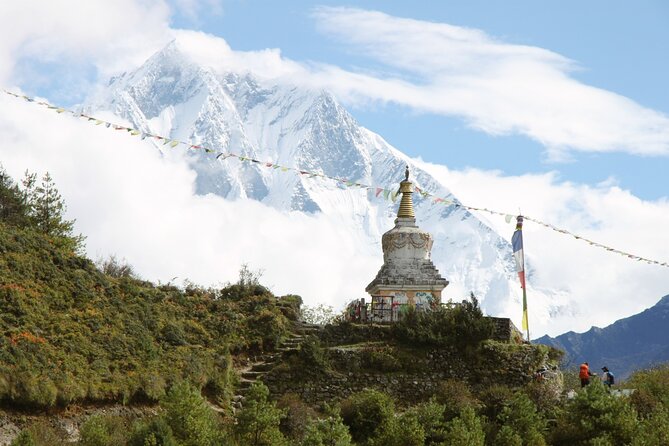
The Namche day is not simply a day in bed. It is planned for rest, local exploration, and enjoying the views. You can keep the pace gentle and use the day to get comfortable with the guide, the tea-house routine, and the feeling of walking at altitude.
This pause matters because the following days climb through Tengboche and Dingboche. A rushed Everest Base Camp schedule can look efficient on paper but can be punishing in practice. Here, the organizer has allowed one complete day before the route moves higher.
More Trekking Tours in Kathmandu
- Annapurna Circuit Trek with Tilicho Lake
★ 5.0 · 368 reviews - Everest Base Camp Trekking – 13 Day
★ 5.0 · 365 reviews - Everest Base Camp Trek
★ 5.0 · 350 reviews - Everest Base Camp Trek -14 Days
★ 5.0 · 321 reviews
Days 5 and 6: Tengboche and Dingboche
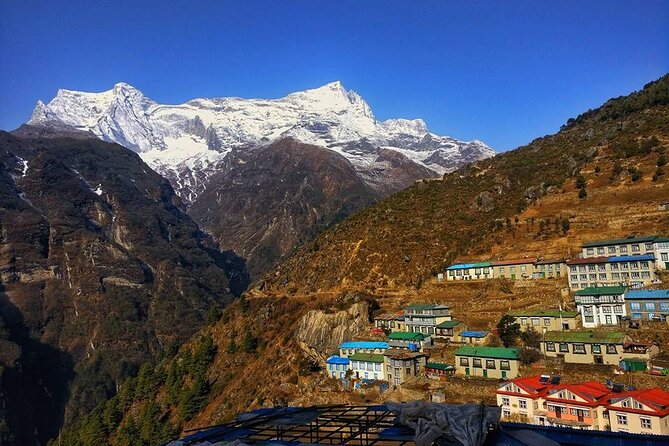
From Namche, you walk to Tengboche at about 3,868 meters. This is a memorable stop for the setting around the monastery and the views of the surrounding peaks. The route begins to feel more remote, and the mountains become the main feature of every day.
The next stage takes you to Dingboche at 4,410 meters. This is a notable jump, and the evening may feel quite different from your first nights near Lukla. You are now preparing for the thin air around Lobuche, Gorakshep, and Base Camp.
The package includes an English-speaking guide, staff insurance, staff medicine, and porter support. Those details matter more here than they do in Kathmandu. A good guide should watch your pace and condition, while the porter arrangement keeps you from carrying the full load yourself. The stated setup is one porter for two people, so pack with that limit in mind.
Day 7: Dingboche acclimatization
Dingboche provides the second full acclimatization day. This is a good place to slow down before the route reaches nearly 5,000 meters. The schedule calls for rest, but the right amount of movement should be discussed with your guide, especially if you are feeling unwell.
The tour requires a moderate level of physical fitness. That phrase should not be treated lightly. You need to be ready for repeated walking days, uneven paths, cold conditions, and high altitude. Fitness helps, but it does not guarantee that your body will adjust well. A private trip gives your group more room to discuss pace and comfort, but the route itself remains demanding.
Days 8 and 9: Lobuche, Gorakshep, and Base Camp
From Dingboche, you walk to Lobuche at about 4,910 meters. At this point, the route is physically serious even if you are moving slowly. Cold, thin air and the cumulative effect of several days on foot can make a modest distance feel long.
The next day is the main goal: Lobuche to Gorakshep at 5,180 meters, then onward to Everest Base Camp at approximately 5,364 meters. You return to Gorakshep for the night. The route to Base Camp is not the summit of Everest, and you should not confuse the two. It is the staging area used by climbing expeditions, while the actual summit is much higher and requires a major expedition.
Still, reaching Base Camp has real emotional weight. You are following the route associated with Edmund Hillary and Tenzing Norgay Sherpa, while passing through a region shaped by Sherpa communities and mountain work. The experience is as much about the long approach as the final sign or viewpoint.
Gorakshep is a high and basic overnight stop. Keep your expectations practical: the room is included, but hot water, charging, bottled drinks, and other comforts are not. You should also be prepared for a short night if the next morning’s Kala Patthar hike begins early.
Day 10: Kala Patthar at sunrise, then Pheriche
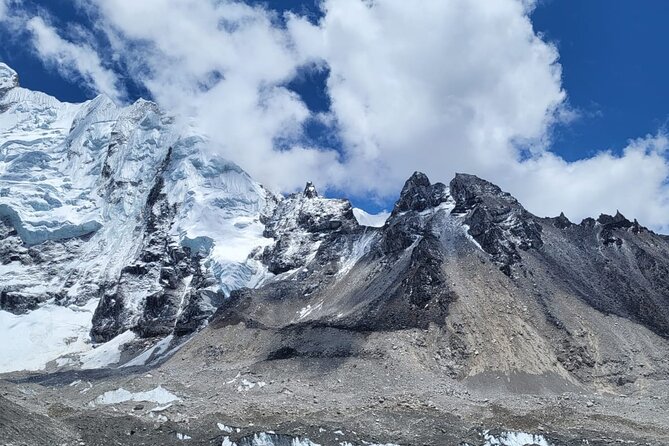
The early hike to Kala Patthar, listed at 5,550 meters, is the visual high point of the trip. You climb for sunrise and look toward Everest and the surrounding peaks, including Nuptse, Lhotse, Thamserku, and Ama Dablam. The views depend on weather, but the timing gives you the best chance of clear morning light.
After returning to Gorakshep for breakfast, you walk down to Pheriche at about 4,240 meters. This descent is welcome after the high point, though it still makes a long day. You should conserve energy and keep your water and warm layers accessible.
I like the order of this section. Base Camp comes first, then Kala Patthar provides the broad mountain view that Base Camp itself may not offer. The tradeoff is that Day 10 starts early and combines a high climb with several hours of descent.
Days 11 to 13: Returning through Namche to Kathmandu
The walk from Pheriche to Namche Bazaar brings you back to 3,440 meters. Descending usually feels easier than climbing, but tired legs and uneven ground still require care. Namche gives you another chance to rest before the final walking day.
Day 12 takes you from Namche to Lukla at 2,840 meters. This is the last trail day, and the thought of a flight back to Kathmandu can make the pace feel lighter. It is also a good time to check your belongings, settle any personal charges, and thank your guide and porter.
On Day 13, you take the morning flight to Kathmandu. The plan includes the domestic ticket and airport tax, plus airport transfer. Because weather can affect Lukla flights, allow room for change. The supplied package includes assistance with arrangements, but it does not promise that every flight will operate on schedule.
Day 14: Airport transfer or extra Kathmandu time
After breakfast on the final day, you are driven to Tribhuvan International Airport if your international flight is scheduled. If you stay longer, the operator can help with shopping, sightseeing, or another trip.
This extra day is useful because it gives you a little breathing room after the trek. Still, if you have an international flight on Day 14, confirm the transfer time carefully and keep your documents, medication, and valuables with you rather than in the duffel bag.
What the $2,000 price really covers
At $2,000 per person, the package is built to cover the main structural costs of an Everest Base Camp trek. You receive:
- Round-trip Kathmandu to Lukla flight and airport tax
- Airport pickup and drop-off
- Two nights of Kathmandu hotel accommodation
- Tea-house accommodation during the trek
- Everest National Park entry permit
- TIMS card
- English-speaking guide
- Porter service, listed as one porter for every two people
- Guide, staff insurance, salaries, and staff medicine
- Breakfast, lunch, and dinner during the trek
- Snacks, a company duffel bag, T-shirt, medical kit, and trip certificate
- Government and local taxes
That is solid value if all listed inclusions are delivered as described. The price is less useful if you assume it covers every comfort. Personal equipment, Nepal entry visa, international flights, tips, alcoholic drinks, cold drinks, bottled water, hot water, hot showers, battery charging, donations, and other personal expenses are excluded.
The meal count deserves a quick check before booking. The package lists 13 breakfasts, 11 lunches, and 11 dinners, while the trip lasts 14 days. That may reflect the two Kathmandu hotel nights or travel-day arrangements, but ask the operator to confirm exactly which meals are covered on each date.
Tipping is expected for the guide and porter. Set aside money for it, even though no amount is given. You should also budget for personal gear, since the company provides a duffel bag but not clothing, boots, sleeping equipment, or other trekking equipment.
What the private format changes
This is a private activity, so only your group takes part. That can be a major advantage on a high-altitude route. You are not tied to the pace of a large mixed group, and your guide can respond to your group’s condition within the fixed itinerary.
Private does not mean effortless. The route, weather, altitude, and tea-house standards remain the same. If one person in your group struggles, the whole group may need to adjust. Talk openly before departure about fitness, expectations, and how you will handle a slower day.
The strongest service theme across the supplied feedback is organization and personal support. Names connected with different trips include Tenzing, Pramish, Lopsang, Nick, and Unish. Specific accounts describe friendly guides, careful arrangements, help during flight trouble, and support for people with limited trekking experience, including one 61-year-old participant. Those are useful signs, but you should still confirm your own guide’s name, experience, and emergency procedures before departure.
Who should book this trek
I would recommend this trip to you if Everest Base Camp is a major personal goal and you want a structured route with permits, flights, lodging, meals, guide service, and porter support bundled together.
It also suits a private group that wants direct contact with one organizer rather than a large fixed departure. The included acclimatization days are a sensible feature for first-time high-altitude hikers.
I would hesitate if you dislike basic lodging, cold conditions, early starts, or uncertain flight schedules. I would also hesitate if you have not prepared physically. The phrase moderate fitness does not mean casual fitness here. You should be ready for two weeks of travel, repeated walking, and a high point above 5,500 meters.
Cancellation is free up to 24 hours before the start time. Within 24 hours, there is no refund, and changes are not accepted. If poor weather cancels the experience, you are offered another date or a full refund.
FAQ
How long is the Everest Base Camp trek?
The planned duration is 14 days, including arrival and departure days in Kathmandu, the Lukla flights, the trekking route, and two acclimatization days.
Where does the trek begin?
The meeting point is Alpine Hotel & Apartment on Chaksibari Marg in Kathmandu. The listed start time is 6:15 am.
Is airport pickup included?
Yes. Airport pickup and drop-off by private car, van, or bus are included, along with airport transfers.
Are flights to Lukla included?
Yes. The package includes a round-trip domestic flight ticket between Kathmandu and Lukla, including airport tax.
What accommodation is provided?
You receive two nights in a Kathmandu hotel and tea-house accommodation during the trek.
Are meals included?
Breakfast, lunch, and dinner are included during the trek, but the listed counts are 13 breakfasts, 11 lunches, and 11 dinners. Confirm the exact meal schedule before booking.
Is a guide included?
Yes. An English-speaking guide is included, along with the guide’s salary and insurance. Guides named in different trips include Tenzing, Pramish, and Lopsang, but your assigned guide should be confirmed.
Is porter service included?
Yes. The stated arrangement is one porter for every two people.
What is not included in the price?
Nepal’s entry visa, international airfare, personal equipment, tips, alcohol, cold drinks, bottled water, hot water, hot showers, battery charging, donations, and expenses not specifically listed are excluded.
Can I cancel for a full refund?
You can cancel at least 24 hours before the start time for a full refund. Cancellations or changes within 24 hours are not accepted for a refund. Poor-weather cancellations offer a different date or a full refund.
Should you book it?
Book this trek if you want the classic Lukla to Everest Base Camp route with the major logistics handled and two built-in acclimatization days. The package offers good value at $2,000, especially because flights, permits, lodging, meals, guide service, porter support, and transfers are included.
Before paying, confirm the exact meal coverage, assigned guide, flight arrangements, porter limits, and what happens if you need an extra night because of weather or illness. If you accept basic tea houses and the physical demands of altitude, this is a practical, well-supported way to reach Base Camp and see Everest from Kala Patthar.
Latest treks added in Kathmandu
- Private Manaslu Circuit Trek at Himalayas★ 5.0 · 3 reviews
- Ghorepani Poonhill Trek★ 5.0 · 5 reviews
- Ghorepani Poon Hill Trek★ 5.0 · 16 reviews
- Upper Mustang Trekking★ 3.0 · 2 reviews
- Amazing 1 Day Trekking Experience in Kathmandu Nepal★ 5.0 · 24 reviews
- Upper Mustang Trekking★ 5.0 · 2 reviews
- Upper Mustang Trek★ 5.0 · 5 reviews
- Upper Mustang Trekking★ 5.0 · 4 reviews
Everest Base Camp Treks, compared.






Browse the lists this tour appears in