
REVIEW · KATHMANDU
12 Days Everest Base Camp Trek from Kathmandu
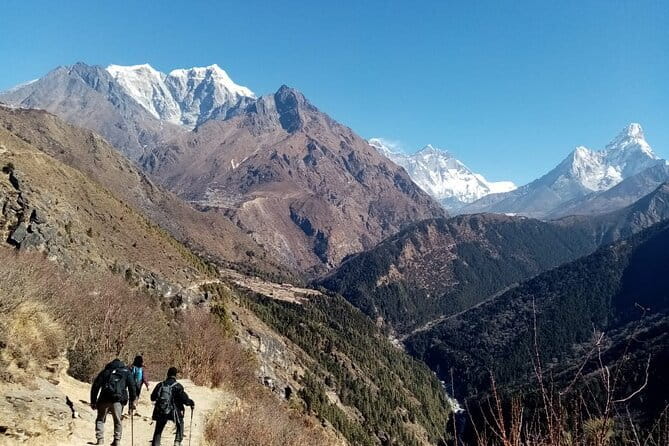
Reaching Everest Base Camp in 12 days means walking through rhododendron forests, Sherpa villages, high mountain valleys, and prayer-flag-lined trails before facing Everest, Lhotse, Nuptse, and Ama Dablam. The route also gives you time to adjust in Namche Bazaar and Dingboche, which matters greatly at altitude.
I like the mix of mountain scenery and Sherpa culture, especially the stop at Tengboche Monastery. I also like that flights, permits, guesthouse lodging, transfers, and a licensed English-speaking guide are included. The main concern is the pace: 12 days is fairly tight for a high-altitude trek, and you need strong fitness and flexibility for mountain weather and flight changes.
Key points to know before you book
- Lukla flights begin and end the trek: The route starts with a scenic flight from Kathmandu and finishes with the return flight from Lukla.
- Two acclimatization days are built in: You pause in Namche Bazaar and Dingboche rather than climbing higher every day.
- Everest is only one part of the story: Tengboche Monastery, Sherpa villages, Buddhist shrines, and suspension bridges add cultural depth.
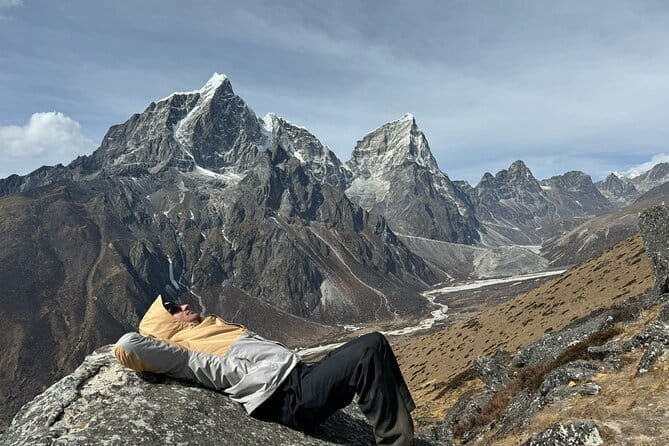
- Kala Patthar is the major viewpoint: The climb above Gorak Shep offers the trek’s broadest views of Everest and nearby peaks.
- The tour is private: Only your group participates, with a government-licensed English-speaking guide.
- Food costs extra: Meals and drinks are not included, and the stated estimate is about $25 per person per day.
What the $1,380 price covers
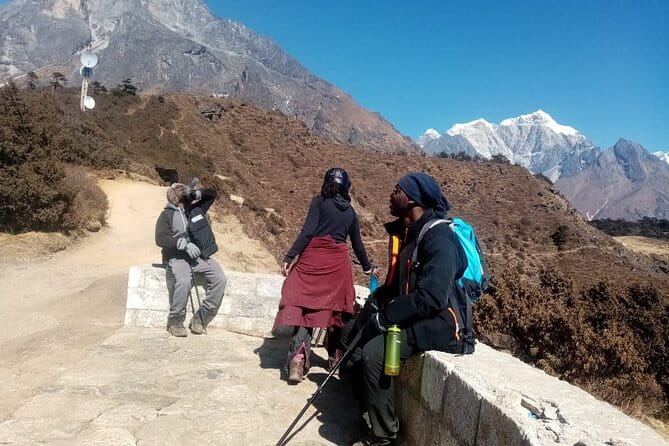
At $1,380 per person, this trek bundles several costly and useful pieces into one package. You receive hotel pickup and drop-off, Kathmandu to Lukla flights, trekking permits, official documents, guesthouse accommodation, a private guide, and a normal first-aid kit carried by the guide.
That makes the price easier to judge than a simple daily trekking rate. The Lukla flights alone are an important part of the transport plan, and handling permits and route paperwork saves you from arranging separate services in Kathmandu.
You still need to budget for food, drinks, gratuities, and personal trekking equipment. The supplied estimate for food and drinks is about $25 per day, so add roughly $300 for the 12-day schedule, although your actual spending will depend on what you order.
The accommodation is in guesthouses, not hotels. That is normal for the Everest Base Camp route and gives you a practical place to sleep along the trail, but comfort and facilities can be basic at higher elevations. You should choose this trip for access to the route and guide support, not for luxury.
Because this is a private tour, the pace and daily experience may feel more personal than a large group departure. The exact guide is not identified in advance in the details provided, but guides named in the experience include Prakash, Milan, and Dev. If a particular guide is important to you, ask CAN Travels to confirm availability before paying.
More Everest Base Camp Treks in Kathmandu
- Everest Base Camp Trek – 14 Days
★ 5.0 · 1,499 reviews - Everest Base Camp Trek
★ 5.0 · 842 reviews - Everest Base Camp Trekking
★ 5.0 · 485 reviews
Day 1: Kathmandu to Lukla and Phakding
The trek begins with a short flight from Kathmandu to Lukla. From Lukla, you meet the rest of the crew and walk toward Phakding, following the Dudh Koshi River.
The first day takes about six hours. It is a useful introduction to the rhythm of the trek, with river scenery, small settlements, and a route that feels far removed from Kathmandu within a few hours.
Phakding is a sensible first stop because the walking day is not the hardest on the itinerary. You are already gaining altitude, though, so do not treat this as a casual stroll. Keep your first day steady, drink regularly, and save energy for the longer climb ahead.
The flight is also one of the trip’s practical uncertainties. It is included, but mountain flights can be affected by conditions. The 12-day schedule leaves less spare time than a longer itinerary, so flexibility is important.
Day 2: Monjo, Sagarmatha National Park, and Namche Bazaar
The second day is one of the first demanding sections. You walk for about seven hours, passing Monjo and entering Sagarmatha National Park, home to mountain flowers and wildlife.
The trail crosses streams, small villages, and suspension bridges before climbing toward Namche Bazaar. This is where the route begins to feel properly Himalayan. The path rises more firmly, and the change from lower forest to high mountain terrain becomes clear.
Namche is the main gateway to the Everest region. It is more than a stopping point. Its location makes it a practical place to pause, meet local people, and prepare for the higher valleys.
The final climb into Namche can feel hard, especially if you are not used to sustained uphill walking. A strong fitness base helps here. You should expect slow progress, short rests, and a full day on your feet rather than a quick transfer between villages.
Day 3: Acclimatization around Namche Bazaar
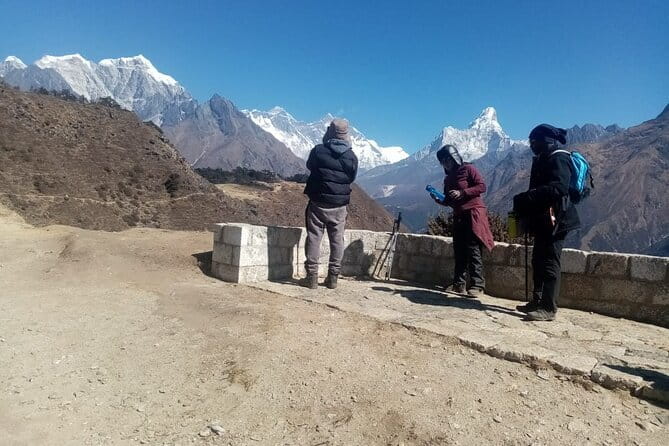
You spend a second night in Namche and take an acclimatization day. The schedule includes a short excursion toward Syangboche Airstrip or the Everest View Hotel, depending on the route used by your guide.
This day has a purpose beyond sightseeing. You climb higher during the day and return to sleep at Namche, giving your body more time to adjust before the trail rises again. The views toward Everest and the surrounding peaks make the effort worthwhile.
I particularly like this pause because it prevents the itinerary from becoming a nonstop march. At high altitude, a rest day is part of the trek, not wasted time.
The stated duration is about six hours, so do not assume you will simply stay indoors. You should still expect uphill walking and exposure to thinner air. Use the day to notice how you feel and tell your guide about headaches, unusual tiredness, or other problems.
More Trekking Tours in Kathmandu
- Annapurna Circuit Trek with Tilicho Lake
★ 5.0 · 368 reviews - Everest Base Camp Trekking – 13 Day
★ 5.0 · 365 reviews - Everest Base Camp Trek
★ 5.0 · 350 reviews - Everest Base Camp Trek -14 Days
★ 5.0 · 321 reviews
Day 4: Rhododendron forest and Tengboche Monastery
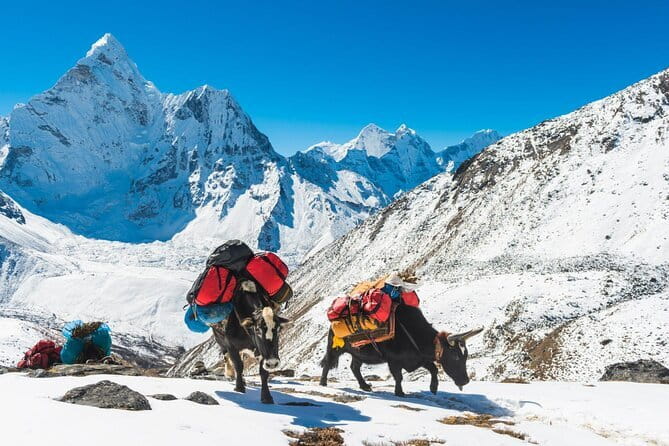
The trail to Tengboche takes about six hours and climbs through dense rhododendron forest. You cross the Imja Khola before reaching Tengboche, one of the route’s most memorable cultural stops.
Tengboche Monastery is described as the oldest monastery in the Khumbu region. Its setting is the real prize: prayer flags, Buddhist features, and a mountain backdrop that makes the stop feel much more than a routine overnight halt.
You can explore the monastery, turn prayer wheels, and witness Buddhist rituals if the timing allows. The details provided do not promise a specific ceremony, so treat that as a possible part of the visit rather than a guaranteed performance.
The route combines steady climbing with forest walking. It may feel gentler than the exposed high valleys later in the trek, but the six-hour day still requires stamina. Tengboche is also a good reminder that the route is a cultural journey as well as a climb toward a famous marker.
Day 5: Pangboche, Orsho, and Dingboche
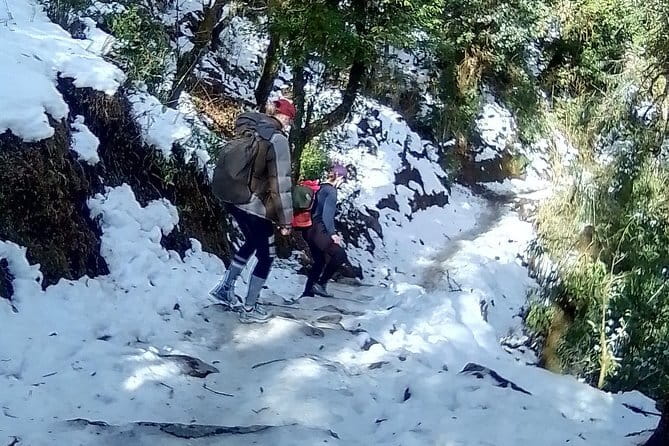
From Tengboche, the trail crosses more suspension bridges and passes small settlements such as Pangboche and Orsho. You walk for about six hours before reaching Dingboche.
Along the way, you encounter stupas, chortens, and other Buddhist markers. These features give the route a quiet visual rhythm. You are not simply counting miles. You are moving through a place where religion is part of daily life.
Dingboche sits higher, and the surroundings become more open and severe. Forest gives way to sparser shrubs, with larger peaks dominating the view. That change is a useful signal that the easier lower-altitude walking is behind you.
The night in Dingboche also prepares you for the next acclimatization day. The upward progress is exciting, but it comes with a real physical cost. Eat what you can, rest well, and follow the guide’s advice rather than trying to prove how fast you can walk.
Day 6: Acclimatization and Nagarjun Hill
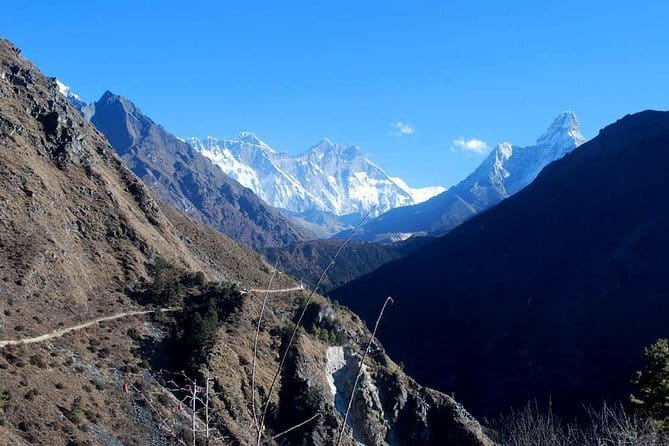
You spend another day in Dingboche and take a hike toward Nagarjun Hill. The route provides views of Everest, Lhotse, Ama Dablam, Nuptse, Thamserku, and Pumori.
This is one of the most valuable days in the plan. You gain height during the hike while sleeping again at Dingboche, giving your body a better chance to adjust before Lobuche and Gorak Shep.
The six-hour outing is not an easy rest day. It is an active pause, and the climb can expose any problems with altitude or fitness. The wide view of several major peaks helps turn the day into a highlight rather than a simple medical precaution.
I would use this day to check your gear, socks, water supply, and cold-weather layers. From here, the route becomes higher and more exposed, and small comfort problems can become much more annoying after several hours on foot.
Day 7: The higher valley to Lobuche
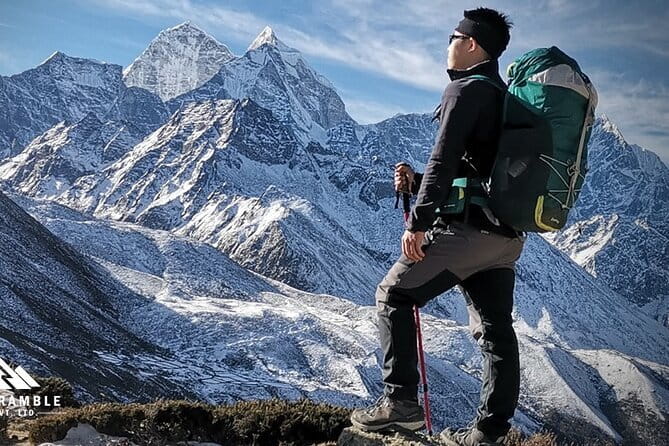
Leaving Dingboche, you continue through smaller settlements and gradually move into more barren country. The six-hour walk ends at Lobuche, situated near the foot of the high route toward Everest Base Camp.
The change in scenery is striking. Lush forest has disappeared, shrubs are sparse, and the mountains feel closer and larger. This is the section where the physical challenge becomes impossible to ignore.
Lobuche is not presented as a sightseeing village in the same way as Namche. Its importance is practical: it places you close to the next day’s long walk toward Gorak Shep and Base Camp.
You should keep your expectations realistic. At this altitude, a modest distance can take hours, and cold, wind, uneven ground, and thin air all affect your pace. The guide’s role becomes especially important here, both for route decisions and for watching how you are coping.
Day 8: Gorak Shep and Everest Base Camp
The eighth day is the major outward goal. You start early and walk toward Gorak Shep, the last settlement on the route, before continuing to Everest Base Camp. The day takes about eight hours.
Gorak Shep was once used as an early base camp, and today it serves as the final human settlement before the trail reaches Base Camp. From there, the route leads through high, rough terrain toward the famous mountaineering site.
Reaching Everest Base Camp is a powerful personal milestone, but keep the view in perspective. You do not stand on the summit, and Everest may not dominate every angle from Base Camp itself. The value is in reaching the site where expeditions prepare for the highest mountain on Earth, surrounded by glaciers and huge peaks.
This is likely the hardest day of the trek because of its length and elevation. Leave early, follow the guide’s pace, and do not race the final kilometers. The tour includes admission to Everest Base Camp, and the stop gives you time to take photographs and absorb the setting before returning toward the overnight area.
Day 9: Kala Patthar and Pheriche
The next morning brings the classic viewpoint: Kala Patthar. The climb rises above Gorak Shep and is known for broad views of Everest, with a 360-degree panorama that also includes Lhotse, Nuptse, Pumori, Ama Dablam, and other peaks.
For many people, Kala Patthar provides a better Everest view than Base Camp. The mountain appears in a wider setting, and the viewpoint makes it easier to understand the scale of the surrounding range.
The day lasts about seven hours and finishes at Pheriche. That means you are combining a demanding viewpoint climb with a descent and onward walking. The downhill sections may feel easier for breathing, but they still work your knees and legs.
This is another reason the trip requires strong fitness. You are not simply reaching Base Camp and stopping. The schedule asks you to climb again before beginning the return journey.
Day 10: Back through Tengboche to Namche Bazaar
From Pheriche, you retrace the route through Tengboche and descend toward Phungki Thanka before continuing to Namche. The walk takes about six hours and follows the Imja River through forest and village sections.
The return journey gives you a different view of familiar ground. Descending through the trees after the stark upper valley can feel like a welcome change, and the return to Namche marks a clear step back toward lower altitude.
You may appreciate the comfort of reaching Namche again, especially after the high nights near Lobuche and Gorak Shep. Still, the route is not effortless. Long descents can be tiring, and the trail remains uneven.
The monastery and mountain views around Tengboche are worth noticing again if time permits. On the way up, you may have been focused on breathing and arrival. On the way down, you can pay more attention to the village setting and Buddhist details.
Day 11: Namche to Lukla
The final walking day takes about seven hours. You descend through forest, cross streams, pass smaller villages, and retrace the route through Phakding before reaching Lukla.
This is a satisfying finish because the trail connects the entire journey. The route that felt unfamiliar on the first day now becomes recognizable, and the return to Lukla signals that the demanding walking is over.
Do not underestimate the distance simply because it is downhill. After many days on the trail, feet, knees, and shoulders may be tired. Keep your pace controlled and use the final day to enjoy the village scenery rather than rushing toward the airport.
The overnight in Lukla also gives the schedule a clear endpoint before the return flight. Your guide and crew help organize the final transition, but exact flight timing remains subject to mountain conditions.
Day 12: Lukla flight and farewell in Kathmandu
The final day includes the flight from Lukla back to Kathmandu. After reaching the airport, you transfer to the hotel, then gather for a farewell dinner and prepare for departure.
The stated duration is about five hours, including the airport and hotel movement. That is a compact ending, but it lets you finish the trek and return to Kathmandu within the same overall schedule.
The return flight is included in the tour price, just like the outbound flight. Still, you should keep some flexibility around both flights because the itinerary gives no separate spare day for delays.
What the guides add to the experience
A licensed English-speaking guide is included, and the guide is central to the value of this trip. You are not only paying for someone to point toward Everest. You are relying on that person for route judgment, pacing, local context, and support when the altitude makes decisions harder.
The named guides connected with this experience include Prakash, Milan, and Dev. Prakash is described as keeping safety and comfort in mind, while Milan is associated with patience, local insight, and help with acclimatization. Dev is noted for taking care of a family group through the practical details of accommodation, transport, and flights.
You should confirm who will lead your departure rather than assuming one of these names. The available feedback gives a useful picture of what matters most: steady support, clear acclimatization advice, and a positive attitude during the harder sections.
Who should book this 12-day trek?
This trip suits you if you want the classic Everest Base Camp route but prefer a private tour over a large group. It also works well if you want the main arrangements handled for you, including flights, permits, guesthouses, transfers, and a guide.
You need strong physical fitness. The schedule includes walking days of six to eight hours, repeated uphill and downhill sections, two active acclimatization days, and high-altitude nights. The itinerary does not promise an easy route.
It is a good match for someone who values scenery and culture together. Namche Bazaar, Tengboche, Dingboche, chortens, prayer wheels, Buddhist rituals, and Sherpa villages give the trek more meaning than a simple march to Base Camp.
I would hesitate if you need a relaxed schedule with plenty of spare days. Twelve days is efficient, but it leaves less room for disruption or recovery than a longer version of the route. Ask about flight flexibility and the exact guide before booking.
Cancellation is allowed for a full refund if you cancel at least three full days before the local start time. Cancellations or changes made within that period are not accepted for a refund.
Should you book it?
Book this trek if you want a direct, well-supported route to Everest Base Camp with two acclimatization stops and the major landmarks included. The price is reasonable for a package that covers Lukla flights, permits, guesthouse stays, transfers, and private guiding, but you must add food, drinks, gratuities, and personal gear.
The strongest reasons to choose it are the cultural stops, the Kala Patthar viewpoint, and the guide support associated with Prakash, Milan, and Dev. The main caution is the compressed 12-day pace. If you are fit, comfortable with basic guesthouses, and ready for long days at altitude, this offers a focused way to reach one of the world’s most famous trekking destinations.
FAQ
How long is the Everest Base Camp trek from Kathmandu?
The experience lasts approximately 12 days, including flights between Kathmandu and Lukla, the trek to Everest Base Camp, the return walk to Lukla, and the flight back to Kathmandu.
What is the price per person?
The listed price is $1,380 per person.
Are the Kathmandu to Lukla flights included?
Yes. The package includes the flight from Kathmandu to Lukla and the return flight from Lukla to Kathmandu.
Is accommodation included?
Yes. Accommodation in guesthouses during the trek is included, along with hotel pickup and drop-off.
Are food and drinks included?
No. Food and drinks are available for purchase, with an estimated cost of about $25 per day.
Is this a private tour?
Yes. Only your group participates in the activity.
What kind of guide is included?
The experience includes a government-licensed, English-speaking trekking guide. Guides named in the experience include Prakash, Milan, and Dev, but you should confirm your assigned guide before booking.
Do I need a high level of fitness?
Yes. The tour information says you should have a strong physical fitness level. Several walking days last six to eight hours, and the route reaches high altitude.
Can I cancel for a full refund?
Yes, if you cancel at least three full days before the experience start time. Cancellations or changes made less than three full days in advance are not accepted for a refund.
Latest treks added in Kathmandu
- Private Manaslu Circuit Trek at Himalayas★ 5.0 · 3 reviews
- Ghorepani Poonhill Trek★ 5.0 · 5 reviews
- Ghorepani Poon Hill Trek★ 5.0 · 16 reviews
- Upper Mustang Trekking★ 3.0 · 2 reviews
- Amazing 1 Day Trekking Experience in Kathmandu Nepal★ 5.0 · 24 reviews
- Upper Mustang Trekking★ 5.0 · 2 reviews
- Upper Mustang Trekking★ 5.0 · 4 reviews
- Upper Mustang Trek★ 5.0 · 5 reviews
Everest Base Camp Treks, compared.






Browse the lists this tour appears in