
REVIEW · KATHMANDU
12 Days Everest Base Camp Trek
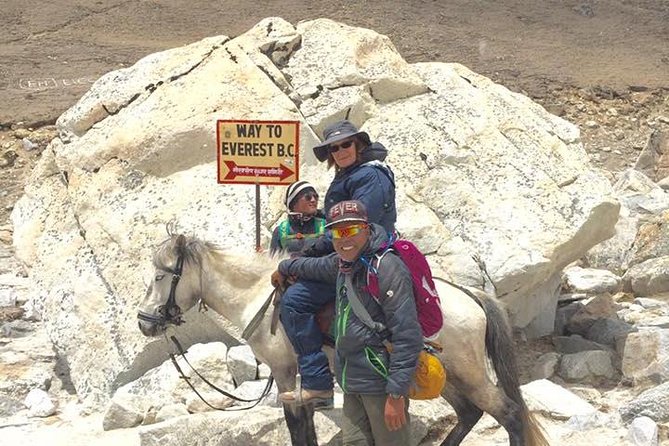
Everest Base Camp is not a quick mountain outing. This 12-day trek takes you from Kathmandu by small domestic flight to Lukla, then on foot through Sherpa villages, suspension bridges, Buddhist monasteries, glaciers, and high valleys to Gorak Shep, Everest Base Camp, and Kala Patthar. At $1,390 per person, the package covers the big practical pieces: permits, flights, lodging, meals, guide, and porter support.
I especially like the two acclimatization days, one in Namche Bazaar and another in Dingboche. I also like that the price includes the Lukla flights and staff costs, which can make planning much easier. The main caution is the tight schedule at altitude, especially the long Lobuche to Base Camp day, plus the real chance of flight delays or cancellations between Kathmandu and Lukla.
Key points before you book
- Lukla flights are included: The 30-minute flights save days of road travel, but mountain weather can delay or cancel them.
- Two acclimatization stops: Namche Bazaar and Dingboche give your body time to adjust before the highest walking days.
- Base Camp and Kala Patthar: You reach Everest Base Camp at about 5,365 meters and Kala Patthar at about 5,555 meters.
- Teahouse package: Breakfast, lunch, and dinner are included during the trek, along with pre-arranged teahouse lodging.
- Porter support: One porter is provided for every two trekkers, with staff salary, insurance, food, lodging, and equipment covered.
- Private group format: Only your group participates, making the arrangement more personal than a large shared departure.
What the $1,390 price really covers
The price is strong for a trek that includes the most expensive and complicated pieces. You get airport pickup and drop-off, domestic flights between Kathmandu and Lukla, teahouse accommodation, three meals each trekking day, a licensed English-speaking guide, porter service, permits, a medical kit, taxes, and a farewell dinner.
That matters because the Everest Base Camp route is not a self-contained walk. You need the Sagarmatha National Park permit and TIMS paperwork, plus a plan for the Lukla flights and mountain lodging. Having those arranged reduces the amount of paperwork you must handle before setting out.
The porter arrangement is one porter for two trekkers. You should still expect to carry a daypack with water, warm layers, rain protection, medication, and valuables. The package does not mean that every bag you bring will be carried.
The price does not include international flights, a Nepalese visa, travel or rescue insurance, sightseeing entrance fees, drinks, bottled or boiled water, showers, laundry, battery charging, phone calls, bar bills, tips, or extra porters. It also does not cover extra nights in Kathmandu caused by an early return, late departure, or mountain delay.
That last point deserves attention. At this altitude, plans can change for weather, flight schedules, or health reasons. I would keep spare time and extra funds available rather than treating day 12 as a guaranteed international departure date.
More Everest Base Camp Treks in Kathmandu
- Everest Base Camp Trek – 14 Days
★ 5.0 · 1,499 reviews - Everest Base Camp Trek
★ 5.0 · 842 reviews - Everest Base Camp Trekking
★ 5.0 · 485 reviews
Day 1: The short flight to Lukla and an easy start at Phakding
Your day begins early, with a stated meeting time of 5:15 am. The flight from Kathmandu to Lukla takes about 30 minutes, then you meet the rest of the trekking crew and begin walking toward Phakding.
The first trek takes about three to four hours. You pass through Cheplung village and get an early view of Mount Khumbila, a sacred mountain that has never been climbed. Phakding sits at about 2,651 meters, so this first night gives you a gentler introduction to the route than an immediate push to a high village.
The early start is practical, but it can make day one feel rushed. The Lukla flight is also one of the less predictable parts of the trip. The package notes that delays of several hours, or cancellations lasting one or more days, can happen in good trekking seasons.
Day 2: Suspension bridges and the climb to Namche Bazaar
The route follows the Benkar Valley and crosses the Dudh Koshi River. You pass Chumoa and Monjo, enter Sagarmatha National Park, then continue through Jorsale before crossing a suspension bridge and following the Dudh Koshi and Bhote Koshi rivers.
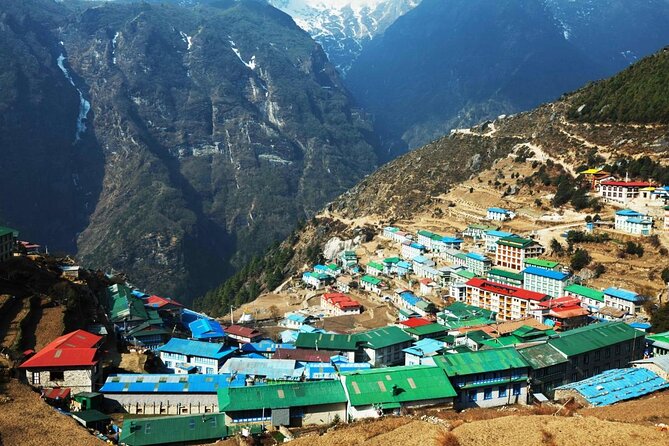
The trail to Namche becomes steep. After about four to five hours, you reach Namche Bazaar at roughly 3,438 meters. This is the first day when the altitude becomes a serious part of the experience, not just a number on a schedule.
Namche is more than a stopping point. It is the main town of the Khumbu region, and your two nights here give you time to rest, look around, and let your body adjust. The day is not technically extreme for a fit walker, but the uphill sections can feel much harder than the distance suggests.
Day 3: Namche acclimatization and first Himalayan views
The acclimatization day includes a hike toward Sagarmatha National Park, with sunrise views of Everest, Lhotse, Nuptse, Ama Dablam, Thamserku, and Kongde. You can also walk toward Khumjung village if you want a longer outing.
I like this day because it adds more than rest. You gain altitude during the daytime, then return to sleep in Namche, which is a useful way to prepare for the higher villages ahead. It also gives you your first broad set of mountain views without the pressure of covering another village-to-village distance.
Keep the day moderate. The purpose is to adjust, not to prove how much ground you can cover. If clouds block the sunrise, the day still has value, but you should not expect clear mountain views every time.
More Trekking Tours in Kathmandu
- Annapurna Circuit Trek with Tilicho Lake
★ 5.0 · 368 reviews - Everest Base Camp Trekking – 13 Day
★ 5.0 · 365 reviews - Everest Base Camp Trek
★ 5.0 · 350 reviews - Everest Base Camp Trek -14 Days
★ 5.0 · 321 reviews
Day 4: From Namche to Tengboche Monastery
The walk begins easily toward Phunki, then climbs toward Tengboche at about 3,870 meters. The full day takes around five to six hours.
Tengboche is one of the cultural highlights of the route. Its monastery is described as the largest in the Everest region, and it sits inside Sagarmatha National Park with views toward Everest, Nuptse, Lhotse, Ama Dablam, and Thamserku.
The monastery opens at 3:00 pm. If your walking pace and arrival time line up, you may observe a Buddhist religious ceremony. That is a useful reminder that this trek is not only about reaching a famous mountain viewpoint. You are also moving through a living Sherpa region where monasteries and religious practice remain part of daily life.
The climb from Phunki to Tengboche can feel demanding after the easier opening section. Take it slowly, especially as you are sleeping nearly 1,000 meters higher than in Namche.
Day 5: Pangboche, monastery paths, and Dingboche
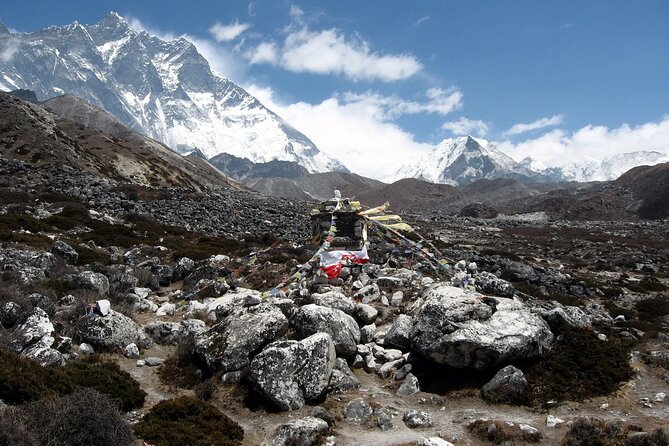
You descend to Debuche, cross the Imja River, and continue to Pangboche. The route includes the upper Pangboche trail and a visit to Pangboche Monastery before continuing through the Imja Valley and along the Lobuche River toward Dingboche.
Dingboche sits at about 4,360 meters. The five to six hour walk is not simply a transfer between lodges. It brings you into a more open, higher valley, with the surrounding peaks becoming a constant part of the walk.
The night may feel noticeably colder and thinner than earlier stops. Meals are included, but drinks and bottled or boiled water are not, so budget for hydration and remember that water costs can rise as you go higher.
Day 6: A second acclimatization day in Dingboche
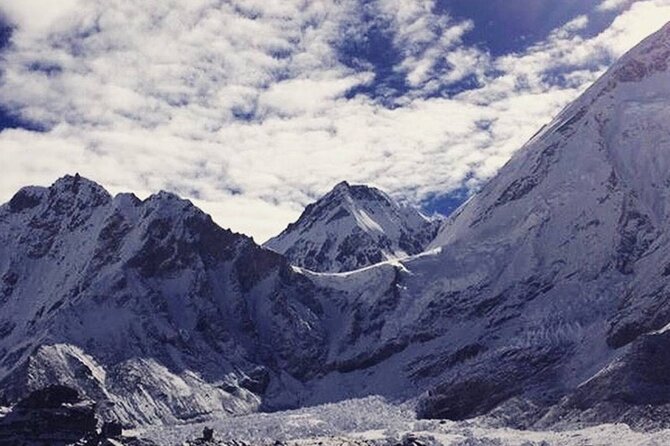
The second acclimatization day is one of the most important parts of the schedule. You can hike for about four hours behind Dingboche toward a hill with views of Lhotse, Makalu, and Cho Oyu, then return to the village for another night.
The itinerary also lists about three hours for this day, so treat the timing as flexible rather than exact. Your guide should help set a pace that fits the group and the altitude.
Dingboche is a good place to take stock. If you are struggling with headache, nausea, unusual tiredness, or other altitude symptoms, tell the guide early. The package includes a medical kit carried by the trek leader, but it does not replace travel and rescue insurance or professional medical care.
Day 7: The rough trail to Lobuche
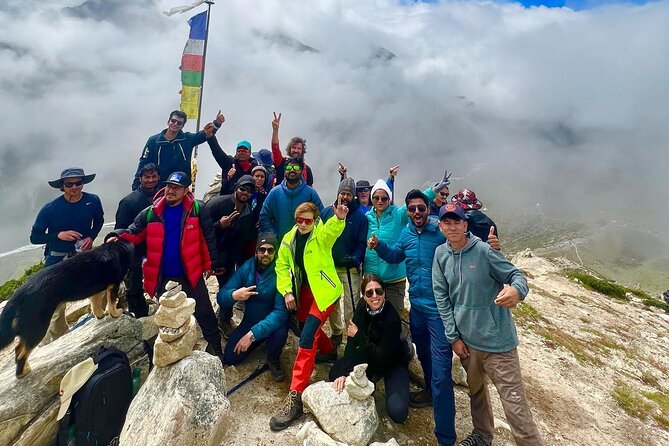
The route toward Lobuche covers about 9 kilometers and is described as taking around seven hours, though another timing estimate gives four hours. Expect a full high-altitude walking day, not a quick stroll.
You continue along a Himalayan trail toward the Base Camp area and pass through the Dughla pass before reaching Lobuche at about 4,900 meters. The setting becomes more severe and exposed, with fewer trees and a stronger sense that you are entering the high mountain zone.
This is a day to keep your expectations realistic. Distances at altitude are deceptive, and the pace of the group may be slower than you expect. The guide and porter arrangement helps, but no support package removes the physical work.
Day 8: Gorak Shep and Everest Base Camp
This is the major day of the trek. You walk from Lobuche to Gorak Shep at about 5,160 meters, check into the lodge, eat lunch, then continue to Everest Base Camp at roughly 5,365 meters.
The schedule describes nearly 12 hours and about 17 kilometers for the day. It also gives a six-hour estimate, so the actual time may vary with the group, weather, trail conditions, and time spent at Base Camp. Either way, plan for a long and tiring day.
At Base Camp, you can see Nuptse, Khumbutse, and Pumori. The destination is famous, but it is important to know what you are reaching: the camp is a seasonal staging area for mountaineering expeditions, not a summit viewpoint and not the top of Everest.
You return to Gorak Shep to sleep. The high elevation makes this one of the hardest nights as well as one of the most memorable. Bring enough warm clothing for stops, since moving slowly or waiting for others can make you feel cold quickly.
Day 9: Kala Patthar and the descent to Pheriche
An early breakfast is followed by the climb to Kala Patthar, the trek’s highest point at about 5,555 meters. The ascent takes about three hours, and the reward is a wide view toward Everest, Lingtren, Khumbutse, and Changtse.
For many people, Kala Patthar provides the clearest mountain panorama of the trip. Everest Base Camp lets you reach the famous destination, while Kala Patthar gives you the elevated viewpoint that puts Everest and the surrounding peaks in context.
After spending time at the top, you return to Gorak Shep for lunch, then descend to Pheriche at about 4,200 meters. The downhill walking is easier on the lungs but can be hard on knees and feet. This day combines the trek’s highest climb with a long descent, so do not judge it only by the lower altitude at the end.
Days 10 and 11: Retracing the route through Namche to Lukla
The return route passes through Pangboche and Tengboche before reaching Namche Bazaar. You are scheduled to arrive in the afternoon and stay overnight at a guesthouse.
The descent can feel faster, but the trail is not effortless. River crossings, uneven stone paths, and long downhill sections still require attention. Namche makes a welcome rest stop after the high camps, and the return visit lets you notice how different the town feels after several days in remote valleys.
The final trekking day takes you back to Lukla in about five to six hours. The afternoon is free for a hot shower, wandering around town, and a celebratory evening with the group. This is one of the few points in the schedule where you have a little unstructured time, so use it to dry gear, charge devices if available, and organize luggage for the flight.
The supplied schedule labels the Namche and Lukla days inconsistently, but the route itself is clear: after Pheriche, you return to Namche, then walk to Lukla before flying to Kathmandu.
Day 12: Flying back to Kathmandu
You take an early morning flight from Lukla to Kathmandu. On arrival, a transfer takes you to your hotel, and the plan includes a cultural dinner in the evening.
Do not arrange an international flight too tightly after this return. The operator specifically warns that Kathmandu to Lukla and Lukla to Kathmandu flights can be delayed or canceled because of weather, including during the best trekking seasons. A spare night in Kathmandu is not included if the mountain schedule changes.
Guides, porters, and the private format
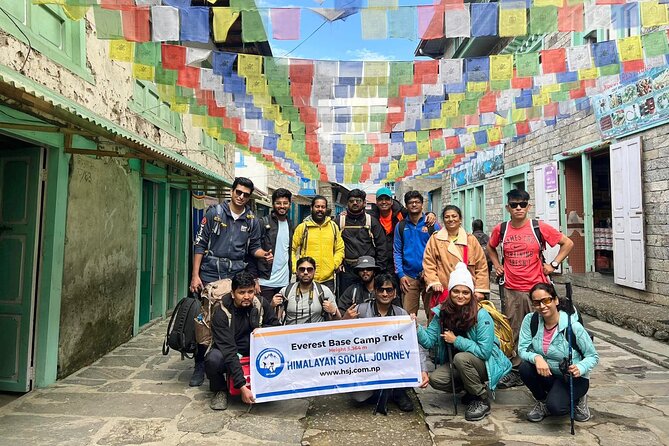
You receive an experienced, English-speaking, government-licensed trekking guide, plus porter service at a ratio of one porter for two trekkers. Staff costs include salary, insurance, equipment, domestic airfare, food, and accommodation, which makes the package easier to price accurately.
The experience is private, meaning only your own group participates. That can make a real difference on a high-altitude trek. You are not automatically tied to a large mixed group, though the exact group size is not stated.
Bishnu is the named contact associated with past arrangements. Communication from him was praised for being strong from the start, and he handled a cancellation and refund when plans changed during the pandemic. That suggests useful organization before departure, but you should still confirm the current guide, group size, flight plan, and hotel details before paying.
Fitness, equipment, and extra costs
The trip calls for a moderate physical fitness level, but the altitude makes that phrase important. You need to manage repeated five to seven hour walking days, a roughly 12-hour Base Camp day, steep climbs, cold conditions, and several nights above 4,000 meters.
The package includes a medical kit, but it does not include travel or rescue insurance. I would treat insurance as essential for this route, especially because delays, early returns, evacuation, and extra accommodation are outside the stated inclusions.
Plan separately for:
- Nepalese visa and international flights
- Water, hot and cold drinks, and snacks
- Showers, laundry, phone use, and battery charging
- Tips for guides, porters, and drivers
- Extra nights in Kathmandu
- Extra porters or baggage charges
- Entrance fees for sightseeing outside the trek
Teahouse lodging is practical rather than luxurious. The main benefit is having a reserved place to sleep and meals arranged along the route. You should not book this expecting resort comfort.
Should you book this Everest Base Camp trek?
I would consider this a good fit if you want a well-organized first Everest Base Camp trek and prefer one price for permits, flights, lodging, meals, guide support, and porters. The two acclimatization days, private group setup, and inclusion of the Lukla flights add real value.
I would hesitate if you have limited time for flight delays, dislike basic teahouse accommodation, or are not prepared for very long days at high altitude. The route is physically serious, and $1,390 is not the final cost once insurance, drinks, tips, visa fees, personal expenses, and possible extra nights are added.
Before booking, ask for the current guide’s name, the exact hotel in Kathmandu, the group size, baggage limits, and the plan if a Lukla flight is canceled. If those details are clear and you can keep your schedule flexible, this package offers a practical way to reach Everest Base Camp without arranging every moving part yourself.
FAQ
How long is the Everest Base Camp trek?
The experience lasts approximately 12 days, including flights between Kathmandu and Lukla, trekking days, acclimatization days, and the return to Kathmandu.
What time does the tour start?
The stated start time is 5:15 am, generally for the early departure toward Lukla.
Is the Kathmandu to Lukla flight included?
Yes. Domestic flights between Kathmandu and Lukla, and between Lukla and Kathmandu, are included.
How long is the flight to Lukla?
The flight takes about 30 minutes, according to the tour details.
Are meals included during the trek?
Breakfast, lunch, and dinner are included during the trekking portion. Meals in Kathmandu, except for the farewell dinner, are not included.
Where do you sleep during the trek?
You stay in pre-arranged teahouse accommodation along the route. The package includes teahouse lodging with breakfast, lunch, and dinner during the trek.
Are trekking permits included?
Yes. The package includes the necessary paperwork and permits, including the National Park Permit and TIMS.
Is a guide provided?
Yes. An experienced, English-speaking, government-licensed trekking guide is included.
Is porter service included?
Yes. The stated arrangement is one porter for every two trekkers. Staff salary, insurance, equipment, food, domestic airfare, and accommodation are included in the staff costs.
Can Lukla flights be delayed or canceled?
Yes. Flights may be delayed by several hours or canceled for one or more days because of unfavorable weather. You should be prepared for extra waiting time in Kathmandu or Lukla.
Latest treks added in Kathmandu
- Private Manaslu Circuit Trek at Himalayas★ 5.0 · 3 reviews
- Ghorepani Poonhill Trek★ 5.0 · 5 reviews
- Ghorepani Poon Hill Trek★ 5.0 · 16 reviews
- Amazing 1 Day Trekking Experience in Kathmandu Nepal★ 5.0 · 24 reviews
- Upper Mustang Trekking★ 5.0 · 2 reviews
- Upper Mustang Trekking★ 3.0 · 2 reviews
- Upper Mustang Trek★ 5.0 · 5 reviews
- Upper Mustang Trekking★ 5.0 · 4 reviews
Everest Base Camp Treks, compared.






Browse the lists this tour appears in