
REVIEW · SAPA
EXPLORE SAPA: 2D1N TREKKING & HMONG CULTURE WITH DINH
The best part of this Sapa trek is the personal connection. Dinh takes you from Sapa Town through rice terraces, bamboo forests, and Hmong villages to her family home in Ta Van, where an evening of cooking, dancing, stories, and local rice wine feels far more personal than a quick village stop. I especially like the community focus, since Dinh uses tour income to support local children’s education, and I like the generous home cooking and flexible walking routes.
The trade-off is simple: this is a real mountain trek, not a gentle stroll. You’ll cover about 18 kilometers over two days, with steep, uneven, and sometimes muddy paths. Group size can vary, the homestay is basic, and the advertised finish of 2:00 to 3:30 PM may run later when the group is large.
Key points at a glance
- A Hmong guide with a personal story: Dinh leads from her home village and explains local customs, farming, clothing, and the differences between ethnic groups.
- A true overnight village stay: Sleep at Dinh’s family homestay in Ta Van, with a private room or mountain-view bungalow if available.
- Two very different trekking days: Day one follows the valley from Sapa to Ta Van, while day two passes through bamboo forest to Giang Ta Chai waterfall.
- Food is part of the experience: Two lunches, dinner, and breakfast are included, with vegetarian choices available.
- The money has a local purpose: Dinh supports the education of children in her community, giving the tour a clear social benefit.
- Prepare for mud and weather: Comfortable hiking shoes, sun protection, water, mosquito spray, and a daypack matter more than fancy gear.
Why this trek feels different from a standard Sapa walk
Sapa is easy to visit as a scenic mountain town, but the most memorable experience comes when you leave the streets and walk into the valleys below. This trip does that over two days, giving you time to see how the scenery, villages, and family life fit together.
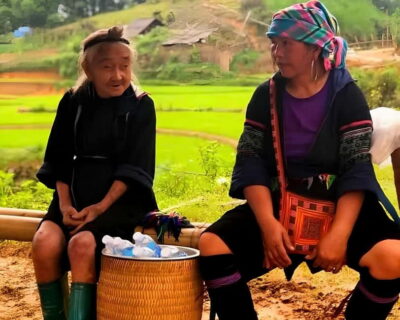
Dinh is a Hmong woman who lives in Ta Van. She is not simply guiding you between viewpoints. She brings you to her family’s home, introduces you to local life, and explains the differences between Hmong, Giay, and Red Dao communities. Guides named Su, Zu, Ku, Mo, and Dinh’s relatives may also help with different groups, so the exact guide team can vary.
Her energy is a major part of the experience. You can expect plenty of conversation, laughter, and stories about how she learned English, built her homestay, and began helping children attend school. That personal element is valuable if you want more than photographs of rice fields.
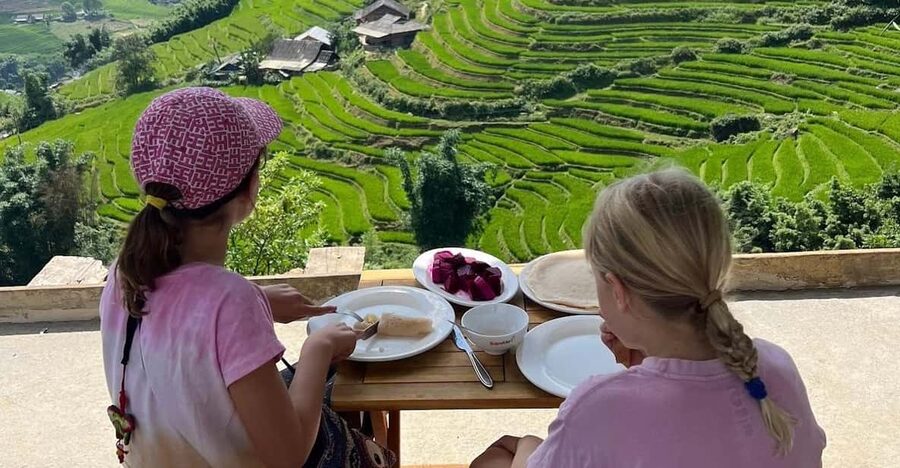
The setting is also unusually personal. The homestay sits on a hill with broad views toward the rice fields and valley. It is simple rather than polished, but that is the point. You get a hot shower, a comfortable bed, and basic amenities, along with a closer look at family life in Ta Van.
More two-day treks in Sa Pa
- Sa Pa: 2-Day Trekking Trip with Ethnic Minority Homestay
★ 4.7 · 145 reviews - Sapa : 2-Day Trek & Heartwarming Homestay with an Ethnic Family
★ 5.0 · 143 reviews - SAPA: 2-DAY 1-NIGHT TREKKING & CULTURE WITH HMONG GUIDE LINH
★ 4.9 · 126 reviews
Day one: Sapa Town to Y Linh Ho and Lao Chai
The walk begins at 9:00 AM, with pickup at your Sapa hotel or a meeting point near the town’s main church. After a short introduction, you leave the town and start down toward Y Linh Ho.
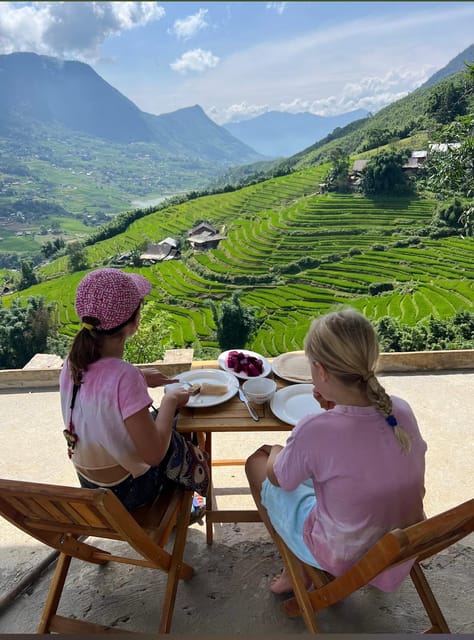
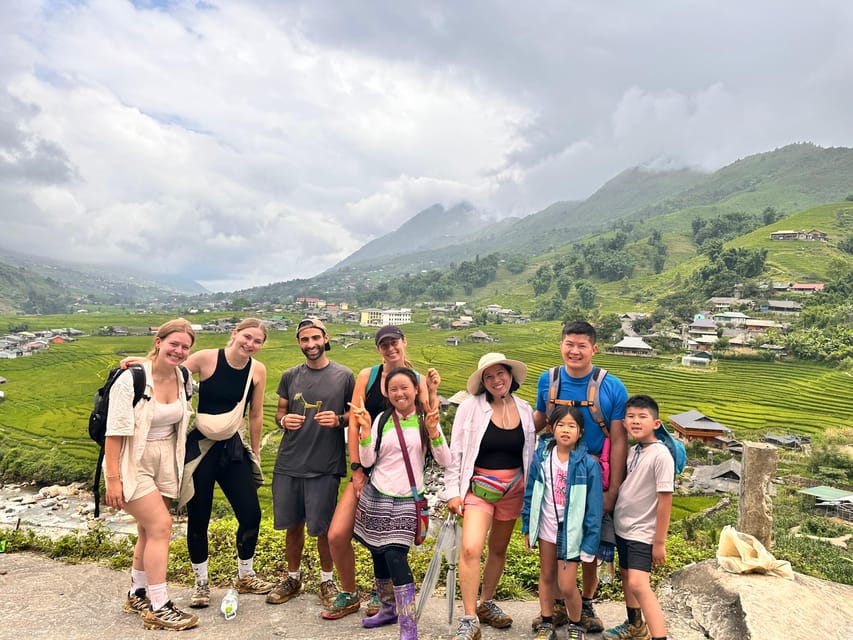
This first stretch gives you the big Sapa views: steep mountains, layered rice terraces, narrow paths, and scattered homes. The terraces change with the season. At some times of year you may see planting, while at others local farmers are harvesting. The view is beautiful, but remember that these fields are working farmland, not just scenery arranged for visitors.
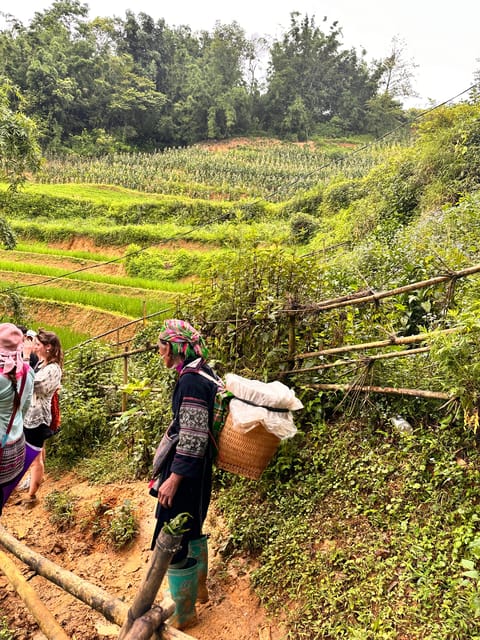
The path can be steep and uneven. After rain, it can become soggy and slippery, especially around narrow rice-field tracks. Good hiking shoes are essential. Several people have found that they ended the day muddy, so bring footwear you are willing to use on wet ground.
You will stop for lunch at a small restaurant operated by a local Hmong family. This is a useful pause after the first section, and it keeps the meal tied to the villages rather than a large tourist restaurant. Lunch is included, though drinks beyond the supplied daily water cost extra.
From Y Linh Ho, the route continues toward Lao Chai, one of the area’s larger and older Hmong villages. Dinh uses this section to explain local agriculture and the way different ethnic groups live in the valley. You may also encounter people selling local handicrafts or artifacts along the route. That can be part of the village economy, but it may feel persistent if you prefer a quieter walk.
Lao Chai to Ta Van: farms, families, and changing views

The afternoon section continues toward Ta Van, home to Hmong and Giay communities. This is where the walk becomes less about one grand viewpoint and more about seeing the valley at a walking pace.
You may pass homes, fields, streams, and tracks used by local residents. The route gives you time to notice practical details, such as how rice is grown on steep ground and how village life changes from one ethnic area to the next. Dinh’s explanations help turn the scenery into something you can understand, not just photograph.
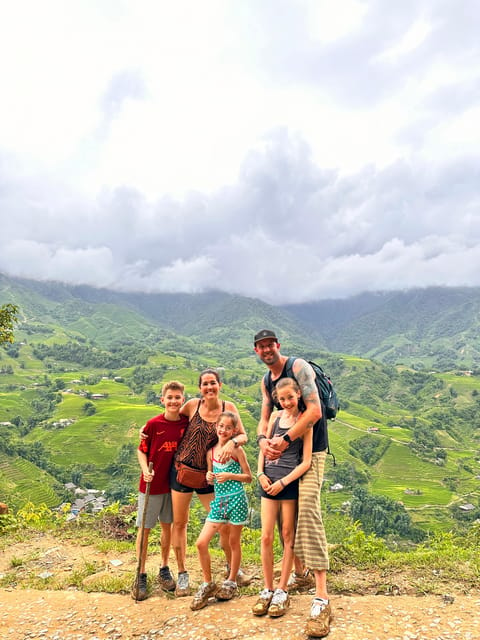
Families with children have also found the route manageable when supported by the guides. Dinh and her relatives have helped younger children along difficult sections, including carrying them when needed. Still, the stated fitness level is moderate, and the trek is not suitable for anyone expecting flat paths.
Arrival at the homestay is a welcome break. You can rest, take a hot shower, and settle into either a shared or private room, depending on the arrangement. A bungalow with a mountain view may also be available, and it is worth stating your preference when booking.
The rooms are comfortable but basic. A heated blanket may be available, which is useful in cool weather, but you should not expect hotel-style facilities. The reward is the setting and the chance to stay with a local family rather than simply passing through Ta Van.
An evening with Dinh’s family
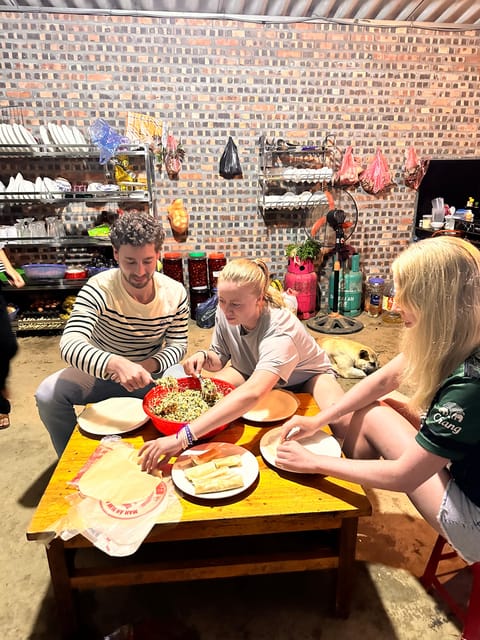
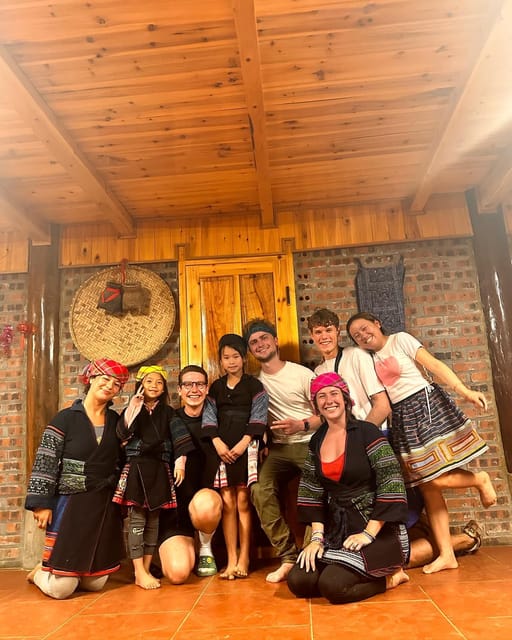
The evening is one of the strongest parts of the trip. You can join Dinh’s family to prepare a traditional dinner, turning the meal into a shared activity instead of a plate delivered to your room.
Dinner is included, and the portions are described as generous. Vegetarian food is available for breakfast, lunch, and dinner, but tell the provider about your needs in advance. Fresh local ingredients and home cooking are central to the evening.
After dinner, Dinh may explain her work supporting local children’s education. The children connected with her project may perform a traditional dance, and you can spend time with them in an informal family setting. This gives the social mission a human face, rather than leaving it as a vague promise.
There may also be drinking games with happy water, the local name for rice wine. Join in only if you want to, and take it slowly. The next morning includes another walking day, so you do not need to prove anything over dinner.
The atmosphere is warm and lively, but it is not a staged cultural show. That also means the evening can be busy and informal. If you want a quiet night, tell Dinh. If you want conversation and family interaction, this is where the trip earns its price.
More Trekking Tours in Sa Pa
- Sa Pa: Muong Hoa Valley Trek and Local Ethnic Villages
★ 4.6 · 864 reviews - Sapa: Eco Adventure Terrace Fields and Local Villages Trek
★ 4.9 · 636 reviews - Number one top rated ethical cultural trekking and homestay by ETHOS
★ 5.0 · 456 reviews - From Sapa: 1-Day Guided Trek to Lao Chai & Ta Van with Lunch
★ 4.9 · 416 reviews
Day two: bamboo forest and Giang Ta Chai waterfall
The second morning starts with coffee or tea and breakfast at the homestay. Take a moment to enjoy the view before walking, especially if your room or bungalow faces the terraces.
The route from Ta Van passes through bamboo forest and rice fields toward Giang Ta Chai. The scenery changes from open terraces to shaded paths and thicker vegetation. The forest section offers a cooler, more enclosed walk, while the rice fields open the view again.
The waterfall is the day’s main natural stop. If conditions suit you, you can swim in the cool water. Bring a small towel and wear clothing that can handle getting wet if you want to take part. Swimming is optional, so you can simply rest and enjoy the setting.
After Giang Ta Chai, you enter a Red Dao area before reaching the main road. Dinh uses this part of the trek to explain another local community and to point out differences in traditions and daily life. This is one reason the tour works well for people interested in culture as much as walking.
The second day covers roughly 7 to 8 kilometers and takes about four hours, followed by a final lunch. Transport back to Sapa is included after the trek ends in the village. The trip is expected to finish between 2:00 and 3:30 PM, but a larger group can slow down lunch and bag transport. If you have a bus or train to catch, leave extra time.
The $43 price and what it covers
At $43 per person, this is strong value for a two-day guided trek with an overnight stay. The cost includes a local guide for both days, entry fees for four villages, one night at the homestay, two lunches, dinner, breakfast, one large bottle of water per person per day, and transport back to Sapa.
The price is especially fair because the experience includes more than transport and scenery. You are paying for a local guide, meals, accommodation, and access to a family-run operation that supports children’s education. That does not mean the tour is luxurious. It means the money buys time, local contact, and practical support.
You should budget extra for drinks during the hike, such as bottled water or beer, and for personal purchases from local sellers. Carry cash, since the tour specifically recommends it. Your own travel insurance is not included.
What to bring and how to handle your bags
Bring a daypack with water, sunscreen, mosquito spray, cash, and any personal essentials. You should also pack a sun hat and comfortable clothing that can get muddy.
The packing list includes comfortable shoes, hiking shoes, biodegradable sunscreen, and climbing gear. For most people, the key items are sturdy footwear and clothing suited to changing weather. The trails can be slippery after rain, so sandals or smooth-soled trainers are a poor choice.
You do not need to carry your main luggage on the trek. First ask your Sapa hostel if it can store your large bags. If that is not possible, Dinh can arrange transport to her house, where the bags will wait for you at the homestay.
Pack a small overnight kit separately. Include a change of clothes, toiletries, and anything you need after walking. Keeping the daypack light will make the steep sections much easier.
Group size, pace, and the practical drawbacks
This is a group tour, so you will walk with other people. The group may be small, but it can also be much larger. One group reached 13 people, and the guides managed it, but the second-day lunch and bag transfer took longer.
The benefit of a group is shared energy and a lower price. The drawback is less control over pauses and timing. If you want a private pace or a silent walk, this may not be the right format.
The guides can offer easier or harder route choices and may adjust the route during the day. That flexibility helps, especially when rain makes the ground slippery. Still, you should arrive with a moderate level of fitness and be ready for about 18 kilometers over two days.
Children under three join free, but you need to tell the provider in advance. The experience is not suitable for people over 95 years old, according to the stated limits.
Who should book this Sapa experience?
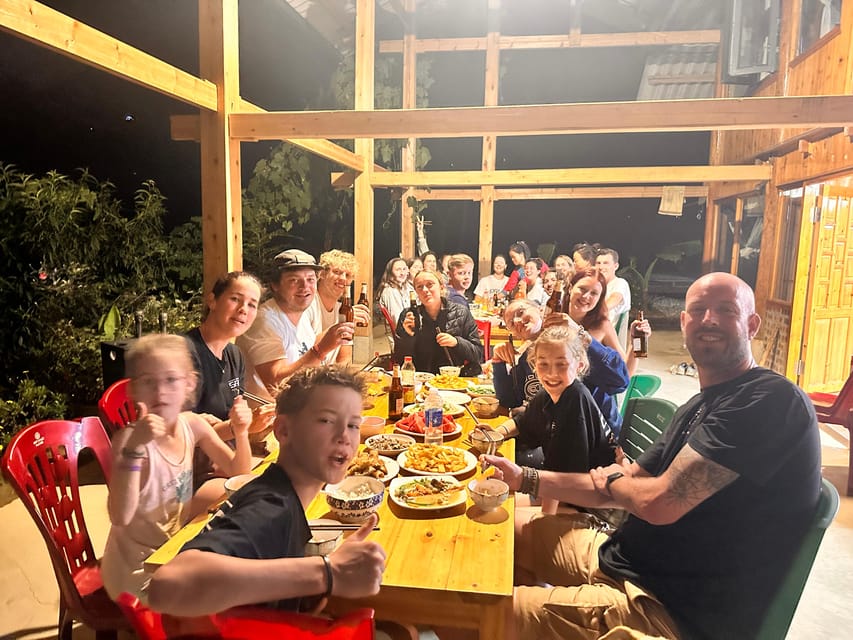
I would choose this trek if you want to combine outdoor activity with direct contact with a local family. It suits nature lovers, curious first-time visitors to Sapa, families with older children, and anyone who would rather sleep in a village than return to town after a day walk.
It is also a good match if you care where your money goes. Dinh’s work supporting local children gives the tour a clear community purpose, and staying at her family home helps keep spending in the village.
I would think twice if you dislike mud, steep paths, shared group timing, or basic accommodation. The route is scenic, but it asks you to walk for several hours each day. Weather can change the character of the trek, and clouds may hide some views.
Booking before 1:00 PM on the first day is important if you want the full itinerary. You can reserve now and pay later, and cancellation is allowed up to 24 hours before departure for a full refund. A free T-shirt is provided at the end, a small but pleasant extra.
Should you book the trek with Dinh?
Book it if you want Sapa through a local family’s eyes. The strongest reasons are Dinh’s personal storytelling, the warm homestay, the excellent home cooking, and the chance to see rice terraces and bamboo forests without rushing back to town.
The tour is not the best choice for a luxury stay or a tightly timed travel schedule. But if you can accept muddy shoes, simple rooms, and a flexible group pace, the $43 price buys a generous two-day experience with a real human connection. Bring good footwear, pack lightly, and leave room in your schedule for the trek to finish late.
FAQ
How long is the Sapa trek?
The trek covers about 18 kilometers over two days. Day one is roughly 9 to 11 kilometers and takes about 5.5 hours. Day two is about 7 to 8 kilometers and takes around four hours.
Where does the tour begin?
The tour begins at 9:00 AM. Dinh meets you at your hotel in Sapa Town or in front of the local main church.
Where do you stay overnight?
You stay for one night at Dinh’s family homestay in Ta Van Village. The accommodation is simple and cozy, with options that include a private room or a bungalow with a mountain view. State your preference when booking.
What meals are included?
The price includes two lunches, one dinner, and one breakfast. Vegetarian choices are available for all meals.
Is drinking water included?
One large bottle of water per person per day is included. Extra drinks during the hike, including bottled water or beer, are not included.
Can you swim at the waterfall?
You may swim at Giang Ta Chai waterfall if you wish. Swimming is optional.
What happens to large bags during the trek?
You can ask your hostel to store large bags. If that is not possible, Dinh can arrange transport to her house, where your bags will be waiting at the homestay.
Is the trek difficult?
The fitness level is moderate. The route includes steep and uneven terrain, and wet weather can make some sections muddy and slippery.
Can children join?
Children under three years old can join free, but you must inform the provider in advance. The tour can include families, though the walking distance and terrain should be considered.
What is the cancellation policy?
You can cancel up to 24 hours in advance for a full refund. You can also reserve and pay later to keep your plans flexible.
Latest treks added in Sa Pa
- Soob Sapa Trekking Tour★ 4.3 · 3 reviews
- Sapa: Y Linh Ho – Lao Chai, and Ta Van Trekking Day Tour★ 5.0 · 25 reviews
- Sapa Trekking Private Tour With Ethnic Female Tour Guide★ 4.9 · 24 reviews
- Sapa Trekking – Waterfalls And H’mong Villages★ 5.0 · 2 reviews
- Sapa: Ta Phin Village Trek with Lunch and Bathing Experience★ 4.7 · 13 reviews
- Sapa Trekking Guide Francophone 2 days – 1 night★ 5.0 · 2 reviews
- Sapa: Trekking Through Terraced Rice Fields & Valley 1 Day★ 4.8 · 4 reviews
- Sapa small groupe activities: 1 Day trek – Meet the locals★ 4.7 · 3 reviews
Sapa Trekking Tours, compared.
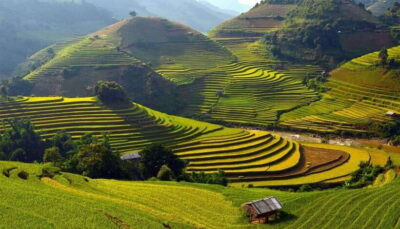
Muong Hoa Valley Trek and Local Ethnic Villages
Read our review →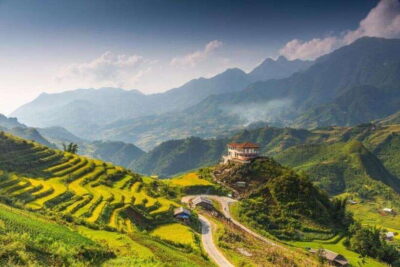
Eco Adventure Terrace Fields and Local Villages Trek
Read our review →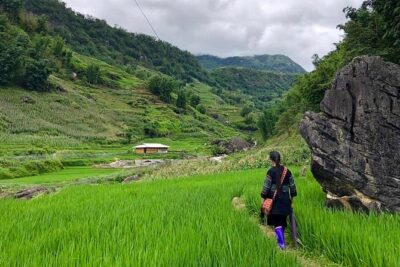
Number one top rated ethical cultural trekking and homestay by ETHOS
Read our review →
1-Day Guided Trek to Lao Chai & Ta Van with Lunch
Read our review →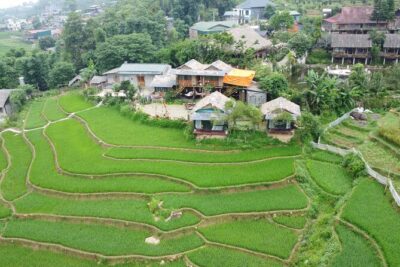
Sapa 1 Day Long Trek: Trek to Hau Thao and Sa Seng Villages
Read our review →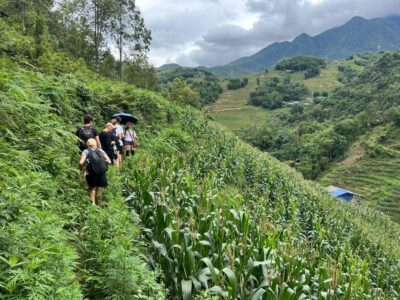
Explore Sapa by TrekkingAdventures, Mountain,Rice fields
Read our review →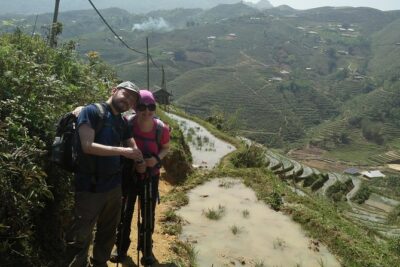
Browse the lists this tour appears in