
REVIEW · KATHMANDU
Short Annapurna Base Camp Trek – 7 Days
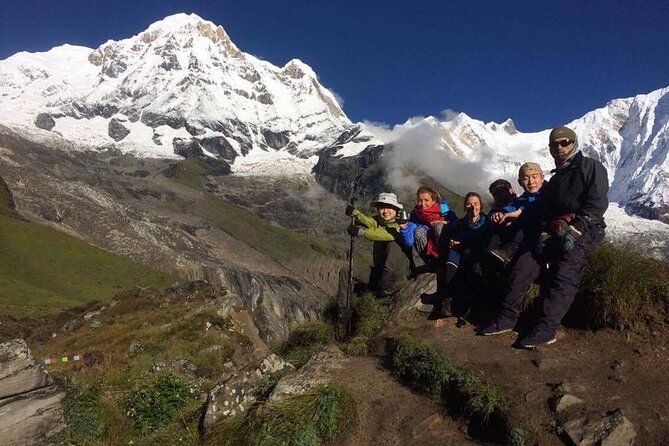
Annapurna Base Camp is the prize here, but the route earns its keep long before you reach it. You pass through mountain villages, walk beneath the sharp profile of Machhapuchhre, and reach the high amphitheater formed by the Annapurna range. For a seven-day trip, it packs in a lot.
I like the family-run tea houses and the practical guide-to-porter ratio: one guide and one porter for every two people. I also like that the price includes transport from Kathmandu, two nights in a three-star Pokhara hotel, meals during the trek, permits, and trekking insurance for the staff. The main catch is the pace. This is a short version of the trek, so you need solid fitness and should not expect much spare time for slow mornings or rest days.
Key points to know before booking
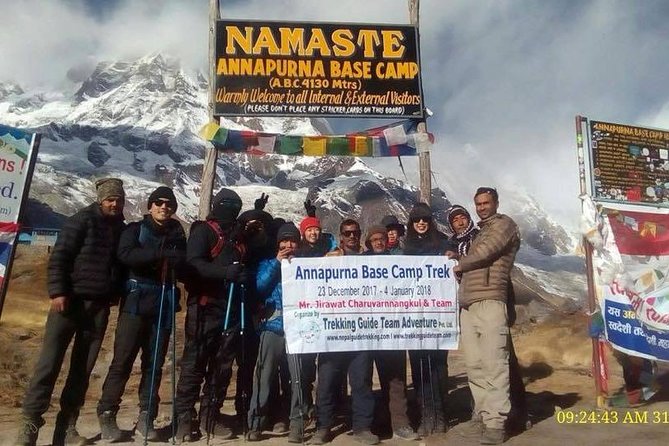
- Annapurna and Machhapuchhre base camps: The route reaches both major base-camp areas, giving you two distinct Himalayan goals.
- Seven days from Kathmandu: Tourist-bus transport and a local jeep make the short schedule possible, though the long first morning starts at 1:15 am.
- Family-run tea houses: Trek accommodation is in normal lodges and tea houses operated by Nepali families, not large hotels.
- Two nights in Pokhara: A three-star bed-and-breakfast hotel is included, giving you a softer start or finish around the mountain walking.
- Private group format: Only your own group takes part, with a guide and one porter assigned for every two people.
- Strong guide support: Guides named in past bookings include Shambu, Jit, Deepak, Ram Sharan, Sujan, Tej Bagale, and Santosh.
Why the short Annapurna route works
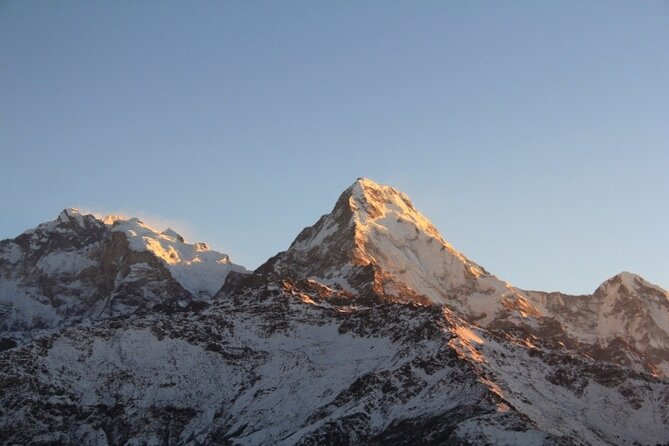
The classic Annapurna Base Camp trek takes longer. This version trims the approach and uses road transport to bring you closer to the walking section. That makes it useful if your Nepal trip is tight, but it also means the days on foot carry more weight.
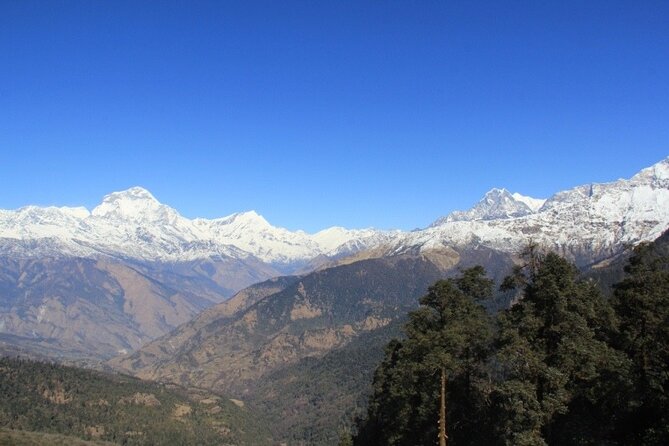
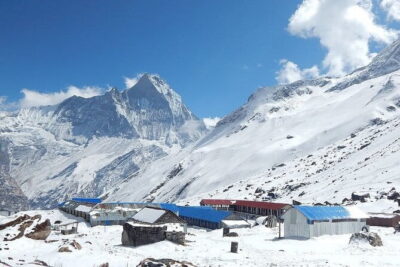
You are not simply being driven to a viewpoint. The trek still reaches Annapurna Base Camp at 8,091 meters and Machhapuchhre Base Camp at 6,997 meters, as described for the experience. The walk gives you a changing view of the Annapurna range, Machhapuchhre, and, from the Himalayan Hotel area, the Dhaulagiri range.
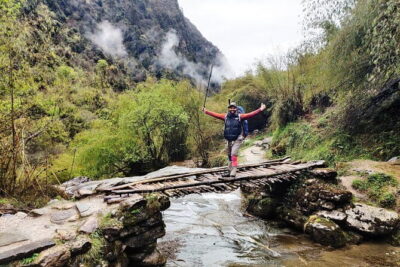
The route also has a human side. You pass through villages associated with Gurung, Magar, and Tamang communities. The accommodation is in tea houses run by local families, so your evenings are tied to the working rhythm of mountain villages rather than a resort timetable.
The trade-off is straightforward: seven days is efficient, not leisurely. A strong walker may appreciate the focus. If you prefer short walking days, long lunches, or built-in weather buffers, the classic version may suit you better.
More Annapurna Treks in Kathmandu
- Annapurna Circuit Trek with Tilicho Lake
★ 5.0 · 368 reviews - Annapurna base camp trek 5 Days
★ 5.0 · 252 reviews - 14-Day Private Annapurna Base Camp Trek
★ 5.0 · 180 reviews
The 1:15 am start from Kathmandu
The trip begins early, with a listed start time of 1:15 am. That is not a typo to overlook. It is an important part of the schedule, especially because the journey from Kathmandu to Pokhara is by tourist bus.
The early departure gives the group a full transport day and helps fit the mountain section into seven days. You should be ready before midnight, keep your warm layers within reach, and organize your main bag the evening before. At that hour, a simple breakfast plan matters more than style.
All land transport from Kathmandu to Kathmandu is included by tourist bus. The trip also includes transport between Pokhara and New Bridge by local jeep. New Bridge is identified as the trekking start and finish point, so the jeep transfer is the link between the city stay and the trail.
You should not confuse this arrangement with a fully private vehicle service. The bus and local jeep are practical transport, chosen to make the short itinerary work. They are part of the value, but they can also make the travel day feel long.
Two nights in Pokhara before or after the mountain section
The package includes two nights in Pokhara at a three-star bed-and-breakfast hotel. The stated hotel name is Splinded View. Pokhara gives the trip a useful city base, with a more comfortable bed and easier access to meals than you have on the trail.
Because the exact order of each hotel night is not supplied, confirm the day-by-day schedule before you pay. The important point is that two nights are included, while Kathmandu accommodation is not. You need to arrange your own Kathmandu hotel.
Lunch and dinner in Pokhara are also not included. The supplied estimate is about 3 to 7 US dollars per menu item, depending on what you order. Coffee, tea, mineral water, hot water, snacks, sweets, and desserts are separate expenses as well.
I see Pokhara as more than a transfer stop. It marks the shift from Nepal’s capital to the mountain region, and it gives you a place to reset before or after the demanding walking days. Just budget for those meals and personal purchases rather than assuming the included trekking meals cover the whole trip.
New Bridge and the start of the walking days
The local jeep carries you from Pokhara to New Bridge, described as the starting and ending point of the trek. This is where the road journey gives way to walking and where the short itinerary begins to feel like a real Himalayan trek.
The experience description does not provide a full list of daily villages, distances, or walking hours. That matters. Ask the operator for the final schedule, estimated hours, and overnight stops before departure, especially if you need to plan around fitness, medication, or a return flight.
What is clear is the character of the route. You walk through typical villages connected with Gurung, Magar, and Tamang communities. The tea houses are operated by Nepali families, which gives you a direct look at how mountain communities serve trekking routes and earn a living from them.
Do not expect polished hotel service in the hills. Normal tea houses are simple, useful places to sleep and eat. Hot showers, laundry, Wi-Fi, internet access, phone calls, and battery charging are not included. The package also excludes hot water as a paid drink and personal snacks, so carry some Nepalese rupees or another practical way to pay for extras.
Another trail to compare in Kathmandu:
- Everest Base Camp Trek – 14 Days
★ 5.0 · 1,499 reviews - Everest Base Camp Trek
★ 5.0 · 842 reviews - Everest Base Camp Trekking
★ 5.0 · 485 reviews - Everest Base Camp Trekking – 13 Day
★ 5.0 · 365 reviews
Himalayan Hotel and the big mountain views
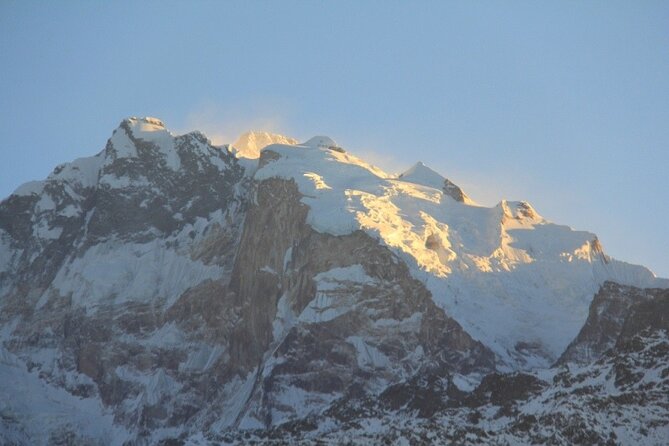
One of the strongest scenic points named for the route is the Himalayan Hotel area. From here, you can see the Annapurna range, Machhapuchhre, and the Dhaulagiri range.
That combination is important. Annapurna Base Camp is the main goal, but the walk is not visually empty before you arrive. The mountain outlook changes as you gain height, and the Himalayan Hotel section provides a broad setting for several major Himalayan groups.
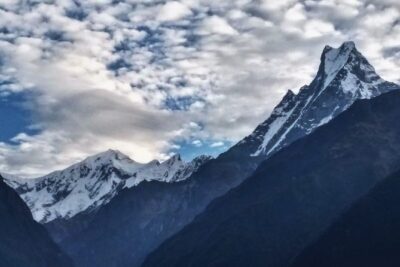
Machhapuchhre, also called Fishtail, is especially important to the identity of the trek. Its pointed form gives the route a clear visual marker, while Annapurna provides the larger high-mountain drama. At the base-camp areas, the scale shifts again: peaks surround you rather than sitting far away on the horizon.
Weather can change quickly in the mountains. One past group dealt with rain and snow, while another described conditions that required careful decisions by the guide. That is a useful warning, not a reason to cancel. You should bring proper layers, gloves, sun protection, sturdy trekking shoes, and equipment suited to changing conditions.
Annapurna Base Camp and Machhapuchhre Base Camp
The central aim is to reach both Annapurna Base Camp and Machhapuchhre Base Camp. The two locations give you different perspectives on the mountain country and make the short trip feel more substantial than a single viewpoint walk.
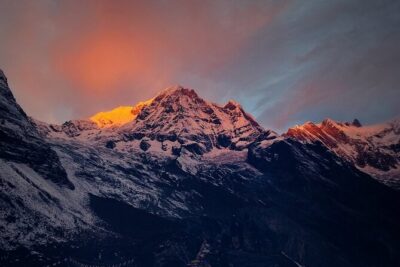
Annapurna Base Camp is the emotional high point of the route. You have moved through villages and tea houses, followed a demanding mountain trail, and arrived in a high setting surrounded by the Annapurna range. The appeal is not only the final photograph. It is the gradual change from settled valley communities to a more exposed high-altitude environment.
Machhapuchhre Base Camp adds another layer to the trip. Machhapuchhre is widely known as Fishtail, and its distinctive shape makes it one of the most recognizable peaks in the region. The experience description presents both base camps as core goals, so confirm how much time the schedule allows at each location.
This is where the seven-day limit matters most. The route is designed to get you there quickly and return you to Kathmandu within the stated period. If altitude, weather, or fatigue slows the group, the schedule may feel tight. Your guide’s judgment is important, and the group should be prepared to follow safety advice rather than treat the base camp as a promise that overrides conditions.
Guides, porters, and the human side of the trek
The package provides one guide and one porter for every two people, with insurance for the guides and porters included. That is a useful level of support for a private group, particularly when the path becomes tiring or the weather turns rough.
Several guides are associated with past bookings, including Shambu, Jit, Deepak, Ram Sharan, Sujan, Tej Bagale, and Santosh. You may not receive a specific guide unless you arrange that in advance, so ask who is assigned to your group.
The strongest pattern in the feedback is personal care. Jit is described as attentive and flexible. Shambu is associated with friendly encouragement, humor, singing, and dancing when the walking became tiring. Deepak and his porter Nama supported a person with a knee injury, while Deepak Gurung helped a mother and daughter through rain and snow, making safety decisions along the way.
You should still be honest about your fitness. A helpful guide can pace you, carry information, and respond to changing conditions, but a guide cannot remove the physical work. The supplier specifically says you need a strong physical fitness level.
The porter arrangement deserves a practical note. One porter serves every two people, so pack thoughtfully and keep your day bag manageable. Personal trekking equipment is not supplied. Sleeping bag, down jacket, gloves, sunglasses, sunscreen, trekking poles, and trekking shoes are your responsibility.
What the 650 dollar price really covers
At 650 dollars per person, the price has solid coverage for a short Nepal trek. Included are trekking meals, tea-house accommodation, two nights of Pokhara hotel accommodation with breakfast, staff, staff insurance, permits, tourist-bus transport from Kathmandu to Kathmandu, and the local jeep connection to New Bridge.
The included meals are breakfast, lunch, and dinner during the trek. That can make the mountain portion easier to budget, since food costs in the tea houses are not added meal by meal. Drinks and snacks are not included, so the final total will be higher than the headline price.
The Annapurna Conservation permit and TIMS permit are included. These are useful inclusions because they cover two routine administrative costs without requiring you to arrange them separately.
The value is strongest for someone who already has, or can borrow, suitable equipment and who wants a private group rather than a large departure. The price is less complete if you need to rent every item, pay for Kathmandu hotels, purchase travel insurance, or use emergency evacuation.
Personal travel insurance is required, and it must cover helicopter rescue. Emergency rescue evacuation itself is not included. That is one of the most important budget points on the entire trip.
The costs you need to add
The package does not include Nepal’s entry visa. The visa is available on arrival at the airport, and you are asked to bring two passport-size photographs.
Kathmandu accommodation is also separate. So are lunch and dinner in Kathmandu and Pokhara, alcoholic and non-alcoholic drinks, coffee, tea, mineral water, hot water, sweets, and snacks.
During the trek, you pay separately for hot showers and laundry. Wi-Fi, internet, phone calls, and battery charging are also extra. These are normal mountain-trip costs, but they can add up if you expect regular online access or several hot showers.
Tipping for the guide and porter is not included. Personal expenses and hygiene items are yours to manage. Before leaving Kathmandu, I would set aside money for drinks, charging, showers, snacks, and tips, then keep the rest available for unexpected needs.
Who should choose this seven-day trek
This experience suits you if you have a limited Nepal schedule but still want a genuine trek to Annapurna Base Camp. It also suits people who value local tea houses, a private group, organized transport, and direct support from a guide and porter.
It can work for first-time Himalayan walkers, but only if you take the fitness requirement seriously. Past bookings include a first Himalayan trek and a 65-year-old trekker with health concerns who received strong support from the guide and porter. Those examples show the value of attentive staff, not a guarantee that the route will feel easy.
You may prefer a longer Annapurna itinerary if you want more time for acclimatization, shorter walking days, or a greater margin for bad weather. The short version is best for someone who accepts a brisk schedule and understands that the mountain part is the focus.
The experience is a private activity, so only your own group participates. That gives you more control than a large group departure, though the guide still sets the pace according to safety and the day’s conditions.
Practical booking advice before you commit
Confirm the precise daily itinerary, overnight villages, estimated walking hours, altitude profile, and the order of the two Pokhara nights. Those details are not supplied in the basic description, and they matter on a seven-day route.
Ask which guide is assigned, what the porter will carry, and whether any gear rental is available. Bring a sleeping bag or arrange one before the trek, along with warm clothing, gloves, sunglasses, sunscreen, trekking shoes, and a trekking stick.
Also check the return timing to Kathmandu before booking onward travel. The trip includes transport back to Kathmandu, but mountain roads and trekking conditions can affect a tightly timed plan.
The cancellation rule is strict: the experience is non-refundable and cannot be changed for any reason. Read that condition carefully before making payment.
Should you book the Short Annapurna Base Camp Trek?
I would book this trek if I had seven days, wanted both Annapurna and Machhapuchhre base camps, and was comfortable with early transport, simple tea houses, and demanding walking days. The included permits, meals, staff, transport, and Pokhara accommodation give the 650 dollar price sensible value.
I would choose a longer itinerary if I wanted a gentler pace or more flexibility for weather and fatigue. Either way, the guide matters. Ask about the assigned guide, prepare your equipment carefully, and treat travel insurance with helicopter evacuation cover as essential.
FAQ
How long is the Short Annapurna Base Camp Trek?
The trek lasts approximately seven days, including transport from Kathmandu, the mountain trek, and the return journey.
What is the listed price?
The listed price is 650 US dollars per person.
Does the tour include transport from Kathmandu?
Yes. All land transportation from Kathmandu to Kathmandu by tourist bus is included.
How do I reach the trekking trail from Pokhara?
The package includes local jeep transport from Pokhara to New Bridge. New Bridge is described as the trekking start and end point.
Are meals included?
Breakfast, lunch, and dinner are included during the trek. Lunch and dinner in Kathmandu and Pokhara are not included.
Where do I sleep during the trek?
Accommodation is in normal lodges and tea houses operated by Nepali families.
Are two nights in Pokhara included?
Yes. Two nights at a three-star bed-and-breakfast hotel in Pokhara are included.
Are permits included?
Yes. The Annapurna Conservation permit and the Trekkers’ Information Management System, or TIMS, permit are included.
What equipment must I bring?
Personal trekking equipment is not included. You must arrange items such as a sleeping bag, down jacket, gloves, sunglasses, sunscreen, trekking shoes, and a trekking stick.
Does the tour include travel insurance or emergency rescue?
Insurance for the guide and porters is included. Your own travel insurance is not included, and it must cover helicopter rescue. Emergency rescue evacuation is also not included.
Is this a private trek?
Yes. It is a private activity, so only your own group participates.
What time does the trip start?
The listed start time is 1:15 am.
Can I cancel for a refund?
No. The experience is non-refundable and cannot be changed for any reason.
More week-long treks in Kathmandu
- Kathmandu to Langtang Valley 7-Day Trek
★ 5.0 · 11 reviews - 7 Days Langtang Valley Private Trek From Kathmandu
★ 5.0 · 10 reviews - Langtang Trek from Kathmandu 7 Days
★ 5.0 · 5 reviews - Everest View Trek – 7 Days
★ 5.0 · 4 reviews
Latest treks added in Kathmandu
- Private Manaslu Circuit Trek at Himalayas★ 5.0 · 3 reviews
- Ghorepani Poonhill Trek★ 5.0 · 5 reviews
- Ghorepani Poon Hill Trek★ 5.0 · 16 reviews
- Upper Mustang Trekking★ 3.0 · 2 reviews
- Amazing 1 Day Trekking Experience in Kathmandu Nepal★ 5.0 · 24 reviews
- Upper Mustang Trekking★ 5.0 · 2 reviews
- Upper Mustang Trek★ 5.0 · 5 reviews
- Upper Mustang Trekking★ 5.0 · 4 reviews
Annapurna Base Camp Treks, compared.

Trekking in Annapurna/Langtang/Everest/Upper Mustang regions
Read our review →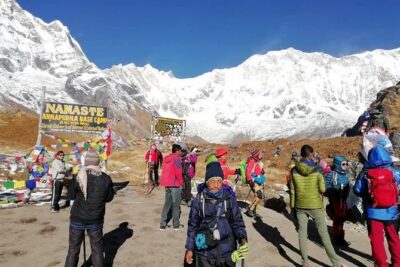
Kathmandu to Annapurna Base Camp (ABC) 5-Day Trek
Read our review →Browse the lists this tour appears in