
REVIEW · KATHMANDU
Manaslu, Nar Phu and Annapurna Three Passes Trek
The remarkable feature here is the sheer range of Nepal packed into one 34-day mountain journey. You move from the green Budhi Gandaki valley into Tibetan-influenced Tsum and Nar Phu, cross three very high passes, then finish among the Annapurna peaks and at Tilicho Lake.
I like the quiet village life around Mu Gompa and Phu, where monasteries, mani walls and prayer wheels matter more than souvenir stalls. I also like the careful rhythm of acclimatization days at Samagaon and Phu. The main drawback is clear: this is a serious trek, and the price does not automatically cover all mountain meals and lodging, so you must confirm the final package before paying.
Key points worth knowing first
- Three major passes: Larkya La reaches 5,160 meters, Kang La reaches 5,306 meters, and Thorung La reaches 5,416 meters.
- Four distinct trekking areas: You travel through Manaslu, Tsum Valley, Nar Phu and the Annapurna region.
- Two useful acclimatization days: One is planned at Samagaon, with hikes toward Birendra Lake, Manaslu Base Camp or Pungen Gompa. Another comes at Phu.
- A strong cultural route: Expect Tibetan Buddhist villages, gompas, chortens, mani walls and the sacred town of Muktinath.
- Support is arranged: The package includes permits, a local guide, one porter for every two clients, an assistant guide for each five trekkers, rescue arrangements and a first-aid kit.
- The cost needs checking: The listed price is $2,426.67 per person, but food and lodging in the mountains may be added depending on the package agreement.
Why this route is unusually ambitious
Many Nepal treks focus on one famous circuit. This one links several. You begin in the Manaslu region, make a detour into the Tsum Valley, return to the main Manaslu route, cross Larkya La, then turn north into Nar Phu before joining the Annapurna circuit.
That route design gives you variety, but it also creates a demanding schedule. You spend long stretches above 3,000 meters, walk on consecutive days, and face three crossings above 5,000 meters. The itinerary usually lists five or six hours of walking per day, though altitude, trail conditions and weather can make those hours feel very different.
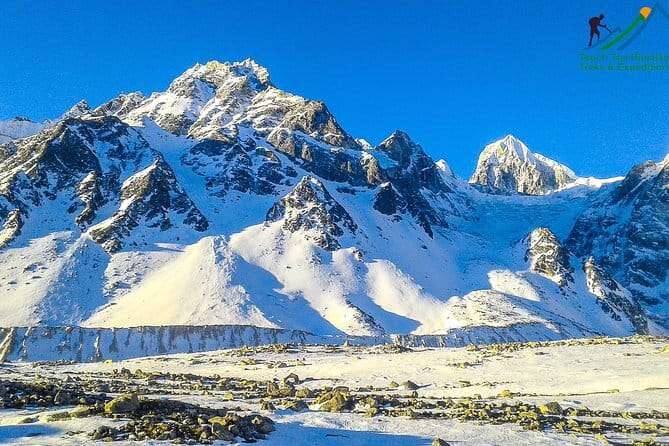
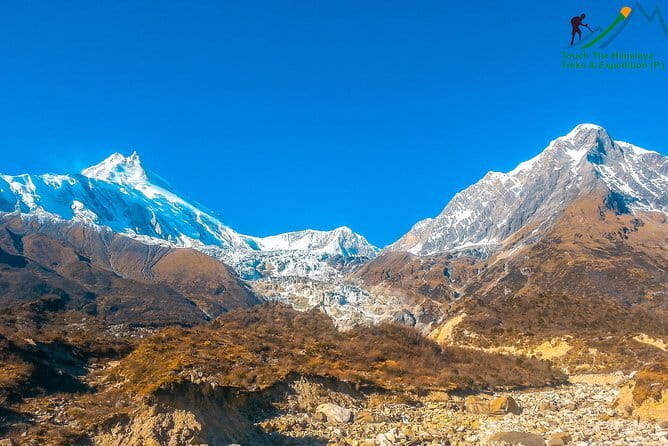
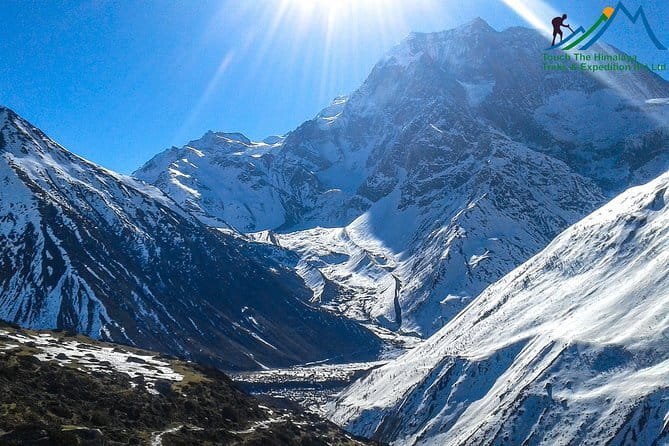
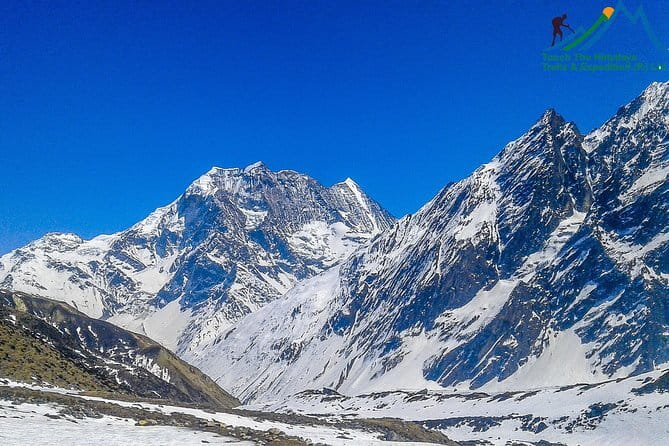
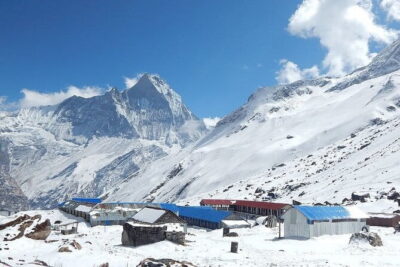
The reward is that the scenery keeps changing. Lower sections bring terraced hills, waterfalls, monkeys, pine forests and river valleys. Higher sections become dry and stark, with views toward Manaslu, Annapurna II, Himlung and other major peaks.
You should think of this as a full expedition-style holiday, not a relaxed walking tour. The private format means the schedule is for your group, but the mountains still set the pace.
More Annapurna Treks in Kathmandu
- Annapurna Circuit Trek with Tilicho Lake
★ 5.0 · 368 reviews - Annapurna base camp trek 5 Days
★ 5.0 · 252 reviews - 14-Day Private Annapurna Base Camp Trek
★ 5.0 · 180 reviews
Kathmandu starts with useful preparation
Your first day is simple. You are met at Tribhuvan International Airport and taken to your hotel. The evening is free, which is welcome after an international flight.
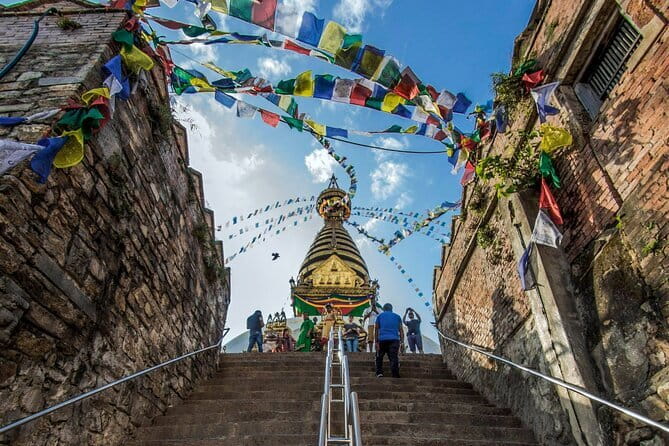
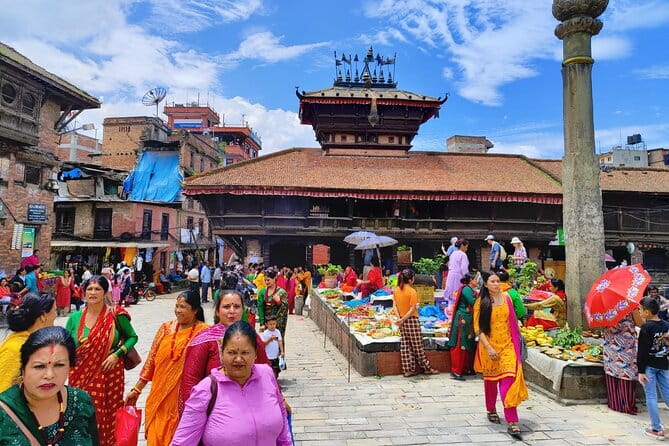
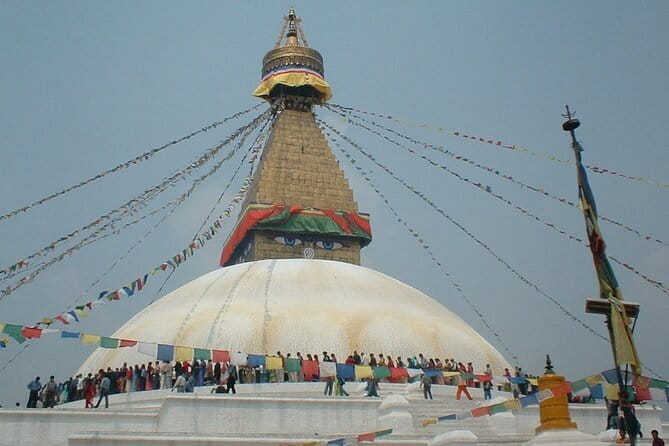
Day two combines a trek briefing with sightseeing. You visit Kathmandu Durbar Square and Swayambhunath, known as the Monkey Temple. Entry fees are not included, so carry local currency or confirm the current cost with the operator.
The briefing matters. This is when you should ask exactly what your price includes, how many staff members will accompany you, what happens if weather changes the plan, and whether mountain meals and rooms are already paid for. The package includes the first two nights in a tourist-standard Kathmandu hotel on a twin-share basis, but extra nights in the capital cost more.
From Arughat to the quiet Tsum Valley
The road journey begins on day three, with a bus transfer toward Arughat, followed by onward local transport toward Soti Khola and Machhakhola. Roads in this part of Nepal can be rough and slow. The journey is part of the experience, taking you past terraced fields, villages and steep river country, but you should not expect a polished coach ride.
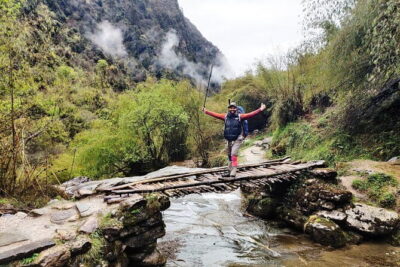
From Machhakhola, the route continues to Jagat. Waterfalls, stone paths, suspension bridges and views of Ganesh Himal give the early walking days plenty of interest. At Jagat, you enter a restricted trekking area, and the character of the route shifts.
Day six leads through Philim and Ekle Bhatti toward Lokpa, the gateway to Tsum Valley. This is one of the strongest sections for cultural atmosphere. You see mani walls, prayer wheels and Tibetan Buddhist details while the Shingri Himal rises around the valley.
The walk to Chumling takes about four hours uphill. You have time to visit gompas and take in views toward Ganesh Himal. The program allows for camping or returning to Lokpa, which is a detail worth confirming because sleeping arrangements can vary.
From Chumling, you continue to Chhokan Paro, formed by two settlements and described as the largest town in Tsum Valley. The route then heads north to Mu Gompa, passing rustic villages and more mani walls.
Mu Gompa is a high point of the cultural side of the trek. You can see Buddhist ceremonies, chortens and the Milarepa Cave before returning downhill to Chumling. This out-and-back section adds walking time, but it gives you access to a remote area that a standard Manaslu circuit leaves out.
Manaslu reveals itself after Deng
After retracing the trail toward Philim, you turn toward Deng. The route then climbs through Ghap to Namrung, with views of Ganesh Himal, Shingri Himal and Kutang Himal.
Day 13 brings the first major visual payoff. You pass Lihi and Sho before reaching Lho, where Mount Manaslu comes into view. At 8,163 meters, Manaslu is the world’s eighth-highest mountain. The mountain becomes a constant reference point as you continue higher.
The walk to Samagaon passes through Shyala, a good place for a broad Himalayan view. From Samagaon, you can see Manaslu, Himalchuli, Nadi Peak, Naike Peak, Kutang Himal and Pangbuche Himal. The village is also your first important rest point at high altitude.
The acclimatization day here is well placed. You can hike around Birendra Lake and toward Manaslu Base Camp, or climb toward Pungen Gompa. You should not treat this as a lazy day if you are feeling well. Gentle uphill walking helps you adjust, while staying back at the lodge may be the wiser choice if you have a headache, nausea or unusual fatigue.
Another trail to compare in Kathmandu:
- Everest Base Camp Trek – 14 Days
★ 5.0 · 1,499 reviews - Everest Base Camp Trek
★ 5.0 · 842 reviews - Everest Base Camp Trekking
★ 5.0 · 485 reviews - Everest Base Camp Trekking – 13 Day
★ 5.0 · 365 reviews
Larkya La is the first major test
From Samagaon, you walk to Samdo, a short but high day. The pace is deliberately slow. Samdo is known as a Tibetan refugee settlement, and a hike toward Samdo Peak is possible if you still have energy.
Next comes Dharmasala, also called Larkya Phedi, the staging point for Larkya La. The overnight stop is basic and the altitude is high. Sleep may be poor, so keep your expectations modest and organize your clothing, water and headlamp before turning in.
The pass day begins early. You climb gradually to Larkya La at 5,160 meters, then descend toward Bhimtang. Views include Cheo Himal, Gyaji Kung, Kang Guru and Annapurna II, all rising above 6,000 meters. This is a long and tiring day, but the crossing gives you a real sense of achievement.
The following day drops through Gho to Dharapani. An early start can give you sunrise views from the teahouse. Dharapani also marks a change in the route, as you begin linking with the Annapurna trekking area.
Nar Phu adds the route’s most remote villages
From Dharapani, the path heads west through pine forests and small settlements toward Koto. Koto is the last practical place to restock, so buy snacks and any small supplies you need there. The route may also offer views of gray langur monkeys.
At Koto, you turn north along the Nar Khola. The walk to Meta passes a large waterfall at Singenge Dharmasala and enters a quieter region with fewer facilities. The route continues to Phu, or Phugaon, through Nar Phedi.
Phu is one of the most distinctive villages on the trip. Chortens, mani prayer wheels and an old stupa give the place a strong Tibetan Buddhist character. You also get the chance to see how daily life works in an isolated mountain settlement, rather than simply passing through a famous viewpoint.
The acclimatization day at Phu includes an out-and-back hike toward Himlung Base Camp. The area is also noted for birdwatching, blue sheep and the possibility of snow leopard sightings. Wildlife is never guaranteed, so treat these as lucky extras, not promised attractions.
From Phu, you return to Nar Phedi and then turn west toward Naar. The bridge over the Phu Khola leads into another remote village. These repeated out-and-back sections add time and effort, but they are the reason this itinerary reaches places that shorter circuits skip.
Kang La leads into the Annapurna circuit
From Naar, you climb toward Kang Phedi and then cross Kang La at 5,306 meters. This is the highest point of the route up to this stage and one of its hardest days. The descent to Ngawal is steep, so trekking poles and careful footwork will help.
The next section feels more connected to the established Annapurna route. You descend through Braga, pass through Manang and continue to Khangsar. Manang is a useful place to replenish supplies, though you should still avoid carrying more than necessary.
From Khangsar, the trail follows the Marsyangdi River toward Tilicho Base Camp. The stay here prepares you for another early and demanding outing.
Tilicho Lake is worth the early start
You leave Tilicho Base Camp around 6 a.m. for the climb to Tilicho Lake. The walk takes roughly three hours uphill, followed by time at the lake and a return to the base camp area before continuing toward Siri Kharka.
Tilicho is widely described as one of the highest lakes in the world and is often called the highest lake in Nepal. The appeal is not just the altitude. After the dry, rugged valleys and high passes, the lake gives this section a distinct visual focus.
The day is long, and the early departure is practical rather than optional decoration. You need enough time for the ascent, time by the lake and the onward route. If weather is poor, conditions can change, which is why the operator notes that the experience depends on suitable weather.
Thorung La finishes the crossing sequence
After Siri Kharka, you walk to Yak Kharka and then toward Thorung Phedi and Thorung High Camp. The pace remains cautious because you are still at high altitude. Blue sheep may be seen in this region, while snow leopard sightings are possible but highly uncertain.
The Thorung La crossing begins around 4 or 4:30 a.m. You climb to the 5,416-meter pass, the highest point of the whole trip, then descend to Muktinath through much drier country.
Muktinath is sacred to Hindus and Buddhists. Its temple area is known for 108 water spouts, though the program describes 180 healing and purifying taps, so you may want to ask your guide about the exact local site details. Either way, this is an important pilgrimage place, not just a stopping point after a hard pass.
The next day takes you through Kagbeni to Jomsom. Apple orchards and the Kali Gandaki River add a gentler finish to the high mountain section. From Jomsom, you may fly to Pokhara in about 25 minutes or travel by road for roughly half a day, depending on your booking.
What the $2,426.67 price really gives you
At $2,426.67 per person, the price can be good value for a 34-day private trek with a complicated permit structure. Included items cover airport transfers, the first two Kathmandu hotel nights, transport toward the trek, some return transport, TIMS and conservation permits, Manaslu, Tsum Valley and Nar Phu restricted-area permits, a local guide, porter support, taxes, rescue arrangements, basic first aid and an achievement certificate.
The staffing plan is useful: one porter for every two clients and one assistant guide for every five trekkers. Your main guide is described as a local Manaslu expert, while the operator contact named in the supplied material is Madan. Previous arrangements by Madan included 21-day and 30-day versions of the Manaslu, Tsum Valley and Nar Phu routes, including one organized at short notice.
But read the food and lodging language closely. The package says mountain meals and accommodation can be arranged, with the cost added according to the agreement. Drinks, Wi-Fi, charging, hot showers, gifts, personal equipment, insurance, tips and sightseeing entry fees are excluded.
That distinction can change the final cost. Ask for a written breakdown covering every night outside Kathmandu, every breakfast, lunch and dinner, porter allowances, transport from Jomsom, and any extra hotel nights in Pokhara or Kathmandu.
Who should book this trek?
This route suits you if you want a long, demanding Himalayan experience with serious cultural variety and are comfortable with basic mountain accommodation. You need a good fitness level, patience with rough road transfers and the ability to walk at altitude for many consecutive days.
It is not the right pick if you want a short, polished holiday, private bathrooms, fixed transport times or a route with only one major pass. The itinerary has many moving parts, and weather can affect flights, road travel and high-pass crossings.
The free cancellation policy allows cancellation up to 24 hours before the start for a full refund. Changes made less than 24 hours before the start are not accepted, and poor weather may lead to a new date or a refund.
FAQ
How long is the Manaslu, Nar Phu and Annapurna trek?
The planned duration is approximately 34 days, including Kathmandu, trekking, transfers and the return to Kathmandu.
What are the three high passes on the route?
You cross Larkya La at 5,160 meters, Kang La at 5,306 meters and Thorung La at 5,416 meters.
Is Tilicho Lake included?
Yes. The route includes an early-morning walk from Tilicho Base Camp to Tilicho Lake, followed by a continuation toward Siri Kharka.
Are mountain meals and accommodation included in the price?
The information says mountain meals and accommodation can be arranged, with the cost added according to the package agreement. Confirm this before booking.
What support staff are included?
The package includes a local Manaslu guide, one porter for every two clients and one assistant guide for every five trekkers. Guide costs, accommodation, meals, salary and insurance are included for the guide.
Are permits included?
Yes. The package includes TIMS, ACAP and MCAP permits, plus special permits for the Tsum Valley, Manaslu and Nar Phu restricted areas.
How do you return from the mountains?
The route includes transport toward Besisahar and then onward by bus to Kathmandu or Pokhara. From Jomsom to Pokhara, you may fly in about 25 minutes or travel by road for about half a day, depending on the booking.
Is this a private trek?
Yes. Only your group participates in the private activity.
What happens if bad weather cancels the trek?
The experience requires suitable weather. If it is canceled because of poor weather, you are offered another date or a full refund. You must cancel at least 24 hours before the start for a full refund for personal cancellation.
More Manaslu Treks in Kathmandu
- Manaslu Circuit Trek
★ 5.0 · 292 reviews - Manaslu Circuit Trek:
★ 5.0 · 106 reviews - Manaslu Circuit Trek (15 Days)
★ 5.0 · 50 reviews - 16 Day Private Manaslu Circuit Trek from Kathmandu
★ 5.0 · 42 reviews
Latest treks added in Kathmandu
- Ghorepani Poonhill Trek★ 5.0 · 5 reviews
- Ghorepani Poon Hill Trek★ 5.0 · 16 reviews
- Private Manaslu Circuit Trek at Himalayas★ 5.0 · 3 reviews
- Upper Mustang Trekking★ 3.0 · 2 reviews
- Amazing 1 Day Trekking Experience in Kathmandu Nepal★ 5.0 · 24 reviews
- Upper Mustang Trekking★ 5.0 · 2 reviews
- Upper Mustang Trek★ 5.0 · 5 reviews
- Upper Mustang Trekking★ 5.0 · 4 reviews
Annapurna Base Camp Treks, compared.

Trekking in Annapurna/Langtang/Everest/Upper Mustang regions
Read our review →
Kathmandu to Annapurna Base Camp (ABC) 5-Day Trek
Read our review →Browse the lists this tour appears in