
REVIEW · ARUSHA
8 Days Lemosho Route Kilimanjaro Trekking
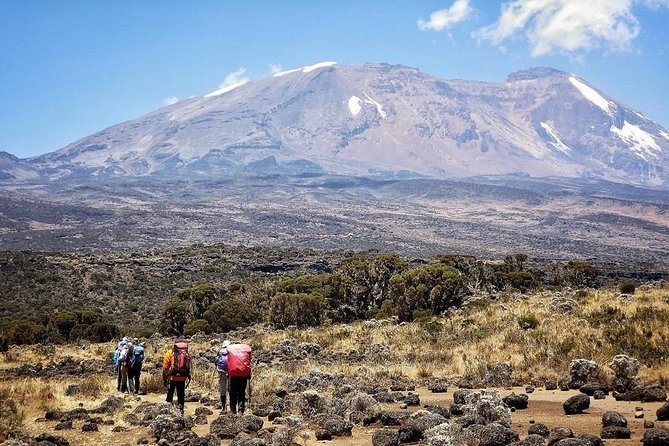
Kilimanjaro’s Lemosho Route gives you the mountain in chapters: rainforest first, then open moorland, the broad Shira Plateau, volcanic rock, glaciers, and finally the cold stone slopes near Uhuru Peak. It is one of the most scenic ways up, and the low crowds during the early days make the first half feel peaceful.
I like two things especially. The gradual acclimatization gives you time to adjust before summit night, and the route’s changing habitats keep each day distinct. I also like the local setup: you deal directly with Erastus, while guides such as Oliver and John lead the mountain crew. The main drawback is simple: this is still a demanding high-altitude climb, with a long summit day and no refund if you cancel.
Key points to know
- Eight days from Arusha: The tour begins at 6:00 a.m. and returns to the Arusha meeting point after the descent.
- A varied western approach: You hike through rainforest, moorland, semi-desert, alpine desert, and summit scree.
- A private group: Only your own group takes part, with a professional guide, porters, and cooking crew.
- Strong acclimatization design: Shira Plateau, Lent Hills, Lava Tower, Barranco, and Karanga help prepare you for altitude.
- Most costs are included: Meals, camping equipment, park charges, rescue fees, porterage, taxes, and mountain accommodation are covered.
- Plan for extras: Sleeping bags, climbing gear, towels, tips, insurance, visas, international flights, and Arusha hotel nights are not included.
Why the Lemosho Route is worth your time
The Lemosho Route begins on Kilimanjaro’s western side, far from the final summit slopes. That matters because the mountain does not appear all at once. You start beneath tall forest, move into open heather and volcanic ground, then cross the huge Shira Plateau with Kibo ahead.
The early sections are quieter than the part shared with the Machame Route. By the time you meet the southern circuit, you have already gained height slowly and seen several types of mountain country. I find that a better way to experience Kilimanjaro than rushing toward the summit.
The route is not easy, though. The total schedule includes long hiking days, a wake-up around 11:30 p.m. before the summit, and a descent of roughly 23 kilometers on Day 7. You need a reasonable level of fitness and the patience to walk slowly.
More Kilimanjaro Climbs in Arusha
- 8-Day Small-group Lemosho Kilimanjaro Summit Trekking
★ 5.0 · 186 reviews - 7 Days Kilimanjaro trek via Machame route
★ 5.0 · 13 reviews - Mount Kilimanjaro day trip trekking
★ 5.0 · 12 reviews
What the $2,700.52 price covers
At $2,700.52 per person, this is not a cheap mountain walk. It is a full camping expedition with a private group and a support team. The price includes camping equipment such as a mess tent, mattress, and cooking equipment, along with porters and a professional driver and guide.
Park charges, parking fees, rescue fees, taxes, and mountain accommodation are also included. Your package provides seven breakfasts, seven dinners, and eight lunches. That last detail matters because food and cooking support are handled on the mountain rather than left to you.
You still need to budget for a sleeping bag and climbing gear if you do not own them. The operator says those items are available for rent. You also pay for accommodation before and after the trek, international flights, bath towels, tips, travel insurance, visa fees, souvenirs, and any later increase in government taxes or park fees.
For the right person, the price offers good practical value because the major mountain costs are grouped together. Before paying, I would ask exactly what rental gear is available, what the sleeping bag costs, and where the Arusha pickup and final drop-off take place. The booking is non-refundable and cannot be changed, so insurance is especially important.
Day 1: Rainforest from Londorossi to the first camp
Your day begins with breakfast at your Arusha hotel and a guide briefing. Pickup starts at 6:00 a.m., followed by a roughly two-hour drive from Arusha at about 1,400 meters to Londorossi Park Gate at 2,100 meters.
Entry formalities take place in the village near Londorossi. You then continue by vehicle for another hour to the Lemosho trailhead. This makes the first day longer than the hiking distance suggests, so keep your morning organized and have your small daypack ready.
After lunch at the trailhead, you walk about 6 kilometers through undisturbed rainforest. The hiking time is listed at three to four hours. The forest gives you shade and a soft start, but the trail can still feel humid and uneven.
Your first night is at camp in the rainforest zone. It is a gentle introduction compared with later days, though you should not treat it as a warm-up you can ignore. Good pacing from the start helps preserve energy for the higher sections.
Day 2: Shira Ridge and the open moorland
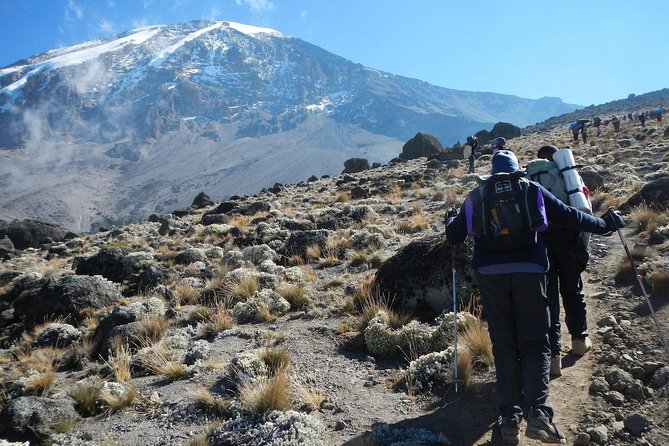
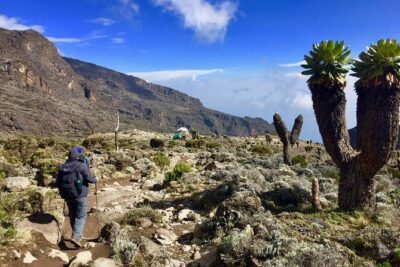
Day 2 covers about 8 kilometers in roughly five to five and a half hours. The forest thins, and you enter moorland with tall grasses, heather, volcanic rock, and lichen hanging from the plants.
The route climbs over rolling ground and crosses several streams before reaching Shira Ridge. From there, it drops gently to Shira 1 Camp. The change is striking. You move from enclosed forest to wide views, with Kibo visible across the plateau.
This is one of the route’s best days for scenery without an extreme distance. The open ground can feel exposed, and the elevation is already serious, but the walking remains manageable. Keep water and sun protection close because shade is less dependable here.
More Trekking Tours in Arusha
- 4 Days Mount Meru Trekking
★ 5.0 · 55 reviews - 4 Days Mount Meru Climbing | Hiking | Trekking Tour
★ 5.0 · 13 reviews - 7 Days Machame Route Trek Mount Kilimanjaro
★ 5.0 · 12 reviews - 7 Days Machame Route Kilimanjaro Trekking
★ 5.0 · 9 reviews
Day 3: Shira 2, Lent Hills, and a useful acclimatization day
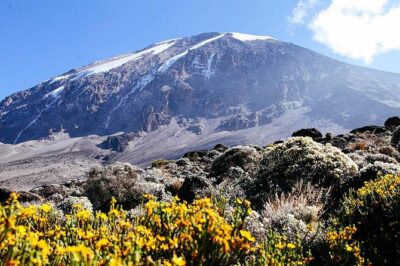
Day 3 is longer, about 15 kilometers, with five to seven hours of hiking. You walk east across the plateau toward Kibo’s glaciered summit, passing through moorland meadows and reaching Shira 2 Camp beside a stream.
The route then continues to Moir Hut, a less-used site at the base of Lent Hills. The setting gives the day a more remote feel, and the surrounding hills provide options for short walks.
This is a valuable acclimatization day because you gain height while still moving at a controlled pace. Shira is also one of the highest plateaus on Earth, so do not let the broad, gentle terrain fool you. You are already asking your body to work with less oxygen.
The main tradeoff is distance. At 15 kilometers, Day 3 may feel more tiring than its gradual profile suggests. Eat properly, walk slowly, and use the available rest time instead of trying to race ahead.
Day 4: Lava Tower and the descent to Barranco
Day 4 is one of the most important days on the route. From Moir Hut, you climb east along a ridge, pass the junction toward Kibo, and turn southeast toward Lava Tower, also called the Shark’s Tooth.
The day covers about 7 kilometers and takes roughly seven hours. The habitat changes to semi-desert, with bare volcanic ground replacing the greener moorland. A junction after Lava Tower leads toward Arrow Glacier at around 16,000 feet, though the overnight camp is at Barranco.
You then descend to Barranco Hut at about 13,000 feet. This climb high and sleep lower pattern is useful for acclimatization. You finish the day at about the same elevation where you began, but the body has experienced higher ground during the walk.
This day can be tough because the air is thin and the scenery becomes more severe. Still, its purpose is not speed. I would judge Day 4 by how steadily you handle it, not by how quickly you reach camp.
Day 5: Over the Barranco Wall to Karanga
Day 5 is short, only about 5 kilometers and four to five hours. The headline feature is the Great Barranco Wall, which looks intimidating from below.
The route is described as a Class 2 hike. That means you should expect hands-on movement over rock, but not a technical climbing pitch requiring specialist climbing skills. At the top, you get views toward Heim Glacier and rise above the clouds.
After the wall, the trail moves up and down through Karanga Valley. You spend the night at Karanga Camp at approximately 3,950 meters. This is another short day built around acclimatization and recovery.
Do not assume the short distance makes this an effortless day. The wall demands concentration, and the repeated rises and drops in the valley use tired legs. The benefit is that you reach camp with more time to eat, rest, and prepare for the final approach.
Day 6: Barafu Camp and the last quiet hours
Day 6 covers about 4 kilometers in three to four hours. You climb toward Barafu Camp, crossing the Mweka Route, which becomes your descent path during the final two days.
Barafu means ice in Swahili. The camp sits on a rocky, exposed ridge at about 4,550 meters, with no accessible water there for the porters. Tents are exposed to wind and rock, so it is wise to look around and get familiar with the camp before darkness arrives.
An early dinner is served, followed by rest before the summit attempt. This is not a day for extra sightseeing or wasted energy. Organize your summit clothing, water, and rented equipment while you still have daylight and enough focus.
The camp can feel stark and uncomfortable. That is part of the deal. You are at the final high camp, and the early night is designed around a midnight wake-up rather than a normal evening.
Day 7: Sunrise at Stella Point and the Uhuru Peak attempt
Summit day begins around 11:30 p.m. with tea and biscuits. You start in darkness and climb northwest over stone scree. The ascent to Stella Point at 5,685 meters takes about six hours for the route described here.
This is usually the hardest mental and physical part of the trek. The ground is loose, the air is thin, and the pace is slow. You need to accept that progress may come in small steps. The private format helps keep the schedule focused on your group, but it cannot make the altitude easier.
At Stella Point, you reach the crater rim and can pause for sunrise. From there, the route continues for about two hours over a snow-covered trail to Uhuru Peak at 5,895 meters.
The day’s listed figures need careful reading. The ascent is about 7 kilometers, while the descent to Mweka is approximately 23 kilometers, with eight hours to reach Uhuru Peak and another seven to eight hours to descend. That is an exceptionally long day.
After the summit, you descend toward Mweka. The high point is dramatic, but the descent is not an afterthought. Tired legs and loose ground can make it demanding, so conserve energy and follow your guide’s pace.
Day 8: Mweka Gate, certificates, and the return to Arusha
After breakfast, the mountain crew holds a celebration with dancing and singing. This is also the time to present tips to the guide, assistant guides, chefs, and porters. Bring cash in suitable form and decide in advance how you want to handle tipping.
The final hike takes about three hours over roughly 15 kilometers through forest to Mweka Gate. At the park gate, you sign your name to receive a certificate.
A successful reach of Stella Point earns a green certificate. Reaching Uhuru Peak earns a gold certificate. After the gate, the stated route continues into Mweka village for about an hour and another 3 kilometers before returning to the Arusha meeting point.
The final day is physically easier than summit day, but the distance is still significant. Wear comfortable shoes and keep some patience in reserve. The trek ends back at the starting meeting point in Arusha.
The local team and private format
This is a private activity, so only your own group takes part. That gives you a more personal setup than a large shared departure, though the exact group size is not stated.
Erastus handles the organization and communicates directly with guests. Oliver is identified as a main guide, and John is also part of the praised mountain crew. The strongest comments about the operation focus on direct communication, a friendly guide team, and the ability to adjust arrangements close to departure.
The local Tanzanian ownership is worth noting. You are not dealing with a distant booking office alone. That can make practical questions easier, especially when you need help arranging the mountain portion alongside a safari or another Tanzania trip.
Porters, assistant guides, chefs, and the main guide all have roles in the experience. The included meals and camping equipment depend on that support team, so responsible tipping is an important part of your budget.
Who should choose this trek?
I would choose this route if you want scenery and acclimatization more than the shortest possible route. The Lemosho approach gives you rainforest, the Shira Plateau, Lent Hills, Lava Tower, Barranco Wall, and the southern circuit before summit night.
It suits someone who can handle several days of steady hiking and one very long summit day. It is also a good match if you prefer a private group and want direct contact with a local operator.
I would think twice if you dislike camping, struggle with long descents, or want a flexible cancellation policy. The non-refundable terms are strict, and the summit attempt is never guaranteed simply because you have paid for it. Gear rental can help, but it does not remove the need for proper preparation.
Should you book the 8-day Lemosho Route?
Book it if you value Kilimanjaro’s changing scenery, a slower approach to altitude, and a private local crew. The strongest practical features are the varied route, included mountain support, direct contact with Erastus, and guides such as Oliver and John.
Before confirming, price the missing items: sleeping bag, climbing gear, hotel nights in Arusha, tips, insurance, visa fees, and flights. If you are comfortable with those costs and the long summit day, $2,700.52 offers a solid all-in mountain package.
If you want a soft adventure, this is not it. If you want a serious climb with a scenic route and a well-supported camping structure, it is a sensible choice.
FAQ
Where does the trek start?
The activity starts in Arusha, Tanzania, with pickup offered at 6:00 a.m.
How long is the Lemosho trek?
The trek lasts approximately eight days.
Is this a private tour?
Yes. Only your own group participates in the activity.
What meals are included?
The package includes seven breakfasts, seven dinners, and eight lunches.
Is camping equipment provided?
Yes. The included camping equipment covers a mess tent, mattress, and cooking equipment. Sleeping bags are not included but are available to rent.
Are climbing gear and towels included?
No. Climbing gear and bath towels are not included. Climbing gear is available for rent.
What certificate do I receive after the climb?
You receive a green certificate if you reach Stella Point at 5,685 meters. You receive a gold certificate if you reach Uhuru Peak at 5,895 meters.
Latest treks added in Arusha
- Mount Kilimanjaro day trip trekking★ 5.0 · 12 reviews
- 5 Days Marangu Route Kilimanjaro Trekking★ 5.0 · 4 reviews
- 3 Days Mount Meru trekking★ 4.5 · 7 reviews
- 7 Days Machame Route Trek Mount Kilimanjaro★ 5.0 · 12 reviews
- 7 Days Machame Route Kilimanjaro Trekking★ 5.0 · 9 reviews
- Lemosho Route 7 Days Trekking at Mount Kilimanjaro★ 5.0 · 7 reviews
- Private One-Day Trek to Mount Kilimanjaro★ 4.5 · 2 reviews
- 5 Days Marangu Route – Mount Kilimanjaro Trek★ 5.0 · 5 reviews
Kilimanjaro Climbs, compared.
8-Day Small-group Lemosho Kilimanjaro Summit Trekking
Read our review →
Best Kilimanjaro Adventure 7 days Machame route Trekking
Read our review →
Kilimanjaro 7 Day Private Trekking Experience
Read our review →
6 Days Machame Route Kilimanjaro Climbing Trekking Tour
Read our review →
Kilimanjaro Trekking 7Days 6Night Lemosho Route
Read our review →
Browse the lists this tour appears in