
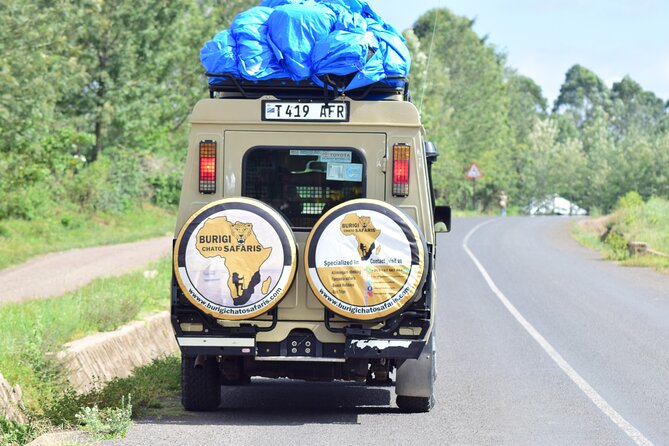
REVIEW · ARUSHA
4 Days Mount Meru Climbing | Hiking | Trekking Tour
Mount Meru gives you a rare mountain daydream: elephants or giraffes on the lower trail, then a narrow volcanic ridge high above the crater. You climb inside Arusha National Park, sleeping in simple huts and walking with an armed ranger because wildlife still moves through the mountain’s lower slopes. The summit morning, with the crater falling away on both sides, is the real prize.
I especially like two things here. First, this is a useful Kilimanjaro acclimatization climb, with real altitude and a demanding summit push. Second, the route has more character than a straightforward uphill trail, from montane forest and moorland to the Ash Cone and the Meru Crater. The drawback is plain: the final summit day is long, steep, and tiring, and the $2,600 price does not include park fees or tips.
Mount Meru at a glance
- Wildlife comes early: Elephants, giraffes, buffalo, zebras, monkeys, and antelope may appear on the lower slopes.
- An armed ranger is required: Arusha National Park’s wildlife rules make ranger support part of the climb.
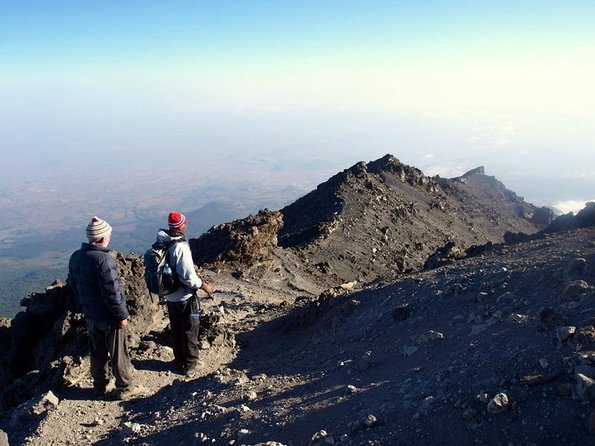
- The summit ridge is the highlight: You walk between the inner crater cliffs and the outer wall before reaching 4,565 meters.
- The hardest work comes before sunrise: Day three begins around 1:30 a.m. and lasts about 10 to 12 hours.
- You sleep in huts: Miriakamba Hut and Saddle Hut replace tents, but do not expect hotel comfort.
- It works well before Kilimanjaro: The climb gives you a demanding test of fitness, pacing, and high-altitude routine.
Why Mount Meru is more than a Kilimanjaro warm-up
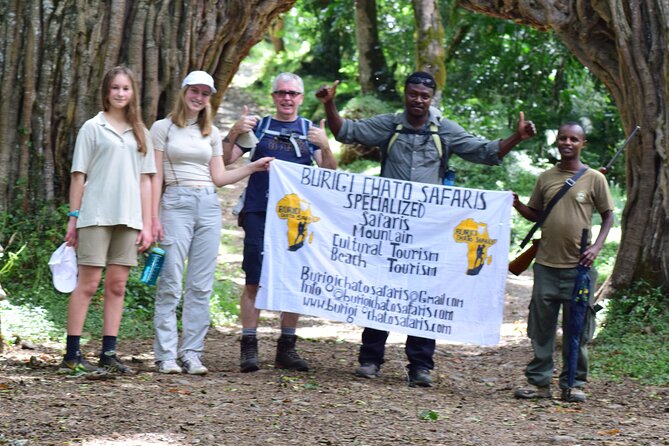
At 4,568 meters, Mount Meru is Tanzania’s second-highest mountain and one of Africa’s major summits. Its setting inside Arusha National Park makes the climb unusually varied. You begin among forest and open grassland, with the possibility of wildlife nearby, then finish among volcanic rock, moorland, and steep crater walls.
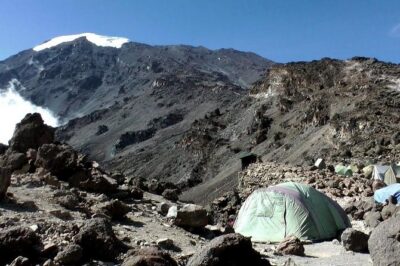
That change is what makes Meru special. Kilimanjaro is famous for its summit, but Mount Meru offers a more dramatic sense of a volcano. The trail follows the northern rim of the crater, and the upper route narrows into a ridge with steep drops toward the interior. On a clear morning, you may also see Kilimanjaro above the clouds.
The mountain is not easy simply because it takes fewer days than Kilimanjaro. The summit push is steep, cold, and timed for the night. Several people who used it as preparation for Kilimanjaro found the effort worthwhile, but the practical lesson is simple: treat this as a real mountain climb. Build your walking fitness before arrival, and do not assume a four-day schedule will feel gentle.
More four-day treks in Arusha
- 4 Days Mount Meru Trekking
★ 5.0 · 55 reviews - 4 Days best Mount meru trekking
★ 5.0 · 2 reviews - Pokhara: 4-Day Ghorepani, Poonhill & Ghandruk Mountain Trek
★ 5.0 · 132 reviews
Day one: Momela Gate to Miriakamba Hut
The day begins with a drive from Arusha to Momela Gate. The stated meeting time is 8:30 a.m. at Arusha Center Inn TouristTZ on Arusha Main Street, with pickup offered. At the gate, you complete registration before setting off with the guide and armed ranger.
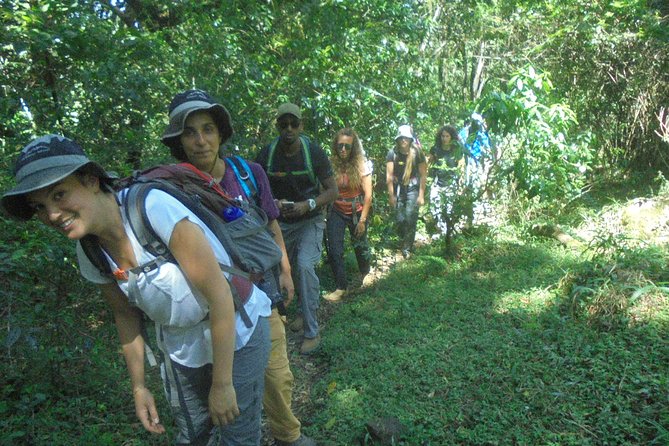
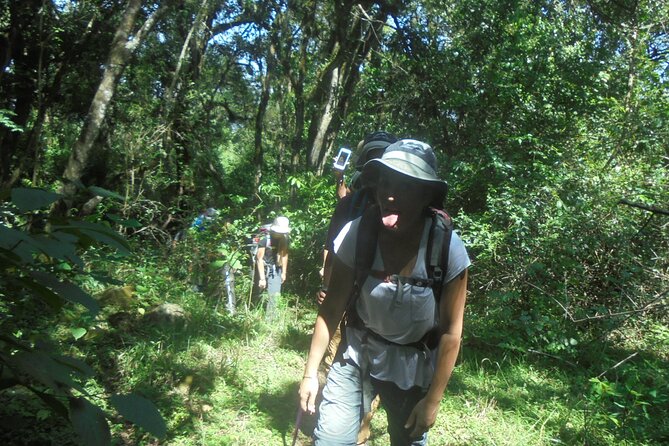
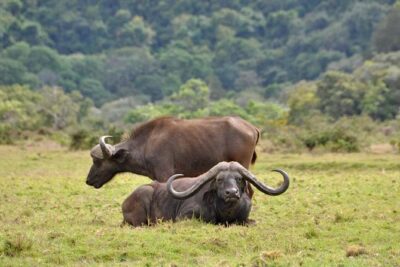
The first section is the most wildlife-focused part of the climb. You might see elephants, giraffes, buffalo, zebras, monkeys, or antelope along the route. Keep your pace calm and follow the ranger’s directions. This is not a place for wandering away from the group to get a closer photograph.
The route covers about 10 kilometers and takes roughly four to six hours. The habitat is listed as montane forest, though the approach also includes open areas where animals can be easier to spot. The elevation figures supplied for this day are not fully consistent, with the itinerary listing a start near 1,387 meters and a finish around 1,500 meters while also showing 3,000 feet. Ask the operator to confirm the exact day-one hut elevation before departure.
Miriakamba Hut is your first overnight stop. Dinner is included, along with lunch and breakfast as part of the overall package. The huts make the route simpler than a camping trek, but you should still bring a sleeping bag and personal essentials unless your operator confirms those items are supplied. The provided details do not specify hut room arrangements, bedding, showers, or charging facilities, so ask before you go.
Day two: The steep climb to Saddle Hut
Day two is shorter in distance but more demanding in gradient. You walk from Miriakamba Hut toward Saddle Hut, gaining altitude through forest and moorland. The stated distance is 8 kilometers, with three to five hours of hiking, and the elevation rises from about 2,514 meters to 3,570 meters.
This is where pacing matters. A slow, steady rhythm helps you arrive with energy for the optional climb to Little Meru. After a hot lunch at Saddle Hut, you can make the short ascent to Little Meru at 3,820 meters. The timing is especially appealing near sunset, when the high ridges and the Meru Crater may catch the last light.
Little Meru is not a substitute for the main summit, but it gives you a useful altitude check. If you feel headache, nausea, unusual weakness, or other altitude symptoms, tell your guide rather than treating the extra climb as a test of pride. The next morning starts around 1:30 a.m., so rest at Saddle Hut matters more than squeezing out every possible viewpoint.
Saddle Hut is also your second mountain night. The route description calls this a short day, but do not confuse short with easy. The climb is steep, and the change from forest to moorland marks a clear shift into higher, more exposed country.
Day three: A 4,565-meter summit before sunrise
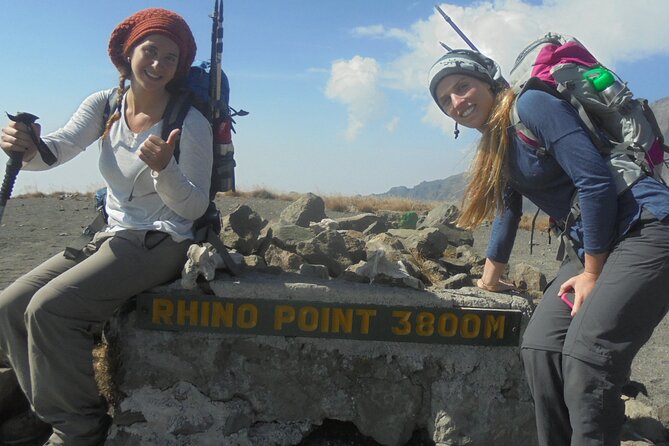
This is the day that defines the trip. You leave around 1:30 a.m. and climb to Rhino Point at approximately 3,800 meters, then continue to Cobra Point at about 4,350 meters. From there, the route reaches the summit at roughly 4,565 meters.
The distance is given as 5 kilometers uphill and 13 kilometers downhill, with 10 to 12 hours of hiking in total. That is a long day, especially after a short night. The best advice is to move slowly from the start. The climb is steep, and the darkness hides the scenery, so your focus becomes breath, footing, warmth, and the next small section of trail.
The upper ridge is the mountain’s signature feature. You walk between the sheer inner cliffs of the crater and the sloping outer wall. This narrow volcanic spine gives Mount Meru its drama, but it also means you should take instructions seriously and stay close to the route.
The aim is to reach the summit around sunrise. From the top, you may see Kilimanjaro rising above the clouds, as well as the Meru Crater and Ash Cone. Clear weather makes this a spectacular viewpoint, but mountain weather can change quickly. The supplied tour terms note that the experience depends on good weather, so poor conditions may lead to a different date or a full refund.
After time at the summit, you descend to Saddle Hut for a short rest and brunch, then continue down to Miriakamba Hut. This return to the lower hut is important because it breaks up the descent. Even so, your knees and feet will likely feel the day’s work. Use trekking poles if you normally rely on them, and keep water and food accessible rather than buried in your pack.
The itinerary lists alpine desert, moorland, and montane forest for this day. That range is one reason the climb feels substantial. In a single day, you move from a dark pre-dawn ascent to a high volcanic ridge, then back through lower mountain vegetation.
More Trekking Tours in Arusha
- 8-Day Small-group Lemosho Kilimanjaro Summit Trekking
★ 5.0 · 186 reviews - 7 Days Kilimanjaro trek via Machame route
★ 5.0 · 13 reviews - Mount Kilimanjaro day trip trekking
★ 5.0 · 12 reviews - 7 Days Machame Route Trek Mount Kilimanjaro
★ 5.0 · 12 reviews
Day four: Returning through forest and grassland
The final morning is a short descent from Miriakamba Hut to Momela Gate. The route covers about 10 kilometers and takes two to four hours, passing through montane forest and open grassland.
This is the best time to keep your eyes open for more wildlife. The animals are never guaranteed, and you still need to follow the ranger’s instructions, but the lower section gives the climb a satisfying return to Arusha National Park’s broader natural setting.
A transfer waits at Momela Gate for the trip back to your hotel in Arusha or Moshi. The activity is described as ending back at the meeting point. Confirm the exact drop-off plan if you are staying outside those towns or connecting to a flight the same day.
The people supporting the climb
The package includes crew wages, a guide, cook, porters, and an armed ranger for the park route. The supplied experiences repeatedly emphasize the local crew’s encouragement during the difficult summit morning. Singing and clapping helped some climbers keep moving when the steep final section became difficult.
That support is valuable, but it does not remove the physical demands. The guide controls the pace, handles route decisions, and helps you respond to problems. The ranger’s role is especially important on the lower slopes, where wildlife is part of the setting rather than a staged attraction.
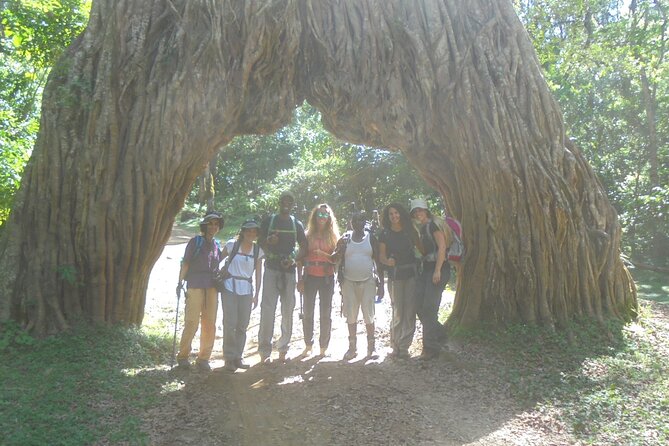
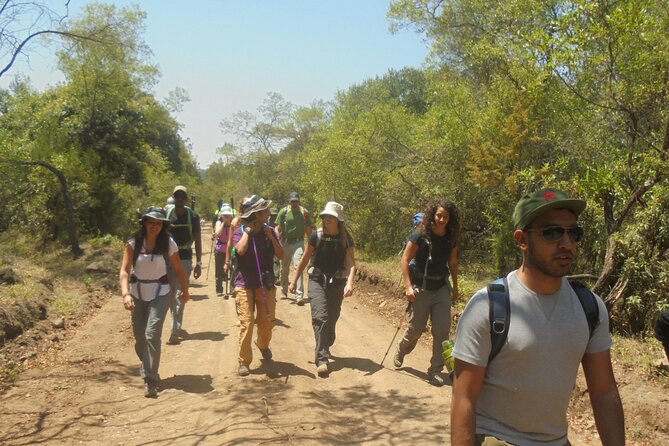
One account names Geoffrey in connection with the organization of a successful climb, but the available information does not provide a complete guide roster. Ask for your guide’s name, the ranger arrangements, porter policy, and group size before you pay. The stated maximum is 200 people, which is a very large possible group for a mountain route. Your actual group may be smaller, but the operator should tell you the expected number.
Food, huts, and what the $2,600 covers
The listed price is $2,600 per person. Included meals are three breakfasts, three dinners, and four lunches. Airport pickup and drop-off, gate transfers, and crew wages are also included.
That can represent fair value if you need a full arrangement from Arusha, including transport and a support team. You are paying for permits and park logistics, guiding, food, porter support, ranger coordination, and transfers rather than just a trail walk. The package also reduces the planning work involved in a mountain inside a national park.
The important catch is that Mount Meru park fees are not included. They can be paid directly to the park or through the tour operator, so ask for the exact extra amount before booking. Flights, visas, and tips are also excluded. A low headline price can look attractive until these costs are added, but this package already has a relatively high listed rate, so get a written total.
The accommodation is in designated mountain huts. This is convenient compared with carrying camping equipment, yet hut life remains basic. The information supplied does not state whether bedding, mattresses, or sleeping bags are included. Pack for cold nights and ask precise questions about what the huts provide.
Preparation for the summit morning
You do not need to be an elite athlete, but you should be ready for long uphill walking and a steep descent. The strongest practical lesson from the climb is to prepare rather than rely on motivation alone. Several people found the summit night tough, especially the final steep section.
Train with long walks, stairs, or hills if available. Break in your boots before arrival. Carry layers for the cold pre-dawn start, rain protection, a headlamp, water, personal medication, and snacks you know you can eat while tired. The provided information does not give a packing list, so confirm equipment requirements with the operator.
Pace is more useful than speed. Your guide may use the familiar slow mountain rhythm, and you should be comfortable moving at that pace from day one. If you are climbing Kilimanjaro soon afterward, leave enough recovery time. One itinerary used Meru as a warm-up before Kilimanjaro only two days later, but that schedule will not suit everyone.
Most people can take part according to the supplied activity information, but the climb is not a casual sightseeing walk. Tell the operator about medical conditions, prior altitude problems, and fitness concerns before departure. The summit altitude is high enough that you should take symptoms seriously.
Who should book this climb
I would choose this trip if you want three things at once: a serious mountain challenge, a chance of wildlife in a national park, and a useful preparation climb before Kilimanjaro. It suits hikers who value volcanic scenery and a quieter route more than resort comfort.
It is also a good match if you prefer huts to tents and want meals, transfers, and a support crew arranged in advance. The route offers a strong mix of forest, moorland, crater views, and a sunrise summit.
I would hesitate if you dislike very early starts, basic accommodation, steep trails, or uncertain weather. The price requires careful checking because park fees and tips are extra, and the potential group size is listed as high. Ask for the final cost and expected group size before committing.
You can cancel free of charge up to 24 hours before the local start time for a full refund. Inside 24 hours, changes and refunds are not accepted. If poor weather cancels the climb, you are offered another date or a full refund.
Should you book the four-day Mount Meru climb?
Book it if you want a genuine mountain test before Kilimanjaro and you like the idea of moving from wildlife country to a narrow crater ridge in four days. The summit day is hard, but the route’s volcanic shape and possible Kilimanjaro view give it real rewards.
Skip it if you are looking for an easy introduction to hiking or a soft adventure with guaranteed wildlife. Mount Meru asks for preparation, patience, and a willingness to sleep simply. Before booking, confirm the park fee, hut arrangements, guide and ranger details, group size, and final transfer plan. With those points clear, this is a strong, purposeful climb rather than a filler excursion.
FAQ
Where does the Mount Meru climb begin?
The listed meeting point is Arusha Center Inn TouristTZ on Arusha Main Street, Bondeni Street, in Arusha. The stated start time is 8:30 a.m., and pickup is offered.
Is an armed ranger required?
Yes. Because Mount Meru is inside Arusha National Park and wildlife lives on the mountain, the climb takes place with an armed ranger escort.
Where do you sleep during the climb?
You sleep in designated mountain huts, including Miriakamba Hut and Saddle Hut.
How high is the summit?
The summit is approximately 4,565 meters, while the mountain’s stated height is 4,568 meters.
Are park fees included in the price?
No. Mount Meru park fees are listed separately and may be paid directly to the park or through the tour operator. Flights, visas, and tips are also not included.
What happens if bad weather cancels the climb?
If poor weather causes cancellation, you are offered a different date or a full refund. You can also cancel up to 24 hours before the start time for a full refund.
Latest treks added in Arusha
- Mount Kilimanjaro day trip trekking★ 5.0 · 12 reviews
- 5 Days Marangu Route Kilimanjaro Trekking★ 5.0 · 4 reviews
- 3 Days Mount Meru trekking★ 4.5 · 7 reviews
- 8 Days Lemosho Route Kilimanjaro Trekking★ 5.0 · 5 reviews
- 7 Days Machame Route Kilimanjaro Trekking★ 5.0 · 9 reviews
- 7 Days Machame Route Trek Mount Kilimanjaro★ 5.0 · 12 reviews
- Lemosho Route 7 Days Trekking at Mount Kilimanjaro★ 5.0 · 7 reviews
- Private One-Day Trek to Mount Kilimanjaro★ 4.5 · 2 reviews
Arusha Trekking Tours, compared.
8-Day Small-group Lemosho Kilimanjaro Summit Trekking
Read our review →
13 Days Adventure in Tanzania – Trekking and Wildlife Safari
Read our review →
Lemosho Route 7 Days Trekking at Mount Kilimanjaro
Read our review →Browse the lists this tour appears in