
REVIEW · ARUSHA
8-Day Small-group Lemosho Kilimanjaro Summit Trekking
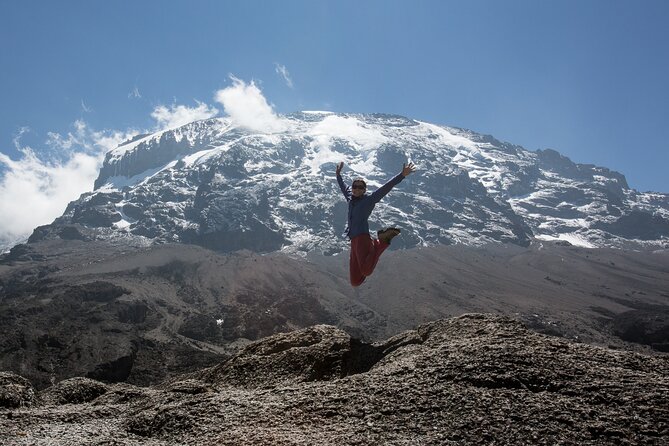
Kilimanjaro’s Lemosho route gives you the mountain in chapters: rainforest, heather, volcanic desert, and arctic summit. The eight-day schedule is slow enough to help your body adjust, and the high point is a midnight climb to Uhuru Peak for sunrise over Africa.
I like the small-group format, which lets guides check your pace, food, comfort, and energy more closely. I also like that the price covers the major mountain costs, including camping gear, park fees, meals, and transfers from your Arusha hotel. The main caution is simple: this remains a demanding high-altitude climb, not a holiday walk, and the summit day can last about 11 hours.
Key points to know before you book
- Eight days on the Lemosho route gives you more time to adjust to altitude than shorter programs.
- A maximum of 15 people keeps the group manageable, though the number in your departure may be smaller.
- Lava Tower and Barranco provide a useful climb-high, sleep-lower acclimatization pattern.
- Summit night begins around midnight, with six to seven hours to Stella Point before the final push to Uhuru Peak.
- Meals, camping equipment, park fees, and hotel transfers are included, which makes the $2,895 price easier to assess.
- Guide teams vary, but past departures have included guides such as Amani, Raymond, Goodluck, Herment Mosha, Manny, and Cinga.
Why Lemosho is a smart eight-day choice
Kilimanjaro is often described as a non-technical mountain. That does not mean easy. You do not need ropes or climbing skills on this route, but you do need stamina, patience, and the ability to keep walking when the air gets thin.
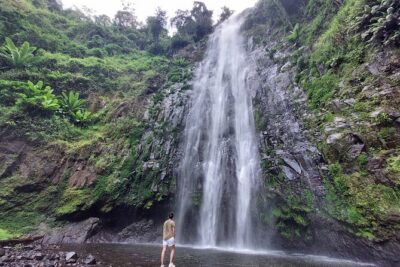
Lemosho is a strong choice because it approaches the mountain from the west and gives you several days before summit night. The route crosses several climate zones, so the scenery changes as quickly as your body does. You begin among tall forest, move through open heather and volcanic ground, then spend the final days above the tree line.
The eight-day version is especially useful for people who have not spent much time at altitude. The schedule includes a full day on the Shira Plateau and a climb to Lava Tower before descending to Barranco Camp. That extra time does not guarantee a summit, but it gives you a better chance to adjust than a rushed schedule.
The group limit is 15. That is small enough for guides to keep an eye on how you are doing, while still giving you company on long walking days. Some departures have been much smaller, including groups of four or five. If you are joining alone, this setup gives you a ready-made walking circle without forcing you into a large expedition.
More Kilimanjaro Climbs in Arusha
- 7 Days Kilimanjaro trek via Machame route
★ 5.0 · 13 reviews - Mount Kilimanjaro day trip trekking
★ 5.0 · 12 reviews - 7 Days Machame Route Trek Mount Kilimanjaro
★ 5.0 · 12 reviews
Day 1: Londorossi Gate to Mti Mkubwa
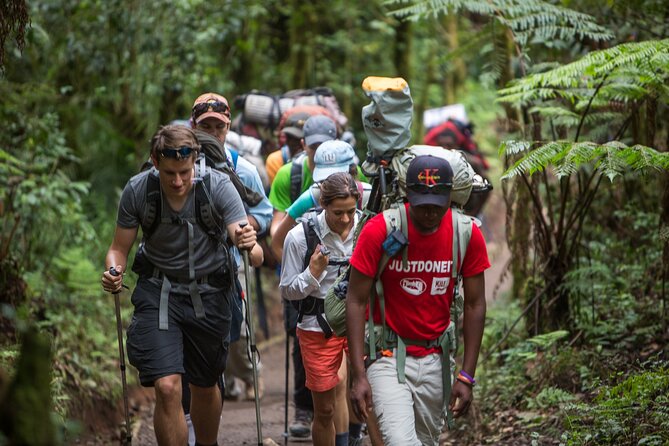
After pickup from your Arusha hotel, you drive toward the western side of Kilimanjaro and check in at Londorossi Gate. The first walking day covers about 3 miles, or 4.8 kilometers, and takes roughly three to four hours.
The trail climbs gently through montane forest. This is a forgiving introduction, but do not treat it as a warm-up to race through. Your goal is to settle into a steady pace and learn how the group moves.
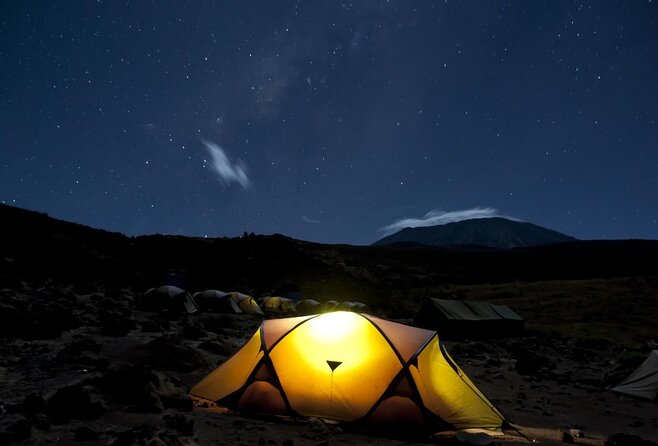
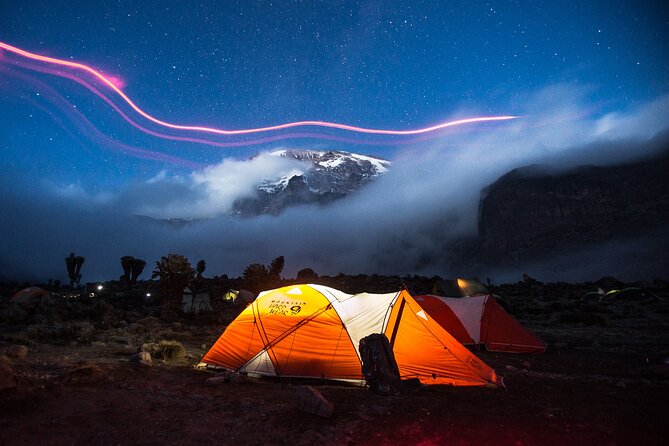
Mti Mkubwa means Big Tree, and the camp sits in the rainforest. Tents are set up before you arrive, with your personal belongings inside. That detail matters after a first day on the trail. You can focus on eating, sorting your sleeping bag, and resting rather than assembling camp in the dark.
Day 2: Leaving the forest for Shira
The second day climbs to about 11,500 feet, or 3,505 meters. The walk is listed at 4.9 miles and about five to six hours, with the trail leaving the forest for tall grass, heather, and volcanic rock covered with pale lichen.
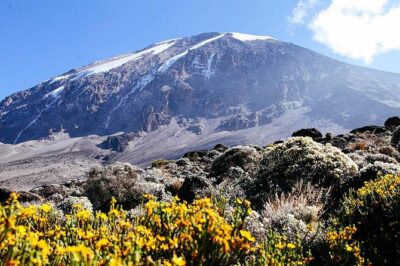
This is one of the first major changes in scenery. The forest gives way to a broad, open high-altitude setting, and views of Kibo, Kilimanjaro’s main summit cone, begin to appear.
You reach the Shira Plateau, an old volcanic area that feels spacious and exposed. The contrast with the first night is part of the appeal. It is also where you may begin to notice altitude. Walk slowly, drink as directed by your guide, and do not use an early burst of energy as proof that you can push harder.
Day 3: A full day across the Shira Plateau
Day three covers about 8.7 miles, or 14 kilometers, in five to seven hours. You continue east toward Kibo and have the option of visiting the collapsed Shira cone, the oldest of Kilimanjaro’s three volcanoes.
This day is less about gaining camp height quickly and more about letting your body spend time at altitude. The route crosses open volcanic ground with broad views toward the summit. You finish at Moir Camp, positioned in a large gorge at the end of an old lava flow.
The distance may look moderate on paper, but the combination of altitude and uneven ground can make it tiring. I would treat the optional Shira cone visit as something to decide with your guide, not a task you must complete. The best choice depends on your energy and how well you are adjusting.
More Trekking Tours in Arusha
- 4 Days Mount Meru Trekking
★ 5.0 · 55 reviews - 4 Days Mount Meru Climbing | Hiking | Trekking Tour
★ 5.0 · 13 reviews - 7 Days Machame Route Kilimanjaro Trekking
★ 5.0 · 9 reviews - 3 Days Mount Meru trekking
★ 4.5 · 7 reviews
Day 4: Lava Tower and the descent to Barranco
Day four is the key acclimatization day. You climb to Lava Tower, described at about 15,000 feet, or 4,500 meters, then descend to Barranco Camp at roughly 13,000 feet, or 3,962 meters.
This is the classic climb-high, sleep-lower pattern. You spend time at a higher elevation, then give your body some relief by losing height before night. The walking distance is about 4.3 miles, with five to six hours of movement.
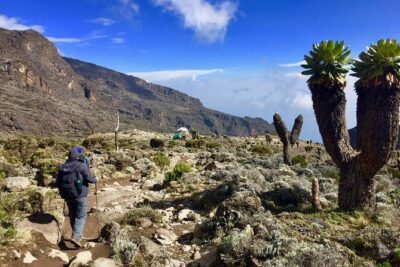
After Lava Tower, the route passes a large Senecio forest and continues toward Barranco. The camp sits beneath the Barranco Wall, with clouds often moving through the valley. The setting is dramatic, but the day can be tough. You may feel headache, tiredness, or shortness of breath. Tell your guide early rather than trying to hide symptoms.
Day 5: Up the Barranco Wall and through Karanga
The Barranco Wall is the day’s memorable feature. It is not a technical rock climb, but it is steeper and more hands-on than the earlier trail. You work your way upward, then continue through the Karanga Valley on the South Circuit path.
The listed distance is only about 2.2 miles, or 3.2 kilometers, with four to five hours of walking. That short distance can mislead you. The wall, altitude, and stop-start progress make this feel like a full mountain day.
You finish at Karanga Camp, around 13,100 feet. The route now feels increasingly alpine, with less plant life and more exposed rock. This is also a useful day for checking your clothing system. Temperatures can change quickly, and you want easy access to warm layers without unpacking your entire bag.
Day 6: Kosovo Camp and summit preparation
Day six takes you slowly toward Kosovo Camp, at roughly 16,000 feet, or 4,876 meters. You pass Barafu Camp and get views of both Kibo and Mawenzi, two of Kilimanjaro’s most recognizable peaks.
The walk is short at about 2.6 miles, with five to six hours allowed. The slow pace is deliberate. You are not trying to win the day. You are trying to reach camp with enough energy to eat, rest, and prepare for the hardest night.
Kosovo Camp sits on an exposed ridge. You are advised to become familiar with the ground before dark, a practical point that is easy to overlook. After sunset, you will want to know where your tent, dining area, and walking route are without wandering around in the cold.
The afternoon is for resting and summit preparation. Organize your headlamp, warm clothing, water, snacks, and any personal items before trying to sleep. The midnight departure means you will not get a normal night’s rest.
Day 7: Stella Point, Uhuru Peak, and Mweka Camp
Summit night begins around midnight. The ascent to Stella Point takes six to seven hours, covering about 5 kilometers uphill. The route is steep in places and passes over heavy scree, loose volcanic gravel that can make every step feel temporary.
This is usually the hardest mental section. You walk in darkness, move slowly, and spend hours focused on the next few steps. The goal is not speed. It is an even pace that you can maintain.
At Stella Point, on the crater rim, you can see the summit. Uhuru Peak is about another hour away, and the route continues between the Rebmann and Ratzel glaciers. Reaching the highest point of Kilimanjaro at 19,340 feet, or 5,895 meters, is the payoff, but do not underestimate the descent.
After time at the summit, you descend and continue to Mweka Camp. The full day is listed at about 13 miles, including the ascent and descent, with six to seven hours for the climb and four to six hours going down. Dinner and a celebration at camp give you a chance to mark the achievement before sleep.
This is where a supportive guide team matters most. Past groups have praised guides including Amani, Raymond, Goodluck, Herment Mosha, Manny, Cinga, Isaya, Emmanuel, and others for patience, encouragement, safety checks, and steady pacing. Your assigned team may be different, but you should expect the guide staff to play a large role in managing the summit day.
Day 8: Walking out through Mweka
The final morning takes you to Mweka Gate, at about 5,400 feet, or 1,645 meters. The walk is roughly 6.4 miles and takes three to four hours.
After the high, cold summit days, this descent can feel almost ordinary. You return to thicker vegetation and eventually meet the Climb Kili vehicle for the transfer back to your hotel.
This last day is not just paperwork and transport. It gives your legs time to cool down before the drive. You may be tired, dusty, and ready for a shower, but the walk out lets the experience settle before you return to Arusha.
What the $2,895 price covers
At $2,895 per person, this is not a budget mountain outing. Still, the cost includes several large expenses: round-trip hotel transfers, park admission fees, camping equipment, meals, and the guiding operation.
That package has real value because Kilimanjaro costs can rise quickly when you add permits, food, porters, camp support, and transport separately. You are also paying for an eight-day route rather than a compressed climb, and the extra time is one of the strongest reasons to choose this program.
The inclusions do not mean you can arrive unprepared. The details provided do not specify personal gear, insurance, tips, flights, or accommodation beyond the hotel transfers. Ask Climb Kili exactly what equipment is supplied and what you must bring before paying the balance.
Meals are an important part of the experience. Several past groups praised the food and the way the crew kept people nourished during long days. If you have dietary needs, confirm them in advance rather than assuming the camp kitchen can handle every request.
The people who make the climb work
A Kilimanjaro trip is not only about the route. Your guides set the pace, monitor your condition, explain the mountain, and decide how to respond when someone struggles.
The strongest praise has focused on guide care, patient encouragement, safety, and personal attention. Specific names connected with past climbs include Raymond, Amani, Goodluck, Herment Mosha, Steve, Manny, Cinga, Veda, Isaya, and Emmanuel. The staff has also been praised for teaching bits of Swahili, answering questions about plants and rocks, and keeping spirits up during long days.
You should also remember the wider crew. Camp staff and porters handle much of the work that lets you walk with a lighter pack and return to a prepared camp. Past groups specifically appreciated details such as coffee wake-up calls, comfortable tents, and meals ready after difficult days.
A good guide is not someone who promises that everyone will reach the summit at any cost. A good guide watches your health and makes safety the first decision. That is the standard I would use when speaking with the company before departure.
Who should book this trek
This climb suits you if you have a strong level of fitness, can walk for several hours on consecutive days, and are comfortable camping for a week. You do not need advanced climbing experience, but you do need to accept slow walking, cold conditions, limited comfort, and a difficult summit night.
The route also suits a first-time high-altitude climber who wants more adjustment time. Experienced hikers may appreciate the scenery, the longer route, and the chance to join a small group rather than organize every detail alone.
It is a poor fit if you want a casual sightseeing tour, dislike camping, or need a fixed guarantee of reaching the summit. A high summit rate is encouraging, but no operator can remove the effects of altitude or promise that every climber will finish.
Pickup is offered from your Arusha hotel, and the meeting time is 8:00 a.m. Confirmation is sent within 48 hours, subject to availability. You can cancel for a full refund up to 24 hours before the start time, but changes or cancellations inside that window are not accepted.
Should you book the 8-day Lemosho climb?
I would choose this trip if you want a well-supported Kilimanjaro climb with extra acclimatization time and a clear all-in price. The Lemosho route gives you varied scenery, the Shira Plateau, Lava Tower, Barranco Wall, and a memorable summit approach.
The main reason to book is the balance between challenge and support. You get a small-group setting, experienced guide teams, prepared camps, meals, transfers, and eight days to adjust. The main reason to hesitate is the physical demand. Summit night is long, cold, steep, and mentally draining.
If your fitness is solid and you prepare carefully, this is a strong package for a first Kilimanjaro attempt. Before booking, confirm the exact inclusions, personal equipment requirements, dietary arrangements, and the guide team assigned to your departure.
FAQ
How long is the Kilimanjaro trek?
The trek lasts eight days, including the final walk from Mweka Camp to Mweka Gate and the transfer back to your Arusha hotel.
What route does the climb use?
The climb uses the Lemosho route, approaching Mount Kilimanjaro from the western side before crossing the Shira Plateau and continuing toward the southern circuit.
How high is Uhuru Peak?
Uhuru Peak is listed at 19,340 feet, or 5,895 meters.
How large can the group be?
The maximum group size is 15 people. Some departures may be smaller.
What is included in the price?
The $2,895 price includes hotel transfers, camping equipment, park fees, and meals.
What time does the experience start?
The stated start time is 8:00 a.m.
How physically fit should I be?
You should have a strong level of physical fitness. The trek includes several hours of walking on most days, a steep summit ascent, and a long descent.
Can I cancel for a full refund?
Yes. You can cancel at least 24 hours before the experience starts for a full refund. Cancellations or changes made less than 24 hours before the start time are not accepted.
Latest treks added in Arusha
- Mount Kilimanjaro day trip trekking★ 5.0 · 12 reviews
- 5 Days Marangu Route Kilimanjaro Trekking★ 5.0 · 4 reviews
- 3 Days Mount Meru trekking★ 4.5 · 7 reviews
- 8 Days Lemosho Route Kilimanjaro Trekking★ 5.0 · 5 reviews
- 7 Days Machame Route Kilimanjaro Trekking★ 5.0 · 9 reviews
- 7 Days Machame Route Trek Mount Kilimanjaro★ 5.0 · 12 reviews
- Lemosho Route 7 Days Trekking at Mount Kilimanjaro★ 5.0 · 7 reviews
- Private One-Day Trek to Mount Kilimanjaro★ 4.5 · 2 reviews
Kilimanjaro Climbs, compared.
Best Kilimanjaro Adventure 7 days Machame route Trekking
Read our review →
Kilimanjaro 7 Day Private Trekking Experience
Read our review →
6 Days Machame Route Kilimanjaro Climbing Trekking Tour
Read our review →
Kilimanjaro Trekking 7Days 6Night Lemosho Route
Read our review →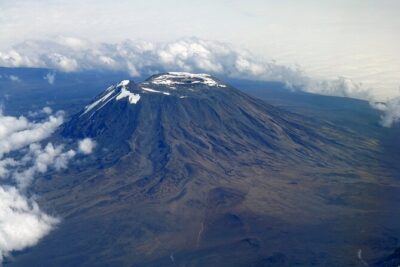
Browse the lists this tour appears in