
REVIEW · SAPA
Sapa: Ta Phin Village Trek & Red Dao Herbal Bath
The best part of this Sapa day trip comes at the end: after a 12 to 14-kilometer walk through Black H’mong and Red Dao villages, you settle into a hot Red Dao herbal bath in a wooden tub. It is a fine answer to tired legs, and a more memorable finish than simply riding back to town after a hike.
I like the small group size, limited to 10 people, and the chance to spend real time talking with a local guide. Guides such as Su and Gao explain farming, family life, crafts, and village customs rather than rushing you from one photo stop to the next. I also like the gentle pace and the local meal, though the walk is still a full day on your feet and may feel demanding if you are not used to 12 to 14 kilometers.
Key points at a glance
- Three villages in one day: Walk through Suoi Ho, Ma Tra, and Ta Phin, each linked with Black H’mong or Red Dao life.
- A soothing finish: The traditional herbal bath follows the trek, with aromatic herbs steeped in a wooden tub.
- Good cultural context: Guides including Su and Gao discuss crops, animal care, embroidery, herbal medicine, and everyday family life.
- A quieter route: The villages and paths feel less commercial than some of Sapa’s better-known walking routes.
- Lunch with a local setting: You may eat a picnic or sit down at a homestay or family restaurant, with traditional dishes and mountain views.
- Strong value at $26: The price covers the guide, lunch, bath, and return transport for a six-hour outing.
Why this route works better than a quick Sapa photo stop
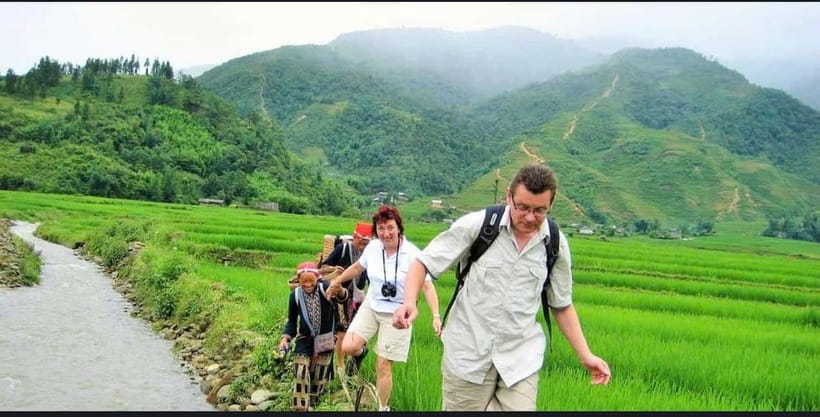
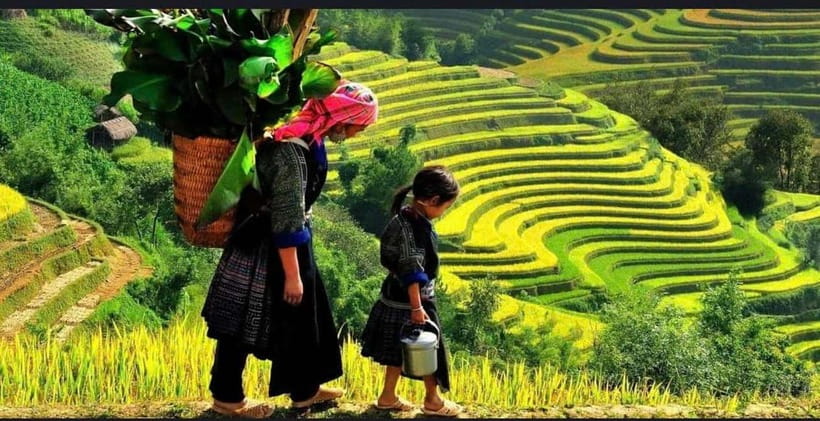
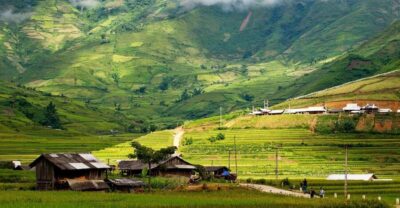
Sapa is famous for its rice terraces, but a short visit can leave you with little sense of how people live among them. This trek gives the views a human setting. You walk past farms, homes, schools, animals, and village paths while your guide explains what you are seeing.
The route connects three villages instead of focusing on one scenic viewpoint. That makes the day feel like a gradual change from the edge of Sapa into rural communities. Suoi Ho is associated with the Black H’mong people, while Ta Phin is home to the Red Dao. Ma Tra adds another stop for village life, local crafts, and conversation.
I would not book this simply for an athletic challenge. The route is described as easy to moderate, but 12 to 14 kilometers is still a serious walk. The ground may feel uneven, and weather can affect comfort. You need comfortable shoes, water, a daypack, insect repellent, and clothing suited to the conditions.
More Homestay Treks in Sapa
- Number one top rated ethical cultural trekking and homestay by ETHOS
★ 5.0 · 456 reviews - Sa Pa: 2-Day Trekking Trip with Ethnic Minority Homestay
★ 4.7 · 145 reviews - Sapa : 2-Day Trek & Heartwarming Homestay with an Ethnic Family
★ 5.0 · 143 reviews
9:00 from Sapa Stone Church to Suoi Ho
The day begins at Sapa’s Stone Church, a convenient central meeting point. You meet the English or Vietnamese-speaking guide there at 9:00, then set off on foot toward Suoi Ho.
The opening section gives you time to settle into the pace. Instead of starting with a long transfer, you begin walking from town and soon move toward quieter surroundings. Your guide can provide the context that is easy to miss when walking independently, from traditional farming to the way families keep animals and manage daily work.
Suoi Ho is a peaceful Black H’mong village. The main attraction is not a single monument. It is the chance to see how the village fits into the surrounding hills, fields, and paths. You learn about crops, harvests, animal husbandry, and ordinary routines.
This is also where the guide matters most. Su, who has led many of the outings, is praised for explaining local culture in clear English and for answering questions about food, family life, and village customs. A guide such as Su can turn a walk past a field into a useful lesson rather than a passing view.
From Suoi Ho to Ma Tra through fields and pine trees
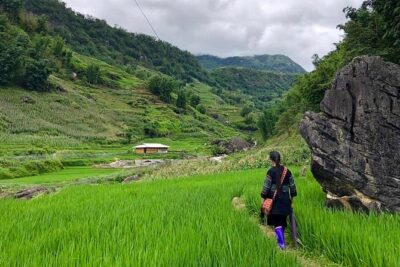
At around 10:30, the walk continues toward Ma Tra. The route passes through rice terraces, green hills, and pine forests. The views change as you leave the first village behind, so the walk does not feel like a single repeated path.
Ma Tra offers another look at local life. You may visit a school or speak with villagers, depending on the day’s arrangements. The focus is on customs, crafts, and the details of life in the area rather than a formal attraction with a fixed script.
The scenery is a major reason to book this trip, but do not expect a sightseeing coach route. You are moving on foot for much of the day, and the appeal comes from small moments: a view across the terraces, a farming area, a village home, or a conversation arranged by the guide.
The route is called easy to moderate, and that description seems useful. It is not presented as a steep mountain expedition, and several people have found the walking manageable. Still, one traveler noted that you need a decent level of fitness. I would treat the distance, not just the gradient, as the main issue.
Lunch with a view near Ta Phin
Around 11:30, you stop for lunch. Depending on the day, this may be a picnic or a meal at a local homestay or family restaurant. The food is described as traditional Vietnamese cooking, and some meals include several dishes shared at the table.
This part is practical as well as enjoyable. You get a proper pause before the final section, and the meal gives you another chance to talk with the guide and learn about local ingredients. Some meals have included a sturgeon hotpot, while other stops offer a selection of Vietnamese specialties. Vegetarian options have also been available at a local restaurant.
The quality and setting can vary because this is not a standardized restaurant meal. One meal was considered simply okay, while other meals were described as delicious and memorable. I see that as a fair trade for eating in a local setting rather than at a large tourist restaurant.
A lunch stop with mountain views adds something to the day, but keep your expectations sensible. You are paying $26 for a guide, food, bath, and transport, not for a polished dining experience. The value comes from the setting and the overall combination.
More Homestay Treks in Vietnam
- Sapa Valley Trek and Homestay – 3D2N
★ 5.0 · 105 reviews - 2 days authentic trekking tour in Sapa ( Homestay – Less touristy )
★ 5.0 · 68 reviews - From Sapa: 2 Days 1 Night Trek Over Night At Homestay
★ 5.0 · 68 reviews - 3-Day Trek in Amazing Muong Hoa Valley & ethnic Homestay
★ 5.0 · 49 reviews
Ta Phin and the Red Dao way of life
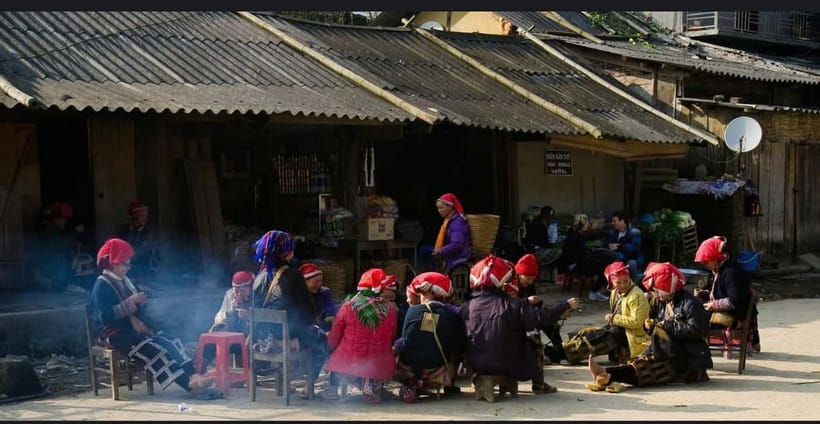
After lunch, the route continues to Ta Phin, home to the Red Dao people. This is the cultural high point of the walk. You learn about embroidery, herbal medicine, and local traditions, with time to look around and take photographs.
Red Dao clothing and textile work are important parts of the village identity. The tour gives you a chance to hear about embroidery techniques rather than treating local dress as a backdrop for photographs. Your guide can also explain how herbal medicine fits into Red Dao traditions.
Ta Phin is less about checking off a landmark and more about paying attention. You might see a family restaurant, a village home, working fields, or people going about ordinary tasks. The experience is at its best when you remain curious and respectful, and when you let the guide explain instead of treating the village as a stage.
This section also helps explain why a guided walk is worth the money. You could reach rural villages on your own, but you would miss much of the meaning behind the crops, crafts, and remedies. Su, Gao, and A Su are noted for being friendly and easy to talk with, which matters when the day depends on conversation.
The Red Dao herbal bath at 2:00
At about 2:00, you finish the walking portion with a traditional Red Dao herbal bath. You sit in a wooden tub filled with hot water and aromatic medicinal herbs. The bath is traditionally believed to ease muscle pain and improve circulation.
After several hours on foot, the timing is excellent. The bath is not an extra tacked onto the day. It gives the whole trip a clear shape: walk through the hills, learn about local life, eat a local meal, then rest.
You should think of this as a cultural wellness experience, not a medical treatment. The herbs and heat may feel calming, and the bath can be especially welcome after the trek, but the stated health effects are traditional beliefs. If you dislike very hot water, tell the staff and take care with the temperature.
The bath also gives you a quieter final hour. Some bathing locations have mountain views, adding a pleasant visual finish before the drive back. At around 3:30, transport returns you to Sapa.
What the $26 price really covers
At $26 per person, this is good value if you want a full day with several elements rather than a basic guided walk. The price includes:
- A local guide
- A picnic or local homestay meal
- The Red Dao herbal bath
- Transport back to Sapa
A separate cost for the bath could make the outing less attractive, but here it is part of the package. You also avoid arranging your own return from Ta Phin, which is useful after a long walk.
The small group limit of 10 improves the value. You are more likely to hear the guide, ask questions, and keep a comfortable walking pace than in a large bus group. It also makes a village visit feel less intrusive.
Personal expenses are not included. The information does not specify extra charges for particular food choices or purchases, so bring some money for anything personal. A daypack and water are also your responsibility.
Guides, language, and the feel of the day
The tour operates with live guides in English or Vietnamese. Su is the guide most often singled out by name, and Gao and A Su have also led the route. Su is described as speaking very good English, with some French, and as being able to explain local culture in an approachable way.
That personal contact is one of the strongest reasons to choose this outing. You can ask about farming, food, family life, crops, and local customs as they come up. The guide is not just there to point out the path.
The group is limited to 10, though the exact group size on your date can vary. A small group is helpful on narrow village paths and makes the meal and bath easier to manage. It also gives you a better chance of having a natural conversation instead of listening to a long speech.
Practical preparation for the 12 to 14 kilometers
Wear shoes with a good grip and enough support for a full day of walking. Comfortable shoes are specifically recommended, and sandals or thin casual footwear would be a poor choice for this distance.
Bring water, insect repellent, a daypack, and weather-appropriate clothing. Sapa weather can change, and the route includes open terraces as well as wooded areas. You will want to be ready for sun, damp conditions, or cooler air without relying on shops along the route.
The tour is not suitable for children under six or people with mobility impairments. It suits most reasonably active adults, but you should be honest about your stamina. If you enjoy a relaxed walk and can handle several hours on your feet, the pace should be manageable. If you are looking for a short stroll, choose a shorter Sapa outing.
Free cancellation is available up to 24 hours before departure for a full refund, and you can reserve now and pay later. Check the available starting time when booking, since the tour lasts six hours and returns around 3:30.
Who should book this Sapa day trip?
I would choose this tour if you want village contact, countryside views, and a cultural explanation of what you are seeing. It is particularly suited to first-time visitors who have walked around Sapa independently but want more context about H’mong and Red Dao life.
It also works well for couples and small groups who like a gentle outdoor day with a clear reward at the end. The herbal bath makes it different from a standard rice terrace trek, and the small group keeps the experience personal.
I would think twice if you want a hard hike, a highly polished meal, or a guaranteed private tour. The route is moderate rather than strenuous, lunch can vary, and the group is small but not necessarily private. You should also avoid it if a 12 to 14-kilometer walk is beyond your comfort level.
Should you book the Ta Phin trek and herbal bath?
Yes, if you want an affordable Sapa day that combines walking with real cultural explanation. The strongest parts are the local guides, the quieter village route, the chance to see farming and crafts up close, and the hot herbal bath after the trek.
Book it with sensible expectations. You are not buying a luxury spa day or a restaurant tour. You are buying six hours of walking, conversation, local food, rural scenery, and a traditional Red Dao bathing experience for $26. For many visitors, that is a very good use of one day in Sapa.
FAQ
How long does the Sapa Ta Phin trek take?
The experience lasts six hours, starting at 9:00 and ending back in Sapa at about 3:30.
How far do you walk?
The trekking distance is approximately 12 to 14 kilometers.
Where does the tour start and finish?
You meet at Sapa Stone Church, also called Sapa Main Church. Transport returns you to the same area in Sapa at the end.
Which villages does the route visit?
The route passes through or visits Suoi Ho, Ma Tra, and Ta Phin. Suoi Ho is associated with the Black H’mong people, while Ta Phin is home to the Red Dao.
Is lunch included?
Yes. The tour includes either a picnic lunch or a meal at a local homestay or restaurant, depending on the arrangements for the day.
Is the Red Dao herbal bath included?
Yes. A traditional Red Dao herbal bath in a wooden tub is included after the trek.
Who may find this tour unsuitable?
The trek is not suitable for children under six or people with mobility impairments. It is rated easy to moderate, but you still need to be comfortable walking 12 to 14 kilometers.
More Homestay Treks in Sa Pa
- Muong Hoa Valley Trek & Homestay Experience – 4D3N
★ 5.0 · 42 reviews - Private Hoang Lien National Park & Tribal Village Trek
★ 4.7 · 30 reviews - Sapa: 2-Day Local Guided Valley Trek with Night Homestay
★ 5.0 · 27 reviews - From Sapa: Muong Hoa Valley View & Village Trek 1-Day
★ 5.0 · 21 reviews
Latest treks added in Sa Pa
- Soob Sapa Trekking Tour★ 4.3 · 3 reviews
- Sapa: Y Linh Ho – Lao Chai, and Ta Van Trekking Day Tour★ 5.0 · 25 reviews
- Sapa Trekking Private Tour With Ethnic Female Tour Guide★ 4.9 · 24 reviews
- Sapa Trekking – Waterfalls And H’mong Villages★ 5.0 · 2 reviews
- Sapa: Ta Phin Village Trek with Lunch and Bathing Experience★ 4.7 · 13 reviews
- Sapa Trekking Guide Francophone 2 days – 1 night★ 5.0 · 2 reviews
- Sapa: Trekking Through Terraced Rice Fields & Valley 1 Day★ 4.8 · 4 reviews
- Sapa small groupe activities: 1 Day trek – Meet the locals★ 4.7 · 3 reviews
Homestay & Village Treks, compared.
Number one top rated ethical cultural trekking and homestay by ETHOS
Read our review →
2-Day Sa Pa Ethnic Homestay Tour & Trek with Limousine Bus
Read our review →
Sapa 3 Day 2 Night Trekking With Hotel & Homestay
Read our review →
Sapa 2 Days 1 Night Overnight At Local Homestay
Read our review →
2-Day Trekking Trip with Ethnic Minority Homestay
Read our review →
2-Day Trek & Heartwarming Homestay with an Ethnic Family
Read our review →Browse the lists this tour appears in